
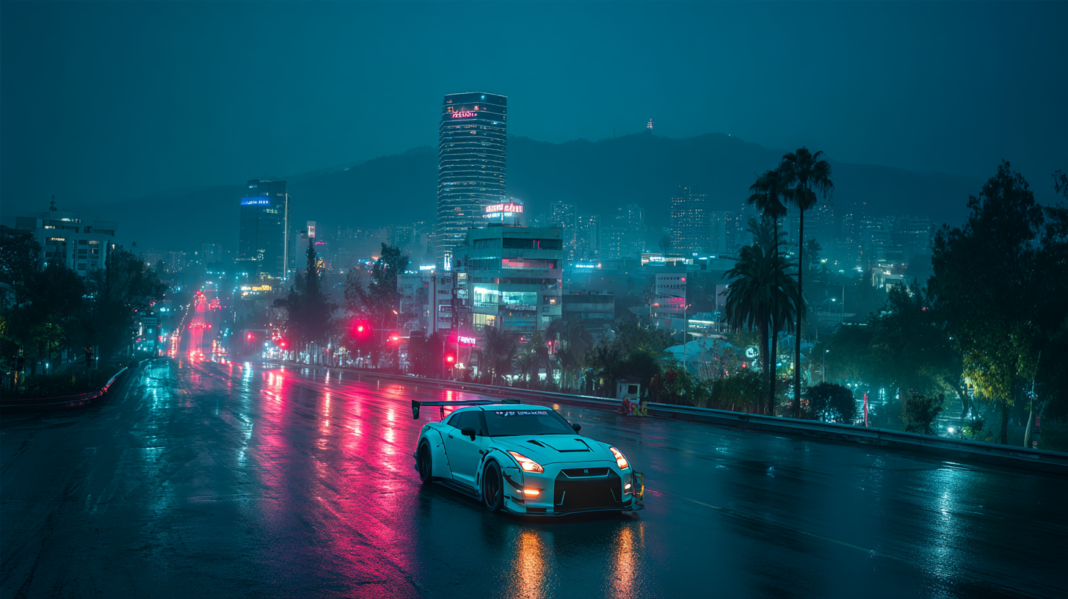
The Nissan GT-R has earned its “Godzilla” nickname through decades of dominance. From the original “Hakosuka” Skyline GT-R in 1969 to the R32 that conquered racetracks worldwide, from the R34 that became a pop culture icon to the R35 that redefined supercar value for 18 years, the GT-R has always represented accessible, no-excuses performance.
The R35 generation finally ended production in 2025 after nearly two decades on the market. It had seen updates throughout its life, but by the end, its VR38 twin turbo V6 could no longer meet evolving global emissions standards. The question on every enthusiast’s mind is simple: what comes next?
Nissan has finally started providing answers. The R36 GT-R is coming, and while it will honor the Godzilla legacy, it will also embrace the technologies of a new era. This article examines everything known about the next generation Nissan GT-R, including expected release timing, powertrain configuration, design direction, pricing strategy, and how it will stack up against the competition.
The R36 Timeline: When Will Godzilla Return?
For years, Nissan was silent about the R36. The company’s financial struggles, the shifting market away from sports cars, and the uncertainty about electrification all contributed to delays. But in 2026, Nissan executives have finally provided concrete information.
The R36 is a matter of “when, not if”. Solid concrete announcements about the car are expected by 2028, with the production model launching before the end of the decade. The R36 is anticipated to arrive by 2030 at the latest.
This timeline suggests that the next GT-R is still several years away. Nissan appears to be taking its time to develop an “all-new car” on a fresh chassis, rather than rushing an update of the aging R35 platform. For enthusiasts who have been waiting since the R35’s glory days, patience remains the watchword.
Powertrain: The VR38 Lives On, But With a Twist
The most significant news about the R36 concerns its engine. Unlike some rumors that suggested a fully electric GT-R, Nissan has confirmed that the next Godzilla will retain a version of the iconic VR38 engine.
The VR38 Hybrid
The 3.8 liter twin turbocharged V6 that powered the R35 has developed a cult following, largely due to its receptiveness to modification and its ability to produce massive power. Rather than discarding this engineering asset, Nissan plans to evolve it.
The block of the VR38 engine is a remarkable piece of engineering, and Nissan sees no reason to throw it away. However, the engine as it exists cannot meet emissions standards in certain regions. The solution is hybridization.
The R36 will pair the VR38 with one or more electric motors and a battery pack. This approach offers several advantages. The electric motor provides instant torque, filling the gap while the twin turbos spool. The hybrid system allows the car to operate in zero emission mode for short distances, meeting regulations in urban centers. And the combined output can significantly exceed the R35’s final power figures.
Power and Performance Expectations
While Nissan has not released official figures, the expected output for the R36 is substantial. The hybrid system could push total horsepower beyond 800 or even 900. Acceleration from 0 to 60 miles per hour is projected at approximately 2.5 seconds.
These figures would place the R36 firmly in supercar territory, competing with offerings from Porsche, Ferrari, and McLaren while maintaining the GT-R’s traditional value proposition.
Transmission and Drive
The R36 will retain the intelligent all wheel drive system that has defined the GT-R since the R35. The ATTESA E TS system will likely be evolved, with more sophisticated torque vectoring and faster response times. A dual clutch transmission is expected, offering rapid shifts and multiple driving modes.
Design: Digital Dreams and Production Realities
While official design details for the R36 remain under wraps, the design direction enthusiasts are hoping for has become clearer.
The Mid Engine Question
One of the most persistent rumors about the R36 is a potential move to a mid engine layout. A mid engine GT-R would feature cab forward cockpit proportions, large side air intakes, and a dramatic widebody stance.
However, Nissan has not confirmed this change. The GT-R has always been a front engine, all wheel drive vehicle, and moving the engine behind the driver would represent a fundamental shift in the car’s character. It would also add significant development cost. A front engine layout with the engine mounted lower and further back remains a possibility.
Design Cues
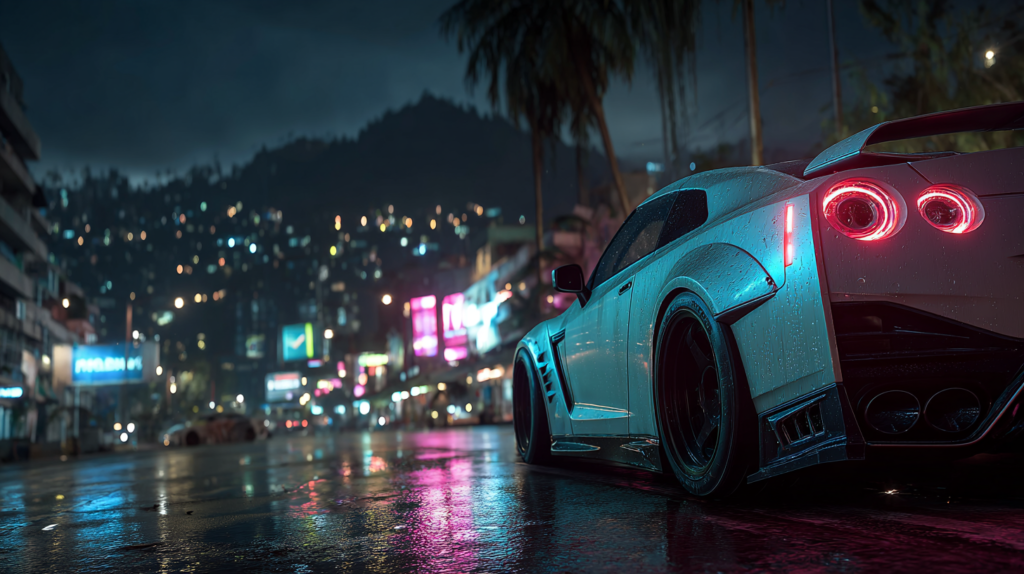
The next GT-R is expected to retain several signature elements. The front fascia features a familiar V motion grille, and the rear end incorporates the distinctive four round LED taillights that have become a GT-R hallmark. Carbon fiber elements, Nismo style aero components, and a large rear wing all point toward a design that prioritizes function over form. The R36 is expected to be a track capable machine from the outset.
The R36 Nismo: An Even More Extreme Variant
Nissan will almost certainly offer a Nismo version of the R36, following the pattern established with the R35. The Nismo variant is expected to feature even more aggressive aerodynamics, stiffer suspension tuning, reduced weight through carbon fiber components, and a higher power output from the hybrid system.
The R35 Nismo pushed the GT-R into the higher price brackets, and the R36 Nismo will likely follow a similar strategy. For buyers seeking the ultimate expression of the Godzilla formula, the Nismo will be the choice.
Pricing: The Return of the Budget Supercar Slayer
One of the R35’s defining characteristics was its value proposition. When it debuted in 2008, it delivered supercar performance for less than half the price of its competitors.
Nissan is committed to maintaining this value equation with the R36. A mainstream GT-R cannot be a $200,000 car. Adjusting for inflation, the R35’s original price would be approximately $120,000 to $130,000 in today’s dollars, and Nissan views this as the sweet spot.
Higher performance derivatives, including the Nismo variant, could reach above $200,000, but the core GT-R model is intended to remain accessible. This pricing strategy would keep the R36 competitive with the Porsche 911 Carrera S and the new Corvette ZR1, while undercutting the Ferrari 296 GTB and Lamborghini Temerario by a substantial margin.
Engineering: The Takumi Touch
One of the distinctive elements of the R35 GT-R was the Takumi engine building program. A handful of master craftsmen individually assembled each VR38 engine, signing their work and ensuring quality control.
When R35 production ended, these Takumi engineers were diverted to building replacement engines and parts. However, the program also incorporated apprentices during its run. Those apprentices could return to build the R36’s hybrid VR38 engines when production begins.
This attention to craftsmanship is part of what sets the GT-R apart from mass produced competitors. If Nissan retains the Takumi program for the R36, it will preserve a connection to the R35’s heritage.
How the R36 Stacks Up Against Rivals
Against the Porsche 911 Carrera S
The Porsche 911 Carrera S is the GT-R’s most direct competitor in terms of price and mission. Both are all wheel drive performance coupes with rear seats and daily usability.
The 911’s advantage is its refinement and its brand cachet. Porsche’s flat six engine, while less powerful than the GT-R’s VR38, is a masterpiece of engineering. The 911’s interior quality and technology are also superior.
The R36’s advantage is its power and its value. With over 800 horsepower projected, the GT-R will significantly outpower the 911 Carrera S, and its price is expected to be comparable.
Against the Chevrolet Corvette ZR1
The Corvette ZR1 is America’s answer to the supercar establishment, with a 1,064 horsepower twin turbo V8.
The ZR1’s advantage is its power and its track capability. The Corvette’s mid engine layout provides exceptional agility, and its price is competitive.
The R36’s advantage is its all weather capability and its daily usability. The GT-R’s all wheel drive system provides traction that the rear drive Corvette cannot match, and its rear seats offer practicality that the Corvette lacks.
Against the Ferrari 296 GTB
The Ferrari 296 GTB is a hybrid supercar with 819 horsepower.
The 296 GTB’s advantage is its brand prestige and its hybrid sophistication. The Ferrari’s V6 is a masterpiece, and the Prancing Horse badge carries a weight that Nissan cannot match.
The R36’s advantage is its value. At an expected $120,000 to $130,000, the GT-R will cost approximately one third of the Ferrari’s price. The GT-R also offers rear seats and more practical daily usability.
Against the Lamborghini Temerario
The Lamborghini Temerario is a hybrid supercar with a V8 producing 920 horsepower.
The Temerario’s advantage is its engine character and its styling. The Lamborghini’s V8 produces a distinctive sound, and its sharp angles create a visual presence that the GT-R cannot match.
The R36’s advantage is its value and its daily usability. At an expected $120,000 to $130,000, the GT-R will cost significantly less than the Lamborghini. The GT-R’s rear seats and all wheel drive system also make it more practical for daily use.
The Godzilla Legacy Continues
The R35 GT-R was a landmark vehicle. When it debuted, it redefined what was possible from a Japanese performance car. Its 3.8 liter twin turbo V6, its advanced all wheel drive system, and its accessible price made it a giant killer.
But the automotive world has changed. Competitors have caught up, emissions regulations have tightened, and Nissan’s financial position has weakened. The R36 cannot simply repeat the R35’s formula.
Instead, the R36 must evolve. It must embrace hybridization while retaining the VR38’s character. It must offer supercar performance at an accessible price. It must honor the Godzilla legacy while looking toward the future.
Based on what Nissan executives have revealed, the R36 appears to be on the right track. The retention of the VR38 engine will please purists who feared an all electric future. The addition of hybrid technology will allow the car to meet global emissions standards while boosting performance. The commitment to accessible pricing will maintain the GT-R’s value proposition.
The R36 is still several years away. Enthusiasts will need to wait until 2028 for concrete announcements and until 2030 for the production model. But for the first time since the R35 ended production, there is reason to believe that Godzilla is not dead. He is simply resting, preparing to return in an evolved form.
Specifications Summary (Projected)
| Specification | Expected Value |
|---|---|
| Engine | 3.8L twin turbo V6 hybrid |
| Combined Power | 800 to 900+ horsepower |
| Transmission | Advanced dual clutch |
| Drive | Intelligent all wheel drive |
| 0-60 mph | Approximately 2.5 seconds |
| Top Speed | 210+ mph |
| Base Price | $120,000 to $130,000 |
| Release Date | 2030 (before end of decade) |
Conclusion
The Nissan GT-R R36 represents the next chapter in the Godzilla story. It is a car that honors the legacy of the R32, R33, R34, and R35 while embracing the technologies of a new era. Its hybrid VR38 engine promises to deliver the power that GT-R fans demand, while its accessible pricing will keep it true to the budget supercar slayer formula.
The R36 is not a car for everyone. Its production is still years away, and the final specifications remain unconfirmed. But for enthusiasts who have followed the GT-R’s journey from the Hakosuka to the R35, the R36 represents hope. It is proof that Nissan has not forgotten what made Godzilla special, and that the legend will continue.

