
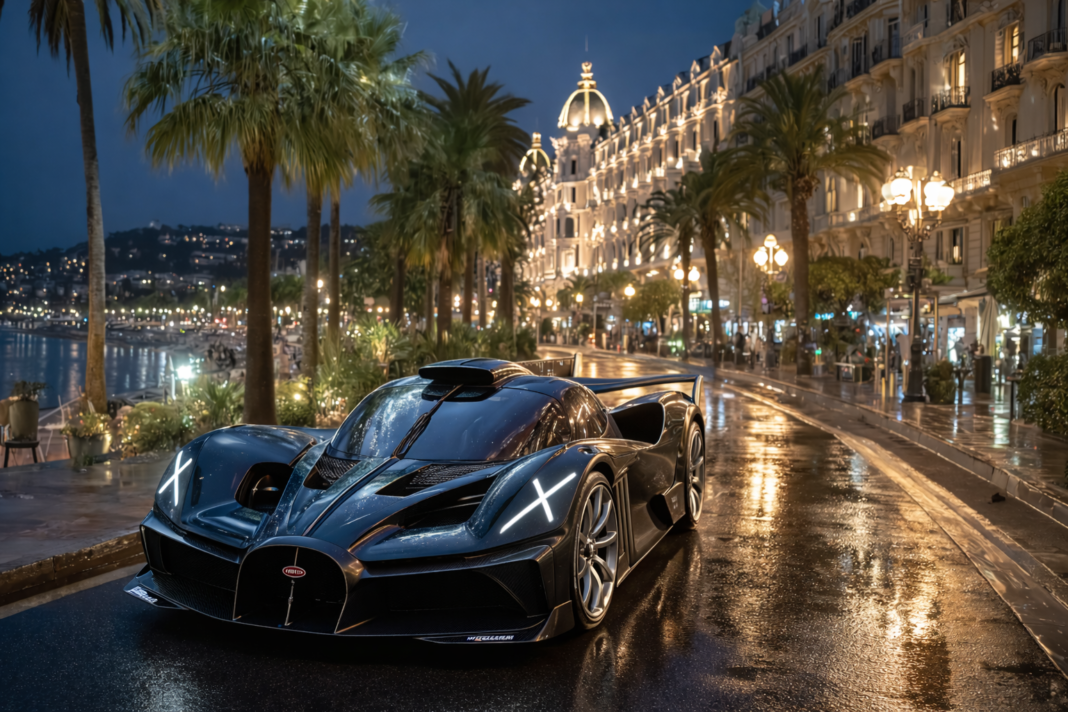
The Bugatti name has become synonymous with speed, luxury, and engineering excess. From the Veyron, which redefined the boundaries of production car performance in the 2000s, to the Chiron, which pushed those boundaries even further, Bugatti has built its reputation on creating cars that are as fast as they are opulent. The Bolide represents a departure from this formula.
Introduced in 2020 as a concept and confirmed for limited production in 2021, the Bolide is a track only hypercar designed without compromise for circuit performance. It shares its 8.0 liter quad turbocharged W16 engine with the Chiron, but everything else is stripped away. There is no luxury, no sound deadening, no infotainment screen, and no pretense of road legality. The Bolide is a machine built for one purpose: to lap race tracks as quickly as possible.
This article provides a comprehensive review of the Bugatti Bolide, examining its performance specifications, engineering, design, and what makes it one of the most extreme track hypercars ever built.
The Philosophy: No Compromises
The Bolide project began with a simple question: what would happen if Bugatti’s engineers were given complete freedom to create a track focused machine without any consideration for road legality, comfort, or luxury? The answer is a car that weighs just 1,240 kilograms dry, produces 1,578 horsepower, and generates over 2,600 kilograms of downforce at top speed.
The Bolide is not a road car. It cannot be driven on public streets. It has no airbags, no emissions controls, and no noise regulations. It is designed exclusively for track use, and it is intended for customers who want the ultimate expression of Bugatti’s engineering capabilities.
Powertrain: The W16 Unleashed
The W16 Engine
The Bolide is powered by the same 8.0 liter quad turbocharged W16 engine that has powered every modern Bugatti. But in the Bolide, the engine is tuned for maximum power without the reliability constraints of a road car. It produces 1,578 horsepower at 7,000 rpm and 1,180 lb ft of torque at 6,000 rpm.
The engine’s W configuration, which combines two narrow angle V8 engines sharing a common crankshaft, is one of the most complex production engines ever built. The four turbochargers are arranged in a staged configuration, with two smaller turbos providing immediate response and two larger turbos providing top end power.
For the Bolide, the engine’s cooling system is significantly upgraded. The car features a high capacity water radiator, separate oil coolers for the engine and transmission, and additional coolers for the turbochargers and intercoolers. The system is designed to maintain consistent performance during sustained track sessions.
Transmission
Power is transmitted to all four wheels through a seven speed dual clutch transmission. The transmission is upgraded for the Bolide’s track focus, with stronger clutches, revised gear ratios, and a calibration that prioritizes shift speed over smoothness. Shift times are measured in milliseconds.
Performance
Acceleration and Speed
The Bolide accelerates from 0 to 60 miles per hour in 2.1 seconds. The 0 to 100 miles per hour sprint takes approximately 4.2 seconds. The quarter mile is completed in approximately 9.0 seconds at 160 miles per hour.
Top speed is rated at 280 miles per hour, a figure that is limited by the car’s aerodynamic downforce. The Bolide is designed for cornering performance, not top speed runs.
Weight and Power to Weight Ratio
The Bolide has a dry weight of 1,240 kilograms, giving it a power to weight ratio of 1.27 horsepower per kilogram. This figure is among the highest of any production track car.
Chassis and Aerodynamics
Carbon Fiber Monocoque
The Bolide is built around a carbon fiber monocoque that is even lighter and stiffer than the Chiron’s. The monocoque is manufactured using aerospace grade materials and processes, with careful attention to fiber orientation and layup sequence.
The body panels are also carbon fiber, and the entire structure is designed to be as light as possible while maintaining the necessary strength for track use.
Suspension
The Bolide features double wishbone suspension at all four corners, with pushrod actuated dampers. The suspension is fully adjustable, with settings for ride height, camber, toe, and damping that can be tuned to suit different tracks and conditions.
The suspension components are manufactured from titanium and carbon fiber, reducing unsprung weight and improving response.
Aerodynamics
The Bolide’s aerodynamic package is among the most extreme ever fitted to a production car. The car features a large fixed rear wing, a prominent front splitter, and an underbody diffuser that spans the width of the car. The system generates over 2,600 kilograms of downforce at top speed, a figure that exceeds the car’s own weight.
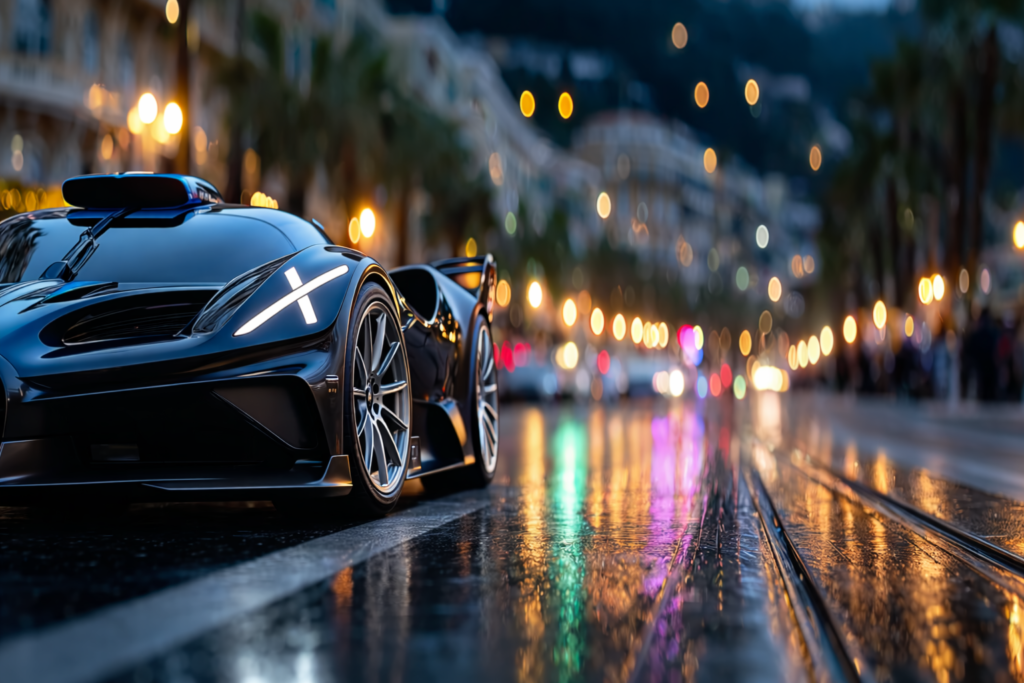
The front end features a massive grille and air intakes that feed cooling air to the engine and brakes. The hood incorporates a prominent air extractor that draws hot air out of the engine bay. The side air intakes are large, providing cooling air to the turbochargers and intercoolers.
The rear end is dominated by the large fixed wing, which sits above the carbon fiber diffuser. The quad exhaust outlets are positioned high, a design element that improves airflow to the diffuser.
Design
Exterior Styling
The Bolide’s exterior design is aggressive and functional. The car’s proportions are defined by the mid engine layout, with a long wheelbase, short overhangs, and a cabin positioned forward of the rear axle. The body is covered in aerodynamic elements, with wings, splitters, and diffusers at every corner.
The front end features a prominent grille and slim headlights. The side profile shows the massive air intakes that feed the engine and brakes. The rear end is dominated by the large wing and diffuser.
The design is not beautiful in the traditional sense; it is purposeful, aggressive, and extreme.
Interior Design
The interior of the Bolide is stripped back to the essentials. The seats are carbon fiber racing buckets with minimal padding, upholstered in Alcantara. The dashboard features a digital instrument cluster that displays essential information, and a small display for vehicle controls.
The steering wheel is a flat bottom unit with integrated controls for the car’s systems. The paddle shifters are mounted on the steering column. There is no infotainment screen, no audio system, and no sound deadening. The interior is designed for one purpose: driving.
Driving Experience
On Track Behavior
The Bolide is a car that demands to be driven at the limit. The engine produces a ferocious wail as the revs climb, and the acceleration is relentless. The brakes provide exceptional stopping power, with a pedal feel that inspires confidence.
The car’s downforce is its defining characteristic. At high speeds, the Bolide is glued to the track, with cornering grip that exceeds 2.5 g. The car can be rotated on corner entry with trail braking, and the throttle can be used to adjust the cornering attitude on exit.
The Bolide is not a car for beginners. Its power, its downforce, and its responsiveness require skill and experience to manage. But for drivers who can handle it, it is one of the most rewarding track cars ever built.
The Sound
The W16 engine’s sound in the Bolide is unlike any other car. The engine produces a deep, guttural roar at low speeds, with a sharp, metallic wail as the revs climb toward the 7,000 rpm redline. The sound is overwhelming, filling the cabin and drowning out all other noise.
Production and Rarity
Production Numbers
Bugatti is building 40 units of the Bolide, a number that was determined by the demand from collectors and the capacity of the company’s workshop. Each car is hand built to the specifications of its owner, with extensive personalization options available.
Pricing
The Bolide carries a base price of approximately $4.7 million. This pricing places it in the upper tier of the track hypercar market, above the McLaren Senna and Ferrari FXX K Evo.
Delivery and Ownership
Bolide owners participate in a structured track program, similar to the Ferrari XX program. Bugatti provides support at track events, including engineering support, spare parts, and driving instruction. The cars are stored and maintained by Bugatti between events.
How the Bolide Stacks Up Against Rivals
Against the Ferrari FXX K Evo
The Ferrari FXX K Evo is a track only hypercar based on the LaFerrari, with a 6.3 liter V12 hybrid producing 1,050 horsepower.
The FXX K Evo’s advantage is its hybrid system, which provides instant torque and energy recovery. The Ferrari’s V12 also produces a distinctive sound.
The Bolide’s advantage is its power and its downforce. With 1,578 horsepower and over 2,600 kilograms of downforce, the Bugatti is in a different performance class.
Against the McLaren Senna GTR
The McLaren Senna GTR is a track only hypercar based on the Senna, with a 4.0 liter twin turbocharged V8 producing 814 horsepower.
The Senna GTR’s advantage is its weight and its handling. The McLaren is lighter than the Bolide, and its chassis tuning is exceptional.
The Bolide’s advantage is its power and its downforce. The Bugatti produces nearly twice the power of the McLaren and generates significantly more downforce.
Against the Lamborghini Essenza SCV12
The Lamborghini Essenza SCV12 is a track only hypercar with a 6.5 liter V12 producing 819 horsepower.
The Essenza’s advantage is its V12 engine and its styling. The Lamborghini’s engine produces a distinctive sound, and its design is dramatic.
The Bolide’s advantage is its power and its downforce. The Bugatti produces nearly twice the power of the Lamborghini and generates significantly more downforce.
Against the Aston Martin Valkyrie AMR Pro
The Aston Martin Valkyrie AMR Pro is a track only hypercar developed with Red Bull Racing, with a 6.5 liter V12 producing 1,160 horsepower.
The Valkyrie’s advantage is its Formula 1 derived engineering. The car’s aerodynamics and chassis are among the most advanced ever fitted to a production vehicle.
The Bolide’s advantage is its power and its torque. The Bugatti produces 418 more horsepower than the Valkyrie and significantly more torque.
Specifications Summary
| Specification | Value |
|---|---|
| Engine | 8.0L quad turbocharged W16 |
| Horsepower | 1,578 hp at 7,000 rpm |
| Torque | 1,180 lb ft at 6,000 rpm |
| Transmission | 7 speed dual clutch |
| Drive | All wheel drive |
| 0-60 mph | 2.1 seconds |
| Quarter Mile | 9.0 seconds at 160 mph |
| Top Speed | 280 mph |
| Downforce | 2,600+ kg |
| Weight | 1,240 kg dry |
| Production | 40 units |
| Base Price | $4.7 million |
Conclusion
The Bugatti Bolide represents the absolute pinnacle of Bugatti’s engineering capabilities. It is a track only hypercar that combines a 1,578 horsepower W16 engine with a lightweight carbon fiber chassis and an aerodynamic package that generates over 2,600 kilograms of downforce. It is a machine built without compromise, designed for one purpose: to lap race tracks as quickly as possible.
The Bolide is not a car for everyone. Its production is limited to 40 units, its price is $4.7 million, and it cannot be driven on public roads. It is a car for collectors who want the ultimate expression of Bugatti’s engineering, and for drivers who want to experience the limits of what is possible on a race track.
For the 40 owners who will acquire a Bolide, the car offers something that no other vehicle can provide: the experience of driving the most extreme track hypercar ever built. It is a machine that honors Bugatti’s racing heritage, and it stands as one of the most extraordinary vehicles ever created.

