
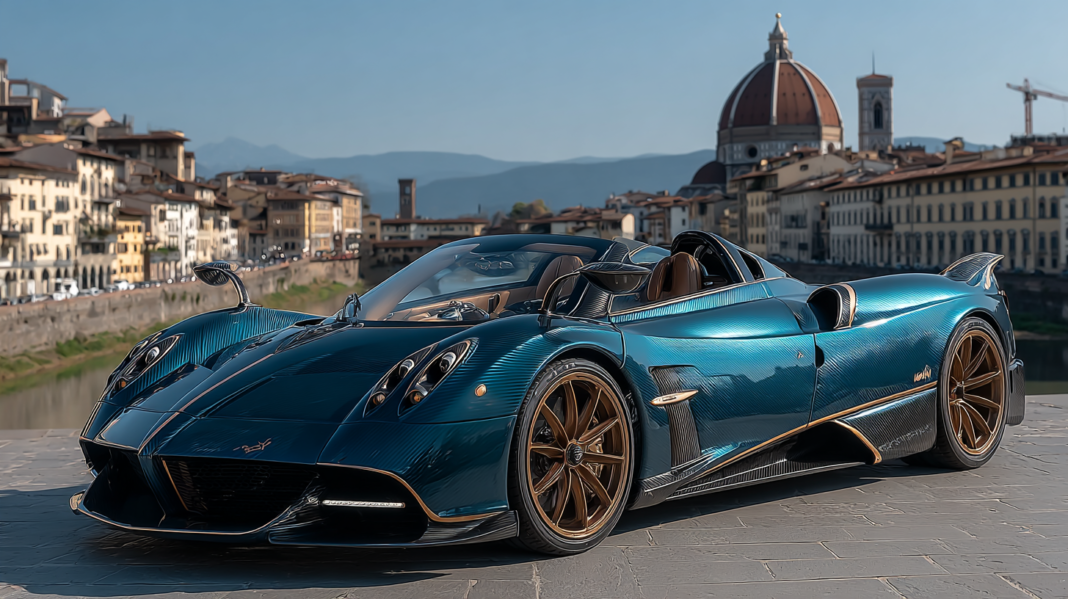
The name Pagani carries a specific weight in the world of hypercars. Unlike Ferrari or Lamborghini, which produce thousands of cars per year, Pagani builds only a handful of vehicles, each one a handcrafted work of art. The company’s founder, Horacio Pagani, is an artist as much as an engineer, and his cars reflect a philosophy that prioritizes beauty, craftsmanship, and emotional resonance alongside performance.
The Huayra Codalunga is the latest expression of this philosophy. Introduced in 2022 as a limited edition variant of the Huayra, the Codalunga takes its name from the Italian for “long tail,” a reference to its extended rear bodywork. It is a car that strips away some of the active aerodynamic complexity of the standard Huayra in favor of cleaner lines and a more minimalist aesthetic. It is a car that celebrates form as much as function.
This article provides a comprehensive review of the Pagani Huayra Codalunga, examining its performance specifications, design philosophy, craftsmanship, and what makes it a unique expression of hypercar art.
The Pagani Philosophy
Horacio Pagani’s approach to car design is defined by several core principles. First, beauty is not optional; it is as important as performance. Second, craftsmanship matters; every component should be finished to the highest standard, even those that are not visible to the driver. Third, carbon fiber is not just a structural material; it is an aesthetic element that can be shaped and finished like a sculpture. Fourth, the driving experience should be engaging, but it should also be civilized enough for grand touring.
The Huayra Codalunga embodies all of these principles. It is a car that is designed to be beautiful, to be crafted with care, and to be driven.
The Codalunga Concept: A Long Tail Tribute
The Codalunga was inspired by the long tail racing cars of the 1960s, particularly the Ferrari 250 GTO and the Porsche 917. These cars featured extended rear bodywork that improved aerodynamic efficiency and gave them a distinctive, elegant silhouette. Pagani’s design team, led by Horacio Pagani, sought to capture this aesthetic in a modern hypercar.
The Codalunga began as a commission from a group of Pagani collectors who wanted a variant of the Huayra with a more streamlined, minimalist design. Pagani agreed to produce a limited run of five cars, each one hand built to the specifications of its owner. The response was so positive that Pagani eventually expanded production to a total of 30 units.
The Codalunga’s most distinctive feature is its extended rear bodywork. The car is 360 millimeters longer than the standard Huayra, with the additional length concentrated in the rear. This extended tail eliminates the active aerodynamic flaps of the standard car, replacing them with a fixed, sculpted surface that manages airflow with passive elements. The result is a car that is cleaner, more elegant, and more minimalist than the standard Huayra.
Powertrain
The V12 Engine
The Codalunga is powered by a 6.0 liter twin turbocharged V12 engine, developed in partnership with Mercedes AMG. Designated the M158, this engine produces 829 horsepower at 6,000 rpm and 811 lb ft of torque at 5,000 rpm. The engine is mounted longitudinally behind the passenger compartment, driving the rear wheels through a seven speed automated manual transmission.
The engine is a work of art in its own right. The intake manifold is polished to a mirror finish, and the carbon fiber engine cover is shaped to display the Pagani logo. The engine bay is designed to be viewed as much as driven, with glass panels that allow the owner to see the engine from above.
Transmission
Power is transmitted to the rear wheels through a seven speed automated manual transmission, developed in partnership with Xtrac. The transmission is mounted at the rear of the car in a transaxle configuration, contributing to the car’s weight distribution. The transmission features a single clutch, which provides a more mechanical feel than the dual clutch units used in many competitors.
The transmission can be operated in automatic mode or via paddle shifters mounted on the steering column. The shift times are rapid in the most aggressive modes, but the transmission retains a characteristic lurch during gear changes that some drivers find engaging.
Performance
Acceleration and Speed
The Codalunga accelerates from 0 to 60 miles per hour in 2.9 seconds. The 0 to 100 miles per hour sprint takes approximately 5.5 seconds. The quarter mile is completed in approximately 10.3 seconds.
Top speed is rated at 236 miles per hour, a figure that reflects the car’s aerodynamic efficiency and the power of its V12 engine.
Weight and Balance
The Codalunga has a dry weight of approximately 1,250 kilograms. The weight distribution is optimized for handling, with the engine mounted low in the chassis and the transmission positioned at the rear. The carbon fiber construction keeps weight to a minimum.
Chassis and Aerodynamics
Carbon Fiber Monocoque
The Codalunga is built around a carbon fiber monocoque, providing exceptional rigidity and occupant protection while minimizing weight. The monocoque is manufactured using Pagani’s proprietary process, which combines autoclave cured carbon fiber with titanium reinforcing elements.
The body panels are also carbon fiber, and the entire structure is designed to be as light as possible while maintaining the necessary strength.
Suspension
The Codalunga features double wishbone suspension at all four corners, with pushrod actuated dampers. The suspension is adjustable, with settings for compression and rebound that can be tuned to suit different roads and conditions. The system uses titanium components throughout, reducing weight and adding to the car’s visual appeal.
Aerodynamics
The Codalunga’s aerodynamic design is focused on efficiency and stability rather than maximum downforce. The extended rear bodywork manages airflow passively, without the active flaps of the standard Huayra. The front splitter and rear diffuser are shaped to balance downforce and drag, providing stable handling at high speeds without the complexity of active systems.
The car’s aerodynamic efficiency is evident in its top speed of 236 miles per hour, a figure that is achieved with relatively modest downforce.
Design
Exterior Styling
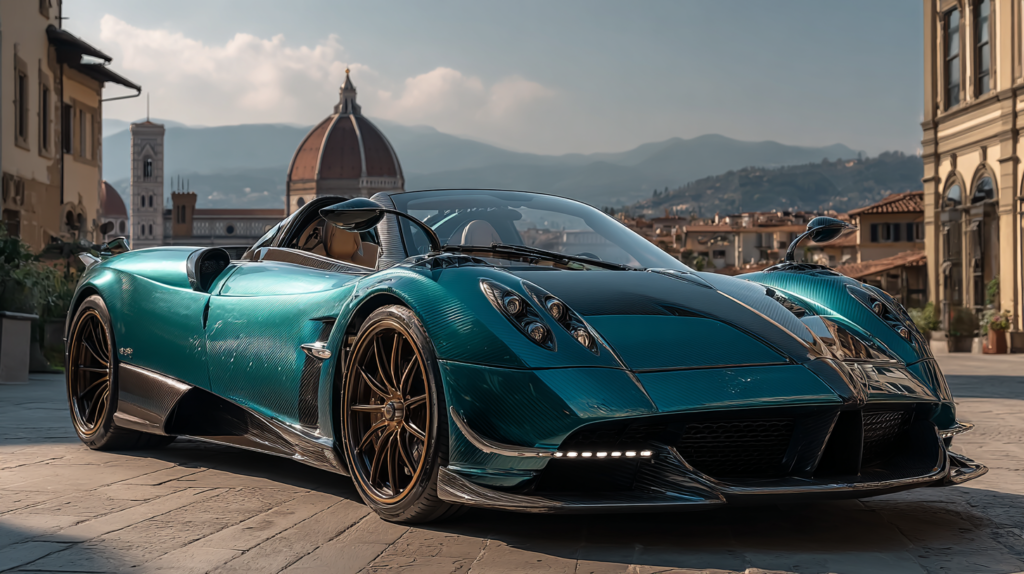
The Codalunga’s exterior design is the car’s defining feature. The extended rear bodywork gives the car a distinctive, elegant silhouette that sets it apart from every other hypercar. The tail is long and flowing, with a smooth, unbroken surface that manages airflow with passive elements.
The front end features Pagani’s signature quad headlight design, with LED elements that are both functional and decorative. The grille is small, reflecting the car’s mid engine layout, and the front splitter is integrated into the bodywork.
The side profile shows the car’s proportions, with a long wheelbase, short overhangs, and a cabin positioned forward of the rear axle. The doors open upward in a gullwing configuration, providing access to the cabin and adding to the car’s dramatic presence.
The rear end is dominated by the long tail, which houses the exhaust outlets and the rear diffuser. The taillights are slim and integrated into the bodywork, with a design that echoes the front headlights.
Interior Design
The interior of the Codalunga is a masterpiece of craftsmanship. The seats are upholstered in fine leather, with a diamond quilting pattern that is both decorative and functional. The dashboard is finished in a combination of leather, carbon fiber, and machined aluminum, with every component finished to the highest standard.
The instrument cluster is digital, with a display that can be configured to show performance data. The central touchscreen handles infotainment functions, with a minimalist interface that does not distract from the driving experience.
The steering wheel is wrapped in leather, with a flat bottom and integrated controls for the car’s systems. The paddle shifters are machined from aluminum, with a precise, mechanical feel.
Craftsmanship
The Codalunga’s craftsmanship is unmatched in the automotive world. Every component, from the exposed carbon fiber weave to the machined aluminum switches, is finished with care. The engine bay is a work of art, with polished intake manifolds and carbon fiber covers. The underside of the car is as carefully finished as the exterior, with titanium suspension components and carbon fiber undertrays.
Pagani’s attention to detail extends to the smallest elements. The seat belt buckles are machined from solid aluminum, with the Pagani logo engraved. The air conditioning vents are shaped like turbines, with knurled edges that provide grip. The car is a work of art, and every detail is considered.
Driving Experience
On Road Character
The Codalunga is a car that is surprisingly civilized for a hypercar. The suspension, while firm, is not punishing. The cabin is comfortable, with seats that provide support without being overly aggressive. The engine produces a deep, muscular roar at low speeds, but it is not overwhelming.
The car is not a track weapon; it is a grand tourer. It is designed to cover long distances in comfort, to be driven to the coast or through the mountains. The ride is compliant, and the steering is precise without being twitchy.
On Track Behavior
When driven on a track, the Codalunga reveals its capabilities. The brakes provide strong stopping power, with a pedal feel that is consistent and predictable. The chassis remains composed through corners, with the suspension controlling body motion effectively.
The car’s weight is low for a hypercar, and its mid engine layout provides exceptional agility. The Codalunga is a car that rewards smooth, precise inputs, and it is capable of lap times that approach those of more track focused machines.
The Sound
The V12 engine’s sound is a significant part of the Codalunga’s appeal. The engine has a deep, muscular tone at low speeds, with a sharper, more aggressive note as the revs climb. The sound is not as high pitched as a Ferrari V12 or as mechanical as a Lamborghini V10, but it is unmistakably Pagani.
Rarity and Exclusivity
Production Numbers
Pagani built 30 units of the Huayra Codalunga, a number that was determined by the demand from collectors and the capacity of the company’s workshop. Each car was hand built to the specifications of its owner, with extensive personalization options available.
Pricing
The Codalunga carried a base price of approximately $3.5 million, with final prices varying based on the extensive personalization options. For context, the standard Huayra was priced at approximately $2.5 million.
Collector Value
The Codalunga’s limited production numbers, its distinctive design, and its status as a Pagani have made it an immediate collector’s item. All 30 units were sold before production began, and values on the secondary market have already appreciated.
How the Codalunga Stacks Up Against Rivals
Against the Standard Pagani Huayra
The standard Huayra is the Codalunga’s most direct comparison.
The standard Huayra’s advantage is its active aerodynamics. The car’s four active flaps provide precise control over downforce and drag, allowing it to adapt to different driving conditions.
The Codalunga’s advantage is its design. The long tail bodywork gives it a more elegant, minimalist aesthetic that sets it apart from the standard car. The removal of the active flaps also reduces complexity.
Against the Pagani Huayra BC
The Huayra BC is a track focused variant of the Huayra, with more power, less weight, and more aggressive aerodynamics.
The BC’s advantage is its performance. With 791 horsepower and a weight of 1,200 kilograms, the BC is quicker and more agile than the Codalunga.
The Codalunga’s advantage is its design and its refinement. The long tail bodywork is more elegant than the BC’s aggressive aero, and the car’s ride is more compliant for grand touring.
Against the Bugatti Chiron Super Sport
The Bugatti Chiron Super Sport is a hypercar with a 8.0 liter quad turbocharged W16 producing 1,578 horsepower.
The Chiron’s advantage is its power and its top speed. With 1,578 horsepower and a top speed of 273 miles per hour, the Bugatti is in a different performance class.
The Codalunga’s advantage is its artistry and its engagement. The Pagani is a handcrafted work of art, with a level of craftsmanship that the Bugatti cannot match. The Codalunga’s manual transmission and lighter weight also provide a more engaging driving experience.
Against the Koenigsegg Jesko
The Koenigsegg Jesko is a hypercar with a 5.0 liter twin turbocharged V8 producing 1,600 horsepower on E85 fuel.
The Jesko’s advantage is its power and its technology. Koenigsegg’s Light Speed Transmission and active aerodynamics are among the most advanced in the industry.
The Codalunga’s advantage is its design and its craftsmanship. The Pagani is a more beautiful car, with a level of artistry that the Koenigsegg cannot match.
Specifications Summary
| Specification | Value |
|---|---|
| Engine | 6.0L twin turbocharged V12 |
| Horsepower | 829 hp at 6,000 rpm |
| Torque | 811 lb ft at 5,000 rpm |
| Transmission | 7 speed automated manual |
| Drive | Rear wheel drive |
| 0-60 mph | 2.9 seconds |
| Top Speed | 236 mph |
| Weight | 1,250 kg dry |
| Production | 30 units |
| Base Price | $3.5 million |
Conclusion
The Pagani Huayra Codalunga represents a unique expression of hypercar art. It is a car that prioritizes beauty and craftsmanship alongside performance, a car that is designed to be appreciated as much as driven. Its extended rear bodywork, with its clean, flowing lines, sets it apart from every other hypercar on the market.
The Codalunga is not the most powerful hypercar, nor the fastest, nor the most technologically advanced. But it is one of the most beautiful, and it is a testament to Horacio Pagani’s vision of what a car can be. It is a car that celebrates form as much as function, that values artistry as much as engineering.
For the 30 owners who acquired a Codalunga, the car offers something that few other vehicles can provide: the experience of owning a handcrafted work of art, a machine that is as beautiful as it is fast. It is a car that rewards close inspection, with details that reveal themselves over time.
The Codalunga is a fitting addition to the Pagani legacy, and it stands as one of the most distinctive and beautiful hypercars ever built. It is a reminder that in an age of increasingly homogenized performance, there is still room for art.

