
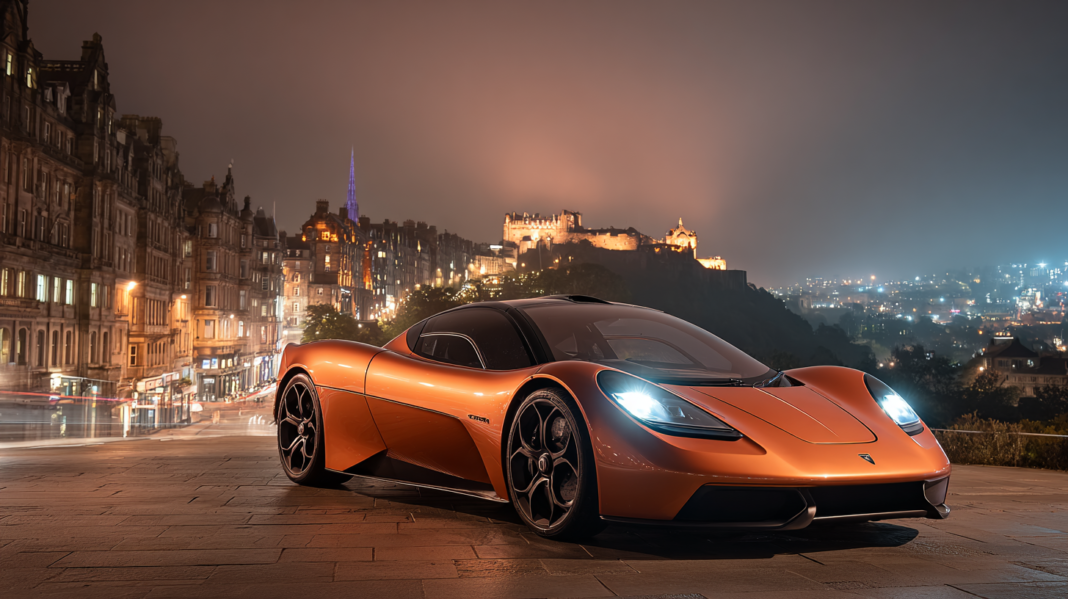
The McLaren F1 is widely regarded as one of the greatest driver’s cars ever built. Produced from 1992 to 1998, it was a car that prioritized engineering purity over commercial considerations. Its central driving position, its naturally aspirated V12 engine, its lightweight construction, and its focus on driver engagement set a benchmark that has rarely been matched. Only 106 units were built, and today they trade for tens of millions of dollars.
The F1 was the vision of Gordon Murray, a South African born engineer who had previously designed multiple Formula 1 championship winning cars. After leaving McLaren, Murray founded his own company, Gordon Murray Automotive, with the goal of creating cars that honored the F1’s philosophy. The T.50 is the first production car from this new venture, and it is explicitly positioned as the spiritual successor to the F1.
This article provides a comprehensive review of the Gordon Murray T.50, examining its performance specifications, engineering philosophy, design, and what makes it a worthy successor to one of the most revered cars in history.
The Gordon Murray Philosophy
Gordon Murray’s approach to car design is defined by several core principles. First, lightweight construction is paramount. Every component is scrutinized for its contribution to mass, and any element that does not serve a clear purpose is eliminated. Second, driver engagement takes precedence over convenience or luxury. The car should communicate with the driver, respond to inputs with precision, and reward skill. Third, naturally aspirated engines are preferred over forced induction for their throttle response and character. Fourth, aerodynamics should be active and efficient, generating downforce without the drag penalty of fixed wings.
The T.50 embodies all of these principles. It is constructed around a carbon fiber monocoque, with a dry weight of just 986 kilograms. It is powered by a 4.0 liter naturally aspirated V12 engine that revs to 12,100 rpm and produces 654 horsepower. It features an active aerodynamic fan system that manages airflow under the car, generating downforce without a fixed rear wing. And it places the driver at the center, with two passenger seats flanking the driver in a 3 seat configuration.
Powertrain: The Heart of the T.50
The V12 Engine
The T.50 is powered by a 4.0 liter naturally aspirated V12 engine, developed in partnership with Cosworth. Designated the GMA V12, this engine is one of the most remarkable production engines ever built. It produces 654 horsepower at 11,500 rpm and 344 lb ft of torque at 9,000 rpm. The redline is 12,100 rpm, making it the highest revving production engine ever fitted to a road car.
The engine is incredibly compact and light. It weighs just 178 kilograms, a figure that is remarkable for a V12. The engine’s compact dimensions allow it to be mounted low in the chassis, contributing to the car’s low center of gravity. The engine’s sound is described by Murray as “a symphony of mechanical music,” with a high pitched wail that builds to a crescendo as the revs approach the redline.
The engine features a flat plane crankshaft, titanium connecting rods, and a gear driven valvetrain. The intake system is designed to minimize restriction, with a ram air intake that draws air from a scoop behind the driver’s head.
Transmission
Power is transmitted to the rear wheels through a six speed manual transmission developed by Xtrac. The transmission is mounted at the rear of the car in a transaxle configuration, contributing to the car’s near perfect weight distribution. The gearbox features a traditional H pattern gate, with a short throw shifter that provides direct mechanical engagement.
The clutch is a lightweight unit designed for quick engagement and precise modulation. The transmission does not feature any electronic assists; there is no rev matching, no hill hold, and no automatic shifting. The driver is responsible for all aspects of gear selection and clutch operation.
Performance
Acceleration and Speed
The T.50 accelerates from 0 to 60 miles per hour in 2.9 seconds. The 0 to 100 miles per hour sprint takes approximately 6.0 seconds. The quarter mile is completed in approximately 10.8 seconds.
Top speed is rated at 217 miles per hour. The car’s aerodynamic fan system allows it to achieve this speed without the drag penalty of a fixed rear wing.
Weight and Balance
The T.50 has a dry weight of 986 kilograms, making it one of the lightest production cars on the market. The weight distribution is 48 percent front, 52 percent rear, a figure that contributes to the car’s balanced handling. The low center of gravity, achieved through the compact engine and the carbon fiber construction, minimizes body roll and enhances agility.
Chassis and Aerodynamics
Carbon Fiber Monocoque
The T.50 is built around a carbon fiber monocoque, providing exceptional rigidity and occupant protection while minimizing weight. The monocoque is manufactured using aerospace grade materials and processes, with careful attention to fiber orientation and layup sequence.
The body panels are also carbon fiber, and the entire structure weighs just 300 kilograms.
Suspension
The T.50 features double wishbone suspension at all four corners, with components manufactured from lightweight aluminum. The suspension is not adaptive; it uses fixed rate dampers that are tuned for the car’s performance focus. The geometry is optimized for the mid engine layout, with a focus on cornering grip and stability.
Active Aerodynamics
The T.50’s most distinctive feature is its active aerodynamic fan system, derived from the Brabham BT46B Formula 1 car that Murray designed in the 1970s. The system uses a 400 mm fan mounted at the rear of the car, driven by a 48 volt electric motor. The fan draws air from under the car, accelerating it through the diffuser and generating downforce without the drag penalty of a fixed wing.
The fan can operate in several modes. In High Downforce mode, the fan generates maximum downforce for cornering. In Streamline mode, the fan reduces drag for high speed runs. In Brake mode, the fan increases drag to assist braking. The fan also serves a cooling function, drawing hot air out of the engine bay.
The system generates up to 400 kilograms of downforce at speed, a figure that is remarkable for a car with no fixed rear wing.
Design
Exterior Styling
The T.50’s exterior design is functional and purposeful. The car’s proportions are defined by the mid engine layout, with a long wheelbase, short overhangs, and a cabin positioned forward of the rear axle. The body is clean and unadorned, with none of the aggressive aerodynamic elements that characterize other hypercars.
The front end features a small grille and slim headlights. The side profile shows the large air intakes that feed the engine and the fan system. The rear end is dominated by the fan housing, with a diffuser that accelerates airflow beneath the car.
The design is not dramatic; it is purposeful. Every line and surface serves a function.
Interior Design
The interior of the T.50 is focused on the driver. The driver sits in the center, with two passenger seats flanking the driver and positioned slightly behind. This 3 seat configuration, derived from the McLaren F1, provides the driver with an unobstructed view forward and a sense of being at the center of the car’s dynamics.
The seats are carbon fiber racing buckets with minimal padding, upholstered in leather. The seats are fixed in position, with the pedal box adjustable to accommodate drivers of different sizes.
The dashboard features a digital instrument cluster that can be configured to display performance data. The steering wheel is a flat bottom unit with no buttons or controls; all ancillary functions are managed through a small display on the dashboard. The gear lever is machined from aluminum, with a leather boot and a traditional H pattern gate.
The interior is stripped back compared to modern supercars. There is no infotainment screen, no premium audio system, and no sound deadening. The focus is entirely on driving.
Driving Experience
On Road Character
The T.50 is a car that demands to be driven. The V12 engine produces a high pitched wail that fills the cabin, and the manual transmission requires the driver to be engaged in every shift. The steering is precise and communicative, providing feedback about every detail of the road surface.
Yet the car is surprisingly usable. The suspension, while firm, is not punishing. The seats are comfortable for extended periods, and the cabin, while loud, is not overwhelming. The car can be driven to the track, perform at its limit, and drive home without issue.
On Track Behavior
When driven on a track, the T.50 reveals the depth of its engineering. The brakes provide consistent stopping power lap after lap, with a pedal feel that inspires confidence. The chassis remains composed through corners, with the active fan providing downforce that mechanical systems alone could not achieve.
The car’s weight is its greatest asset. At 986 kilograms, the T.50 responds to inputs with an immediacy that heavier cars cannot match. The car is balanced and predictable, with a slight tendency toward oversteer at the limit that rewards skilled drivers.
The Sound
The V12 engine’s sound is one of the T.50’s defining characteristics. The engine produces a high pitched wail as the revs climb toward the 12,100 rpm redline. The sound is sharp, urgent, and deeply satisfying, with a quality that distinguishes it from every other production engine.
Rarity and Exclusivity
Production Numbers
Gordon Murray Automotive is building 100 units of the T.50, a number that was chosen to ensure exclusivity while allowing the company to maintain a hands on approach to production. Each car is hand assembled by a team of craftsmen, and each car is built to the specifications of its owner.
Pricing
The T.50 carries a base price of approximately $3.5 million. This pricing places it in the upper tier of the hypercar market, above the Ferrari SF90 Stradale and Lamborghini Revuelto, but below the most extreme limited edition models.
Collector Value
The T.50’s limited production numbers, its connection to the McLaren F1, and its focus on analog driving have made it an immediate collector’s item. All 100 units were sold before production began, and values on the secondary market have already appreciated.
How the T.50 Stacks Up Against Rivals
Against the McLaren F1
The McLaren F1 is the T.50’s spiritual predecessor, and the comparison is inevitable.
The F1’s advantage is its legacy. As the original, it carries a historical significance that the T.50 cannot match.
The T.50’s advantage is its engineering. With 30 years of technological advancement, the T.50 is lighter, more powerful, and more aerodynamically advanced than the F1. The active fan system, the higher revving engine, and the carbon fiber construction all represent improvements over the original.
Against the Pagani Utopia
The Pagani Utopia is a V12 hypercar with a 6.0 liter twin turbocharged engine producing 864 horsepower.
The Utopia’s advantage is its power and its artistry. Pagani’s cars are rolling sculptures, with a level of craftsmanship that is unmatched.
The T.50’s advantage is its weight and its analog character. The Gordon Murray is significantly lighter than the Pagani, and its naturally aspirated engine provides a different kind of experience.
Against the Ferrari SF90 Stradale
The Ferrari SF90 Stradale is a hybrid hypercar with a V8 and three electric motors producing 986 horsepower.
The SF90’s advantage is its power and its technology. The Ferrari’s hybrid system provides instant torque and electric only capability.
The T.50’s advantage is its weight and its engagement. The Gordon Murray is lighter and more engaging to drive, with a manual transmission and a naturally aspirated engine that the Ferrari cannot match.
Against the Aston Martin Valkyrie
The Aston Martin Valkyrie is a hypercar developed with Red Bull Racing, with a 6.5 liter V12 producing 1,160 horsepower.
The Valkyrie’s advantage is its power and its aerodynamics. The Aston Martin is one of the most extreme road cars ever built.
The T.50’s advantage is its usability and its analog character. The Gordon Murray is more usable on public roads, with a more compliant suspension and a more engaging manual transmission.
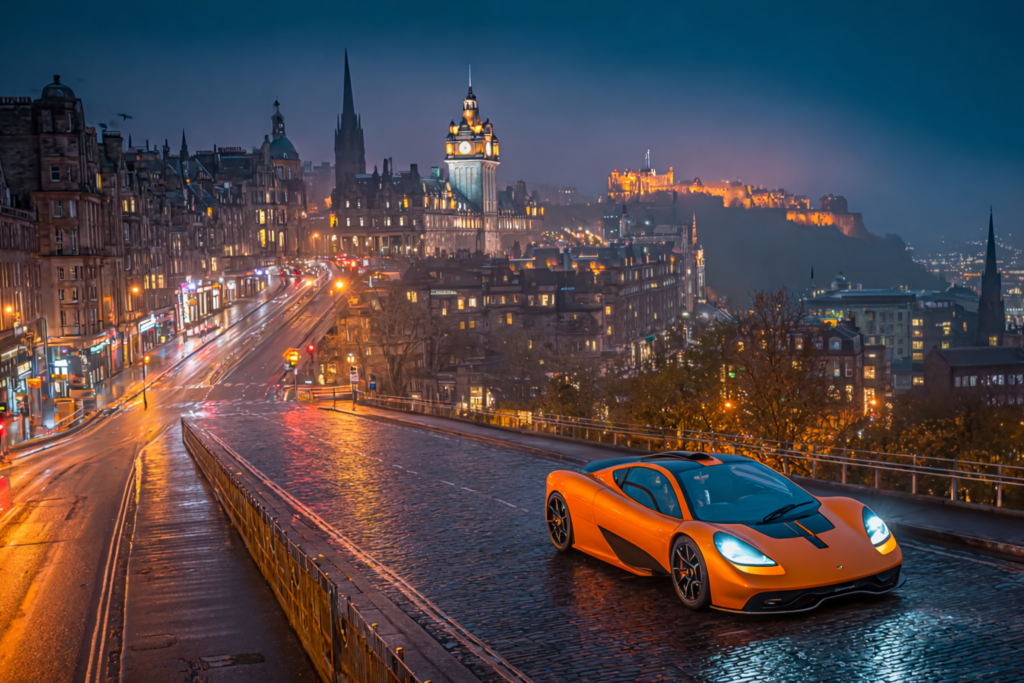
Specifications Summary
| Specification | Value |
|---|---|
| Engine | 4.0L naturally aspirated V12 |
| Horsepower | 654 hp at 11,500 rpm |
| Torque | 344 lb ft at 9,000 rpm |
| Redline | 12,100 rpm |
| Transmission | 6 speed manual |
| Drive | Rear wheel drive |
| 0-60 mph | 2.9 seconds |
| Top Speed | 217 mph |
| Weight | 986 kg dry |
| Downforce | 400 kg |
| Production | 100 units |
| Base Price | $3.5 million |
Conclusion
The Gordon Murray T.50 is a car that honors the legacy of the McLaren F1 while pushing the boundaries of what is possible. Its 4.0 liter naturally aspirated V12 revs to 12,100 rpm, producing 654 horsepower and a sound that is among the best in the industry. Its active aerodynamic fan system generates downforce without the drag penalty of a fixed wing. Its carbon fiber construction keeps weight to just 986 kilograms. And its 3 seat configuration, central driving position, and six speed manual transmission place the driver at the center of the experience.
The T.50 is not a car for everyone. Its production is limited to 100 units, its price is $3.5 million, and its focus on analog driving means it lacks the conveniences that modern drivers expect. But for the 100 owners who acquired a T.50, the car offers something that no other vehicle can provide: the experience of driving a car designed by one of history’s greatest automotive engineers, a car that prioritizes driver engagement above all else.
The T.50 is a fitting successor to the McLaren F1, and it stands as one of the most remarkable driver’s cars ever built. It is a testament to Gordon Murray’s engineering philosophy, and it is a reminder that the analog driving experience still has a place in an increasingly digital world.

