
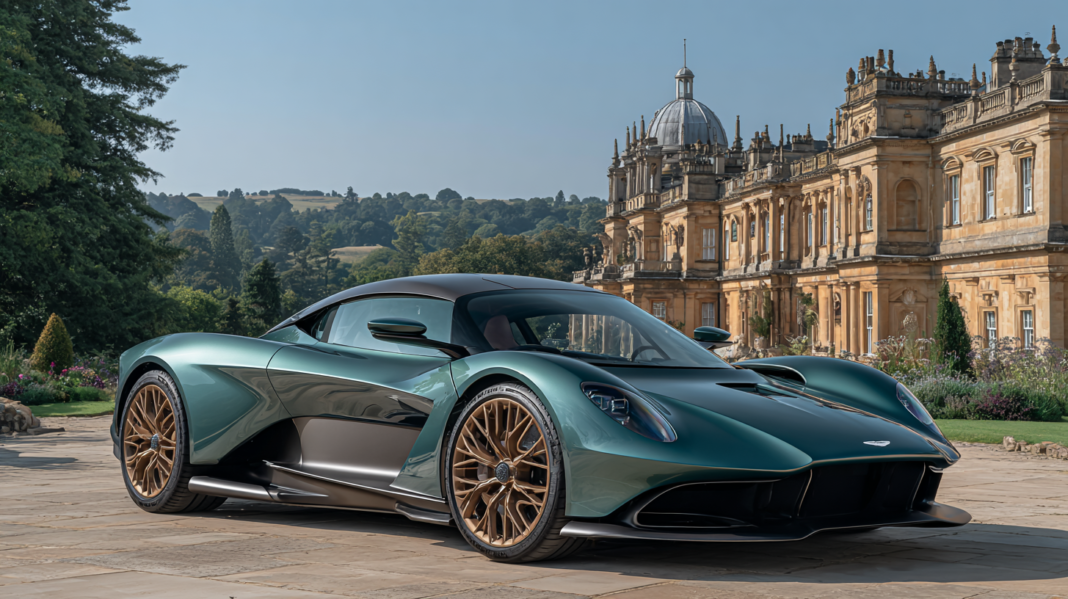
The Aston Martin Valhalla represents a significant moment in the British brand’s history. For decades, Aston Martin has been associated with grand tourers: elegant, powerful, and luxurious cars designed for long distance comfort. The Valhalla is something different. It is a mid engine hybrid hypercar, a machine that prioritizes performance and technology over traditional Aston Martin values of luxury and refinement.
The Valhalla was developed in partnership with the Aston Martin Formula 1 team, and its engineering reflects this connection. It combines a 4.0 liter twin turbocharged V8 with a hybrid system to produce over 1,000 horsepower. It is a car that is designed to compete with the Ferrari 296 GTB, McLaren Artura, and Lamborghini Temerario, and it represents Aston Martin’s ambition to compete at the highest level of the supercar market.
This article provides a comprehensive review of the Aston Martin Valhalla, examining its performance specifications, hybrid engineering, design philosophy, and what makes it a bridge between Formula 1 and the road.
The Valhalla Name: A Legacy of Performance
The Valhalla name continues Aston Martin’s tradition of using mythological themes for its models. It follows the Valkyrie, the brand’s hypercar developed in partnership with Red Bull Racing, and it precedes other planned models like the Vanquish. The Valhalla is intended to be more accessible than the Valkyrie, which was limited to 150 units and priced in the millions. The Valhalla is positioned as a volume model, with production numbers expected to be higher and a price that, while still substantial, is intended to be competitive with its peers.
The car was developed with significant input from the Aston Martin Formula 1 team, and its engineering reflects this collaboration. The Valhalla’s chassis, aerodynamics, and hybrid system all benefit from the lessons learned in F1, making it one of the most technologically advanced road cars Aston Martin has ever built.
Powertrain: A Hybrid Powerhouse
The V8 Engine
The Valhalla is powered by a 4.0 liter twin turbocharged V8 engine, sourced from Mercedes AMG. This engine, designated the M178, has been extensively modified for the Valhalla’s mid engine application. The engine produces 750 horsepower on its own, with a redline of 7,200 rpm.
The engine is mounted behind the passenger compartment in a mid engine configuration, with the transmission and hybrid components integrated into the drivetrain. The engine’s placement contributes to the car’s near perfect weight distribution, with the mass concentrated between the axles.
The Hybrid System
The Valhalla features a hybrid system that combines the V8 with two electric motors. One motor is integrated into the transmission, providing additional power during acceleration and filling the gaps during gear changes. The second motor is mounted at the front axle, providing all wheel drive and independent torque vectoring.
The electric motors draw power from a lithium ion battery pack, mounted low in the chassis to lower the center of gravity. The battery is designed for power delivery rather than range, with a focus on providing the electric assistance needed for performance. The electric range is approximately 10 miles, sufficient for low speed urban driving.
Total Output
The combined output of the V8 engine and the two electric motors is 1,079 horsepower and approximately 800 lb ft of torque. The power is distributed to all four wheels through an eight speed dual clutch transmission.
Transmission and Drive
The transmission is mounted at the rear of the car in a transaxle configuration, contributing to the car’s weight distribution. The transmission is an eight speed dual clutch unit, with shift times measured in milliseconds in the most aggressive driving modes.
The all wheel drive system can vary torque distribution between the front and rear axles, with a rear bias in sport modes that allows for controlled oversteer. The front axle motor provides independent torque vectoring, allowing the car to pull itself into corners and manage power delivery on exit.
Performance
Acceleration and Speed
The Valhalla accelerates from 0 to 60 miles per hour in 2.5 seconds. The 0 to 100 miles per hour sprint takes approximately 5.5 seconds. The quarter mile is completed in approximately 10.0 seconds.
Top speed is rated at 217 miles per hour, a figure that reflects the car’s aerodynamic development and the capability of its powertrain.
Weight and Balance
The Valhalla has a dry weight of approximately 1,550 kilograms. The weight distribution is optimized for handling, with the engine mounted low in the chassis and the battery positioned to maintain a low center of gravity. The weight is distributed with approximately 45 percent front, 55 percent rear.
Chassis and Aerodynamics
Carbon Fiber Monocoque
The Valhalla is built around a carbon fiber monocoque, providing exceptional rigidity and occupant protection while minimizing weight. The monocoque is manufactured using techniques derived from the Valkyrie program and from Formula 1, with careful attention to fiber orientation and layup sequence.
The suspension is mounted directly to the monocoque, with pushrod actuated dampers at both the front and rear. This configuration allows for precise control over wheel motion and reduces unsprung weight.
Active Aerodynamics
The Valhalla features an active aerodynamic system that adjusts the car’s downforce based on speed and driving mode. The front splitter has adjustable elements that change the amount of downforce generated. The rear wing is a two element design that can be adjusted for different tracks and conditions.
The system is designed to generate downforce without excessive drag. At top speed, the car generates approximately 600 kilograms of downforce, a figure that places it among the most aerodynamically advanced production cars in its class.
Underbody Aero
The car’s underbody is flat from the front splitter to the rear diffuser, a design that improves airflow and reduces drag. The diffuser is large and complex, with multiple channels that accelerate airflow beneath the car and generate downforce at the rear axle.
Suspension
The Valhalla features double wishbone suspension at all four corners, with pushrod actuated dampers. The suspension is adjustable, with settings for compression and rebound that can be tuned to suit different tracks and conditions.
Design
Exterior Styling
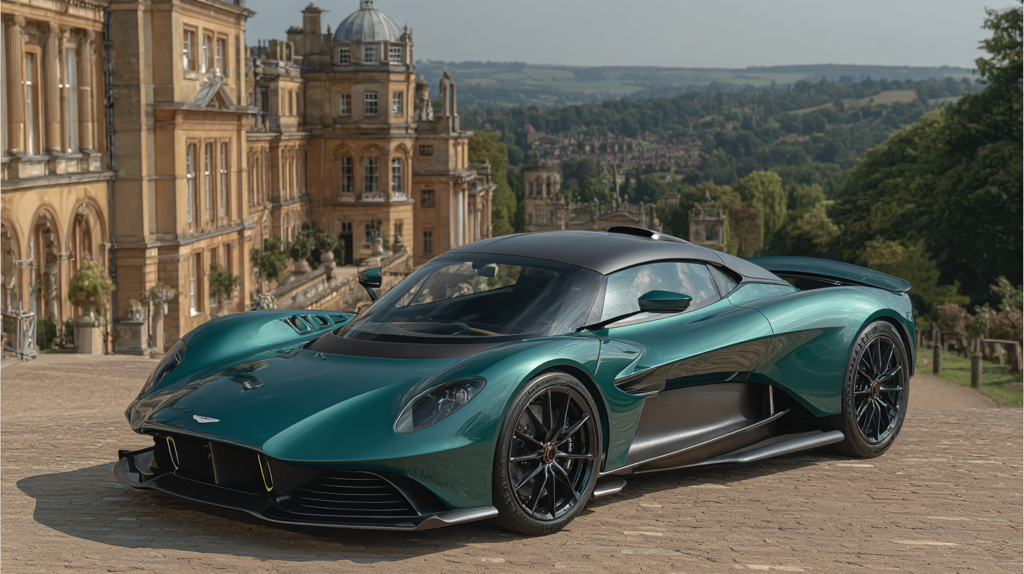
The Valhalla’s exterior design is aggressive and functional. The front end features a prominent grille and large air intakes that feed cooling air to the engine and brakes. The headlights are slim and integrated into the bodywork, with a design that echoes the Valkyrie.
The side profile shows the mid engine proportions, with a long wheelbase, short overhangs, and a cabin positioned forward of the rear axle. The doors open upward in a scissor configuration, providing access to the cabin and adding to the car’s dramatic presence.
The rear end is dominated by the large active rear wing, which sits above the carbon fiber diffuser. The quad exhaust outlets are positioned high, a design element that references the Valkyrie.
Interior Design
The interior of the Valhalla is focused on the driver. The seats are carbon fiber racing buckets with Alcantara upholstery, providing lateral support during cornering. The dashboard features a digital instrument cluster that can be configured to display performance data, and a central touchscreen handles infotainment functions.
The steering wheel is flat bottom, with integrated controls for the car’s systems. The paddle shifters are mounted on the steering column, ensuring they remain in the same position regardless of steering angle.
The interior is stripped back compared to traditional Aston Martin models, with a focus on function over luxury. The materials are of high quality, with leather and Alcantara throughout, but the emphasis is on performance.
Driving Experience
On Road Character
The Valhalla is a car that is designed for performance, but it is not as extreme as the Valkyrie. The suspension is firm but not punishing, and the cabin is insulated enough for conversation. The car can be driven in electric only mode for short distances, allowing for quiet operation in urban environments.
When the V8 engages, the character transforms. The engine produces a deep, muscular roar that builds as the revs climb. The acceleration is immediate and relentless, pushing occupants into their seats with force that is both thrilling and accessible.
On Track Behavior
When driven on a track, the Valhalla reveals the depth of its engineering. The brakes provide consistent stopping power lap after lap, with a pedal feel that inspires confidence. The chassis remains composed through corners, with the active aerodynamics providing grip that mechanical systems alone could not achieve.
The car’s all wheel drive system provides exceptional traction, and the front axle motors can rotate the car on corner entry. The Valhalla is a car that rewards skilled drivers, with a level of precision and feedback that is among the best in its class.
The Sound
The V8 engine’s sound is a significant part of the Valhalla’s appeal. The engine has a deep, muscular tone at low speeds, with a sharper, more aggressive note as the revs climb. The sound is not as high pitched as a Ferrari V8 or as mechanical as a Lamborghini V10, but it is unmistakably Aston Martin.
The F1 Connection
Technology Transfer
The Valhalla’s development was closely tied to the Aston Martin Formula 1 team. The car’s hybrid system, its aerodynamic philosophy, and its lightweight construction all benefit from the lessons learned in F1. The pushrod suspension, the active aero system, and the carbon fiber monocoque are all technologies that have been proven in racing.
The Partnership
The Valhalla was developed in collaboration with the Aston Martin Cognizant Formula 1 Team, with engineers from both organizations working together on the project. The result is a car that is as close to a Formula 1 car as any road vehicle that is not a hypercar has come.
How the Valhalla Stacks Up Against Rivals
Against the Ferrari 296 GTB
The Ferrari 296 GTB is a mid engine hybrid supercar with a 3.0 liter V6 producing 819 horsepower.
The 296 GTB’s advantage is its hybrid sophistication and its brand prestige. The Ferrari’s plug in hybrid system provides electric only capability, and the Prancing Horse badge carries a cachet that the Aston Martin cannot match.
The Valhalla’s advantage is its power and its Formula 1 connection. With 1,079 horsepower, the Aston Martin produces 260 more horsepower than the Ferrari. The car’s F1 derived engineering also gives it a level of technological sophistication that the Ferrari cannot match.
Against the McLaren Artura
The McLaren Artura is a mid engine hybrid supercar with a 3.0 liter V6 producing 671 horsepower.
The Artura’s advantage is its weight and its handling. The McLaren is lighter than the Valhalla, and its chassis tuning is exceptional.
The Valhalla’s advantage is its power and its aerodynamics. With 1,079 horsepower, the Aston Martin produces 408 more horsepower than the McLaren. The Valhalla’s active aero system also provides downforce that the Artura cannot match.
Against the Lamborghini Temerario
The Lamborghini Temerario is a mid engine hybrid supercar with a 4.0 liter V8 producing 920 horsepower.
The Temerario’s advantage is its engine character and its styling. The Lamborghini’s V8 produces a distinctive sound, and its sharp angles create a visual presence that the Aston Martin cannot match.
The Valhalla’s advantage is its power and its Formula 1 connection. With 1,079 horsepower, the Aston Martin produces 159 more horsepower than the Lamborghini. The Valhalla’s F1 derived engineering also gives it a level of technological sophistication that the Temerario cannot match.
Against the Porsche 911 Turbo S
The Porsche 911 Turbo S is a rear engine, all wheel drive sports car with 640 horsepower.
The 911 Turbo S’s advantage is its daily usability and its reliability. The Porsche is more refined, more comfortable, and more practical than the Valhalla.
The Valhalla’s advantage is its performance and its exclusivity. With 1,079 horsepower, the Aston Martin produces 439 more horsepower than the Porsche. The Valhalla’s mid engine layout and F1 derived engineering also provide a level of performance and sophistication that the 911 cannot match.
Value Proposition
Pricing
The Aston Martin Valhalla carries a base price of approximately $1.0 million to $1.2 million, depending on market and specification. This pricing places it in the upper tier of the supercar segment, above the Ferrari 296 GTB and McLaren Artura, but below the Valkyrie and other hypercars.
Production Numbers
Aston Martin is building approximately 1,000 units of the Valhalla, a figure that is higher than the Valkyrie’s 150 units but still limited enough to ensure exclusivity. Production is scheduled to begin in 2025, with deliveries continuing through 2026.
Depreciation
Aston Martin vehicles have traditionally depreciated more than Ferraris and Porsches, but the Valhalla’s limited production numbers and its status as a technologically advanced hybrid may help it hold its value better than other Aston Martin models.
Specifications Summary
| Specification | Value |
|---|---|
| Engine | 4.0L twin turbocharged V8 |
| Electric Motors | 2 (1 transmission, 1 front axle) |
| Combined Power | 1,079 hp |
| Combined Torque | 800 lb ft |
| Transmission | 8 speed dual clutch |
| Drive | All wheel drive |
| 0-60 mph | 2.5 seconds |
| Top Speed | 217 mph |
| Downforce | 600 kg |
| Weight | 1,550 kg dry |
| Production | 1,000 units |
| Base Price | $1.0 to $1.2 million |
Conclusion
The Aston Martin Valhalla represents a significant achievement for the British brand. It is a mid engine hybrid hypercar that combines a 1,079 horsepower powertrain with advanced aerodynamics and a carbon fiber chassis. It is a car that was developed in partnership with the Aston Martin Formula 1 team, and its engineering reflects this connection.
The Valhalla is not a traditional Aston Martin. It is not a grand tourer, not a luxury car, and not a car that prioritizes comfort over performance. It is a machine that is designed to compete with the best from Ferrari, McLaren, and Lamborghini, and it succeeds in that mission.
Against its rivals, the Valhalla holds its own. It offers more power than the Ferrari 296 GTB, more sophistication than the McLaren Artura, more exclusivity than the Lamborghini Temerario, and more performance than the Porsche 911 Turbo S. It is a car that can be driven on the road and on the track, and it represents the future of Aston Martin performance.
For buyers seeking a hybrid hypercar that combines Formula 1 technology with Aston Martin design, the Valhalla makes a compelling case. It is a bridge between the track and the road, and it stands as one of the most technologically advanced and capable supercars in its class.

