
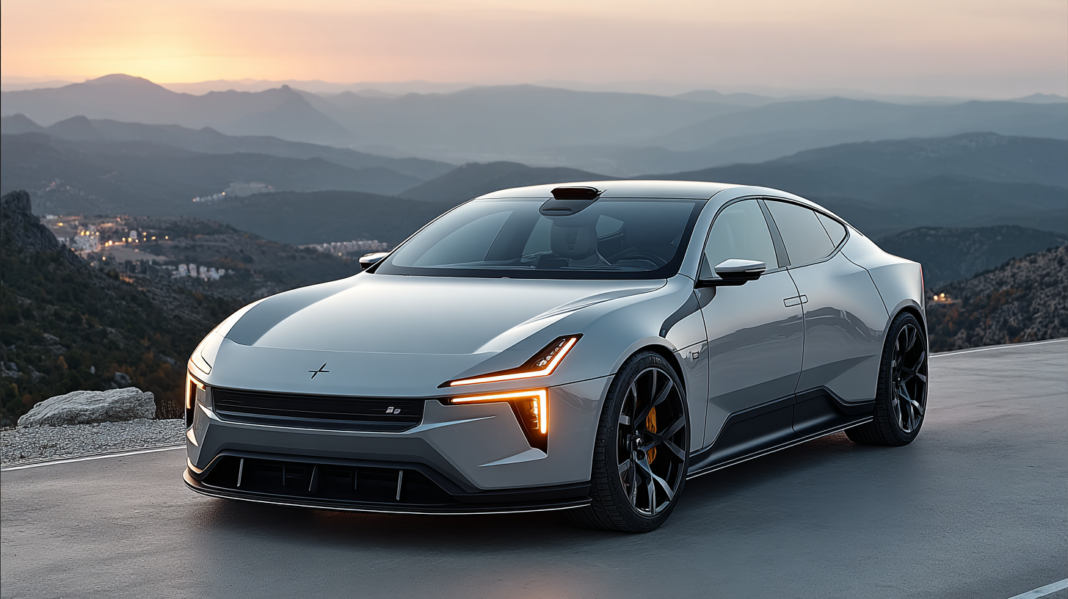
The transformation of Polestar from a discreet performance tuning partner for Volvo into a standalone electric performance brand has been one of the more deliberate and strategic evolutions in the modern automotive industry. Launched initially as a division responsible for high output Volvos with subtle styling cues, Polestar has since established itself as a manufacturer of dedicated electric vehicles that combine Scandinavian design sensibility with genuine performance credentials.
The Polestar 6 represents the brand’s most ambitious statement yet. First shown as the Polestar O2 concept in March 2022 at the Los Angeles Auto Show, the roadster generated sufficient enthusiasm that Polestar made the rare decision to fast track it to production. Now, as we approach its planned 2026 launch, the Polestar 6 stands poised to enter a segment with few competitors: the electric four seat roadster.
With 884 horsepower, a bonded aluminum platform shared with the forthcoming Polestar 5, and a design that evolved from the acclaimed Precept concept, the Polestar 6 aims to demonstrate that electrification and open top driving pleasure can coexist harmoniously. This article provides a detailed examination of the Polestar 6, its performance specifications, design philosophy, and what makes this electric roadster stand out in 2026.
From Concept to Production: The Polestar 6 Story
The Polestar O2 Concept
The Polestar 6 began life as the Polestar O2 concept, unveiled in Los Angeles in early 2022. The concept was designed to showcase Polestar’s vision for an electric sports car, one that would combine the brand’s design language with genuine driving engagement. The response from customers and media was sufficiently strong that Polestar’s leadership decided to put the car into production, a decision announced in August 2022.
This rapid progression from concept to production has become something of a pattern for Polestar. The Polestar 5, a four door grand tourer, followed a similar path from the Precept concept to confirmed production. This approach allows Polestar to gauge customer interest before committing the significant resources required to bring a new model to market.
Production Timeline
The Polestar 6 is scheduled to enter production in 2026, with first customer deliveries expected later that year. The car will be built alongside other Polestar models, utilizing the brand’s manufacturing capabilities and supply chain relationships.
The LA Concept Edition
To celebrate the production announcement and honor the concept’s debut, Polestar created the LA Concept Edition, a limited run of 500 vehicles distinguished by unique Sky Blue exterior paint, light colored interior leather, and 21 inch wheels. Despite a price tag approaching $200,000, all 500 examples sold out within one week of the announcement, demonstrating the strength of demand for an electric roadster from Polestar.
Following this initial sellout, Polestar’s leadership confirmed that production would not be limited to these 500 units. CEO Thomas Ingenlath stated that the brand “would not stop at 500 if people want it,” indicating that the Polestar 6 will remain in production as long as sufficient demand exists.
Platform and Architecture
Bonded Aluminum Platform
The Polestar 6 utilizes a new bonded aluminum platform developed by Polestar’s engineering team in the United Kingdom. This platform represents a significant investment in lightweight construction technology, employing techniques previously reserved for low volume sports cars with exotic price tags.
Bonded aluminum construction offers several advantages over traditional steel fabrication. It provides exceptional rigidity relative to its weight, which is critical for both handling precision and crash safety. For an open top car like the Polestar 6, chassis rigidity is particularly important because the absence of a fixed roof removes a primary structural element. The bonded aluminum platform is designed to deliver the stiffness required for responsive handling without the weight penalties of traditional construction methods.
The platform is shared with the Polestar 5, a four door grand tourer scheduled for earlier release. This sharing of core architecture across multiple models allows Polestar to amortize development costs while maintaining the engineering integrity of each vehicle.
800 Volt Architecture
The Polestar 6 features an 800 volt electrical architecture, placing it among the most advanced electric vehicles in terms of charging capability. Higher voltage systems reduce current for a given power level, which in turn reduces heat generation and allows for thinner, lighter cabling.
The 800 volt system enables DC fast charging at rates that significantly reduce time spent at charging stations. Combined with the battery capacity necessary for its performance targets, this architecture makes the Polestar 6 suitable for longer journeys as well as local driving.
Weight Distribution and Center of Gravity
The placement of the battery pack low in the chassis provides a center of gravity that enhances handling. The bonded aluminum platform allows engineers to position the heaviest components optimally, contributing to balanced weight distribution between front and rear axles.
Powertrain and Performance
Dual Motor Configuration
The Polestar 6 is powered by dual electric motors, one mounted at each axle, providing full time all wheel drive. This configuration delivers not only all weather traction but also sophisticated torque vectoring capabilities that enhance cornering performance.
Power Output
Total system output is rated at 884 horsepower and 900 Nm of torque. This figure places the Polestar 6 among the most powerful production roadsters ever built, electric or otherwise. The instant torque delivery characteristic of electric motors ensures that this power is available immediately upon demand.
Acceleration
The Polestar 6 accelerates from 0 to 100 kilometers per hour in 3.2 seconds. This performance rivals dedicated supercars and exceeds what most drivers will ever be able to exploit on public roads. The combination of all wheel drive traction and instant electric torque enables launch control systems that deliver consistent, repeatable acceleration.
Top Speed
Top speed is electronically limited to 250 kilometers per hour. This figure reflects a focus on acceleration and handling rather than outright top end, a sensible prioritization for a roadster intended primarily for engaging driving on real world roads.
Range
The Polestar 6 offers an estimated range of approximately 480 kilometers on the WLTP testing cycle. This range figure makes it practical for longer journeys as well as local driving, though real world range will vary based on driving style, conditions, and use of performance modes.
Design Philosophy
Evolution from Precept
The Polestar 6 carries forward the design language established by the Precept concept, which itself set the direction for the brand’s future models. This language emphasizes clean surfaces, purposeful proportions, and a distinctive lighting signature that makes Polestar vehicles instantly recognizable.
Maximilian Missoni, Head of Design at Polestar, has described the design philosophy as finding a meeting point between technology and art, between precision and sculpture. The result is a car with a determined but not aggressive posture, one that communicates its performance capabilities without shouting.
Exterior Proportions
The Polestar 6 measures approximately 4,606 mm in length with a wheelbase of 2,735 mm. These dimensions create classic sports car proportions: low and wide, with minimal overhangs and a long wheelbase that provides both visual drama and practical space for the 2+2 seating configuration.
The low body height and wide track give the Polestar 6 a planted stance, while the compact cabin design emphasizes the car’s sporting intent. The folding hard top allows the car to transform from closed coupe to open roadster, providing flexibility for different driving conditions and preferences.
Lighting Signature
Polestar’s distinctive lighting treatment carries forward on the 6. The headlights feature a split design that echoes the brand’s logo, with separate elements for low and high beam functions. The taillights are equally distinctive, designed as a continuous bar that stretches across the rear of the vehicle. These lights also serve an aerodynamic function, acting as air blades that reduce turbulence behind the car.
Aerodynamic Development
Aerodynamics play a significant role in the Polestar 6 design, with every surface optimized for efficiency and stability. Concealed ducts integrated into the bodywork improve laminar airflow over the wheels and along the flanks, reducing drag and increasing range. The carefully shaped underbody manages airflow to reduce lift and improve high speed stability.
The folding hard top mechanism is designed to maintain aerodynamic efficiency whether open or closed, ensuring that range and handling are not compromised when the roof is stowed.
Aerodynamic Blades
The rear lights are not merely decorative but serve as functional aerodynamic elements. They are shaped to act as air blades, managing airflow as it leaves the vehicle and reducing turbulence that would otherwise increase drag. This integration of design and function is characteristic of Polestar’s approach.
Interior Design
2+2 Seating Configuration
The Polestar 6 features a 2+2 seating layout, providing space for two adults in the front and two smaller passengers or children in the rear. This configuration is traditional for grand touring roadsters and adds versatility that pure two seaters cannot match.
As with most cars in this class, the rear seats are best suited for occasional use or for additional luggage space when folded. Their presence does, however, provide flexibility for short trips with four occupants.
Sustainable Materials
Polestar has made sustainability a core brand value, and the 6 interior reflects this commitment. The car utilizes recycled polyester fibers for interior soft components, including foam, adhesives, and fabrics. This mono material approach simplifies recycling at the end of the vehicle’s life while maintaining the premium feel expected in this price class.
The seats feature surfaces that combine advanced materials with traditional craftsmanship, creating an environment that is both modern and inviting. The color palette draws inspiration from Scandinavian design, with light, airy tones that complement the exterior finishes.
Interior Technology
The dashboard is dominated by a large central touchscreen that controls infotainment and vehicle functions. A smaller digital instrument cluster provides essential driving information directly in the driver’s line of sight. The interface runs on Android Automotive OS, providing seamless integration with Google services and access to apps optimized for in car use.
Physical controls remain for critical functions, allowing operation without taking attention from the road. The steering wheel integrates controls for driver assistance systems and infotainment.
Craftsmanship
The attention to detail throughout the cabin reflects Polestar’s Scandinavian heritage. Materials are carefully selected and assembled with precision, creating an environment that feels both luxurious and purposeful. The hidden Polestar logos integrated throughout the interior, a detail borrowed from luxury goods, reward close inspection.
Driving Experience
Open Air Motoring
The Polestar 6 is designed to deliver the visceral experience of open air driving combined with the instant response of electric power. The folding hard top allows the car to transform from a secure, quiet coupe to an open roadster at the touch of a button, adapting to conditions and driver preference.
Wind management is addressed through careful aerodynamic development, with the goal of creating a comfortable environment for occupants even at higher speeds with the top down. Heated seats and a heated steering wheel extend the comfortable operating season for open air driving.
Daily Usability
Despite its performance credentials, the Polestar 6 is intended to serve as a daily driver. Maximilian Missoni has described the goal as creating an everyday sports car for the electric age, one that can be used for commuting, errands, and weekend adventures alike.
The 2+2 seating provides flexibility for carrying additional passengers or luggage, while the range and charging capability make longer journeys practical. The ride and handling balance is tuned to provide comfort on rough roads while maintaining the precision expected of a sports car.
Handling Characteristics
The bonded aluminum platform and low center of gravity provide the foundation for engaging handling. Polestar’s engineers have tuned the suspension to deliver responsive turn in, controlled body motions, and predictable behavior at the limit.
The all wheel drive system provides traction that builds driver confidence while allowing the handling character to remain playful. Torque vectoring can adjust power delivery between the rear wheels to rotate the car on corner entry and provide maximum traction on exit.
Steering and Feedback
The steering system is calibrated to provide genuine feedback about what the front tires are doing, communicating available grip to the driver. This connection between driver and machine is essential to the sports car experience and has been a priority in the Polestar 6 development program.
The Sound Question
Electric vehicles present a challenge for sports car enthusiasts who value the acoustic experience of driving. The Polestar 6 does not attempt to fake the sound of a combustion engine, instead offering the characteristic whine of its electric motors under load, the rush of air over the bodywork, and the protest of tires at the limit.
This soundscape, while different from a traditional roadster, provides its own form of feedback and engagement. The absence of engine noise allows other sounds the mechanical noises of suspension and brakes, the subtle changes in motor pitch to become more apparent.
Special Editions and Variants
LA Concept Edition
The LA Concept Edition, limited to 500 units, celebrates the production announcement and honors the concept’s Los Angeles debut. These cars feature unique Sky Blue exterior paint, light colored leather interiors, and 21 inch wheels. All 500 examples sold out within one week of announcement, demonstrating the strength of demand.
BST Concept
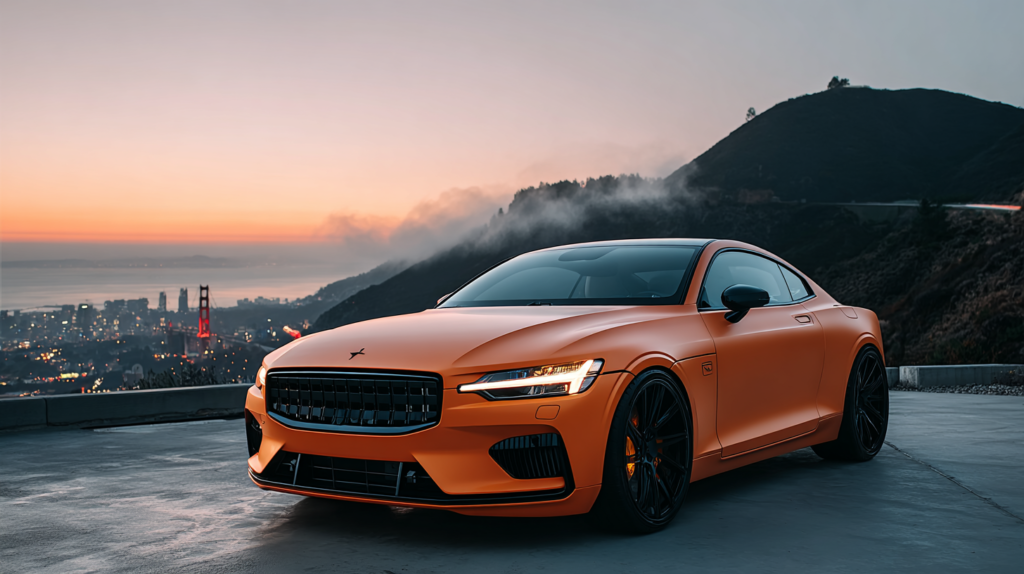
In July 2024, Polestar unveiled the Concept BST at the Goodwood Festival of Speed. BST, a contraction of Beast, represents a design study for a more extreme version of the Polestar 6. The concept features aggressive front splitters, an enormous rear wing, vents in the bonnet, flared arches, and 22 inch forged alloy wheels.
Polestar CEO Thomas Ingenlath described the Concept BST as “a demonstration of how far we can push our performance brand Polestar turned up to 11, if you will and a demonstration of how we could apply the BST formula to our line up in the future.”
While the Concept BST is not confirmed for production, it previews potential future variants that could appeal to buyers seeking even sharper performance and more aggressive styling. The BST name has previously been applied to limited production versions of the Polestar 2, suggesting that a production version of the BST could follow if demand warrants.
What Makes the Polestar 6 Stand Out in 2026
The Rare Electric Roadster
In 2026, the Polestar 6 occupies a sparsely populated segment. Electric roadsters are rare, with most manufacturers focusing on SUVs, sedans, and coupes. The combination of open top driving and electric power is one that few brands have pursued, leaving Polestar with limited direct competition.
This scarcity makes the Polestar 6 distinctive by definition. For buyers who value the experience of open air motoring and have embraced electrification, the Polestar 6 offers something that few other manufacturers provide.
The 2+2 Configuration
The 2+2 seating layout adds versatility that pure two seaters cannot match. While the rear seats are not intended for regular adult occupancy, they provide space for children, additional luggage, or the occasional short trip with friends. This flexibility makes the Polestar 6 more practical as a primary vehicle than a strict two seater.
Scandinavian Design Sensibility
The Polestar 6 embodies a distinctly Scandinavian approach to design, one that prioritizes clean lines, purposeful forms, and restraint over excess. In a segment where many competitors rely on aggressive styling to communicate performance, the Polestar 6’s relative subtlety is itself distinctive.
This design sensibility extends to the interior, where sustainable materials and thoughtful details create an environment that feels both modern and timeless. The hidden logos, the careful material combinations, the light filled cabin all reflect a design culture that values quality over quantity.
Performance Credentials
With 884 horsepower and 3.2 second acceleration to 100 kilometers per hour, the Polestar 6 delivers genuine supercar performance. These figures place it among the quickest production vehicles available, electric or otherwise, ensuring that the driving experience matches the visual promise.
The Bonded Aluminum Platform
The use of bonded aluminum construction, developed by Polestar’s UK engineering team, provides a level of chassis sophistication that is rare at any price. This technology, previously reserved for low volume exotics, delivers the rigidity and light weight essential to engaging handling.
Daily Usability
The Polestar 6 is designed to be driven, not simply collected. The range, charging capability, and interior space make it suitable for daily use, while the performance ensures that every drive can be rewarding. This combination of capability and usability distinguishes it from more focused track toys.
Production and Availability
Manufacturing Location
The Polestar 6 will be manufactured alongside other Polestar models, utilizing the brand’s global production capabilities. Specific manufacturing locations have not been announced, but Polestar’s relationship with the Volvo and Geely manufacturing network ensures access to world class facilities.
Production Timeline
First customer deliveries are scheduled for 2026, following the completion of development and validation testing. The LA Concept Edition cars will be built first, with regular production following.
Pricing
The Polestar 6 carries a starting price of approximately $200,000, positioning it in the upper tier of the sports car market. The LA Concept Edition commands a premium due to its limited availability and unique specifications.
Market Availability
The Polestar 6 will be sold in global markets, including North America, Europe, and Asia. The initial allocation of LA Concept Edition cars for China was limited to 10 units, reflecting the brand’s careful management of supply across regions.
The Future of Polestar
Product Roadmap
The Polestar 6 is one of several new models planned as part of Polestar’s aggressive expansion. The Polestar 3, a performance SUV, and Polestar 4, a coupe SUV, have already launched. The Polestar 5, a four door grand tourer, is scheduled before the 6, with the roadster representing the halo of the lineup.
This product offensive aims to establish Polestar as a global player in the premium electric segment, competing directly with established German manufacturers and newer entrants like Tesla.
Design Language Evolution
The Polestar 6 carries forward the design language established by the Precept concept, and this language will continue to evolve across future models. The distinctive lighting, the clean surfaces, the careful proportions all of these elements will become increasingly familiar as Polestar expands its lineup.
Sustainability Commitment
Polestar has positioned sustainability as a core brand value, and the 6 reflects this commitment through its use of recycled materials and efficient manufacturing processes. The mono material approach to interior components, the careful selection of suppliers, and the focus on circularity all demonstrate that performance and environmental responsibility need not be mutually exclusive.
Conclusion
The Polestar 6 represents a significant achievement for a brand that began as a modest performance tuning division. It is a dedicated electric roadster with 884 horsepower, bonded aluminum construction, and a design that honors the Scandinavian tradition of clean, purposeful form.
Yet the Polestar 6 is not defined solely by its specifications. It is defined by its character: the promise of open air driving combined with instant electric response, the versatility of 2+2 seating, the sustainability of its materials, the restraint of its design. It is a car for those who value the experience of driving as much as the numbers on a spec sheet.
In 2026, as the automotive industry continues its transition toward electrification, the Polestar 6 stands as proof that sports cars can survive this shift. It demonstrates that open air motoring, engaging handling, and driver focused design can coexist with electric power. It offers a vision of a future where driving remains rewarding, where cars continue to stir emotions, and where the experience of the open road remains accessible to those who seek it.
For the buyers who will acquire a Polestar 6, it offers something beyond performance. It offers the knowledge that they are participating in a new chapter of automotive history, one where electrification and driving pleasure need not be in conflict. And for the rest of the automotive world, it offers a glimpse of what the sports car of tomorrow can become.

