
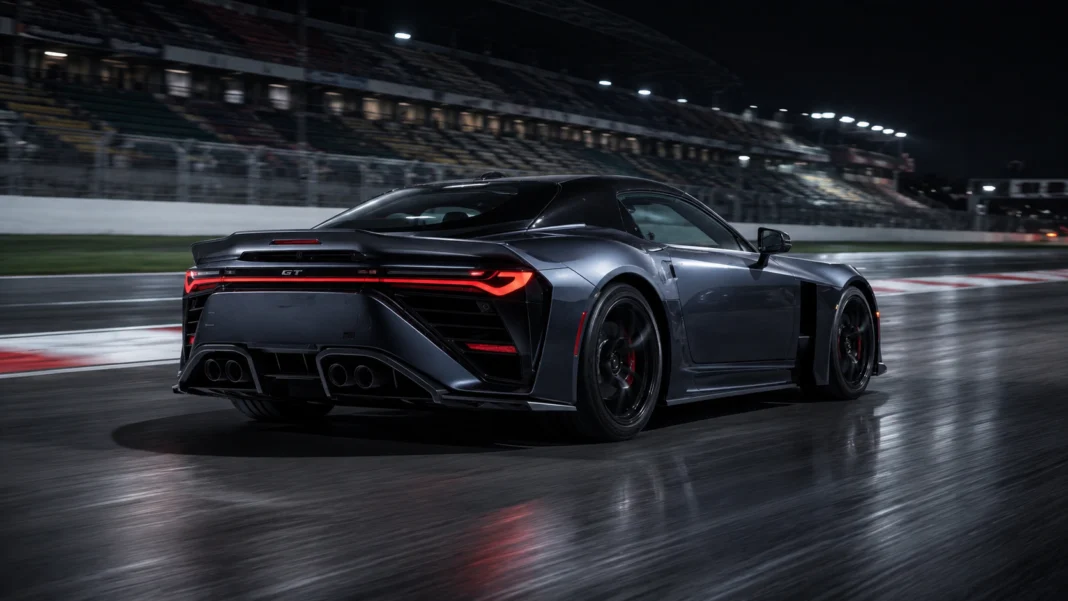
Picture the lights of Fuji Speedway glowing in the distance as a long, low car cuts through the night, the sound of a V8 echoing off the grandstands. It is the kind of scene the Toyota GR GT was built for. Japan’s new flagship sports car is the most significant performance machine to emerge from Toyota since the Lexus LFA.
The GR GT is the culmination of everything Toyota Gazoo Racing has learned from decades of motorsport participation. It combines a newly developed 4.0-liter twin-turbo V8 with a hybrid system, an all-aluminum body frame, and a driver-first philosophy that positions it as the spiritual successor to the Toyota 2000GT and Lexus LFA. It is a car that proves Japan can still build a world-class front-engine supercar.
The Powertrain: A V8 Hybrid for the Ages
The heart of the GR GT is a newly developed 4.0-liter twin-turbo V8 engine, Toyota’s first all-new V8 in years and a departure from the brand’s recent focus on turbocharged six-cylinders. The engine features a “hot-V” turbo configuration, a short stroke, and dry-sump lubrication to lower the center of gravity. It is mated to a rear-mounted eight-speed automatic transaxle with a single electric motor integrated within the transmission.

The total system output is targeted at 650 PS (641 horsepower) or greater, with maximum system torque of 850 Nm or greater. The engine is mounted low and pushed back toward the cabin, contributing to a front-rear weight distribution of 45:55. The electric motor smooths torque delivery during gearshifts, and the exhaust has been tuned to ensure a distinctive performance sound.
The Chassis: Toyota’s First All-Aluminum Body Frame
The GR GT is built on Toyota’s first all-aluminum body frame, with carbon fiber reinforced plastic (CFRP) and other materials used in the body panels to reduce weight while maintaining strength. The vehicle weight is targeted at 1,750 kg or lower.
The suspension uses a double wishbone setup at all four corners with forged aluminum arms, and the car rides on 20-inch wheels wrapped in Michelin Pilot Sport Cup 2 tires developed specifically for the GR GT. Brembo carbon ceramic brakes are fitted at both the front and rear.
The car measures 4,820 mm long, 2,000 mm wide, and just 1,195 mm tall, with a 2,725 mm wheelbase. This makes it lower than a Porsche 911 Turbo S and similar in footprint to a Lamborghini Revuelto.
Aerodynamics: Form Follows Function
The GR GT’s styling was developed under an “aerodynamics first” concept. Aerodynamics engineers and exterior designers worked as a single team to establish the ideal aerodynamic performance before finalizing the exterior styling. This is a reverse of the conventional development process, where exterior styling is typically set before aerodynamic efficiency is considered.

The result is a car that is low, wide, and purposeful. Large air intakes feed and cool the engine, while vents near the windscreen extract hot air. Flat fenders direct airflow around the wheels, and a subtle ducktail spoiler tops the rear deck. The car’s design is functional, aggressive, and unmistakably a product of Toyota’s racing DNA.
The Interior: Driver-First Design
The GR GT’s interior was designed with the driving position and visibility as the top priorities. A flat-bottomed steering wheel with large paddle shifters and switches for traction control, drive modes, and a “Sport Boost” setting puts essential controls at the driver’s fingertips.
A digital instrument cluster with a clear gear indicator and shift lights is complemented by a large central infotainment display. The cabin is bathed in red leather and Alcantara, with bucket-style carbon fiber sports seats. Physical toggle switches for the air conditioning preserve the tactile connection to the car.
The Racing Connection: GR GT3
Alongside the road-going GR GT, Toyota unveiled the GR GT3, a race car based on the GR GT that meets FIA GT3 regulations. The GR GT3 shares the same low center of gravity, lightweight construction, and aerodynamic focus as the road car, but adds race-ready components including a large spoiler, a roll cage, and unique body panels.

The GR GT3 is designed to be a car that is chosen by drivers who want to win, yet is easy to drive for anyone. It will spearhead Toyota’s GT racing efforts in the World Endurance Championship and other series.
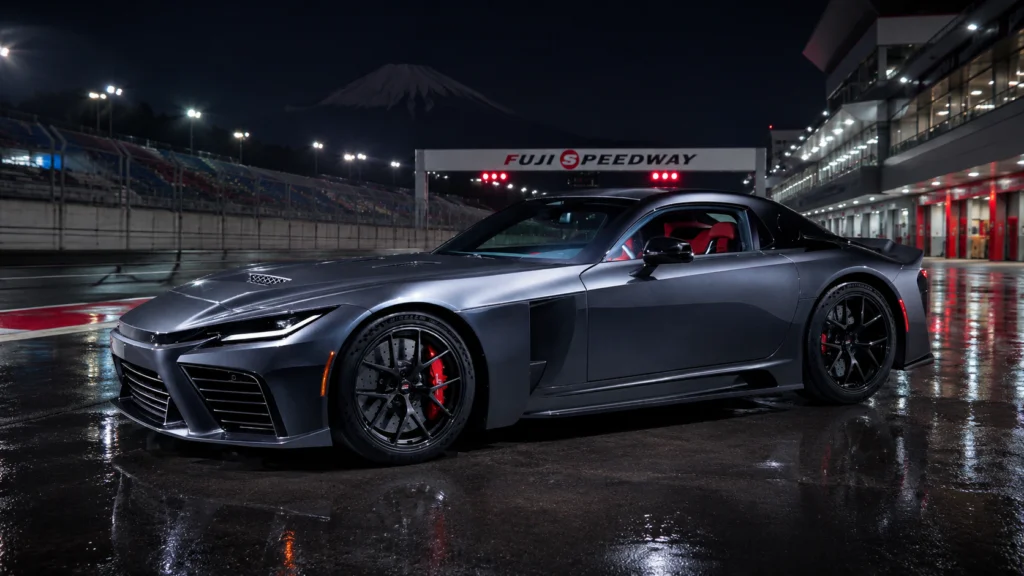
The Fuji Speedway Night
The prototype has completed its demonstration laps. Its V8 hybrid powertrain has delivered the 650 horsepower that makes it Toyota’s most powerful production car. The all-aluminum frame and double-wishbone suspension have kept it composed through the curves. The driver, cocooned in the driver-focused interior, has experienced a level of performance that was previously the domain of European supercars.
The GR GT is not a car for everyone. It is a flagship sports car that will be launched around 2027. But it represents a significant moment in Toyota’s history. It is the first Toyota with an all-aluminum frame, the first with a 4.0-liter V8 hybrid, and the most serious performance machine ever to wear a Toyota badge. It is the car that carries the legacy of the 2000GT and LFA into the next generation.
The GR GT is not just a car. It is a statement. It is a reminder that even in an era of electrification, Toyota remains committed to the pure, unfiltered joy of driving. The spirit of the 2000GT and LFA lives on. And it has never been more powerful.
Gear Picks for This Story
 PerformanceMichelin Pilot Sport 4S 245/35ZR20See What It Does →
 EV LifeTesla Wall Connector Gen 3Check Compatibility →
 Paddock StyleScuderia Ferrari Puma Polo ShirtSee the Design →
 Stay SafeRexing V1 Basic Dash CamSee the Specs →
As an Amazon Associate, VeloxTrend earns from qualifying purchases.

