
The name Alfa Romeo carries a weight in automotive history that few others can claim. From the pre war racing successes of the 8C 2300 to the post war elegance of the Giulietta, from the dramatic styling of the Montreal to the cult status of the GTV6, the brand has always prioritized emotion over calculation. Alfas are not cars purchased for their reliability ratings or resale values; they are cars purchased for how they make the driver feel.
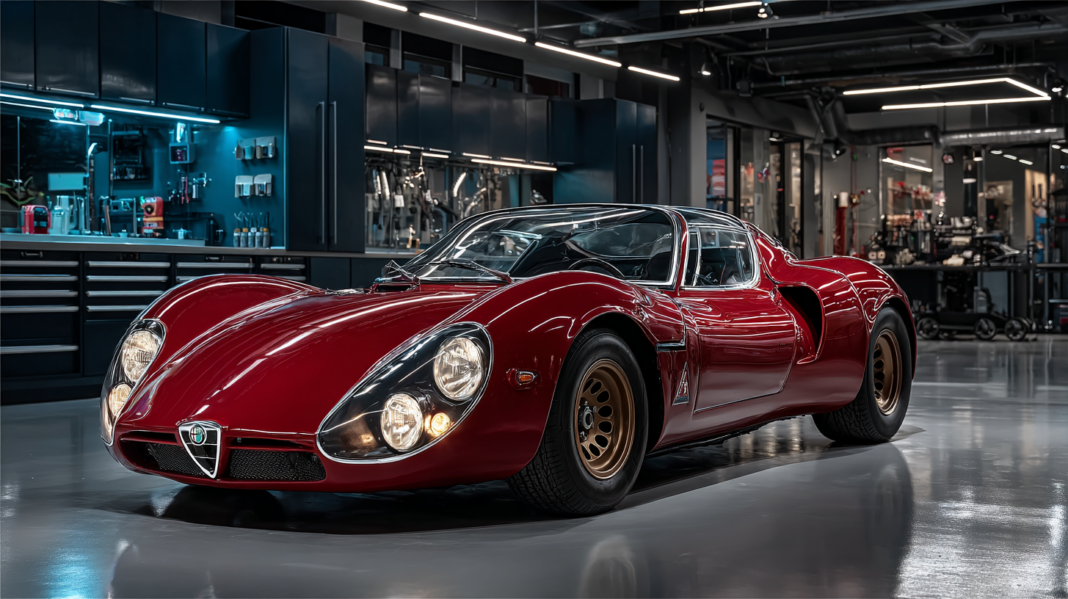
The 33 Stradale is the purest expression of this philosophy. The original 33 Stradale, built in 1967, is widely regarded as one of the most beautiful cars ever made. With its butterfly doors, central V8 engine, and stunning proportions, it was a road going version of the Tipo 33 race car, and only 18 examples were produced. Today, those 18 cars are among the most valuable and sought after collector cars in the world.
In 2023, Alfa Romeo announced that it would produce a modern interpretation of the 33 Stradale, a limited edition model that would honor the original while embracing modern technology. Production has now concluded, with all 33 units delivered to customers. This article provides a comprehensive review of the Alfa Romeo 33 Stradale, examining its performance specifications, design philosophy, interior accommodations, and how it stacks up against rivals in performance, design, and value.
The Original 33 Stradale: A Benchmark for Beauty
The original Alfa Romeo 33 Stradale debuted at the 1967 Turin Motor Show. It was based on the Tipo 33 race car, which had been developed for the World Sportscar Championship. The road car retained the race car’s 2.0 liter V8 engine, its mid engine layout, and its advanced for the time chassis. But it was the bodywork, designed by Franco Scaglione at Carrozzeria Marazzi, that captured the world’s attention.
The 33 Stradale was impossibly low, with a height of just 39 inches. Its butterfly doors opened upward, its headlights were retractable, and its surfaces were sculpted with a purity that has rarely been matched. The car was not designed to be a commercial success; it was designed to be a showcase of Alfa Romeo’s engineering and design capabilities.
Only 18 examples were built, each hand assembled. Today, those 18 cars are valued at tens of millions of dollars each, and they are considered by many to be the most beautiful cars ever made.
The modern 33 Stradale is a tribute to this car. It is not a replica; it is an interpretation, using modern technology to capture the spirit of the original.
The Modern 33 Stradale: A Tribute Reimagined
Design Philosophy
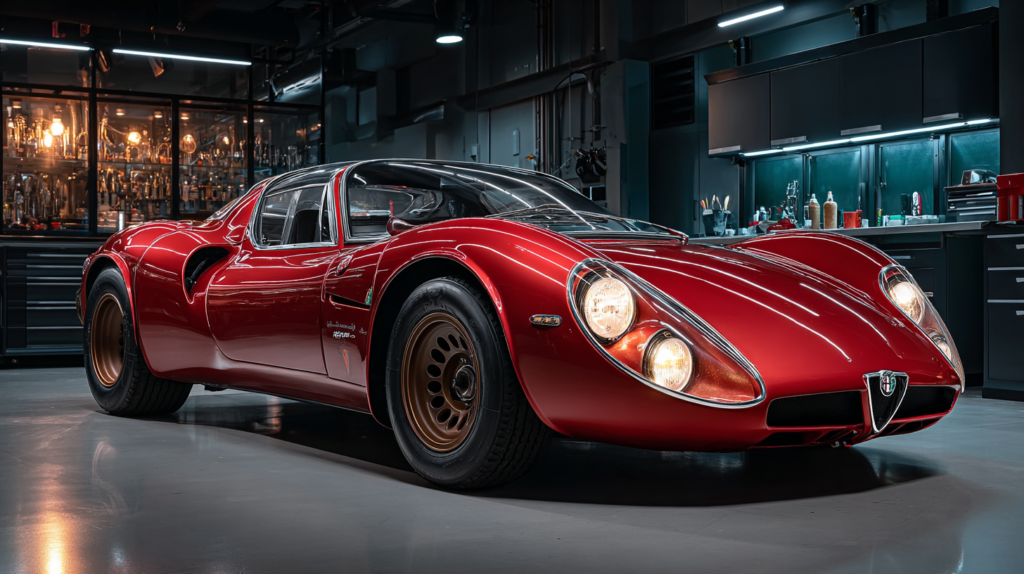
The modern 33 Stradale was designed by the Alfa Romeo Centro Stile, led by Alejandro Mesonero Romanos. The design team was given a clear brief: create a car that captures the spirit of the original 33 Stradale, while being unmistakably modern. The result is a car that shares the original’s proportions, its butterfly doors, and its purity of line, but with surfaces and details that reflect contemporary design language.
The front end features Alfa Romeo’s signature V shaped grille, reinterpreted for the mid engine layout. The headlights are thin, integrated into the bodywork, and the front bumper is minimal, emphasizing the car’s low, wide stance. The hood is sculpted, with vents that feed air to the radiators.
The side profile is defined by the butterfly doors, which open upward and forward, providing access to the cabin. The body side is clean, with a strong character line that runs from the front wheel arch to the rear air intake. The wheels are pushed to the corners, emphasizing the mid engine proportions.
The rear end is dominated by a full width taillight assembly, with a diffuser that houses the quad exhaust outlets. The rear deck is short, and the engine cover is transparent, allowing a view of the engine beneath.
Powertrain Options
The modern 33 Stradale was offered with two powertrain options, reflecting the changing automotive landscape. The internal combustion version uses a 3.0 liter twin turbocharged V6, the same engine that powers the Giulia Quadrifoglio and Stelvio Quadrifoglio, but with significant modifications. This engine produces 620 horsepower at 6,500 rpm and 530 lb ft of torque from 3,000 to 5,500 rpm.
The electric version, offered to buyers who preferred zero emissions, uses a three motor setup producing 750 horsepower, with all wheel drive and a 100 kWh battery.
The internal combustion version was the more popular choice, with approximately 70 percent of buyers selecting it. For these buyers, the V6’s character and sound were essential parts of the 33 Stradale experience.
Transmission and Drive
The internal combustion version features an eight speed dual clutch transmission, mounted behind the engine in a transaxle configuration. This layout improves weight distribution, with 50 percent of the weight over the front axle and 50 percent over the rear. The transmission provides rapid shifts, with the ability to change gears in milliseconds in the most aggressive driving modes.
Drive is to the rear wheels only, a deliberate choice that reflects the original car’s configuration. The electric version, with its three motors, provides all wheel drive and torque vectoring capabilities.
Performance
The internal combustion 33 Stradale accelerates from 0 to 100 kilometers per hour in 3.0 seconds. The 0 to 200 kilometers per hour sprint takes approximately 8.5 seconds, and top speed is rated at 333 kilometers per hour.
The electric version is quicker, with a 0 to 100 time of 2.5 seconds, reflecting the instant torque of the electric motors. However, for buyers who chose the internal combustion version, the slightly lower acceleration figures were offset by the engine’s character and sound.
Weight and Balance
The internal combustion 33 Stradale weighs approximately 1,500 kilograms dry, a figure that reflects its carbon fiber construction and the compact V6 engine. The weight distribution is 50:50, a figure that engineers pursued to achieve neutral handling.
The electric version is heavier, at approximately 1,800 kilograms, due to the battery pack. The weight is distributed with a slight rear bias, reflecting the placement of the motors and battery.
Chassis and Structure
Carbon Fiber Construction
The 33 Stradale is built around a carbon fiber monocoque, providing exceptional rigidity and occupant protection while minimizing weight. The monocoque is manufactured using aerospace grade materials and processes, with careful attention to fiber orientation and layup sequence.
The body panels are also carbon fiber, and the butterfly doors are constructed from carbon fiber, keeping weight to a minimum.
Suspension
The 33 Stradale uses double wishbone suspension at all four corners, with components manufactured from lightweight aluminum. The suspension features adaptive dampers that can adjust their characteristics based on driving mode and road conditions.
The system provides a range of behavior, from compliant for road use to firm for track driving. The suspension geometry is optimized for the mid engine layout, with a focus on cornering grip and stability.
Brakes
The braking system uses carbon ceramic discs with six piston front calipers and four piston rear calipers. The front discs are 390 mm in diameter, and the rear discs are 360 mm. The system provides exceptional stopping power, with consistent pedal feel and resistance to fade during track use.
Wheels and Tires
The 33 Stradale rides on 20 inch front wheels and 21 inch rear wheels, wrapped in specially developed Michelin Pilot Sport Cup 2 tires. The tire sizes are 245/30 ZR20 front and 305/30 ZR21 rear.
Interior and Accommodations
Cabin Design
The interior of the 33 Stradale is minimalist and driver focused. The seats are carbon fiber bucket units, upholstered in leather and Alcantara, with power adjustment and heating. The dashboard is clean and uncluttered, with a digital instrument cluster that can be configured to display performance data.
The steering wheel is flat bottom, with integrated controls for the car’s systems. The shift paddles are mounted on the steering column, ensuring they remain in the same position regardless of steering angle.
The butterfly doors provide wide access to the cabin, and the seating position is low, with the driver connected directly to the car.
Materials and Craftsmanship
The interior materials reflect the car’s limited production status. The leather is sourced from premium tanneries, and the Alcantara is applied with care. The carbon fiber trim is finished to show its weave, and the metal accents are machined from solid aluminum.
Each car was built to the specifications of its owner, with extensive personalization options available through Alfa Romeo’s Tailor Made program. Buyers could choose from a range of interior colors, materials, and trim options, ensuring that each of the 33 cars was unique.
Technology Features
The 33 Stradale is equipped with a modest suite of technology features, reflecting its focus on driving engagement. The infotainment system includes navigation, Apple CarPlay, and a premium audio system. The digital instrument cluster can display performance data, including lap times, g forces, and power output.
Driver assistance features are limited, with only the essentials such as parking sensors and a rearview camera included.
Driving Experience
On Road Character
The 33 Stradale is a car that demands to be driven. The V6 engine’s sound, with its distinctive Alfa Romeo character, fills the cabin. The engine is responsive, with power building smoothly to the redline. The dual clutch transmission provides rapid shifts, and the chassis communicates every detail of the road surface.
The car’s low seating position and the butterfly doors create a sense of occasion that few other cars can match. Driving the 33 Stradale is not transportation; it is an experience.
On Track Behavior
When driven on a track, the 33 Stradale reveals the depth of its engineering. The chassis is balanced and predictable, with a slight tendency toward oversteer at the limit that rewards skilled drivers. The brakes provide consistent stopping power lap after lap, and the suspension controls body motion effectively.
The car’s weight is low for a modern supercar, and its mid engine layout provides exceptional agility. The 33 Stradale is a car that rewards skill and invites exploration of its limits.
The Sound
The V6 engine’s sound is one of the 33 Stradale’s defining characteristics. The engine has a distinctive Alfa Romeo character, with a deep, growling tone at low speeds and a sharp, metallic wail as the revs climb. The sound is immediate and engaging, connecting the driver to the car in a way that few modern engines can match.
Rarity and Exclusivity
Production Numbers
Only 33 examples of the modern 33 Stradale were built, a deliberate nod to the original’s production number. Each car was hand assembled, with a team of craftsmen working on each unit. The cars were sold to a select group of collectors and enthusiasts, many of whom were existing Alfa Romeo customers.
Pricing
The 33 Stradale carried a base price of approximately $2.2 million, with final prices varying based on the extensive personalization options. The electric version was priced similarly to the internal combustion version.
This pricing placed the 33 Stradale in the upper tier of the hypercar market, competing with models from Bugatti, Koenigsegg, and Pagani.
Collector Appeal
The combination of the Alfa Romeo name, the connection to the original 33 Stradale, and the limited production numbers made the 33 Stradale an immediate collector’s item. All 33 units were sold before production began, and values on the secondary market have already appreciated significantly.
For buyers who acquired a 33 Stradale, the car represents not only a driving experience but also a significant investment.
How the 33 Stradale Stacks Up Against Rivals
Against the Ferrari 296 GTB
The Ferrari 296 GTB is a mid engine hybrid supercar with a 3.0 liter V6 producing 819 horsepower. It is a more powerful car than the 33 Stradale, with a 0 to 100 time of 2.9 seconds.
The Ferrari’s advantage is its power and its brand cachet. Ferrari is the dominant name in the supercar segment, and the 296 GTB is a technologically advanced machine with exceptional performance.
The 33 Stradale’s advantage is its rarity and its connection to history. Only 33 units exist, compared to thousands of 296 GTBs. The Alfa Romeo’s design is also more distinctive, with a purity of line that sets it apart.
Against the McLaren Artura
The McLaren Artura is a mid engine hybrid supercar with a 3.0 liter V6 producing 671 horsepower. It is a lighter and more agile car than the 33 Stradale, with a focus on handling precision.
The McLaren’s advantage is its engineering focus. The Artura is designed to be a driver’s car, with exceptional handling and feedback.
The 33 Stradale’s advantage is its emotional appeal. The Alfa Romeo is a car that connects with the driver on an emotional level, with a design and sound that the McLaren cannot match.
Against the Porsche 911 S/T
The Porsche 911 S/T is a limited edition, lightweight version of the 911, with a 4.0 liter naturally aspirated flat six producing 518 horsepower. It is a car designed for driving engagement, with a manual transmission and a focus on weight reduction.
The Porsche’s advantage is its usability and its engineering. The 911 S/T can be driven daily, and its engine is one of the best in the business.
The 33 Stradale’s advantage is its exclusivity and its design. The Alfa Romeo is rarer and more visually striking than the 911 S/T, and its mid engine layout provides a different driving experience.
Against the Bugatti Mistral
The Bugatti Mistral is an open top hypercar with a 8.0 liter quad turbocharged W16 producing 1,600 horsepower. It is one of the most powerful and exclusive cars ever built.
The Bugatti’s advantage is its sheer performance and its engineering. The Mistral is a car that pushes the boundaries of what is possible.
The 33 Stradale’s advantage is its design and its connection to history. The Alfa Romeo is more beautiful, by most accounts, and its connection to the original 33 Stradale gives it a depth of meaning that the Bugatti cannot match.
Value Proposition
Price vs. Performance
At $2.2 million, the 33 Stradale is not a value proposition in the traditional sense. It offers less power and slower acceleration than cars costing half as much. But for buyers in this segment, value is not measured in horsepower per dollar.
Investment Potential
The 33 Stradale’s limited production, its connection to the original car, and the Alfa Romeo brand’s emotional appeal make it a strong investment candidate. The original 33 Stradale has appreciated from approximately $50,000 in the 1980s to tens of millions today. The modern car may follow a similar trajectory.
The Emotional Value
For the 33 buyers who acquired a 33 Stradale, the car’s value lies not in its investment potential but in the experience it provides. The sound of the V6, the feel of the chassis, the sight of the butterfly doors opening these are the things that make the 33 Stradale worth its price.
Specifications Summary
| Specification | Value |
|---|---|
| Engine | 3.0L twin turbocharged V6 |
| Horsepower | 620 hp at 6,500 rpm |
| Torque | 530 lb ft from 3,000 to 5,500 rpm |
| Transmission | 8 speed dual clutch |
| Drive | Rear wheel drive |
| 0-100 km/h | 3.0 seconds |
| 0-200 km/h | 8.5 seconds |
| Top Speed | 333 km/h |
| Weight | 1,500 kg dry |
| Production | 33 units |
| Base Price | $2.2 million |
Conclusion
The Alfa Romeo 33 Stradale represents a rare achievement in the automotive world: a modern car that captures the spirit of a legendary original without being constrained by it. It honors the 1967 original through its proportions, its butterfly doors, and its focus on emotion over calculation. But it is not a replica; it is a car of its time, with a twin turbocharged V6, a carbon fiber monocoque, and performance that rivals the best in the world.
Against its rivals, the 33 Stradale holds its own. It does not have the power of a Bugatti, the brand cachet of a Ferrari, or the engineering precision of a McLaren. But it offers something that these rivals cannot match: a connection to history, a purity of design, and an emotional appeal that is difficult to quantify.
Only 33 people in the world own a modern 33 Stradale. They are collectors and enthusiasts who understand that a car is more than a collection of specifications. For these 33 owners, the 33 Stradale is not simply a car; it is a piece of automotive art, a tribute to a legend, and an experience that cannot be replicated.
In an automotive world increasingly dominated by electric vehicles, SUVs, and autonomous technology, the 33 Stradale stands as a reminder of what cars can be. It is limited edition, it is expensive, and it is emotionally charged. It is, in every sense, an Alfa Romeo.

