
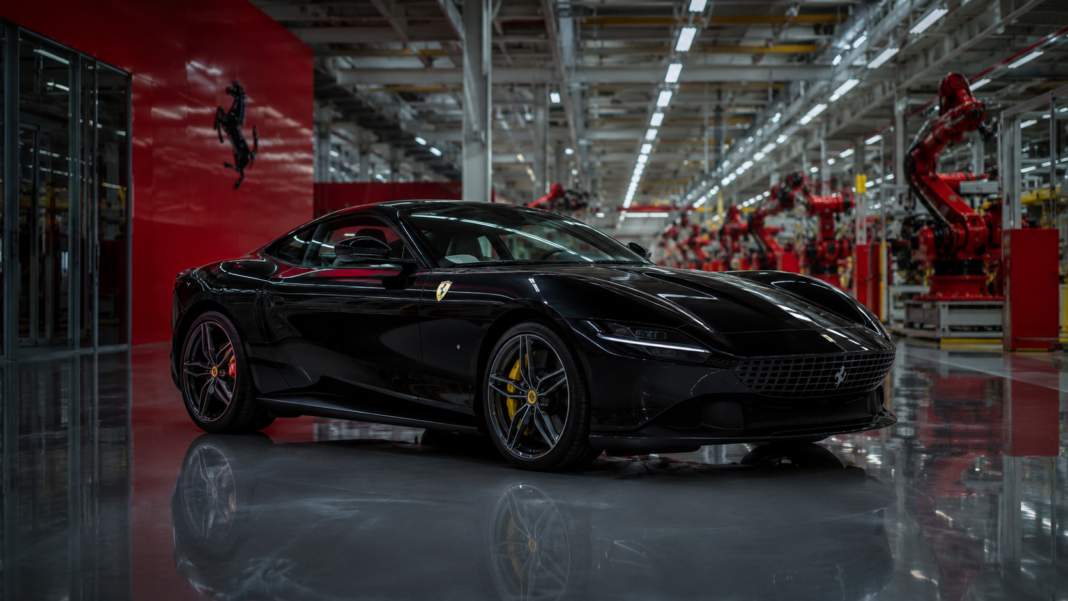
The Via Emilia Nord is quiet on a cool October morning. The road leads into Maranello, a small town in Emilia-Romagna that has become synonymous with automotive passion. The Ferrari factory sits just off the main road, a low, sprawling complex of buildings that have changed little from the outside over the decades. But inside, the process of building a car like the Roma is a blend of hand craftsmanship and advanced technology.
The Ferrari Roma is a grand tourer, a car designed for long-distance driving with style and performance. Its front mid-engine V8 produces 620 horsepower, and it can accelerate from 0 to 100 km/h in 3.4 seconds. But before any car can be driven, it must be built. This article provides a behind-the-scenes look at the manufacturing process of the Ferrari Roma, from aluminum chassis assembly to final quality inspection at Maranello.
The Foundry: Where the Engine Begins
The engine is the heart of every Ferrari. The Roma’s 3.9 liter twin-turbocharged V8 starts its life in the foundry, a facility that has been casting engine components for decades. Solid aluminum ingots are heated in large melting furnaces until they become liquid. The temperature reaches approximately 700 degrees Celsius, hot enough to keep around 2,000 kilograms of alloy in a liquid state.
The liquid alloy is then poured into sand or steel casting molds to produce engine components such as the cylinder block and cylinder heads. The process is carefully monitored by expert foundry workers. For the Roma’s V8, some components are made using recycled aluminum from the production phase, reducing waste.
After casting, the engine components are machined to precise tolerances. The valve mechanics are connected using automated equipment, the only part of the production process that is automated. The rest of the engine is built by hand.
The Assembly Line: Hand-Built Precision
Once the engine is complete, it is sent to the main assembly line, housed in the historic factory buildings. The Roma’s aluminum chassis is mounted on a rolling platform. The chassis, like all Ferrari chassis, is built using advanced techniques to ensure rigidity and light weight.
The assembly process follows a sequence. The dashboard is installed first, followed by the steering wheel, the seats, and the infotainment system. Each component is fitted by hand. The workers are specialists, trained to install specific components with precision.
The body panels are then attached. The Roma’s sleek shape, designed by the Ferrari Styling Centre, is made from aluminum. The panels are fitted and adjusted by hand to ensure perfect gaps and alignment.
The Tailor Made Program: Personalization Beyond Paint
Ferrari offers a high level of personalization through its Tailor Made program. Customers can specify unique colors, materials, and details. The program allows for extensive customization, from the color of the stitching to the material of the seat inserts.
For example, one special Roma featured an exterior finish inspired by traditional Japanese crafts. The car incorporated fabric from rewoven kimono strands for the seat inserts and door handles wrapped in hand-woven strips of leather, inspired by the art of wrapping Katana sword grips. Another Roma featured a unique exterior finish with an interior combining chrome-free leather and recycled materials.
These bespoke touches are a significant part of the Ferrari experience. They are also a source of profit, as the high-tech tooling and flexibility in the new production facilities allow for more personalization options.
The E-Building: Ferrari’s Future
Ferrari has opened a new production facility called the e-building, located just north of the existing campus. The building is designed to house assembly lines for electric, hybrid, and combustion models all in the same space. It includes stations for axle building, electric motor assembly, and battery production.
The e-building is powered in part by solar panels on the roof, producing renewable energy. The goal is for the building to be entirely powered by renewable energy. The facility is not about increasing production volume. It is about flexibility and speed. The new building will shorten the time to market for new models and allow the company to offer more personalization options. It is a statement of Ferrari’s commitment to building cars with any powertrain.
The Final Inspection: Quality Above All
Once the car is assembled, it undergoes a final quality inspection. The process is thorough. Every system is checked: the engine, the transmission, the brakes, the electrical systems, the fit and finish of the interior.
The car is then taken to the Fiorano test track, a private circuit located adjacent to the factory. The Fiorano track is used for testing both road cars and Formula 1 cars. A test driver will push the car to its limits, checking for any issues that might not be apparent in static inspection.
If the car passes the Fiorano test, it is ready for delivery. It will be shipped to a dealer, or, if the owner has opted for the factory pickup experience, it will be handed over at Maranello.
The Maranello Experience
The factory tour is part of a broader experience for Ferrari owners. The Esperienza Ferrari program includes a private presentation of the car, a road test drive through the countryside around Maranello, and a visit to the Museo Ferrari. The drive route is carefully selected to offer different driving conditions, and each guest is accompanied by a professional instructor.
The experience is designed to immerse owners in the Ferrari spirit. It is a reminder that a Ferrari is not just a car. It is a product of a specific place, a specific culture, and a specific passion.
The Verdict
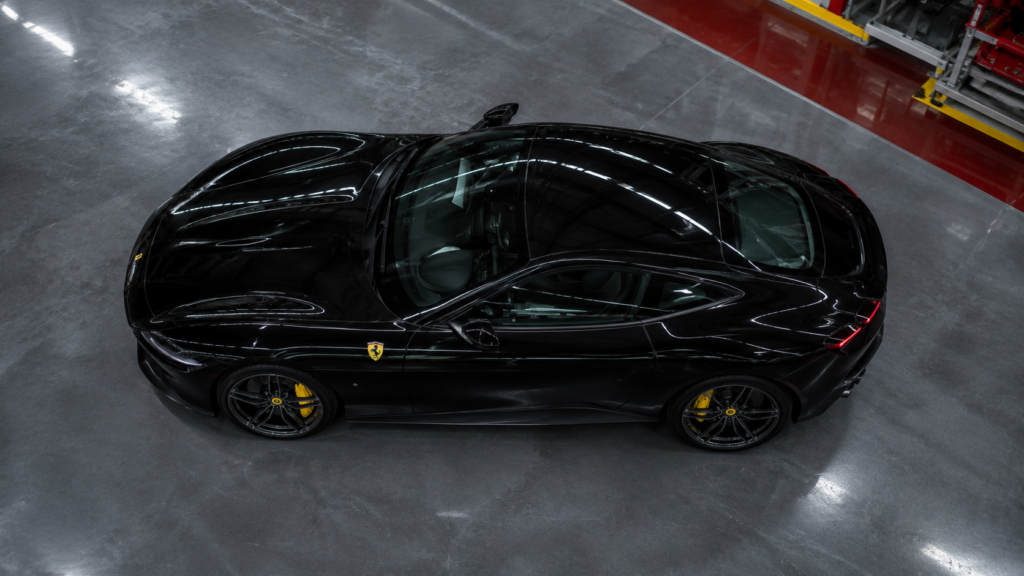
The Ferrari Roma is built by hand in Maranello, Italy. The process begins in the foundry, where engine components are cast from molten aluminum. The engine is then assembled by hand and installed into the aluminum chassis on the assembly line. The body panels are fitted by hand. The interior is crafted to the owner’s specifications through the Tailor Made program. The car is then inspected and tested at Fiorano.
The new e-building represents the future of Ferrari, with the capacity to build electric, hybrid, and combustion models under one roof. But the core of the process remains the same. Each car is built by skilled workers who take pride in their craft. Each car is unique. Each car is a Ferrari.
Key Takeaways
- The Ferrari Roma is built at the Maranello factory in Italy.
- The engine starts in the foundry, where aluminum is melted and cast into components.
- The engine is built by hand, with only the valve mechanics automated.
- The assembly line process is a sequence of hand-fitted components.
- The Tailor Made program offers extensive personalization options.
- The new e-building is designed for electric, hybrid, and combustion models.
- The final quality inspection includes a test drive at the Fiorano track.
Conclusion
The Ferrari Roma is not a mass-produced car. It is a hand-built machine, crafted by skilled workers in a factory that has been producing Ferraris for decades. The process is a blend of tradition and technology, from the foundry to the e-building.
The car that emerges from the factory is a product of Maranello. It carries the passion of the people who built it. And it is ready to be driven on the roads of the world, a piece of Italian craftsmanship and engineering.
The next Roma to roll off the line will be unique. It will be tailored to its owner’s taste. It will be a Ferrari. And it will be built in Maranello.

