
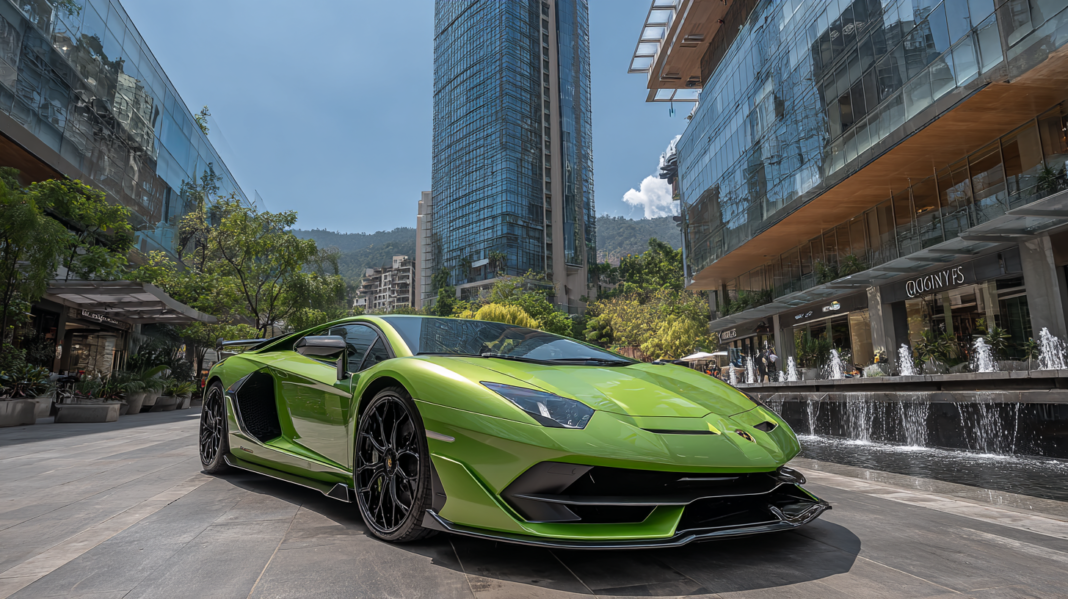
The Lamborghini Aventador SVJ represents the end of an era. It is the final naturally aspirated V12 Lamborghini without hybrid assistance, the last of a lineage that began with the Miura and continued through the Countach, Diablo, Murciélago, and Aventador. The SVJ, which stands for Super Veloce Jota, was the most extreme and focused version of the Aventador, designed to set lap records and dominate tracks.
Introduced in 2018 as a limited edition variant of the Aventador S, the SVJ features a 6.5 liter naturally aspirated V12 engine producing 759 horsepower, advanced aerodynamics with active elements, and a chassis tuned for the Nürburgring. It set a production car lap record at the Nürburgring Nordschleife with a time of 6 minutes 44.97 seconds, a record that stood for several years.
This article provides a comprehensive examination of the Lamborghini Aventador SVJ, including its development, V12 engine, aerodynamics, performance, design, and why it remains the last wild V12 Lamborghini.
The Aventador Legacy
The Lamborghini Aventador was introduced in 2011 as the successor to the Murciélago. It featured a 6.5 liter naturally aspirated V12 engine producing 690 horsepower, a seven-speed automated manual transmission, and a carbon fiber monocoque. The Aventador was a dramatic, uncompromising supercar that honored Lamborghini’s heritage.
Over its production run, the Aventador evolved. The Aventador S (2016) added more power, revised suspension, and rear-axle steering. The Aventador SV (2015) was a lighter, more focused variant with 740 horsepower. The SVJ was the most extreme of all.
The SVJ Name
SVJ stands for Super Veloce Jota. Super Veloce means “super fast” in Italian, a designation that has been used on earlier Lamborghinis, including the Miura SV and the Diablo SV. Jota refers to the Appendix J of the FIA regulations that governed racing cars, a reference that Lamborghini has used on track-focused models.
The SVJ name signals that this is the most extreme and focused Aventador, a car designed for track performance.
The V12 Engine: The Heart of the SVJ
Engine Specifications
The Aventador SVJ is powered by a 6.5 liter naturally aspirated V12 engine, designated the L539. This engine is a development of the unit that powered the Aventador S, with modifications that increase power to 759 horsepower at 8,500 rpm and 531 lb-ft of torque at 6,750 rpm. The redline is 8,500 rpm.
The engine features a 60-degree V angle, four valves per cylinder, and a dry-sump lubrication system. The intake system uses individual throttle bodies, contributing to the engine’s immediate throttle response. The exhaust system is tuned to produce a distinctive sound, with a high-pitched wail at high rpm.
The Sound
The V12 engine’s sound is one of the SVJ’s defining characteristics. The engine produces a high-pitched wail as the revs climb toward the 8,500 rpm redline. The sound is sharp, urgent, and deeply satisfying, with a quality that distinguishes it from every other production engine.
The SVJ’s exhaust system is more aggressive than the standard Aventador’s, with a louder and more pronounced note.
Performance
The Aventador SVJ accelerates from 0 to 60 miles per hour in 2.8 seconds. The 0 to 124 miles per hour sprint takes approximately 8.6 seconds. The quarter mile is completed in approximately 10.5 seconds at 135 miles per hour. Top speed is 217 miles per hour (350 kilometers per hour).
The Nürburgring Record
The Aventador SVJ set a lap time of 6 minutes 44.97 seconds at the Nürburgring Nordschleife. This made it the fastest production car around the circuit at the time, beating the previous record held by the Porsche 911 GT2 RS (6 minutes 47.3 seconds).
The record was a significant achievement for Lamborghini. The Nürburgring is the most demanding track in the world, and a fast lap time requires a balance of power, grip, aerodynamics, and chassis tuning. The SVJ’s record demonstrated that Lamborghini could compete with the best from Porsche and other manufacturers.
Aerodynamics: The ALA System
Active Aerodynamics
The Aventador SVJ features Lamborghini’s Aerodinamica Lamborghini Attiva (ALA) system, an active aerodynamic system that adjusts the car’s downforce based on speed and driving conditions. The system uses movable flaps in the front splitter and rear wing to direct airflow.
In high downforce mode, the flaps close, directing airflow over the wing and splitter to generate maximum downforce. In low drag mode, the flaps open, allowing airflow to pass through the wing and splitter, reducing drag and improving top speed.
Downforce Figures
The ALA system allows the SVJ to generate significant downforce without the drag penalty of a fixed wing. At high speeds, the car generates approximately 400 kilograms of downforce, keeping it planted through corners.
The Rear Wing
The SVJ’s rear wing is a distinctive feature. It is larger than the standard Aventador’s wing, and it incorporates the ALA flaps. The wing is made of carbon fiber, keeping weight to a minimum.
Chassis and Dynamics
Carbon Fiber Monocoque
The Aventador SVJ is built around a carbon fiber monocoque, providing exceptional rigidity and occupant protection while minimizing weight. The monocoque is manufactured using aerospace-grade materials and processes.
The body panels are also carbon fiber. The dry weight is approximately 1,525 kilograms (3,362 pounds).
Suspension
The SVJ features double-wishbone suspension at all four corners, with pushrod-actuated dampers. This configuration, derived from Formula 1, allows for precise control over wheel motion and reduces unsprung weight.
The SVJ’s suspension is revised compared to the Aventador S, with stiffer springs, revised damper calibration, and a lower ride height.
Rear-Axle Steering
The SVJ features rear-axle steering, a system that turns the rear wheels in the opposite direction to the front wheels at low speeds and in the same direction at high speeds. The system improves maneuverability at low speeds and stability at high speeds.
Brakes
The braking system uses carbon ceramic discs with six-piston calipers at the front and four-piston calipers at the rear. The system provides exceptional stopping power, with consistent pedal feel and resistance to fade during track use.
Wheels and Tires
The SVJ rides on 20-inch front wheels and 21-inch rear wheels, wrapped in specially developed Pirelli P Zero Corsa tires. The front tires are 255/30 ZR20, and the rear tires are 355/25 ZR21. The rear tires are among the widest ever fitted to a production car, providing exceptional grip.
Design
Exterior Styling
The Aventador SVJ’s exterior design is more aggressive than the standard Aventador’s. The front end features a larger splitter, larger air intakes, and distinctive ALA flaps. The hood has a central vent that extracts hot air from the engine bay.
The side profile shows the carbon fiber side skirts and the large air intakes that feed cooling air to the engine. The rear end is characterized by the large rear wing, the prominent diffuser, and the quad exhaust outlets.
The SVJ is available in a range of colors, including the exclusive SVJ-specific colors.
Interior Design
The interior of the Aventador SVJ is focused on the driver. The seats are carbon fiber racing buckets with Alcantara upholstery, providing lateral support during cornering. The seats are fixed in position, with manual adjustment.
The dashboard features a digital instrument cluster with a central tachometer and auxiliary gauges. The central infotainment screen is small, reflecting the car’s focus on driving.
The interior is stripped back compared to the standard Aventador. The sound deadening is reduced, and the audio system is optional.
Driving Experience
On Road Character
The Aventador SVJ is a car that demands respect. The steering is heavy, the ride is firm, and the engine is loud. The car is not comfortable in the way a grand tourer is, but it is not punishing.
The engine produces abundant power from mid-rpm, but the real excitement comes above 6,000 rpm. The car pulls strongly to the 8,500 rpm redline, and the sound is intoxicating.
On Track Behavior
When driven on a track, the SVJ reveals the depth of its engineering. The brakes provide consistent stopping power, and the chassis remains composed through corners. The ALA system provides downforce that keeps the car planted at high speeds.
The car’s all-wheel-drive system provides traction that allows early power application on exit. The SVJ is a car that rewards smooth inputs and punishes abrupt actions.
The Sound
The V12 engine’s sound is the SVJ’s defining characteristic. The engine produces a high-pitched wail as the revs climb toward the 8,500 rpm redline. The sound is sharp, urgent, and deeply satisfying.
The SVJ 63
Lamborghini also produced the Aventador SVJ 63, a limited edition variant that honored the company’s founding year, 1963. The SVJ 63 featured unique exterior and interior details, including a carbon fiber hood and a numbered plaque. Only 63 units were built.
Rarity and Exclusivity
Production Numbers
Lamborghini built approximately 900 units of the Aventador SVJ, including the SVJ 63. All units were sold before production began.
Pricing
The Aventador SVJ carried a base price of approximately $520,000. The SVJ 63 was priced higher.
Collector Status
The SVJ is one of the most sought-after Aventadors. Its status as the final naturally aspirated V12 Lamborghini without hybrid assistance, its Nürburgring record, and its limited production numbers have made it a prized collector car.
How the SVJ Stacks Up Against Rivals
Against the Porsche 911 GT2 RS
The Porsche 911 GT2 RS is a rear-engine, rear-wheel-drive sports car with a 3.8 liter twin-turbocharged flat-six producing 700 horsepower.
The GT2 RS’s advantage is its handling and its track focus. The Porsche’s chassis tuning and aerodynamics are exceptional.
The SVJ’s advantage is its V12 engine and its drama. The Lamborghini’s engine produces a sound and a character that the Porsche’s flat-six cannot match.
Against the Ferrari 812 Superfast
The Ferrari 812 Superfast is a front-engine V12 grand tourer with 789 horsepower.
The 812’s advantage is its power and its refinement. The Ferrari produces 30 more horsepower than the SVJ, and its interior is more luxurious.
The SVJ’s advantage is its all-wheel-drive traction and its track focus. The Lamborghini’s AWD system provides grip that the rear-drive Ferrari cannot match.
Against the McLaren 720S
The McLaren 720S is a mid-engine supercar with a 4.0 liter twin-turbocharged V8 producing 710 horsepower.
The 720S’s advantage is its weight and its handling. The McLaren is lighter than the SVJ, and its chassis tuning is exceptional.
The SVJ’s advantage is its V12 engine and its all-wheel-drive traction. The Lamborghini’s engine provides a character that the McLaren’s V8 cannot match.
Against the Aventador SVJ and the Ultimae
The Aventador Ultimae was the final Aventador variant, with 769 horsepower and a more refined interior. It was the last Aventador before the Revuelto.
The Ultimae’s advantage is its power and its refinement. The Ultimae produces 10 more horsepower than the SVJ, and its interior is more luxurious.
The SVJ’s advantage is its track focus and its Nürburgring record. The SVJ is the more extreme, more focused car.
The Last Wild V12
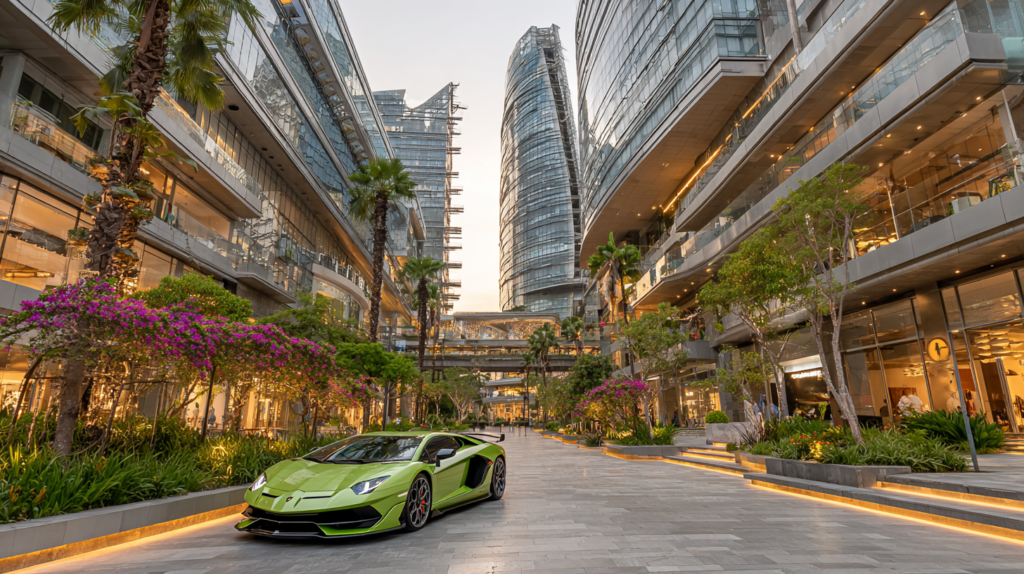
The Aventador SVJ is the last wild V12 Lamborghini. It is a car that prioritizes emotion over efficiency, drama over comfort, and performance over everything else. It is a car that embodies the Lamborghini spirit: uncompromising, aggressive, and thrilling.
The Revuelto, which succeeded the Aventador, uses a V12 hybrid powertrain. It is faster, more efficient, and more technologically advanced than the SVJ. But it is not the same. The SVJ’s naturally aspirated V12, with its 8,500 rpm redline and its high-pitched wail, is a dying breed.
For enthusiasts who value the sound and character of a naturally aspirated V12, the SVJ is a legend.
Specifications Summary
| Specification | Value |
|---|---|
| Engine | 6.5L naturally aspirated V12 |
| Horsepower | 759 hp at 8,500 rpm |
| Torque | 531 lb-ft at 6,750 rpm |
| Redline | 8,500 rpm |
| Transmission | 7-speed automated manual |
| Drive | All wheel drive |
| 0-60 mph | 2.8 seconds |
| Top Speed | 217 mph |
| Nürburgring Lap Time | 6 minutes 44.97 seconds |
| Weight | 1,525 kg dry |
| Production | Approximately 900 units |
| Base Price | $520,000 |
Conclusion
The Lamborghini Aventador SVJ is the last wild V12 Lamborghini. It is the most extreme and focused version of the Aventador, with a 6.5 liter naturally aspirated V12 producing 759 horsepower, advanced active aerodynamics, and a chassis tuned for the Nürburgring. It set a production car lap record at the Nürburgring, with a time of 6 minutes 44.97 seconds.
The SVJ is not a car for everyone. Its production was limited to approximately 900 units, its price was $520,000, and its focus on track performance means it lacks the comfort of grand tourers. But for the buyers who acquired an SVJ, the car offers something that no other vehicle can provide: the experience of driving the last wild V12 Lamborghini.
The SVJ also represents the end of an era. The Revuelto, which succeeded the Aventador, uses a V12 hybrid powertrain. It is faster, more efficient, and more technologically advanced, but it is not the same. The SVJ’s naturally aspirated V12, with its 8,500 rpm redline and its high-pitched wail, is a dying breed.
For enthusiasts who value the sound and character of a naturally aspirated V12, the Aventador SVJ is a legend. It will forever be remembered as one of the greatest Lamborghinis ever built.

