
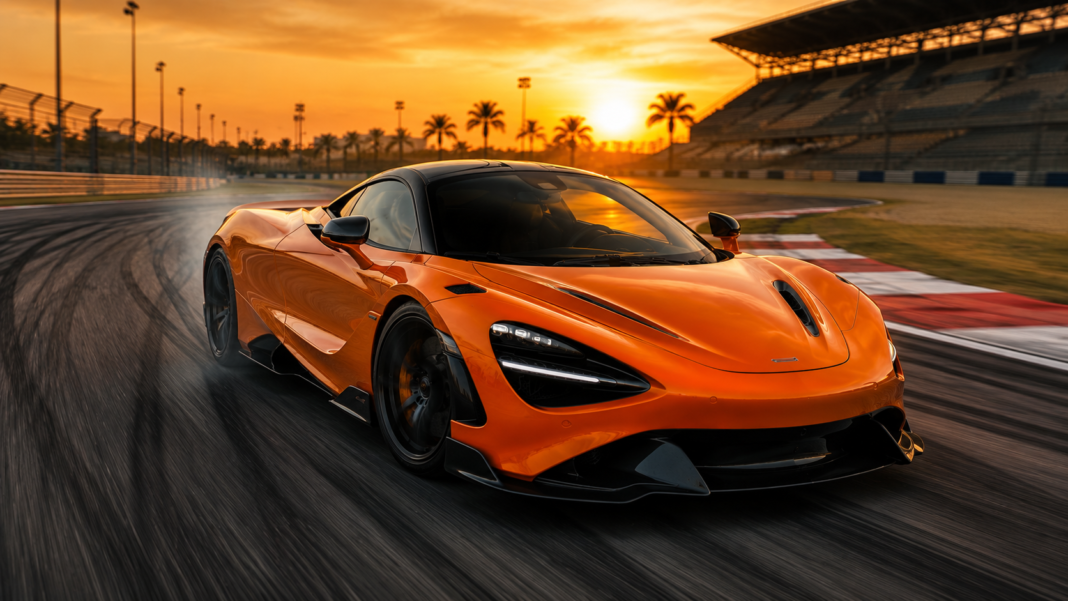
The sun is setting over the Dubai skyline, casting a golden glow across the track at Dubai Autodrome. The grandstands are empty, but the pit lane is alive with activity. A McLaren 765LT is being prepped for a hot lap. The driver straps in, fires the engine, and pulls the right paddle. The car lurches forward, then rockets down the main straight. The shifts are instantaneous, seamless, and almost violent in their speed.
The dual-clutch transmission, or DCT, has transformed supercar performance. It shifts faster than any human can, with less power loss than a traditional automatic, and without the torque interruption of a manual gearbox. This article explains how dual-clutch gearboxes work, why they have become the standard in supercars, and why traditional automatics and manuals cannot match their shift speed.
The Location: Dubai Autodrome, Dubai, United Arab Emirates
Dubai Autodrome is a 5.4 kilometer FIA Grade 1 circuit located in the heart of Dubai’s Motor City. The track features 16 turns, long straights, and elevation changes that test both car and driver. It is a venue designed for speed, and it is the perfect place to appreciate the speed of a DCT.
The Basic Problem: Shifting Gears
Every transmission has the same fundamental task. It must transfer power from the engine to the wheels while allowing the driver to select different gear ratios. The challenge is that changing gears requires interrupting the flow of power.
In a manual transmission, the driver presses the clutch pedal, disengaging the engine from the gearbox. The driver moves the shifter, engaging a new gear. The driver releases the clutch, re-engaging the engine. This process takes time. A skilled driver can shift in approximately 500 milliseconds to 1 second. The power interruption is noticeable.
In a traditional automatic transmission with a torque converter, the power interruption is smoother but the shifts are slower. The torque converter uses fluid to transmit power, which smooths the engagement but also saps efficiency.
The dual-clutch transmission solves this problem by pre-selecting the next gear and switching between two clutches.
How a Dual-Clutch Transmission Works
A dual-clutch transmission is essentially two gearboxes in one housing. There are two input shafts, one nested inside the other. One shaft controls the odd gears (1st, 3rd, 5th, 7th). The other shaft controls the even gears (2nd, 4th, 6th) and reverse.
There are two clutches, one for each input shaft. The clutches are arranged concentrically, with one clutch pack inside the other. The outer clutch pack controls the odd gears. The inner clutch pack controls the even gears.
The magic of the DCT is that while one clutch is engaged and power is flowing through one gear, the transmission is pre-selecting the next gear on the other shaft. For example, when accelerating in first gear, second gear is already engaged on the even shaft, but the even clutch is disengaged.
When it is time to shift, the system simply disengages the odd clutch and engages the even clutch. The shift takes milliseconds. The pre-selected gear is already in place. The interruption in power is minimal. The system then pre-selects the next gear on the odd shaft.
The entire process is controlled by a Transmission Control Module, which manages the hydraulic actuators that move the shift forks and engage the clutches.
The Shift Speed Advantage
The numbers tell the story. A modern dual-clutch transmission can shift in as little as 40 to 80 milliseconds. A skilled manual driver takes 500 milliseconds to 1 second. The difference is significant. Over the course of a lap, with dozens of shifts, the DCT car will have a measurable advantage.
In a comparison test of two identical cars, one with a manual and one with a DCT, the DCT car was quicker around a track. The shift speed was a significant factor.
Why Traditional Automatics Can’t Match
Traditional automatic transmissions with torque converters are smoother than DCTs in stop-and-go traffic, but they are slower to shift. The torque converter uses fluid coupling, which creates a delay in power delivery. The hydraulic systems that control gear selection are also slower than the electronic controls in a DCT.
Some modern torque converter automatics can shift in approximately 160 milliseconds. This is faster than a manual, but still slower than a DCT. The DCT also has the advantage of pre-selecting gears, which eliminates the delay in engaging the next gear.
Why Manuals Can’t Match
Manuals are limited by the speed of human movement. The driver must press the clutch pedal, move the shifter, and release the clutch. The physical movements take time. The driver must also coordinate the clutch and throttle to match engine speed.
The power interruption is also more significant in a manual. When the driver presses the clutch, the engine is completely disengaged from the wheels. The power flow stops. In a DCT, one clutch disengages while the other engages, minimizing the interruption.
Manuals also have the disadvantage of requiring the driver to move the shifter through a gate. A DCT simply switches between the two input shafts, with no mechanical resistance.
The Daily Driving Benefit
The shift speed advantage of a DCT is most apparent on a track. But there is also a daily driving benefit. A DCT is easier to drive in traffic. There is no clutch pedal. The car does not stall. The shifts are smooth and automatic.
A DCT also offers the driver a choice. The driver can leave it in automatic mode for traffic and use the paddles for spirited driving.
The Tradeoffs
DCTs are heavier than manuals. They are also more expensive to manufacture and more complex to repair. Some drivers also complain that DCTs can feel less engaging than a manual, because the driver is less involved in the process.
Some drivers also find DCTs to be less refined in stop-and-go traffic. The low speed clutch engagement can be jerky, especially in older designs.
The Dubai Evening: A Hot Lap
The McLaren 765LT is on track now. The driver is pushing hard. The shifts are immediate, seamless, and satisfying. The driver does not have to think about the gear changes. He can focus on the braking points, the turn-in, and the throttle application.
A group of enthusiasts is watching from the pit lane. They are discussing the transmission. One of them is a manual advocate. He argues that a manual is more engaging.
The McLaren driver responds after his lap. “I understand the appeal of a manual. I have owned many. But this car is faster. The shifts are faster. The lap times are faster. And on the street, it is easier to drive.”
The Verdict
The dual-clutch transmission has transformed supercar performance. It shifts faster than any manual and with less power interruption than any torque-converter automatic. It is easier to drive in traffic and offers the driver the choice of fully automatic or paddle-shift operation.
The DCT is not without tradeoffs. It is heavier and more expensive than a manual. Some drivers find it less engaging. But for the majority of supercar buyers, the benefits outweigh the drawbacks.
The McLaren 765LT leaves the pit lane. It is heading back to the track. The driver pulls the paddle. The transmission shifts. The car accelerates.
That is the sound of the DCT. It is the sound of speed.
Key Takeaways
- A dual-clutch transmission uses two clutches and two input shafts to pre-select the next gear.
- One shaft controls odd gears, the other controls even gears and reverse.
- Shifts are completed by disengaging one clutch and engaging the other.
- DCT shift times range from 40 to 100 milliseconds, compared to 500 milliseconds to 1 second for a manual.
- A DCT is also easier to drive in traffic and offers the driver a choice of automatic or manual modes.
- DCTs are heavier and more expensive than manuals, but offer superior performance.
Conclusion
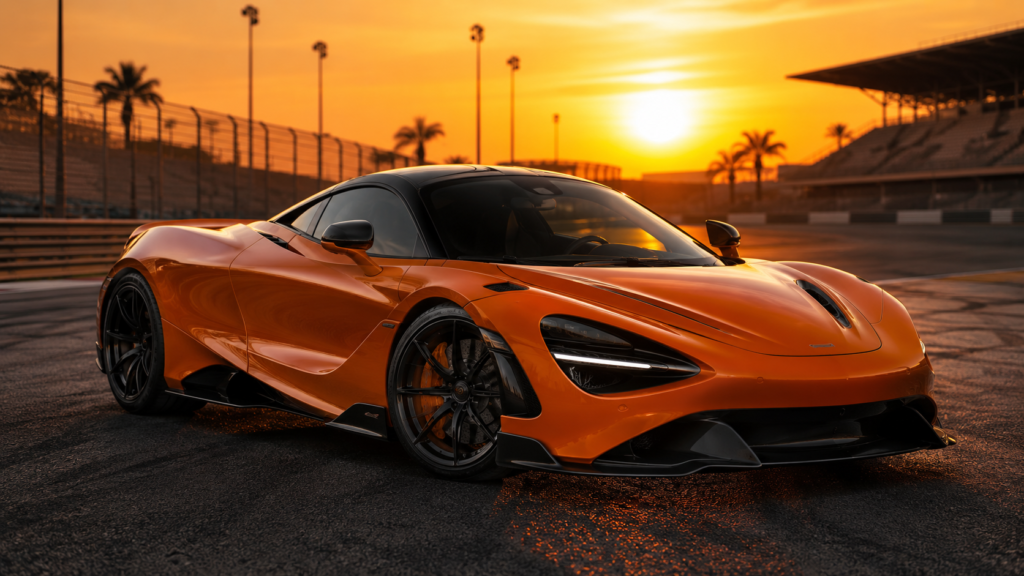
The sun has set over Dubai. The McLaren 765LT is parked in the pit lane, its engine ticking as it cools. The driver is satisfied. The DCT delivered.
The enthusiasts are still talking. They are discussing the transmission. They are impressed by the technology.
The dual-clutch transmission is not a compromise. It is an advancement. It is faster, more efficient, and more refined than the transmissions it has replaced.
The manual transmission is not dead. It is still available in some supercars. But the DCT is the future. It is the sound of speed. And in Dubai, where speed is celebrated, the DCT is the transmission of choice.

