
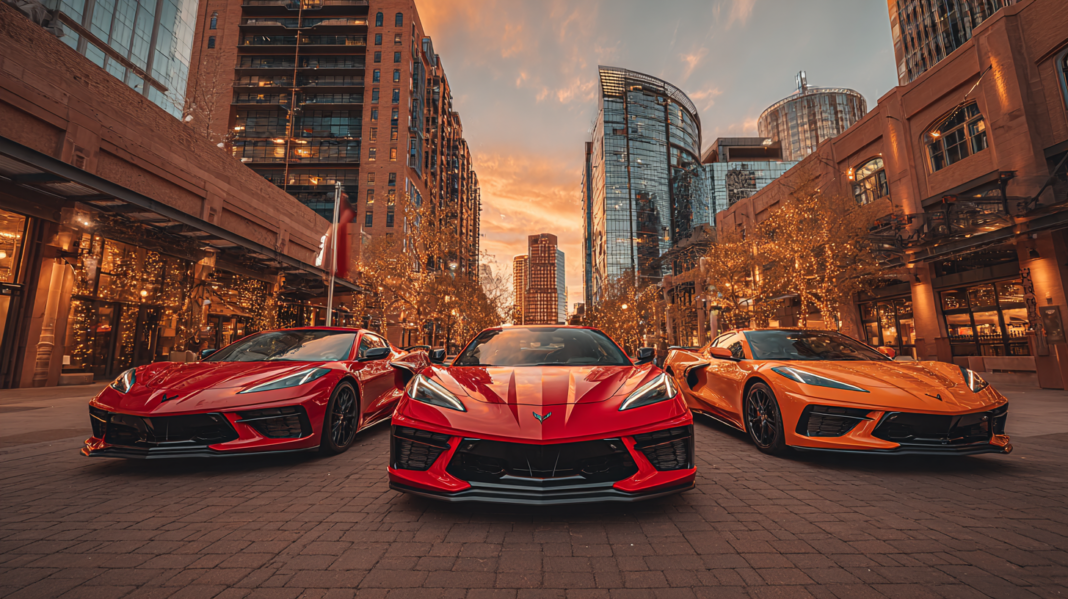
Introduction: The Corvette C8, One Name, Nine Personalities
The Chevrolet Corvette has transformed. What began as a simple American sports car has branched into a family of vehicles so diverse that the lineup now spans from accessible entry performance to machines that challenge hypercar territory. A drive through the twisting tarmac northeast of Scottsdale, where the Sonoran Desert meets rocky inclines and high-speed straightaways, reveals something surprising. Not all Corvettes feel like Corvettes. And that is exactly the point.
Before we dive into the nine current models, it helps to remember where this all started. The Corvette began in 1953 as the C1, a stylish but modestly powered roadster with a six-cylinder engine. The C2 introduced the Sting Ray name and independent rear suspension. The C3 brought long hoods and dramatic curves. The C4 returned to performance roots with a modern chassis. The C5 fixed the rear end and introduced the LS engine family. The C6 refined the formula with round taillights and the brutal ZR1. The C7 went global with a more angular design and the wild Z06. And now the C8 changed everything by moving the engine behind the driver. Each generation added a chapter to the story. The nine models below represent the current climax of that evolution.
This comparison examines nine distinct Corvette models within the C8 generation. Each serves a different driver. Each responds differently when pushed to its limit. And each occupies a specific segment, from sports car to hypercar.
Understanding the Corvette C8 Lineup: A Segment-by-Segment Breakdown
Before analyzing how each model behaves on the road, it helps to understand where each fits in the performance hierarchy. The Corvette family now spans four performance tiers:
| Segment | Models Included | Core Purpose |
|---|---|---|
| Sports Car (High-Performance) | Stingray | Entry-level performance, daily usability |
| Sports Car (Track-Oriented) | Stingray Z51 | Enhanced grip, track-day readiness |
| Sports Car+ / Entry Supercar | Grand Sport | Driver engagement, linear power delivery |
| Supercar (AWD Hybrid) | E-Ray | All-weather capability, instant torque |
| Supercar (GT-Leaning) | Grand Sport X | Long-distance comfort, planted handling |
| Supercar (Track-Focused) | Z06 | High-rpm power, precision driving |
| Supercar+ / Near-Hypercar | ZR1 | Extreme ICE performance, rear-drive character |
| Hypercar | ZR1X | Maximum everything, physics-defying grip |
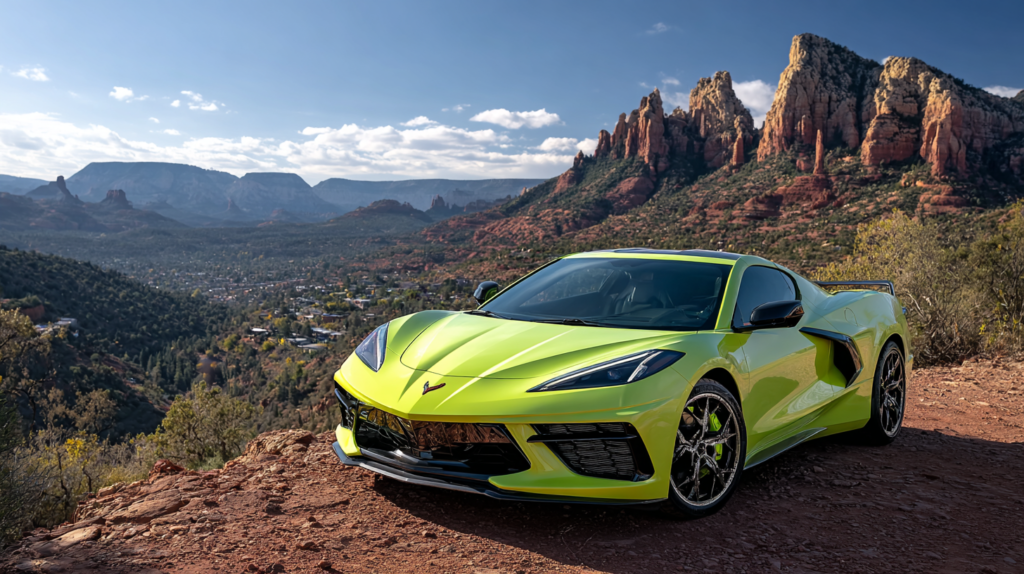
Chapter 1: The Entry Point – Corvette Stingray
Starting MSRP: $70,000–75,000
Drivetrain: Rear-wheel drive
Powertrain: 6.2-liter naturally aspirated V8 (LT2)
Horsepower: 490
Peak RPM / Redline: 6,600 rpm
Core Identity: Entry performance
Segment Classification: Sports Car (High-Performance)
The Stingray serves as the gateway. But do not let the words “entry performance” fool you. Even this base model feels like a supercar. The mid-engine layout, a first for a production Corvette, places the driver closer to the front axle while the engine sits behind the cabin. The result is a polar moment of inertia that allows the car to rotate faster than any front-engine Corvette in history. On the roads near Bartlett Lake, where long sweepers allow for steady throttle application, the Stingray feels composed and exotic. The 490 horsepower reaches the rear wheels through a predictable chassis that does not surprise the driver. Steering feedback is direct without being nervous. The cabin feels special. The engine note, while quieter than the higher trims, still barks with authority above 4,000 rpm.
What happens when you push it: The Stingray remains predictable and balanced. The rear end steps out gradually, giving the driver time to correct. Understeer is minimal. The car forgives small mistakes in throttle or steering input. A novice driver can approach the limit without fear. An experienced driver can hold the car at the edge of traction for extended periods. The base car communicates like a supercar should, with a clear sense of where the grip ends and the slide begins.
Best for: First-time sports car owners, daily drivers who want weekend fun, drivers who value predictability over aggression.
Chapter 2: The Sharper Sibling – Corvette Stingray Z51
Starting MSRP: $77,000–85,000
Drivetrain: Rear-wheel drive
Powertrain: 6.2-liter naturally aspirated V8 with performance exhaust (LT2)
Horsepower: 495
Peak RPM / Redline: 6,600 rpm
Core Identity: Sharper Stingray
Segment Classification: Sports Car (Track-Oriented)
The Z51 package adds more than five horsepower. It adds cooling, brakes, suspension tuning, and an electronic limited-slip differential. On the ascent toward Bartlett Lake, where the road tightens and elevation changes, the Z51 feels more planted than the base Stingray. The body rolls less. The brakes inspire confidence after multiple hard stops. The performance exhaust changes the sound character, adding a snarl that was missing on the base car.
What happens when you push it: Grip levels rise noticeably compared to the base Stingray. The car rotates more willingly into corners. At the limit, the Z51 remains forgiving but playful. The rear end moves under power in a controlled manner. Drivers can adjust their line with throttle inputs. The car does not snap unexpectedly. It communicates clearly through the steering wheel and seat.
Best for: Track day enthusiasts, drivers who want more capability without losing daily usability, those who plan to push the car regularly.
Chapter 3: The Driver’s Choice – Corvette Grand Sport
Starting MSRP: $88,495
Drivetrain: Rear-wheel drive
Powertrain: 6.7-liter naturally aspirated V8 (LS6)
Horsepower: 535 (estimated)
Peak RPM / Redline: 7,200 rpm (estimated)
Core Identity: Driver’s car
Segment Classification: Sports Car+ / Entry Supercar
The Grand Sport represents a shift. The larger 6.7-liter engine revs higher. The power delivery feels linear, meaning acceleration builds smoothly rather than surging. On the straight sections near the Bartlett Lake dam, the Grand Sport pulls hard but predictably. The engine note changes character above 5,000 rpm, encouraging the driver to explore the upper ranges. This is the car for drivers who believe that connection matters more than outright speed.
What happens when you push it: The Grand Sport rewards consistency. Unlike the Z51 which invites playfulness, the Grand Sport wants smooth inputs. Abrupt steering or throttle application upsets the balance. But with smooth driving, the car delivers remarkable grip and corner exit speeds. Confidence builds as the driver learns the car’s rhythm. The limit is high but clearly marked. Push past it and the car provides warning through understeer before any sudden behavior.
Best for: Experienced drivers who value chassis feedback over raw power, canyon carvers, drivers who enjoy building skill over time.
Chapter 4: The Hybrid Revolution – Corvette E-Ray
Starting MSRP: $108,000–115,000
Drivetrain: All-wheel drive (electric AWD)
Powertrain: 6.2-liter V8 plus front electric motor
Horsepower: 655 combined
Peak RPM / Redline: 6,600 rpm (gas engine)
Core Identity: Hybrid performance
Segment Classification: Supercar (AWD Hybrid)
The E-Ray changes the formula. Electric motors power the front wheels while the V8 drives the rear. This creates all-wheel drive without a physical connection between front and rear axles. On the dusty shoulders of the Bartlett Lake road, where loose gravel meets pavement, the E-Ray finds grip where rear-drive Corvettes would spin. It is the Corvette for people who live where seasons change.
What happens when you push it: Instant torque from the electric motor transforms launches. The car jumps forward without waiting for engine rpm to build. The front wheels pull through corners, reducing understeer. Stability is remarkable. The E-Ray feels almost impossible to spin. However, the added weight of the hybrid system becomes apparent in quick transitions. The car feels heavier than the Grand Sport despite having more power. At the limit, the E-Ray is very stable but less playful than rear-drive models.
Best for: Drivers in snowy or rainy climates, those who want supercar performance with year-round usability, drag strip enthusiasts who value consistent launches.
Chapter 5: The All-Weather Performer – Corvette Grand Sport X
Starting MSRP: $112,195
Drivetrain: All-wheel drive (electric AWD)
Powertrain: 6.7-liter V8 plus front electric motor
Horsepower: 721 (estimated)
Peak RPM / Redline: 7,200 rpm (estimated)
Core Identity: All-condition performance
Segment Classification: Supercar (GT-Leaning)
The Grand Sport X takes the Grand Sport’s high-revving V8 and adds the E-Ray’s electric front axle. The result is a car that combines linear power delivery with all-wheel drive traction. On the long, flowing sections of road near Horseshoe Dam, north of Bartlett Lake, the Grand Sport X settles into a rhythm that feels effortless.
What happens when you push it: This car is extremely planted. The combination of a naturally aspirated engine’s predictable torque curve and electric front axle grip means the Grand Sport X accelerates through corners with remarkable composure. Unsettling the car requires deliberate effort. Mid-corner bumps that would upset other Corvettes pass without drama. The limit is high enough that most drivers will never find it on public roads. On track, the car understeers slightly before the rear breaks away, giving ample warning.
Best for: Long-distance touring, drivers who want performance in any weather, those who prefer a car that feels stable at all times.
Chapter 6: The Track Specialist – Corvette Z06
Starting MSRP: $121,395
Drivetrain: Rear-wheel drive
Powertrain: 5.5-liter flat-plane crank V8 (LT6)
Horsepower: 670
Peak RPM / Redline: 8,600 rpm
Core Identity: Track weapon
Segment Classification: Supercar (Track-Focused)
Picture this. You are climbing from Bartlett Lake Road toward the Four Peaks Wilderness. The elevation rises. The corners tighten. You press the start button and the Z06 wakes up. Then you hear it. The flat-plane crank V8 does not sound like any Corvette that came before. It sounds like a Ferrari. Specifically, it sounds like the Ferrari 458 Italia, the car many enthusiasts consider the greatest naturally aspirated V8 of the modern era. The LT6 engine wails to 8,600 rpm with a metallic shriek that raises the hair on your arms. At idle, it spits and crackles with an uneven rhythm. At full throttle, it screams like a race car.
The Z06 represents a philosophy shift. This engine wants to stay above 6,000 rpm. Below that, it feels ordinary. Above that, it transforms into something emotional. The flat-plane crank allows for higher revs and quicker throttle response, but it also changes the vibration character. The car shakes slightly at idle in a way that feels purposeful.
What happens when you push it: The Z06 rewards skill and punishes mistakes. At the limit, the car rotates quickly. The rear end steps out with less warning than the Grand Sport or E-Ray. Throttle application requires precision. Too little power and the car pushes wide. Too much and the rear slides. The steering is direct and communicates every surface change. This car is not for novices. But for drivers with track experience, the Z06 offers a level of engagement that rear-drive supercars from Europe cannot match at this price. And the sound alone is worth the price of admission.
Best for: Experienced track drivers, those who value high-rpm power delivery, drivers who want to improve their skills over time.
Chapter 7: The Extreme ICE Flagship – Corvette ZR1
Starting MSRP: $197,000–216,000
Drivetrain: Rear-wheel drive
Powertrain: 5.5-liter twin-turbo flat-plane V8 (LT7)
Horsepower: 1,064
Peak RPM / Redline: 8,600 rpm
Core Identity: Extreme ICE flagship
Segment Classification: Supercar+ / Near-Hypercar
The ZR1 adds twin turbochargers to the Z06’s flat-plane V8. The result is 1,064 horsepower sent to the rear wheels only. On the straight sections of State Route 88 heading toward Canyon Lake, the ZR1 accelerates with an intensity that feels barely legal. The turbos spool with purpose. The engine builds boost quickly and holds it to redline. The sound changes from a shriek to a pressurized howl, with whooshing air sounds between shifts.
What happens when you push it: Violent acceleration is the first thing drivers notice. The ZR1 reaches speeds that feel inappropriate for public roads in seconds. But traction becomes a challenge. In first and second gears, even sticky tires struggle to put the power down. The car requires careful throttle modulation. Sudden full throttle in low gears produces wheelspin. The ZR1 demands precision and respect. At corner exit, drivers must wait until the car is straight before applying full power. The chassis remains communicative, but the power overwhelms the rear tires easily. This is a car that demands you pay attention every single second.
Best for: Experienced drivers seeking extreme straight-line performance, collectors, those who want a rear-drive challenge.
Chapter 8: The Ultimate Corvette – ZR1X
Starting MSRP: $207,000–247,000
Drivetrain: All-wheel drive (electric AWD)
Powertrain: Twin-turbo flat-plane V8 plus electric front axle
Horsepower: 1,250 (estimated)
Peak RPM / Redline: 8,600 rpm
Core Identity: Ultimate Corvette
Segment Classification: Hypercar
The ZR1X takes the ZR1’s twin-turbo engine and adds the electric front axle from the E-Ray and Grand Sport X. This is the most powerful and most capable Corvette ever produced. On the remote sections of the Apache Trail, where pavement gives way to well-maintained tarmac through desert canyons, the ZR1X feels like physics has been rewritten.
What happens when you push it: Relentless acceleration describes the experience. The electric front axle eliminates traction concerns. The car launches with near-unlimited grip. Corner exit speeds exceed what seems possible. The ZR1X does not feel like a 1,250-horsepower car because the power is so usable. Where the ZR1 requires careful throttle management, the ZR1X allows earlier and harder acceleration. The car remains planted through bumpy corners. The limit is so high that finding it on public roads is not advisable. On a track, the ZR1X delivers consistent, repeatable performance without the drama of rear-drive models.
Best for: Drivers who want the most capable Corvette available, those with access to tracks, collectors seeking the ultimate expression of the nameplate.
How to Choose: A Practical Guide
Drivers in Scottsdale face a decision. The city’s combination of straight highways, winding canyon roads, and nearby tracks like Arizona Motorsports Park means any of these Corvettes could find a home. But the right choice depends on the driver’s experience and goals.
Choose the Stingray if: You want a sports car for weekends and daily driving. The predictable handling and lower price make it accessible. Plus, it still feels like a supercar.
Choose the Stingray Z51 if: You plan to visit the track several times per year but still drive the car to work.
Choose the Grand Sport if: You have track experience and value chassis feedback over straight-line speed.
Choose the E-Ray if: You live where it snows or rains frequently and want year-round supercar performance.
Choose the Grand Sport X if: You want the Grand Sport’s character with all-weather capability.
Choose the Z06 if: You are an experienced track driver who wants a high-revving, rear-drive challenge. And you want to hear a Ferrari soundtrack from an American engine.
Choose the ZR1 if: You have advanced driving skills and want extreme power in a rear-drive package.
Choose the ZR1X if: You want the most capable Corvette and have the budget. This is the ultimate expression.
Final Thoughts: A Lineup for Every Driver
The Corvette family no longer offers a single experience. From the forgiving Stingray to the physics-defying ZR1X, each model serves a different driver with different priorities. The roads northeast of Scottsdale, with their mix of tight corners, high-speed sections, and elevation changes, reveal these differences clearly. A novice driver will feel comfortable in the Stingray. A track veteran will find joy in the Z06’s high-rpm precision and Ferrari-like wail. And anyone who experiences the ZR1X will understand how far the Corvette nameplate has evolved.
The starting prices range from $70,000 to over $220,000. The horsepower ranges from 490 to 1,250. The drivetrains range from rear-drive to electric all-wheel drive. But every model shares one characteristic. Each delivers performance appropriate to its segment. The Corvette has come a long way from the C1’s Blue Flame six-cylinder. The C8 generation proves that America can build not just a sports car, but an entire family of world-class performance machines. Choose based on your skill level, your climate, and your goals. The right Corvette exists for you.

