
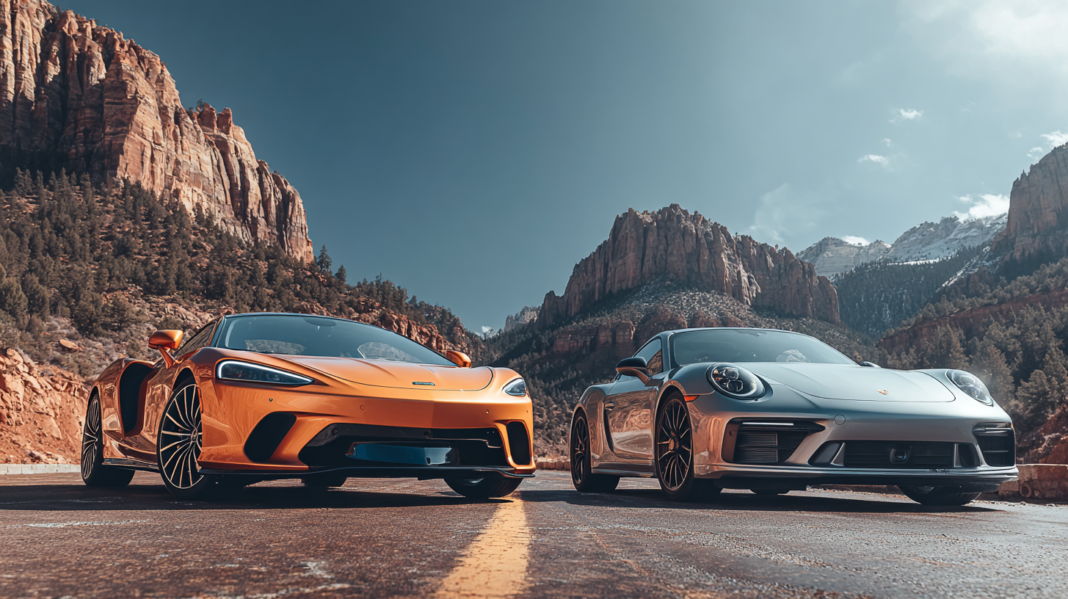
Can a supercar truly serve as a daily driver? Two very different machines put to the test on the iconic roads between Malibu and Santa Monica.
The morning fog had not yet lifted from the Pacific Ocean when the McLaren GT and the Porsche 911 Carrera S sat idling side by side at a traffic light just off the Pacific Coast Highway in Malibu, California. The air smelled of salt and cold coffee, and the only sounds were the distant crash of waves and the occasional cry of gulls circling above the cliffs.
This was the starting point of a different kind of test. Not a track battle. Not a drag race. A real world test to answer a question that has occupied the thoughts of driving enthusiasts for years: Can a supercar actually work as an everyday sports car?
The McLaren GT was positioned as the brand’s most usable model. It was designed with grand touring in mind, with more luggage space, a more compliant suspension, and a less aggressive character than the brand’s super series cars. The Porsche 911 Carrera S was the default answer for buyers who wanted sports car performance without sacrificing daily usability. It had rear seats, a compliant ride, and a reputation for reliability.
Two cars. One question. A day of driving from the canyons of Malibu to the streets of Santa Monica would provide the answer.
The Drive Begins: First Impressions on the Pacific Coast Highway
The light turned green, and both drivers turned right onto the Pacific Coast Highway. The sun was just beginning to burn through the marine layer, casting long shadows across the asphalt.
Behind the wheel of the McLaren GT, the driver sat low, with knees nearly straight and hips barely off the ground. The cabin was cocoon like, with a thin glass canopy that let in light but not the outside world. The seats were supportive, with aggressive bolsters that held the driver in place. The steering wheel was small and thick, covered in Alcantara.
The McLaren’s 4.0 liter twin turbo V8 woke up with a sharp, mechanical bark. The 612 horsepower and 465 lb ft of torque were available immediately, and the car surged forward with an urgency that demanded attention. The dual clutch transmission shifted quickly, nearly imperceptibly, and the car settled into a cruise at 45 miles per hour.
The Porsche 911 Carrera S took a different approach. The 3.0 liter twin turbo flat six produced 443 horsepower and 390 lb ft of torque. It was less powerful than the McLaren, but it was also less intimidating. The engine note was a deep, guttural rumble, and the car felt immediately familiar. The driving position was more upright, the visibility was better, and the interior felt more like a luxury car than a race car for the road.
The first few miles of the drive revealed the fundamental difference between the two cars. The McLaren demanded attention. It was a car that you drove, not a car that you rode in. The Porsche invited relaxation. It was a car that you could drive without thinking about it.
McLaren GT vs Porsche 911 Carrera S: Key Specifications Comparison
| Specification | McLaren GT | Porsche 911 Carrera S |
|---|---|---|
| Engine | 4.0L twin-turbo V8 | 3.0L twin-turbo flat-six |
| Horsepower | 612 hp | 443 hp |
| Torque | 465 lb-ft | 390 lb-ft |
| Transmission | 7-speed dual-clutch | 8-speed dual-clutch |
| Drive | Rear-wheel drive | Rear-wheel drive (optional AWD) |
| 0-60 mph | 3.1 seconds | 3.3 seconds |
| Top Speed | 203 mph | 191 mph |
| Curb Weight | 3,400 lb | 3,500 lb |
| Cargo Space | 14.8 cu ft (total) | 5.1 cu ft (front) + rear seats |
| Base Price | $210,000 | $130,000 |
The Comfort Test: Can You Live With It Every Day?
After twenty minutes on the Pacific Coast Highway, the road turned inland, heading into the canyons of Malibu. Before the twisty sections, the drivers made a brief stop at a lookout point overlooking the ocean. This was an opportunity to assess the cars for their daily usability.
The McLaren GT’s interior was striking. The exposed carbon fiber, the brushed aluminum switches, the leather and Alcantara upholstery all spoke of craftsmanship and expense. The seats were comfortable for a short period, but the aggressive bolsters and the low seating position would become tiring on a long commute. The infotainment system was a screen mounted portrait style on the dashboard. It worked, but it was not intuitive.
The Porsche’s interior was less dramatic but more functional. The seats were supportive without being aggressive. The driving position was natural, with good visibility in all directions. The infotainment system, mounted in a curved display, was intuitive and responsive. The materials were not as exotic as the McLaren’s, but they were durable and well assembled.
The cargo test was revealing. The McLaren GT had a rear hatch that opened to reveal a luggage compartment with 14.8 cubic feet of space. This was enough for two carry on suitcases and a couple of soft bags. The front trunk added a small amount of additional space. For a weekend trip for two, the McLaren would work.
The Porsche had a front trunk with 5.1 cubic feet of space, enough for one small bag. But the car also had rear seats that could fold down, creating additional storage. For a single person or a couple without children, the Porsche’s cargo space was adequate but less than the McLaren’s.
The Verdict on Usability: The McLaren GT surprised with its generous cargo space, but the Porsche 911 Carrera S was easier to live with day to day. Its better visibility, more comfortable seats, and more intuitive controls made it the winner for daily driving.
The Performance Test: Which One Leaves You Wanting More?
The road climbed into the Santa Monica Mountains, becoming narrower and more winding. This was where the true character of each car would emerge.
The McLaren GT came alive on the twisty roads. The 612 horsepower was intoxicating, and the car accelerated out of corners with a force that pushed the driver into the seat. The steering was precise, providing feedback about what the front tires were doing. The chassis was stiff, and the car changed direction with immediacy.
But there was a catch. The McLaren’s suspension was firm, and on the rough, cracked pavement of the canyon roads, the car transmitted every imperfection to the driver’s spine. The ride was punishing. The car was also wide, and on narrow roads with oncoming traffic, the driver had to pay constant attention to the car’s placement in the lane.
The Porsche 911 Carrera S was less powerful, but it was also less intimidating. The 443 horsepower was sufficient to make the car feel quick, but it did not overwhelm the chassis. The steering was precise, though less communicative than the McLaren’s. The suspension was compliant, absorbing bumps without losing composure.
The Porsche felt smaller than it was, and it was easier to place on the road. The car rotated willingly on corner entry, and the rear engine layout gave it a unique handling character. The driver could get on the throttle early, using the weight over the rear axle to drive out of corners.
On a smooth road, the McLaren was the more thrilling car. Its power, its steering, and its chassis created a level of engagement that the Porsche could not match. But on a real road, with real imperfections, the Porsche was the more usable performance car.
The Verdict on Performance: The McLaren GT left the driver wanting more when the road was smooth and the conditions were perfect. But on a typical road, the Porsche 911 Carrera S was the car that delivered satisfaction without frustration.
The Highway Test: Cruising in Comfort
The Pacific Coast Highway stretched out ahead, a straight ribbon of asphalt running alongside the ocean. This was the grand touring test, a chance to see how each car performed on long journeys.
The McLaren GT settled into a cruise at 70 miles per hour. The engine was quiet, barely audible over the wind and road noise. The suspension, while still firm, absorbed the expansion joints and minor imperfections without transmitting harshness. The seats, despite their aggressive bolstering, were comfortable for extended periods.
There was, however, a constant sense of occasion. The low seating position, the narrow cabin, the view of the front fenders bulging on either side all of these elements reminded the driver that this was a supercar, not a sedan.
The Porsche 911 Carrera S was more relaxed. The driving position was higher, the visibility was better, and the cabin was quieter. The suspension was more compliant, and the car absorbed the road’s imperfections without complaint. The seats were comfortable, and the infotainment system was easy to use.
The Porsche did not feel special in the same way that the McLaren did. It felt like a very capable sports car, but it did not feel like an event. For a daily driver, this was an advantage. For a weekend car, it was a drawback.
The Verdict on Highway Cruising: The McLaren GT was comfortable enough for long journeys, but the Porsche 911 Carrera S was more relaxing. The Porsche was the car you would choose for a cross country road trip. The McLaren was the car you would choose for a drive where the journey itself was the destination.
The City Test: Navigating Urban Environments
The final segment of the test took the cars into the streets of Santa Monica. Traffic was moderate, with stop and go conditions on Wilshire Boulevard. This was the true test of daily usability.
The McLaren GT was challenging in the city. The wide body made parking difficult, and the lack of visibility to the rear and sides required constant attention. The dual clutch transmission was smooth, but the firm suspension transmitted every bump and pothole. The car attracted attention, which was not always welcome in heavy traffic.
The Porsche 911 Carrera S was easier to manage. The car was narrower, with better visibility, and the more compliant suspension absorbed the city’s poor pavement. The car did not attract the same level of attention, which was an advantage in traffic.
The Verdict on City Driving: The Porsche 911 Carrera S was the clear winner for urban environments. The McLaren GT was a handful, and it would be tiring as a daily driver in a city.
The Cost of Ownership: Numbers That Matter
The financial consideration of owning either car was significant. The McLaren GT had a base price of approximately $210,000, while the Porsche 911 Carrera S started at approximately $130,000. The difference of $80,000 was substantial.
But the price difference was only part of the equation. The McLaren’s depreciation curve was steeper than the Porsche’s, meaning that the McLaren would lose more value over time. Maintenance costs for the McLaren were higher, with specialized service requirements and more expensive parts. Insurance costs were also higher for the McLaren.
The Porsche, on the other hand, benefited from a large dealer network, more affordable parts, and a reputation for reliability. The 911 Carrera S would be less expensive to own and maintain over the long term.
The Final Verdict: Which One Actually Works as a Daily Driver?
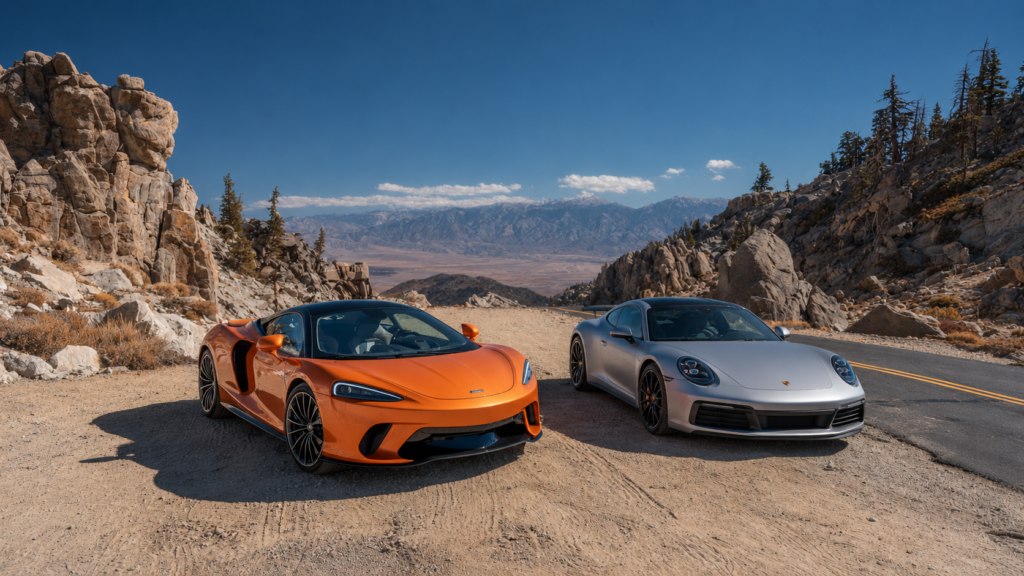
The McLaren GT was a remarkable car. It was beautiful, powerful, and exclusive. It offered generous cargo space and surprising comfort on the highway. On the right road, under the right conditions, it was one of the most thrilling cars on the market.
But as a daily driver, it fell short. The firm ride, the limited visibility, the wide body, and the constant attention made it tiring to live with. The McLaren GT was a supercar that you could drive every day, but it was not a car that you would want to drive every day.
The Porsche 911 Carrera S was less dramatic, less powerful, and less exclusive. But it was more comfortable, more practical, and easier to live with. It was a car that you could drive to work, to the grocery store, to the track, and on a cross country road trip without compromise. It was a sports car that worked as a daily driver.
The answer to the question was clear. The McLaren GT left the driver wanting more when the road was smooth and the conditions were perfect. The Porsche 911 Carrera S delivered satisfaction every day, on every road, in every condition.
For the driver who wanted a weekend toy that could also be used for occasional errands, the McLaren GT was a compelling choice. For the driver who wanted a daily driver that could also provide thrilling performance, the Porsche 911 Carrera S was the superior option.
Both cars had their place. Both would put a smile on the driver’s face. But for the driver who needed a sports car that actually worked as a car, the Porsche 911 Carrera S was the one to buy.
Conclusion: The Everyday Supercar Verdict
As the sun set over the Pacific Ocean and the two cars idled one final time at a traffic light in Santa Monica, the drivers reflected on the day. The McLaren GT had delivered moments of pure joy, moments when the road and the car aligned to create a driving experience that few cars could match. But those moments were fleeting, separated by periods of discomfort and frustration.
The Porsche 911 Carrera S had delivered consistent satisfaction. It had not reached the same heights as the McLaren, but it had never fallen to the same lows. It was a car that you could live with, a car that you could trust, a car that would never leave you wanting more.
The light turned green. The Porsche turned right, heading toward the freeway and home. The McLaren turned left, heading back into the canyons for one more pass before the light was gone.
Both drivers were smiling. But only one of them was smiling about the car they would drive to work tomorrow.

