
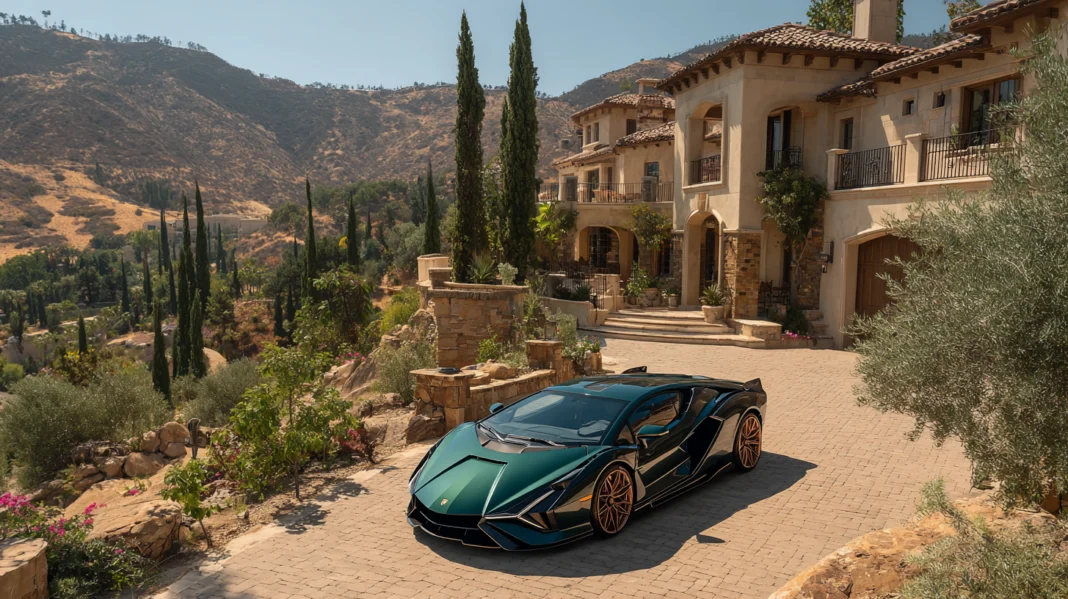
The Lamborghini Sian represents a significant moment in the company’s history. It was the first electrified Lamborghini, combining a 6.5 liter naturally aspirated V12 with a supercapacitor-based hybrid system. Unlike traditional hybrid systems that use heavy lithium-ion batteries, the Sian’s supercapacitor technology offered unique advantages: rapid charging and discharging, higher power density, and lighter weight.
Produced from 2019 to 2022, the Sian was limited to 63 units (plus 19 units of the Sian Roadster). The number 63 referenced Lamborghini’s founding year, 1963. The Sian was a preview of the brand’s electrified future, demonstrating that Lamborghini could embrace hybrid technology without compromising the character of its V12 engine.
This article provides a comprehensive examination of the Lamborghini Sian, including its development, supercapacitor technology, performance, design, and why it remains one of the most significant Lamborghinis of its era.
The Sian Name
The name Sian comes from the Bolognese dialect and means “flash” or “lightning”. The name was chosen to reflect the car’s electrified powertrain and its instant response. It also referenced the lightning bolt that appears in the Lamborghini logo.
The Electrification Strategy
Lamborghini’s approach to electrification has been cautious. Unlike competitors that adopted plug-in hybrid systems with lithium-ion batteries, Lamborghini chose a supercapacitor-based system for the Sian. Supercapacitors offer several advantages for a performance car: they can charge and discharge much faster than lithium-ion batteries, they have a higher power density, and they are lighter.
The supercapacitor system was developed in partnership with engineers from the Massachusetts Institute of Technology. It was designed to enhance performance rather than provide electric-only range. The system provides instant torque at low engine speeds, filling the gap before the V12’s power builds.
Powertrain: The Heart of the Sian
The V12 Engine
The Sian is powered by a 6.5 liter naturally aspirated V12 engine, derived from the unit that powered the Aventador SVJ. The engine produces 774 horsepower at 8,500 rpm, making it one of the most powerful naturally aspirated V12s ever fitted to a production Lamborghini.
The engine features a 60-degree V angle, four valves per cylinder, and a dry-sump lubrication system. The intake system uses individual throttle bodies, contributing to the engine’s immediate throttle response. The exhaust system is tuned to produce a distinctive sound, with a high-pitched wail at high rpm.
The Supercapacitor Hybrid System
The Sian’s hybrid system uses a supercapacitor instead of a traditional lithium-ion battery. The supercapacitor is mounted in the bulkhead between the cabin and the engine, where it also serves as a structural element.
The supercapacitor powers a 34 horsepower electric motor integrated into the seven-speed automated manual transmission. The motor provides additional power during acceleration, filling the gaps in the V12’s power delivery. It also provides instant torque at low engine speeds, eliminating any lag.
The supercapacitor charges during braking, recovering energy that would otherwise be lost. It can charge and discharge much faster than a traditional battery, allowing the system to provide immediate assistance when needed.

Total Output
The combined output of the V12 engine and the electric motor is 808 horsepower (774 from the V12, 34 from the motor). This made the Sian the most powerful production Lamborghini ever built at the time.
Performance
Acceleration and Speed
The Sian accelerates from 0 to 62 miles per hour in 2.8 seconds. The 0 to 124 miles per hour sprint takes approximately 8.9 seconds. Top speed is over 217 miles per hour (350 kilometers per hour).
The hybrid system’s instant torque provides a noticeable improvement in throttle response, particularly at low speeds.
Weight and Balance
The Sian has a dry weight of approximately 1,600 kilograms. The supercapacitor system adds minimal weight compared to a traditional hybrid system, preserving the car’s agility.
Chassis and Aerodynamics
Carbon Fiber Monocoque
The Sian is built around a carbon fiber monocoque, shared with the Aventador. The monocoque provides exceptional rigidity and occupant protection while minimizing weight. The body panels are also carbon fiber.
Suspension
The Sian features double-wishbone suspension at all four corners, with pushrod-actuated dampers. This configuration, derived from Formula 1, allows for precise control over wheel motion and reduces unsprung weight.
Brakes
The braking system uses carbon ceramic discs with six-piston calipers at the front and four-piston calipers at the rear. The regenerative braking system, integrated with the supercapacitor, recovers energy during deceleration.
Wheels and Tires
The Sian rides on 20-inch front wheels and 21-inch rear wheels, wrapped in specially developed tires. The tires are designed for maximum grip, with a compound and construction that suit the car’s power and weight.
Aerodynamics
The Sian’s aerodynamic package is derived from the Aventador SVJ. The car features an active rear wing that adjusts its angle based on speed and driving mode. The underbody is flat, with a large diffuser that accelerates airflow beneath the car.
The Sian also features unique aerodynamic elements, including a front splitter with integrated winglets and side air intakes that direct airflow to the engine and brakes.
Design
Exterior Styling
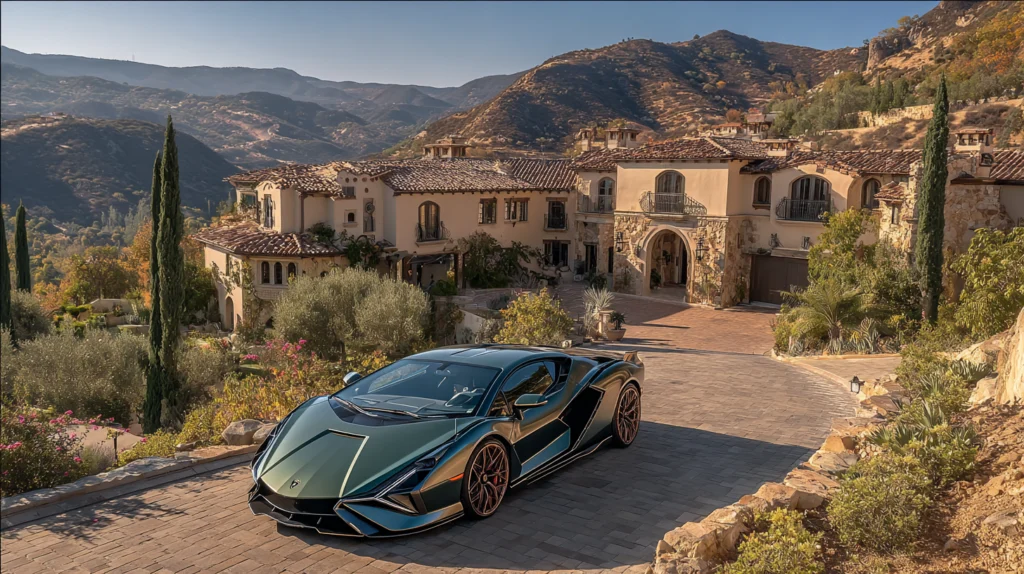
The Sian’s exterior was designed by Lamborghini’s Centro Stile under the direction of Mitja Borkert. The design is aggressive and futuristic, with sharp lines and dramatic surfaces.
The front end features a prominent grille and large air intakes that feed cooling air to the engine and brakes. The headlights are slim and integrated into the bodywork, with a distinctive Y-shaped signature. The front splitter is prominent, with integrated winglets that generate downforce.
The side profile shows the mid-engine proportions, with a long wheelbase, short overhangs, and a cabin positioned forward of the rear axle. The side air intakes are large, feeding air to the engine and brakes. The wheels are finished in a unique design.
The rear end is characterized by a prominent rear wing, a large diffuser, and a distinctive taillight design. The taillights are slim and integrated into the bodywork, with a hexagonal pattern.
Interior Design
The interior of the Sian is focused on the driver. The seats are carbon fiber racing buckets with leather and Alcantara upholstery, providing lateral support during cornering. The dashboard features a digital instrument cluster with a central tachometer and auxiliary gauges.
The steering wheel is a three-spoke unit with integrated controls for the car’s systems. The paddle shifters are mounted on the steering column.
The interior features unique Sian badging and a numbered plaque indicating the car’s production number.
The Sian Roadster
Lamborghini also produced the Sian Roadster, an open-top version of the car. The Roadster was limited to 19 units, making it even rarer than the coupe. The Roadster featured a removable roof panel and revised aerodynamics to compensate for the loss of the fixed roof.
The Sian Roadster was the last open-top V12 Lamborghini before the Revuelto.
Driving Experience
On Road Character
The Sian is a car that is surprisingly refined for a Lamborghini. The suspension can be softened for road use, and the cabin is quieter than the Aventador’s. The supercapacitor system provides instant torque, making the car responsive at low speeds.
The V12 engine’s sound is intoxicating, with a high-pitched wail that builds to a crescendo as the revs climb. The steering provides good feedback, and the chassis communicates the road surface effectively.
On Track Behavior
When driven on a track, the Sian reveals the depth of its engineering. The brakes provide consistent stopping power, and the chassis remains composed through corners. The active aerodynamics provide downforce that keeps the car planted at high speeds.
The supercapacitor system provides instant torque on corner exit, pulling the car out of corners with authority. The car’s all-wheel-drive layout provides traction that inspires confidence.
The Sound
The V12 engine’s sound is one of the Sian’s defining characteristics. The engine produces a high-pitched wail as the revs climb toward the 8,500 rpm redline. The sound is sharp, urgent, and deeply satisfying.
Rarity and Exclusivity
Production Numbers
Lamborghini built 63 units of the Sian coupe and 19 units of the Sian Roadster. The number 63 referenced Lamborghini’s founding year. All units were sold before production began.
Pricing
The Sian carried a base price of approximately $3.7 million. The Roadster was priced higher. This pricing placed the Sian in the upper tier of the hypercar market.
Collector Status
The Sian is one of the most sought-after Lamborghinis of its era. Its limited production numbers, its status as the first electrified Lamborghini, and its unique supercapacitor technology have made it a prized collector car.
How the Sian Stacks Up Against Rivals
Against the Ferrari SF90 Stradale
The Ferrari SF90 Stradale is a plug-in hybrid with a 4.0 liter twin-turbocharged V8 and three electric motors, producing 986 horsepower.
The SF90’s advantage is its power and its hybrid sophistication. The Ferrari produces 178 more horsepower than the Sian, and its plug-in system provides electric-only range.
The Sian’s advantage is its V12 engine and its supercapacitor technology. The Lamborghini’s V12 provides a sound and character that the Ferrari’s V8 cannot match, and the supercapacitor system offers unique advantages in power delivery.
Against the Lamborghini Revuelto
The Revuelto is the successor to the Sian, with a 6.5 liter V12 and three electric motors producing 1,001 horsepower.
The Revuelto’s advantage is its power and its technology. The Revuelto produces 193 more horsepower than the Sian, and its plug-in hybrid system provides electric-only range.

The Sian’s advantage is its rarity and its place in Lamborghini history. The Sian was the first electrified Lamborghini, and its limited production numbers make it more exclusive.
Against the Porsche 918 Spyder
The Porsche 918 Spyder is a plug-in hybrid hypercar with a 4.6 liter naturally aspirated V8 and two electric motors, producing 887 horsepower.
The 918 Spyder’s advantage is its electric range and its open-top design. The Porsche can travel approximately 20 miles on electric power alone.
The Sian’s advantage is its V12 engine and its supercapacitor technology. The Lamborghini’s V12 provides a sound and character that the Porsche’s V8 cannot match.
Against the McLaren P1
The McLaren P1 is a plug-in hybrid hypercar with a 3.8 liter twin-turbocharged V8 and an electric motor, producing 903 horsepower.
The P1’s advantage is its aerodynamics and its track focus. The McLaren’s active aero system is advanced.
The Sian’s advantage is its V12 engine and its supercapacitor technology. The Lamborghini’s engine provides a different kind of experience.
The Future of Lamborghini Electrification
The Revuelto
The Revuelto, introduced in 2023, is the successor to the Sian. It uses a 6.5 liter V12 with three electric motors and a lithium-ion battery, producing 1,001 horsepower. The Revuelto is a plug-in hybrid, offering electric-only range.
The Temerario
The Temerario, introduced in 2024, is the successor to the Huracán. It uses a 4.0 liter twin-turbocharged V8 with three electric motors, producing 920 horsepower.
The Electric Future
Lamborghini has announced plans to introduce its first fully electric vehicle later this decade. The Sian and Revuelto are transitional cars, bridging the gap between the naturally aspirated V12 era and an electric future.
Specifications Summary
| Specification | Sian Coupe | Sian Roadster |
|---|---|---|
| Engine | 6.5L naturally aspirated V12 | 6.5L naturally aspirated V12 |
| Electric Motor | 34 hp (supercapacitor) | 34 hp (supercapacitor) |
| Combined Power | 808 hp | 808 hp |
| Transmission | 7-speed automated manual | 7-speed automated manual |
| Drive | All wheel drive | All wheel drive |
| 0-62 mph | 2.8 seconds | 2.9 seconds |
| Top Speed | 217+ mph | 217+ mph |
| Weight | 1,600 kg dry | 1,600 kg dry |
| Production | 63 units | 19 units |
| Base Price | $3.7 million | Higher |
Conclusion
The Lamborghini Sian is one of the most significant Lamborghinis ever built. It was the company’s first electrified vehicle, combining a 6.5 liter naturally aspirated V12 with a supercapacitor-based hybrid system. It demonstrated that Lamborghini could embrace hybrid technology without compromising the character of its V12 engine.
The Sian’s supercapacitor technology was unique among hybrid hypercars. Unlike traditional lithium-ion batteries, the supercapacitor offered rapid charging and discharging, higher power density, and lighter weight. It was a perfect fit for a performance car.
The Sian was also a preview of Lamborghini’s electrified future. It paved the way for the Revuelto, the Temerario, and the brand’s first fully electric vehicle.
Today, the Sian is a legend. Its limited production numbers, its status as the first electrified Lamborghini, and its unique supercapacitor technology have made it one of the most desirable collector cars in the world. It is a car that represents a turning point in Lamborghini’s history.
The Lamborghini Sian is a flash of lightning, a glimpse of the future. It will forever be remembered as one of the most significant Lamborghinis ever built.
Gear Picks for This Story
 Essential ToolNOCO GENIUS10 Smart Battery ChargerExplore the Specs →
 Creator GearGoPro HERO13 BlackSee the Specs →
 Stay SafeSanDisk 512GB Extreme Pro microSDSee the Specs →
 Garage EssentialLiqui Moly 2041 Premium 5W-40 Motor Oil 5LExplore the Specs →
As an Amazon Associate, VeloxTrend earns from qualifying purchases.

