
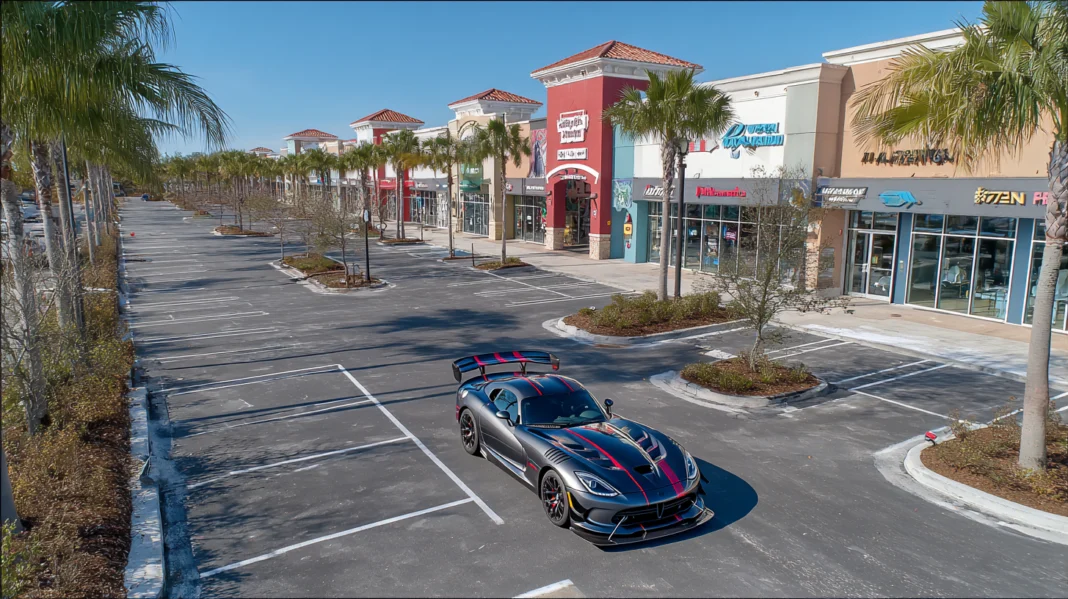
The Dodge Viper occupies a unique place in American automotive history. It was a car that prioritized raw power and driver engagement over refinement and luxury. With its 8.4 liter naturally aspirated V10 engine, rear-wheel drive layout, and aggressive styling, the Viper was a throwback to an earlier era of performance cars. It was a car that demanded respect and rewarded skill.
The Viper ACR (American Club Racer) was the most extreme version of this formula. Produced in two generations (2008 to 2010 and 2015 to 2017), the ACR was designed for one purpose: to lap race tracks as quickly as possible. With its massive rear wing, adjustable suspension, and aerodynamic package derived from the Viper’s racing program, the ACR set lap records at tracks across North America. It was a car that prioritized track performance above all else.
This article provides a comprehensive examination of the Dodge Viper ACR, including its development, performance specifications, engineering, design, and why it remains America’s most extreme track weapon.
The Viper Legacy: A Modern Cobra
The original Dodge Viper RT/10 was introduced in 1992 as a modern interpretation of the Shelby Cobra. It featured a massive 8.0 liter V10 engine, a lightweight body, and a no-compromises approach to performance. There was no anti-lock braking, no traction control, and no air conditioning (in early models). The Viper was a car for purists.
Over the following years, the Viper evolved. The second generation (1996 to 2002) added power and refinement. The third generation (2003 to 2006) introduced the 8.3 liter V10. The fourth generation (2008 to 2010) introduced the 8.4 liter V10 and the first ACR variant. The fifth generation (2013 to 2017) refined the formula further, with a more powerful 8.4 liter V10 and a significantly improved chassis.
The ACR was introduced in 2008 as a track-focused variant. It was designed to compete with the best from Porsche, Ferrari, and Chevrolet, and it succeeded. The ACR set lap records at tracks across North America, including Laguna Seca, Road Atlanta, and Virginia International Raceway.
The ACR Philosophy: No Compromises
The ACR was developed with a simple philosophy: prioritize track performance above all else. The engineers removed the sound deadening, the luxury features, and anything else that added weight. They added a massive rear wing, a front splitter, and adjustable suspension. They tuned the engine for maximum power and the chassis for maximum grip.
The result was a car that was not comfortable, not quiet, and not practical. But it was one of the fastest production cars ever built around a racetrack.
Powertrain: The Heart of the Viper
The V10 Engine
The Viper ACR is powered by an 8.4 liter naturally aspirated V10 engine, designated the Viper V10. This engine is a development of the unit that powered earlier Vipers, with significant modifications for power and durability.
The engine produces 645 horsepower at 6,200 rpm and 600 lb-ft of torque at 5,000 rpm. The redline is 6,200 rpm. The specific output is 77 horsepower per liter, a figure that is modest by modern standards but reflects the engine’s emphasis on torque and reliability.
The engine features a cross-plane crankshaft, which gives it a deep, guttural sound. The sound is one of the Viper’s defining characteristics, with a low-frequency rumble at idle and a thunderous roar at full throttle.
Transmission
Power is transmitted to the rear wheels through a six-speed manual transmission. The transmission features a short-throw shifter with mechanical engagement, providing direct feedback to the driver. The clutch is heavy, requiring significant effort, but it is durable enough to withstand the engine’s torque.

The ACR does not offer an automatic transmission. The manual gearbox is a core part of the car’s character.
Performance
The Viper ACR accelerates from 0 to 60 miles per hour in 3.4 seconds. The quarter mile is completed in approximately 11.4 seconds at 127 miles per hour. Top speed is 177 miles per hour.
These figures are respectable, but they do not tell the full story. The ACR is not designed for straight-line speed; it is designed for cornering.
Chassis and Dynamics
Suspension
The Viper ACR features double-wishbone suspension at all four corners, with adjustable coil-over dampers. The suspension is fully adjustable, with settings for ride height, camber, caster, toe, and damping. The system is designed to be tuned for different tracks and conditions.
The ACR’s suspension is firm, transmitting road imperfections to the cabin. The car remains flat through corners, with minimal body roll. The communication through the chassis is exceptional, providing the driver with detailed information about tire grip and road surface.
Brakes
The braking system uses carbon ceramic discs with six-piston calipers at the front and four-piston calipers at the rear. The front discs measure 15.5 inches in diameter, and the rear discs measure 14.1 inches. The system provides exceptional stopping power, with consistent pedal feel and resistance to fade during track use.
Wheels and Tires
The Viper ACR rides on 19-inch front wheels and 20-inch rear wheels, wrapped in specially developed tires. The front tires are 295/30 ZR19, and the rear tires are 355/30 ZR20. The rear tires are among the widest ever fitted to a production car, providing exceptional grip.
Aerodynamics
The Viper ACR’s aerodynamic package is among the most extreme ever fitted to a production car. The car features a massive adjustable rear wing, a large front splitter, and an underbody diffuser. The system generates significant downforce, keeping the car planted at high speeds.
The rear wing is made of carbon fiber and is adjustable, allowing drivers to tailor the downforce to suit different tracks. The front splitter is also adjustable, with multiple positions that change the amount of downforce generated.
The ACR generates approximately 1,200 pounds of downforce at top speed, a figure that exceeds the car’s weight. This level of downforce provides exceptional cornering grip.
The ACR Extreme Aero Package
The final year of Viper ACR production (2017) offered an optional Extreme Aero package. This package added even more aggressive aerodynamic elements, including a larger rear wing, a more pronounced front splitter, and additional dive planes. The package was designed for maximum downforce, at the expense of drag.
The Extreme Aero package generated approximately 1,500 pounds of downforce at top speed, making the Viper ACR one of the most aerodynamically aggressive production cars ever built.
Design
Exterior Styling
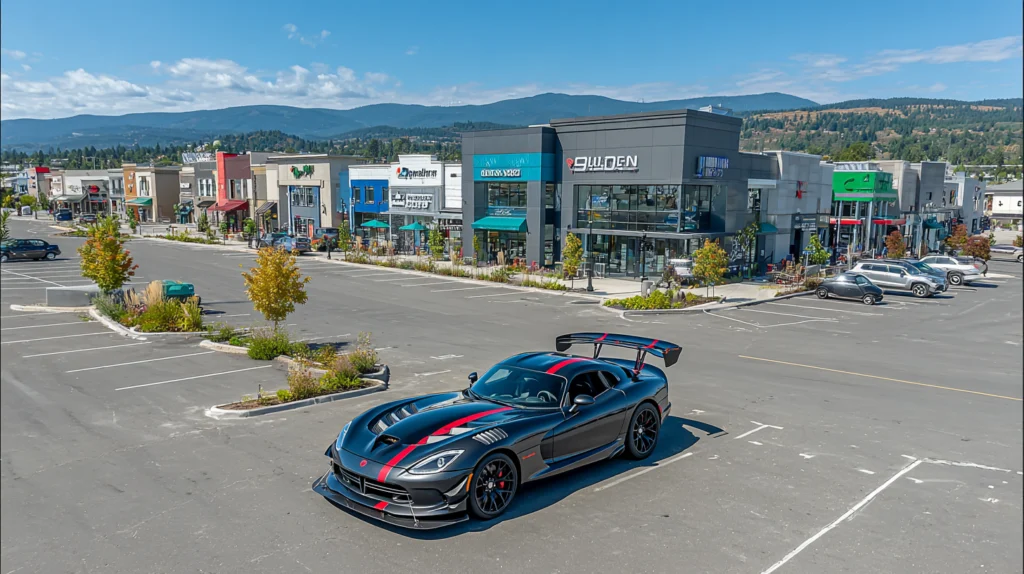
The Viper ACR’s exterior design is aggressive and functional. The front end features a large splitter and prominent dive planes that direct air to the underbody. The hood has a central vent that extracts hot air from the engine bay. The side profile shows the long hood and short rear deck, with massive fender flares that accommodate the wide tires.
The rear end is dominated by the massive adjustable rear wing. The wing sits high above the decklid, providing clean airflow. The diffuser is large and complex, with multiple channels that accelerate airflow beneath the car.
Interior Design

The interior of the Viper ACR is stripped back compared to standard Vipers. The sound deadening is removed, the audio system is optional, and the air conditioning is available but not standard. The seats are racing buckets with Alcantara upholstery, providing lateral support during cornering.
The dashboard features a digital instrument cluster with a central tachometer and auxiliary gauges. The steering wheel is a three-spoke unit wrapped in leather.
The interior is not luxurious, but it is functional. The focus is entirely on driving.
The Viper ACR’s Track Records
The Viper ACR set lap records at numerous tracks across North America. These records were independently verified and demonstrated the car’s capability.
Some of the notable lap records include:
- Mazda Raceway Laguna Seca: 1 minute 28.65 seconds
- Road Atlanta: 1 minute 26.54 seconds
- Virginia International Raceway Grand Course: 2 minutes 40.02 seconds
- Circuit of the Americas: 2 minutes 29.69 seconds
These records were set in 2016 and 2017, and many stood for years.
Driving Experience
On Road Character
The Viper ACR is not a car for the faint of heart. The suspension is extremely firm, transmitting every imperfection in the road surface to the cabin. The clutch is heavy, the steering is heavy at low speeds, and the engine produces a constant mechanical rumble. The car is not comfortable, not quiet, and not relaxing.
Yet for drivers who are willing to meet its demands, the ACR rewards. The steering provides exceptional feedback, the engine responds immediately to throttle inputs, and the chassis communicates every detail of the road surface.
On Track Behavior
When driven on a track, the Viper ACR reveals the depth of its engineering. The brakes provide consistent stopping power lap after lap, with a pedal feel that inspires confidence. The chassis remains composed through corners, with the aerodynamic downforce providing grip that mechanical systems alone could not achieve.
The car’s rear-wheel-drive layout and massive torque require skill to manage. The ACR rewards smooth, precise inputs and punishes abrupt actions. The car is balanced and predictable, with a slight tendency toward oversteer at the limit that rewards skilled drivers.
The Sound
The V10 engine’s sound is one of the Viper’s defining characteristics. The engine produces a deep, guttural rumble at idle and a thunderous roar at full throttle. The sound is not refined, but it is visceral and engaging.
The Viper’s Legacy
The End of the Viper
Production of the Dodge Viper ended in 2017. The car could not meet evolving safety and emissions regulations, and the market for a $100,000+ track-focused sports car was limited. The Viper was not replaced.
The ACR was the last and most extreme Viper. It represented the culmination of the Viper’s development, and it remains one of the most capable track cars ever built.
Collector Status
The Viper ACR has become a sought-after collector car. Its limited production numbers (the 2016 and 2017 ACRs combined for approximately 500 units), its status as the last Viper, and its legendary track performance have driven values. Well-maintained ACRs trade for prices above their original window stickers.
The ACR’s Place in History
The Viper ACR is recognized as one of the greatest track cars of its era. It competed with and often beat cars costing two and three times as much. It was a car that demonstrated American engineering could compete at the highest level.
How the Viper ACR Stacks Up Against Rivals
Against the Porsche 911 GT2 RS
The Porsche 911 GT2 RS is a track-focused sports car with a 3.8 liter twin-turbocharged flat-six producing 700 horsepower.

The GT2 RS’s advantage is its power and its technology. The Porsche produces 55 more horsepower than the Viper, and its chassis tuning is exceptional.
The Viper ACR’s advantage is its naturally aspirated engine and its mechanical character. The Viper’s V10 provides a different kind of experience than the Porsche’s turbocharged flat-six.
Against the Chevrolet Corvette Z06
The Chevrolet Corvette Z06 is a front-engine sports car with a 6.2 liter supercharged V8 producing 650 horsepower.
The Z06’s advantage is its value and its daily usability. The Corvette is less expensive than the Viper and more comfortable for daily driving.
The Viper ACR’s advantage is its track focus and its aerodynamics. The ACR’s downforce and suspension tuning make it more capable on track than the Corvette.
Against the Ferrari 488 Pista
The Ferrari 488 Pista is a track-focused version of the 488 GTB, with a 3.9 liter twin-turbocharged V8 producing 710 horsepower.
The Pista’s advantage is its power and its brand prestige. The Ferrari produces 65 more horsepower than the Viper, and the Prancing Horse badge carries a cachet that Dodge cannot match.
The Viper ACR’s advantage is its naturally aspirated engine and its mechanical character. The Viper’s V10 provides a visceral experience that the Ferrari’s turbocharged V8 cannot match.
Against the Lamborghini Huracán Performante
The Lamborghini Huracán Performante is a track-focused version of the Huracán, with a 5.2 liter naturally aspirated V10 producing 631 horsepower.
The Performante’s advantage is its all-wheel-drive traction and its active aerodynamics. The Lamborghini’s ALA system is advanced, and its AWD provides grip in all conditions.
The Viper ACR’s advantage is its downforce and its mechanical character. The Viper’s ACR generates more downforce than the Performante, and its manual transmission provides a more engaging driving experience.
Specifications Summary
| Specification | Viper ACR (2016-2017) |
|---|---|
| Engine | 8.4L naturally aspirated V10 |
| Horsepower | 645 hp at 6,200 rpm |
| Torque | 600 lb-ft at 5,000 rpm |
| Redline | 6,200 rpm |
| Transmission | 6-speed manual |
| Drive | Rear wheel drive |
| 0-60 mph | 3.4 seconds |
| Top Speed | 177 mph |
| Downforce | 1,200+ lb |
| Weight | 3,400 lb |
| Production | Approximately 500 units |
Conclusion
The Dodge Viper ACR is America’s most extreme track weapon. It is a car that prioritized performance above all else, with an 8.4 liter naturally aspirated V10 producing 645 horsepower, a massive aerodynamic package generating over 1,200 pounds of downforce, and a chassis tuned for track use. It set lap records at tracks across North America, competing with and often beating cars costing two and three times as much.
The Viper ACR is not a car for everyone. Its ride is punishing, its interior is stripped, and its focus on track performance means it lacks the luxury and refinement of its competitors. But for drivers who value engagement above all else, it is one of the most rewarding cars ever built.
The Viper ACR also represents the end of an era. It was the last Viper, and it was the most extreme expression of the Viper formula. For enthusiasts who value naturally aspirated engines, manual transmissions, and mechanical purity, the ACR is a reminder of what was lost.
Today, the Viper ACR is a legend. It is recognized as one of the greatest track cars of its era, and it is sought after by collectors and enthusiasts. It stands as a testament to American engineering and a reminder that sometimes, the most rewarding cars are the ones that demand the most from their drivers.
The Dodge Viper ACR is America’s most extreme track weapon, and it will forever be remembered as one of the most remarkable performance cars ever built.
Gear Picks for This Story
 Tech UpgradeBlueDriver Pro OBD2 Bluetooth ScannerExplore the Specs →
 Stay SafeNextbase 622GW 4K Dash CamSee How It Helps →
 Paddock StyleSPARCO Martini Racing TeeSee the Design →
 Detail Like a ProCERAKOTE Ceramic Headlight Restoration KitSee How It Works →
As an Amazon Associate, VeloxTrend earns from qualifying purchases.

