
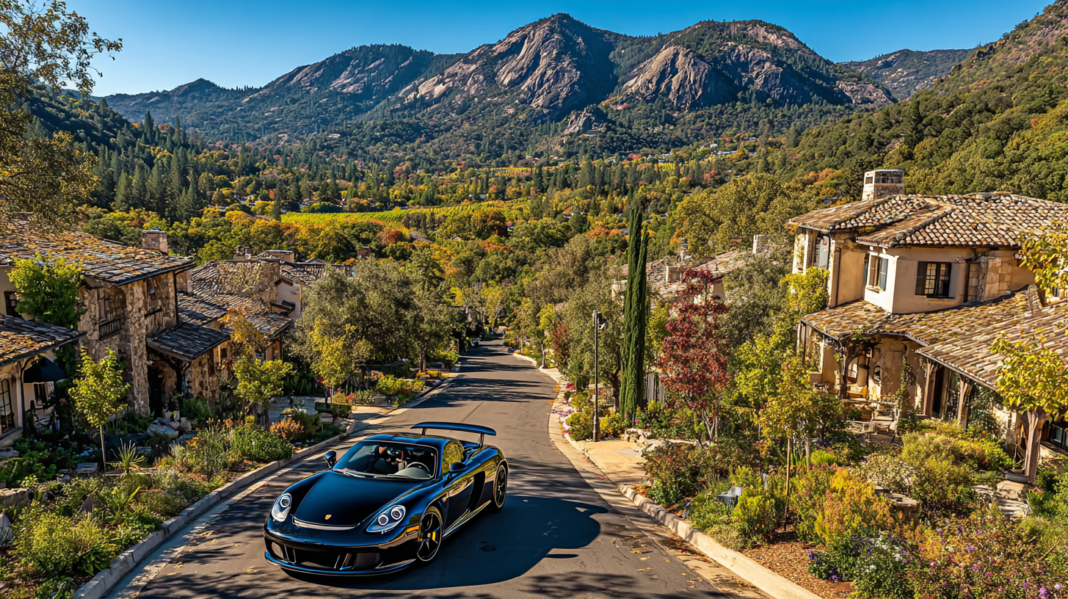
The Porsche Carrera GT occupies a unique place in automotive history. Produced from 2003 to 2007, it was a car that arrived at the end of an era, just before the introduction of advanced electronic stability controls, dual-clutch transmissions, and hybrid powertrains. It was a machine that relied on mechanical grip, driver skill, and a naturally aspirated V10 engine that revved to 8,400 rpm. It was the last pure analog supercar from a major manufacturer.
More than 20 years after its introduction, the Carrera GT remains one of the most revered driver’s cars ever built. Its 5.7 liter V10, its six-speed manual transmission, its carbon fiber monocoque, and its lack of electronic intervention have made it a legend among enthusiasts. It is a car that rewards skill, demands respect, and communicates with the driver in ways that modern supercars cannot.
This article provides a comprehensive examination of the Porsche Carrera GT, including its development history, performance specifications, engineering, driving experience, and why it remains one of the purest driving experiences ever created.
The Genesis: From Le Mans to the Road
The Carrera GT’s story begins with a canceled Le Mans prototype. In the late 1990s, Porsche was developing a V10 engine for a planned Le Mans prototype program. The engine was a 5.5 liter naturally aspirated V10, designed to produce over 600 horsepower. When the program was canceled, Porsche’s engineers looked for another use for the engine.
The decision was made to develop a road car around the V10. The result was the Carrera GT, unveiled as a concept at the 2000 Paris Motor Show. The response was overwhelmingly positive, and Porsche approved the car for production in 2001.
The Carrera GT was designed to be a no-compromises supercar. It would use a carbon fiber monocoque, a carbon fiber subframe, and carbon fiber body panels. It would have no electronic stability control, no power steering (in early versions), and a manual transmission. It would be a car for drivers, not for computers.
Production began in 2003 and ended in 2007. A total of 1,270 units were built, making the Carrera GT a rare and exclusive machine.
Powertrain: The Heart of the Carrera GT
The V10 Engine
The Carrera GT is powered by a 5.7 liter naturally aspirated V10 engine, designated the M80. The engine is derived from the Le Mans prototype unit, with modifications for road use. It produces 603 horsepower at 8,000 rpm and 435 lb-ft of torque at 5,750 rpm. The redline is 8,400 rpm.
The engine’s sound is one of its defining characteristics. The V10 produces a high-pitched wail that builds to a crescendo as the revs climb toward the redline. The sound is sharp, urgent, and deeply satisfying, with a character that distinguishes it from V8s and V12s.
The engine features a dry-sump lubrication system, which allows it to withstand high g-forces during cornering. The intake system uses individual throttle bodies, contributing to the engine’s immediate throttle response.
Transmission
Power is transmitted to the rear wheels through a six-speed manual transmission. The transmission is mounted at the rear of the car in a transaxle configuration, contributing to the car’s near-perfect weight distribution.
The transmission features a traditional H-pattern gate and a clutch pedal with moderate weight. The shift action is mechanical and precise, with clear engagement points. There is no rev-matching system; the driver must heel-toe downshift manually.
Performance
The Carrera GT accelerates from 0 to 60 miles per hour in 3.5 seconds. The quarter mile is completed in approximately 11.2 seconds at 130 miles per hour. Top speed is 205 miles per hour.
These figures remain respectable today, though they have been surpassed by many modern supercars. The Carrera GT’s performance is not defined by its numbers but by the way it delivers them.
Chassis and Construction
Carbon Fiber Monocoque
The Carrera GT was one of the first production cars to use a carbon fiber monocoque. The structure is a single-piece carbon fiber tub that provides exceptional rigidity and occupant protection while minimizing weight. The monocoque weighs only 100 kilograms.
The subframes are also constructed from carbon fiber, as are the body panels. The result is a dry weight of approximately 1,380 kilograms (3,042 pounds).
Suspension
The Carrera GT features double-wishbone suspension at all four corners, with pushrod-actuated dampers. The suspension is adjustable, with settings for ride height, camber, and damping. The system is designed to provide precise control over wheel motion and excellent feedback to the driver.
The suspension is firm but not punishing. The car remains flat through corners, with minimal body roll. The communication through the chassis is exceptional, providing the driver with detailed information about tire grip and road surface.
Steering
The Carrera GT does not have power steering. The steering rack is unassisted, providing direct, unfiltered feedback from the front tires. The effort is high at low speeds, making parking maneuvers difficult, but at speed, the steering is precise and communicative.
The lack of power assistance is a defining feature of the Carrera GT. It provides a level of feedback that no electric power steering system can match.
Brakes
The braking system uses carbon ceramic discs with six-piston calipers at the front and four-piston calipers at the rear. The system provides exceptional stopping power, with consistent pedal feel and resistance to fade during track use. The carbon ceramic brakes were a pioneering feature for a production car.
Wheels and Tires
The Carrera GT rides on 19-inch front wheels and 20-inch rear wheels, wrapped in specially developed tires. The front tires are 265/35 ZR19, and the rear tires are 335/30 ZR20. The tires were developed in partnership with Michelin, with a compound and construction designed for maximum grip.
Design
Exterior Styling
The Carrera GT’s exterior design is characterized by its low, wide stance and its functional aerodynamic elements. The front end features a prominent splitter and large air intakes that feed cooling air to the engine and brakes. The headlights are integrated into the bodywork, with a design that references Porsche’s racing cars.
The side profile shows the mid-engine proportions, with a long wheelbase, short overhangs, and a cabin positioned forward of the rear axle. The removable roof panel sits above the cabin, and the engine air intakes are located behind the doors.
The rear end features a prominent rear wing that deploys at speed, a large diffuser, and quad exhaust outlets. The taillights are slim and integrated into the bodywork.
Interior Design
The interior of the Carrera GT is focused on the driver. The seats are carbon fiber racing buckets with leather upholstery, providing lateral support during cornering. The dashboard features a digital instrument cluster with a central tachometer, a speedometer, and auxiliary gauges.
The steering wheel is a small-diameter unit wrapped in leather, with no controls or buttons. The shift lever is machined from aluminum, with a leather boot and a traditional H-pattern gate.
The interior is stripped back compared to modern supercars. There is no infotainment screen, no premium audio system, and no sound deadening. The focus is entirely on driving.
Driving Experience
On Road Character
The Carrera GT is a car that demands respect. The steering is heavy at low speeds, the clutch requires precise modulation, and the engine produces a constant mechanical whir that fills the cabin. The car is not comfortable, not quiet, and not relaxing. It demands attention and engagement.
Yet for drivers who are willing to meet its demands, the Carrera GT rewards. The steering provides feedback that is unmatched by any modern car. The engine responds immediately to throttle inputs, with power building linearly to the 8,400 rpm redline. The chassis communicates every detail of the road surface.
The car is not a daily driver. It is too stiff, too loud, and too demanding for regular use. But on the right road, on the right day, it is one of the most rewarding cars ever built.
On Track Behavior
When driven on a track, the Carrera GT reveals the depth of its engineering. The brakes provide consistent stopping power lap after lap, with a pedal feel that inspires confidence. The chassis remains composed through corners, with the mechanical grip providing a level of adhesion that is impressive for a car of its era.
The car’s rear-wheel-drive layout and lack of electronic aids require skill to manage. The car can be rotated on corner entry with trail braking, and the throttle can be used to adjust the cornering attitude on exit. The Carrera GT is a car that rewards smooth, precise inputs and punishes abrupt or aggressive actions.
The Sound
The V10 engine’s sound is one of the Carrera GT’s defining characteristics. The engine produces a high-pitched wail as the revs climb toward the 8,400 rpm redline. The sound is sharp, urgent, and deeply satisfying, with a quality that distinguishes it from every other production engine.
The sound is not synthesized or augmented. It is the natural product of a 5.7 liter V10 with a cross-plane crankshaft and a free-breathing exhaust system. It is a sound that has become legendary among enthusiasts.
The Carrera GT’s Legacy
The End of an Era
The Carrera GT arrived at the end of an era. It was one of the last supercars without electronic stability control, without a dual-clutch transmission, and without power steering. It was a car that relied on the driver’s skill, not on computers.
After the Carrera GT, Porsche introduced the 918 Spyder, a plug-in hybrid with all-wheel drive, a dual-clutch transmission, and advanced electronic aids. The 918 Spyder is a remarkable car, but it is a different kind of machine. The Carrera GT represents a pure, analog experience that modern cars cannot replicate.
Collector Status
The Carrera GT has become a highly sought-after collector car. Its limited production run of 1,270 units, its status as the last analog supercar, and its legendary driving experience have driven values to significant heights. Well-maintained examples now trade for prices well above their original window stickers.
The Carrera GT’s value has appreciated steadily over the years. It is regarded as one of the great driver’s cars of its era, and its reputation continues to grow.
The Driving Experience
What sets the Carrera GT apart from other supercars is its driving experience. The unassisted steering, the manual transmission, the naturally aspirated V10, and the lack of electronic aids create a connection between driver and car that is rare. The Carrera GT does not isolate the driver; it involves them in every aspect of the driving process.
For drivers who value this connection, the Carrera GT is one of the best cars ever built.
How the Carrera GT Stacks Up Against Modern Rivals
Against the Porsche 918 Spyder
The Porsche 918 Spyder is the Carrera GT’s successor. It is a plug-in hybrid with 887 horsepower, all-wheel drive, and a dual-clutch transmission.
The 918 Spyder’s advantage is its performance and its technology. The car is faster, more efficient, and more capable than the Carrera GT.
The Carrera GT’s advantage is its analog character. The unassisted steering, the manual transmission, and the lack of electronic aids create a driving experience that the 918 Spyder cannot match.
Against the Ferrari F50
The Ferrari F50 is a contemporary of the Carrera GT, produced from 1995 to 1997. It features a 4.7 liter naturally aspirated V12 producing 513 horsepower.
The F50’s advantage is its Formula 1-derived engine and its open-top design. The V12 produces a distinctive sound, and the removable roof provides an open-air experience.
The Carrera GT’s advantage is its handling and its precision. The Porsche’s chassis tuning and steering feedback are superior to the Ferrari’s.
Against the McLaren F1
The McLaren F1 is widely regarded as one of the greatest driver’s cars ever built. It features a 6.1 liter naturally aspirated V12 producing 618 horsepower and a central driving position.
The F1’s advantage is its engineering purity and its heritage. The McLaren is lighter than the Carrera GT, and its central driving position is unique.
The Carrera GT’s advantage is its availability. The McLaren F1 is extremely rare and valuable, with prices exceeding $20 million. The Carrera GT, while expensive, is more accessible to collectors.
Against the Mercedes-Benz SLR McLaren
The Mercedes-Benz SLR McLaren was produced from 2003 to 2010. It features a 5.4 liter supercharged V8 producing 617 horsepower.
The SLR’s advantage is its power and its luxury. The Mercedes produces more torque than the Carrera GT, and its interior is more luxurious.
The Carrera GT’s advantage is its handling and its engagement. The Porsche is lighter, more agile, and more rewarding to drive.
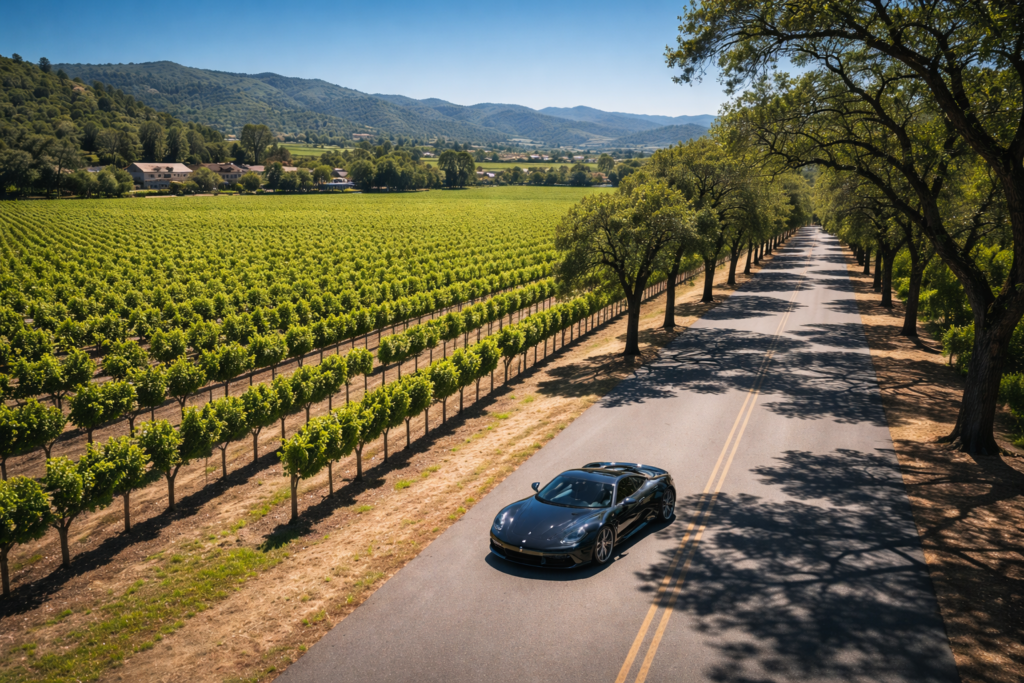
Specifications Summary
| Specification | Value |
|---|---|
| Engine | 5.7L naturally aspirated V10 |
| Horsepower | 603 hp at 8,000 rpm |
| Torque | 435 lb-ft at 5,750 rpm |
| Redline | 8,400 rpm |
| Transmission | 6-speed manual |
| Drive | Rear wheel drive |
| 0-60 mph | 3.5 seconds |
| Top Speed | 205 mph |
| Weight | 1,380 kg dry |
| Production | 1,270 units |
| Original Price | $440,000 |
Conclusion
The Porsche Carrera GT is one of the purest driving experiences ever created. Its 5.7 liter naturally aspirated V10 produces 603 horsepower and a sound that is among the best in automotive history. Its six-speed manual transmission, unassisted steering, and lack of electronic aids place the driver at the center of the experience. Its carbon fiber construction and advanced (for its time) chassis engineering make it a capable track machine.
The Carrera GT is not a car for everyone. Its steering is heavy at low speeds, its ride is firm, and its cabin is stripped back. It demands skill and attention. But for drivers who are willing to meet its demands, it rewards with a level of connection and engagement that modern supercars cannot match.
The Carrera GT also represents the end of an era. It was the last pure analog supercar from a major manufacturer, and it arrived just before the industry shifted toward electronic aids, dual-clutch transmissions, and hybrid powertrains. For enthusiasts who value the analog driving experience, the Carrera GT is a reminder of what was lost.
Today, the Carrera GT is a highly sought-after collector car. Its limited production run, its legendary driving experience, and its status as the last of its kind have driven values to significant heights. But the Carrera GT is not a car to be stored; it is a car to be driven. It rewards those who take it to the track, who explore its limits, who connect with its character.
The Porsche Carrera GT remains one of the purest driving experiences ever created. It is a testament to Porsche’s engineering, and it stands as one of the most revered driver’s cars of all time.

