

The sun is setting over the Circuit de la Sarthe in Le Mans, France. The track is quiet now, but the ghosts of the past echo through the trees. The 24 Hours of Le Mans is the oldest active endurance race in the world, and for over a century it has served as a proving ground for automotive technology. The lessons learned on this circuit have shaped the cars we drive on the road.
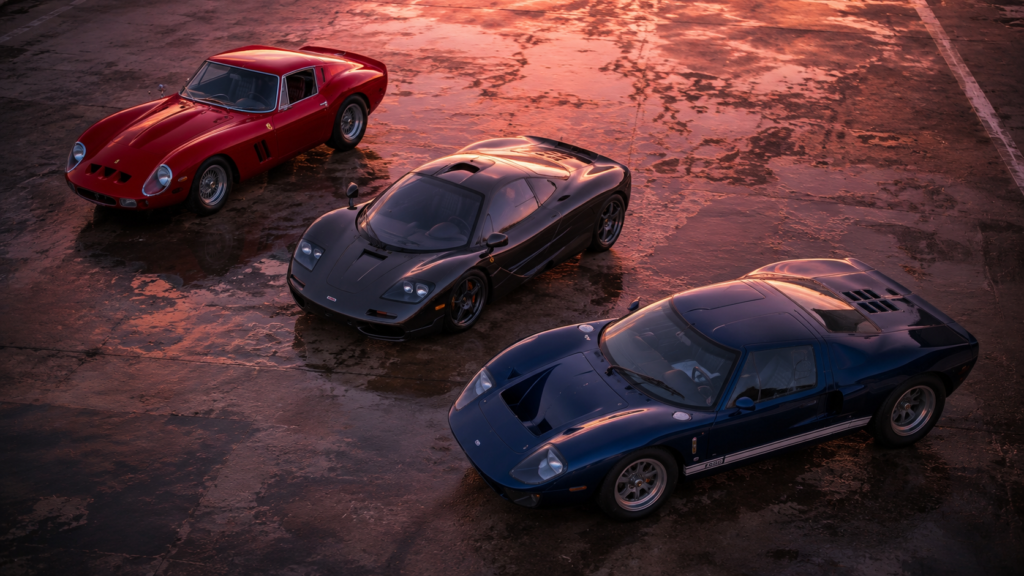
From the Ferrari 250 GTO to the McLaren F1, Le Mans has directly influenced supercar engineering for 70 years. The race is a technology laboratory, where high-performance batteries, aerodynamic innovations, and hybrid powertrains are developed and tested under extreme conditions. This article explains how endurance racing has shaped road cars, from the early days of disc brakes to the latest hypercar technologies.
The Circuit: A Proving Ground for Innovation
The 24 Hours of Le Mans is a unique race. It is 24 hours long, covering over 3,000 miles on a circuit that is part permanent racetrack and part public road. The cars run at full throttle for two-thirds of the race, reaching speeds of up to 350 km/h. The conditions are brutal. The heat, the vibration, and the constant demand for speed push the cars to their limits.
This environment is a perfect test bed for new technology. If something holds up at Le Mans, it is a valuable gain in knowledge for series production. The technology transfer is not always immediate, but it is real.
The Early Innovations: Disc Brakes and Wipers
Some of the technologies that Le Mans helped develop are now standard on every car. Windscreen wipers are largely thought to have been influenced by endurance racing in the pioneering days of the Le Mans 24 Hours. The changing weather conditions at the circuits of the world saw manufacturers use race cars as test beds for whatever the conditions.
Disc brakes were tried and tested by racing in the immediate post-war period and are now an intrinsic part of the automobile. The technology was first seen at Le Mans. The ability to stop a car from high speeds, lap after lap, without fading was a crucial development.
The 1990s: Homologation Rules and Road Cars
In the 1990s, homologation rules spawned some of the wildest road cars ever seen. The GT1 class required carmakers to create at least 25 road cars in order for their racers to be eligible to take on events such as the 24 Hours of Le Mans.
McLaren kicked things off with the F1 GTR in 1995, which famously won that year’s drenched Le Mans 24 Hours. The F1 GTR’s success led to the production of the F1 LM, a road-legal version of the race car. The LM featured a powerful BMW V12 and minimal creature comforts, weighing just over 2,300 pounds.
Jaguar followed by building the XJ220. Mercedes-Benz showed off the CLK GTR, with a large naturally aspirated V12 producing about 600 horsepower, weighing just 1000 kg. The Porsche 911 GT1, meanwhile, featured a full carbon-fiber chassis, a water-cooled, twin-turbo flat-six, and weighed just 1050 kg. Just 21 cars were built for the road.
The McLaren F1 GTR’s Le Mans victory in 1995 was the most recent Le Mans victory for a genuinely road-derived car. The win was a surprise. The race was expected to be won by purpose-built prototypes, but the McLaren F1 GTRs filled four of the top five positions. The winning car was a testament to the car’s robustness and the skill of the drivers.
The Ferrari 250 GTO: A Le Mans Legend
The Ferrari 250 GTO is one of the most famous cars to emerge from Le Mans. It was born in a tumultuous chapter in Ferrari history and never won Le Mans outright, only the GT class. But its legacy is immense.
The GTO was built on a 2400mm wheelbase and used a 3-liter V12 power unit, essentially a 250 TR specification engine, producing a claimed power output of 300 bhp. It was paired with a new 5-speed, all-synchro gearbox. The car was a dual-purpose sports-racer, capable of winning on the track and being driven on the road. Only 39 were ever built.
Today, the 250 GTO is the most valuable car in the world. The car’s desirability is driven by its racing history, its beauty, and its rarity.
The Longtails: Aero Innovations on the Mulsanne
The Mulsanne Straight, a 3.7-mile section of the Circuit de la Sarthe, has been the spawning ground of fantastical automotive oddities. Before 1990, the straight was unchicaned, and cars would reach speeds over 250 mph. To cope with these speeds, engineers developed “longtail” aerodynamic bodies, designed for low drag.
The Porsche 908 LH (Langheck) was one of the most successful longtails. It approached 200 mph on the Mulsanne with a relatively modest 350 hp, thanks to a slippery drag coefficient. In 1969, a 908 LH finished second at Le Mans, only two seconds behind the winning Ford GT40. The Porsche 935/78 “Moby Dick” was another longtail, achieving a low drag coefficient and touching 227 mph on the Mulsanne.
The Ford GT40, which won Le Mans in 1966, 1967, 1968, and 1969, was also a product of Le Mans engineering. The 427-cubic-inch V-8 produced 485 to 505 horsepower, and the car’s top speed was 213 mph, achieved by a Mk IV model in 1967. The GT40’s legacy extended to the modern Ford GT, which won Le Mans in its debut appearance in 2016.
The Hypercar Era: Hybrid Technology
The modern Le Mans Hypercar era has driven the development of hybrid technology. The high-performance batteries that charge and recuperate quickly are being developed with an eye toward improving fast charging in road cars of the future. The battery-engineered powertrains which have won Le Mans are now commonplace in road cars.
The technology transfer is not always immediate, but it is real. Racing is an extreme endurance test in which the cars are pushed to their limits. If something holds up, it is a valuable gain in knowledge for series production.
The Circuit de la Sarthe Evening
The sun has set over the Circuit de la Sarthe. The track is quiet. The ghosts of the past have faded into the night.
The Le Mans legacy is not just about the race. It is about the cars that were born from it. The Ferrari 250 GTO, the McLaren F1, the Ford GT40 these are the cars that defined supercar engineering. They were shaped by the demands of the track, and they continue to influence the cars we drive today.
Key Takeaways
- Le Mans has been a technology laboratory for over a century, developing innovations like disc brakes, windscreen wipers, and hybrid powertrains.
- Homologation rules in the 1990s spawned a generation of road cars, including the McLaren F1, Porsche 911 GT1, and Mercedes CLK GTR.
- The Ferrari 250 GTO is one of the most valuable cars in history, a direct product of Le Mans racing heritage.
- Longtail aerodynamic bodies, developed for the Mulsanne Straight, influenced supercar design for decades.
- The Hypercar era continues to drive hybrid technology development, with batteries and electric motors being tested under extreme conditions.
Conclusion
The 24 Hours of Le Mans is more than a race. It is a crucible, a place where cars and drivers are tested to their limits. The innovations developed on the Circuit de la Sarthe have shaped the cars we drive on the road, from the earliest disc brakes to the latest hybrid hypercars.
The circuit is quiet now, but the legacy endures. The Ferrari 250 GTO, the McLaren F1, the Ford GT40 they are all products of Le Mans. They are the proof that racing heritage shapes road cars.

