
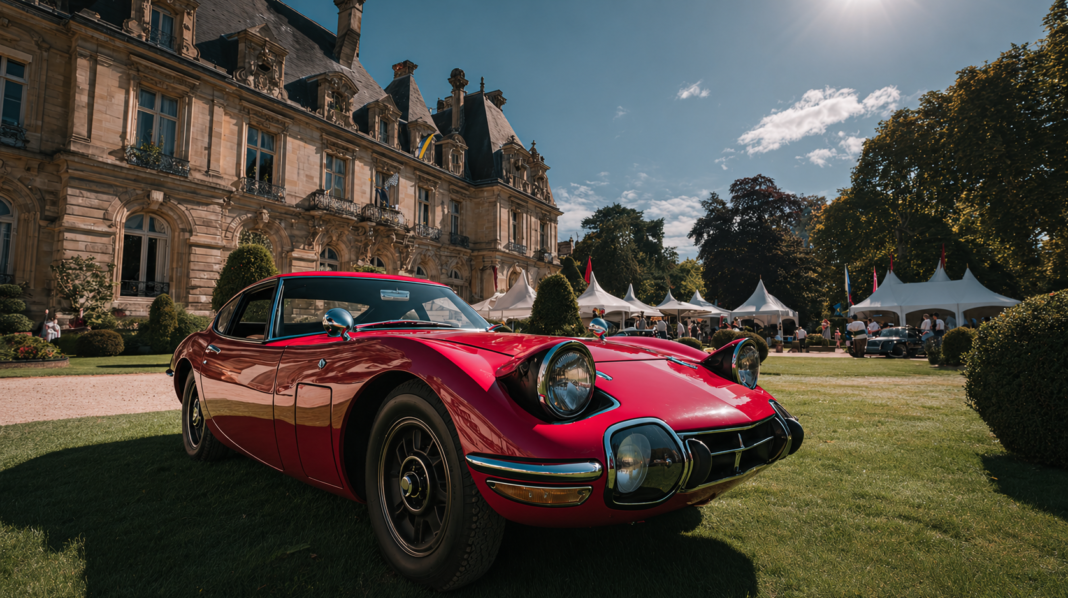
Produced from 1967 to 1970, only 337 units were built, including 62 right-hand drive models and 225 left-hand drive models for export. Today, the 2000GT is one of the most valuable Japanese cars ever produced, with well-maintained examples trading for over $1 million. Its design, engineering, and rarity have made it a legend.
This article provides a comprehensive examination of the Toyota 2000GT, including its development, design, engineering, performance, and why it remains Japan’s first true supercar.
The Genesis: A Collaboration with Yamaha
The 2000GT was born from a collaboration between Toyota and Yamaha. In the early 1960s, Yamaha had been developing its own sports car, the YX-30, but lacked the resources to bring it to production. Toyota saw potential in the project and partnered with Yamaha to develop a new grand tourer.
The design was led by Toyota designer Satoru Nozaki, with input from Yamaha’s engineers. The goal was to create a car that could compete with European rivals like the Jaguar E-Type and the Mercedes-Benz 280SL. The result was the 2000GT, a car that combined Japanese craftsmanship with European styling cues.
The 2000GT was first shown as a concept at the 1965 Tokyo Motor Show. The response was overwhelmingly positive, and Toyota approved the car for production.
Design: A Masterpiece of Styling
The Silhouette
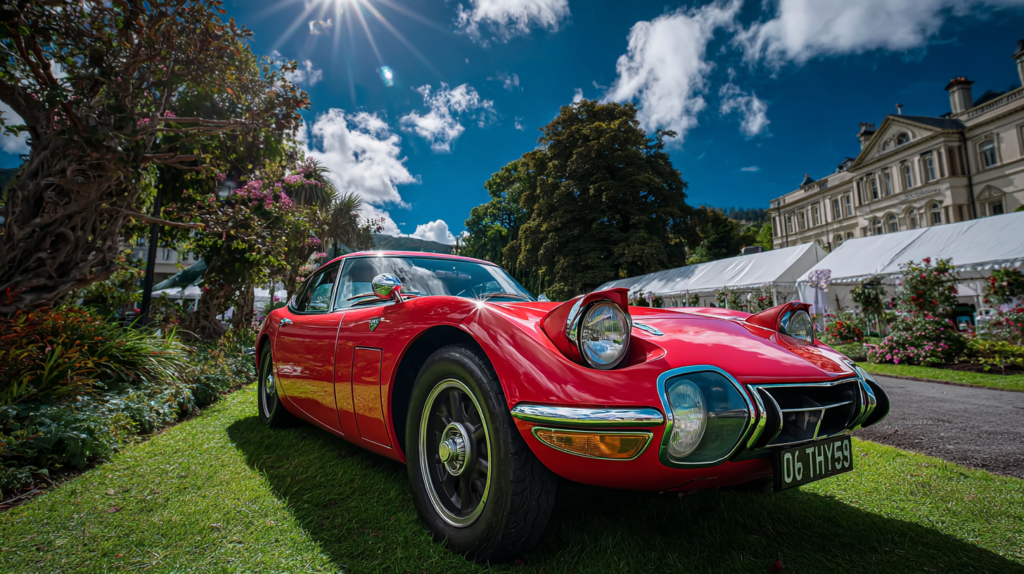
The 2000GT’s exterior design is one of the most beautiful of any car from its era. The long hood, low roofline, and fastback tail give it classic grand tourer proportions. The body is lean and muscular, with subtle curves and a distinctive front end.
The car measures 4,175 mm in length, 1,600 mm in width, and just 1,160 mm in height. The low height, combined with the long, sweeping hood, gives the 2000GT a dramatic, purposeful stance.
The Front End
The front end features a protruding grille with a chrome surround and a prominent Toyota emblem. The headlights are retractable, a feature that was advanced for the time. The front bumper is slim and integrated into the bodywork.
The Side Profile
The side profile shows the long hood, the low cabin, and the fastback tail. The wheel arches are flared, giving the car a muscular appearance. The side windows are frameless, and the doors are long and low.
The Rear End
The rear end features a fastback tail that slopes down to a small spoiler. The taillights are slim and horizontal, integrated into the bodywork. The quad exhaust outlets are a distinctive feature.
Interior Design
The interior of the 2000GT is elegant and driver-focused. The dashboard is finished in wood, with Smiths gauges that are clear and legible. The seats are low and supportive, upholstered in leather.
The cabin is small, with limited headroom and legroom. The 2000GT is not a car for tall drivers. But the quality of the materials and the craftsmanship are exceptional.
Engineering: Advanced for Its Time
The Engine
The 2000GT is powered by a 2.0 liter naturally aspirated inline-six engine, designated the 3M. The engine is a development of the unit used in the Toyota Crown, with modifications from Yamaha. It features a twin-cam head, three two-barrel carburetors, and a nine-bearing crankshaft.
The engine produces 148 horsepower at 6,600 rpm and 129 lb-ft of torque at 5,000 rpm. The redline is 7,000 rpm.
The specific output of 74 horsepower per liter was impressive for its era.
Transmission
Power is transmitted to the rear wheels through a five-speed manual transmission. The transmission is a floor-mounted unit with a short-throw shifter. A three-speed automatic was also available.
Suspension
The 2000GT features double-wishbone suspension at all four corners, with coil springs and telescopic dampers. The suspension was tuned for grand touring, providing a balance of comfort and handling.
Brakes
The braking system uses disc brakes at all four corners, a feature that was advanced for a production car in the 1960s.
Performance
The 2000GT accelerates from 0 to 60 miles per hour in 10.0 seconds. Top speed is 127 miles per hour (204 kilometers per hour).
These figures were competitive with European rivals of the era, including the Jaguar E-Type and the Porsche 911.
The Yamaha Connection
Yamaha’s involvement in the 2000GT was significant. The company contributed to the engine development, helping to create the twin-cam head and the carburetion system. Yamaha’s experience with high-performance engines, gained from its work in motorsports, was invaluable.
The 2000GT’s engine is a testament to the partnership. It is smooth, responsive, and willing to rev. The sound is distinctive, with a high-pitched wail at high rpm.
Racing Heritage
The 2000GT had a brief but successful racing career. In 1966, a modified 2000GT lapped the Yatabe Test Track at an average speed of 124.5 miles per hour, a world record for cars with engines under 2.0 liters.
The car also competed in the 1967 Fuji 24 Hour Race, finishing second and third. In 1967, a 2000GT set a new world record for endurance, covering 20,000 miles in ten days at an average speed of 118 miles per hour.
The 2000GT in Pop Culture
The 2000GT’s most famous appearance was in the 1967 James Bond film You Only Live Twice. Two specially modified 2000GTs were built for the film, including a roadster version without a roof. The car was driven by Bond (Sean Connery) in several scenes.
The Bond connection cemented the 2000GT’s status as an icon. It introduced the car to a global audience and associated it with glamour, sophistication, and adventure.
Rarity and Collectability
Production Numbers
Toyota built 337 units of the 2000GT between 1967 and 1970. This includes 62 right-hand drive models for the Japanese market, 109 left-hand drive models for the US market, and 166 left-hand drive models for other markets.
Pricing
The 2000GT carried a base price of approximately $6,800 when new, which was comparable to the Jaguar E-Type. Today, well-maintained examples trade for over $1 million. The most desirable models are the early cars and the Bond roadsters, which have sold for over $2 million.
Collector Status
The 2000GT is one of the most sought-after Japanese collector cars in the world. Its rarity, its beauty, and its significance as Japan’s first supercar have made it a prized possession for collectors.
How the 2000GT Stacks Up Against Rivals
Against the Jaguar E-Type
The Jaguar E-Type is the 2000GT’s most direct competitor. The E-Type features a 3.8 liter inline-six producing 265 horsepower.
The E-Type’s advantage is its power and its legacy. The Jaguar is faster and more iconic.
The 2000GT’s advantage is its rarity and its craftsmanship. The Toyota is more exclusive, and its build quality is superior.
Against the Porsche 911
The Porsche 911 is a rear-engine sports car with a 2.0 liter flat-six producing 130 horsepower.
The 911’s advantage is its handling and its longevity. The Porsche has been in production for decades, and its rear-engine layout provides unique dynamics.
The 2000GT’s advantage is its design and its rarity. The Toyota is more beautiful and more exclusive.
Against the Mercedes-Benz 280SL
The Mercedes-Benz 280SL is a grand tourer with a 2.8 liter inline-six producing 160 horsepower.
The 280SL’s advantage is its refinement and its durability. The Mercedes is more comfortable and more practical.
The 2000GT’s advantage is its performance and its design. The Toyota is faster and more dramatic.
The 2000GT’s Legacy
The First Japanese Supercar
The 2000GT is widely regarded as Japan’s first true supercar. It proved that Japanese manufacturers could compete with the best from Europe. It established a template for future Japanese performance cars, including the Datsun 240Z, the Mazda RX-7, and the Toyota Supra.
A Design Icon
The 2000GT’s design has aged gracefully. The long hood, low roofline, and fastback tail remain beautiful today. It is widely regarded as one of the most beautiful cars of its era, and it has influenced generations of designers.
A Collector Legend
The 2000GT is one of the most valuable Japanese cars in existence. Its rarity, its beauty, and its significance have made it a legend among collectors. It is a car that will only become more valuable as time passes.
Specifications Summary
| Specification | Value |
|---|---|
| Engine | 2.0L naturally aspirated inline-six |
| Horsepower | 148 hp at 6,600 rpm |
| Torque | 129 lb-ft at 5,000 rpm |
| Transmission | 5-speed manual |
| Drive | Rear wheel drive |
| 0-60 mph | 10.0 seconds |
| Top Speed | 127 mph |
| Weight | 1,120 kg |
| Production | 337 units |
| Original Price | $6,800 |
Conclusion
The Toyota 2000GT is Japan’s first true supercar. It was a stunningly beautiful, technologically advanced grand tourer that proved Japanese manufacturers could compete with the best from Europe. Its 2.0 liter inline-six engine, five-speed manual transmission, and double-wishbone suspension were state of the art for the 1960s. Its design remains timeless.
The 2000GT is not a car for everyone. Its production was limited to 337 units, its price today is over $1 million, and its small cabin means it is not practical for tall drivers. But for the collectors who own a 2000GT, the car offers something that no other Japanese vehicle can provide: the experience of driving Japan’s first supercar.
The 2000GT also represents a turning point in Toyota’s history. It demonstrated that the company could build a world-class performance car, and it paved the way for future icons like the Supra and the LFA. It is a car that will forever be remembered as one of the greatest Japanese cars ever built.
The Toyota 2000GT is a legend, and it remains one of the most beautiful and significant cars in automotive history.

