Home Blog Page 4

Ferrari 296 Speciale: Why Ferrari’s Most Focused Mid Engine Supercar Continues to Lead the Conversation

0

The Ferrari 296 Speciale Demonstrates How Precision Engineering Can Elevate a Modern Supercar

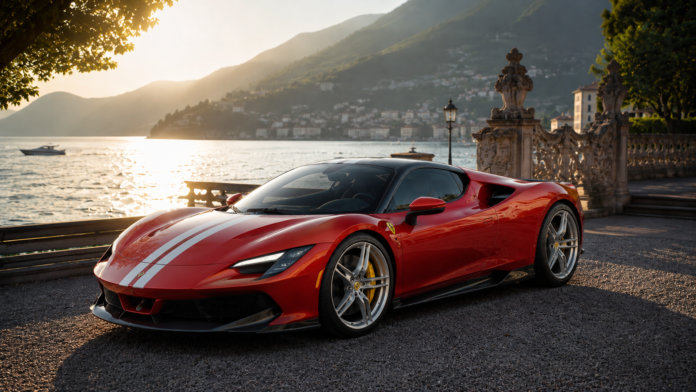
On a warm summer morning in Lake Como, Italy, visitors gathered along the elegant promenade of Villa Olmo, where some of Italy’s finest automobiles often appear during private automotive gatherings. Among the collection of grand tourers and classic Ferraris, one model consistently drew enthusiasts eager to study every detail. The Ferrari 296 Speciale represented a clear evolution of Ferrari’s mid engine performance philosophy, combining advanced hybrid technology with engineering refinements designed for drivers seeking a more focused experience.

As reviews and first driving impressions continue to emerge, the Ferrari 296 Speciale remains one of the most discussed high performance cars of the year. Rather than replacing the successful Ferrari 296 GTB, the Speciale builds upon its foundation through extensive chassis development, aerodynamic improvements, weight reduction, and increased performance.

For Ferrari enthusiasts, the Speciale reflects a familiar approach that has defined some of the company’s most respected models. It takes an already capable platform and transforms it into a more engaging machine without compromising everyday usability.

What Makes the Ferrari 296 Speciale Different?

The Ferrari 296 GTB introduced a new chapter for Ferrari with its twin turbocharged V6 hybrid powertrain. The 296 Speciale expands on that formula by focusing on every aspect of vehicle dynamics.

The development process concentrated on improving:

  • Aerodynamic efficiency
  • Chassis balance
  • Driver feedback
  • Weight reduction
  • Suspension tuning
  • Power delivery

Instead of relying solely on increased horsepower, Ferrari engineers refined multiple systems that collectively improve the driving experience.

This holistic philosophy has become one of Ferrari’s defining strengths when developing special series models.

Aerodynamics Play a Greater Role Than Ever

One of the most noticeable differences between the Ferrari 296 GTB and the Ferrari 296 Speciale is its aerodynamic package.

Revised front air intakes, redesigned rear bodywork, an optimized diffuser, and carefully managed airflow help generate additional downforce while maintaining overall efficiency.

The exterior changes remain elegant while serving clear functional purposes.

Every body panel contributes to cooling, stability, or aerodynamic balance.

This engineering approach reflects Ferrari’s extensive motorsport experience, where even minor airflow improvements can significantly influence performance.

A Lightweight Approach Improves Every Aspect of Driving

Reducing weight remains one of the most effective methods for improving vehicle performance.

Ferrari applied lightweight materials throughout the Speciale, allowing the car to respond more quickly to steering inputs while improving braking and cornering precision.

Weight savings benefit virtually every dynamic characteristic:

  • Faster direction changes
  • Improved acceleration
  • More responsive braking
  • Enhanced suspension control
  • Greater driver confidence on technical roads

Rather than emphasizing one performance metric, Ferrari focused on creating a balanced package.

Hybrid Performance Continues to Define Ferrari’s Future

The Ferrari 296 Speciale continues to use Ferrari’s advanced plug in hybrid architecture.

The twin turbocharged V6 works together with an electric motor to deliver immediate torque and smooth acceleration across a broad range of driving conditions.

Unlike early hybrid performance cars, modern Ferrari systems are designed to enhance driver engagement rather than isolate the driver from the mechanical experience.

Electric assistance improves responsiveness while allowing the combustion engine to deliver its distinctive character throughout the rev range.

The result is a driving experience that feels both contemporary and unmistakably Ferrari.

Interior Design Reflects a Driver Focused Philosophy

Inside the cabin, the Ferrari 296 Speciale maintains the minimalist design language introduced in recent Ferrari models.

Every control has been positioned to minimize distractions while allowing the driver to remain focused on the road.

Carbon fiber trim, Alcantara surfaces, lightweight seats, and premium materials reinforce the car’s sporting intentions without sacrificing craftsmanship.

The interior avoids unnecessary complexity, supporting Ferrari’s emphasis on precision driving.

Comparing the Ferrari 296 Speciale With the Ferrari 296 GTB

Although both vehicles share the same platform, the driving character differs considerably.

The Ferrari 296 GTB serves as an exceptionally capable road car suitable for everyday enjoyment.

The Ferrari 296 Speciale moves closer to Ferrari’s track inspired heritage by increasing driver involvement through more responsive handling, sharper steering, and refined chassis calibration.

Drivers considering both models are likely to evaluate several factors:

  • Intended driving environment
  • Comfort preferences
  • Track day participation
  • Collectability
  • Long term ownership goals

For many enthusiasts, the Speciale represents the more focused interpretation of the platform.

Why Collectors Are Paying Close Attention

Special series Ferraris have historically attracted significant interest among collectors because they often represent the highest performance evolution of an existing model.

The Ferrari 296 Speciale follows this established pattern.

Limited production, engineering improvements, and Ferrari’s reputation for developing special variants contribute to sustained collector interest.

While future market performance remains impossible to predict, demand for Ferrari’s performance focused editions has traditionally remained strong.

Ferrari Continues to Balance Innovation and Heritage

One of Ferrari’s greatest challenges has been integrating modern hybrid technology while preserving the emotional qualities that define the brand.

The Ferrari 296 Speciale demonstrates that electrification can complement rather than replace traditional performance characteristics.

The combination of lightweight engineering, responsive handling, advanced aerodynamics, and hybrid performance illustrates Ferrari’s current direction as regulations evolve across the automotive industry.

Final Thoughts

The Ferrari 296 Speciale is more than an updated version of the Ferrari 296 GTB. It represents Ferrari’s continued commitment to refining every element of the driving experience through thoughtful engineering rather than dramatic redesigns.

As new reviews and owner impressions continue to emerge, the Ferrari 296 Speciale remains one of the most relevant topics in the world of high performance automobiles. Its balance of hybrid technology, lightweight construction, aerodynamic efficiency, and driver engagement positions it among the most compelling supercars of 2026 for enthusiasts, collectors, and anyone following the evolution of Ferrari’s performance philosophy.
Nilu27: What Happens When a Koenigsegg Designer Goes Solo – A Night at the Quail Lodge

0

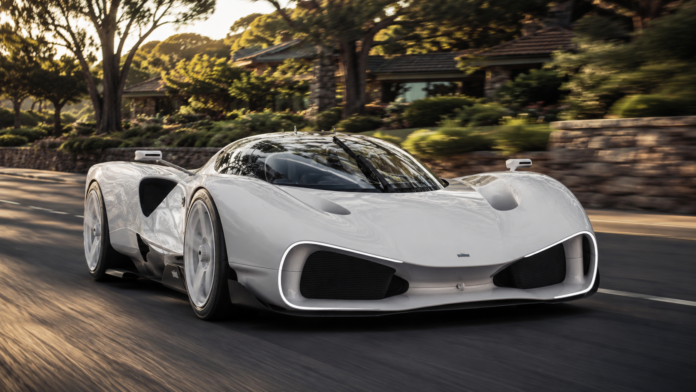
The sun is setting over the Monterey Peninsula as a low, sculpted silhouette sits on the lawn at the Quail Lodge in Carmel, California. The car has no screens, no steering wheel buttons, and no hybrid system. It is a pure, unfiltered expression of what happens when a designer who shaped the Bugatti Chiron, the Koenigsegg CC850, and the Lamborghini Huracán decides to build his own car. This is the Nilu27 NILU hypercar, and it represents a rebellion against everything the automotive industry is doing.

Sasha Selipanov, the founder of Nilu27, spent two decades designing cars for Volkswagen, Bugatti, Lamborghini, Genesis, and Koenigsegg. But he saw the industry’s pivot toward electrification and digitalization as a threat to the visceral, mechanical experience that defines a great driver’s car. So he left. He founded Nilu27 with his wife Inna, and he built the car he wanted to drive.

The Powertrain: A V12 That Defies the Trend

The heart of the NILU is a 6.5-liter naturally aspirated V12 engine developed by Hartley Engines of New Zealand. The engine features an 80-degree bank angle and a distinctive “Hot V” configuration that positions the exhaust headers between the cylinder banks. This allows heat to exit directly through the car’s fully exposed rear engine bay while contributing to a compact, performance-focused package.

The engine produces 1,070 horsepower at 11,000 rpm. It is a naturally aspirated masterpiece, with no turbochargers, no electric motors, and no hybrid assistance. The engine weighs just 200 kilograms and features 12 individual throttle bodies, a billet aluminum crankcase, forged connecting rods, and ultra-lightweight pistons. The sound is sharp and engaging, a high-revving wail that echoes off the cliffs of Carmel.

Power is sent to the rear wheels through a seven-speed manual transmission supplied by CIMA. The gearbox features a locking mechanism to prevent accidental reverse engagement, a nod to classic supercars like the Lamborghini Countach. The shift linkage is exposed, a mechanical centerpiece that connects the driver to the car.

The Chassis: Lightweight and Focused

The NILU is built around a carbon fiber monocoque with tubular aluminum subframes. The dry weight is 1,200 kilograms, giving it a power-to-weight ratio of nearly 1:1. The suspension uses double wishbones at all four corners with pushrod actuated dampers. The car rides on 20-inch front and 21-inch rear wheels wrapped in Michelin Pilot Sport Cup 2R tires, with Brembo carbon ceramic brakes providing immense stopping power.

The Interior: A Rebellion Against Screens

The NILU’s cabin is a deliberate rejection of modern supercar conventions. The seats are fixed, with only the pedal box, headrest, and mirrors adjustable. There are no buttons on the steering wheel. The only screen is the digital rearview mirror, required for the backup camera. The rest is analog: physical gauges, a gated shifter, and the sound of a V12 at 11,000 rpm.

Selipanov described the philosophy simply: “I made a 1,000 horsepower car with a manual gearbox because that’s how I wanted it.”

Production: Exclusive and Limited

Nilu27 plans to build 15 track-only examples first, followed by 54 street-legal versions. The Founder’s Edition Program allows customers to choose either configuration. Approximately 30 percent of the total production run of 69 units is already reserved. The price is approximately $3.7 million.

The Quail Evening

The NILU has completed its demonstration run. Its V12 has delivered the 1,070 horsepower that makes it one of the most powerful naturally aspirated cars ever built. The manual transmission has provided the direct mechanical engagement that purists crave. The driver, cocooned in the minimalist cabin, has experienced a level of performance that is both thrilling and raw.

The NILU is not a car for everyone. It is a car for those who value the pure, unfiltered experience of driving, who are willing to accept the compromises of a car built without compromise. But it represents a significant moment in automotive history. It is a car that proves the analog hypercar is not dead, that there is still a market for cars that prioritize engagement over technology.

The NILU is not just a car. It is a statement. It is a reminder that even in an era of electrification and automation, there is still room for a car that is built by hand, driven with intent, and cherished as art. The Koenigsegg designer has gone solo. And the result is unforgettable.

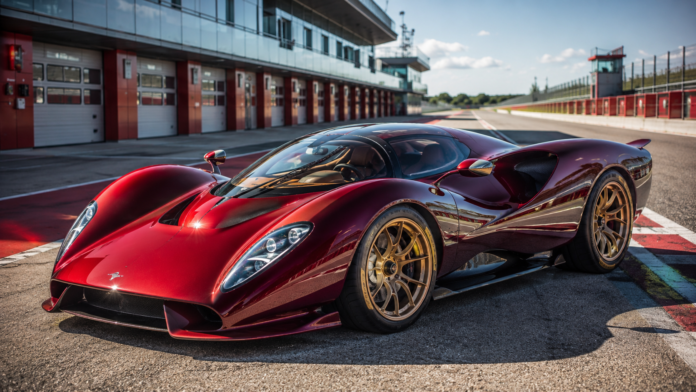
De Tomaso P900: A Track-Only V12 From a Revived Name – A Night at the Nürburgring

0

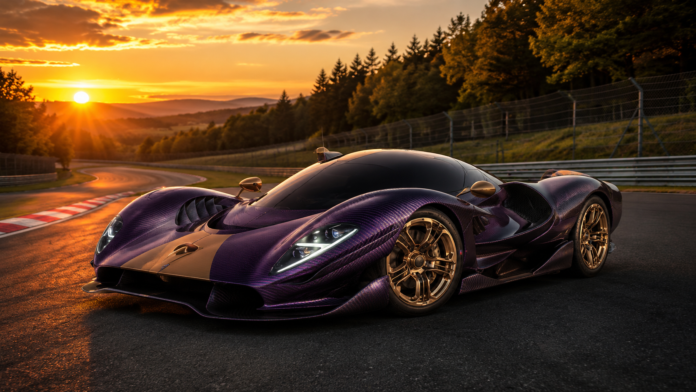
The lights of the Nürburgring Nordschleife glow in the distance as a low, alien silhouette sits in the pit lane. The engine is not running, but the presence is unmistakable. This is the De Tomaso P900, a track-only hypercar that represents the purest expression of the brand’s philosophy: a naturally aspirated V12, no electrification, no forced induction, and no road-legal ambitions.

The P900 was first revealed in late 2022 as a concept, and it has been through a series of changes since. The original plan called for a 6.2-liter V12 revving to 12,300 rpm, but the final production engine is a 7.0-liter unit that produces 900 horsepower at 9,500 rpm and redlines at 10,200 rpm. It is a car that De Tomaso built because the founders of the revived brand had a dream: to create a V12 that would have been worthy of Alejandro De Tomaso himself.

The Engine: A V12 in Defiance of Convention

The heart of the P900 is a 65-degree naturally aspirated V12 developed in collaboration with ItalTecnica, an Italian powertrain specialist. The engine displaces 7.0 liters and produces 900 horsepower at approximately 9,500 rpm, with a redline of 10,200 rpm. It is a masterpiece of engineering: a billet aluminum crankcase, forged connecting rods, ultra-lightweight pistons, and a full gear-driven cascade for the valvetrain.

The engine weighs less than 200 kilograms, making it remarkably light for its size and configuration. It features an eight-stage dry sump lubrication system, ensuring consistent oil pressure during high-g cornering. The carbon intake system is engineered as much for sound character as airflow efficiency. The objective, according to De Tomaso, was not purely power, but response, absolute immediacy on command. An engine not built for a brochure, but for the driver.

The engine’s sound is a defining characteristic. The 12-into-1 exhaust manifold, crafted from heat-reflective Inconel 625 steel piping, is designed to create a unique, high-pitched, visceral sound. De Tomaso describes it as a “10,200 rpm symphony,” a tribute to the era when noise was the defining signature of a marque.

The Chassis: LMP-Inspired Aerodynamics

The P900 is built around a carbon fiber monocoque, with a dry weight of just 900 kilograms. The car’s design is a collaboration with Jowyn Wong, the designer behind the Apollo IE and De Tomaso P72. The exterior features large air intakes, an active DRS-capable rear wing, and extensive underbody aero management. The aerodynamic package was validated in an F1-spec wind tunnel.

The result is a car with a power-to-weight ratio of 1:1, akin to the Koenigsegg One:1. The P900 is designed to deliver an authentic LMP-style driving experience. The car is fitted with an Xtrac sequential gearbox, which sends power to the rear wheels.

The Experience: More Than a Car

The P900 is not just a car; it is an experience. Owners will have access to “De Tomaso Competizione,” a driver’s club that organizes and helps run the car for owners at circuits. The cars will be stored and maintained by De Tomaso, and transported to and from track events. The first customer deliveries are expected to begin soon.

The Nürburgring Evening

The P900 has completed its demonstration run. Its V12 has delivered the 900 horsepower that makes it one of the most extreme track cars ever built. The carbon fiber chassis and advanced aerodynamics have kept it planted through the curves. The driver has experienced a level of performance that is as exclusive as it is extraordinary.

The P900 is not a car for everyone. It is limited to 18 units, priced at approximately $3 million each. But it represents a significant moment in De Tomaso’s history. It is a car that proves the naturally aspirated V12 is not dead, that there is still a market for cars that prioritize emotion over efficiency.

The P900 is not just a car. It is a statement. It is a reminder that even in an era of electrification and automation, there is still room for a car that is built by hand, driven with intent, and cherished as art. The track-only V12 has arrived. And it is unforgettable.

De Tomaso P72: Seven Years From Concept to First Customer Car – An Evening at the Autodromo di Modena

0

The lights of the Autodromo di Modena glow in the distance as a low, sculpted silhouette sits in the pit lane. The engine is not running, but the presence is unmistakable. This is the De Tomaso P72, a car that took seven years to go from concept to customer delivery, and it represents one of the longest waits in modern supercar history.

The P72 was first revealed as a concept at the 2019 Goodwood Festival of Speed. It was a stunning, retro-futuristic design that paid homage to the 1965 De Tomaso P70, a collaboration between Alejandro De Tomaso and Carroll Shelby. The response was immediate and enthusiastic. De Tomaso announced plans to build 72 units, each priced at approximately €1.6 million. The wait began.

The Long Road to Production

Seven years passed between the concept’s debut and the delivery of the first customer car. The project faced a series of challenges: the pandemic, supply chain disruptions, changes in manufacturing partners, and the sheer complexity of developing a clean-sheet carbon fiber chassis.

The chassis itself is a masterpiece of engineering. It is a single-piece carbon fiber monocoque with no bonded sections, extending from the central tub through the front and rear subframes. This structure enhances rigidity and reduces weight, providing a foundation for the car’s analog driving experience.

The Powertrain: A Supercharged V8 With a Manual

The heart of the P72 is a supercharged 5.0-liter V8 engine, sourced from Ford and developed in partnership with Roush. The engine produces 700 horsepower and 820 Nm of torque. It features bespoke forged internals and a De Tomaso-specific supercharger.

Power is sent to the rear wheels through a six-speed manual gearbox with short ratios, tuned for in-gear response rather than top-speed dominance. The exposed shift linkage is a tribute to De Tomaso’s racing heritage, a mechanical centerpiece that connects the driver to the car.

The Interior: A Rebellion Against Screens

The P72’s cabin is a deliberate rejection of modern supercar conventions. There are no touchscreens, no infotainment systems, no digital distractions. The dashboard features a series of gauges and physical controls, all housed in milled aluminum with a copper or rose gold finish. The only screen is the digital rearview mirror, required for the backup camera.

The interior is a study in craftsmanship. Leather is hand-stitched, metal surfaces are knurled, and every touchpoint has been considered. The P72 is a car designed to be driven, not operated.

The Customer Experience

The first customer car was delivered in 2026. It featured a dark finish with rose gold wheels and mirrors, and a blue leather interior. Each of the 72 units will be highly bespoke, tailored to the individual custodian’s preferences.

De Tomaso refers to buyers not as owners, but as “custodians.” It is a nod to the brand’s belief that the P72 is a rolling piece of art, meant to be preserved and enjoyed.

The Modena Evening

The P72 has completed its demonstration run. Its supercharged V8 has delivered the 700 horsepower that makes it one of the most engaging supercars on the road. The carbon fiber chassis and pushrod suspension have kept it planted through the curves. The driver, cocooned in the analog cabin, has experienced a level of performance that is as exclusive as it is extraordinary.

The P72 is not a car for everyone. It is limited to 72 units, priced at approximately $1.7 million each. But it represents a significant moment in De Tomaso’s history. It is the car that proves the manual, analog supercar is not dead, that there is still a market for cars that prioritize engagement over technology.

The P72 is not just a car. It is a statement. It is a reminder that even in an era of electrification and automation, there is still room for a car that is built by hand, driven with intent, and cherished as art. The wait is over. The P72 has arrived.

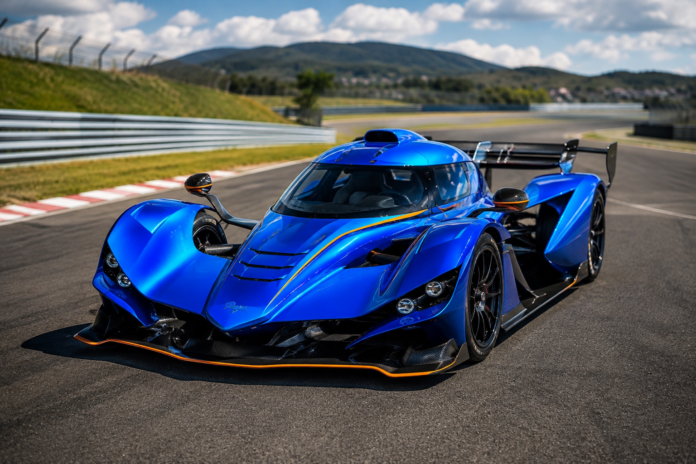
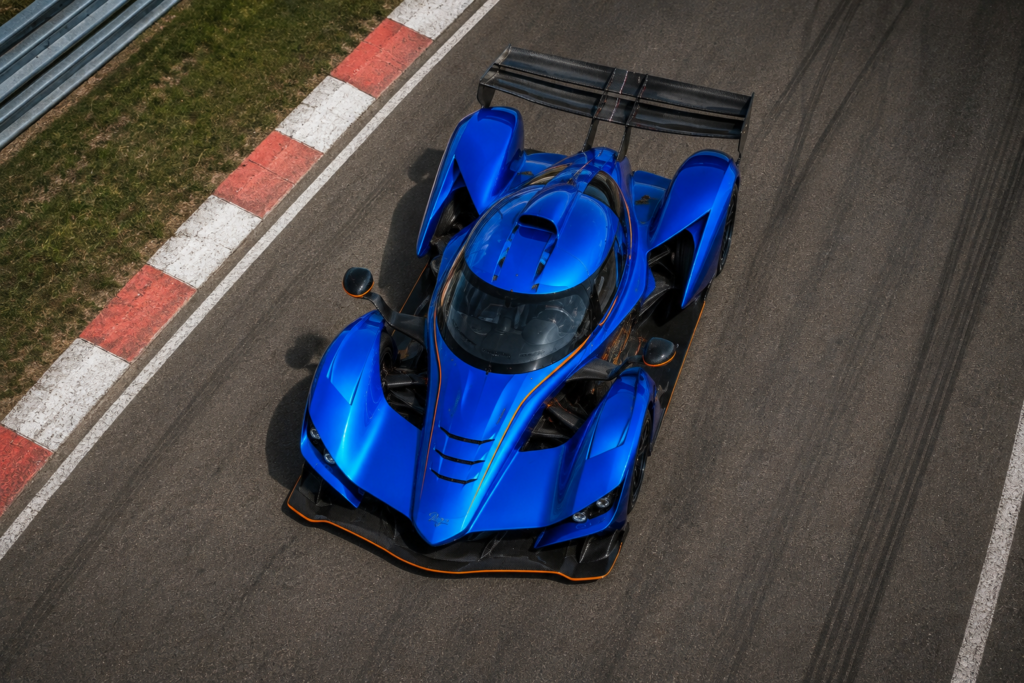
Praga Bohema: The Czech Track Car With a Nissan GT-R Heart – A Morning at the Autodrom Most

0

The morning sun is just beginning to warm the asphalt of the Autodrom Most in the Czech Republic as a low, aggressive silhouette carves through the curves of the circuit. The sound is unmistakable. A high-revving V6 wail echoes off the grandstands, blending with the hum of the nearby chemical plant. This is the Praga Bohema, a car that takes the heart of a Nissan GT-R and places it in a lightweight, road-legal chassis developed with input from Formula 1 engineers. Only 89 will be built, with an annual production rate of under 20 cars.

The Bohema is the culmination of Praga’s 110-year history. It is a road-legal track car that has been engineered to deliver an unparalleled driving experience, with a focus on weight reduction, aerodynamic efficiency, and mechanical grip. It is a car that is as comfortable on the track as it is on the road, and it represents the purest expression of Praga’s engineering philosophy.

The Powertrain: A Nissan GT-R Engine, Tuned for Track Duty

The heart of the Bohema is a 3.8-liter twin-turbo V6 engine borrowed from the Nissan GT-R. In the Bohema, the engine produces 700 horsepower at 6,800 rpm and 725 Nm of torque from 3,000 to 6,000 rpm. The engine is paired with a Hewland six-speed sequential gearbox, which is mounted transversely behind the driver.

The engine’s character is defined by its responsive turbochargers and linear power delivery. The power is immediate, the throttle response is sharp, and the sound is unmistakably Nissan. The engine is tuned for track use, with a focus on durability and consistent performance over extended sessions.

The Chassis: Carbon Fiber and Aluminum

The Bohema is built around a carbon fiber monocoque that weighs just 60 kg. The body panels are also made from carbon fiber, reducing weight and improving rigidity. The car weighs just 982 kg dry, giving it a power-to-weight ratio of 1.4 kg per horsepower.

The suspension uses double wishbones at all four corners, with pushrod-actuated dampers. The car features a fully adjustable suspension system, allowing drivers to fine-tune the handling to suit their preferences and track conditions.

The Aerodynamics: F1-Derived Downforce

The Bohema’s aerodynamic package was developed with input from Formula 1 engineers. The car generates approximately 900 kg of downforce at 250 km/h, making it one of the most aerodynamically efficient road cars ever built. The downforce is achieved through a combination of a large rear wing, a front splitter, and an underbody diffuser.

The aerodynamic package is designed for track use, with a focus on generating downforce without compromising top speed. The car’s top speed is 300 km/h, and it can accelerate from 0 to 100 km/h in 2.3 seconds.

The Driving Experience: Track-Focused Precision

The Bohema is designed to be driven on track. The driving position is low and focused, with the driver seated in a single-piece carbon fiber bucket seat. The steering wheel is a Formula 1-style yoke, with integrated controls for the car’s systems.

The car features a comprehensive data acquisition system, allowing drivers to analyze their performance and make adjustments to the car’s setup. The system includes GPS-based lap timing, accelerometers, and suspension position sensors.

The Autodrom Most Morning

The Bohema has completed its demonstration laps. Its Nissan GT-R engine has delivered the 700 horsepower that makes it one of the most engaging track cars on the road. The carbon fiber chassis and advanced aerodynamics have kept it planted through the curves. The driver has experienced a level of performance that is as exclusive as it is extraordinary.

The Bohema is not a car for everyone. It is limited to 89 units, priced at approximately $1.3 million each. But it represents a significant moment in Praga’s history. It is the culmination of 110 years of engineering, and it proves that a small Czech manufacturer can build a world-class track car.

The Bohema is not just a car. It is a statement. It is a reminder that even in an era of electrification and automation, Praga remains committed to the pure, unfiltered joy of driving. The Czech track car with a Nissan GT-R heart has arrived. And it is unforgettable.

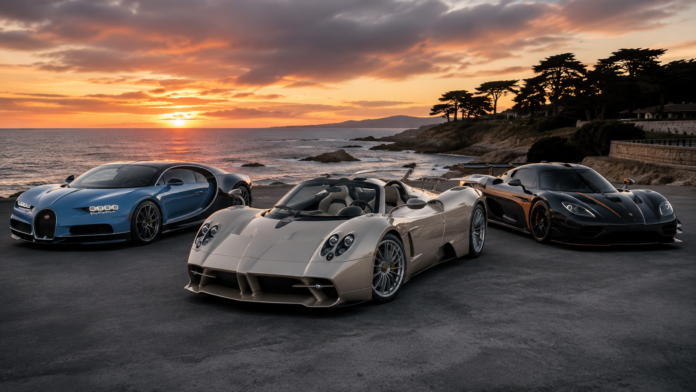
Pagani Utopia Roadster vs Bugatti Tourbillon vs Koenigsegg CC850: A Detailed Comparison of Three Modern Hypercars

0

The Pagani Utopia Roadster Brings a Different Philosophy to the Hypercar Segment

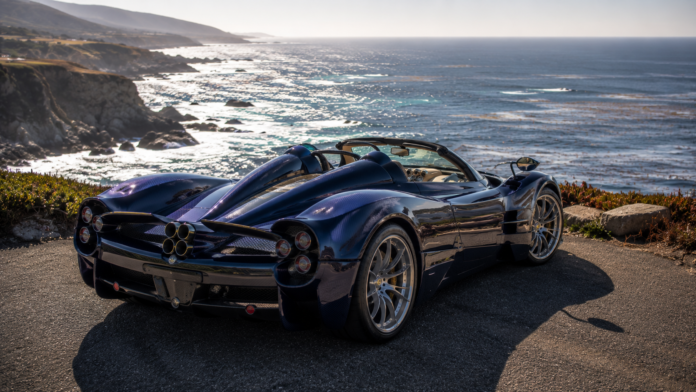
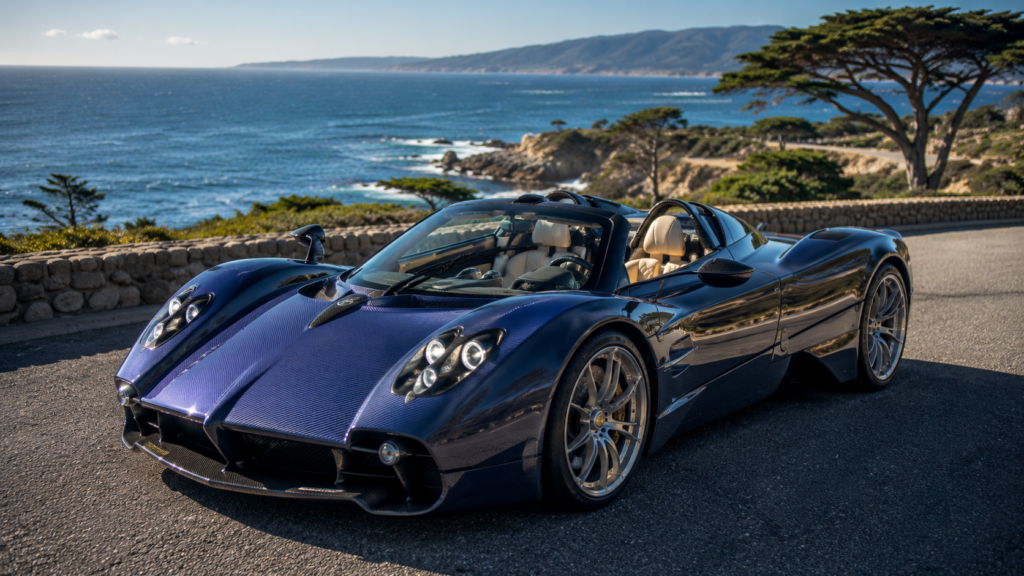
On a clear autumn morning in Carmel-by-the-Sea, California, visitors gathered near the scenic overlooks along 17 Mile Drive, where some of the world’s most exclusive automobiles often appear during automotive events. Among the collection of rare vehicles, one model consistently attracted attention from enthusiasts and photographers. The Pagani Utopia Roadster stood quietly beside the Pacific coastline, inviting closer inspection through its craftsmanship rather than overwhelming spectators with aggressive styling.

The arrival of the Pagani Utopia Roadster has introduced an interesting discussion within the hypercar community. While many manufacturers continue expanding the use of electrification and advanced driver assistance technologies, Pagani has chosen to focus on mechanical purity, lightweight engineering, and handcrafted luxury.

At the same time, the Bugatti Tourbillon represents a new generation of engineering with a naturally aspirated V16 hybrid powertrain, while the Koenigsegg CC850 celebrates driver engagement through one of the most innovative transmissions ever developed.

These three automobiles pursue exceptional performance through very different philosophies, making comparisons especially compelling for collectors and automotive enthusiasts.

Pagani Utopia Roadster Design Focuses on Timeless Craftsmanship

The Pagani Utopia Roadster continues the design language established by previous Pagani models while refining every surface with subtle aerodynamic improvements.

Instead of relying on oversized wings or dramatic bodywork, the Roadster features elegant curves, exposed carbon fiber, polished aluminum components, and carefully integrated airflow management. Every exterior detail appears functional without sacrificing visual harmony.

Inside the cabin, traditional craftsmanship takes priority over digital minimalism.

Hand stitched leather, precision machined aluminum controls, exposed mechanical linkages, and analog inspired instrumentation create an environment that feels both modern and timeless.

This interior philosophy has become one of the defining characteristics of Pagani vehicles and remains one of the strongest reasons collectors seek ownership.

Bugatti Tourbillon Introduces a New Era of Performance

The Bugatti Tourbillon represents one of the most ambitious engineering projects in the automotive industry.

Replacing the famous quad turbocharged W16 engine with a naturally aspirated V16 combined with multiple electric motors, the Tourbillon delivers remarkable performance while embracing a completely new mechanical architecture.

Its engineering focuses on:

  • Naturally aspirated V16 power delivery
  • Hybrid performance system
  • Lightweight chassis construction
  • Advanced aerodynamics
  • Luxury craftsmanship throughout the interior

Rather than simply increasing horsepower, Bugatti has invested considerable effort into creating an emotional driving experience supported by modern hybrid technology.

This approach positions the Tourbillon as a technological flagship for the next generation of ultra luxury performance vehicles.

Koenigsegg CC850 Celebrates Mechanical Innovation

The Koenigsegg CC850 occupies a unique position within the hypercar market.

While capable of extraordinary acceleration, the CC850 is often discussed because of its revolutionary transmission system, which allows the driver to experience both manual and automatic operation without traditional compromises.

Inspired by the legendary CC8S, the CC850 combines classic proportions with cutting edge engineering.

Its design reflects Koenigsegg’s ongoing commitment to lightweight construction, advanced aerodynamics, and technical innovation.

Collectors frequently praise the model because it offers an engaging driving experience that remains increasingly rare within today’s performance car landscape.

Pagani Utopia Roadster Performance Balances Precision and Emotion

Unlike many modern hypercars that prioritize outright speed above everything else, the Pagani Utopia Roadster focuses on creating a rewarding connection between driver and machine.

The twin turbocharged V12 engine delivers substantial power while maintaining predictable throttle response and smooth torque delivery.

Combined with its lightweight carbon fiber structure, the Roadster feels agile on winding roads rather than simply optimized for straight line acceleration.

This balance allows drivers to enjoy the vehicle during spirited drives instead of reserving it exclusively for race circuits.

Bugatti Tourbillon Pushes Engineering Boundaries

Performance discussions often begin with acceleration figures, but the Bugatti Tourbillon offers much more than impressive numbers.

Its hybrid architecture provides immediate electric torque while the naturally aspirated V16 delivers a distinctive character throughout the rev range.

The result is a driving experience that combines modern efficiency with traditional engine sound and responsiveness.

Bugatti has also focused heavily on weight reduction compared with previous generations, improving agility alongside raw performance.

Koenigsegg CC850 Prioritizes Driver Engagement

For enthusiasts who value active participation behind the wheel, the CC850 offers one of the most engaging driving experiences currently available.

Its innovative gearbox provides manual shifting when desired while seamlessly transitioning to automatic operation during everyday driving.

This flexibility allows owners to enjoy relaxed cruising or more involved driving without sacrificing performance.

The lightweight chassis further enhances steering precision and cornering confidence.

Interior Comparison

Each manufacturer interprets luxury differently.

The Pagani Utopia Roadster emphasizes handcrafted artistry with exposed mechanical details and premium materials.

The Bugatti Tourbillon blends traditional analog inspired instruments with advanced engineering, creating an elegant yet modern environment.

The Koenigsegg CC850 adopts a more technical approach, placing emphasis on functionality while maintaining exceptional material quality.

Each interior reflects the philosophy of its respective manufacturer rather than following current automotive design trends.

Exclusivity and Collector Appeal

One of the strongest factors influencing demand within the hypercar market is production volume.

All three manufacturers intentionally limit production, ensuring long term exclusivity.

Collectors often evaluate these vehicles according to several criteria:

  • Engineering significance
  • Design originality
  • Production rarity
  • Brand heritage
  • Long term desirability
  • Mechanical innovation

Because each model excels in different areas, comparisons frequently depend on individual priorities rather than objective rankings.

Driving Experience Defines Their Individual Character

The Pagani Utopia Roadster rewards drivers seeking craftsmanship, balance, and emotional engagement.

The Bugatti Tourbillon appeals to buyers interested in groundbreaking engineering combined with extraordinary grand touring capability.

The Koenigsegg CC850 attracts enthusiasts who appreciate innovative mechanical solutions and a highly interactive driving experience.

Although all three vehicles occupy the hypercar segment, they deliver distinctly different personalities.

Which Hypercar Offers the Most Unique Experience?

Choosing between the Pagani Utopia Roadster, Bugatti Tourbillon, and Koenigsegg CC850 depends less on performance statistics and more on personal preferences.

The Pagani emphasizes artistry and timeless craftsmanship.

The Bugatti showcases the future of high performance engineering through its advanced hybrid architecture.

The Koenigsegg demonstrates how innovation can enhance rather than replace driver involvement.

As conversations continue among collectors and enthusiasts, these three automobiles represent different visions of what the modern hypercar can become. Rather than competing through identical formulas, each manufacturer has developed a distinct identity that contributes to the continued evolution of the world’s most exclusive performance cars.

Pagani Utopia Roadster: A Manual V12 With No Roof – A Morning at the Quail Lodge

0

The sun is rising over the Monterey Peninsula as a low, sculpted silhouette sits on the lawn at the Quail Lodge in Carmel, California. The car has no roof, but it does not need one. The hardtop is stored on a stand, transforming it into a piece of design to be admired. This is the Pagani Utopia Roadster, a car that offers an 850-horsepower AMG V12, an available seven-speed manual transmission, and the pure, unfiltered experience of driving with the sky above.

The Utopia Roadster is the third model from Pagani, following the Zonda and the Huayra. Unlike the roadster versions of its predecessors, which were designed after their respective coupes, the Utopia’s development of both variants took place jointly from the outset. The result is a car that is just as light, dynamic, and high-performing as its closed sister.

The Powertrain: A V12 Without Hybrid Support

The heart of the Utopia Roadster is a 6.0-liter twin-turbo V12 engine developed by Mercedes-AMG. It produces 864 horsepower (635 kW) at 6,000 rpm and 1,100 Nm of torque from 2,800 to 5,900 rpm. The engine is an authentic marvel of mechanics, light and compact, built in close collaboration with AMG engineers, who are in charge of its exclusive production for the Italian hypercar. Each engine is entirely assembled by a single craftsman.

There are no heavy batteries, no hybrid system, just the wonderful roar of a V12 engine. The engine’s power output is comparable to that of many racing engines, yet it remains capable of turning smoothly at low revs and delivering explosive acceleration when the driver wants to experience the full power of the Pagani engine.

The Transmission: A Manual for the Purists

The Utopia Roadster is one of the few new hypercars that caters to purists by offering a seven-speed manual transmission. Pagani partnered with British specialist firm Xtrac to design a gearbox capable of handling the torque of the twin-turbo V12, while guaranteeing smooth and agreeable functioning in all conditions. The transmission is extremely compact, positioned transversely behind the engine, and connected to a light and adjustable triple-disc clutch.

The take rate for the manual has been impressive. Pagani’s commercial director reported that over 70 percent of Utopia clients have opted for the manual gearbox. The development was no easy task, requiring Pagani to develop specific components they could not find in the market, including their own clutch.

The Design: Open or Closed, Same Weight

The Utopia Roadster features a seamlessly integrated hardtop that offers the flexibility of an open or closed driving experience, while maintaining the same weight as its counterpart. This was achieved through a monocoque chassis entirely redesigned to optimize rigidity and resistance, without resorting to the heavy reinforcements usually required when a car roof is eliminated.

The dry weight is just 1,280 kg (2,822 lb), an incredible figure for a large hypercar fitted with a V12 engine. The styling of the two versions is an expression of continuity, being the work of the same team of designers and engineers, working under the guidance of Horacio Pagani in the Modenese Atelier.

The Quail Morning

The Utopia Roadster has completed its drive. Its AMG V12 has delivered the 864 horsepower that makes it one of the most powerful naturally aspirated cars on the road. The manual transmission has provided the direct mechanical engagement that purists crave. The driver, cocooned in the light-filled interior, has experienced a level of performance that is both thrilling and refined.

The Utopia Roadster is not a car for everyone. It is limited to 130 units, priced at approximately €3.1 million ($3.4 million). But it represents a significant moment in Pagani’s history. It is a car that proves the manual V12 is not dead, that open-top driving can be pure, and that Pagani remains committed to the art of engineering.

The Utopia Roadster is not just a car. It is a statement. It is a reminder that even in an era of electrification and automation, Pagani remains committed to the pure, unfiltered joy of driving. The manual V12 with no roof has arrived. And it is unforgettable.

Aston Martin Valkyrie LM: Le Mans Rules Meet a Cosworth V12 – A Night at the Circuit de la Sarthe

0

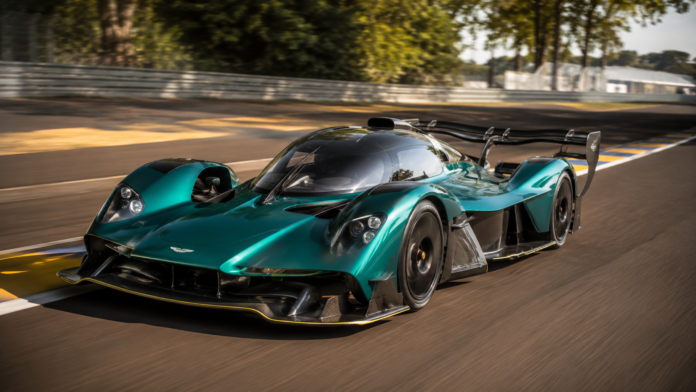
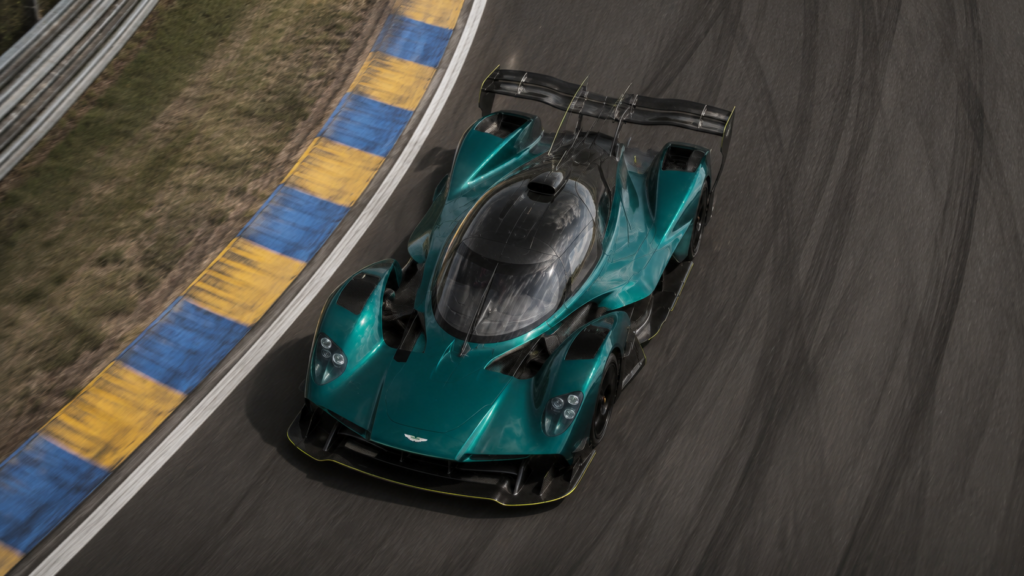
The lights of the Circuit de la Sarthe glow in the distance as a low, wide silhouette sits in the pit lane at Le Mans. The engine is not running, but the presence is unmistakable. This is the Aston Martin Valkyrie LM, a car that represents the closest any private owner can come to owning a genuine Le Mans Hypercar. Only ten will be built.

The Valkyrie LM is a non-homologated, track-only evolution of the Aston Martin Valkyrie Hypercar that competes in the FIA World Endurance Championship and the IMSA WeatherTech SportsCar Championship. It is powered by the same Cosworth-built 6.5-liter naturally aspirated V12 engine, tuned to the same regulation-limited 697 horsepower (520 kW) and paired with the same seven-speed sequential transmission. It is a car that embodies the “fly-in-and-drive” experience, a gateway into the soul of endurance racing.

The Engine: A Cosworth V12 Unleashed

The heart of the Valkyrie LM is a 6.5-liter naturally aspirated V12 engine developed by Cosworth. It produces 697 horsepower at 8,400 rpm and is a lean-burn version of the engine found in the road-going Valkyrie, adapted for endurance racing. The engine is mounted longitudinally and uses a dry sump lubrication system.

The engine’s character is defined by its naturally aspirated response. There are no turbos, no electric motors, no hybrid assistance. Just the raw, unfiltered sound of a V12 revving to 8,400 rpm. The power is linear, the throttle response is immediate, and the sound is unmistakably Cosworth.

The Chassis: Carbon Fiber and Aerodynamic Mastery

The Valkyrie LM is built around a carbon fiber monocoque survival cell, with a high-speed pneumatic jack system for pit stops. The suspension uses double wishbones at all four corners with pushrod-actuated torsion bar springs, featuring adjustable side and central dampers.

The aerodynamic package is derived directly from the Le Mans Hypercar. It includes a front wing with an adjustable aerodynamic device, a venturi tunnel underbody, and a two-element rear wing. The car generates 3.5g of lateral force in corners and 2.5g under braking. The aerodynamics are designed for endurance racing, with high-output front lighting and high-visibility rain lights integrated into the rear wing endplates.

Weight: 1,030 kg of Racing Purity

The Valkyrie LM weighs less than 1,030 kilograms without driver and fuel. This is achieved through the use of carbon fiber for the monocoque and body panels, and the removal of race-specific items such as ballast and FIA-regulation electronics. The car is lighter than the race car, making it theoretically faster on track.

The Interior: A Driver-Focused Cockpit

The cockpit of the Valkyrie LM is optimized for driver safety, access, and visibility. It features a custom carbon fiber race seat with shoulder support and headrest padding, a six-point safety harness, and a fire extinguisher system. The steering wheel has an integrated driver display and shift lights.

The cockpit interface has been tailored for track day use, with user-friendly open-loop torque control and the removal of the torque sensors that manage power delivery on the race car. The V12 engine has been recalibrated to accept readily available fuel.

The Experience: More Than a Car

The Valkyrie LM is not just a car; it is an experience. The ten owners will receive a bespoke driver development programme, including simulator coaching, track walks, and one-on-one instruction from professional driver coaches. The cars will be stored and maintained by Aston Martin, and transported to and from track events.

The package includes a helmet, HANS device, driver’s suit and boots, molded earpieces, drivers gloves, and fireproof underwear. The first year of the programme will culminate in a special evening at Aston Martin’s headquarters at Gaydon.

The Le Mans Evening

The Valkyrie LM has completed its demonstration run. Its Cosworth V12 has delivered the 697 horsepower that makes it the most authentic Le Mans Hypercar experience available to private owners. The carbon fiber chassis and advanced aerodynamics have kept it planted through the curves. The driver has experienced a level of performance that is as exclusive as it is extraordinary.

The Valkyrie LM is not a car for everyone. It is limited to 10 units, priced at approximately $3.5 million each. But it represents a significant moment in Aston Martin’s history. It is the closest any private owner can come to owning a genuine Le Mans Hypercar, and it proves that the Cosworth V12 can deliver the raw, unfiltered power that endurance racing demands.

The Valkyrie LM is not just a car. It is a statement. It is a reminder that even in an era of hybridization and electrification, Aston Martin remains committed to the pure, unfiltered power of the naturally aspirated V12. The Le Mans Hypercar has arrived. And it is ready to race.

McLaren Elva: The Windscreen-Free Experiment That Didn’t Sell – A Morning at the Quail Lodge

0

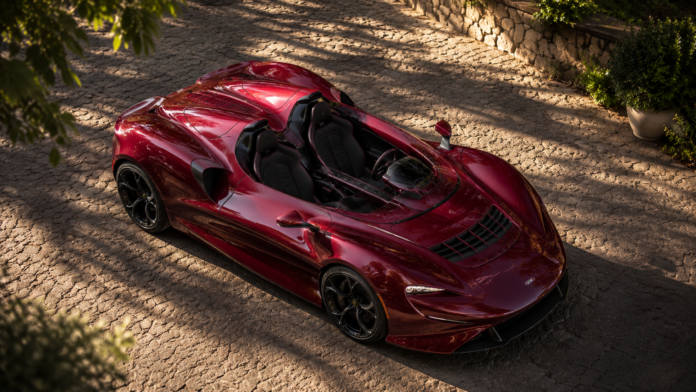
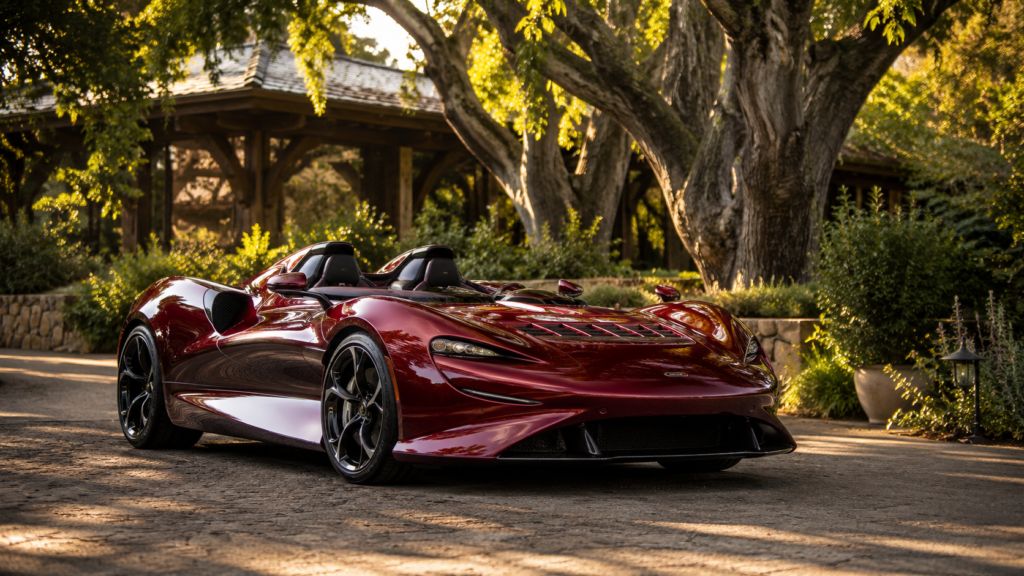
The sun is rising over the Monterey Peninsula as a low, shark-like silhouette sits on the lawn at the Quail Lodge in Carmel, California. The car has no roof, no windscreen, and no doors in the traditional sense. It is a McLaren Elva, one of just 149 examples ever built, and it represents one of the most polarizing experiments in modern supercar history.

The Elva was McLaren’s fifth Ultimate Series model, following the F1, P1, Senna, and Speedtail. Named after the “elle va” French phrase meaning “she goes” and paying tribute to Bruce McLaren’s open-top race cars of the 1960s, it was designed to deliver the purest possible driving experience. But the market had other ideas.

The Concept: Pure, Undiluted Connection

When McLaren unveiled the Elva in 2019, the pitch was simple. No roof. No windscreen. No barriers between the driver and the elements. It was the lightest McLaren road car ever built at 1,148 kg dry, with the most powerful version of McLaren’s 4.0-liter twin-turbo V8, producing 815 PS and 800 Nm of torque.

The car was a technical showcase. The Active Air Management System, a world first, channeled high-speed air over the cabin to create a turbulence-free zone for driver and passenger. The carbon fiber body was made from just three main panels. The Proactive Chassis Control II suspension delivered handling that was described as exceptional.

The performance was staggering. 0 to 100 km/h in 2.8 seconds. 0 to 200 km/h in 6.7 seconds. A top speed of 203 mph. The Elva was, by any measure, a genuine hypercar.

The Problem: A Windscreen-Free Hypercar with Limited Appeal

The Elva faced an immediate challenge: it was a highly specialized, niche product in a market that was already saturated with limited edition hypercars. It competed directly with the Ferrari Monza SP1 and SP2 and the Aston Martin V12 Speedster, two equally unconventional speedsters.

The open-cockpit design was polarizing. Some reviewers praised the immersive experience, comparing it to driving a superbike or an open-cockpit aircraft. Others found it contrived, a car for buyers so wealthy and attention-seeking that they would happily put up with being pelted by gravel.

The lack of a windscreen was a practical issue. In the United States, local regulations required a windshield for road use, so McLaren offered a fixed windscreen variant as a factory option. But this added weight and compromised the car’s purity of purpose.

Production Numbers: From 399 to 149

McLaren originally planned to build 399 examples of the Elva. But in April 2020, the production total was reduced to 249 units, and eventually to just 149. McLaren CEO Mike Flewitt cited customer feedback encouraging exclusivity, but the decision likely reflected sluggish sales.

Market Performance: Soft Demand, Stable Values

The Elva’s market performance has been mixed. When new, the base price was $1.69 million. Today, values have settled well below that figure.

At a 2026 auction, a 2021 Elva sold for $1,512,500. Another auction house has estimated a low-mileage example at $1.75 million to $2.1 million. The median price since 2020 is approximately $1.24 million, with a sell-through rate of just 28 percent. A lightly damaged salvage example sold for just $813,000.

The Elva’s value has not collapsed, but it has not appreciated like some of its Ultimate Series siblings. A 2014 P1 in good condition is now valued at approximately $1.5 million, with the strongest examples selling well past $2 million. The Senna has also held its value more consistently. The Elva, by contrast, remains a niche collector car with a limited audience.

The Quail Morning

The Elva has completed its drive. Its V8 has delivered the 815 PS that makes it one of the most powerful McLarens ever built. The Active Air Management System has kept the cabin calm. The driver has experienced a level of engagement that few cars can match.

The Elva is not a car for everyone. It is a car for those who value the pure, unfiltered experience of driving, who are willing to accept the compromises of an open cockpit, and who have the means to afford a $1.7 million hypercar. But it is also a car that struggled to find its audience.

What the Elva Teaches Us

The Elva is a case study in the limits of the hypercar market. A car can be technically brilliant, visually stunning, and emotionally engaging, yet still struggle to find buyers. The market for $1.7 million speedsters is small, and the Elva faced competition from Ferrari, Aston Martin, and its own stablemates.

McLaren’s decision to limit production to 149 units was the right call. It preserved exclusivity and ensured that the Elva would not become a drag on the brand’s reputation. But it also acknowledged that the windscreen-free experiment had not resonated as strongly as the company had hoped.

The Elva is not a failure. It is a reminder that even the most passionate engineering vision must align with market reality. The car has found its owners, and it will be remembered as one of McLaren’s most daring creations. But it will also be remembered as the Ultimate Series model that didn’t quite sell.

McLaren Solus GT: A Video Game Car That Escaped Into Reality – A Night at the Monterey Car Week

0

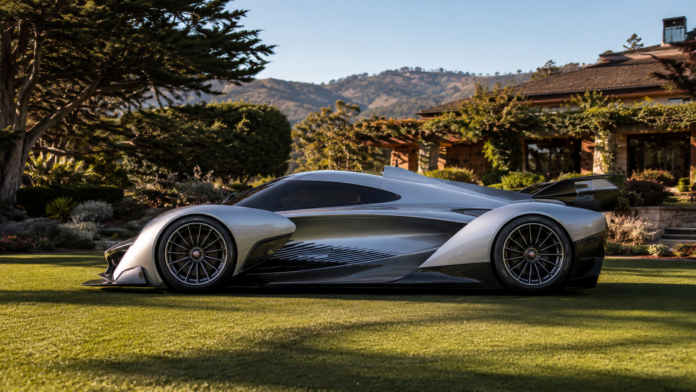
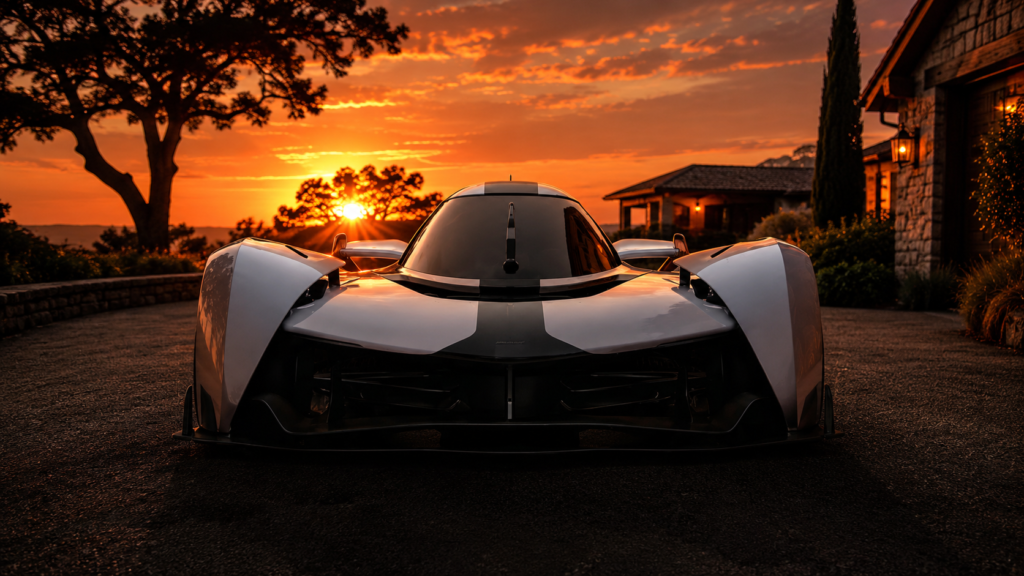
The sun is setting over the Pacific Ocean as a low, alien shape sits on the lawn at the Quail Lodge in Carmel, California. It is the 13th of just 25 examples, and it looks like nothing else on the property. This is the McLaren Solus GT, a car that started life as pixels in a video game and ended up in the garages of 25 of the world’s most dedicated collectors.

The Solus GT is the sixth entry in McLaren’s Ultimate Series, joining the F1, P1, Senna, Speedtail, and Elva. It is a single-seat, track-only hypercar that was originally conceived as the McLaren Vision Gran Turismo concept, created for the Gran Turismo Sport video game in 2017. The concept was so compelling that McLaren decided to turn it into reality, and all 25 units were sold before the car was even revealed.

The Vision Gran Turismo Connection

The Solus GT began its life not in carbon fiber or forged alloy, but in pixels. It was born in the world of Gran Turismo, a concept car imagined without limitation, shaped by the freedom of the digital realm. A single-seat vision of what a track machine could be, unconstrained by regulation or tradition.

Kazunori Yamauchi, the creator of Gran Turismo, noted the significance of the project. “Many Gran Turismo players ultimately become loyal customers of sports cars,” he said. “When a player falls in love with cars, about 20 years down the line they are able to buy that car. In the supercar world, there is a genre of customers who is actually a Gran Turismo customer.”

The Solus GT kept the original concept of the Vision car, but became much more sophisticated. It was driven obsessively by millions around the world, gamers who learned every apex and shaved every tenth. For most car companies, the story would have ended there. But McLaren is not most car companies.

The Powertrain: A V10 for the Ages

The heart of the Solus GT is a 5.2-liter naturally aspirated V10 engine that produces 829 horsepower and 650 Nm of torque. The engine revs beyond 10,000 rpm, making it one of the highest-revving production engines ever built. It is the first McLaren with more than eight cylinders since the F1’s V12 of the 1990s.

The power is sent to the rear wheels through a seven-speed sequential manual gearbox, with straight-cut gears and a carbon fiber multi-plate clutch. The transmission shifts with a mechanical precision that is deeply satisfying.

The performance figures are staggering. The Solus GT accelerates from 0 to 60 mph in under 2.5 seconds and reaches a top speed of 200 mph. The car weighs less than 1,000 kg, giving it a power-to-weight ratio that rivals Formula 1 cars.

The Chassis: Carbon Fiber and Titanium

The Solus GT is built around a carbon fiber monocoque, with front and rear chassis structures also made from carbon fiber. In a first for McLaren, the halo cockpit-protection structure and roll hoop are made from 3D-printed titanium components.

The suspension features double wishbones at all four corners with pushrod-actuated dampers. The car rides on 18-inch forged aluminum wheels fitted with Le Mans-specification racing tires, available in both slick and treaded compounds for wet weather.

The braking system features carbon ceramic discs with forged aluminum calipers, providing immense stopping power.

The Aerodynamics: 1.2 Tons of Downforce

The Solus GT’s aerodynamic package is among the most extreme ever fitted to a production car. The swooping wings and underbody aero tunnels generate 1,200 kilograms of downforce at 150 mph, more than the car’s own weight. In theory, the car could drive upside down.

The design includes a jet fighter-style canopy that slides forward to allow access to the cockpit. The driver sits centrally, in a single molded seat that is custom-fitted to each owner’s body. The steering wheel is a Formula 1-style yoke with an integrated display.

The Owner Experience

Each Solus GT owner receives more than just a car. The package includes an individually molded seat, a custom FIA-homologated race suit, a bespoke helmet, a HANS safety device, and race-tuned headphones. A driver development coaching program is also available to help owners fully explore the car’s potential.

The car comes with a custom flight case including tools, vehicle jacks and stands, radios, and a coolant pre-heater to warm the engine before use. McLaren also offers track events for owners, allowing them to experience the Solus GT in a controlled environment.

The Monterey Evening

The Solus GT has completed its demonstration run. Its V10 has delivered the 829 horsepower that makes it one of the most extreme track cars ever built. The carbon fiber chassis and 1.2 tons of downforce have kept it planted through the curves. The driver, cocooned in the single-seat cockpit, has experienced a level of performance that is as exclusive as it is extraordinary.

The Solus GT is not a car for everyone. It is limited to 25 units, priced at approximately £3 million each, with total MSRPs exceeding $3 million for heavily optioned examples. But it represents a significant moment in McLaren’s history. It is the ultimate expression of McLaren’s commitment to driver engagement, and it proves that video game concepts can become reality.

The Solus GT is not just a car. It is a statement. It is a reminder that even in an era of electrification, McLaren remains committed to the raw, unfiltered joy of driving. The video game car has escaped into reality. And it is more spectacular than anyone could have imagined.