Home Blog Page 5

McLaren Artura Spider: Roof Off, Weight Barely Up – A Morning in Newport Beach, California

0

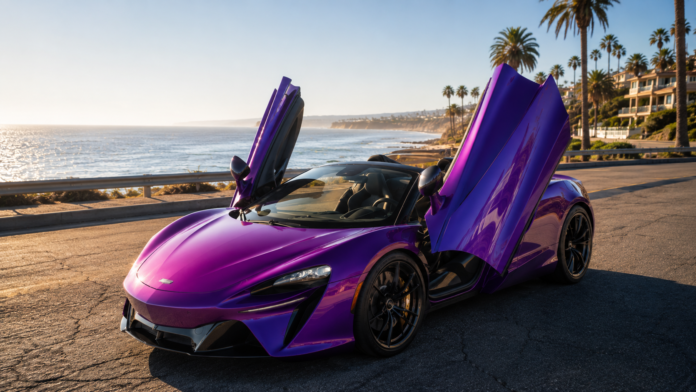
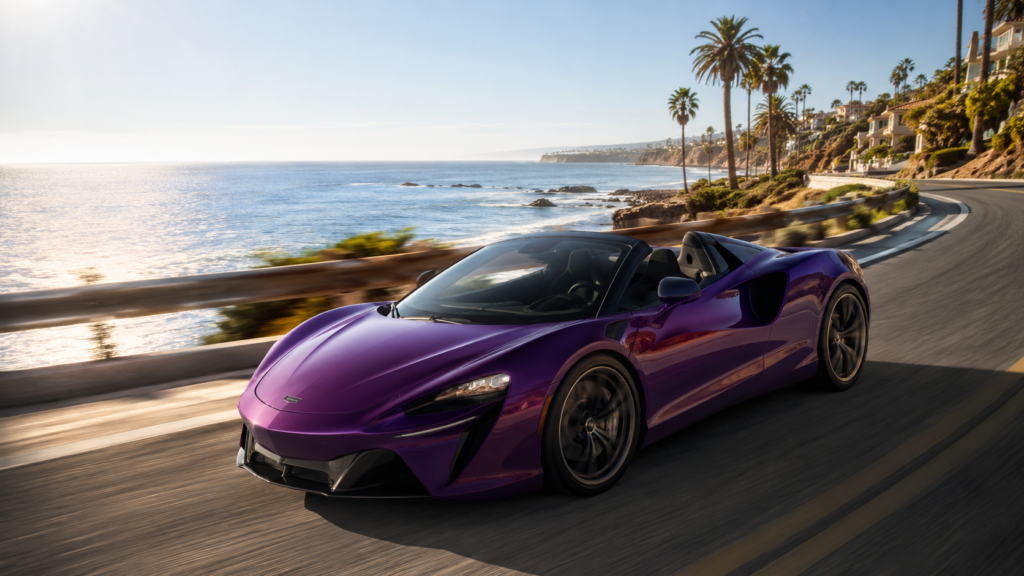
The Pacific Ocean glitters in the morning sun as a low, sleek silhouette glides along Pacific Coast Highway in Newport Beach. The driver presses a button, and in 11 seconds, the hardtop disappears, transforming the car from coupe to open-air supercar. The sound of the twin-turbo V6 becomes more immediate, the wind rushes through the cabin, and the connection to the road intensifies. This is the McLaren Artura Spider, the convertible version of McLaren’s high-performance hybrid supercar, and it achieves something remarkable: it removes the roof while adding almost nothing to the scales.

The Artura Spider is McLaren’s first-ever high-performance hybrid convertible. It builds on the Artura coupe introduced in 2021, which was McLaren’s first series-production hybrid and its first use of a V6 engine. The Spider adds a retractable hardtop that operates in just 11 seconds at speeds up to 31 mph. It does this while adding only about 100 pounds of weight, making it the lightest convertible supercar in its class.

The Weight Story: How McLaren Kept It Light

The Artura Spider weighs approximately 1,457 kg dry, compared to 1,395 kg for the coupe. The weight increase is minimal for a convertible, thanks to McLaren’s super-light engineering philosophy and the carbon fiber monocoque at the heart of the car. The McLaren Carbon Fibre Lightweight Architecture weighs just 82 kg.

The Spider’s curb weight is approximately 1,560 kg with fluids and driver, a figure that compares favorably to rivals. The power-to-weight ratio is 480 PS/tonne.

The Powertrain: More Power, Same Efficiency

The Artura Spider uses a 3.0-liter twin-turbo V6 with a hot-inside-V configuration, producing 585 PS (577 horsepower) on its own. An axial flux electric motor adds another 95 PS, for a combined output of 700 PS (690 horsepower) and 720 Nm of torque.

The electric motor is integrated into the eight-speed dual-clutch transmission, sending power to the rear wheels. A 7.4 kWh lithium-ion battery enables up to 33 km (21 miles) of electric-only driving. The hybrid system does not drive the front wheels; it provides torque fill and instant throttle response.

The transmission has been recalibrated for 25 percent faster gearshifts. The powertrain mounts are stiffer, improving dynamic agility.

The performance figures are impressive. The Spider accelerates from 0 to 100 km/h in 3.0 seconds and reaches a top speed of 330 km/h (205 mph). The 0 to 200 km/h sprint takes 8.4 seconds. Fuel consumption is 4.8 l/100 km, with CO2 emissions of 108 g/km.

The Roof: Engineering Precision

The retractable hardtop is a masterpiece of engineering. Eight near-silent electric motors actuate the system. The roof can be raised or lowered in 11 seconds at speeds up to 50 km/h (31 mph). It can also be operated from the key when parked.

The roof features an optional electrochromic glazed panel. Four separate ducting systems accommodate the RHT storage and reduce occupant buffeting.

The Chassis: Carbon Fiber and Proactive Damping

The Artura Spider’s chassis is a carbon fiber tub that weighs just 82 kg. The suspension uses Proactive Damping Control, with response rates increased by up to 90 percent. The system reacts to driver input and changes in road surface in milliseconds.

The braking system features forged aluminum calipers and carbon ceramic discs. Brake cooling ducts improve thermal management.

The Interior: Minimalist and Driver-Focused

The cabin is minimalist and driver-focused. The seats are electrically adjustable, with a low seating position. The digital instrument cluster moves with the steering column. The infotainment system is an 8-inch touchscreen. A Bowers & Wilkins audio system is available as an option.

The interior features exquisite metal switchgear and paddle shifts. The dihedral doors open upwards for dramatic effect.
The Newport Beach Morning

The Artura Spider has completed its drive along the coast. Its V6 hybrid powertrain has delivered the 690 horsepower that makes it one of the most engaging supercars on the road. The active suspension and carbon fiber chassis have kept it planted through the curves. The driver, cocooned in the minimalist cabin, has experienced a level of performance that is both thrilling and refined.

The Artura Spider is not a car for everyone. It starts at approximately $278,800. But it represents a significant moment in McLaren’s history. It is the brand’s first high-performance hybrid convertible, and it proves that removing the roof does not have to compromise performance.

The Artura Spider is not just a car. It is a statement. It is a reminder that even in an era of electrification, McLaren remains committed to the pure, unfiltered joy of driving. The roof is off. The weight is barely up. And the experience is unforgettable.
Bugatti Tourbillon: Why Bugatti Chose a V16 Instead of a Bigger Battery – A Night in Molsheim

0

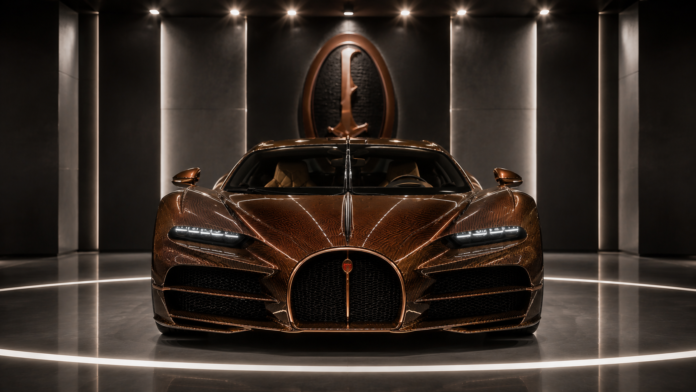
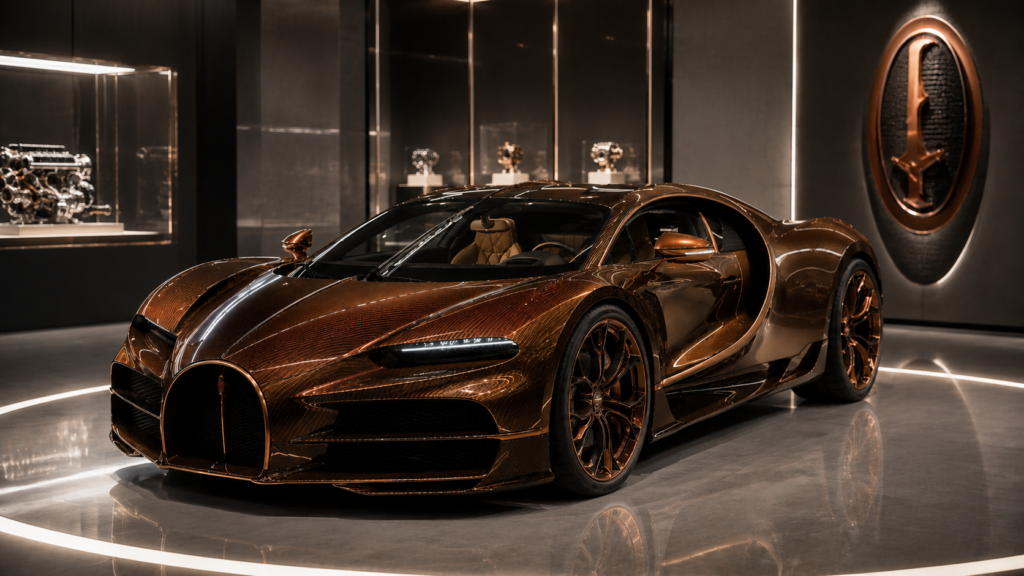
The lights of the Bugatti Atelier glow softly in the Alsatian night as a low, sculpted silhouette sits in the courtyard. The building has changed little since Ettore Bugatti built his first cars here over a century ago. Inside, a new powertrain is being assembled. It is not a W16. It is not a battery-electric hypercar. It is something the automotive world has not seen in decades: a naturally aspirated V16 engine, paired with hybrid assistance, designed to carry Bugatti into a new era.

The Bugatti Tourbillon is the replacement for the Chiron, and it represents the most significant departure from the brand’s modern formula since the Veyron introduced the W16 in 2005. The quad-turbocharged 8.0-liter W16, with its 1,600 horsepower and 16 cylinders arranged in a W formation, defined Bugatti for two decades. But Mate Rimac, the engineer now leading the brand, chose a different path.

The V16: A Return to Mechanical Artistry

The heart of the Tourbillon is an 8.3-liter naturally aspirated V16 engine, developed in partnership with Cosworth. It produces 1,000 horsepower at 9,000 rpm on its own, without any forced induction. The engine is a masterpiece of engineering: a 90-degree V16, nearly a meter long, with a massive crankshaft and a redline that few naturally aspirated engines can match.

The engine weighs just 251.7 kilograms, remarkably light for its size and configuration. The entire rear powertrain assembly, including the V16, the eight-speed dual-clutch transmission, and a rear electric motor, weighs only 430 kilograms. That is less than the weight of the Chiron’s engine alone.

The decision to go naturally aspirated was deliberate. Rimac and his team wanted an engine that was pure, emotional, and responsive. In an era of downsizing, turbocharging, and hybridization, a naturally aspirated V16 is a statement. It is a return to the mechanical artistry that defined the early days of Bugatti, when Ettore himself insisted that every visible component be beautifully finished.

The Hybrid System: Electric Assistance Without Compromise

The V16 is not alone. Three electric motors complement the combustion engine. Two motors are mounted on the front axle, providing all-wheel drive and torque vectoring. A third motor is mounted at the rear axle, integrated into the transmission.

The total system output is 1,800 horsepower. The front axle alone produces up to 3,000 Nm of torque at the wheels, and the rear axle electric motor can spin at 24,000 rpm. The battery pack operates on an 800-volt architecture, enabling electric-only range of over 60 kilometers. The battery is integrated into the chassis structure, contributing to rigidity and optimizing weight distribution.

The hybrid system is designed to enhance the V16, not replace it. Where the combustion engine cannot deliver full power immediately, the electric motor can. The electric motors provide instant torque, filling the gaps in the V16’s power delivery and eliminating the need for a traditional starting system.

Why Not a Bigger Battery?

The answer is fundamental to Bugatti’s philosophy. A larger battery would have added weight, compromised the car’s proportions, and altered its character. Bugatti did not want a hypercar that felt like a science experiment. They wanted a hypercar that felt like a Bugatti: elegant, powerful, and timeless.

The Tourbillon’s engineering demonstrates this philosophy. Despite its advanced hybrid architecture, the car weighs less than the Chiron. It achieves this through weight-saving innovations such as 3D-printed suspension components that are 45 percent lighter than previous units.

The Name: Tourbillon

The name is a reference to the intricate rotating mechanism in high-end watches. It is a deliberate choice, reflecting the car’s focus on mechanical artistry and timelessness. The dashboard features an instrument cluster built by Swiss watchmakers, with gauges housed in crystal. The car is designed to be a mechanical masterpiece, not a digital device.

The Molsheim Night

The Tourbillon has completed its demonstration run. Its V16 has delivered the 1,000 horsepower that makes it one of the most powerful naturally aspirated engines ever built. The electric motors have provided instant torque and seamless power delivery. The driver has experienced a level of performance that is as refined as it is exhilarating.

The Tourbillon is not a car for everyone. It is limited to 250 units, priced at approximately €3.6 million ($3.8 million). But it represents a significant moment in Bugatti’s history. It is the first Bugatti with a V16, the first with a hybrid powertrain, and the first to abandon the W16 formula.

The Tourbillon is not just a car. It is a statement. It is a reminder that Bugatti remains committed to the art of engineering, the emotion of driving, and the legacy of Ettore Bugatti. The V16 is not a compromise. It is a choice.

Koenigsegg Jesko Absolut: Built for a Top Speed Run That Never Came – A Night at the Åre Airfield

0

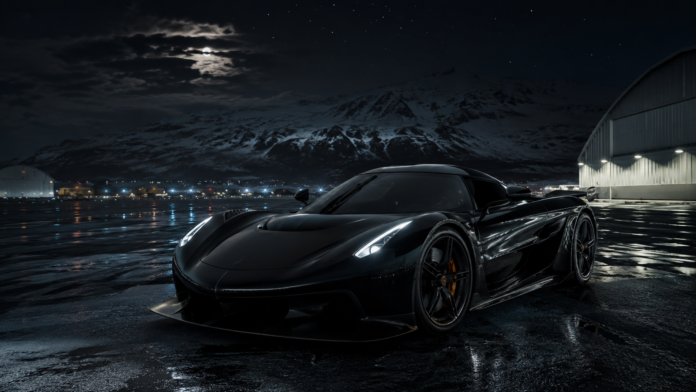
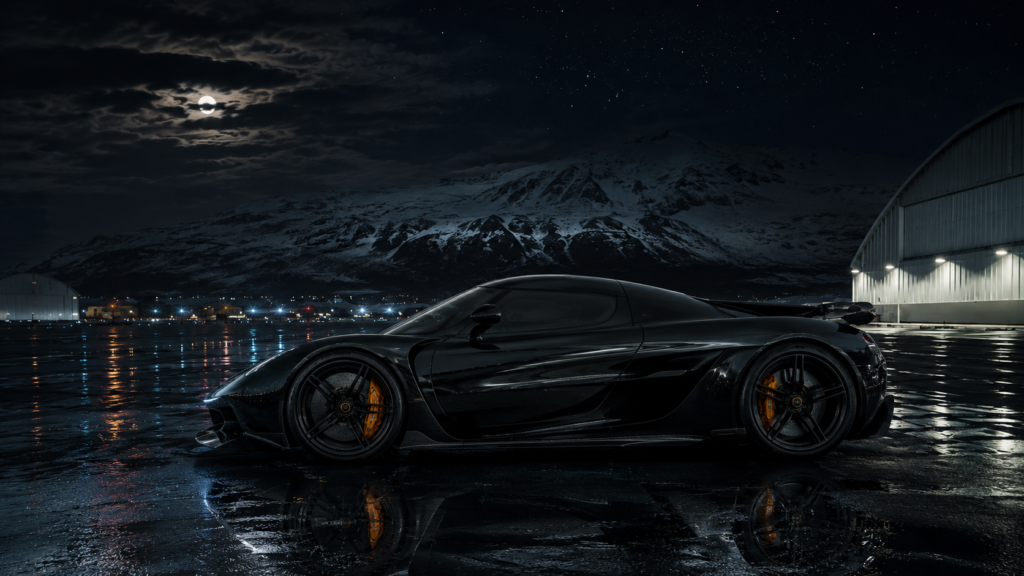
The lights of the Åre airfield in Sweden flicker in the distance as a low, sleek silhouette sits on the runway, its engine idling, its driver preparing for a run that will define its place in automotive history. This is the Koenigsegg Jesko Absolut, the lowest-drag Koenigsegg ever built, and it was designed for a top speed run that has yet to come.

The Jesko Absolut is the high-speed sibling of the track-focused Jesko Attack. It is a car built to achieve extraordinary speeds through extreme aerodynamics and immense power. With a drag coefficient of just 0.278, a frontal area of 1.88 m², and 1,600 horsepower on E85 fuel, it was destined to achieve higher speeds than any Koenigsegg or any other fully homologated car before it. Yet the top speed record that was promised has remained elusive.

The Engineering: Built for Speed

The Jesko Absolut is a masterclass in aerodynamic efficiency. Every surface element has been purposefully constructed to reduce drag or surrounding turbulence around the car while increasing high-speed stability. Over 3,000 hours were invested in fluid dynamics analysis, and over 5,000 hours of design and engineering went into the Absolut on top of the Jesko.

The most obvious change was the removal of the massive rear wing found on the Jesko Attack. This dropped downforce from 1,400 kg to just 150 kg, significantly reducing drag. In place of the wing are two rear hood fins that maintain stability at high speeds. The car was also elongated by 85 mm, giving it a more teardrop shape that allows air to glide effortlessly over the body.

The aerodynamic package includes more streamlined front splitter winglets, redesigned front louvers, and removable aerodynamic wheel covers. The target drag coefficient was 0.28, but the CFD team overachieved with a final figure of just 0.278.

The engine is the most powerful Koenigsegg has ever built. The 5.0-liter twin-turbo V8 produces 1,280 horsepower on regular gasoline and 1,600 horsepower on E85 biofuel. The engine features the world’s lightest V8 crankshaft at just 12.5 kg, a flat-plane 180-degree design that produces more power with greater efficiency while achieving an 8,500 rpm rev limit.

The power is delivered through Koenigsegg’s revolutionary Light Speed Transmission, a nine-speed gearbox with seven clutches that can shift between any forward gears in near-zero time. The transmission uses Ultimate Power On Demand technology to instantly select and engage the optimal gear for maximum acceleration, regardless of whether that gear is one or five gears away.

The Records: A Different Kind of Speed

While the ultimate top speed record has remained unclaimed, the Jesko Absolut has shattered multiple other records.

The Jesko Absolut became the first production car to surpass 300 km/h (186 mph) in the quarter-mile, completing the run in 8.54 seconds at 305 km/h (190 mph). The half-mile was completed in 12.76 seconds at 373 km/h (232 mph). Both terminal speeds represent records for production cars.

The car achieved these figures on an unprepared runway surface, wearing standard production tires, and relying solely on rear-wheel drive. Factory test driver Markus Lundh completed the run with his phone in one hand.

The Jesko Absolut has also been at the center of a ongoing rivalry with the Rimac Nevera over the 0-400-0 km/h (0-249-0 mph) record. Koenigsegg set a time in July 2024, only to have Rimac beat it. Koenigsegg responded with software tweaks to the Light Speed Transmission and engine management, achieving a new record and improving their time.

The Absolut Overdrive: Software-Defined Performance

The record-breaking 0-400-0 km/h run was enabled by software refinements that Koenigsegg calls “Absolut Overdrive.” The changes recalibrated the Light Speed Transmission and engine management system while introducing a new torque control system that allows the Absolut to manage traction like never before.

The over-the-air update also contributed to the quarter-mile record, with traction control tuning, shifting enhancements, and launch control tweaks credited for the performance. The new software advancements will be rolled out to all Jesko Absolut owners.

The Unclaimed Crown

Despite these achievements, the top speed run that the Jesko Absolut was built for has yet to materialize. The claimed theoretical top speed of 330 mph remains unverified. The run has been delayed by a combination of factors: the difficulty of finding a suitable venue, the risks involved in attempting such speeds, and the ongoing rivalry that has focused attention on the 0-400-0 km/h record instead.

Christian von Koenigsegg has acknowledged the challenge, noting that his software engineers have been tweaking and adjusting the Light Speed Transmission and engine management system while introducing a new torque control system which manages the grip of the Absolut like never before.

The Åre Evening

The Jesko Absolut has completed its demonstration run. Its twin-turbo V8 has delivered the 1,600 horsepower that makes it one of the most powerful production cars ever built. The aerodynamic efficiency and Light Speed Transmission have kept it stable through the run. The driver has experienced a level of performance that is as exclusive as it is extraordinary.

The Jesko Absolut is not a car for everyone. It is limited to 125 units, priced at over $3 million each. But it represents a significant moment in Koenigsegg’s history. It is the fastest Koenigsegg ever made, and the company has stated it will never endeavor to make a faster series-production road car.

The Jesko Absolut is not just a car. It is a statement. It is a reminder that Koenigsegg remains committed to pushing the boundaries of what is possible with internal combustion technology. The top speed record has not yet fallen. But the Absolut has proven its capability in other ways. The record run will come. The question is when.

Koenigsegg Sadair’s Spear: Past the 1:1 Power-to-Weight Line – A Night at the Gotland Ring

0

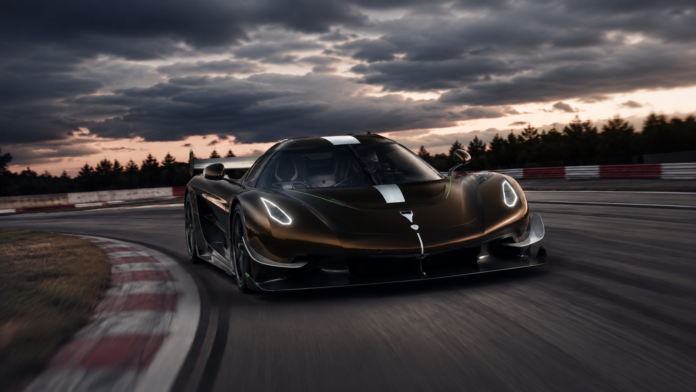
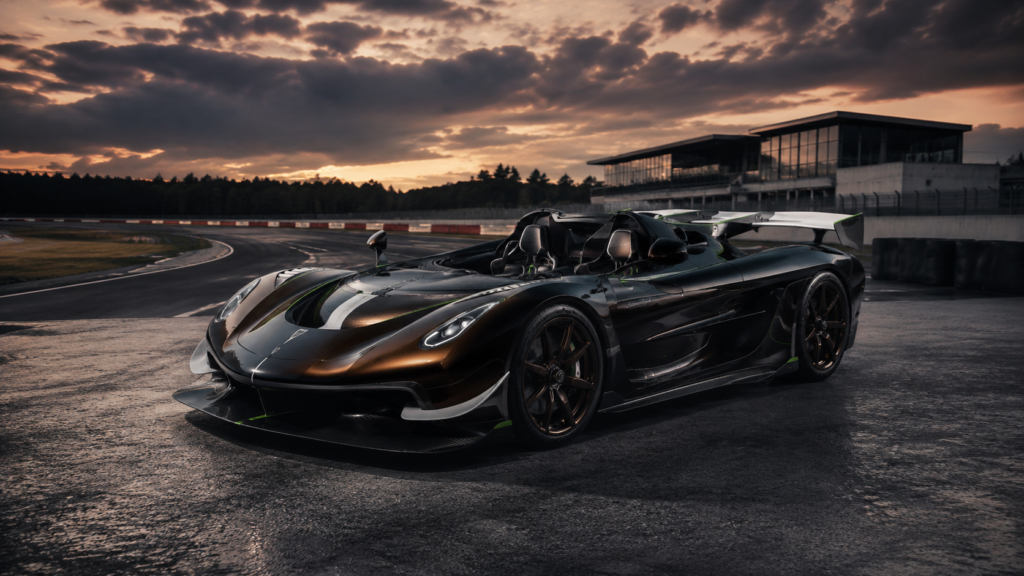
The lights of the Gotland Ring glow in the distance as a low, aggressive silhouette carves through the curves of the Swedish circuit. The sound is unmistakable, a high-revving V8 wail that echoes off the trees. This is the Koenigsegg Sadair’s Spear, a car that pushes the power-to-weight ratio past the legendary 1:1 benchmark, and only 30 people in the world will ever own one.

The Sadair’s Spear is Koenigsegg’s most extreme track-focused road car yet. Based on the Jesko Attack, it represents a comprehensive evolution of the Jesko formula with more power, less weight, and advanced aerodynamics. All 30 units were sold before the car was even revealed.

The Name: A Tribute to a Racehorse

The name Sadair’s Spear comes from a deeply personal place. Christian von Koenigsegg previously honored his father, Jesko, by naming the Koenigsegg Jesko after him. Jesko von Koenigsegg was a passionate gentleman jockey, and his favorite racehorse, the one he rode in his final race in 1976, was named Sadair’s Spear. The car bearing this storied name is engineered with uncompromising dedication to performance and precision.

The Powertrain: A V8 Pushed to Its Limits

The heart of the Sadair’s Spear is a 5.0-liter twin-turbo V8 engine that produces 1,300 horsepower on regular unleaded fuel and 1,625 horsepower on E85 biofuel. This represents an increase of approximately 20 horsepower on regular fuel and 25 horsepower on E85 over the Jesko Attack. The enhanced output was achieved through revised engine calibration, improved airflow, and enhanced cooling, including redesigned air intakes and improved oil cooling capability.

The engine is paired with Koenigsegg’s revolutionary flywheel-free Light Speed Transmission, a nine-speed gearbox capable of revving at 46,000 rpm/s and shifting in just 0.2 seconds. The transmission allows the driver to shift between gears further apart without needing to cycle through all of them. Peak torque reaches 1,500 Nm at 5,100 rpm, with over 1,000 Nm available from 2,700 rpm to 6,170 rpm.

Weight Reduction: 35 kg Lighter

The Sadair’s Spear is approximately 35 kilograms lighter than the Jesko, achieved through a combination of measures. Sound insulation was reduced by 2.6 kilograms. New carbon fiber construction techniques saved another 1.3 kilograms. Additional weight savings came from lightweight interior and mechanical components.

The curb weight is approximately 1,385 kilograms, allowing the Sadair’s Spear to surpass the iconic 1:1 power-to-weight ratio established by the Koenigsegg One:1. The power-to-weight ratio with E85 fuel is approximately 1.17 horsepower per kilogram.

Aerodynamics: Mastery of Airflow

The Sadair’s Spear’s aerodynamic package is among the most sophisticated ever fitted to a production car. The core of the system is a new lightweight, top-mounted double-blade active rear wing optimized for increased downforce. The rear end features an elongated design to enhance aerodynamic efficiency and stability.

The front-end aero package includes expanded front canards, louvres, and reengineered hood vents with a new Gurney flap. Refined underfloor strakes and wheel arch louvres work in harmony with the rear wing to maximize cornering traction. Redesigned air intakes and rear hood scoops further boost engine performance at high speeds.

The complete aerodynamic package generates nearly 1,770 kilograms of downforce, ensuring the car remains planted through high-speed corners.

Chassis and Dynamics: Track-Ready Precision

The Sadair’s Spear’s chassis has been comprehensively upgraded for track use. The suspension features bespoke lightweight springs and Koenigsegg-designed front Triplex dampers, providing exceptional body control and feedback. The Active Ride Height system enhances stability and steering precision.

The braking system has been upgraded with enhanced multi-layer carbon-ceramic brakes featuring stronger materials for the pads. The car rides on exclusive 7-spoke turbine-blade Aircore carbon fiber wheels, with unique directional designs at each corner. Wider, track-oriented tires provide exceptional grip.

The Interior: Minimalism Meets Performance

Inside, the cabin of the Sadair’s Spear showcases a lightweight, minimalist center console and redesigned carbon fiber seats. Standard three-point seatbelts can be upgraded to a 6-point racing harness. Gear changes are executed solely through steering wheel-mounted paddle shifters, reinforcing the pure performance ethos.

Despite its track focus, essential Koenigsegg features remain: the SmartCluster display, SmartCenter interface, USB connectivity, inductive phone charging, the Autoskin system, and birds-eye parking assist.

Performance: Breaking Records

The Sadair’s Spear has already proven its capability. During initial testing at the Gotland Ring in Sweden, it shattered the previous lap record set by the Jesko Attack by an impressive 1.1 seconds. At Laguna Seca, the Sadair’s Spear set a new production car lap record of 1:24.16, beating the previous record set by the Czinger 21C.

The Gotland Ring Evening

The Sadair’s Spear has completed its demonstration laps. Its twin-turbo V8 has delivered the 1,625 horsepower that makes it one of the most powerful production cars ever built. The advanced aerodynamics and Triplex suspension have kept it planted through the curves. The driver, cocooned in the minimalist carbon fiber interior, has experienced a level of performance that is as exclusive as it is thrilling.

The Sadair’s Spear is not a car for everyone. It is limited to 30 units, priced at approximately £3.8 million ($5.2 million). But it represents a significant moment in Koenigsegg’s history. It is the most track-focused road car the brand has ever built, and it proves that the power-to-weight ratio can be pushed beyond the 1:1 benchmark.

The Sadair’s Spear is not just a car. It is a statement. It is a reminder that even in an era of electrification, Koenigsegg remains committed to the raw, unfiltered power of the internal combustion engine. The Sadair’s Spear has arrived. And it is destined to set records.

Lamborghini Urus SE: The Plug-In Super SUV Nobody Asked For – A Night in Beverly Hills

0

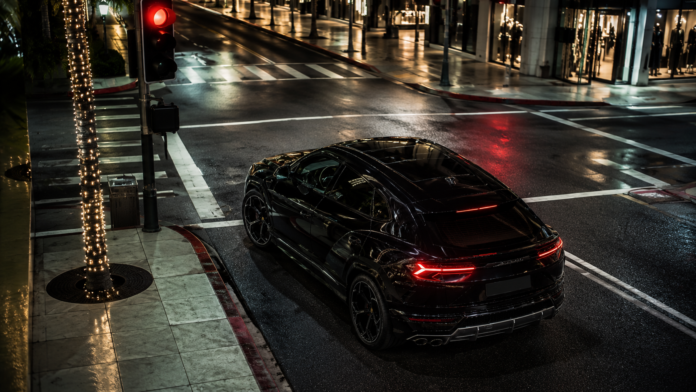
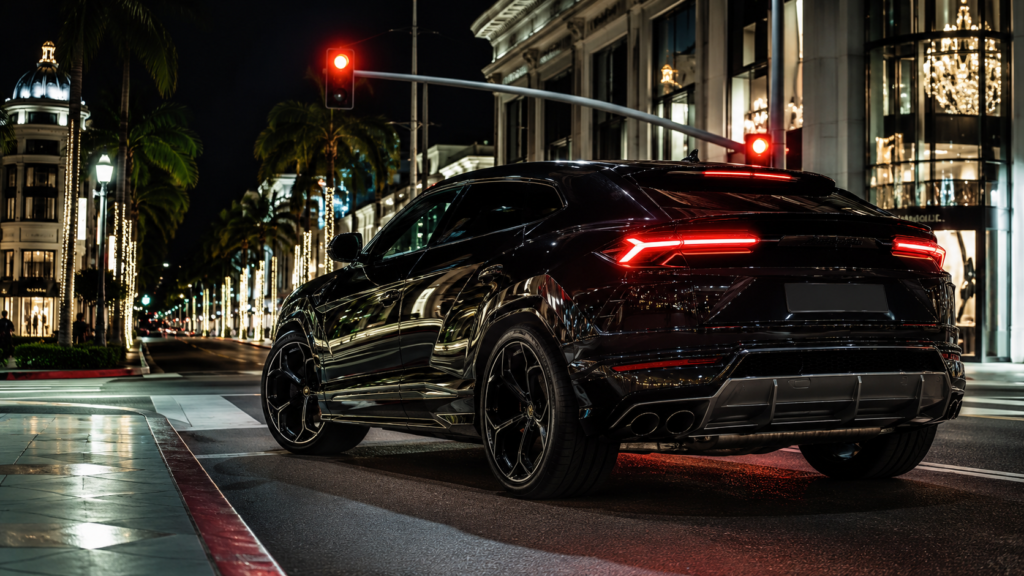
The lights of Rodeo Drive reflect off the glossy black paint of a Lamborghini Urus SE as it idles at a stoplight. The Beverly Hills night is quiet, but the SUV is not. It is the most powerful version of the car that saved Lamborghini’s balance sheet, and it is now a plug-in hybrid.

The Urus SE is Lamborghini’s first plug-in hybrid SUV, and it represents a significant shift for a brand that built its reputation on naturally aspirated V12s and uncompromising performance. The question is whether electrification suits the Urus, or whether it dilutes the super SUV formula.

The Powertrain: A V8 Hybrid Formula

The heart of the Urus SE is a 4.0-liter twin-turbo V8 engine that produces 620 horsepower on its own. An electric motor, integrated into the eight-speed automatic transmission, adds another 189 horsepower. The total system output is 809 horsepower and 701 lb-ft of torque, making the Urus SE the most powerful production Lamborghini ever built.

The battery is a 25.9 kWh unit mounted under the floor, providing up to 37 miles of electric-only range. The electric motor can power the car at speeds up to 80 mph in EV mode, making it practical for urban driving without using the V8.

The performance figures are impressive. The Urus SE accelerates from 0 to 60 mph in 3.0 seconds and reaches a top speed of 194 mph. The quarter mile is dispatched in 11.2 seconds at 122 mph. The car weighs approximately 5,700 pounds, but the hybrid system’s instant torque and all-wheel-drive traction make it feel quicker than its mass suggests.

The Hybrid Experience: Best of Both Worlds

The Urus SE offers a genuine split personality. In EV mode, it is silent, smooth, and refined. The electric motor provides adequate power for city driving, and the 37-mile range covers most daily commutes. The regenerative braking system captures energy during deceleration, keeping the battery charged.

In hybrid mode, the car seamlessly blends the V8 and electric power. The V8 provides the brutish roar and relentless acceleration that defines the Urus experience, while the electric motor fills the gaps in power delivery and improves fuel economy. The transition between power sources is smooth and barely perceptible.

In Corsa mode, the Urus SE becomes a different machine. The V8 is always on, the suspension stiffens, and the throttle response sharpens. The electric motor provides instant torque, making the car feel even more responsive than the non-hybrid Urus. The torque vectoring system and all-wheel-drive traction keep the car planted through corners, and the massive carbon ceramic brakes provide exceptional stopping power.

What the Urus SE Means for Lamborghini

The Urus SE is a significant moment for Lamborghini. It is the brand’s first plug-in hybrid SUV, and it signals the company’s commitment to electrification. The Urus has been Lamborghini’s best-selling model, accounting for more than half of the brand’s global sales. Making it a hybrid ensures that Lamborghini can meet increasingly stringent emissions regulations without abandoning the performance that defines the brand.

The Urus SE also serves as a test bed for Lamborghini’s hybrid technology. The lessons learned from developing the Urus SE will inform future models, including the Revuelto and the Temerario. The hybrid system is derived from Formula 1 technology, and it demonstrates that electrification can enhance performance rather than compromise it.

The Beverly Hills Evening

The Urus SE has completed its drive along Sunset Boulevard. Its V8 hybrid powertrain has delivered the 809 horsepower that makes it the most powerful Lamborghini ever built. The active suspension and all-wheel-drive system have kept it composed through the curves. The driver, cocooned in the leather and Alcantara interior, has experienced a level of performance that is as practical as it is thrilling.

The Urus SE is not a car for everyone. It is expensive, with a starting price of approximately $280,000. But it represents a significant moment in Lamborghini’s history. It is the first plug-in hybrid SUV from the brand, and it proves that electrification can enhance the super SUV formula.

The Urus SE is not just a car. It is a statement. It is a reminder that even in an era of electrification, Lamborghini remains committed to the raw, unfiltered power that defines the brand. The plug-in super SUV has arrived. And it is more powerful than ever.

Lamborghini Fenomeno: 1,080 HP and Only 29 Cars Built – An Evening at the Villa d’Este

0

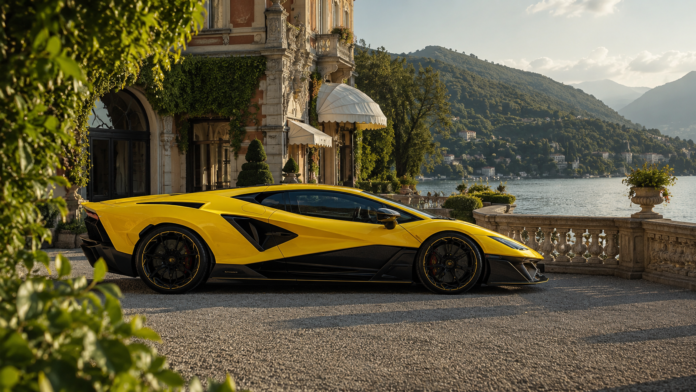
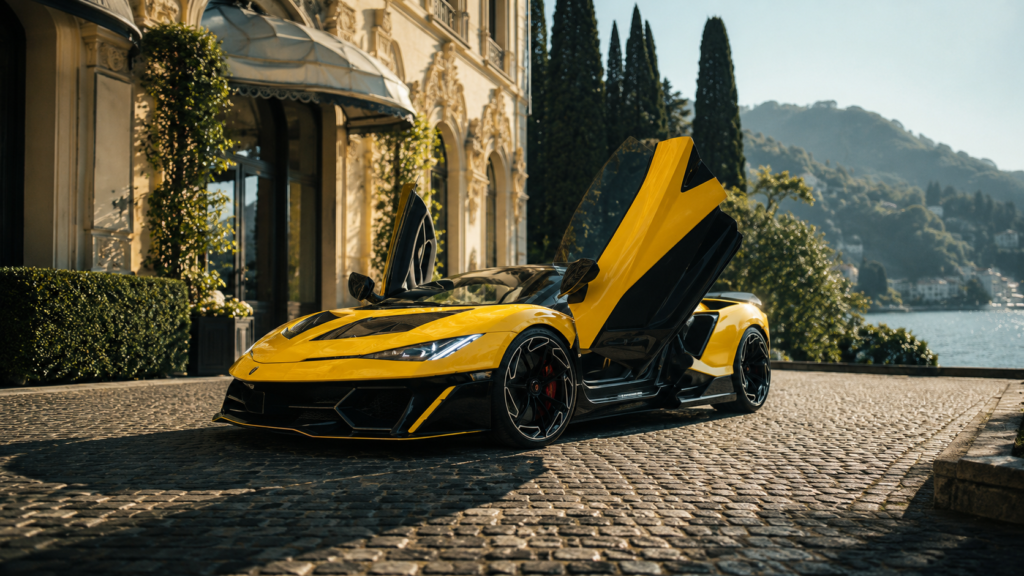
The sun is setting over Lake Como as a low, aggressive silhouette glides through the gates of the Villa d’Este. The sound is unmistakable, a high-revving V12 wail that echoes off the Renaissance walls. This is the Lamborghini Fenomeno, the most powerful V12 Lamborghini ever built, and only 29 people in the world will ever own one.

The Fenomeno is Lamborghini’s latest limited edition creation, a car that celebrates 20 years of the brand’s Centro Stile design department. It takes Lamborghini’s most representative design elements to the extreme, combining a 6.5-liter naturally aspirated V12 with three electric motors to produce 1,080 CV (1,065 horsepower). All 29 units were sold before the car was even revealed.

The Name: A Bull That Was Pardoned

The name Fenomeno comes, as per Lamborghini tradition, from a famous fighting bull. The bull was fought in Morelia, Mexico, in 2002, and was pardoned for the exceptional qualities it demonstrated in the ring. In both Italian and Spanish, Fenomeno means “phenomenal,” symbolizing something truly exceptional and unique.

The Powertrain: A V12 Hybrid for the Ages

The heart of the Fenomeno is a 6.5-liter naturally aspirated V12 engine that produces 835 CV at 9,250 rpm and 725 Nm of torque at 6,750 rpm. The engine has a specific power output of over 128 CV per liter, the highest in the history of Lamborghini V12 engines. The redline is 9,500 rpm.

Three electric motors complement the V12. Two motors on the front axle provide all-wheel drive and torque vectoring, while a third motor is integrated into the eight-speed dual-clutch transmission. The total system output is 1,080 CV (1,065 horsepower), making the Fenomeno the most powerful Lamborghini ever built.

The performance figures are extraordinary. The Fenomeno accelerates from 0 to 100 km/h in 2.4 seconds and from 0 to 200 km/h in 6.7 seconds. Top speed exceeds 350 km/h. The power-to-weight ratio is 1.64 kg/CV, the best in Lamborghini’s history.

The Chassis: Carbon Fiber and Forged Composite

The Fenomeno is built around the monofuselage, Lamborghini’s aerospace-inspired chassis. The monocoque is made entirely of multi-technology carbon fiber, and the front structure uses Forged Composite, a special material made of short carbon fiber soaked in resin. The body panels are also made entirely of carbon fiber.

The car features a number of technologies typically found in race cars, including carbon-ceramic brakes, single-nut forged rims, and sport-tuned suspension. The brakes use a 3D structure with long carbon fibers, providing maximum braking stability and durability.

The Design: A New Manifesto

The Fenomeno’s design is a “design manifesto” that introduces a new direction for Lamborghini’s design language. The front features large air intakes inspired by racing Lamborghinis, and the DRLs pay homage to the horns of the Lamborghini logo’s bull. The new Automobili Lamborghini logo, unveiled in 2024, makes its debut on this model.

The side view reinterprets the classic Lamborghini silhouette, inspired by the “long tail” of the Essenza SCV12. The rear is unprecedented in Lamborghini design history, with a continuous line connecting the wing and wheel arch. The futuristic light signature reinterprets the iconic Y shape vertically.

The launch livery is in Giallo Crius, a vibrant yellow that brings out the muscularity of the upper volumes.

The Interior: Feel Like a Pilot

The cabin of the Fenomeno reflects the “Feel like a pilot” philosophy, creating a deep connection between the driver and the car. Three digital screens replace physical buttons, and carbon fiber dominates the interior, appearing on the center console, door panels, sports seats, and 3D-printed air vents.

The Ad Personam program offers a virtually unlimited range of customization options, with over 400 exterior colors and an almost unlimited range of interior options.

The Villa d’Este Evening

The Fenomeno has completed its drive along the shores of Lake Como. Its V12 hybrid powertrain has delivered the 1,080 CV that makes it the most powerful Lamborghini ever built. The carbon-ceramic brakes and sport-tuned suspension have kept it planted through the curves. The driver, cocooned in the carbon fiber cabin, has experienced a level of performance that is as exclusive as it is thrilling.

The Fenomeno is not a car for everyone. It is limited to 29 units, priced at approximately €3 million ($3.5 million). But it represents a significant moment in Lamborghini’s history. It is a celebration of 20 years of Centro Stile, a tribute to the brand’s tradition of exclusive models, and a showcase for the most powerful V12 Lamborghini has ever built.

The Fenomeno is not just a car. It is a statement. It is a reminder that even in an era of electrification, Lamborghini remains committed to the raw, unfiltered power of the V12. The Fenomeno has arrived. And it is truly phenomenal.

Ferrari 296 Speciale Aperta: Open-Air Hybrid at Full Attack – A Night on the Amalfi Coast

0

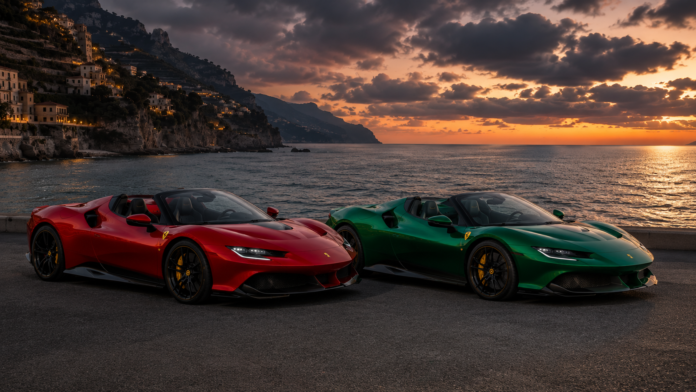
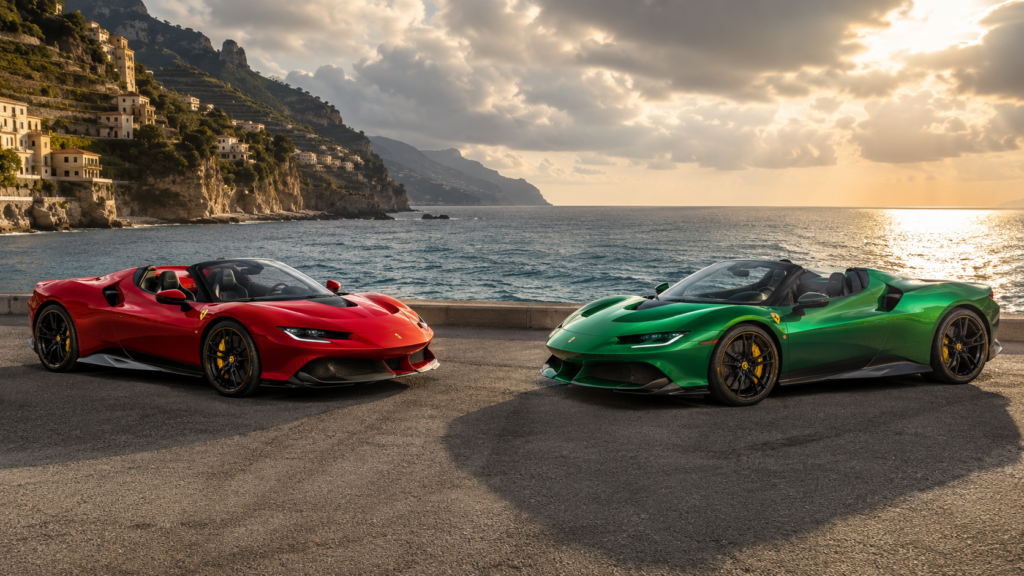
The sun is setting over the Tyrrhenian Sea as a low, aggressive silhouette carves through the curves of the Amalfi Coast road. The sound is unmistakable. A high-revving V6 wail echoes off the cliffs, blending with the crash of waves below. This is the Ferrari 296 Speciale Aperta, the most focused open-top Ferrari since the 458 Speciale Aperta, and it is a car that proves the hybrid supercar can still deliver raw, unfiltered emotion.

The 296 Speciale Aperta is Ferrari’s latest limited-production special series model. It follows in the footsteps of the 360 Challenge Stradale, 430 Scuderia, 458 Speciale, and 488 Pista, and it carries the same mission: deliver driving engagement as well as performance. Available as both a coupe and an open-top Aperta, it is designed to be faster, sharper, and louder than the 296 GTB on which it is based. The Aperta is the open-air expression of that philosophy, a car that sacrifices nothing in performance while adding the sensory thrill of driving without a roof.

The Powertrain: A Hybrid Pushed to Its Limits

The heart of the Speciale Aperta is a heavily revised version of the 3.0-liter 120-degree twin-turbo V6 that powers the standard 296. The internal combustion engine alone now produces 700 horsepower, an increase of 37 horsepower over the 296 GTS. This was achieved through a combination of technologies, including titanium connecting rods, a lightened crankshaft, revised boost management, and new knock control software. The engine is 9 kilograms lighter than the standard unit, thanks to a lighter crank, block, and crankcase.

The electric motor, mounted between the engine and the eight-speed dual-clutch transmission, adds up to 180 horsepower, bringing the total system output to 880 horsepower (868 bhp). This makes the 296 Speciale the most powerful rear-wheel-drive Ferrari ever built.

The performance figures are extraordinary. The Speciale Aperta accelerates from 0 to 100 km/h in 2.8 seconds and reaches a top speed of 330 km/h (205 mph). The 0 to 200 km/h sprint takes 7 seconds. The car can travel up to 25 kilometers on electric power alone in eDrive mode.

Weight Reduction: 80 Kilograms Saved

The Speciale Aperta weighs 50 kilograms less than the 296 GTS, tipping the scales at 1,490 kg dry, while the coupe weighs 1,410 kg. The weight savings come from a combination of measures: carbon fiber body panels, titanium engine components, a stripped-back interior, and an optional titanium exhaust.

The interior features carbon fiber door cards, lightweight bucket seats, and Alcantara upholstery. The overall effect is purposeful and minimal, a reminder that this car is built for driving, not for luxury.

Aerodynamics: 20 Percent More Downforce

The Speciale Aperta’s aerodynamic package is a significant evolution of the 296 GTS. It generates 435 kilograms of downforce at 250 km/h, a 20 percent increase over the standard car.

The front end features a new splitter and an S-duct-style intake that channels air through the hood. The rear features a new active spoiler flanked by winglets, and a redesigned diffuser inspired by the 296 Challenge and GT3 race cars. The result is a car that is planted at speed, stable under braking, and composed through high-speed corners.

Chassis and Dynamics: Track-Ready Precision

The Speciale Aperta’s chassis has been refined for track use. The car sits 5 millimeters lower than the 296 GTS, reducing body roll by 13 percent during cornering. The suspension uses titanium springs and Multimatic dampers derived from the 296 GT3 race car, providing exceptional body control and feedback.

The braking system has been upgraded with ABS Evo, which improves braking precision and repeatability on all surfaces. The car can brake from 200 km/h to a standstill in just 106 meters.

The speciale’s new torque delivery software boosts acceleration during upshifts for punchier gear changes. The exhaust note benefits from a more free-flowing system, and new ducts pump real engine noise into the cabin.

The Aperta Experience: Open-Air Thrills

The Aperta version of the 296 Speciale adds a retractable hardtop that opens or closes in 14 seconds. The open-top experience adds a new dimension to the driving experience, allowing the driver to hear the V6 engine more clearly and feel the wind rush past.

The Aperta is not a car for everyone. It is expensive, with a starting price of €462,000 in Italy. But it represents a significant moment in Ferrari’s history. It is the first open-top special series Ferrari since the 458 Speciale Aperta, and it proves that Ferrari can still build a car that delivers pure, unfiltered driving pleasure, even with a hybrid powertrain.

The Amalfi Evening

The Speciale Aperta has completed its drive along the coast. Its V6 hybrid powertrain has delivered the 880 horsepower that makes it the most powerful rear-wheel-drive Ferrari ever built. The active aerodynamics and Multimatic suspension have kept it planted through the curves. The driver, cocooned in the carbon fiber interior, has experienced a level of performance that is as thrilling as it is engaging.

The 296 Speciale Aperta is not a facelift. It is a revolution. It is a car that proves the hybrid supercar can still deliver raw, unfiltered emotion. The open-air hybrid has arrived. And it has never been better.

Ferrari 12Cilindri: The V12 Grand Tourer That Refused to Die – A Night on the Amalfi Coast

0

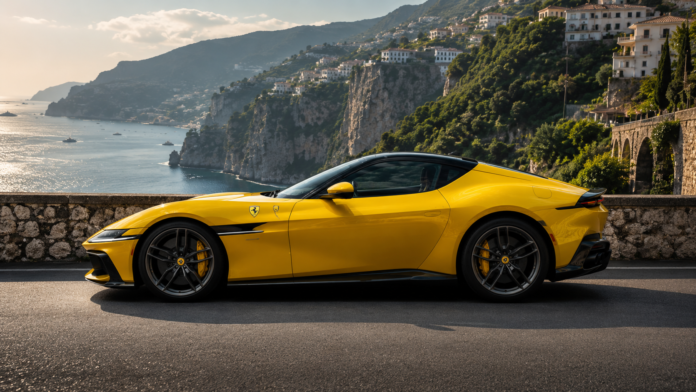
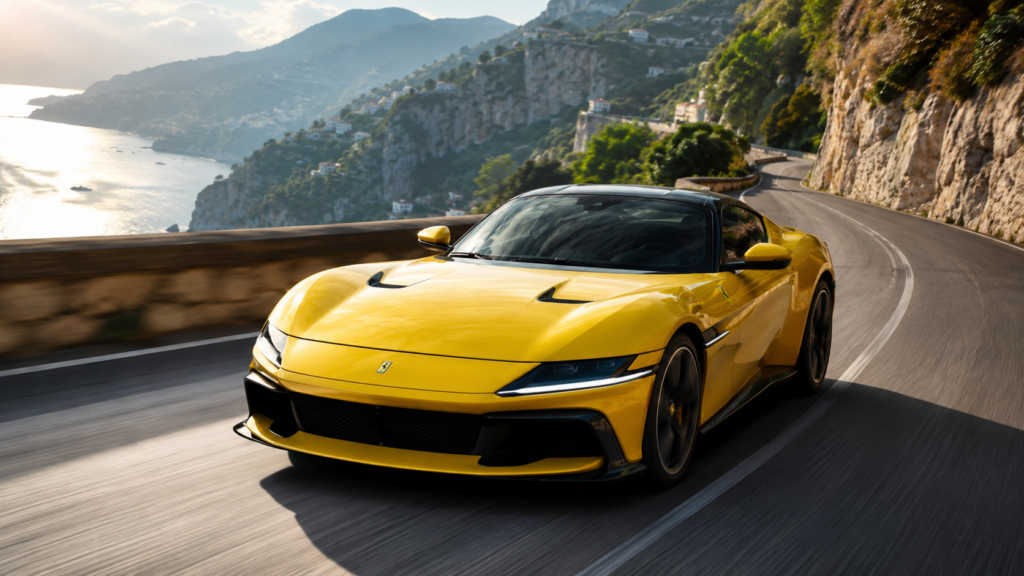
The sun is setting over the Tyrrhenian Sea as a low, sculpted silhouette carves through the curves of the Amalfi Coast road. The sound is unmistakable. A high-revving V12 wail echoes off the cliffs, blending with the crash of waves below. This is the Ferrari 12Cilindri, the car that proves the naturally aspirated V12 grand tourer is not dead. It has simply evolved.

In an era of downsizing, turbocharging, and hybridization, Ferrari has chosen to keep the V12 alive. The 12Cilindri is a 6.5-liter naturally aspirated masterpiece that produces 830 CV (819 horsepower) and revs to 9,500 rpm. It is a car that Ferrari built because customers demanded it, and it is a car that rivals have walked away from.

The Engine: A V12 for the Ages

The heart of the 12Cilindri is the F140HD engine, the latest evolution of Ferrari’s naturally aspirated V12 lineage. The 6.5-liter unit produces 830 CV at 9,250 rpm and 678 Nm of torque at 7,250 rpm. The redline is 9,500 rpm, making it one of the highest-revving production engines ever built.

The engine features a new 120-degree V-angle crankshaft design, revised intake and exhaust systems, and a new valve train with sliding rocker arms that reduce friction and improve performance. The sound is unmistakably Ferrari, with a high-pitched wail that builds to a crescendo as the revs climb.

The performance figures are impressive. The 12Cilindri accelerates from 0 to 100 km/h in 2.9 seconds and reaches a top speed of over 340 km/h (211 mph). The car is rear-wheel drive, with power sent through an eight-speed dual-clutch transmission.

The Design: A Modern Interpretation

The 12Cilindri’s design is a modern interpretation of Ferrari’s grand touring heritage. The front end features a distinctive grille with a dark band that integrates the headlights, creating a futuristic, almost sci-fi appearance. The rear is dominated by a full-width light bar and quad exhaust outlets. The body is made from aluminum and carbon fiber, keeping weight to a minimum.

The car’s proportions are classic grand tourer, with a long hood and short overhangs. The design is functional as well as beautiful, with active aerodynamic elements that manage airflow for cooling and stability.

The Interior: Driver-Focused Technology

Inside, the 12Cilindri features a driver-focused cockpit with a digital instrument cluster and a large central touchscreen. The seats are comfortable and supportive, with power adjustment and heating. The materials are high quality, with leather and Alcantara throughout.

The Amalfi Evening

The 12Cilindri has completed its drive along the coast. Its V12 has delivered the 830 CV that makes it one of the most powerful naturally aspirated cars on the road. The active aerodynamics and chassis systems have kept it planted through the curves. The driver, cocooned in the cabin, has experienced a level of performance that is both thrilling and refined.

The 12Cilindri is not a car for everyone. It is expensive, with a starting price of approximately €395,000. But it represents a significant moment in Ferrari’s history. It is the car that proves the V12 grand tourer is not dead. It is a reminder that even in an era of electrification, Ferrari remains committed to the pure, unfiltered joy of driving. The V12 has refused to die. And it has never been better.

Ferrari Luce: What Maranello’s First EV Actually Has to Prove – An Evening on Butler Street

0

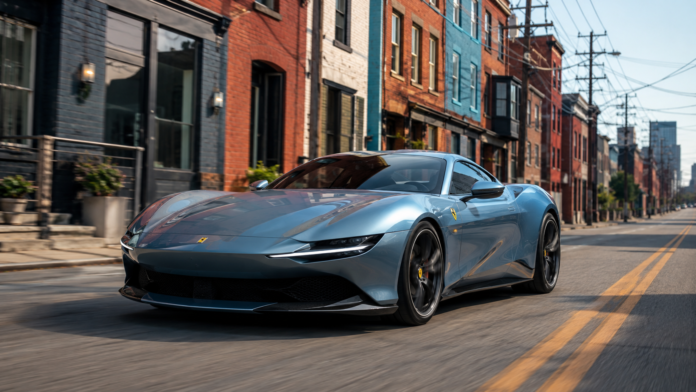
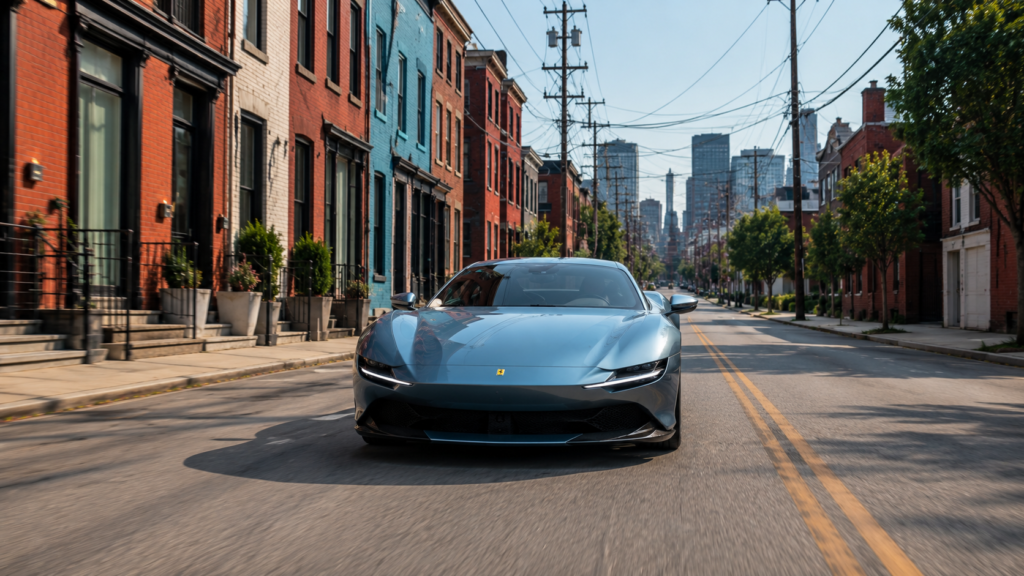
The summer sun hangs low over the Allegheny River as a blue silhouette glides along Butler Street in Pittsburgh’s Lawrenceville neighborhood. The old brick buildings and converted warehouses that once housed steel and manufacturing now hold boutiques, coffee shops, and tech startups. The car is unmistakably a Ferrari, yet unlike any Ferrari that has come before it. This is the Ferrari Luce, the first fully electric car from Maranello, and it has arrived at a moment when the automotive world is questioning whether an electric Ferrari can still be a Ferrari.

The Luce is Ferrari’s gamble on the future. With four electric motors producing 1,050 cv (1,036 horsepower), a 122 kWh battery, and a top speed exceeding 310 km/h, it is undeniably fast. But speed alone has never defined Ferrari. The question is whether a Ferrari without a combustion engine can still deliver the emotional connection that defines the brand.

What the Luce Actually Is

The Luce is not a one-off concept. It is a production-ready model scheduled for delivery in the fourth quarter of 2026, priced at approximately €550,000 ($640,000). It represents over two decades of electrification research at Ferrari, beginning with Formula 1 technology that was first incorporated into the limited-edition LaFerrari hybrid supercar that debuted in 2013.

The car’s name, Luce, is Italian for “light,” and it was developed with input from former Apple design chief Jony Ive and his collective LoveFrom. It is Ferrari’s first five-seater, a practical grand tourer aimed at families with deep pockets. The design features rear-hinged doors, a floating front wing, and a glass-led design that marks a break from the carmaker’s aggressive, muscular, signature sporty style.

The Powertrain: Four Motors, One Philosophy

The Luce’s powertrain is a departure from everything Ferrari has built before. Four independent electric motors, one at each wheel, deliver a combined output of 1,050 cv. The front axle alone produces 210 kW and up to 3,500 Nm of torque, while the rear axle delivers a further 620 kW and 8,000 Nm.

The 122 kWh battery pack operates on an 800-volt architecture, enabling charging speeds up to 350 kW. Range is rated at over 530 kilometers (approximately 329 miles). The battery is integrated into the floorpan, with 85 percent of the modules located between the front and rear axles. Weight distribution is 47:53 percent front-to-rear, much like a mid-engined supercar, and the center of gravity sits 95 mm lower than a Purosangue’s.

The car weighs approximately 2,260 kilograms, making it the heaviest Ferrari ever built. But the chassis and body are made from 75 percent recycled aluminum, saving 6.7 tons of carbon dioxide per vehicle.

The Sound: Amplified, Not Simulated

One of the most significant challenges for any electric Ferrari is the sound. Ferrari has not attempted to fake the roar of a V12. Instead, the company has amplified the natural acoustic characteristics of the electric powertrain.

Antonio Palermo, the engineer responsible for sound and vibration on the Luce, has described the approach as being inspired by the electric guitar. A precision accelerometer on the rear axle captures the natural frequencies of the powertrain components, which are then amplified in the cabin. Ferrari has also applied its Order Noise Cancellation technology to eliminate undesirable harmonics and high-pitched whines.

The resultant sound is functional: if you drive the Luce hard, the noise reaches a ripe crescendo. At steady state motorway speeds, it shuts up. The sound level is based on the position of the e-Manettino and the use of the paddles, allowing the driver to switch from quiet focus to maximum expressiveness.

The Driving Experience: Ferrari First

Freed from the constraints of a traditional gearbox, the steering wheel paddles now provide access to five progressively higher levels of torque with the right-hand paddle, or increase engine braking with inputs to the left paddle in a strategy called Torque Shift Engagement. The driver can influence dynamic characteristics through Range, Tour, and Performance driving modes, while the eManettino adjusts the electric powertrain and the Manettino includes a new Dry mode integrated between Wet and Sport.

Third-generation 48-volt active suspension, first seen in the Purosangue and subsequently in the F80 hypercar, has been revised for the Luce. An upgrade to the recirculating ball screw better cushions and controls vertical impacts, and revised shock absorbers reduce weight by 2 kilograms. The suspension now also monitors and controls damper oil temperature for consistent behavior in both hot and cold conditions.

The traction control system in the Luce actually learns how you drive. Ferrari’s software judges the pilot, studying how the operator brakes, modulates the throttle, and turns the wheel. If you drive cleanly and confidently, the system raises its intervention threshold and allows capable drivers more wheel slip. Race mode is earned, not selected.

What It Must Prove

The Luce has to prove several things. It must demonstrate that a Ferrari without a V8 or V12 can still deliver the emotional connection that defines the brand. It must prove that the company’s first electric vehicle can attract new buyers while satisfying existing customers. And it must show that Ferrari can lead in electrification.

The company has scaled back its electrification targets. In 2022, Ferrari said 40 percent of its lineup would be electric by 2030. That figure is now 20 percent. The Luce is positioned as “an addition, not a transition,” according to CEO Benedetto Vigna.

The car has faced significant criticism from traditionalists. Ferrari shares fell after the launch. Online, fans have mocked the Luce as “more Apple Magic Mouse than Italian stallion.” But Ferrari is betting that a new generation of wealthy buyers, less tied to the legacy of twelve and eight cylinder engines, will embrace the shift. The Luce could help Ferrari penetrate markets where EVs are widespread and big petrol cars are heavily taxed.

The Butler Street Evening

The blue prototype has completed its drive along Butler Street. Its four electric motors have delivered the instant torque and dynamic response that Ferrari executives have promised. The active suspension and low center of gravity have kept it composed through the curves. The driver, cocooned in the cabin, has experienced a level of performance that proves the Ferrari formula can survive electrification.

The Luce is not a car for everyone. It is expensive, priced at approximately €550,000. It is heavy, weighing more than 2.2 tonnes. But it represents a significant moment in Ferrari’s history. It is the first fully electric car from Maranello, and it proves that Ferrari can deliver the driving experience enthusiasts demand, even without a combustion engine.

The Luce is not just a car. It is a statement. It is a reminder that even in an era of electrification, Ferrari remains committed to the pure, unfiltered joy of driving. The sound is different, the powertrain is different, and the driving experience is different. But the soul remains. The Ferrari Luce has arrived. And it has a lot to prove.

Ferrari Amalfi: The Roma Successor That Brought Buttons Back – A Night in Los Cabos

0

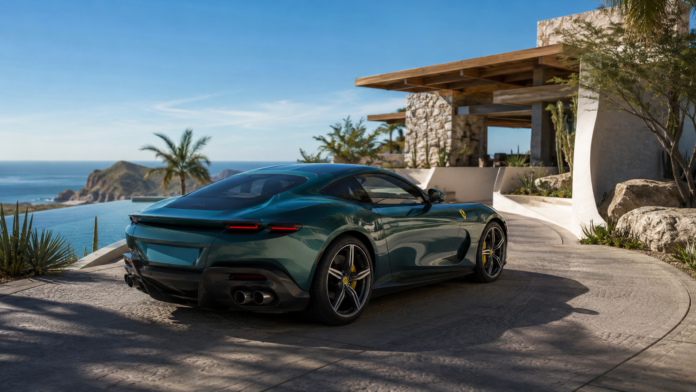
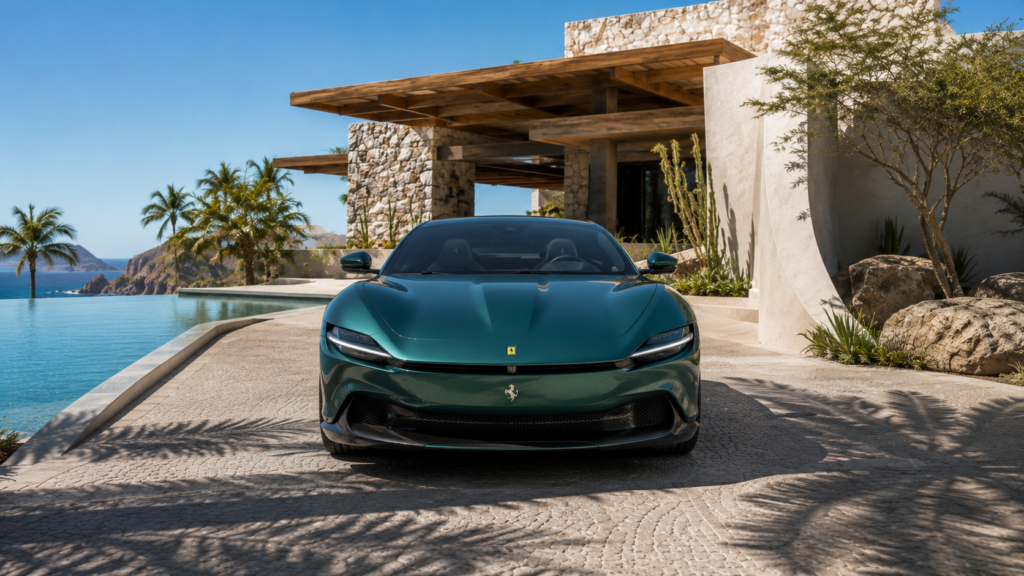
The lights of the villa glow across the infinity pool as a low, sculpted silhouette glides up the drive. The sound of a V8 engine echoes off the stone walls, blending with the distant crash of waves against the cliffs of Los Cabos. This is the Ferrari Amalfi, the car that replaces the Roma and brings back the physical buttons that Ferrari drivers have been asking for.

The Amalfi is a front-mid-engine V8 2+2 coupe that Ferrari unveiled in July 2025. Named after the Italian coastal town, it represents a refinement of the Roma formula with more power, sharper design, and a cabin designed around tactile controls. It is the car that Ferrari hopes will attract new customers while satisfying existing ones.

The Name: A New Chapter

The Ferrari Amalfi is the successor to the Roma, which had been in production since 2019. The name change reflects a new direction for Ferrari’s entry-level GT. The car was unveiled in Amalfi, Italy, a UNESCO World Heritage site that embodies the elegance and beauty Ferrari aimed to capture.

The launch color, Verde Costiera, is a teal green inspired by the reflections of the sea along the Amalfi coast. It is a fresh, vibrant color that sets the tone for the car’s personality.

The Powertrain: A V8 Pushed Further

The heart of the Amalfi is a 3.9-liter twin-turbo V8 from Ferrari’s award-winning F154 family. The engine produces 640 cv (631 horsepower) at 7,500 rpm, a 20-horsepower increase over the Roma. The redline has been raised to 7,600 rpm.

The performance increase was achieved through a new Bosch ECU, advanced turbocharging management, and new pressure sensors. The turbochargers now spin up to 171,000 rpm, and the engine features a new control unit also used in the 296 GTB, Purosangue, and 12Cilindri.

The engine has also been lightened. New camshafts save 1.3 kg, and a redesigned engine block saves another 1 kg. A new low-viscosity oil has been introduced, reducing cold resistance by 30%.

The performance figures are impressive. The Amalfi accelerates from 0 to 100 km/h in 3.3 seconds and reaches a top speed of 320 km/h (199 mph). Power is sent to the rear wheels through an eight-speed dual-clutch F1 transmission.

The Chassis: Refined for Precision

The Amalfi’s chassis has been refined for a more engaging driving experience. The car features a 50:50 weight distribution, with the front-mid-engine layout contributing to excellent balance.

The suspension uses double wishbones at the front and a multi-link setup at the rear. The car rides on 20-inch wheels wrapped in high-performance tires. The brake-by-wire system includes ABS Evo, which improves braking precision on all surfaces. The Side Slip Control system integrates all dynamic controls, including steering, traction, and vertical suspension.

The steering has been recalibrated for improved precision and linearity. A new Electric Power Steering system includes a grip estimation function that is faster than the system in the 296.

The Design: Elegant and Aerodynamic

The Amalfi’s design is an evolution of the Roma’s elegant proportions. The exterior features a minimalist approach, with sharp lines and geometric volumes defining a sculpted, modern body. The front end abandons the traditional grille in favor of a body-colored spoiler above a dark recessed band that integrates the sensors and headlights.

The rear is defined by a strong character line and a compact tail. The taillights are hidden within graphic cuts, evoking classic Ferraris. The active rear spoiler can assume three configurations: Low Drag, Medium Downforce, and High Downforce. In the High Downforce position, it generates significant downforce at high speed.

The design is functional as well as beautiful. A bypass duct between the headlights channels air to cool the engine bay. The flat underbody and diffuser optimize airflow and improve aerodynamic efficiency.

The Interior: Buttons Are Back

The Amalfi’s interior is where the most significant change has occurred. The cabin features a dual-cockpit layout that envelops both driver and passenger. The dashboard has been simplified, with a clean, contemporary design.

The most notable change is the steering wheel. Ferrari has returned to physical buttons, replacing the touch-sensitive controls that frustrated many owners. The iconic red anodized start button is back on the left spoke. The controls are functionally distributed, with ADAS, phone, and voice controls on the left and display, wipers, and indicators on the right.

The HMI system includes three displays: a digital instrument cluster, a central touchscreen, and a passenger display. The system supports Apple CarPlay, Android Auto, and wireless charging. An optional premium audio system delivers high-quality sound through multiple speakers.

The seats are available with a massage function featuring multiple air chambers, programmes, and intensity levels. Ventilation is also available for both the seat and backrest.

The Los Cabos Evening

The Amalfi has completed its drive along the coast. Its V8 has delivered the 640 horsepower that makes it a worthy successor to the Roma. The active rear wing and chassis systems have kept it planted through the curves. The driver, cocooned in the dual-cockpit cabin, has experienced a level of performance that is both thrilling and accessible.

The Amalfi is not a car for everyone. It is a grand tourer for those who want a Ferrari that can be used every day, for those who appreciate the return of physical controls, and for those who value elegance as much as performance. But it represents a significant moment in Ferrari’s history. It is the car that acknowledges the importance of tactile feedback and the joy of driving.

The Amalfi is not just a car. It is a statement. It is a reminder that even in an era of screens and touch controls, Ferrari remains committed to the pure, unfiltered joy of driving. The buttons are back. And it has never been better.