Home Blog Page 6

Ferrari 849 Testarossa: The SF90 Replacement Ferrari Won’t Call a Facelift – A Night at the Fiorano Circuit

0

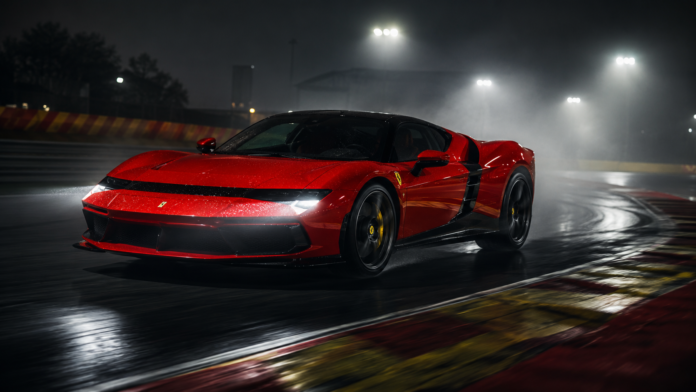
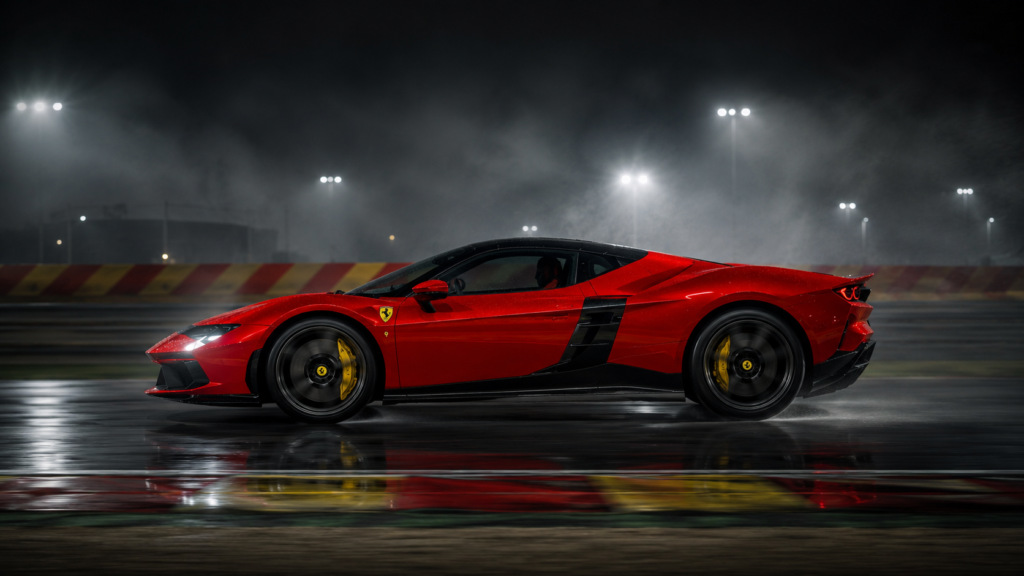
The lights of the Fiorano Circuit glow in the distance as a low, aggressive silhouette sits in the pit lane, its engine idling, its driver preparing for a session that will define its place in Ferrari history. This is the Ferrari 849 Testarossa, the car that replaces the SF90 Stradale and revives one of the most iconic names in automotive history. Ferrari calls it a revolution, not a facelift, and the numbers back up that claim.

The 849 Testarossa is a plug-in hybrid super sports berlinetta powered by a mid-rear twin-turbo V8 engine and three electric motors, delivering a total output of 1,050 cv (1,036 horsepower). It is the most powerful series-production Ferrari ever built, and it is the car that Ferrari believes deserves the Testarossa name.

The Name: A 70-Year Legacy

The Testarossa name has a history that stretches back to 1956, when it was first used to describe the red cam covers of the Ferrari 500 TR’s engine. It subsequently appeared on legendary Le Mans winners and, most famously, the 1984 Testarossa that became a poster car for a generation.

The “849” designation refers to the engine: eight cylinders and 49 cc of displacement per cylinder, totaling 4.0 liters. According to design chief Flavio Manzoni, there is no retro association to the 1980s car. The name is tied to a deeper part of Maranello’s history: the red cam covers of Ferrari’s most powerful racing engines.

The Powertrain: A V8 Pushed to Its Limits

The heart of the 849 Testarossa is the F154FC engine, the latest evolution of Ferrari’s multi-award-winning twin-turbo V8. The engine has been completely re-engineered to produce 830 cv (819 horsepower) alone, a 50 cv increase over the SF90 Stradale’s V8.

The key innovation is a new, larger turbocharger, the largest ever fitted to a Ferrari production car. It features low-friction bearings derived from the F80 and an innovative heat shield inspired by the 296 GT3 to improve thermal management. The engine also uses titanium screws and racing-inspired machining to achieve a 10% improvement in weight-to-power ratio.

The Hybrid System: Three Motors, 220 cv

Three electric motors complement the V8. Two motors on the front axle provide all-wheel drive and torque vectoring, while a third motor, the MGU-K, is positioned between the engine and the eight-speed dual-clutch transmission.

The hybrid system produces 220 cv (217 horsepower), bringing the total system output to 1,050 cv (1,036 horsepower). The 7.45 kWh lithium-ion battery allows up to 25 km of pure electric driving in eDrive mode. Four electric driving modes are available via the eManettino: eDrive, Hybrid, Performance, and Qualify.

Performance: 1:17.5 at Fiorano

The performance figures are extraordinary. The 849 Testarossa accelerates from 0 to 100 km/h in under 2.3 seconds and reaches a top speed beyond 330 km/h (205 mph).

It has lapped the Fiorano test track in 1 minute and 17.5 seconds, a time that is 1.5 seconds quicker than the SF90 Stradale and just 0.2 seconds shy of the limited-series SF90 XX Stradale. This places it among the fastest cars ever to lap the circuit.

The Assetto Fiorano package, available from launch, shaves 30 kg off the car’s dry weight of 1,570 kg and introduces track-focused suspension, tires, and aerodynamic elements.

Aerodynamics: 415 kg of Downforce

The 849 Testarossa’s aerodynamic package is a significant evolution of the SF90’s design. It generates 415 kg of downforce at 250 km/h, a 25 kg increase over its predecessor, while cooling performance improves by 15%.

Key features include:

  • A twin-tail rear architecture inspired by the 512 S sports prototype, which generates downforce at the rear
  • An active rear spoiler that can switch between Low Drag and High Downforce configurations in under a second
  • Optimized bodywork flanks that increase airflow to the intercoolers by 30%

The Interior: A Driver-Centric Revolution

Inside, the 849 Testarossa features a horizontal dashboard combined with single-seater-inspired details. A central sail motif with an integrated gear-change gate is inspired by the F80. The new steering wheel features mechanical buttons, including the iconic engine start button.

Two seat designs are available: comfort seats or carbon-fiber racing seats. A new HMI system concentrates functions around the driver, making interaction with the car simpler and more intuitive.
The Fiorano Evening

The 849 Testarossa has completed its demonstration laps. Its V8 hybrid powertrain has delivered the 1,036 horsepower that makes it the most powerful series-production Ferrari ever built. The active aerodynamics and advanced electronics have kept it planted through the curves. The driver, cocooned in the driver-focused cabin, has experienced a level of performance that was previously the domain of limited-series models.

The 849 Testarossa is not a facelift. It is a revolution. It is a car that revives one of the most iconic names in automotive history and pushes the boundaries of what a hybrid supercar can be. The Testarossa name has returned. And it has never been better.
Why the Corvette ZR1X Changes the American Hypercar Argument Forever – A Night at the Nürburgring

0

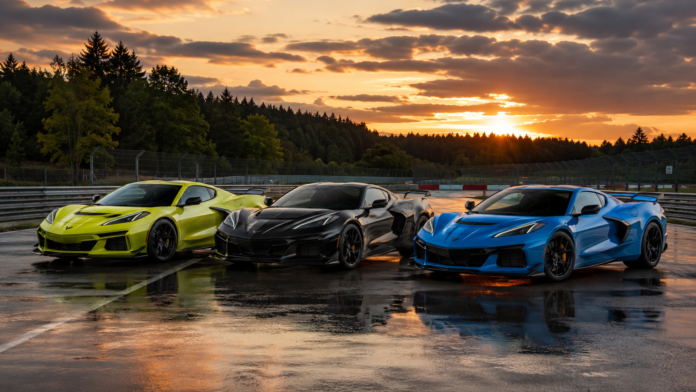
The lights of the Nürburgring Nordschleife flicker in the distance as a low, aggressive silhouette sits in the pit lane, its engine idling, its driver preparing for a session that will define its place in automotive history. This is the Chevrolet Corvette ZR1X, America’s first hybrid hypercar, and it is about to do something that no American car has ever done before.

The ZR1X is not just a fast Corvette. It is a paradigm shift. It combines a 1,064-horsepower twin-turbo V8 with a 186-horsepower electric motor on the front axle, delivering a total of 1,250 horsepower and 1,195 lb-ft of torque. It is the most powerful production Corvette ever built, and it redefines what an American performance car can be.

The Numbers: A New American Benchmark

The ZR1X’s performance figures are staggering. It accelerates from 0 to 60 mph in 1.89 seconds on unprepped surfaces and 1.68 seconds on prepped surfaces. The quarter mile is dispatched in 8.99 seconds on unprepped surfaces and 8.675 seconds on prepped surfaces. Top speed is 233 mph.

The braking system is equally impressive. Massive 16.5-inch carbon ceramic rotors at all four corners are paired with 10-piston front and 6-piston rear calipers, delivering 1.9g of deceleration during testing. This is the largest braking system ever fitted to a production Corvette.

The ZR1X’s Nürburgring lap time of 6:49.275 makes it the fastest American car ever to lap the circuit. The time was set by Corvette engineer Drew Cattell, making it the fastest lap recorded by a non-professional driver. It places the ZR1X in elite company among the world’s fastest production cars.

The Powertrain: A Hybrid Hypercar Formula

The ZR1X’s powertrain is a masterclass in engineering integration. The heart of the system is the 5.5-liter LT7 V8, a twin-turbocharged flat-plane crank engine that produces 1,064 horsepower and 828 lb-ft of torque on its own. This engine, derived from the Corvette Z06 and Z06 GT3.R race car, uses a forged crankshaft, dry sump lubrication, and twin 76mm turbochargers with a Mani-Turbo design for improved exhaust flow and throttle response.

The V8 drives the rear wheels through an eight-speed dual-clutch transmission. An electric motor at the front axle adds another 186 horsepower and 145 lb-ft of torque, bringing the total system output to 1,250 horsepower. The 1.9 kWh battery pack is mounted low in the chassis for optimal weight distribution, and it is self-charging through regenerative braking, requiring no external plug-in. A Stealth Mode allows for electric-only driving for 4 to 5 miles at speeds up to 45 mph.

Chevrolet has developed specialized performance modes for track use. Endurance mode provides consistent power over extended sessions, Qualifying mode maximizes single-lap performance, and Push-to-Pass delivers instant overtaking power. The new PTM Pro mode allows drivers to disable traction and stability control while retaining regenerative braking, front axle pre-control, and launch control, delivering the purest driving experience possible.

The Price: A Fraction of the Competition

The ZR1X’s starting price of $207,395 makes it the most expensive Corvette ever built. But it is still a fraction of the price of its European rivals. The Ferrari F80 starts at $3.7 million. The McLaren W1 starts at $2.1 million. The Bugatti Tourbillon starts at over $4 million. The ZR1X delivers comparable or superior performance for roughly one-tenth the price.

The ZR1X’s value proposition is unmatched. It is a hypercar that costs less than a well-optioned Porsche 911 GT3 RS and delivers performance that rivals million-dollar exotics. It is a car that democratizes hypercar performance in a way that no American car has ever done before.

The Heritage: From the C1 to the C8

The Corvette has always been America’s sports car. From the first C1 in 1953 to the mid-engine C8 today, it has represented American performance and ingenuity. The ZR1X is the pinnacle of this legacy, a car that proves America can build a hypercar that competes with the best from Europe.

The ZR1X is not just a Corvette. It is a statement. It is proof that American engineering can compete at the highest level, at a price that does not require a seven-figure budget. It is a car that redefines the American hypercar argument forever.

The Nürburgring Evening

The ZR1X has completed its demonstration lap. Its LT7 V8 and electric front motor have delivered the 1,250 horsepower that makes it the most powerful Corvette ever. The carbon ceramic brakes and massive downforce have kept it composed through the curves. The driver has experienced a level of performance that was previously the domain of million-dollar European hypercars.

The ZR1X is not a car for everyone. It is a hypercar with a hypercar price. But it represents a significant moment in automotive history. It is the first American hypercar that can genuinely compete with the best from Europe, at a price that does not require a seven-figure budget. It is a paradigm shift. And it has never been better.
Aston Martin Valhalla vs Ferrari F80: A Tale of Two Hybrid Hypercars – A Night at the Imola Circuit

0

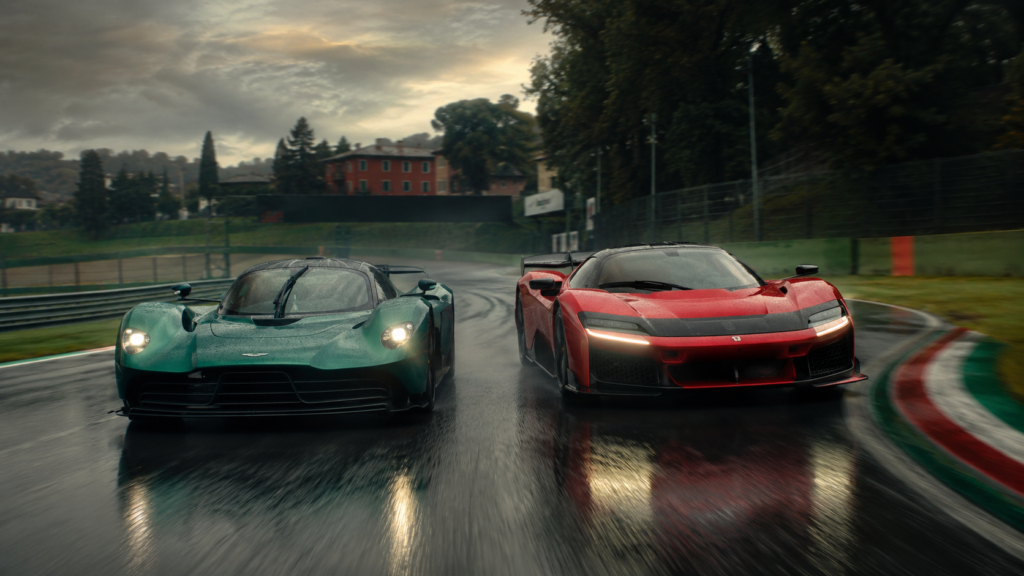
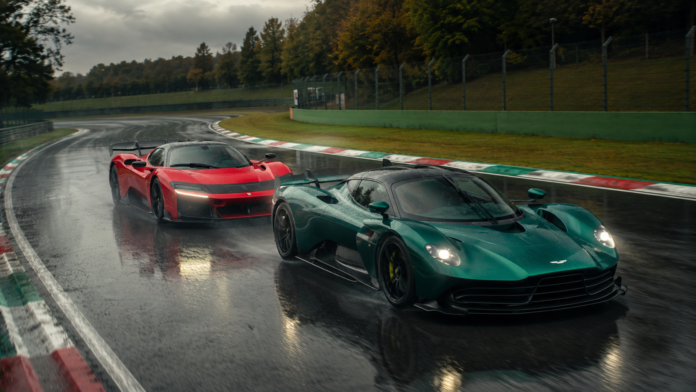
The lights of the Autodromo Enzo e Dino Ferrari glow in the distance as two cars sit in the pit lane, their engines idling, their drivers preparing for a session that will define their place in automotive history. On one side, the Aston Martin Valhalla, a 1,064-horsepower V8 hybrid that represents the British brand’s first series production mid-engine supercar. On the other, the Ferrari F80, a 1,200-horsepower V6 hybrid that joins the pantheon of icons including the GTO, F40, and LaFerrari. Both cars use hybrid powertrains to cross the 1,000-horsepower threshold. Both are limited to around 800 to 999 units. But the similarities end there.

The Powertrains: V8 vs V6

The Aston Martin Valhalla uses a bespoke 4.0-liter twin-turbo V8 with a flat-plane crankshaft, producing 817 horsepower on its own. Three electric motors, two on the front axle and one integrated into the eight-speed dual-clutch transmission, add another 248 horsepower, bringing the total system output to 1,064 horsepower and 811 lb-ft of torque.

The Ferrari F80 uses a 3.0-liter twin-turbo V6 with a 120-degree angle, producing 900 horsepower on its own. Three electric motors, two on the front axle and one MGU-K integrated into the transmission, add another 300 horsepower, bringing the total system output to 1,200 horsepower. The engine is derived from the 499P that won the 24 Hours of Le Mans in 2023 and 2024, and it features electric turbo technology that eliminates lag.

The Hybrid Systems: Different Approaches

The Valhalla’s hybrid system is designed for both performance and usability. In pure EV mode, the car can travel up to 14 kilometers (approximately 9 miles) with a top speed limited to 80 mph. The car has four drive modes: Pure EV, Sport, Sport+, and Race, each with its own combination of settings for powertrain, suspension, active aero, and steering calibration.

The F80’s hybrid system is designed solely for performance enhancement. The car cannot be driven in electric-only mode. The hybrid system is closed-loop, designed to deliver instantaneous response and maximum performance on track.

The Aerodynamics: Different Philosophies

The Valhalla’s aerodynamic package is a combination of active elements that work together to generate more than 600 kilograms of downforce at 149 mph, which is then maintained all the way to the car’s 217 mph maximum speed. The active rear wing raises by 255 mm in Race mode, and the active front wing shifts to maximum downforce mode, with an automated DRS function that reduces drag on straights. Under braking, the rear wing deploys as an air brake.

The F80’s aerodynamic package is among the most extreme ever fitted to a road car. It generates 1,000 kilograms of downforce at 250 km/h, achieved through an active rear wing, an S-Duct with a triple-wing configuration, a flat underbody with a 1.8-meter diffuser, and an active suspension system that contributes directly to ground effect by minimizing body roll during cornering.

The Driving Experience: Different Characters

The Valhalla is a car that rewards a skilled driver with a playful, approachable character. The chassis is allowed to breathe, and the rear end can be provoked into a slide on corner exit. The steering is light and accurate, and the ride is surprisingly compliant. The flat-plane crank V8 is hard-edged and responsive, though some reviewers note the sound is more McLaren than Ferrari. The Valhalla is a car that feels special and exotic, yet usable on the road.

The F80 is a car that demands respect. The power is immense, and the active aerodynamics and hybrid system work in harmony to deliver a driving experience that is both brutal and precise. It is more intense, more focused, and more demanding than the Valhalla. The F80 is a track weapon that happens to be road legal.

The Price: A Significant Difference

The Valhalla is priced at approximately £850,000 ($1.05 million), making it significantly more affordable than the F80, which starts at $3.7 million. The Valhalla is positioned as a step between traditional supercars and the more radical hypercars. The F80 is positioned as a halo car, a successor to the LaFerrari.

The Imola Evening

The two cars have completed their demonstration laps. The Aston Martin Valhalla has delivered the 1,064 horsepower that makes it the most powerful Aston Martin ever built. The Ferrari F80 has delivered the 1,200 horsepower that makes it the most powerful Ferrari road car ever built. The lap times are close, but the experience is different.

The Valhalla is a car that combines performance with usability. The hybrid system allows for electric-only driving, the active aerodynamics adapt to the situation, and the cabin is a comfortable place to be. It is a car that can be driven to the track, set competitive lap times, and drive home.

The F80 is a car that demands respect. The power is immense, and the car requires a skilled driver to extract its full potential. The active aerodynamics and hybrid system work in harmony to deliver a driving experience that is both brutal and precise. It is a car that is designed for the track, and it shows.

The Verdict

The Aston Martin Valhalla and Ferrari F80 are two of the most impressive hypercars ever built. The Valhalla is a technological showcase that combines performance with usability. The F80 is a track-focused weapon that pushes the boundaries of what is possible with a V6 hybrid powertrain.

The choice between them depends on what you value most. The Valhalla is more usable, with electric-only driving and a more comfortable cabin. It is also significantly more affordable. The F80 is more focused, with a more extreme aerodynamic package and a more demanding driving experience. Both are extraordinary. Both are legends. The rematch is a draw.

Ferrari F80 vs McLaren W1: The Halo Hypercar Rematch – A Night at the Silverstone Circuit

0

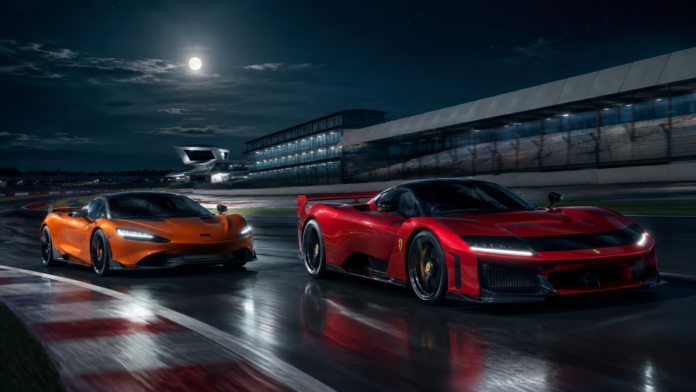
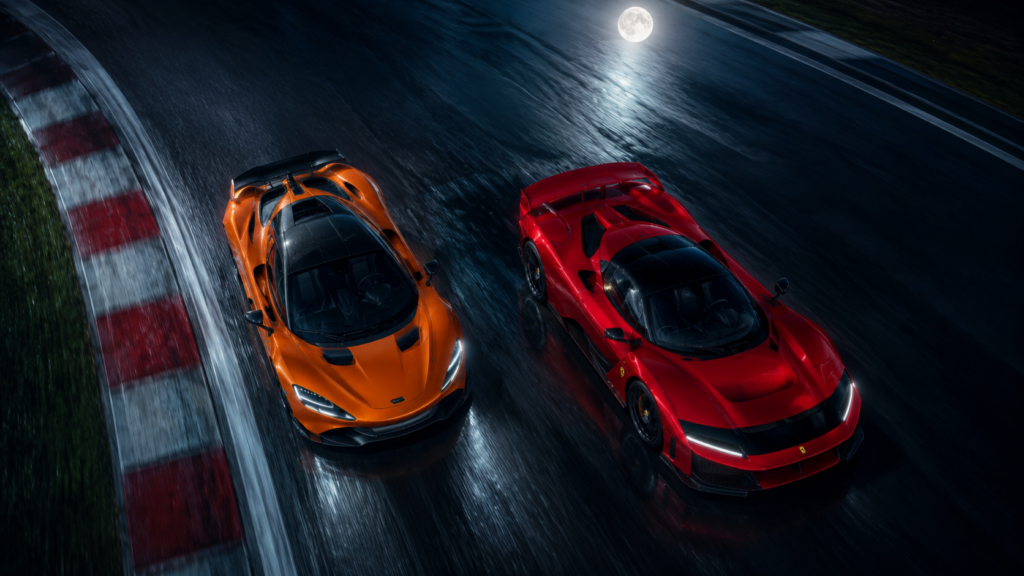
The lights of the Silverstone Circuit glow in the distance as two cars sit in the pit lane, their engines idling, their drivers preparing for a session that will define their place in automotive history. On one side, the Ferrari F80, a 1,200-horsepower V6 hybrid that represents the pinnacle of Maranello’s engineering. On the other, the McLaren W1, a 1,258-horsepower V8 hybrid that continues the legacy of the F1 and P1.

The comparison is inevitable. Both cars are the successors to the LaFerrari and the P1, two of the most iconic hypercars of the previous decade. Both cars use hybrid powertrains to deliver over 1,200 horsepower. Both cars are limited to around 400 units, and both cars cost millions of dollars. But the similarities end there. The F80 and the W1 represent two very different philosophies of what a halo hypercar should be.

The Powertrains: V6 vs V8

The Ferrari F80 uses a 3.0-liter twin-turbo V6 with a 120-degree angle, producing 900 horsepower on its own. Three electric motors, two on the front axle and one integrated into the transmission, add another 300 horsepower, bringing the total system output to 1,200 horsepower. The engine is derived from the 499P that won the 24 Hours of Le Mans in 2023, 2024, and 2025, and it features electric turbo technology that eliminates lag.

The McLaren W1 uses a 4.0-liter twin-turbo V8 producing 916 horsepower on its own, making it the most powerful internal combustion engine McLaren has ever built. A single electric motor, mounted after the transmission, adds another 340 horsepower, bringing the total system output to 1,258 horsepower. The engine revs to 9,200 rpm and features both port and direct injection, hollow sodium-filled intake valves, and plasma-spray cylinder liners.

The Hybrid Systems: Different Approaches

The F80’s hybrid system is designed for boost optimization. The driver takes a sighting lap, and the car logs the curves and straights, analyzing where a performance boost might be most useful. On the next lap, the system deploys that extra power at the optimal moments. The F80 cannot be driven in electric-only mode. The hybrid system is closed-loop, designed solely for performance enhancement.

The W1’s hybrid system is designed for constant power delivery. The electric motor is mounted after the transmission’s clutches, feeding torque through the even gears in parallel with the engine. This allows the W1 to deliver a combined 1,258 horsepower and 1,340 Nm of torque. The electric motor can power the car for short distances at low speeds, but the primary focus is on performance.

The Aerodynamics: Ground Effect vs Active Aero

The F80’s aerodynamic package is among the most extreme ever fitted to a road car. It generates 1,000 kilograms of downforce at 250 kilometers per hour, achieved through an active rear wing, an S-Duct with a triple-wing configuration, a flat underbody with a 1.8-meter diffuser, and an active suspension system that minimizes body roll.

The W1’s aerodynamic package is a fully ground effect system. The car generates all of its downforce underneath the car, massively improving drag while delivering unprecedented grip and downforce. The system includes an active front splitter and the McLaren Active Long Tail, a rear wing that extends 300 mm backward in Race mode to work with the underfloor and rear diffuser. The entire aerodynamic package produces 1,000 kilograms of downforce, five times more than in road mode.

The Weight: A Significant Difference

The F80’s dry weight is approximately 1,500 kilograms, while the W1’s dry weight is just 1,399 kilograms. The W1 is significantly lighter, a difference that is felt in the car’s agility and responsiveness.

The Silverstone Evening

The two cars have completed their demonstration laps. The Ferrari F80 has delivered the 1,200 horsepower that makes it the most powerful Ferrari road car ever built. The McLaren W1 has delivered the 1,258 horsepower that makes it the most powerful McLaren ever built. The lap times are close, but the experience is different.

The F80 is a car that demands respect. The power is immense, and the car requires a skilled driver to extract its full potential. The active aerodynamics and hybrid system work in harmony to deliver a driving experience that is both brutal and precise.

The W1 is a car that rewards precision. The lighter weight and ground-effect aerodynamics make it feel more agile and responsive. The hybrid system delivers power in a linear, predictable manner, and the chassis communicates clearly with the driver.

The Verdict

The Ferrari F80 and McLaren W1 are two of the most impressive hypercars ever built. The F80 is a technological tour de force, a car that pushes the boundaries of what is possible with a V6 hybrid powertrain. The W1 is a return to the analog driving experience, a car that prioritizes weight reduction and driver engagement over sheer power.

The choice between them depends on what you value most. The F80 is faster, more powerful, and more technologically advanced. The W1 is lighter, more agile, and more engaging. Both are extraordinary. Both are legends. The rematch is a draw.

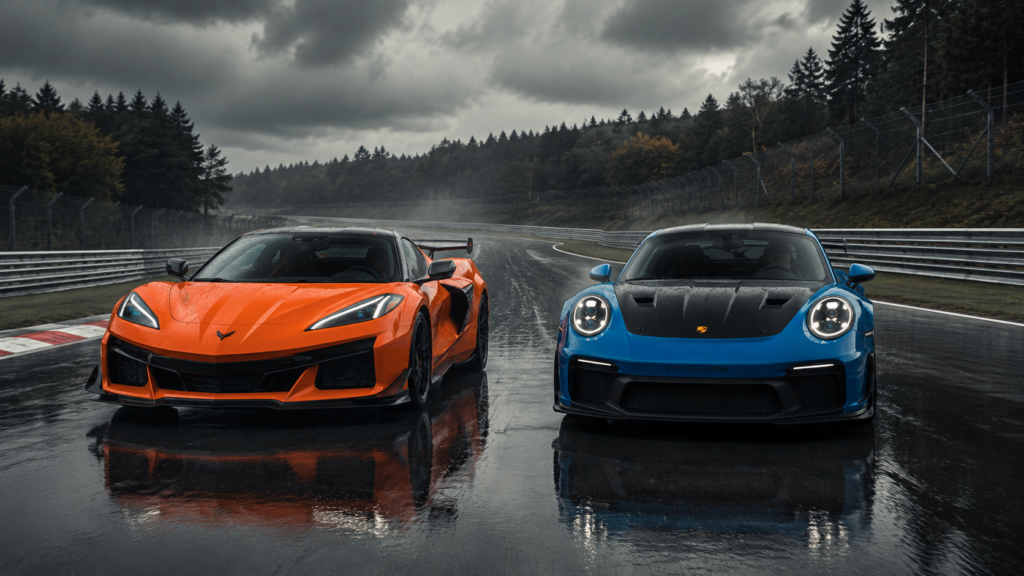
Corvette ZR1X vs Porsche 911 GT3: 1,250hp vs 500hp at the Nürburgring – A Night at the Nürburgring

0

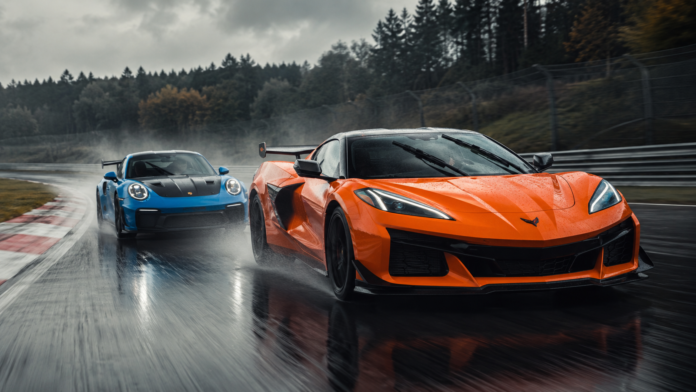
The lights of the Nürburgring Nordschleife flicker in the distance as two cars sit in the pit lane, their engines idling, their drivers preparing for a session that will define their place in automotive history. On one side, the Chevrolet Corvette ZR1X, a 1,250-horsepower hybrid hypercar that represents the pinnacle of American performance engineering. On the other, the Porsche 911 GT3, a 500-horsepower naturally aspirated track weapon that has set the benchmark for driver engagement for a quarter of a century.

The comparison seems absurd on paper. The Corvette has more than twice the horsepower, all-wheel drive, and a hybrid system that delivers instant torque. The Porsche has rear-wheel drive, a naturally aspirated flat-six, and a manual transmission option. But the Nürburgring is not a drag strip. It is a 12.9-mile ribbon of tarmac with 154 corners, elevation changes, and surfaces that test every aspect of a car’s performance.

The Contenders: Two Very Different Approaches

The Corvette ZR1X is America’s first hybrid hypercar. It combines a 5.5-liter twin-turbo V8 with an electric motor on the front axle, producing 1,250 horsepower and 1,195 lb-ft of torque . The car features carbon ceramic brakes, a track-focused suspension, and an aerodynamic package that generates over 1,200 pounds of downforce .

The Porsche 911 GT3 is the latest evolution of Porsche’s naturally aspirated track weapon. Its 4.0-liter flat-six produces 502 horsepower and 331 lb-ft of torque . The car features a double-wishbone front suspension, rear-axle steering, and an aerodynamic package that generates significant downforce without the need for a massive rear wing .

The Lap Times: What the Numbers Say

The Corvette ZR1X has lapped the Nürburgring in 6:49.275, making it the fastest American car ever to lap the circuit . The time was set by Corvette engineer Drew Cattell, making it the fastest lap recorded by a non-professional driver . The Porsche 911 GT3, by comparison, has lapped the Nürburgring in 7:03.92, a time that is 14.6 seconds slower than the Corvette .

The numbers tell a clear story. The Corvette is significantly faster around the Nürburgring than the Porsche. But the numbers do not tell the whole story.

The Power-to-Weight Ratio

The Corvette’s power-to-weight ratio is exceptional. At approximately 3,600 pounds, the ZR1X has a power-to-weight ratio of approximately 2.88 pounds per horsepower. The GT3, at approximately 3,200 pounds, has a power-to-weight ratio of approximately 6.38 pounds per horsepower. The Corvette has a significant advantage on paper.

But the Nürburgring is not a drag strip. The track rewards balance, grip, and driver confidence as much as raw power. The Corvette’s all-wheel-drive system and hybrid torque vectoring give it an advantage out of corners, but the car’s weight and complexity can work against it in the tighter sections. The Porsche’s lighter weight and more traditional layout give it an advantage in the corners, but the car’s lower power output limits its top speed on the straights.

The Driving Experience

The Corvette is a car that demands respect. The power is immense, and the car requires a skilled driver to extract its full potential. The hybrid system provides instant torque, and the all-wheel-drive system delivers exceptional grip, but the car’s weight and complexity can make it feel less nimble than the Porsche.

The Porsche is a car that rewards precision. The naturally aspirated flat-six delivers power in a linear, predictable manner, and the chassis communicates clearly with the driver. The car is lighter and more agile than the Corvette, but it requires the driver to work harder to extract the maximum performance.

The Nürburgring Evening

The two cars have completed their demonstration laps. The Corvette ZR1X has delivered the 1,250 horsepower that makes it the fastest American car ever to lap the Nürburgring. The Porsche 911 GT3 has delivered the 502 horsepower that makes it one of the most engaging track cars ever built. The lap times are clear, but the experience is more complex.

The Corvette is faster. The Porsche is more engaging. The Corvette is a hypercar. The Porsche is a driver’s car. The choice between them depends on what you value most.

Key Takeaways

  • The Corvette ZR1X lapped the Nürburgring in 6:49.275, while the Porsche 911 GT3 lapped in 7:03.92.
  • The Corvette has more than twice the horsepower of the Porsche, but the Porsche is significantly lighter.
  • The Corvette’s all-wheel-drive system and hybrid torque vectoring give it an advantage out of corners, but the Porsche’s lighter weight and more traditional layout give it an advantage in the corners.
  • The Corvette is faster, but the Porsche is more engaging.

Conclusion

The Corvette ZR1X and Porsche 911 GT3 are two of the most impressive performance cars ever built. The Corvette is a hypercar that delivers brutal power and record-setting lap times. The Porsche is a driver’s car that rewards skill and precision. The lap times are clear, but the choice between them is not. It depends on what you value most.

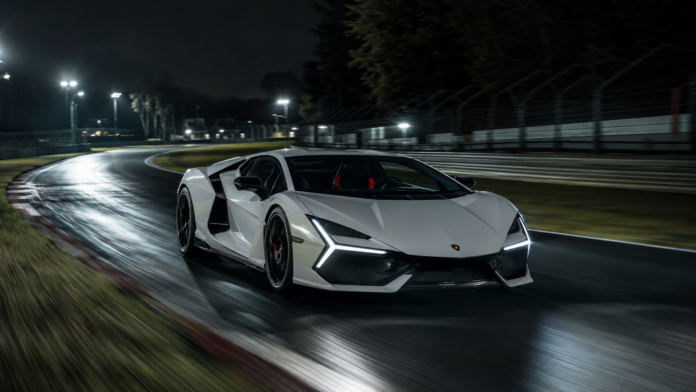
Lamborghini Revuelto Hypercar Edition: The Rarest V12 Lambo – A Night at the Imola Circuit

0

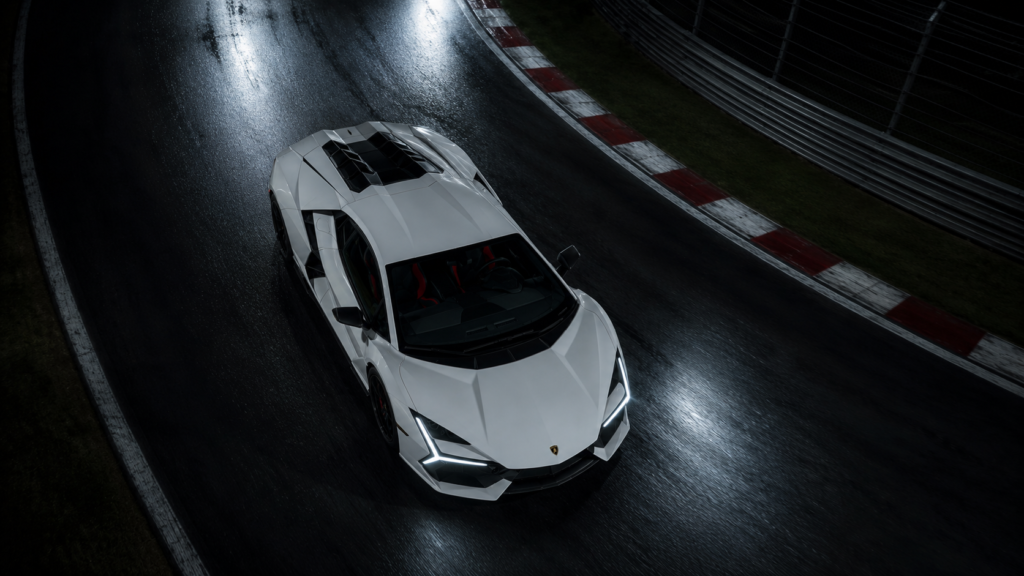
The lights of the Autodromo Enzo e Dino Ferrari glow in the distance as a low, aggressive silhouette cuts through the curves of the Imola Circuit. The air is cool, and the sound of a V12 engine echoes off the grandstands. This is the Lamborghini Revuelto Hypercar Edition, the rarest V12 Lamborghini ever made, and it represents the purest expression of the brand’s track-focused philosophy.

The Revuelto Hypercar Edition is an ultra-limited variant of the Revuelto, Lamborghini’s flagship V12 hybrid. It is a car that strips away the active aerodynamics and advanced suspension of the standard car in favor of a more focused, track-oriented setup. It is a car for drivers who value engagement over convenience, who want a car that demands to be driven, not just piloted.

The Powertrain: A V12 Hybrid for the Track

The heart of the Revuelto Hypercar Edition is the same 6.5-liter naturally aspirated V12 engine found in the standard Revuelto, producing 825 horsepower at 9,250 rpm . The engine is mated to three electric motors, two on the front axle and one integrated into the eight-speed dual-clutch transmission . The total system output is 1,001 horsepower, making it one of the most powerful V12 Lamborghinis ever built.

The Hypercar Edition retains the standard Revuelto’s powertrain, but the focus is on the chassis and aerodynamics. The car has been stripped of its active aerodynamic elements and advanced suspension systems in favor of a more traditional, mechanical setup.

The Chassis: Passive Suspension and No Active Aero

The most significant changes to the Hypercar Edition are in the chassis and aerodynamics. The car ditches the standard Revuelto’s active aerodynamic system, which includes a deployable rear wing and active front flaps, in favor of a fixed aero package . This reduces weight and complexity, but it also means the car generates less downforce and relies more on mechanical grip.

The suspension has also been revised. The Hypercar Edition uses a passive setup with manually adjustable coilover dampers, replacing the standard car’s active suspension system . This allows the driver to fine-tune the handling to suit their preferences, but it also means the car is less adaptable to changing road conditions.

The result is a car that is more demanding to drive, but also more rewarding. The absence of active aero and active suspension means the driver must rely on skill and feel to extract the maximum performance from the car. It is a return to the analog driving experience that many enthusiasts crave.

The Interior: A Focus on the Driver

The interior of the Hypercar Edition is stripped back and focused on the driver. The seats are lightweight carbon fiber buckets, and the steering wheel is a small, flat-bottomed unit . The infotainment system is minimalist, and the sound deadening has been reduced to save weight. The overall effect is purposeful and focused, a reminder that this car is built for driving, not for comfort.

The Design: More Aggressive, More Focused

The Hypercar Edition’s exterior design is more aggressive than the standard Revuelto. The fixed aero package includes a larger rear wing and a more prominent front splitter, giving the car a race-ready appearance. The exposed carbon fiber body panels and unique badging mark it as a special edition.

The Imola Evening

The Hypercar Edition has completed its demonstration laps. Its V12 hybrid powertrain has delivered the 1,001 horsepower that makes it one of the most powerful Lamborghinis ever built. The passive suspension and fixed aero package have kept it planted through the curves, but the driver has had to work harder to extract the maximum performance. The experience is raw, engaging, and unforgettable.

The Hypercar Edition is not a car for everyone. It is a limited-production track special, a car for drivers who value engagement over convenience. But it represents a significant moment in Lamborghini’s history. It is a return to the analog driving experience that defined the brand’s early years, and it proves that Lamborghini can still build a car that demands to be driven.

The Hypercar Edition is not just a car. It is a statement. It is a reminder that even in an era of electrification and automation, Lamborghini remains committed to the pure, unfiltered joy of driving. The rarest V12 Lamborghini has arrived. And it promises to be unforgettable.

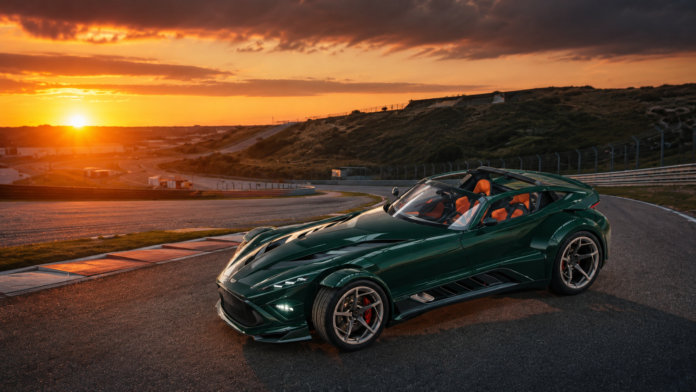
Donkervoort P24 RS: The Most Dutch Supercar Ever Made – A Night at the Zandvoort Circuit

0

The lights of the Zandvoort Circuit glow in the distance as a low, wide silhouette cuts through the curves of the Dutch coastal track. The air is cool, and the sound of a five-cylinder engine echoes off the grandstands. This is the Donkervoort P24 RS, the most Dutch supercar ever made, and it represents the purest expression of the brand’s lightweight, analog philosophy.

The P24 RS is the latest in a lineage that began with the Donkervoort S7 in 1978. It is a car that is built to celebrate the 50th anniversary of the brand that started in 1978, with only 50 units being produced . It is a car that is a permanent convertible, a roadster that features no roof, no doors, and no windows, delivering the most authentic and engaging driving experience possible . It is a car that is built for an elite group of enthusiasts who will appreciate its authenticity and who prioritize the joy of driving above all else .

The Powertrain: A Five-Cylinder Symphony

The heart of the P24 RS is a 2.5-liter five-cylinder turbocharged engine, sourced from Audi but heavily modified by Donkervoort . The engine produces 493 horsepower and 520 Nm of torque, all sent to the rear wheels through a five-speed manual transmission . The power-to-weight ratio is exceptional, with the car weighing just 750 kg in its lightest configuration .

The performance figures are staggering. The P24 RS accelerates from 0 to 100 km/h in 2.5 seconds and reaches a top speed of 300 km/h . The engine’s sound is distinctive, with a five-cylinder warble that is both gruff and engaging.

The Chassis: Carbon Fiber and Tubular Steel

The P24 RS is built around a carbon fiber monocoque with a tubular steel frame . The suspension uses double wishbones at all four corners with pushrod-actuated dampers, a configuration derived from racing . The car is equipped with coilover dampers with a high/low speed adjustment, allowing the driver to fine-tune the handling to suit their preferences .

The car rides on 18-inch wheels wrapped in Nankang AR-1 semi-slick tires . The brakes are ventilated discs with carbon-ceramic options available .

The Interior: A Focus on the Driver

The cabin of the P24 RS is stripped back and focused on the driving experience. The seats are lightweight carbon fiber buckets, and the steering wheel is a small, flat-bottomed unit . The interior features a digital instrument cluster and a minimalist infotainment system . The absence of a roof, doors, and windows means the driver is fully exposed to the elements, creating an immersive driving experience.

The Design: Function Over Form

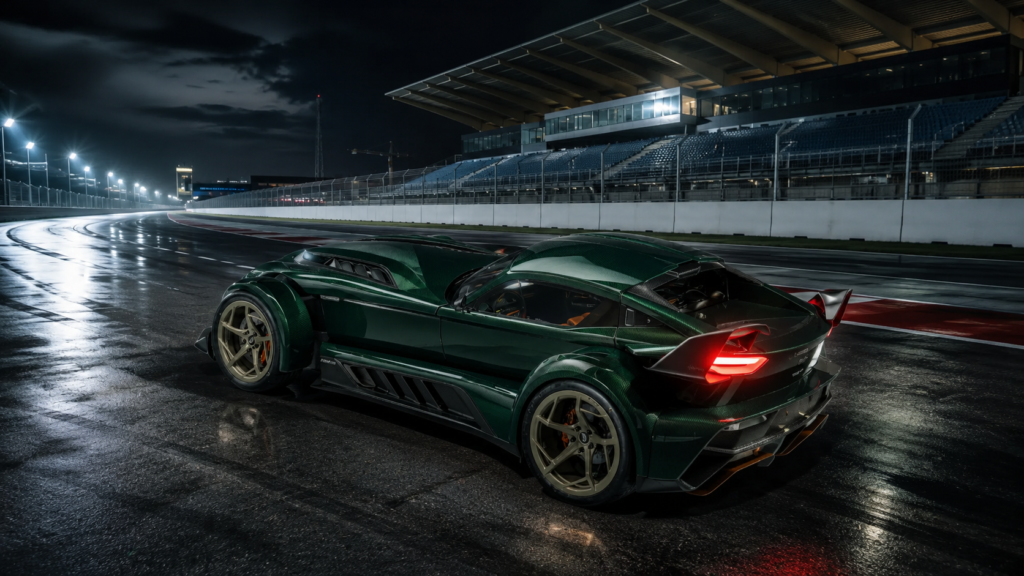
The P24 RS’s design is functional and purposeful. The long hood, short overhangs, and exposed carbon fiber body panels give it a raw, race car appearance . The large rear wing, front splitter, and side intakes are functional, managing airflow for cooling and aerodynamic performance.

The car is available in a range of colors, including the classic Donkervoort green and orange . The design is a tribute to the brand’s heritage, with the S7’s distinctive lines evident in the P24 RS’s profile .

The Zandvoort Evening

The P24 RS has completed its demonstration laps. Its five-cylinder engine has delivered the 493 horsepower that makes it one of the most exciting supercars on the road. The carbon fiber chassis and double-wishbone suspension have kept it planted through the curves. The driver, cocooned in the minimalist cockpit, has experienced a level of performance that is as raw as it is engaging.

The P24 RS is not a car for everyone. It is a limited-production supercar, with only 50 units being built . But it represents a significant moment in Donkervoort’s history. It is the brand’s 50th-anniversary model, and it proves that the analog, lightweight philosophy still has a place in a world of heavy, turbocharged supercars.

The P24 RS is not just a car. It is a statement. It is a reminder that even in an era of electrification and automation, Donkervoort remains committed to the pure, unfiltered joy of driving. The most Dutch supercar ever made has arrived. And it promises to be unforgettable.

Hyundai N Vision 74: Hydrogen Sports Car, Production Reality – A Night at the Inje Speedium

0

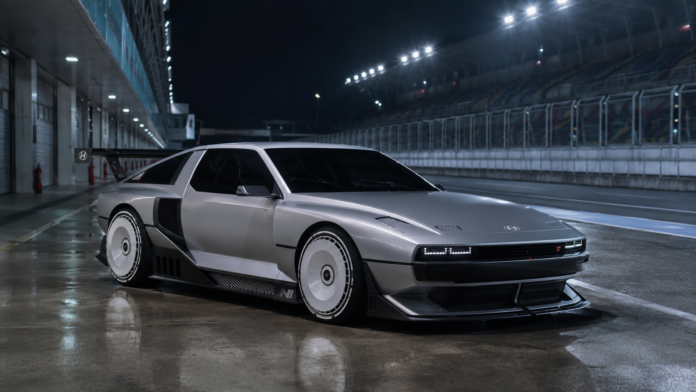
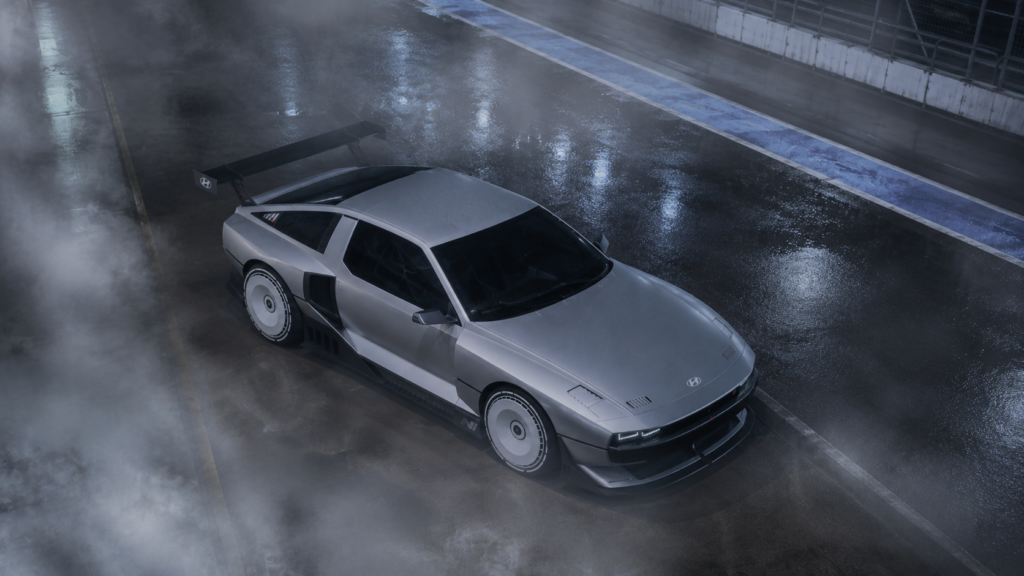
The lights of the Inje Speedium glow in the distance as a low, wide silhouette cuts through the curves of the South Korean circuit. The air is cool, and the sound of electric motors whirs through the cabin of a car that has been years in the making. This is the Hyundai N Vision 74, a car that began as a concept in 2022 and is now on the path to production.

The N Vision 74 is the first hydrogen hybrid high-performance vehicle from Hyundai’s N brand, and it represents the most significant performance machine to emerge from the company since the Pony Coupe concept of 1974. It is a car that combines a 670-horsepower rear-wheel-drive electric powertrain with a hydrogen fuel cell system, delivering a driving experience that is as sustainable as it is thrilling.

The Powertrain: A Hydrogen Hybrid Formula

The N Vision 74’s powertrain is a masterclass in engineering integration. The car uses a hybrid structure that combines a battery-electric system with a fuel cell electric vehicle (FCEV) system. This is not a traditional EV or a traditional hydrogen car. It is both.

A hydrogen fuel cell stack is mounted at the front, generating up to 95 kW of power. Two hydrogen tanks, with a combined capacity of 4.2 kg, are placed on the rear axle. The fuel cell charges a 62.4 kWh T-type battery mounted low in the chassis, which in turn powers two rear-mounted electric motors.

The twin motors produce over 500 kW (670 horsepower) and 900 Nm of torque, all sent to the rear wheels. The car is equipped with a torque vectoring control system that allows for precise handling and drifting capability. Acceleration from 0 to 100 km/h takes less than 4 seconds, and the top speed exceeds 250 km/h. The driving range is over 600 km, and refueling the hydrogen tanks takes just 5 minutes.

The Design: Heritage Meets Futurism

The N Vision 74’s design pays homage to the 1974 Hyundai Pony Coupe concept, designed by the legendary Giorgetto Giugiaro. The pure surface, dynamic proportions, and distinctive B-pillar are direct references to the original concept. The parametric pixel lighting, a signature of Hyundai’s modern design language, adds a futuristic touch.

The car is 4,952 mm long, 1,995 mm wide, and 1,331 mm tall, with a 2,905 mm wheelbase. The large rear wing, front splitter, and side intakes are functional, managing airflow for cooling and aerodynamic performance.

The Interior: A Driver-Centric Cockpit

The interior inherits the driver-centric cockpit of the Pony Coupe concept, blending heritage elements with modern design. It features a digital cluster, analogue buttons, and Performance Blue details that create an N-specific interior feel. The seating position is low and focused, with the driver at the center of the experience.

The Production Reality

The N Vision 74 has been confirmed for production, with Hyundai listing it as a “high-performance EV” in its 2024 CEO Investor Day presentation. Reports suggest that only 200 units will be built, with production potentially starting in June 2026. Each unit is expected to cost in excess of US$300,000, positioning the N Vision 74 as a halo car for the brand.

While the concept featured a hydrogen fuel cell system, the production model may be all-electric, as the Hyundai presentation made no mention of hydrogen for its future EVs. However, recent patent filings suggest that the production car could retain the hydrogen hybrid powertrain. The final configuration remains unconfirmed.

The Inje Speedium Evening

The N Vision 74 has completed its demonstration laps. Its hydrogen hybrid powertrain has delivered the 670 horsepower that makes it one of the most exciting performance cars Hyundai has ever built. The torque vectoring system and rear-wheel-drive layout have kept it playful through the curves. The driver, cocooned in the driver-focused cockpit, has experienced a level of performance that was previously the domain of sports cars from Europe and Japan.

The N Vision 74 is not a car for everyone. It is a limited-production halo car, a technological showcase that pushes the boundaries of what Hyundai can achieve. But it represents a significant moment in the company’s history. It is the realization of a dream that began with the Pony Coupe concept in 1974 and continued with the N 2025 Vision Gran Turismo in 2015. It is a car that proves Hyundai can build a world-class performance machine.

The N Vision 74 is not just a car. It is a statement. It is a reminder that even in an era of electrification, Hyundai remains committed to the pure, unfiltered joy of driving. The hydrogen sports car has arrived. And it promises to be unforgettable.

Porsche 718 Electric: The Future of the Boxster and Cayman – A Night on the Pacific Coast Highway

0

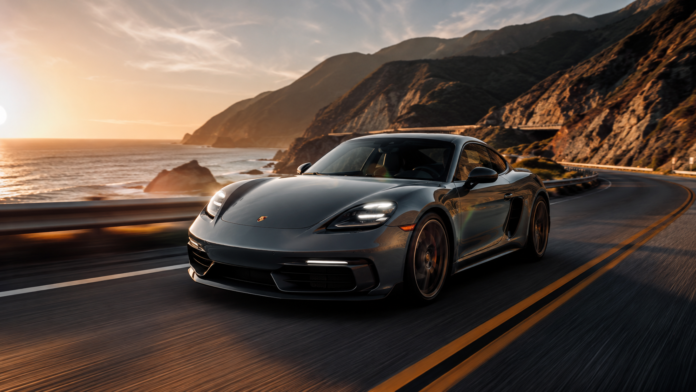
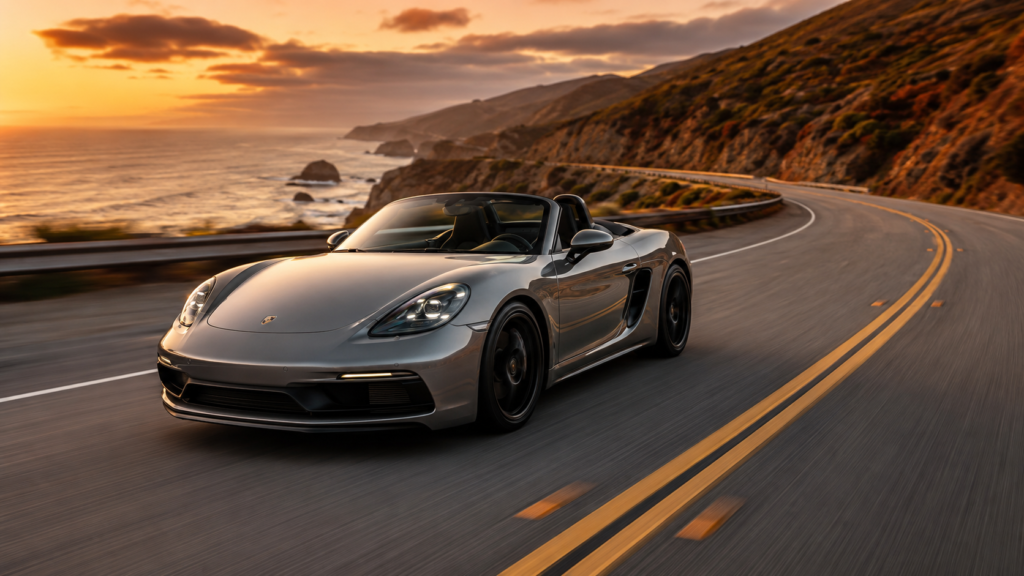
The sun is setting over the Pacific Ocean as a low, wide silhouette cuts through the curves of the Pacific Coast Highway. The air is cool, and the scent of salt and sage drifts through the cabin of a car that has been years in the making. This is the Porsche 718 Electric, the first fully electric sports car from the German brand, and it represents the most significant shift in the 718’s history since the Boxster saved Porsche from financial ruin in the 1990s.

The 718 Electric is not just another EV. It is a car that must preserve the mid-engine balance, the go-kart feel, and the driver engagement that have made the Boxster and Cayman icons for nearly three decades. Porsche has faced delays, cost pressures, and shifting market conditions in bringing this car to market. But the commitment remains. The gas-powered 718 models have already been discontinued in Europe, and the electric replacements are on their way.

The Powertrain: Electric, but Still a Porsche

The 718 Electric will ride on a dedicated electric architecture, likely derived from the Premium Platform Electric (PPE) architecture that underpins the electric Macan. The platform features an 800-volt system, enabling rapid charging at up to 270 kW. Battery capacity is expected to be substantial, though specific figures have not been confirmed.

Power will come from one or two electric motors. Base models are expected to feature a single motor and rear-wheel drive, while higher trims will get a dual-motor all-wheel-drive setup. Porsche executives have driven prototypes and described them as “amazing” and “brilliant,” emphasizing that the car retains the weight distribution and go-kart feel that define the 718 experience.

The Design: Familiar Silhouette, New Details

The 718 Electric will look like a Porsche. The design retains the classic 718 silhouette, with a low stance and an aerodynamic profile. The front end will feature a closed-off grille and distinctive lighting signatures, signaling its electric nature. Active aero elements will manage airflow for cooling and aerodynamic efficiency.

The charging port will be located at the rear, between the taillights. The interior will feature a digital cockpit with a large infotainment display, offering access to navigation, performance data, and connectivity features. Advanced driver-assistance systems like adaptive cruise control and lane-keeping assist will likely be available.

The Price: More Than the Gas Models

The electric 718 will be more expensive than its gas-powered predecessors. Base gas models started around $75,400, while top-spec variants exceeded $160,000. The electric versions will command a premium, reflecting the cost of the new platform and battery technology.

The Future: ICE Options Remain Possible

Porsche has not completely closed the door on combustion engines. Reports suggest the top-tier 718 models could retain internal combustion engines, and the company has confirmed that gas-powered versions of the next-generation 718 are in development, likely as limited-production specials aimed at purists who crave a manual gearbox and exhaust noise. Porsche is evaluating opportunities to offer both ICE and EV versions, though no final decision has been announced.

The Pacific Coast Highway Evening

The 718 Electric has completed its drive along the coast. Its electric motors have delivered the instant torque and dynamic response that Porsche executives have promised. The low center of gravity and balanced weight distribution have kept it composed through the curves. The driver has experienced a level of performance that proves the 718 formula can survive electrification.

The 718 Electric is not a car for everyone. It is more expensive than the gas models it replaces, and it may not satisfy those who crave a manual gearbox and exhaust noise. But it represents a significant moment in Porsche’s history. It is the first fully electric sports car from the brand, and it proves that Porsche can deliver the driving experience enthusiasts demand, even without a combustion engine.

The 718 Electric is not just a car. It is a statement. It is a reminder that even in an era of electrification, Porsche remains committed to the pure, unfiltered joy of driving. The future of the Boxster and Cayman is electric. And it promises to be brilliant.

Maserati GT2 Stradale: Racing Car for the Road – A Night at the Ascari Circuit

0

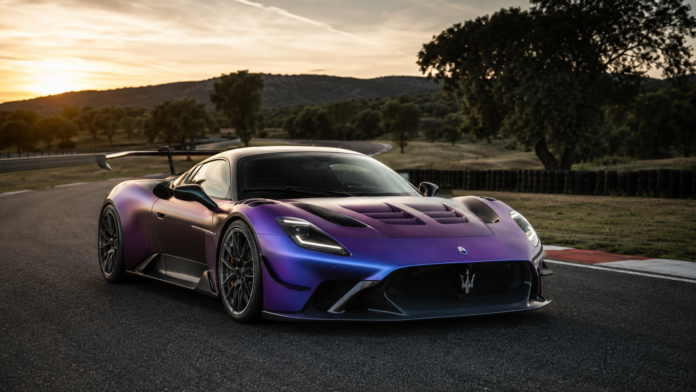
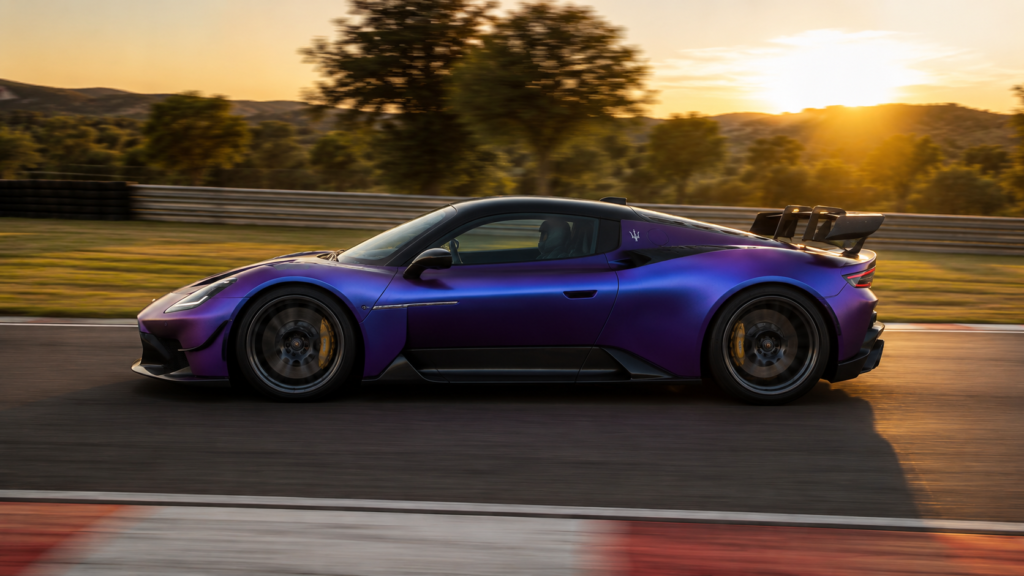
The sun is setting over the Andalusian hills near Ronda, Spain, as the lights of the Ascari Circuit flicker to life. The track is quiet, but the air hums with the memory of engines past. A single car sits in the pit lane, its carbon fiber body low and wide, its presence unmistakable. This is the Maserati GT2 Stradale, a car that Maserati has converted from its GT2 race car into a road-legal supercar built on the MC20 platform.

The GT2 Stradale is the latest expression of Maserati’s racing DNA. It is a car that combines the extreme, refined performance of the racing world with the option of uncompromising driving in the utmost comfort. Limited to just 914 units worldwide, it is Maserati’s most exclusive and track-focused road car.

The Powertrain: Nettuno Unleashed

The heart of the GT2 Stradale is the 3.0-liter twin-turbo V6 Nettuno engine, which now produces 631 horsepower (640 PS) and 720 Nm (531 lb-ft) of torque. This is a 10-horsepower increase over the MC20, achieved through improved airflow and a small bump in boost pressure. The engine features F1-inspired pre-chamber combustion technology, delivering a distinctive character that is both gruff and engaging.

The power is sent to the rear wheels through an eight-speed dual-clutch transmission, making the GT2 Stradale one of the fastest rear-wheel-drive cars in its category. It accelerates from 0 to 60 mph in just 2.8 seconds and reaches a top speed of 201 mph.

Chassis and Dynamics: Carbon Fiber and Aero

The GT2 Stradale is built around the same carbon fiber monocoque as the MC20, but with significant upgrades. The dry weight is 1,365 kg, 60 kg less than the MC20, thanks to new carbon-shell Sabelt bucket seats, lighter center-lock wheels, standard carbon-ceramic brakes, and Alcantara interior trim.

The suspension uses double wishbones at all four corners with active dampers that can be adjusted via a knob on the center console. The ride quality is compliant and usable for daily driving, despite the track focus. The steering is precise and well-weighted.

The most significant upgrade is the aerodynamic package. The GT2 Stradale generates 500 kilograms of downforce at 174 mph, more than three times the MC20’s 145 kg. This is achieved through a large swan-neck rear wing with three adjustable settings, a new front splitter, a racing-derived aero hood, and louvered fenders. The rear wing alone contributes 370 kg of downforce, while the front end adds 130 kg.

The Interior: A Focus on the Driver

The cabin of the GT2 Stradale is stripped back and focused on the driving experience. The optional carbon-backed Sabelt bucket seats are positioned lower in the cabin than in the MC20, and the center console has been redesigned to bring the drive mode selector closer to the driver. The interior features Alcantara upholstery and yellow highlights that focus the eyes toward the key controls.

The infotainment system is usable, with wireless Apple CarPlay and Android Auto. The driving position is excellent, with a near-perfect steering wheel and visibility that is surprisingly good, thanks to the tall fenders marking out the corners of the car.

The Ascari Evening

The GT2 Stradale has completed its demonstration laps. Its Nettuno V6 has delivered the 631 horsepower that makes it one of the fastest rear-wheel-drive cars on the road. The carbon fiber chassis and aerodynamic package have kept it planted through the curves. The driver, cocooned in the carbon bucket seat, has experienced a level of performance that was previously the domain of race cars.

The GT2 Stradale is not a car for everyone. It is limited to 914 units worldwide, with a starting price of $311,995 in the US and £273,510 in the UK. But it represents a significant moment in Maserati’s history. It is the road-going version of the GT2 race car, and it proves that Maserati can build a car that combines racing DNA with road-going comfort.

The GT2 Stradale is not just a car. It is a statement. It is a reminder that even in an era of electrification, Maserati remains committed to the pure, unfiltered joy of driving. The racing car for the road has arrived. And it has never been more exciting.