
The name Genesis may be relatively new to the luxury automotive segment, but the Korean brand has rapidly established itself as a serious contender. Since its launch as a standalone luxury division in 2015, Genesis has produced a line of sedans and SUVs that combine distinctive design, generous equipment, and competitive pricing to challenge established players from Germany and Japan. The brand’s product strategy has been methodical and effective, building a foundation of conventional luxury vehicles before expanding into more ambitious territory.
The Genesis X Speedium Coupe Concept represents that expansion. First shown as a concept in 2022, the Speedium Coupe previews the brand’s electric future while celebrating its design philosophy. Named after the Inje Speedium racing circuit in the mountains of South Korea, the concept car embodies Genesis’s belief that the emotional value of driving will remain strong in the era of electrification. It is not merely a show car, but a look into the design processes as the brand explores ideas for the next wave of electric vehicles.
As Genesis moves toward its goal of offering six electric vehicles by 2030, the X Speedium Coupe Concept provides a clear indication of where the brand is heading. While the car remains a concept as of 2026, with no official production confirmation, its influence can already be seen in the design language of Genesis’s growing electric lineup. This article examines the concept’s design philosophy, what we know about its potential specifications, and what makes this Korean interpretation of grand touring stand out in the current automotive landscape.
The Genesis Design Philosophy
Reductive Design
The guiding principle behind the X Speedium Coupe Concept is what Genesis calls reductive design. This philosophy holds that less is more and that genuine, purist design means every detail is chosen for a reason. If something is unnecessary, it is not included. This approach stands in contrast to the increasingly complex and ornamented designs emerging from some competitors, where visual drama often takes precedence over clarity and proportion.
For Genesis, reductive design is about honesty. The surfaces are clean, the lines are purposeful, and the overall shape communicates its intent without relying on decorative elements. This philosophy is applied consistently across the X Speedium Coupe Concept, from the simple parabolic line that defines the side profile to the minimal rocker panels that emphasize the car’s muscular stance.
The Two Line Motif
The most recognizable element of Genesis design is the Two Line motif, a signature that appears on every model the brand produces. The design leadership has described this element as essential to the brand’s identity. On the X Speedium Coupe Concept, the dual headlamps have evolved into a continuous design element that extends across the full width of the front end.
This evolution serves both aesthetic and symbolic purposes. The uninterrupted front end represents Genesis’s transformation into a fully electric brand, with the absence of a traditional grille signaling the concept’s electric nature. The LED illuminated surround that frames the grille area creates a distinctive face that is clearly Genesis while being unmistakably electric.
Hourglass Silhouette
The X Speedium Coupe Concept’s proportions are defined by what Genesis describes as an hourglass silhouette. The pronounced front and rear fenders create a sense of dynamic force, while the elegantly curved parabolic line that connects them softens the overall effect. The body is drawn in at the center by the minimal rocker panels, emphasizing the width of the fenders and the concept’s planted stance.
From above, the hourglass shape is even more apparent, with the body tapering inward between the flared wheel arches. This approach to proportioning creates visual drama without resorting to aggressive creases or complex surfacing, a demonstration of the reductive design philosophy in action.
Exterior Design
Front End Treatment
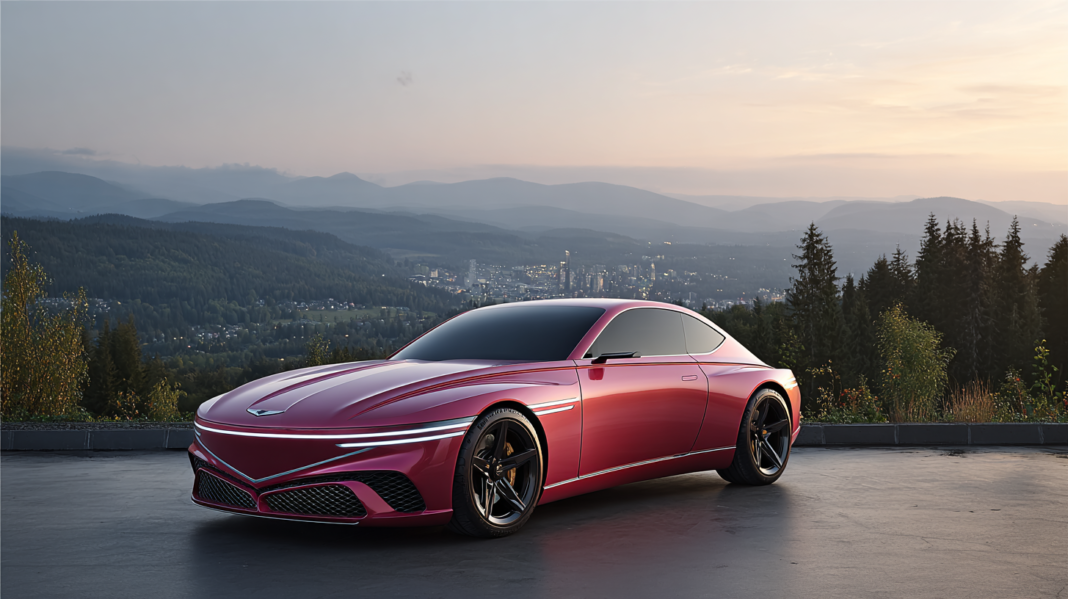
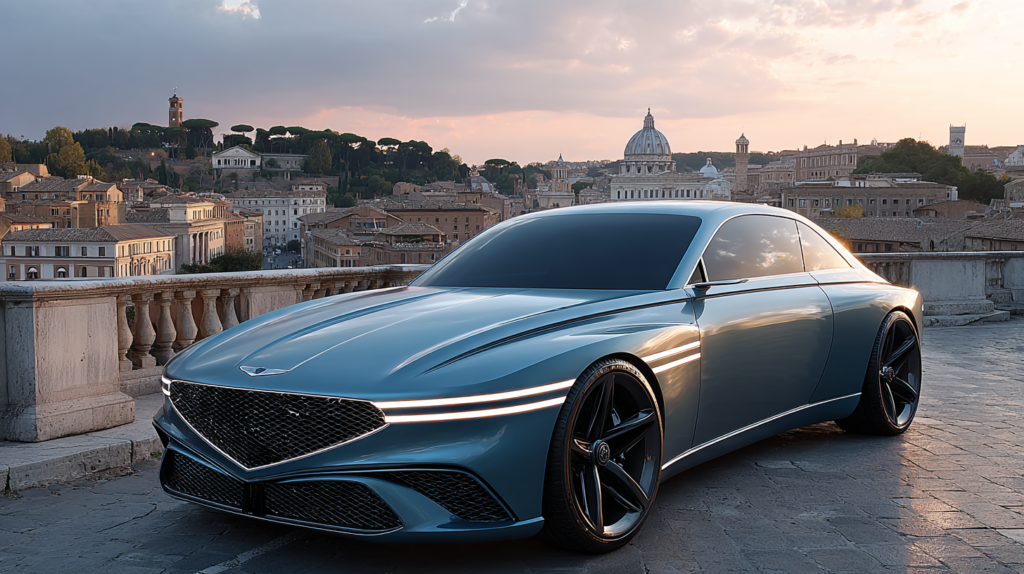
The face of the X Speedium Coupe Concept represents a significant evolution from previous Genesis designs. The Two Line motif remains, but the dual lamps are now integrated into a continuous light bar that spans the full width of the nose. Below this, the area traditionally occupied by a grille is reinterpreted for the electric age. Rather than a blank panel or a purely decorative element, Genesis has created a distinctive shape framed by LED lighting.
The actual cooling intakes are located in the front fascia below this grille area, providing airflow to the battery cooling systems and front motors while maintaining the clean appearance of the upper face. This separation of functional and aesthetic elements allows the design to serve both purposes without compromise.
Side Profile
The side view of the X Speedium Coupe Concept reveals its grand touring proportions. The long hood, cab rearward greenhouse, and short rear deck recall the classic GT coupes of the 1960s and 1970s, while the execution is thoroughly modern. The parabolic line that arcs from the front fender to the rear creates a sense of forward motion even when the car is stationary.
Compared to earlier Genesis concepts, the Speedium Coupe appears more compact and more aggressively proportioned, with a faster, more sporting roofline that terminates in a pronounced rear spoiler. The flared fenders house wheels pushed to the corners, emphasizing the concept’s width and stability.
Rear Design
At the rear, the Two Line motif continues in the taillights, which echo the shape and proportion of the front lighting. Above, the distinctive elliptical tail houses a V shaped brake light that creates contrast with the elegant curves of the rear bodywork. This V element is a subtle touch that rewards close inspection without shouting for attention.
The pronounced rear spoiler, integrated into the decklid, serves both aerodynamic and aesthetic functions. It manages airflow at the rear of the vehicle while providing a visual capstone to the fastback roofline. Below, the rear fascia is clean and unadorned, with the absence of exhaust outlets confirming the concept’s electric nature.
Inje Green Paint
The X Speedium Coupe Concept is shown in a distinctive metallic paint color called Inje Green, named for the racing circuit that inspired the car. The color evokes the lush, green environment of the track set in the mountains of South Korea. It is described as a classic racing color, one that suits the timeless elegance of this dynamic vehicle.
This choice of color is significant. Rather than a futuristic silver or a dramatic pearlescent white, Genesis chose a deep, rich green that references both the concept’s Korean origins and the grand touring tradition. It is a confident choice that signals the brand’s intention to create cars that are elegant rather than merely flashy.
Interior Design
The Beauty of White Space
The interior of the X Speedium Coupe Concept carries forward the exterior’s design philosophy with a theme Genesis calls the beauty of white space. This approach emphasizes openness, simplicity, and the careful arrangement of elements within the cabin.
The driver sits in an asymmetrically designed cockpit, with the center console arching upward to meet twin towers above the instrument panel. This architectural element is finished in brushed metal trim that covers the driver facing side, making the piece particularly striking. The asymmetry reinforces the driver focus of the cabin while creating visual interest.
Material Choices
Material selection in the X Speedium Coupe Concept reflects Genesis’s commitment to sustainability as well as luxury. The seats, instrument panel, and center console are upholstered in deep Pinegrove Green leather, providing a rich, natural contrast to the cabin’s architecture. The remainder of the interior is finished in Monterey Gold, creating a deliberate contrast between the two sides of the cabin.
The upper cabin surfaces use a new, breathable grain material manufactured with reduced water and chemical usage compared to conventional alternatives. The remaining leather is vegetable tanned, avoiding the harsh chemicals used in conventional tanning processes. The steering wheel is wrapped in woven leather made from recycled scraps left over from seat production, with the threads used to join the pieces made from recycled plastic.
Technology Integration
The center console houses a tilted touchscreen display for infotainment functions, positioned for easy access by the driver while maintaining the clean lines of the dashboard. The instrument cluster is fully digital, providing configurable information displays that can be tailored to the driver’s preferences.
Genesis partnered with a high end audio equipment manufacturer to create a dedicated sound system for the X Speedium Coupe Concept. This collaboration, unusual for a concept car, suggests that Genesis is thinking seriously about the sensory experience of driving, not just the visual elements.
Powertrain and Performance
Electric Platform
While Genesis has not released detailed powertrain specifications for the X Speedium Coupe Concept, the car is clearly positioned as an electric vehicle. The absence of a traditional grille, the clean front fascia, and the brand’s stated commitment to electrification all point to an electric powertrain beneath the bodywork.
The X Speedium Coupe Concept is built on the same electric platform that underpins Genesis’s production EVs. This architecture, developed within the Hyundai Motor Group, has already proven itself in models like the Genesis GV60 and the related Hyundai Ioniq 5 and Kia EV6. It supports both rear wheel drive and all wheel drive configurations, with dual motor setups available for higher performance variants.
Performance Expectations
As a concept vehicle, the X Speedium Coupe has not been assigned official performance figures. However, given its positioning as a grand touring coupe, a production version would likely target performance levels appropriate to the segment. Existing models on the same platform provide a baseline for what the architecture can deliver, with outputs ranging from modest single motor configurations to high performance dual motor setups producing approximately 430 horsepower.
Acceleration targets for a potential production version would likely place the car competitively within the grand touring segment. Zero to sixty miles per hour in the mid three second range would be achievable with appropriate powertrain tuning, providing performance that satisfies the GT brief without sacrificing the refinement expected of a luxury coupe.
Range expectations would similarly align with the platform’s capabilities. Existing models offer between 235 and 280 miles of range depending on configuration. A more aerodynamically efficient coupe shape could potentially improve on those numbers. Real world range of 250 to 300 miles would be competitive in the grand touring segment.
Charging Capability
The platform’s 800 volt architecture enables ultra fast charging at compatible stations. Under ideal conditions, a 10 to 80 percent charge can be completed in approximately 18 minutes. This capability makes long distance travel practical, an essential characteristic for a grand tourer designed to cover ground efficiently and comfortably.
Concept to Production: The Path Forward
Current Status
As of 2026, the X Speedium Coupe remains a concept vehicle. It has appeared at automotive events and exhibitions since its 2022 debut, generating significant interest from enthusiasts and industry observers. However, Genesis has not announced official production plans for the model.
Design Influence
While the concept itself may not reach production, its design language has already influenced Genesis’s production vehicles. The Two Line motif evolution, the clean front fascia treatment for electric models, and the emphasis on proportion and surface quality can all be seen in current Genesis electric vehicles. The brand’s commitment to reductive design, as demonstrated by the X Speedium Coupe Concept, continues to shape its approach to造型.
Market Considerations
The grand touring coupe segment is relatively small compared to the SUV and sedan categories where Genesis currently competes. A production version of the X Speedium Coupe would require a business case that justifies the investment in a dedicated model. The brand’s goal of offering six electric vehicles by 2030 could accommodate a halo coupe, but no decision has been announced.
What Makes the X Speedium Coupe Concept Stand Out in 2026
The Korean Interpretation of Grand Touring
The X Speedium Coupe Concept represents a distinctly Korean take on the grand touring concept. While European manufacturers have defined the GT category for decades, Genesis brings a fresh perspective shaped by different cultural and design influences. The result is a concept that respects the traditions of the segment while expressing them in a new way.
The Inje Speedium circuit inspiration grounds the concept in its Korean origins, connecting it to a place and a culture rather than simply borrowing from European templates. This authenticity matters in a luxury segment where buyers increasingly value distinctiveness over imitation. A Korean grand tourer offers something genuinely different from the established German, British, and Italian alternatives.
Design as Differentiator
In an era when many electric vehicles are adopting similar shapes dictated by aerodynamic efficiency, the X Speedium Coupe Concept stands out for its commitment to proportion and surface quality. The hourglass silhouette, the parabolic line, the careful management of volumes these are the concerns of a design team working at a high level, not simply optimizing for drag coefficients.
Genesis has demonstrated with its production vehicles that it can execute distinctive design at scale. The X Speedium Coupe Concept suggests that this capability will continue to evolve, with cars that are recognizable as Genesis from any angle. The Two Line motif, the crest grille shape reinterpreted for electric power, the clean surfacing all of these elements work together to create a cohesive identity.
The Reductive Philosophy
The reductive design approach, with its insistence on removing anything unnecessary, produces a concept that is calm rather than busy, elegant rather than aggressive. In a market segment where many competitors rely on visual drama to attract attention, the X Speedium Coupe Concept’s restraint is itself distinctive.
This philosophy extends beyond the exterior to the interior, where the focus on white space and careful material selection creates a cabin that feels both luxurious and calm. The sustainable materials, integrated thoughtfully rather than highlighted as features, demonstrate that environmental responsibility need not compromise luxury. The result is a space that invites relaxation and engagement in equal measure.
The Emotional Value of Driving
The X Speedium Coupe Concept represents a belief that the emotional value of driving will remain strong in the era of electrification. This speaks to a concern shared by many enthusiasts. As cars become faster and more capable, there is a risk that they also become more isolated, more digital, more removed from the driver.
The concept suggests that Genesis understands this concern. The car is designed to be driven, not merely piloted. The driver focused cockpit, the attention to the sensory experience, the connection to a racing circuit all point to a vehicle that values engagement as much as capability. The sound system collaboration, the material choices, the careful attention to ergonomics all serve the goal of creating a car that rewards the act of driving.
The Concept as Statement
Even as a concept that may never reach production, the X Speedium Coupe serves an important purpose. It demonstrates Genesis’s design capabilities and its vision for the future. It signals to customers, competitors, and the industry at large that the brand intends to compete not just in mainstream luxury segments but in the enthusiast oriented niches that define brand passion.
For a relatively young brand like Genesis, concept vehicles like the X Speedium Coupe build credibility and generate excitement. They show what the brand is capable of when freed from production constraints, and they provide a roadmap for future design directions.
The Future of Genesis Electrification
The Six EV Strategy
Genesis has announced plans to offer six electric vehicles by 2030, a commitment that will transform the brand’s lineup over the coming years. The current electric offerings, including the Electrified G80 sedan and the GV60 and Electrified GV70 SUVs, represent the first wave of this transition.
Future models will include additional sedans and SUVs, as well as the potential for dedicated electric vehicles inspired by concepts like the X Speedium Coupe. The brand’s design language, as previewed by the concept, will continue to evolve while maintaining the distinctive identity that Genesis has established.
Design Leadership
The appointment of design leadership with experience at Bentley and Lamborghini signaled Genesis’s ambition to compete at the highest levels of automotive design. The X Speedium Coupe Concept reflects this influence, combining European sophistication with Korean sensibility.
As Genesis moves toward its electric future, design will remain a primary differentiator. The brand cannot compete with German manufacturers on heritage or with Japanese competitors on volume, but it can offer something genuinely different in terms of visual identity. The X Speedium Coupe Concept suggests that the brand understands this opportunity and is prepared to seize it.
Market Positioning
A production version of the X Speedium Coupe, should it materialize, would enter a segment currently dominated by European manufacturers. Electric grand tourers from Audi, BMW, Mercedes Benz, and Porsche represent the established competition, with their own interpretations of what a luxury GT should be.
Genesis would position its offering as an alternative to these established players, offering comparable performance and superior design at a more accessible price point. This approach has worked for the brand in the sedan and SUV segments, and it could succeed in the GT category as well.
Conclusion
The Genesis X Speedium Coupe Concept represents a significant statement from Korea’s fastest growing luxury brand. It demonstrates that Genesis understands the grand touring tradition and has the design capability to interpret it in a fresh, distinctive way. It shows that the brand’s commitment to electrification does not mean abandoning the emotional value of driving. And it suggests that Genesis’s electric future will be defined by cars that are beautiful, engaging, and unmistakably Korean.
In 2026, as the automotive industry continues its transition toward electrification, the X Speedium Coupe Concept stands as proof that electric cars can have soul. While it remains a concept with no confirmed production plans, its influence can already be seen in the design language of Genesis’s growing electric lineup. It is not simply a collection of performance figures or range estimates, though those would matter if a production version arrives. It is a car designed to be experienced, to be driven, to be enjoyed. It honors the grand touring tradition while looking firmly toward the future.
For Genesis, the X Speedium Coupe Concept represents both a destination and a point of departure. It shows where the brand is heading while providing a roadmap for how it will get there. And for the rest of the automotive world, it offers compelling evidence that Korea’s take on grand touring is worth taking seriously.

