
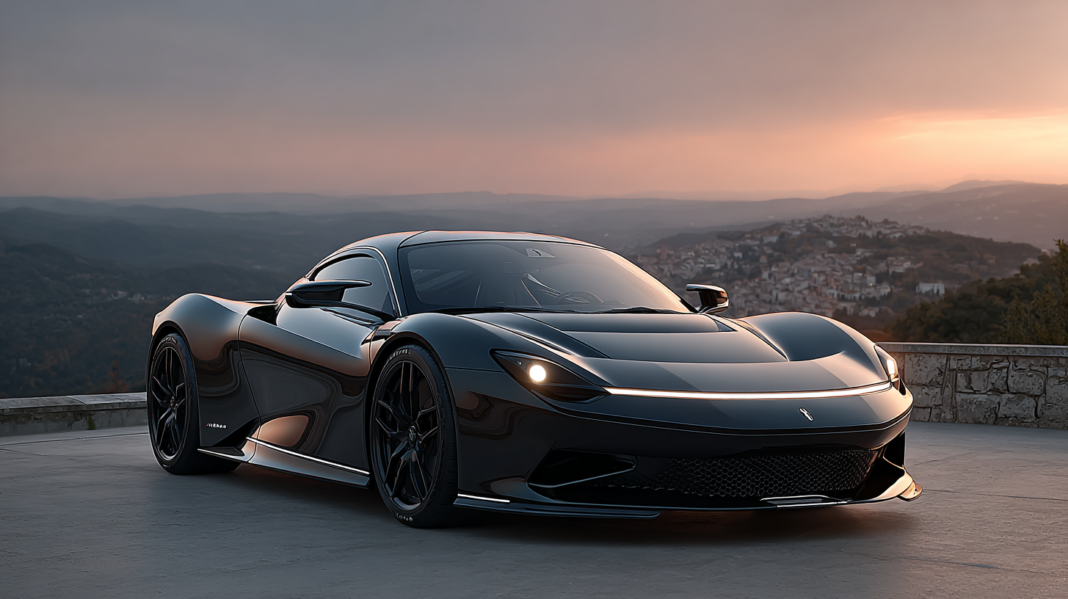
The name Pininfarina carries a weight in automotive history that few others can claim. For more than nine decades, this Italian design house has been responsible for some of the most beautiful cars ever created, with a client list that includes Ferrari, Alfa Romeo, Maserati, and Lancia. The shapes that emerged from the Pininfarina studios in Cambiano, Turin, have defined generations of automotive aesthetics, from the timeless elegance of 1960s Ferraris to the dramatic lines of modern supercars.
But the Battista represents something new. It is the first production vehicle to wear the Pininfarina badge as a manufacturer, not just a design house. Named for company founder Battista “Pinin” Farina, this electric hypercar fulfills a dream that the patriarch held nearly a century ago: to create automobiles bearing the family name. Chairman Paolo Pininfarina has stated that it was always his grandfather’s dream for Pininfarina to produce cars carrying its own badge, and the Battista is the realization of that vision.
Now in full production for the 2026 model year, the Battista represents the convergence of Pininfarina’s design heritage with the electric vehicle technology of Rimac, the Croatian engineering firm known for creating some of the world’s most advanced electric powertrains. The result is a machine that delivers 1,900 horsepower, sub two second acceleration to sixty miles per hour, and a design that honors the company’s legacy while pointing toward its future.
This article provides a detailed examination of the Pininfarina Battista, its performance specifications, design philosophy, and what makes this car stand out in the current automotive landscape.
The Pininfarina Story: From Design House to Manufacturer
For most of its existence, Pininfarina operated as an independent design and engineering firm, creating bodies and interiors for other manufacturers. The relationship with Ferrari, beginning in the 1950s, produced some of the most celebrated automotive designs of the twentieth century, including the 250 GT, the Daytona, and the Testarossa. The company also worked with Alfa Romeo, Maserati, Lancia, and even mass market manufacturers like Peugeot and Hyundai.
The transition from design house to automobile manufacturer became possible through the backing of Mahindra, the Indian industrial conglomerate that acquired a majority stake in Pininfarina. With Mahindra’s financial support and strategic vision, Automobili Pininfarina was established as a separate entity dedicated to producing luxury electric vehicles under the Pininfarina name.
The Battista serves as the halo car for this new venture, a low volume hypercar that demonstrates the company’s capabilities and establishes its credentials in the luxury performance segment. It is followed by plans for additional models, including the B95 open top hypercar and a luxury SUV positioned at a lower price point for broader market appeal.
Powertrain Specifications
Electric Motor Configuration
The Pininfarina Battista is powered by four electric motors, one mounted at each wheel. This quad motor configuration provides all wheel drive and enables sophisticated torque vectoring capabilities. By varying power delivery to individual wheels, the system can enhance cornering performance, rotating the car into turns and providing optimal traction during exit.
Total system output reaches 1,900 horsepower and 1,696 lb ft of torque in standard form. The Anniversario and Novantacinque special editions increase output slightly to 1,926 horsepower, marking the 95th anniversary of Pininfarina’s founding. This makes the Battista the most powerful road legal car ever to come out of Italy.
Battery and Range
Power for the electric motors is drawn from a 120 kWh battery pack developed by Rimac, the Croatian electric hypercar manufacturer with extensive experience in high performance battery systems. The T shaped pack is mounted low in the chassis, positioned in the central tunnel and behind the seats to optimize weight distribution and lower the center of gravity.
The battery provides an estimated range of approximately 300 miles on the WLTP cycle, which tends to be more optimistic than the EPA cycle used in the United States. Real world range under mixed driving conditions is likely closer to 250 miles, while sustained high speed driving will reduce range further.
DC fast charging is supported at up to 180 kW, allowing a 20 to 80 percent charge in approximately 25 minutes under ideal conditions. This charging capability makes long distance travel feasible, though the car’s primary mission remains performance rather than touring.
Acceleration Performance
The Battista accelerates from 0 to 60 miles per hour in 1.79 seconds, placing it among the quickest production vehicles in the world. The 0 to 120 miles per hour sprint takes approximately 4.5 seconds, and 0 to 186 miles per hour is achieved in under 12 seconds.
These figures exceed the acceleration of current Formula One cars off the line, a fact that Pininfarina notes with understandable pride. The instant torque delivery of electric motors, combined with the traction provided by all wheel drive and sophisticated launch control systems, enables performance that was impossible with internal combustion engines.
Top Speed
The Battista has a top speed of 217 miles per hour, electronically limited to preserve tire integrity and battery cooling capacity. This figure, while lower than some competitors, reflects the car’s focus on acceleration and handling rather than outright top speed. The trade off is appropriate for a vehicle designed to excel on road courses rather than high speed ovals.
Chassis and Structure
Carbon Fiber Monocoque
The foundation of the Battista is a carbon fiber monocoque, providing exceptional rigidity and occupant protection while minimizing weight. The monocoque is manufactured to aerospace standards, with careful attention to fiber orientation and layup sequence to achieve the desired combination of stiffness and energy absorption.
A carbon fiber and aluminum rear subframe supports the electric motors and suspension components, while the front structure is similarly constructed to manage crash loads while keeping weight to a minimum. The complete chassis is claimed to be among the stiffest in production, providing a stable platform for suspension tuning and precise handling.
Suspension System
The Battista uses double wishbone suspension at all four corners, with components manufactured from lightweight aluminum and carbon fiber where appropriate. The suspension geometry is designed to maintain optimal tire contact patch through the full range of wheel travel, providing consistent grip and predictable handling.
Height adjustable coilover dampers allow the ride height to be lowered by 15 to 20 millimeters for track driving, reducing the center of gravity and improving aerodynamic performance. The suspension can be raised for speed bumps and driveway approaches, preserving usability in real world conditions.
Braking System
Stopping power is provided by carbon ceramic brakes from Brembo, the Italian supplier with extensive Formula One and road car experience. The system uses large diameter discs with multi piston calipers at all four corners, providing fade free stopping power lap after lap.
Regenerative braking, controlled by the electric motors, captures energy during deceleration and returns it to the battery. The regenerative system is integrated with the friction brakes through a brake by wire controller that blends the two sources seamlessly, providing consistent pedal feel regardless of the balance between regeneration and friction.
Wheels and Tires
The Battista rides on forged aluminum wheels, sized 20 inches at the front and 21 inches at the rear for the standard model. The Anniversario edition receives specially designed forged wheels with aerodynamic inserts that reduce drag and improve cooling.
Tires are developed specifically for the Battista in partnership with Michelin, using the Pilot Sport Cup 2 compound and construction. These tires provide the grip necessary to transmit the car’s massive power to the pavement while maintaining predictable breakaway characteristics at the limit.
Aerodynamics and Design
Functional Aesthetics
The exterior design of the Battista is the work of Pininfarina’s in house styling team, led by Chief Design Officer Dave Amantea. The team was given the freedom to create without the constraints of adapting an existing platform or sharing components with other models, resulting in a design that is both beautiful and functional.
The body surfaces are shaped to manage airflow for both aerodynamic efficiency and cooling requirements. The front end channels air to the radiators that cool the electric motors and power electronics, while side exits allow heated air to escape from the wheel wells. The rear diffuser accelerates airflow beneath the car, generating downforce without the drag penalty of a large rear wing.
Downforce Generation
The Battista is designed to produce substantial downforce with a relatively low drag coefficient. This balance is achieved through careful attention to the overall shape, with specific elements such as the front splitter, side blades, and rear diffressor contributing to the aerodynamic package.
At high speeds, the car generates enough downforce to significantly increase cornering grip without requiring the drag inducing wings that characterize many competitors. This approach reflects Pininfarina’s belief that aerodynamic efficiency and visual elegance can coexist.
The Anniversario and Novantacinque Editions
For 2026, Pininfarina offers two special editions of the Battista that build on the standard car’s capabilities. The Battista Anniversario, limited to just five units, celebrates the company’s 90th anniversary with an exclusive paint scheme incorporating three signature colors: Bianco Sestriere, Iconica Blue, and Grigio Antonelliano. The complex paint application requires weeks to complete by hand at Pininfarina’s design center in Cambiano.
The Anniversario also features the Furiosa aerodynamic package, which includes a revised carbon fiber front splitter, side blades, and a rear diffuser for extra downforce and improved high speed stability. Special forged wheels and unique interior trim complete the package.
The Battista Novantacinque, limited to 150 units, marks the company’s 95th anniversary with red carbon fiber accents and the number 95 discreetly placed on the bodywork. This edition shares the standard car’s performance specifications while adding anniversary commemorations.
Visual Identity
The Battista establishes a visual language that will carry forward to future Pininfarina models. The illuminated charging port, positioned under the rear window and dubbed the E Heart, creates a distinctive signature at night. The proportions are classic front mid engine, with a long hood, cabin positioned rearward, and short rear deck that recalls the great GT cars of the 1960s.
Interior Design
Driver Focused Cockpit
The interior of the Battista is organized around the driver, with all primary controls positioned for intuitive operation. Three digital displays provide information: one mounted behind the steering wheel for driving data, one to the left for vehicle systems, and one to the right for infotainment and navigation.
The steering wheel itself is redesigned for production, with controls that fall readily to hand. Unlike some competitors that bury functions in touchscreen menus, the Battista retains physical controls for critical functions, allowing the driver to operate the car without taking attention from the road.
Materials and Craftsmanship
Materials throughout the cabin are chosen for both aesthetics and sustainability. The leather is environmentally tanned using natural processes. The carpet is made from recycled fishing nets, recovered from oceans and processed into fiber. These choices reflect Pininfarina’s commitment to reducing environmental impact without compromising luxury.
The carbon fiber trim is finished to display its weave, a visual reminder of the car’s advanced construction. Metal switches and controls are machined from solid aluminum, with precise detents and smooth operation that communicates quality.
Seating and Space
The seats are designed for both comfort and support, trimmed in leather and Alcantara with contrast stitching. They provide adequate lateral support for spirited driving without becoming uncomfortable on long journeys. However, tall passengers may find headroom limited, a consequence of the low roof line required for aerodynamic efficiency.
The cabin is hand finished by skilled craftsmen at the Pininfarina facility in Cambiano, with each car requiring hundreds of hours of labor. This handcrafted approach ensures a level of detail that mass production cannot replicate.
Driving Experience
On Road Character
Despite its extreme capabilities, the Battista is designed to be usable on public roads. The suspension, while firm, absorbs impacts without punishing occupants. The adjustable drive modes allow the driver to select a softer setting for cruising, with reduced power output and more compliant damping.
The silence of electric operation, a topic of much discussion among enthusiasts, becomes an asset in daily use. The car glides through urban environments without drawing unwanted attention, and long distances can be covered without the fatigue that accompanies constant engine noise. Pininfarina has developed a subtle sound signature for the car, inspired by low frequency earth tones, that provides auditory feedback without artificial theatrics.
On Track Performance
When driven at the limit, the Battista reveals its true purpose. The combination of all wheel drive traction, torque vectoring, and the low center of gravity enabled by the battery placement allows the car to accelerate out of corners with authority. The suspension maintains control over body motions, and the carbon ceramic brakes provide consistent stopping power lap after lap.
The steering is communicative for an electric vehicle, providing feedback about available grip and allowing the driver to place the car precisely. The chassis balance is neutral, with the ability to rotate on corner entry and put power down effectively on exit.
The Sound Question
Electric vehicles are often criticized for their silence, and the Battista does not attempt to fake the sound of a combustion engine. Instead, it offers a different acoustic experience: the whine of electric motors under load, the rush of air over the bodywork, the protest of tires at the limit of adhesion.
For drivers who measure experience by engagement rather than by decibels, this soundscape can be as rewarding as the roar of a V12. It communicates speed and load effectively, providing the feedback necessary to drive quickly without relying on artificial noise.
What Makes the Pininfarina Battista Stand Out in 2026
The Design Pedigree
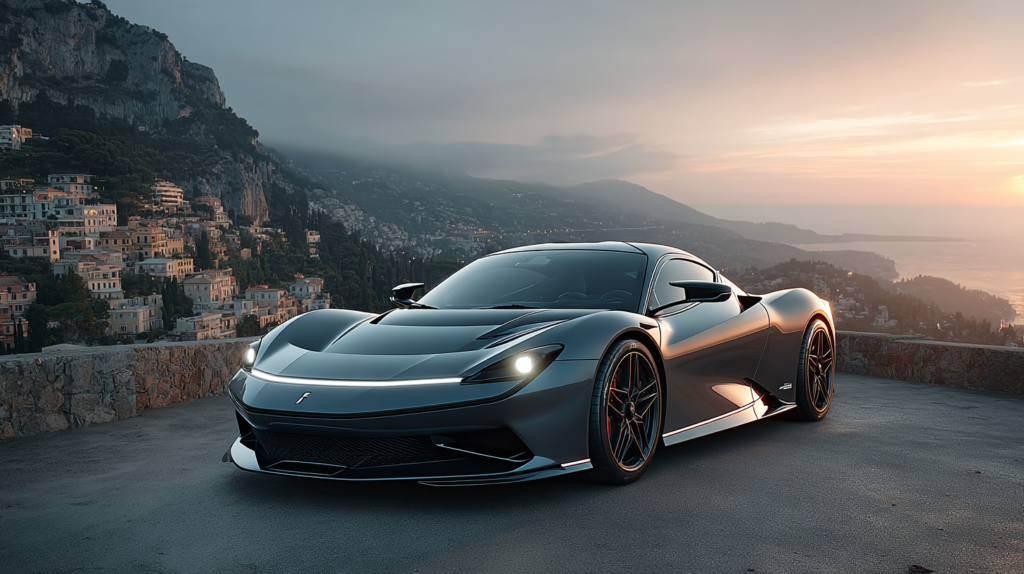
In a market segment increasingly dominated by aggressively styled machines that prioritize visual drama over elegance, the Battista stands out for its restraint. The design draws on Pininfarina’s nine decades of experience creating timeless shapes, resulting in a car that looks right from every angle without relying on exaggerated wings or fussy details.
This design philosophy extends to the interior, where clarity and craftsmanship take precedence over screen count and digital effects. The Battista feels like a car designed by people who understand what makes a great GT, not simply a collection of the latest technology trends.
The Rimac Partnership
The collaboration with Rimac brings proven electric vehicle technology to the Battista program. Rimac’s experience developing the Nevera, itself one of the world’s most capable electric hypercars, informs every aspect of the Battista’s powertrain and chassis. The battery, motors, and control systems are battle tested in one of the most demanding applications possible.
This partnership allows Pininfarina to focus on what it does best design, craftsmanship, and the creation of a distinctive brand experience while relying on a proven technology partner for the complex engineering that enables electric performance.
Italian Craftsmanship
The Battista is hand built in Italy, at Pininfarina’s historic facility in Cambiano. Each car requires hundreds of hours of labor, with skilled craftsmen attending to details that automated production would miss. The leather is stitched by hand, the carbon fiber is finished to show its weave, and the painted surfaces are polished to a depth that only handwork can achieve.
For buyers who value the human touch in their automobiles, this craftsmanship is a significant part of the Battista’s appeal. It connects the car to the tradition of Italian coachbuilding that Pininfarina helped establish, while looking toward an electric future.
Exclusivity
With only 150 examples planned for production, the Battista is genuinely rare. The Anniversario edition, limited to just five cars, represents the ultimate expression of exclusivity within an already exclusive model line. Owners can be confident that they will not encounter another Battista at the local cars and coffee, a consideration that matters to collectors who value rarity.
This limited production also allows Pininfarina to maintain the handcrafted approach that defines the car. Building more would require compromises in quality and attention to detail that the company is unwilling to make.
The Halo Effect
The Battista serves as a halo car for the entire Pininfarina brand, demonstrating what the company can achieve when given the freedom to create without compromise. The technology, design language, and craftsmanship developed for the Battista will filter down to future models, including the B95 open top hypercar and the planned luxury SUV.
For buyers who acquire a Battista, this halo effect means they are not simply purchasing a car but participating in the establishment of a new automotive brand. They become part of the Pininfarina story, connected to the company’s heritage and its future.
Production and Availability
Manufacturing Location
The Battista is hand assembled at Pininfarina’s facilities in Cambiano, Italy, near Turin. This location has been the heart of Pininfarina operations for decades, and the addition of automobile production represents a return to the company’s roots as a manufacturer rather than simply a design house.
Production Timeline
First customer deliveries of the Battista commenced in 2025, with production continuing through 2026 for the remaining allocations. The Anniversario edition, limited to five units, has already been reserved by collectors. The Novantacinque edition, celebrating 95 years of Pininfarina, entered production in late 2025.
Pricing
The Pininfarina Battista carries a base price of approximately $2.2 million to $2.25 million, depending on market and specification. The Anniversario edition, with its exclusive paint and aerodynamic package, commands a premium at approximately 2.6 million euros.
For this price, buyers receive not only a record setting hypercar but also the involvement of Pininfarina’s personalization team, who work with each owner to tailor the car to their specifications. The result is a vehicle that is unique to its owner, reflecting their preferences while maintaining the integrity of the original design.
Market Availability
The Battista is homologated for approximately 50 markets worldwide, including the United States, Europe, the Middle East, Japan, and Canada. Distribution is handled through a network of selected partners, with Louwman Exclusive serving as the Dutch dealer and similar arrangements in other key markets.
The Future of Pininfarina
The B95 Open Top Hypercar
Following the Battista, Pininfarina has introduced the B95, an open top hypercar based on the same mechanical platform. The B95 shares the Battista’s 1,900 horsepower powertrain but replaces the fixed roof with a dramatic speedster configuration. Only a handful of examples will be built, each tailored to its owner’s specifications.
The Planned SUV
For buyers who find the Battista’s exclusivity and price point beyond reach, Pininfarina plans to introduce a luxury SUV positioned at approximately 300,000 euros. This model will share the brand’s design language and commitment to sustainability while offering greater practicality and lower pricing. Production volumes will be higher than the Battista, though still limited by luxury car standards.
The Electric Future
Pininfarina’s commitment to electrification is absolute. All future models will be battery electric, building on the technology and experience gained from the Battista program. The company believes that electric powertrains offer the best path to sustainable luxury, combining performance with environmental responsibility in ways that internal combustion cannot match.
Conclusion
The Pininfarina Battista represents a remarkable achievement: an electric hypercar that honors nine decades of design heritage while pointing toward an electric future. With 1,900 horsepower, sub two second acceleration, and a body shaped by one of history’s great design houses, it delivers performance that rivals anything on the road while maintaining the elegance that Pininfarina is known for.
Yet the Battista is not defined solely by its specifications. It is defined by how it was created: hand assembled in Italy by skilled craftsmen, designed by a team that understands proportion and surface, and backed by technology from Rimac that represents the state of the art in electric powertrains. It fulfills a dream that Battista Farina held nearly a century ago, and it establishes a foundation for the Automobili Pininfarina brand going forward.
In 2026, as the automotive industry continues its transition toward electrification, the Battista stands as proof that electric cars can have soul, style, and substance. It is not simply a collection of performance figures, though those figures are impressive. It is a car designed to be experienced, to be driven, to be lived with. It demonstrates that the values enthusiasts cherish design, craftsmanship, driver engagement can survive the shift to electric power.
For the 150 buyers who will acquire a Battista, it offers something beyond electric performance. It offers the knowledge that their car was designed by one of history’s great automotive design houses, built by hand in Italy, and engineered to deliver an experience that is unique in the world. And for the rest of the automotive world, it offers proof that electrification need not mean the end of beauty in automobile design.

