
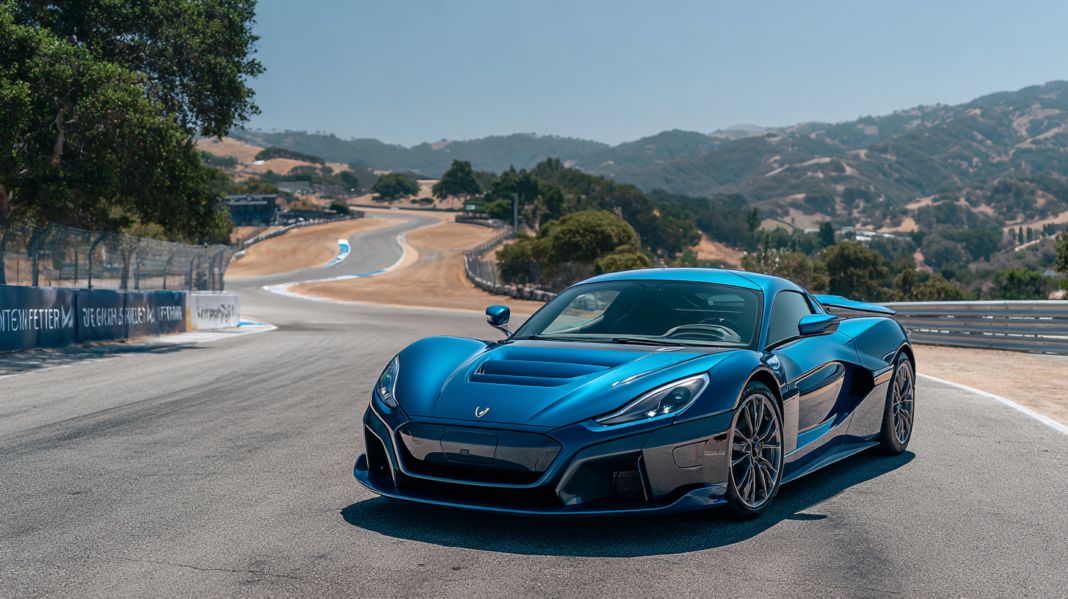
The sun rises over the hills surrounding WeatherTech Raceway Laguna Seca in Monterey County, California. The famous corkscrew is still in shadow, but the sound of a high revving engine already echoes through the pines. A Rimac Nevera, all 1,914 horsepower of it, sits at pit exit. The driver adjusts the steering wheel, checks the display, and waits for the green flag.
This is a car that can accelerate from 0 to 60 miles per hour in 1.85 seconds. It can cover a quarter mile in under 9 seconds. It produces more power than a Formula 1 car from a few years ago. And it is road legal.
The question is not whether the Nevera is fast. It is whether it is too fast to actually drive. The same question applies to a growing class of hypercars: the Bugatti Chiron, the Koenigsegg Jesko, the Pininfarina Battista. They produce 1,000, 1,500, or even 2,000 horsepower. They accelerate with violent force. They top out at speeds that would be illegal on any public road.
Have manufacturers built cars that exist only as engineering flexes? Or are these hypercars genuinely usable?
The Numbers: A Reality Check
The performance numbers of modern hypercars are staggering. A few examples:
- Rimac Nevera: 1,914 horsepower, 0 to 60 mph in 1.85 seconds
- Bugatti Chiron Super Sport: 1,578 horsepower, 0 to 60 mph in 2.4 seconds
- Koenigsegg Jesko Absolut: 1,600 horsepower, claimed top speed over 310 mph
- Pininfarina Battista: 1,900 horsepower, 0 to 60 mph in 1.9 seconds
These numbers exceed the performance of most race cars from a decade ago. They exceed the traction limits of public roads. They exceed the reaction times of most drivers.
The Usability Problem: What Does “Too Fast” Mean?
A car can be too fast in several ways:
Acceleration: In less than 2 seconds, a hypercar reaches speeds that would result in a felony charge on a public road. The driver has no time to react, no time to correct, no time to enjoy the experience.
Braking: The same hypercar requires equally aggressive braking. The forces involved can be uncomfortable for passengers and demanding for the driver.
Top Speed: No public road in the world allows a driver to legally exceed 200 miles per hour. The Autobahn has unrestricted sections, but even there, speeds over 200 mph are rare and dangerous.
Handling: The limits of modern hypercars are so high that they cannot be approached on public roads. The driver would be breaking the law long before the car reaches its limit.
Laguna Seca: Where Speed Has a Place
Laguna Seca is a race track. It is one of the few places where a hypercar can be driven near its limits legally and safely. The corkscrew, the Rahal Straight, the Andretti Hairpin these are corners that reward precision and skill.
The Rimac Nevera laps the track with ease. The torque vectoring system, the adaptive suspension, and the carbon ceramic brakes work in harmony. The car is fast, but it is also manageable. The driver can explore the limits without fear of a police car.
This is the paradox. The hypercar is too fast for the street. It is not too fast for the track.
The San Francisco Drive: Hypercars in Traffic
A few days earlier, the same Rimac Nevera was driven through the streets of San Francisco. The experience was different. The car was limited to electric mode in the city, the engine quiet, the acceleration subdued. On the freeway, the driver could not use more than a fraction of the car’s power without risking a ticket.
The driver navigated traffic, stopped at lights, and searched for parking. The Nevera was not faster than a Toyota Camry in these conditions. It was just more expensive.
This is the reality of hypercar ownership. Most of the miles are driven on public roads, where the car’s performance is severely constrained.
The Case For: Hypercars Are Not Too Fast
The argument that hypercars are not too fast rests on several points:
Driver Responsibility: A hypercar is a tool. It is the driver’s responsibility to use it appropriately. A 1,900 horsepower car can be driven at 30 miles per hour. The driver chooses the speed.
The Experience: The experience of driving a hypercar is not only about going fast. It is about the sound, the feel, the presence, and the engineering. These qualities are available at any speed.
The Track: A hypercar is not meant to be driven exclusively on public roads. It is meant to be enjoyed on a track, where its capabilities can be explored safely.
The Engineering: The engineering that goes into a hypercar is a statement of what is possible. Even if the car is never driven at its limit, the fact that it can reach that limit is meaningful.
The Case Against: Hypercars Are Too Fast
The argument that hypercars are too fast is also compelling:
The Law: Using a hypercar’s full performance on public roads is illegal. The driver cannot legally accelerate from 0 to 60 in under 2 seconds without risking their license.
The Danger: A mistake at 200 miles per hour is fatal. The margin for error is tiny. Even professional drivers have crashed hypercars on public roads.
The Waste: A hypercar that is never driven at its limit is a waste of engineering. The owner is paying for capability that they cannot use.
The Trend: The focus on ever increasing power and speed is becoming absurd. The numbers no longer correspond to any real world need. They are marketing tools.
The Monterey Parking Lot: A Moment of Truth
The Rimac Nevera is parked in the Laguna Seca paddock. A group of spectators gathers around it. They take photos, ask questions, and marvel at the carbon fiber body. None of them ask about the quarter mile time. They ask about the sound, the feel, and the experience.
The owner, a man in his 50s, is happy to talk. He drives the car on the street perhaps once a month. The rest of the time, it sits in a climate controlled garage. He tracks it twice a year. He does not regret the purchase.
“Of course it is too fast,” he says. “That is the point.”
The Verdict: Too Fast for What?
Modern hypercars are too fast for public roads. They are not too fast for a race track. They are not too fast for an owner who values the engineering, the exclusivity, and the experience.
The question is not whether hypercars are too fast. The question is whether you have a place to drive one.
The Future: Will Hypercars Get Even Faster?
The trend in hypercar performance shows no sign of slowing. Electric powertrains will continue to increase power and decrease weight. The next generation of hypercars may reach 2,000, 2,500, or even 3,000 horsepower.
The usability problem will only get worse. The gap between what a hypercar can do and what a driver can legally do on public roads will continue to widen.
But the people who buy hypercars will not stop buying them. The engineering flex is the point.
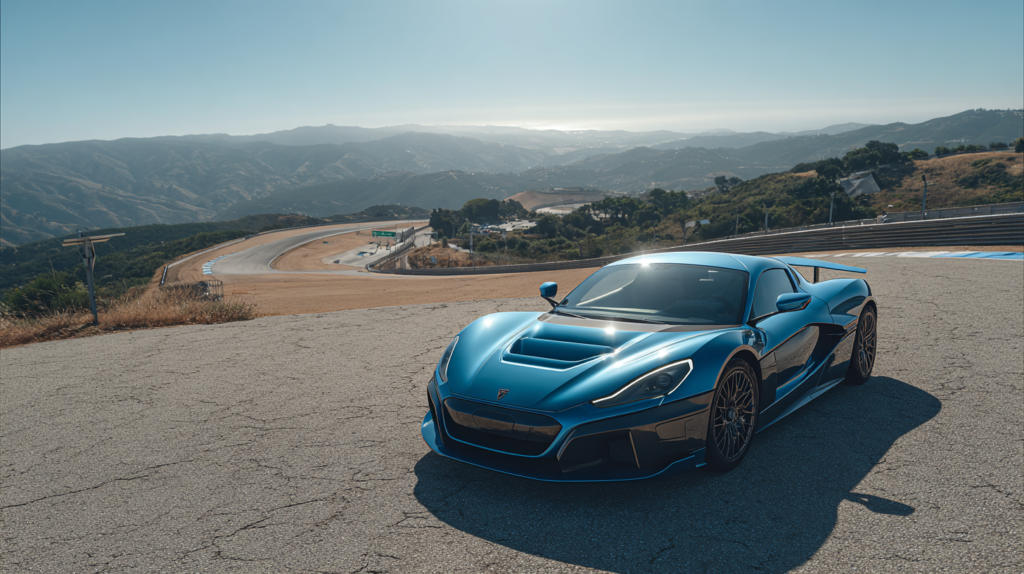
The Laguna Seca Sunset
The Rimac Nevera completes its final lap of the day. The driver pulls into the pits, turns off the car, and steps out. The engine (or motors) are silent. The brakes cool with a ticking sound.
A group of children walk by, pointing at the car. They do not know the horsepower figure. They do not know the quarter mile time. They just know it looks fast.
Maybe that is enough.
Performance Comparison
| Car | Horsepower | 0 to 60 mph | Top Speed | Useable on Street? |
|---|---|---|---|---|
| Rimac Nevera | 1,914 hp | 1.85 seconds | 258 mph | Limited |
| Bugatti Chiron | 1,500 hp | 2.4 seconds | 261 mph | Limited |
| Porsche 911 Turbo S | 640 hp | 2.6 seconds | 205 mph | Yes |
| Chevrolet Corvette Z06 | 670 hp | 2.6 seconds | 195 mph | Yes |
The table shows the difference. The 640 horsepower Porsche is usable on the street. The 1,914 horsepower Rimac is not.
Conclusion
Modern hypercars are too fast to be driven at their limits on public roads. They are not too fast to be owned, enjoyed, and admired. The owners who can afford them do not need a rational justification. The engineering flex is the justification.
The Rimac Nevera leaves Laguna Seca, loaded onto a trailer, heading back to its climate controlled garage. It will be driven again next month, perhaps on the same track, perhaps on a quiet back road where the driver can briefly feel the full force of 1,914 horsepower.
For a few seconds, it will be worth it. For a few seconds, the speed will make sense. For the rest of the time, it will be a sculpture, a statement, a piece of automotive art.
That is the hypercar paradox. It is too fast to drive. It is too beautiful to ignore.

