
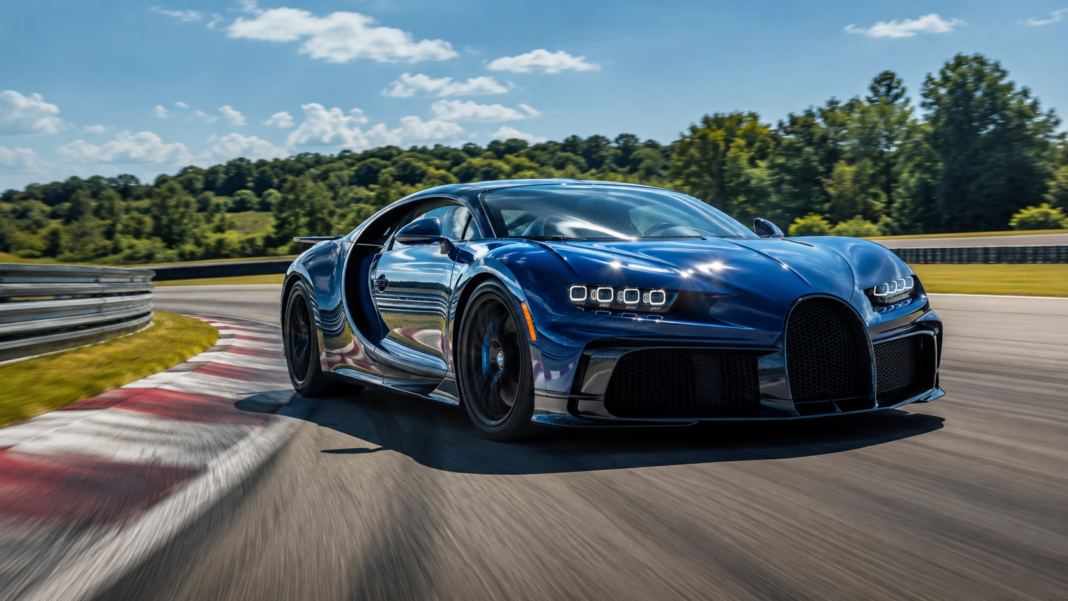
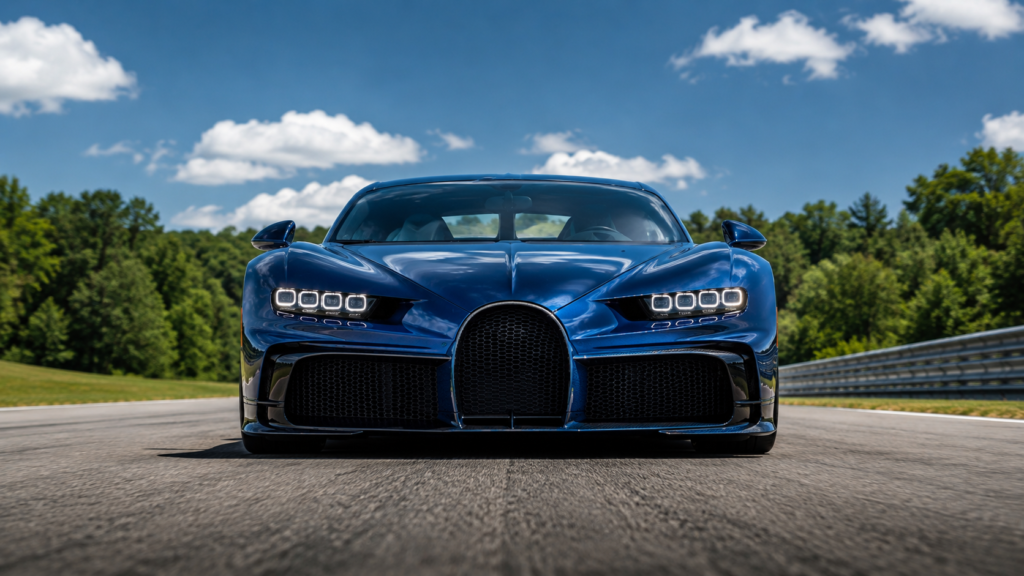
The sun is just beginning to warm the asphalt at the Pittsburgh International Race Complex in Wampum, Pennsylvania. The track is quiet, but a Bugatti Chiron is waiting in the paddock. Its 8.0 liter quad turbo W16 engine is cold, but it will start without drama. It will idle smoothly. It will accelerate to 200 miles per hour without missing a beat. And it will do this for years, for tens of thousands of miles, without catastrophic failure.
Making 1,500 horsepower is difficult. Making 1,500 horsepower reliable enough for a decade of road use is an engineering miracle. Bugatti achieved this through a combination of groundbreaking design, exhaustive testing, and obsessive quality control. This article explains how.
The Location: Pittsburgh International Race Complex, Wampum, Pennsylvania
The Pittsburgh International Race Complex is a 2.8 mile road course that hosts track days, club races, and high performance driving events. It is not a Bugatti test track. But it is a place where the limits of cars are explored. The Chiron sitting in the paddock is a reminder that even the most extreme hypercars are built to be driven, not just displayed.
The W16 Engine: A Brief Overview
The W16 engine that powers the Bugatti Veyron and Chiron is a masterpiece of engineering. It is essentially two narrow angle V8 engines mated at a 90 degree angle on a common crankshaft. The result is a compact 8.0 liter engine with four turbochargers, producing between 1,001 and 1,600 horsepower depending on the variant.
The W16 is not a simple engine. It has thousands of individual parts. It takes multiple days for a team of specialists to assemble one. It is hand built before being shipped to Molsheim for final installation.
But power is not enough. The engine must survive.
The Engineering Challenges
Heat Management
An engine producing 1,500 horsepower generates enormous heat. Bugatti fitted the W16 with an extensive cooling system to manage thermal loads. The cooling system is as complex as the engine itself, with dedicated circuits for the engine, turbochargers, transmission, and differential. Without this thermal management, the engine would destroy itself within minutes of full throttle operation.
Turbocharger Response
Four turbochargers produce immense power, but they can also produce lag. Bugatti solved this with a carefully calibrated turbocharging system that manages boost pressure across the rev range. The system ensures that power delivery is smooth and predictable, reducing stress on internal components.
Mechanical Stress
The forces inside a 1,500 horsepower engine are extreme. The connecting rods, pistons, and crankshaft must withstand forces that would shatter conventional components. Bugatti uses specially forged materials and precise manufacturing tolerances to ensure durability. Every component is designed to handle stresses far beyond what the engine will ever see in normal use.
Fuel Delivery
A 1,500 horsepower engine consumes fuel at an astonishing rate. At full throttle, the Chiron’s engine can drain its 100 liter fuel tank in less than 15 minutes. The fuel delivery system must supply fuel at high pressure and flow rates without interruption. Bugatti uses a sophisticated direct injection system that precisely meters fuel to each cylinder.
The Testing Regimen
Before the first Chiron was delivered, Bugatti subjected the W16 engine to exhaustive testing. The engine was run at full throttle for hours at a time. It was tested in extreme heat and extreme cold. It was tested at high altitude and at sea level.
The testing regimen was brutal. Engines that failed were taken apart. The failures were analyzed. The components were redesigned. The process was repeated until the engine met Bugatti’s durability standards.
The result is an engine that can run at full power for extended periods without failure. The Chiron’s engine is not fragile. It is robust.
The Quality Control
Every W16 engine is built by hand. The assemblers are highly trained specialists who spend years learning the intricacies of the engine. The assembly process is documented and verified at every step.
After assembly, each engine is run on a test stand. It is brought up to temperature. It is run at various speeds and loads. It is inspected for leaks, vibrations, and unusual noises. Engines that do not pass the test are rebuilt.
The Real World Reliability
The proof of the engineering is in the real world. Chiron owners drive their cars. They drive them hard. They drive them on track days. They drive them on cross country road trips.
The W16 engine has proven remarkably reliable. There are Chirons with over 50,000 miles on the original engine. There are Chirons that have been driven at over 250 miles per hour multiple times.
The reliability is not accidental. It is the result of obsessive engineering, exhaustive testing, and uncompromising quality control.
The Pittsburgh Morning: A Track Day Conversation
The Chiron is on track now. The driver is not pushing the car to its limit. He is warming up the tires, learning the track, feeling the brakes.
A group of enthusiasts is watching from the paddock. They are not Bugatti owners. They are owners of Porsches, BMWs, and Corvettes. They are impressed by the Chiron’s presence.
One of them asks about the reliability. “Does it break down a lot?” he asks.
The owner of the Chiron smiles. “No,” he says. “It is a Bugatti. It is built to be driven.11
The Maintenance Reality
A 1,500 horsepower engine is not cheap to maintain. The Chiron’s service costs are substantial. An oil change costs thousands of dollars. A set of tires costs tens of thousands of dollars. The annual service is a significant expense.
But the engine itself does not need frequent rebuilds. It does not need special treatment. It just needs regular oil changes and inspections.
The reliability comes at a cost. But it also comes with peace of mind.
The Verdict
Bugatti solved the reliability problem through a combination of innovative engineering, exhaustive testing, and obsessive quality control. The W16 engine is not fragile. It is robust. It can handle 1,500 horsepower for years.
The Chiron owner drives his car. He does not worry about the engine. He knows it is built to last.
Key Takeaways
- The W16 engine is a compact 8.0 liter quad turbo design that produces between 1,001 and 1,600 horsepower.
- The engineering challenges include heat management, turbocharger response, mechanical stress, and fuel delivery.
- Bugatti used an extensive cooling system with dedicated circuits for different components.
- The testing regimen was brutal, with engines run at full power for hours and tested in extreme conditions.
- Every engine is hand built and tested before installation.
- Real world reliability has proven excellent, with some Chirons exceeding 50,000 miles.
Conclusion
The sun is higher now. The Chiron is back in the paddock. The engine is ticking as it cools. The driver is smiling.
He did not break the car. He drove it. He pushed it. It responded.
The W16 engine is not a fragile flower. It is a robust machine. It is built to be driven.
That is the engineering miracle of the Bugatti engine. It produces absurd power. It is reliable. It is durable. It is a masterpiece.

