
The name Koenigsegg carries a specific weight in the world of hypercars. It represents a singular vision pursued with relentless engineering intensity, a story that began in a small Swedish workshop and grew into one of the most respected names in automotive performance. The company’s founder, Christian von Koenigsegg, started this journey with a simple goal: to build the world’s greatest sports car. That dream became the CC8S, the first production Koenigsegg, unveiled in 2002.
Twenty years later, Koenigsegg introduced the CC850 as a tribute to that original car. The CC850 is not merely a commemorative edition; it is a reinterpretation of the CC8S’s design and philosophy using the engineering capabilities that Koenigsegg has developed over two decades. It combines classic proportions with modern technology, a manual automatic transmission that allows the driver to choose their level of engagement, and the raw performance that defines the brand.
This article provides a detailed examination of the Koenigsegg CC850, its performance specifications, design philosophy, and what makes this tribute hypercar stand out in 2026.
The Origin: The Koenigsegg CC8S
The story of Koenigsegg begins with a young Swedish entrepreneur who believed he could build a car that would compete with the best from Italy and Germany. The result, after years of development, was the CC8S. Introduced in 2002, it was a mid engine, rear drive hypercar powered by a 4.7 liter supercharged V8 producing 655 horsepower. It featured a carbon fiber monocoque, a removable hardtop, and a design that was both functional and elegant.
The CC8S established the template that Koenigsegg would follow for the next two decades: lightweight construction, innovative engineering, and a focus on driver engagement. Only six examples of the CC8S were built, making it one of the rarest and most sought after modern hypercars.
The CC850 pays tribute to this original car. It takes the design language of the CC8S the rounded headlights, the sweeping roofline, the distinctive side vents and updates it with the engineering advancements that Koenigsegg has developed in the intervening years. The result is a car that looks like a modern interpretation of the original while delivering performance that far exceeds what was possible in 2002.
The CC850: A Modern Tribute
Design Philosophy
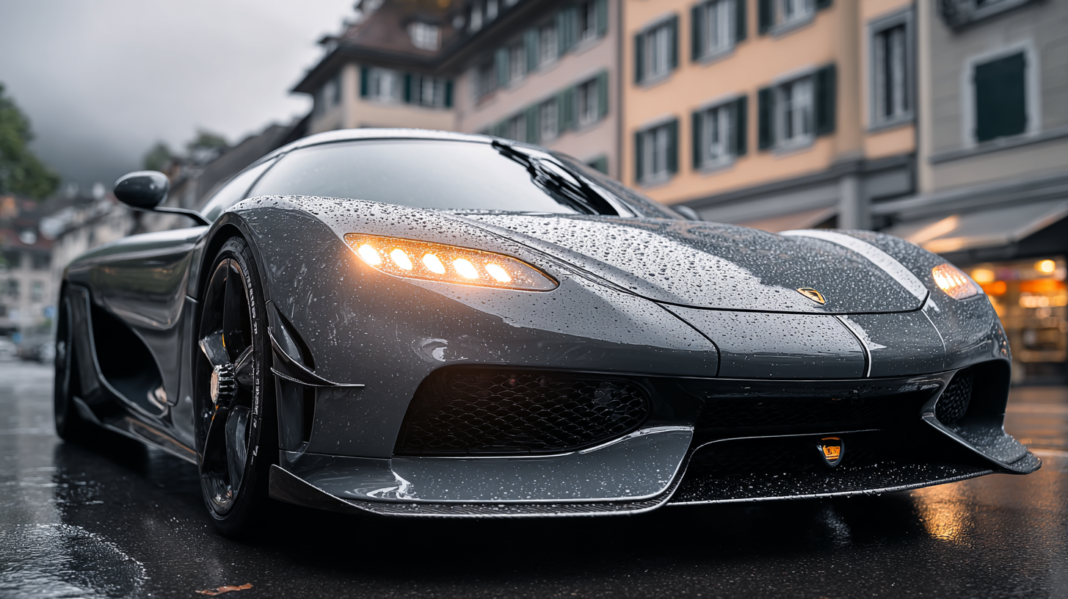
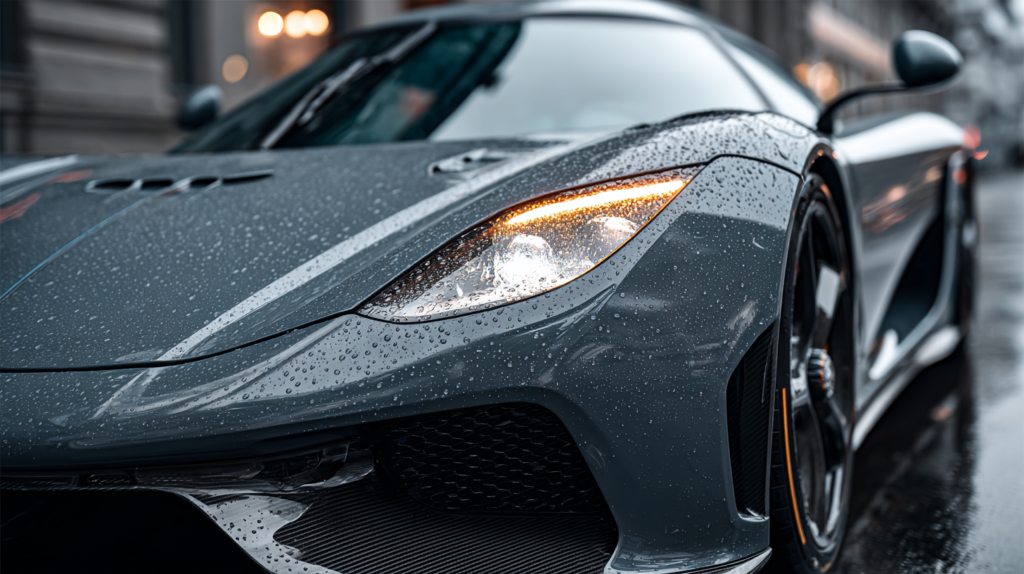
The CC850’s exterior design is a deliberate nod to the CC8S. The front end features rounded headlight housings that echo the original car’s shape, though the lighting technology within is thoroughly modern. The front bumper incorporates a more aggressive splitter and larger air intakes than the CC8S, reflecting the increased cooling requirements of the more powerful powertrain.
The side profile is defined by the sweeping roofline that was a signature of the CC8S, a shape that flows from the windshield to the rear deck without interruption. The side vents, which on the original car provided cooling air to the engine, are larger and more sculpted on the CC850, incorporating active aerodynamic elements that adjust based on driving conditions.
The rear end features a fixed wing that echoes the CC8S’s spoiler, though its shape has been optimized through computational fluid dynamics to provide downforce without excessive drag. The taillights are arranged in a circular pattern that references the original car, and the centrally mounted exhaust outlets are positioned in the same location as on the CC8S.
The overall effect is a car that is unmistakably a Koenigsegg, and unmistakably a tribute to the original, while being clearly a product of the brand’s current engineering capabilities.
Powertrain and Performance
The CC850 is powered by a 5.0 liter twin turbocharged V8 engine, a development of the engine that has powered Koenigsegg models for years. This engine produces 1,185 horsepower when running on regular gasoline, and 1,385 horsepower when running on E85 fuel. This flexibility allows owners to choose between the convenience of pump fuel and the increased performance of renewable ethanol.
The engine is mounted longitudinally behind the passenger compartment, as in the original CC8S, and drives the rear wheels through a revolutionary transmission that Koenigsegg calls the Light Speed Transmission. This unit, which the company has developed over years of refinement, offers a unique capability: it can function as both a nine speed automatic and a six speed manual, depending on the driver’s preference.
In automatic mode, the transmission provides seamless shifts, with the ability to skip multiple gears at once for rapid acceleration. In manual mode, the driver operates a clutch pedal and a physical shifter that provides the tactile engagement of a traditional manual gearbox. The shift gates are arranged in a pattern that references the CC8S’s original gearbox, and the clutch pedal is hydraulically assisted to provide consistent feel.
The performance figures that result from this powertrain are substantial. The CC850 accelerates from 0 to 100 kilometers per hour in 2.5 seconds, 0 to 200 in 5.9 seconds, and 0 to 300 in 10.1 seconds. The top speed is rated at 320 miles per hour, though this figure is achieved only in specific configurations and conditions.
Chassis and Structure
The CC850 is built around a carbon fiber monocoque, a technology that Koenigsegg pioneered with the original CC8S and has continued to refine. The monocoque provides exceptional torsional rigidity while keeping weight to a minimum. The dry weight of the car is listed at approximately 1,385 kilograms, a remarkable figure for a vehicle with this level of power and equipment.
The suspension uses double wishbones at all four corners, with electronically adjustable dampers that can vary their characteristics based on driving mode. The system is designed to provide both the compliance required for road use and the control necessary for track driving. The ride height can be adjusted through the car’s lift system, allowing the driver to raise the front end for speed bumps and driveways.
The wheels are forged aluminum units sized 20 inches at the front and 21 inches at the rear, wrapped in Michelin Pilot Sport Cup 2R tires that provide the grip necessary to handle the car’s power and weight. The braking system uses carbon ceramic discs with multi piston calipers, providing stopping power that matches the acceleration capability.
The Engage Clutch System
One of the most distinctive features of the CC850 is the Engage Clutch System, the mechanism that enables the transmission to function as both a manual and an automatic. The system uses a series of clutches and gears that can be reconfigured electronically, allowing the driver to choose their preferred mode at any time.
When in manual mode, the driver operates a traditional H pattern shifter and a clutch pedal. The system provides the mechanical engagement that enthusiasts value, with the shifter moving through a defined gate and the clutch engaging at a predictable point. When in automatic mode, the transmission functions as a conventional automatic, with the car handling gear selection and clutch operation.
This capability allows the CC850 to serve as both a focused track car and a more relaxed grand tourer, adapting to the driver’s mood and the conditions. It is a demonstration of Koenigsegg’s engineering ingenuity, solving a problem that has challenged performance car manufacturers for years.
Interior and Driver Experience
Cabin Design
The interior of the CC850 reflects the car’s dual personality as both a tribute to the original and a modern hypercar. The seats are trimmed in leather with contrasting stitching, and the dashboard is finished in a combination of leather and carbon fiber. The overall effect is luxurious without being ostentatious, reflecting the Scandinavian design sensibility that has always characterized Koenigsegg.
The driver faces a digital instrument cluster that can be configured to display information in different layouts depending on the driving mode. The steering wheel is wrapped in leather and features integrated controls for the car’s systems, allowing the driver to keep their hands on the wheel while adjusting settings.
The shifter and clutch pedal are the centerpieces of the cabin. The shifter is machined from aluminum and finished with a leather boot, and the H pattern gate is illuminated to indicate the selected gear. The clutch pedal is positioned for easy operation, with a weight that is appropriate for the car’s performance.
Practicality
As with most hypercars, the CC850 prioritizes performance over practicality. The cabin is snug, with seating for two adults and limited storage space. The front trunk provides enough space for a weekend’s worth of luggage, and the removable hardtop can be stored in the trunk when not in use.
The car is designed to be driven, however, not simply collected. The adjustable suspension and lift system allow it to navigate urban environments, and the dual mode transmission makes it equally suited to highway cruising and back road attacks.
What Makes the CC850 Stand Out in 2026
The Dual Mode Transmission
The CC850’s Light Speed Transmission with Engage Clutch System is the most distinctive feature of the car, and one of the most innovative engineering solutions in any production vehicle. The ability to switch between a nine speed automatic and a six speed manual at the push of a button addresses a fundamental tension in the performance car market: the desire for both convenience and engagement.
For drivers who value the involvement of a manual gearbox, the CC850 offers a solution that does not compromise on performance. For those who prefer the ease of an automatic, it delivers that capability as well. The system is a testament to Koenigsegg’s willingness to pursue unconventional solutions to engineering challenges.
Heritage with Substance
The CC850 is a tribute car, but it is not merely a styling exercise. It incorporates the design language of the original CC8S while delivering performance that far exceeds what was possible in 2002. The result is a car that honors its heritage without being limited by it.
The production run of 50 units directly references the original CC8S, which was built in a quantity of 50 including prototypes and test cars. This connection to the original adds to the car’s collectability and significance.
Engineering Innovation
Koenigsegg has built its reputation on engineering innovation, and the CC850 continues this tradition. The dual mode transmission, the flexible fuel capability, the lightweight construction all of these elements demonstrate the brand’s commitment to pushing boundaries.
The car’s 1,385 horsepower output on E85 fuel is achieved without hybridization, a deliberate choice that reflects Koenigsegg’s belief that internal combustion still has potential to be developed. This focus on combustion engineering sets the CC850 apart from many competitors that have embraced hybrid and electric powertrains.
Rarity and Exclusivity
With only 50 units planned for global production, the CC850 is genuinely rare. This limited production ensures that the car will remain a collector’s item, and the connection to the original CC8S adds to its significance.
The allocation of these 50 cars was managed carefully, with priority given to existing Koenigsegg customers and collectors who have supported the brand over the years. The cars sold out quickly after the announcement, demonstrating the strength of demand.
The Scandinavian Design Aesthetic
The CC850 reflects the Scandinavian design sensibility that has always characterized Koenigsegg: clean lines, purposeful shapes, and an absence of decorative excess. The car is elegant without being flashy, aggressive without being aggressive. This restraint distinguishes it from the more flamboyant designs of some competitors.
Production and Availability
Manufacturing Location
The CC850 is built at Koenigsegg’s facility in Ängelholm, Sweden, the same location where the original CC8S was produced. This continuity of location adds to the car’s connection to its heritage.
Production Timeline
Production of the CC850 began in 2024, with the first customer deliveries occurring in 2025. By 2026, the majority of the 50 units have been delivered, with production continuing to fulfill the remaining orders.
Pricing
The CC850 carries a starting price of approximately $3.7 million, placing it in the upper tier of hypercar pricing. This figure reflects the car’s exclusivity, its engineering complexity, and its significance as a tribute to the original Koenigsegg.
Specifications Summary
| Specification | Value |
|---|---|
| Engine | 5.0L twin turbocharged V8 |
| Power | 1,185 hp (gasoline), 1,385 hp (E85) |
| Transmission | Light Speed Transmission with Engage Clutch System |
| Drive | Rear wheel drive |
| 0-100 km/h | 2.5 seconds |
| 0-200 km/h | 5.9 seconds |
| 0-300 km/h | 10.1 seconds |
| Top Speed | 320 mph (rated) |
| Weight | 1,385 kg dry |
| Production | 50 units |
Conclusion
The Koenigsegg CC850 represents a rare achievement in the world of hypercars: a tribute to a brand’s origins that is also a showcase of its current capabilities. It honors the original CC8S through its design language, its proportions, and its limited production numbers, while delivering performance that the original car could not have imagined.
The dual mode transmission is the centerpiece of the car’s engineering, a solution to a challenge that has long frustrated enthusiasts. The ability to switch between manual and automatic operation at will allows the CC850 to serve as both a focused track car and a relaxed grand tourer, adapting to the driver’s mood and the conditions.
For the 50 buyers who will acquire a CC850, it offers something beyond performance. It offers the connection to a story that began with a young Swedish entrepreneur who believed he could build the world’s greatest sports car. It offers the knowledge that their car is part of a lineage, a tribute to the car that started it all.
In 2026, as the automotive industry continues its transition toward electrification and automation, the CC850 stands as a celebration of what internal combustion engineering can still achieve. It is a car that honors its heritage while looking forward, that prioritizes driver engagement while delivering extraordinary performance, and that demonstrates that Koenigsegg’s commitment to innovation remains as strong as ever.

