
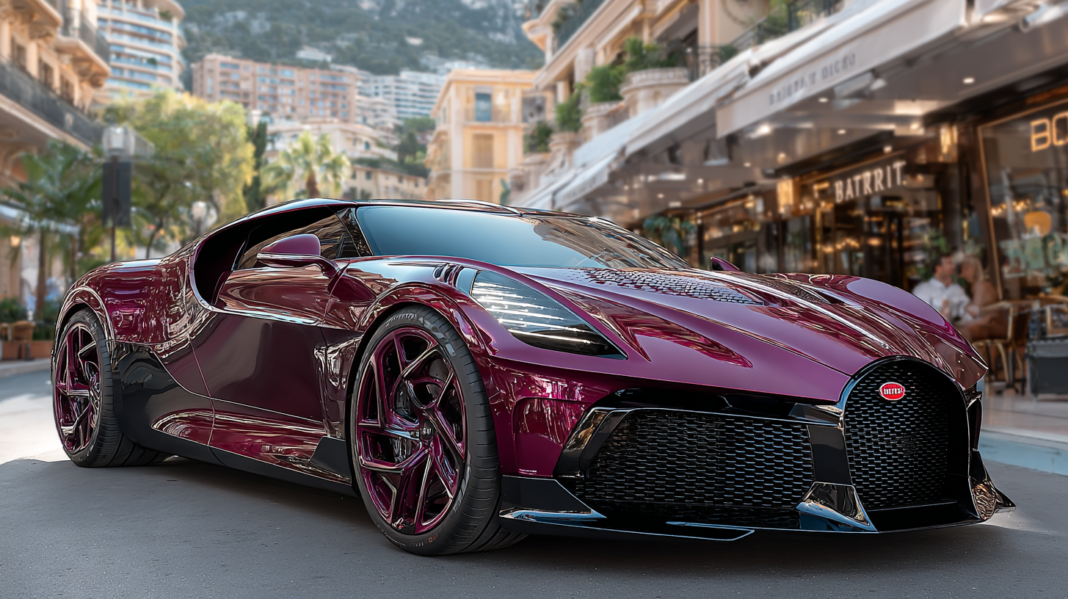
The name Bugatti carries a weight in automotive history that few others can claim. From the legendary Type 35 that dominated racing in the 1920s to the Type 57 Atlantic that defined automotive art, the brand has always represented the pinnacle of engineering and design. The modern era of Bugatti, beginning with the Veyron in 2005, established a new benchmark: the combination of extraordinary performance with uncompromising luxury.
The W16 engine, a 8.0 liter quad turbocharged powerplant that has powered every modern Bugatti, is the heart of this era. It is an engine unlike any other, producing 1,001 horsepower in its first iteration and evolving to 1,600 horsepower in the Chiron Super Sport. It is an engine that defines an era, one that is now coming to a close.
The Bugatti Mistral, unveiled in 2022, represents the final production car to be powered by the W16 engine. It is an open top roadster, a configuration that has been relatively rare in Bugatti’s modern history, and it serves as a farewell to the engine that has defined the brand for two decades. With a top speed of over 260 miles per hour, it is the fastest open top car the company has ever produced.
This article provides a detailed examination of the Bugatti Mistral, its performance specifications, design philosophy, and what makes this final open-air W16 car stand out in 2026.
The End of an Era: The W16 Engine
The W16 engine is one of the most remarkable production engines ever created. Its configuration combines two narrow angle V8 engines sharing a common crankshaft, creating a W shape that is both compact and powerful. The 8.0 liter displacement is fed by four turbochargers, and the engine produces its peak power at the highest reaches of its rev range.
This engine first appeared in the Veyron, where it produced 1,001 horsepower and propelled the car to a top speed of over 250 miles per hour. It was an engine that defied conventional thinking, delivering power that had previously been reserved for racing cars in a package that was also luxurious and usable.
Over the years, the W16 evolved. It gained power, efficiency, and sophistication. The Chiron version produced 1,500 horsepower, and the Super Sport variant pushed that figure to 1,600 horsepower. Each iteration refined the engine’s character, making it more responsive, more refined, and more capable.
The Mistral represents the final application of this engine. It is the last production car to carry the W16, the end of a line that began with the Veyron in 2005. For Bugatti, this is a significant moment, marking the transition to a new era of electrified powertrains. For enthusiasts, it is the last chance to experience one of the most extraordinary engines ever built.
The Mistral: An Open Top Tribute
Design Philosophy
The Mistral is designed as an open top roadster, a configuration that Bugatti has explored only rarely. The company’s modern history has been dominated by coupes, with the Veyron Grand Sport and the Chiron Sport being the only open top variants. The Mistral takes the open top concept further, with a design that is unique to the roadster rather than being a simple conversion of the coupe.
The design is inspired by the Type 57 Roadster Grand Raid, a classic Bugatti from the 1930s that combined elegant proportions with open air motoring. The Mistral’s windshield is curved and wraps around to the A pillars, a shape that required extensive engineering to achieve the necessary structural rigidity without a fixed roof.
The rear end is the most distinctive element of the Mistral. The engine cover is designed to look like a helmet visor, a visual element that references the aerodynamic helmets worn by racing drivers in the early days of motorsport. The X shaped taillights, made from a single piece of machined aluminum, create a distinctive light signature that sets the Mistral apart from other Bugatti models.
The car retains the horseshoe grille that has been a Bugatti signature since the Type 35, though it is reshaped for the Mistral’s front end. The grille is flanked by vertical air intakes that feed cooling air to the engine and brakes, and the front splitter is shaped to manage airflow under the car.
Powertrain and Performance
The Mistral is powered by the same 8.0 liter quad turbocharged W16 engine that has powered the Chiron and its variants. In the Mistral, the engine produces 1,600 horsepower, matching the output of the Chiron Super Sport. This power is transmitted to all four wheels through a seven speed dual clutch transmission and Bugatti’s advanced all wheel drive system.
The performance figures that result from this powertrain are extraordinary for an open top car. The Mistral accelerates from 0 to 100 kilometers per hour in approximately 2.5 seconds. The 0 to 200 kilometers per hour sprint takes about 5.5 seconds, and 0 to 300 requires approximately 12 seconds.
The top speed is rated at 260 miles per hour, making the Mistral the fastest open top production car Bugatti has ever built. Achieving this speed with a removable roof required extensive aerodynamic development, including careful management of airflow over the occupants and around the cockpit.
Chassis and Structure
The Mistral is built around the same carbon fiber monocoque that underpins the Chiron, though significant modifications were required to accommodate the open top configuration. The removal of the fixed roof reduced structural rigidity, requiring reinforcements in the sills and around the windshield to maintain the stiffness necessary for precise handling.
The suspension uses double wishbones at all four corners, with electronically adjustable dampers that can vary their characteristics based on driving mode. The system is designed to provide both the compliance required for road use and the control necessary for high speed driving.
The wheels are forged aluminum units sized 20 inches at the front and 21 inches at the rear, wrapped in specially developed Michelin Pilot Sport Cup 2 tires that are rated for speeds exceeding 260 miles per hour. The braking system uses carbon ceramic discs with eight piston front calipers and six piston rear calipers, providing stopping power that matches the acceleration capability.
Interior and Craftsmanship
The interior of the Mistral reflects Bugatti’s commitment to luxury and craftsmanship. The seats are trimmed in fine leather, with diamond quilting that references the pattern used in classic Bugatti models. The dashboard is finished in a combination of leather and carbon fiber, with machined aluminum accents throughout.
The gear selector is carved from a single piece of aluminum and crystal, a detail that requires hours of hand finishing. The door panels incorporate leather straps that reference the Type 35’s interior, a subtle nod to Bugatti’s racing heritage.
The convertible top is a lightweight fabric unit that can be operated at speeds up to 30 miles per hour. When stowed, it occupies a minimal amount of space, preserving the car’s clean lines when open.
What Makes the Mistral Stand Out in 2026
The Final W16
The most significant aspect of the Mistral is its engine. The W16 is the defining element of the modern Bugatti era, an engine that has set benchmarks for power, refinement, and engineering sophistication. The Mistral is the last production car to carry this engine, making it the final opportunity to experience the W16 in a new car.
For collectors and enthusiasts, this significance is substantial. The Mistral represents the end of a line, a car that will be remembered as the final open air expression of one of the most remarkable engines ever built.
Open Air Performance
The Mistral combines the performance of the Chiron Super Sport with the experience of open top driving. Achieving a top speed of 260 miles per hour with the roof removed required extensive engineering, including careful management of airflow around the cockpit and over the occupants. The result is a car that delivers the visceral experience of high speed open air motoring without compromising safety or stability.
Design Distinction
The Mistral’s design sets it apart from other Bugatti models. The curved windshield, the helmet visor engine cover, the X shaped taillights these elements create a visual identity that is unique to the Mistral. It is not simply a Chiron with the roof removed; it is a car designed from the ground up as an open top roadster.
The design also references Bugatti’s heritage, from the Type 57 Roadster Grand Raid to the Type 35 racing cars. This connection to history adds depth to the car’s appeal, making it more than a collection of performance figures.
Rarity and Exclusivity
The Mistral is limited to 99 units, a number that reflects Bugatti’s strategy of creating exclusivity through limited production. This rarity ensures that the Mistral will remain a collector’s item, and the significance of the final W16 engine adds to its long term value.
All 99 units were allocated shortly after the car’s unveiling, with priority given to existing Bugatti customers and collectors. The cars have been sold out for years, and secondary market prices are already reflecting the car’s significance.
Craftsmanship
The Mistral’s interior reflects Bugatti’s commitment to craftsmanship, with details that reward close inspection. The crystal and aluminum gear selector, the leather door straps, the diamond quilted seats all of these elements demonstrate a level of attention to detail that mass production cannot replicate.
For buyers who value the human touch in their automobiles, this craftsmanship is a significant part of the Mistral’s appeal.
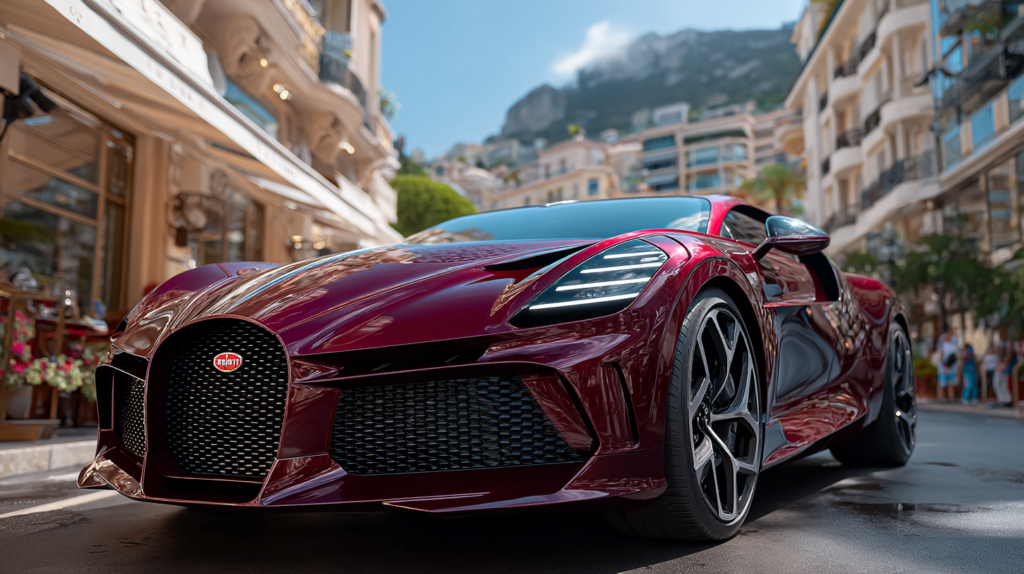
The End of the W16 Era
Transition to Electrification
The Mistral marks the end of the W16 era for Bugatti. The company’s next generation of hypercars will be powered by hybrid powertrains, a necessary transition as the automotive industry moves toward electrification. The W16, for all its engineering brilliance, cannot meet modern emissions standards without significant compromises.
Bugatti has announced that its next model, currently in development, will feature a hybrid powertrain developed in partnership with Rimac, the Croatian electric hypercar manufacturer. This new era promises different performance characteristics, different sounds, and a different driving experience.
The Significance of the Farewell
For enthusiasts who have followed Bugatti’s modern history, the Mistral represents a significant moment. It is the last chance to experience the W16 in a new production car, the final roar of an engine that has defined the brand for two decades.
The Mistral is not simply a car; it is a farewell. It acknowledges the end of an era while celebrating what that era achieved.
Specifications Summary
| Specification | Value |
|---|---|
| Engine | 8.0L quad turbocharged W16 |
| Power | 1,600 horsepower |
| Transmission | 7 speed dual clutch |
| Drive | All wheel drive |
| 0-100 km/h | 2.5 seconds |
| 0-200 km/h | 5.5 seconds |
| 0-300 km/h | 12 seconds |
| Top Speed | 260 mph (rated) |
| Production | 99 units |
Conclusion
The Bugatti Mistral represents a significant moment in automotive history. It is the final production car powered by the W16 engine, the powerplant that has defined the modern Bugatti era. It is an open top roadster that combines the performance of the Chiron Super Sport with the visceral experience of open air driving.
Yet the Mistral is not defined solely by its specifications or its engine. It is defined by what it represents: the end of an era, the final chapter in a story that began with the Veyron in 2005. The W16 engine is one of the most remarkable production engines ever created, and the Mistral is its last expression.
For the 99 buyers who will acquire a Mistral, it offers something beyond performance. It offers the knowledge that their car is the last of its kind, a tribute to an engine that redefined what was possible. It offers a connection to Bugatti’s history, from the Type 35 to the Veyron to the Chiron.
In 2026, as the automotive industry continues its transition toward electrification, the Mistral stands as a celebration of what internal combustion engineering achieved. It is a car that honors its heritage while looking toward the future, that delivers extraordinary performance while remaining usable, and that demonstrates that Bugatti’s commitment to excellence remains as strong as ever. It is the final open-air W16 roar, and it is a fitting farewell to an extraordinary engine.

