
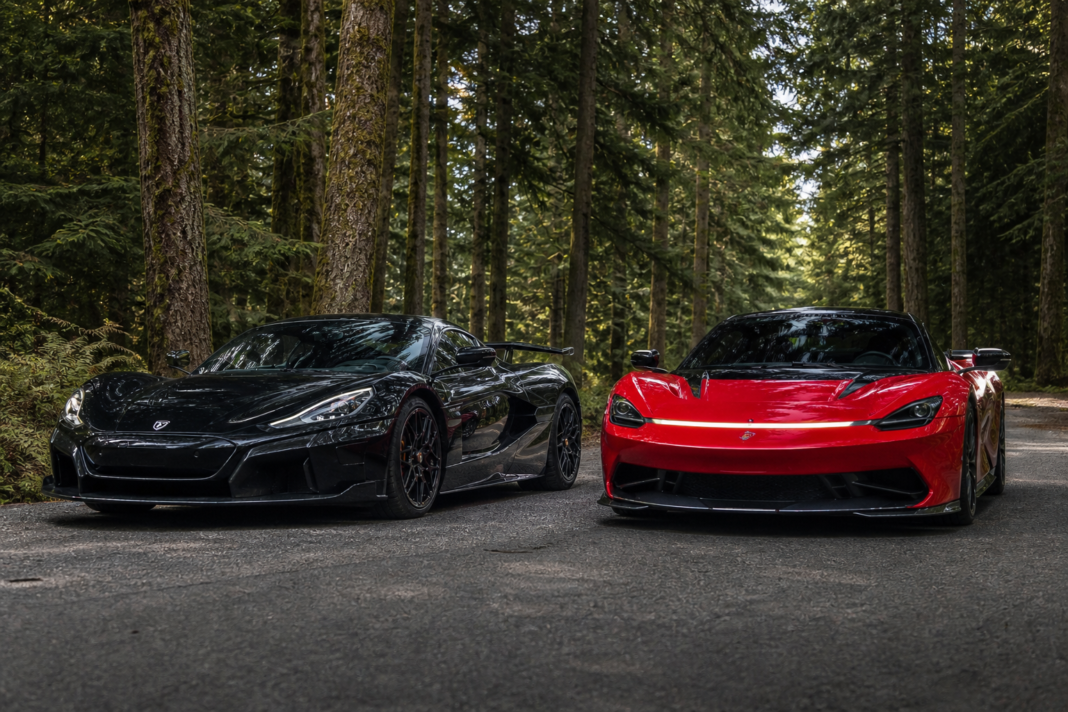
The Rimac Nevera and the Pininfarina Battista share a common foundation. Both are built on the same Rimac developed powertrain, using four electric motors producing nearly 1,900 horsepower. Both are capable of accelerating from 0 to 60 miles per hour in under two seconds. Both have a top speed approaching 260 miles per hour. Both are limited production, seven figure hypercars.
Yet the two cars could not be more different. The Nevera is the product of Rimac’s engineering first philosophy. It is a hypercar designed to showcase the company’s technological capabilities. The Battista is the product of Pininfarina’s design first philosophy. It is a hypercar designed to be beautiful, elegant, and emotionally engaging.
This article compares the Rimac Nevera and the Pininfarina Battista across performance, design, driving experience, and value to determine how Rimac’s driver-focused approach stacks up against Pininfarina’s design-first philosophy.
The Common Foundation: Rimac’s Powertrain
The Rimac Powertrain
Both cars use Rimac’s proprietary powertrain, which includes four permanent magnet synchronous electric motors, a 120 kWh battery pack, and a sophisticated torque vectoring system.
- Total Power: 1,914 horsepower (Nevera), 1,900 horsepower (Battista)
- Total Torque: 1,741 lb-ft (Nevera), 1,696 lb-ft (Battista)
- Battery Capacity: 120 kWh
- Drivetrain: All-wheel drive with torque vectoring
The Differences
While the powertrain is shared, the tuning and calibration are unique to each manufacturer. Rimac focuses on raw performance and driver engagement. Pininfarina focuses on refinement and usability.
Rimac Nevera: The Engineering-First Hypercar
The Philosophy
Rimac never intended to become a car manufacturer. The company was founded in 2009 as a supplier of electric powertrain technology for other manufacturers. The Nevera was created to demonstrate what the company’s technology could achieve. The car is named after a sudden, intense Mediterranean storm, reflecting its ferocious character.
Design
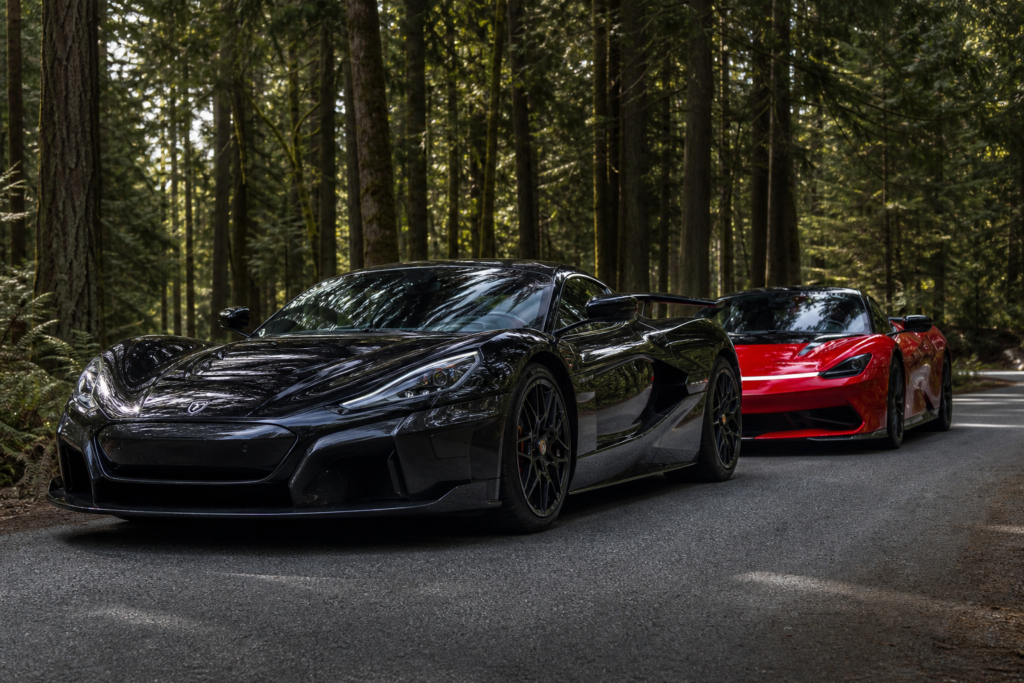
The Nevera’s design is functional and aggressive. The body is shaped by aerodynamics, with large air intakes, a prominent rear diffuser, and an active rear wing. The styling is technical and purposeful, but it lacks the elegance of the Battista.
Performance
The Nevera is one of the fastest accelerating production cars ever built.
- 0 to 60 mph: 1.85 seconds
- 0 to 100 mph: 3.6 seconds
- Quarter mile: 8.5 seconds at 167 mph
- Top Speed: 258 mph
- Range: Approximately 300 miles
Driving Experience
The Nevera is designed for maximum performance. The torque vectoring system provides exceptional cornering grip, and the car is stable and predictable at high speeds. The steering is precise and direct, providing excellent feedback.
Production
Rimac is building 150 units of the Nevera. The base price is approximately $2.2 million.
Pininfarina Battista: The Design-First Hypercar
The Philosophy
Pininfarina is one of the most famous design houses in automotive history. The Battista is the first production car to wear the Pininfarina badge, and it is named for the company’s founder, Battista “Pinin” Farina. The car is designed to be beautiful, elegant, and emotionally engaging.
Design
The Battista’s design is stunning. The body is flowing and sculptural, with curves that catch the light. The front end features a prominent grille and slim headlights. The side profile shows the dramatic roofline and the muscular rear haunches. The rear end is characterized by a full width light bar and a prominent diffuser.
Performance
The Battista is slightly less focused on outright performance than the Nevera.
- 0 to 60 mph: 1.9 seconds
- Top Speed: 217 mph
- Range: Approximately 300 miles
Driving Experience
The Battista is designed to be more refined and usable than the Nevera. The ride is more compliant, the cabin is quieter, and the driving experience is less intense. The car is fast, but it is not overwhelming.
Production
Pininfarina is building 150 units of the Battista. The base price is approximately $2.5 million.
Performance Comparison
Acceleration
The Nevera is slightly quicker to 60 miles per hour, with a time of 1.85 seconds compared to the Battista’s 1.9 seconds. The difference is negligible in real world driving.
Top Speed
The Nevera has a higher top speed, with 258 miles per hour compared to the Battista’s 217 miles per hour. The Battista is limited by its aerodynamic design.
Range
Both cars have a range of approximately 300 miles.
Handling
The Nevera is the more aggressive and capable track car. Its torque vectoring system is tuned for maximum grip and cornering performance. The Battista is more refined, with a focus on ride comfort and daily usability.
Design Comparison
Exterior
The Battista is the more beautiful car. Its flowing lines and sculptural surfaces are a testament to Pininfarina’s design heritage. The Nevera is more aggressive and technical, but it lacks the Battista’s elegance.
Interior
The Battista’s interior is luxurious and elegant, with high quality materials and a driver-focused layout. The Nevera’s interior is more technical, with a digital instrument cluster and a minimalist design.
Which One Has More Soul?
The concept of soul is subjective, but each car appeals to a different kind of driver.
The Nevera’s Soul
The Nevera’s soul is raw and intense. It is a car that demands respect and rewards skill. The driver feels every input, and the car responds with brutal acceleration and precise handling. It is a car for drivers who want to feel the limits of performance.
The Battista’s Soul
The Battista’s soul is elegant and refined. It is a car that can be driven every day, yet it is still capable of extraordinary performance. The driver feels connected to the car, but the experience is less overwhelming. It is a car for drivers who want beauty and performance in equal measure.
Value and Ownership
Pricing
The Battista is more expensive, with a base price of $2.5 million compared to the Nevera’s $2.2 million.
Depreciation
Both cars are expected to hold their value well, but the Battista’s design heritage and limited production may give it an advantage.
Ownership Experience
Rimac offers a comprehensive ownership program, including track events and factory visits. Pininfarina offers a similar program, with a focus on design personalization.
Which One is Right for You?
Choose the Rimac Nevera if:
- You want the most extreme performance. The Nevera is quicker, faster, and more aggressive.
- You value engineering precision over design elegance.
- You plan to track your car regularly.
- You want the raw, unfiltered hypercar experience.
Choose the Pininfarina Battista if:
- You value design and beauty as much as performance.
- You want a car that is more refined and usable for daily driving.
- You appreciate the heritage of the Pininfarina name.
- You want a hypercar that is as elegant as it is fast.
Specifications Summary
| Specification | Rimac Nevera | Pininfarina Battista |
|---|---|---|
| Power | 1,914 hp | 1,900 hp |
| Torque | 1,741 lb-ft | 1,696 lb-ft |
| Battery | 120 kWh | 120 kWh |
| 0-60 mph | 1.85 seconds | 1.9 seconds |
| Top Speed | 258 mph | 217 mph |
| Range | 300 miles | 300 miles |
| Production | 150 units | 150 units |
| Base Price | $2.2 million | $2.5 million |
Conclusion
The Rimac Nevera and the Pininfarina Battista represent two different visions of the electric hypercar. Both are extraordinary. Both are limited to 150 units. Both cost millions of dollars.
The Nevera is the engineering-first hypercar. It is raw, intense, and focused on performance. It is a car for drivers who want to feel the limits of speed.
The Battista is the design-first hypercar. It is elegant, refined, and beautiful. It is a car for drivers who want to look good while going fast.
Neither is objectively better. The choice between them depends on what you value most. If you want the most extreme performance, choose the Nevera. If you want the most beautiful hypercar ever built, choose the Battista.
Both have soul. Both are legends. And both prove that the electric hypercar is not just the future; it is the present.

