Home Blog Page 10

The 1990s Supercar Wars: McLaren F1, Ferrari F50, and Bugatti EB110 – An Evening at the Mirafiori Motor Village in Turin

0

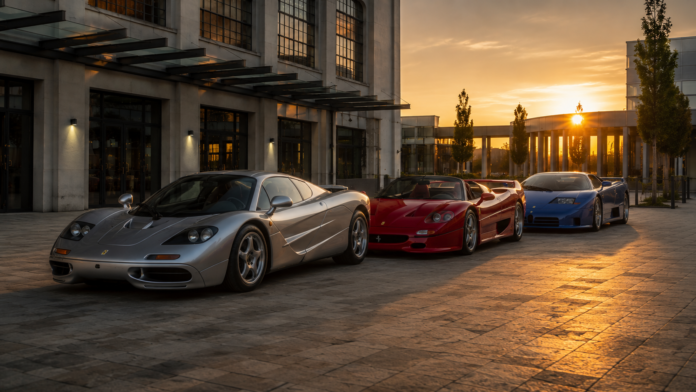
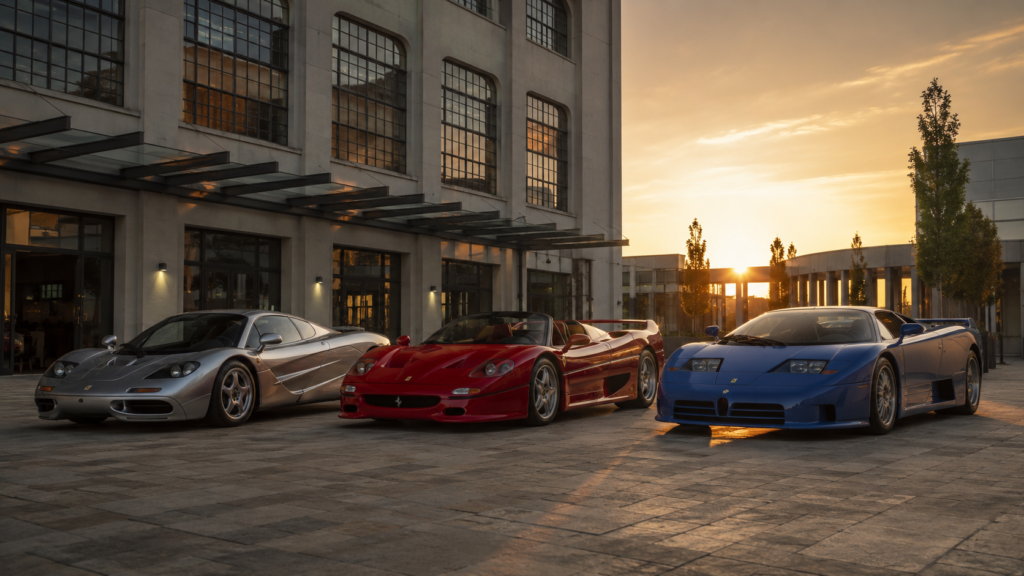
The sun is setting over the Lingotto building in Turin, the former Fiat factory with its famous rooftop test track. The air is cool, and the lights of the city are beginning to glow. In the courtyard of the Mirafiori Motor Village, three cars are parked in a line. They are not modern hybrids or electric hypercars. They are the machines that defined an era: the McLaren F1, the Ferrari F50, and the Bugatti EB110.

The 1990s were the decade that defined the modern hypercar. It was a decade of excess, of technological leaps, and of fierce competition. Three manufacturers raced to build the ultimate road car. Each took a different approach. Each produced a masterpiece. And together, they set the stage for the supercar wars that continue to this day.

The McLaren F1: The Purist’s Choice

The McLaren F1 is widely considered the greatest supercar of all time. It was the vision of Gordon Murray, a South African engineer who had designed multiple Formula 1 championship-winning cars. Murray’s goal was simple: build the ultimate driver’s car.

The F1 was a machine of extreme purity. It was powered by a 6.1 liter naturally aspirated V12 engine developed by BMW, producing 627 horsepower. The engine was mounted amidships, and power was sent to the rear wheels through a six-speed manual transmission.

The F1’s most distinctive feature was its central driving position. The driver sat in the middle of the car, with two passenger seats flanking them and positioned slightly behind. This layout provided an unobstructed view forward and a sense of being at the center of the car’s dynamics.

The F1 was also the fastest production car in the world at the time. It could accelerate from 0 to 60 miles per hour in 3.2 seconds and reach a top speed of 240 miles per hour. The record stood for over a decade.

The F1 was not a commercial success in the traditional sense. Only 106 units were built. But its legacy is unmatched. It is the car that every other supercar is measured against.

The Ferrari F50: The Race Car for the Road

The Ferrari F50 was Ferrari’s answer to the McLaren F1. It was introduced in 1995 to celebrate the company’s 50th anniversary. Only 349 units were built.

The F50 was a machine of extremes. Its 4.7 liter naturally aspirated V12 engine was derived from the V12 used in Ferrari’s Formula 1 cars. The engine produced 520 horsepower at 8,500 rpm and revved to 8,500 rpm.

The F50 was built around a carbon fiber monocoque, a technology derived directly from Formula 1. The suspension used pushrod actuated dampers, another Formula 1 feature. The car had no power steering, no servo brakes, and no ABS. It was raw, demanding, and uncompromising.

The F50 was not as fast as the McLaren F1. It could accelerate from 0 to 60 miles per hour in 3.8 seconds and reach a top speed of 202 miles per hour. But it was a more visceral experience. The sound of the V12, the feel of the unassisted steering, and the connection to the road made it a driver’s car in the purest sense.

The F50 was controversial. Some criticized its styling, which incorporated cues from contemporary F1 cars. Others found it less engaging than its predecessor, the F40. But over time, the F50 has gained appreciation for its purity and its connection to Ferrari’s racing heritage.

The Bugatti EB110: The Technological Pioneer

The Bugatti EB110 was the most technologically advanced of the three. It was introduced in 1991, four years before the F50 and three years before the F1. It marked the revival of the Bugatti brand after a hiatus of nearly 40 years.

The EB110 was powered by a 3.5 liter V12 engine with four turbochargers. The GT version produced 560 horsepower, and the Super Sport version produced 603 horsepower. The engine was mounted in the middle of the car, and power was sent to all four wheels through a six-speed manual transmission.

The EB110 was the first production car to use a carbon fiber monocoque. It was also one of the first to use all-wheel drive. The technology was years ahead of its time, and it established the template that would be followed by the Bugatti Veyron and Chiron.

The EB110 was the fastest production car in the world when it was introduced. The Super Sport could accelerate from 0 to 100 km/h in 3.2 seconds and reach a top speed of 351 km/h. It was also one of the most expensive cars on the market, with a price of approximately $300,000.

The EB110 was a commercial failure. The company went bankrupt in 1995, and only 139 examples were built. The timing was unfortunate. The car was launched during a global recession, and the market for high-priced supercars was limited. But the EB110’s legacy is significant. It proved that a small, ambitious manufacturer could build a world-class hypercar.

The Turin Evening: A Comparison of Approaches

The three cars are parked side by side. They are different, but they are all masterpieces.

The McLaren F1 is the purist’s choice. It is light, simple, and focused on the driver. The naturally aspirated V12 is responsive and intoxicating. The manual transmission is engaging. The central driving position is unique. The F1 is a car that rewards skill and connection.

The Ferrari F50 is the racer’s choice. It is raw, demanding, and uncompromising. The V12 is derived from Formula 1. The carbon fiber monocoque is state of the art. The lack of power steering and ABS is a statement. The F50 is a car that demands respect.

The Bugatti EB110 is the pioneer’s choice. It is technologically advanced, ambitious, and ahead of its time. The quad-turbo V12 is powerful. The carbon fiber monocoque is groundbreaking. The all-wheel drive is sophisticated. The EB110 is a car that predicted the future.
The Legacy: What the 1990s Left Behind

The 1990s supercar wars left a lasting legacy. The McLaren F1 set a benchmark for driver engagement that has never been surpassed. The Ferrari F50 proved that Formula 1 technology could be adapted for the road. The Bugatti EB110 established the template for the modern hypercar: quad-turbo, carbon fiber, and all-wheel drive.

The three cars also represent different approaches to the same problem. The F1 was about purity and driver connection. The F50 was about racing heritage and raw experience. The EB110 was about technology and ambition.

Each approach was valid. Each approach produced a masterpiece. And together, they define the 1990s as the decade that built the modern hypercar.

Key Takeaways

  • The McLaren F1 was the purist’s choice, with a naturally aspirated V12, a central driving position, and a top speed of 240 mph.
  • The Ferrari F50 was the race car for the road, with a Formula 1-derived V12, a carbon fiber monocoque, and no power steering or ABS.
  • The Bugatti EB110 was the technological pioneer, with a quad-turbo V12, a carbon fiber monocoque, and all-wheel drive.
  • The three cars represent different approaches to the same problem: building the ultimate road car.
  • The 1990s supercar wars set the stage for the modern hypercar market.

Conclusion

The 1990s supercar wars were a defining moment in automotive history. Three manufacturers, three approaches, three masterpieces. The McLaren F1, the Ferrari F50, and the Bugatti EB110 each pushed the boundaries of what was possible. They each had their strengths and weaknesses. But together, they created a legacy that continues to influence the industry today.

The Mirafiori Motor Village is quiet now. The cars are gone. The engines are silent. But the debate continues. Which car was the best? The answer depends on who you ask. But one thing is clear: the 1990s were the decade that defined the modern hypercar.
Ferrari vs Lamborghini: The Rivalry That Built an Industry – An Evening at the Piazza della Signoria in Florence

0

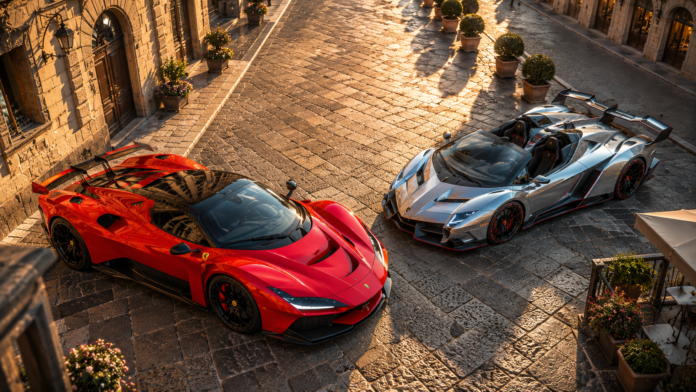
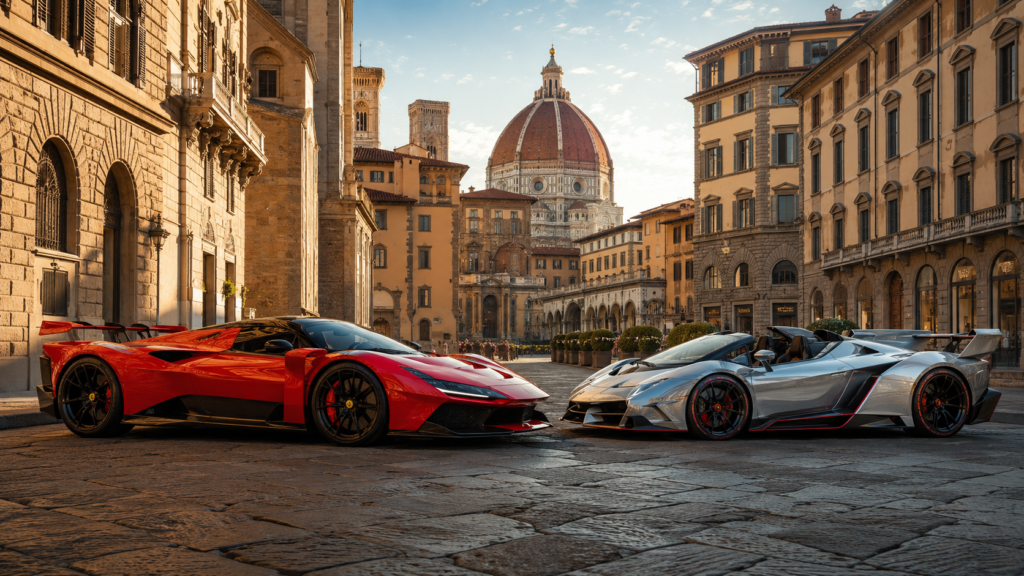
The sun is setting over the Piazza della Signoria in Florence, casting long shadows across the Loggia dei Lanzi. The statues of ancient gods and heroes seem to watch over the square, and in the distance, the sound of a high-revving V12 engine echoes off the stone walls. This is the city of the Medici, of Michelangelo, of the Renaissance. It is also the city where, in a small factory on the outskirts of town, the seeds of a rivalry were planted that would build an industry.

The Ferrari-Lamborghini rivalry is one of the most famous in automotive history. It transformed the luxury automobile industry in the 1960s and 1970s, leading to the creation of some of the world’s most iconic supercars. It began with an insult, escalated with a series of engineering masterpieces, and gave enthusiasts five decades of debate. This is the story of how a tractor manufacturer’s wounded pride led to the creation of an empire.

The Spark: A Tractor Manufacturer’s Complaint

In the early 1960s, Ferruccio Lamborghini was a prosperous tractor manufacturer. He had made his fortune building agricultural machinery, and he owned several high-end sports cars. One of his prized possessions was a Ferrari 250 GT. However, he was repeatedly frustrated by issues with his Ferrari.

Seeking a solution, Lamborghini approached Enzo Ferrari to discuss potential improvements. Accounts vary on how the meeting transpired, but the outcome is well-documented. Enzo Ferrari dismissed Lamborghini’s suggestions, reportedly making it clear that he considered Lamborghini an unqualified upstart who should stick to tractors.

The slight didn’t sit well with Lamborghini. Determined to prove Ferrari wrong, he decided to build his own line of superior sports cars. In just four months, he built a state-of-the-art factory in Sant’Agata Bolognese and completed his first car, the Lamborghini 350 GT.

The irony is that Enzo Ferrari had also inadvertently provided Lamborghini with the engineering talent needed to build his new brand. Ferrari had fired several of his best employees after a dispute involving his wife’s involvement in factory decisions. Ferruccio approached these former employees and enlisted their help in creating the first Lamborghini road car.

The Counterpunches: Icons That Changed the Industry

The rivalry between Ferrari and Lamborghini spurred both companies to push the boundaries of automotive design and engineering. Each new model was a direct challenge to the other, a statement of superiority.

Lamborghini introduced groundbreaking models like the Miura in 1966, often regarded as the world’s first supercar, and the Countach in 1974, which became an icon of automotive design with its sharp angles and scissor doors. The Miura’s mid-engine layout was revolutionary and cemented Lamborghini’s place in supercar history.

Ferrari responded with its own masterpieces, including the 288 GTO, the F40, and the F50. These were the cars that defined the supercar segment, establishing a template that would be followed for decades. The Enzo Ferrari, introduced in 2002, was a direct descendant of this rivalry, incorporating Formula 1 technology and a carbon-fiber body.

The Florence Sunset: A Rivalry Endures

The sun has fully set over Florence. The V12 engine has faded into the distance. The statues in the Loggia dei Lanzi stand silent, having witnessed centuries of human ambition and rivalry.

The Ferrari-Lamborghini feud is a classic example of how competition can drive innovation. This legendary rivalry has not only produced some of the finest luxury automobiles but has also inspired a culture of excellence and relentless pursuit of perfection in the automotive industry.

Today, Ferrari and Lamborghini remain two of the most revered names in the supercar world, each continuing to push the limits of performance and design. The rivalry that began with an insult at a factory in Maranello has become a cornerstone of automotive culture. And it shows no signs of slowing down.

Key Takeaways

  • The Ferrari-Lamborghini rivalry began in the early 1960s when Ferruccio Lamborghini, a tractor manufacturer, complained to Enzo Ferrari about issues with his Ferrari.
  • Enzo Ferrari dismissed Lamborghini’s concerns, making it clear he considered him unqualified.
  • Lamborghini founded Automobili Lamborghini in 1963 and built his first car, the 350 GT, in just four months.
  • The rivalry spurred both companies to create iconic models, including the Lamborghini Miura (1966) and Ferrari F40 (1987).
  • The rivalry continues to this day, with both brands pushing the boundaries of automotive performance and design.

Conclusion

The Ferrari-Lamborghini rivalry is more than a business competition. It is a story of pride, ambition, and the relentless pursuit of perfection. It is a reminder that even insults can lead to greatness when met with determination.

The Piazza della Signoria is quiet now. The V12 engines are silent. But the rivalry endures, a testament to the power of competition to build an industry.

The Car That Created the Supercar: The Lamborghini Miura Story – An Evening at the Piazza del Popolo in Rome

0

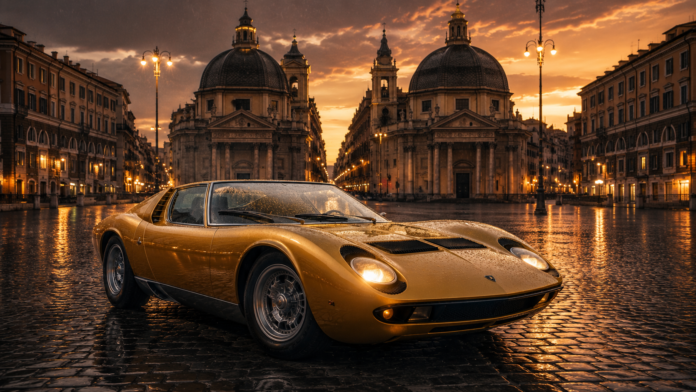
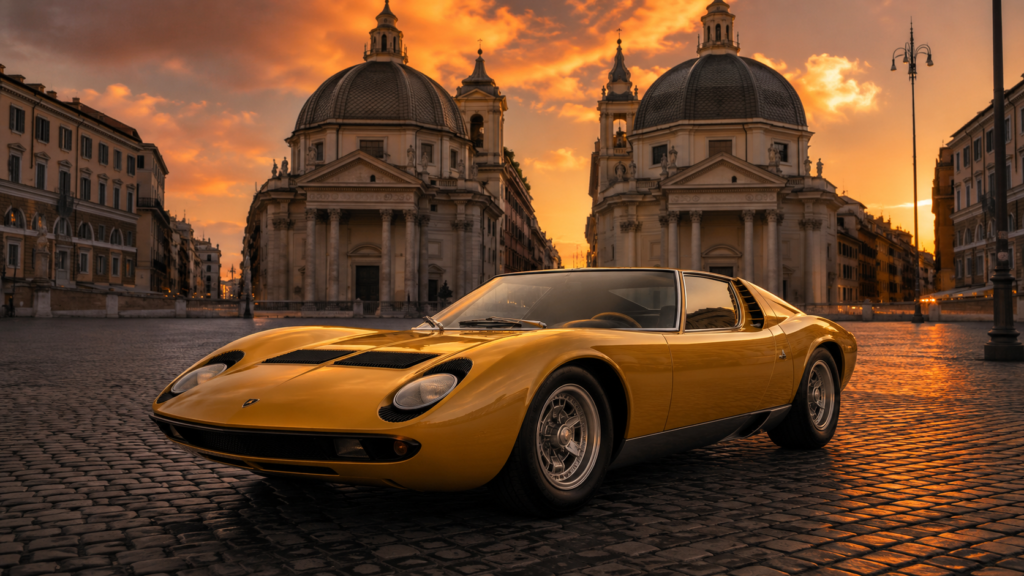
The sun is setting over the Piazza del Popolo, casting long shadows across the ancient cobblestones. The twin churches of Santa Maria dei Miracoli and Santa Maria in Montesanto frame the view, and the sound of a V12 engine echoing off the stone walls seems to transport the scene back to the late 1960s. This is Rome, a city of emperors and artists, of gladiators and engineers. It is the perfect place to remember a car that changed the automotive world forever.

The Lamborghini Miura did not just introduce a new car. It introduced a new category of automobile. It was the car that created the supercar. This is the full story of how Ferruccio Lamborghini, a group of rebellious engineers, and a mid-engine layout changed automotive history in 1966.

The Genesis: A Tractor Manufacturer’s Ambition

Ferruccio Lamborghini was not a car man, at least not at first. He had made his fortune building tractors. By the 1960s, he had become one of Italy’s great industrialists. He was also a car enthusiast. He owned a fleet of sports cars, including a Ferrari 250 GT.

The legend is well-known. Ferruccio was dissatisfied with his Ferrari, which he found too noisy and rough for proper road use. He complained to Enzo Ferrari himself. According to the story, Enzo dismissed him, saying he was just a tractor maker who could not understand a real sports car.

Ferruccio decided to build his own car. In 1963, he founded Automobili Ferruccio Lamborghini in Sant’Agata Bolognese. His goal was not to beat Ferrari on the track. He wanted to build a refined, luxurious grand tourer that could be driven every day. His first models, the 350 GT and 400 GT, were successful, establishing Lamborghini as a serious competitor.

The Rebel Engineers: The P400 Project

While Ferruccio focused on grand tourers, a group of his young engineers had different ideas. Gian Paolo Dallara, Paolo Stanzani, and Bob Wallace were working on a secret project in their spare time, against the wishes of the company founder. They envisioned a road car with racing pedigree, something that could win on the track and be driven on the street.

The car was codenamed P400. The “P” indicated the positioning of the engine, and the “400” the 4-liter displacement. The design was revolutionary. They mounted the V12 engine transversely behind the cockpit and ahead of the rear wheels, a layout that had not been seen in a production road car. This mid-engine layout would become the standard for high-performance sports cars.

Ferruccio was initially not keen. He preferred the grand touring philosophy. But the engineers persuaded him to let them display a rolling chassis at the 1965 Turin Auto Show. He thought it would be a provocative marketing tool, but the interest was enormous. People placed orders without even seeing a fully constructed car.

The Debut: Geneva 1966

The complete Miura was revealed at the Geneva Motor Show in March 1966. The styling, created by Marcello Gandini at Carrozzeria Bertone, was a sensation. The car was exceptionally low, measuring just 110cm in height. The distinctive “eyelashes” around the headlights, the sleek bodywork, and the louvered rear window all contributed to its dramatic appearance.

The car was so new that the engine was not installed in the show car. It was filled with ballast and locked shut. But the audience did not care. The Miura was an instant success, and the term “supercar” was coined to describe it.

The Engineering: The Transverse V12

The Miura’s technical features were as impressive as its design. The V12 engine was mounted transversely to keep the wheelbase short. This required a unique casting to marry the engine and gearbox. The engine produced 350 horsepower at 7,000 rpm in the original P400. Over the years, power increased. The P400 S produced 370 horsepower at 7,700 rpm, and the Miura SV produced 385 horsepower at 7,850 rpm.

The car was the fastest production car in the world at launch. It could accelerate from 0 to 100 km/h in 6.7 seconds and reach a top speed of 280 km/h. The transverse layout and mid-engine positioning gave the car exceptional balance and handling.

The Evolution: S and SV

The Miura was continuously developed throughout its production run. The P400 S, introduced in 1968, featured slight aesthetic changes and a more comfortable interior. The Miura SV, introduced in 1971, was the most radical variant. It featured larger rear tires, widened wheel arches, a stronger chassis, and revised suspension. The “eyelashes” were also removed from the headlights. The SV is now the most desirable of the Miura variants, with only 150 units produced.

The Roman Sunset: The Miura in Pop Culture

The Miura’s impact extended beyond the automotive world. It became a cultural icon, sought after by rock stars and film stars. The car’s most famous role was in the 1969 film “The Italian Job,” where it appeared in the opening scenes. The film sealed the car’s status as a legend.

The Miura’s Legacy

The Miura ended production in 1973, after 764 units had been built. It was succeeded by the Countach, a car that would become even more dramatic. But the Miura’s legacy is unique. It created the supercar category. It proved that a mid-engine layout could work in a production road car. It established Lamborghini as a brand that would always push the limits of automotive design and engineering.

The sun has fully set over Rome. The Piazza del Popolo is quiet, but the memory of the Miura endures. It is the car that created the supercar, and it is a legend that will never fade.

Key Takeaways

  • The Lamborghini Miura was the first mid-engine production car and the vehicle for which the term “supercar” was coined.
  • It was developed by a team of rebellious engineers against the wishes of founder Ferruccio Lamborghini.
  • The Miura’s transverse V12 and mid-engine layout set a new standard for high-performance sports cars.
  • The car was continuously evolved into the P400 S and the more radical Miura SV.
  • The Miura became a cultural icon, appearing in films and becoming a symbol of 1960s automotive design.

Conclusion

The Lamborghini Miura is not just a car. It is a piece of automotive history. It is the machine that defined a category and inspired generations of designers and engineers. The story of its creation, from a tractor manufacturer’s ambition to a group of rebellious engineers, is as compelling as the car itself.

The Miura is a testament to what can be achieved when passion, engineering, and a willingness to defy convention come together. It was the car that created the supercar. And it remains a symbol of what a car can be when it is built without compromise.

How Supercar Brakes Go From Street to Track Without Fading – A Morning at the Fuji Speedway

0

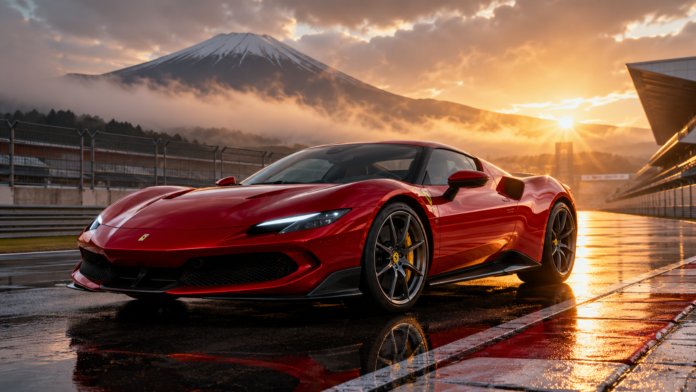
The sun is just beginning to burn through the morning mist that often clings to the foothills of Mount Fuji. The track at Fuji Speedway is empty, but the pit lane is alive with activity. A Ferrari 296 GTB is being prepped for a session. The car is equipped with carbon ceramic brakes, the same technology that has become the standard for modern supercars.

Brake fade is the enemy of performance driving. It is the gradual loss of stopping power that occurs when brakes overheat. On a track, where drivers brake hard from high speeds lap after lap, fade can be dangerous. Supercar brakes must perform on the street, where they are cold and used gently, and on the track, where they are hot and used aggressively. The engineering that makes this possible is a combination of materials, cooling, and calibration.

The Material: Carbon Ceramic vs. Steel

The foundation of a fade-resistant brake system is the disc material. Traditional steel discs are heavy and prone to heat-related performance loss. Carbon ceramic discs, by contrast, are designed to handle extreme temperatures.

Weight Reduction

A carbon ceramic disc is significantly lighter than a steel disc of the same size. This reduction in unsprung weight improves handling, suspension response, and ride comfort. On a supercar, every kilogram saved contributes to agility.

Heat Resistance and Fade Resistance

When braking hard, friction causes brake discs to heat up excessively. As standard steel discs heat up, their braking performance decreases. This is brake fade. Carbon ceramic discs can withstand extremely high temperatures. The heat dissipation capability of these discs is very high, so the risk of fade is very low, even on a race track.

How They Are Made

The manufacturing process is complex and time-consuming. A mixture of carbon fibers and silicon resin is placed under high pressure at elevated temperatures. The mold is then heated multiple times over several days, with additional silicon powder added between stages. This process transforms the raw ingredients into the silica carbide ceramic that adds durability and longevity. The entire process can take many days to produce a single disc. This complexity is the primary reason for their high cost.

The Cooling: Active and Passive Systems

Even the best materials need cooling. Supercar brake systems use a combination of passive and active cooling to manage temperatures.

Passive Cooling

The design of the discs themselves aids cooling. Ventilation holes and internal vanes help air flow through the disc, dissipating heat. The brake cooling system on many supercars directs a significant portion of the airflow to the discs and pads.

Active Cooling

Some systems use active cooling, where ducts open only when needed. With speed and brake application sensors feeding an electronic control unit, brake-cooling air intake ducts open automatically only when the driver makes a sufficiently demanding application. Since closed brake ducts create no drag, they improve the car’s aerodynamic efficiency.

Caliper Cooling

Some brake manufacturers have developed calipers with integrated air cooling. This forced ventilation reduces the brake fluid temperature compared with a standard caliper, allowing the system to maintain maximum braking efficiency.

The Calibration: Brake Bias and Feel

The brake system must be calibrated to provide consistent feel and performance across a wide range of temperatures.

Brake Bias

Brake bias refers to the distribution of braking force between the front and rear axles. On a mid-engine supercar, the bias is carefully calibrated to balance stopping power with stability. Too much front bias can cause nose dive and loss of rear traction. Too much rear bias can cause instability.

Pedal Feel

Carbon ceramic brakes often have different pedal feel than steel brakes, particularly when cold. Early systems required an “all or nothing” approach to braking. Modern systems have refined pedal feel, with consistent response regardless of temperature.

The Cost: The Price of Performance

Carbon ceramic brakes are expensive. The cost is driven by the complex manufacturing process and the high-quality materials. Replacement costs are similarly high. However, for drivers who push their cars on track, the benefits outweigh the expense.

The Fuji Speedway Session

The Ferrari 296 GTB is on track now. The driver is pushing hard, braking deep into corners. The car is consistent, lap after lap. The brakes are not fading.

After the session, the driver explains. “The carbon ceramics take a lap to warm up. But once they are hot, they are consistent. No fade. No surprises.”

The Verdict

Carbon ceramic brakes are the standard for supercars because they work. They resist fade, reduce weight, and provide consistent performance. The cost is high, but for drivers who push their cars on track, the benefits are clear.

The engineering is a combination of advanced materials, sophisticated cooling, and precise calibration. The result is a brake system that can survive both the streets of Maranello and the demands of a full Nürburgring lap.

Key Takeaways

  • Carbon ceramic discs are significantly lighter than steel discs, reducing unsprung weight and improving handling.
  • Carbon ceramic discs can withstand extremely high temperatures, resisting brake fade.
  • The manufacturing process is complex and time-consuming, which drives the high cost.
  • Active cooling systems open brake ducts only when needed to balance cooling and aerodynamics.
  • Some calipers integrate cooling ducts to reduce brake fluid temperature.
  • Modern carbon ceramic systems offer consistent pedal feel across a wide range of temperatures.

Conclusion

The sun is higher now. The Ferrari 296 GTB is parked in the pit lane. Its brakes are hot, but they have not faded.

The engineering that allows supercar brakes to transition from street to track without fading is a combination of material science, cooling design, and electronic calibration. Carbon ceramic discs, active cooling ducts, and precise brake bias all work together to ensure that the car stops consistently, lap after lap.

The cost is high. The performance is exceptional. And for those who drive their cars on track, the peace of mind is priceless.

The Gearbox Engineering Behind 7-Speed Dual-Clutch Supercar Transmissions – An Evening at Dubai Autodrome

0

The sun is setting over the Dubai skyline, casting a golden glow across the track at Dubai Autodrome. The grandstands are empty, but the pit lane is alive with activity. A McLaren 765LT is being prepped for a hot lap. The driver straps in, fires the engine, and pulls the right paddle. The car lurches forward, then rockets down the main straight. The shifts are instantaneous, seamless, and almost violent in their speed.

The dual-clutch transmission, or DCT, has transformed supercar performance. It shifts faster than any human can, with less power loss than a traditional automatic, and without the torque interruption of a manual gearbox. This article explains how dual-clutch gearboxes work, why they have become the standard in supercars, and why traditional automatics and manuals cannot match their shift speed.

The Location: Dubai Autodrome, Dubai, United Arab Emirates

Dubai Autodrome is a 5.4 kilometer FIA Grade 1 circuit located in the heart of Dubai’s Motor City. The track features 16 turns, long straights, and elevation changes that test both car and driver. It is a venue designed for speed, and it is the perfect place to appreciate the speed of a DCT.

The Basic Problem: Shifting Gears

Every transmission has the same fundamental task. It must transfer power from the engine to the wheels while allowing the driver to select different gear ratios. The challenge is that changing gears requires interrupting the flow of power.

In a manual transmission, the driver presses the clutch pedal, disengaging the engine from the gearbox. The driver moves the shifter, engaging a new gear. The driver releases the clutch, re-engaging the engine. This process takes time. A skilled driver can shift in approximately 500 milliseconds to 1 second. The power interruption is noticeable.

In a traditional automatic transmission with a torque converter, the power interruption is smoother but the shifts are slower. The torque converter uses fluid to transmit power, which smooths the engagement but also saps efficiency.

The dual-clutch transmission solves this problem by pre-selecting the next gear and switching between two clutches.

How a Dual-Clutch Transmission Works

A dual-clutch transmission is essentially two gearboxes in one housing. There are two input shafts, one nested inside the other. One shaft controls the odd gears (1st, 3rd, 5th, 7th). The other shaft controls the even gears (2nd, 4th, 6th) and reverse.

There are two clutches, one for each input shaft. The clutches are arranged concentrically, with one clutch pack inside the other. The outer clutch pack controls the odd gears. The inner clutch pack controls the even gears.

The magic of the DCT is that while one clutch is engaged and power is flowing through one gear, the transmission is pre-selecting the next gear on the other shaft. For example, when accelerating in first gear, second gear is already engaged on the even shaft, but the even clutch is disengaged.

When it is time to shift, the system simply disengages the odd clutch and engages the even clutch. The shift takes milliseconds. The pre-selected gear is already in place. The interruption in power is minimal. The system then pre-selects the next gear on the odd shaft.

The entire process is controlled by a Transmission Control Module, which manages the hydraulic actuators that move the shift forks and engage the clutches.

The Shift Speed Advantage

The numbers tell the story. A modern dual-clutch transmission can shift in as little as 40 to 80 milliseconds. A skilled manual driver takes 500 milliseconds to 1 second. The difference is significant. Over the course of a lap, with dozens of shifts, the DCT car will have a measurable advantage.

In a comparison test of two identical cars, one with a manual and one with a DCT, the DCT car was quicker around a track. The shift speed was a significant factor.

Why Traditional Automatics Can’t Match

Traditional automatic transmissions with torque converters are smoother than DCTs in stop-and-go traffic, but they are slower to shift. The torque converter uses fluid coupling, which creates a delay in power delivery. The hydraulic systems that control gear selection are also slower than the electronic controls in a DCT.

Some modern torque converter automatics can shift in approximately 160 milliseconds. This is faster than a manual, but still slower than a DCT. The DCT also has the advantage of pre-selecting gears, which eliminates the delay in engaging the next gear.

Why Manuals Can’t Match

Manuals are limited by the speed of human movement. The driver must press the clutch pedal, move the shifter, and release the clutch. The physical movements take time. The driver must also coordinate the clutch and throttle to match engine speed.

The power interruption is also more significant in a manual. When the driver presses the clutch, the engine is completely disengaged from the wheels. The power flow stops. In a DCT, one clutch disengages while the other engages, minimizing the interruption.

Manuals also have the disadvantage of requiring the driver to move the shifter through a gate. A DCT simply switches between the two input shafts, with no mechanical resistance.

The Daily Driving Benefit

The shift speed advantage of a DCT is most apparent on a track. But there is also a daily driving benefit. A DCT is easier to drive in traffic. There is no clutch pedal. The car does not stall. The shifts are smooth and automatic.

A DCT also offers the driver a choice. The driver can leave it in automatic mode for traffic and use the paddles for spirited driving.

The Tradeoffs

DCTs are heavier than manuals. They are also more expensive to manufacture and more complex to repair. Some drivers also complain that DCTs can feel less engaging than a manual, because the driver is less involved in the process.

Some drivers also find DCTs to be less refined in stop-and-go traffic. The low speed clutch engagement can be jerky, especially in older designs.

The Dubai Evening: A Hot Lap

The McLaren 765LT is on track now. The driver is pushing hard. The shifts are immediate, seamless, and satisfying. The driver does not have to think about the gear changes. He can focus on the braking points, the turn-in, and the throttle application.

A group of enthusiasts is watching from the pit lane. They are discussing the transmission. One of them is a manual advocate. He argues that a manual is more engaging.

The McLaren driver responds after his lap. “I understand the appeal of a manual. I have owned many. But this car is faster. The shifts are faster. The lap times are faster. And on the street, it is easier to drive.”

The Verdict

The dual-clutch transmission has transformed supercar performance. It shifts faster than any manual and with less power interruption than any torque-converter automatic. It is easier to drive in traffic and offers the driver the choice of fully automatic or paddle-shift operation.

The DCT is not without tradeoffs. It is heavier and more expensive than a manual. Some drivers find it less engaging. But for the majority of supercar buyers, the benefits outweigh the drawbacks.

The McLaren 765LT leaves the pit lane. It is heading back to the track. The driver pulls the paddle. The transmission shifts. The car accelerates.

That is the sound of the DCT. It is the sound of speed.

Key Takeaways

  • A dual-clutch transmission uses two clutches and two input shafts to pre-select the next gear.
  • One shaft controls odd gears, the other controls even gears and reverse.
  • Shifts are completed by disengaging one clutch and engaging the other.
  • DCT shift times range from 40 to 100 milliseconds, compared to 500 milliseconds to 1 second for a manual.
  • A DCT is also easier to drive in traffic and offers the driver a choice of automatic or manual modes.
  • DCTs are heavier and more expensive than manuals, but offer superior performance.

Conclusion

The sun has set over Dubai. The McLaren 765LT is parked in the pit lane, its engine ticking as it cools. The driver is satisfied. The DCT delivered.

The enthusiasts are still talking. They are discussing the transmission. They are impressed by the technology.

The dual-clutch transmission is not a compromise. It is an advancement. It is faster, more efficient, and more refined than the transmissions it has replaced.

The manual transmission is not dead. It is still available in some supercars. But the DCT is the future. It is the sound of speed. And in Dubai, where speed is celebrated, the DCT is the transmission of choice.

How Tyres Actually Limit Supercar Performance (And What’s Being Done About It) – A Morning at the Pittsburgh International Race Complex

0

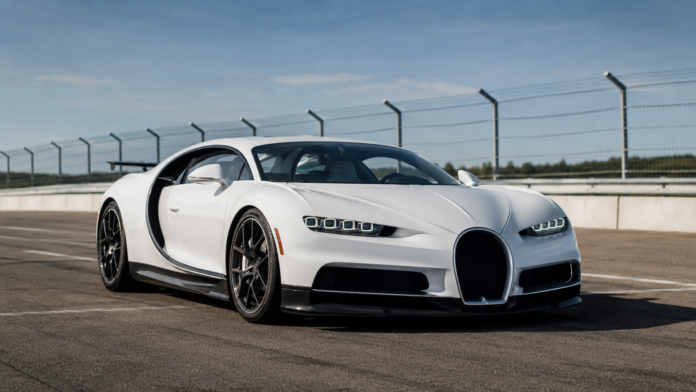
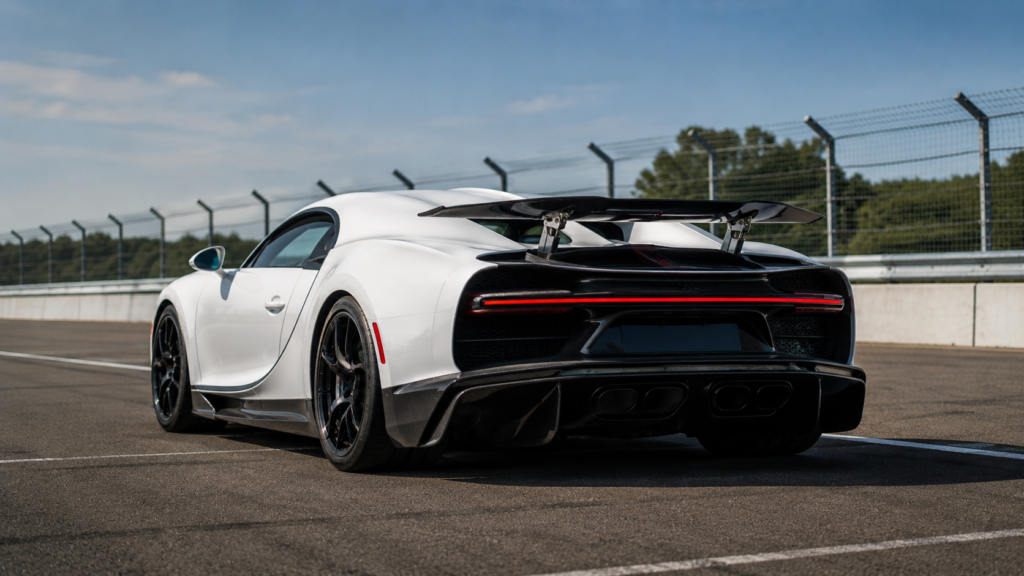
The sun is just beginning to warm the asphalt at the Pittsburgh International Race Complex in Wampum, Pennsylvania. A Bugatti Chiron Super Sport sits in the paddock, its quad turbo W16 engine capable of producing over 1,500 horsepower. The car is theoretically capable of exceeding 300 miles per hour. Yet the production car is electronically limited to a lower speed for safety reasons.

The limiting factor is not the engine. It is the tyres.

At extreme speeds, the forces on a tyre are immense. The tyres must withstand temperatures that would melt conventional rubber, maintain structural integrity under loads that would deform steel, and provide grip on surfaces that are never perfectly smooth.

The biggest limiter on modern supercar performance is not the engine. It is the four contact patches connecting it to the road. This article explains the engineering of performance tyres, why they limit performance, and what is being done about it.

The Forces at Play

When a supercar accelerates, brakes, or corners, the tyres are the only connection between the car and the road. All the power, all the grip, all the stopping force must pass through four small patches of rubber.

Centrifugal Force

At high speed, the tyre is spinning at thousands of revolutions per minute. The centrifugal force wants to pull the tyre apart. The tread can separate from the carcass. The belts can shift. The sidewalls can bulge. The tyre must be strong enough to resist these forces.

Heat

Friction generates heat. At high speed, the tyre temperature can exceed 100 degrees Celsius. The rubber must remain stable at these temperatures, providing consistent grip. If the tyre gets too hot, the rubber can melt or degrade, leading to catastrophic failure.

Load

A supercar generates significant downforce. The tyres must support the weight of the car plus the additional load from downforce. The tyres developed for extreme hypercars must withstand extreme stresses from the car’s power, torque, and aerodynamic downforce.

The Bugatti Example: When Tyres Say No

The Bugatti Chiron is a case study in tyre limitations. The car has a top speed that exceeds 420 km/h. The engine could push it faster. But the tyres cannot safely handle more.

For the record run, Bugatti used specially reinforced tyres. Each tyre was x-rayed before use to check for the smallest flaws. The tyres were tested on a machine that had been used for the Space Shuttle, spinning at speeds far beyond what the car would achieve.

The production Chiron is limited for safety. A tyre failure at extreme speed would be catastrophic. The risk is simply too high.

The Race Tyre Challenge

In motorsport, tyres are a constant challenge. In some racing series, the tyres are described as having a small operating window. Drivers cannot push hard for extended periods. Instead, they must manage their pace to preserve the tyre between pit stops.

If the tyre gets too hot too quickly, it does not recover. The peak performance is short lived. In other racing categories, the tyres are more forgiving. Drivers can push on them without suffering massive drop off. The difference is in the compounds and the construction.

The Future: Sustainable Supercar Tyres

The future of supercar tyres is sustainable. Manufacturers are developing the first supercar tyres made with a significant percentage of bio-based and recycled materials. The bio-based materials include natural rubber, biochemicals, and bio-resins. The recycled materials include metal reinforcements, rubber from end-of-life tyres, synthetic rubber, silica, and carbon black.

The goal is to launch tyres containing an even higher percentage of bio-based and recycled materials in the coming years, with the ultimate aim of reaching 100 percent sustainable materials.

The Development Process

Developing tyres for a supercar is a collaborative process. The tyre manufacturer works with the car manufacturer from the earliest stages of development.

The teams work together in a virtual environment, using state-of-the-art driving simulation technology. They then progress to physical tests at circuits around the world. This approach reduces the number of physical prototypes needed, cutting waste and shortening development time.

Some tyre manufacturers have developed virtual development technology that eliminates hundreds of physical prototypes, cuts physical vehicle tests significantly, and reduces development time by up to 50 percent.

The Pittsburgh Morning: A Track Session

The sun is higher now. The Chiron is on track. The driver is not pushing the car to its limit. He is warming the tyres, learning the track, feeling the brakes.

A group of enthusiasts is watching from the paddock. They are not Bugatti owners. They are owners of Porsches, BMWs, and Corvettes. They are impressed by the Chiron’s presence.

One of them asks about the tyres. “How much do they cost?”

The owner of the Chiron smiles. “A set costs tens of thousands of dollars. But you do not buy them every day.”

The Verdict

Tyres are the most critical component of a supercar’s performance. They limit top speed, cornering grip, and braking distance. They are also the most challenging component to develop.

The future of supercar tyres is sustainable. Manufacturers are using bio-based and recycled materials to reduce environmental impact. They are using virtual simulation to speed development and reduce waste. They are pushing the limits of performance and sustainability.

The Chiron leaves the track. The tyres are warm, the car is ready. The driver is satisfied.

The tyres are the limit. But they are also the solution. They connect the car to the road. They make the performance possible.

Key Takeaways

  • Tyres are the biggest limiter on supercar performance, restricting top speed, cornering grip, and braking distance.
  • At high speeds, tyres face extreme centrifugal forces, heat, and loads that can cause failure.
  • The Bugatti Chiron is electronically limited for safety because tyres cannot safely handle higher speeds.
  • The development process for supercar tyres is collaborative and involves extensive virtual and physical testing.
  • Manufacturers are developing tyres with significant percentages of bio-based and recycled materials.
  • Virtual development technology is reducing development time and environmental impact.

Conclusion

The sun is higher now. The track session is over. The Chiron is parked in the paddock, its tyres warm, its engine ticking as it cools.

The enthusiasts are still talking. They are discussing tyres, compounds, and technology. They are fascinated by the science.

The tyres are the limit. They are the reason the Chiron cannot exceed its electronically limited top speed on public roads. They are the reason drivers must manage their tyres in a race.

But they are also the solution. They connect the car to the road. They make the performance possible. They are the most critical component of a supercar’s performance.

That is the science of tyres. It is not about rubber. It is about engineering, physics, and the relentless pursuit of speed.

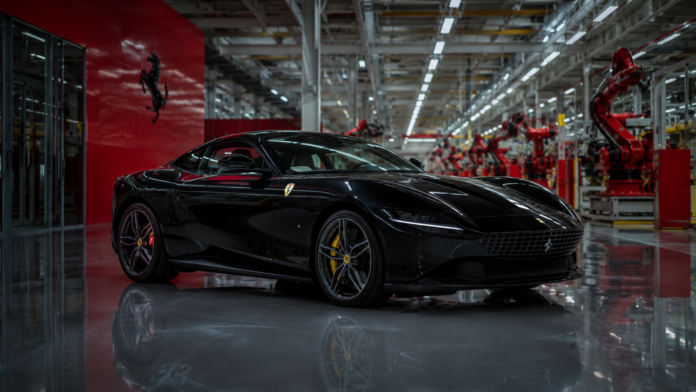
Inside a Supercar Factory: How Ferrari Builds the Roma – A Visit to Maranello

0

The Via Emilia Nord is quiet on a cool October morning. The road leads into Maranello, a small town in Emilia-Romagna that has become synonymous with automotive passion. The Ferrari factory sits just off the main road, a low, sprawling complex of buildings that have changed little from the outside over the decades. But inside, the process of building a car like the Roma is a blend of hand craftsmanship and advanced technology.

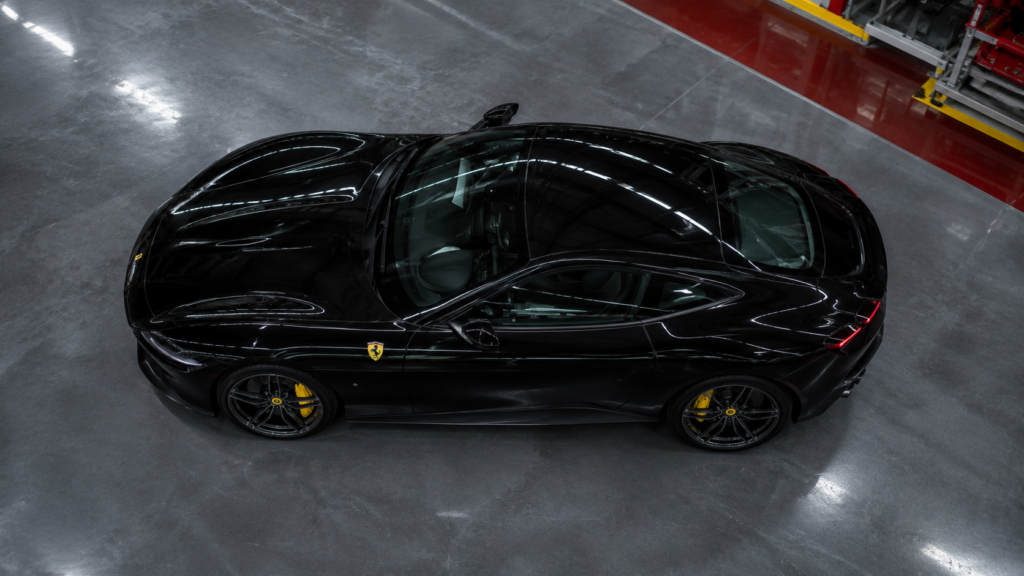
The Ferrari Roma is a grand tourer, a car designed for long-distance driving with style and performance. Its front mid-engine V8 produces 620 horsepower, and it can accelerate from 0 to 100 km/h in 3.4 seconds. But before any car can be driven, it must be built. This article provides a behind-the-scenes look at the manufacturing process of the Ferrari Roma, from aluminum chassis assembly to final quality inspection at Maranello.

The Foundry: Where the Engine Begins

The engine is the heart of every Ferrari. The Roma’s 3.9 liter twin-turbocharged V8 starts its life in the foundry, a facility that has been casting engine components for decades. Solid aluminum ingots are heated in large melting furnaces until they become liquid. The temperature reaches approximately 700 degrees Celsius, hot enough to keep around 2,000 kilograms of alloy in a liquid state.

The liquid alloy is then poured into sand or steel casting molds to produce engine components such as the cylinder block and cylinder heads. The process is carefully monitored by expert foundry workers. For the Roma’s V8, some components are made using recycled aluminum from the production phase, reducing waste.

After casting, the engine components are machined to precise tolerances. The valve mechanics are connected using automated equipment, the only part of the production process that is automated. The rest of the engine is built by hand.

The Assembly Line: Hand-Built Precision

Once the engine is complete, it is sent to the main assembly line, housed in the historic factory buildings. The Roma’s aluminum chassis is mounted on a rolling platform. The chassis, like all Ferrari chassis, is built using advanced techniques to ensure rigidity and light weight.

The assembly process follows a sequence. The dashboard is installed first, followed by the steering wheel, the seats, and the infotainment system. Each component is fitted by hand. The workers are specialists, trained to install specific components with precision.

The body panels are then attached. The Roma’s sleek shape, designed by the Ferrari Styling Centre, is made from aluminum. The panels are fitted and adjusted by hand to ensure perfect gaps and alignment.

The Tailor Made Program: Personalization Beyond Paint

Ferrari offers a high level of personalization through its Tailor Made program. Customers can specify unique colors, materials, and details. The program allows for extensive customization, from the color of the stitching to the material of the seat inserts.

For example, one special Roma featured an exterior finish inspired by traditional Japanese crafts. The car incorporated fabric from rewoven kimono strands for the seat inserts and door handles wrapped in hand-woven strips of leather, inspired by the art of wrapping Katana sword grips. Another Roma featured a unique exterior finish with an interior combining chrome-free leather and recycled materials.

These bespoke touches are a significant part of the Ferrari experience. They are also a source of profit, as the high-tech tooling and flexibility in the new production facilities allow for more personalization options.

The E-Building: Ferrari’s Future

Ferrari has opened a new production facility called the e-building, located just north of the existing campus. The building is designed to house assembly lines for electric, hybrid, and combustion models all in the same space. It includes stations for axle building, electric motor assembly, and battery production.

The e-building is powered in part by solar panels on the roof, producing renewable energy. The goal is for the building to be entirely powered by renewable energy. The facility is not about increasing production volume. It is about flexibility and speed. The new building will shorten the time to market for new models and allow the company to offer more personalization options. It is a statement of Ferrari’s commitment to building cars with any powertrain.

The Final Inspection: Quality Above All

Once the car is assembled, it undergoes a final quality inspection. The process is thorough. Every system is checked: the engine, the transmission, the brakes, the electrical systems, the fit and finish of the interior.

The car is then taken to the Fiorano test track, a private circuit located adjacent to the factory. The Fiorano track is used for testing both road cars and Formula 1 cars. A test driver will push the car to its limits, checking for any issues that might not be apparent in static inspection.

If the car passes the Fiorano test, it is ready for delivery. It will be shipped to a dealer, or, if the owner has opted for the factory pickup experience, it will be handed over at Maranello.

The Maranello Experience

The factory tour is part of a broader experience for Ferrari owners. The Esperienza Ferrari program includes a private presentation of the car, a road test drive through the countryside around Maranello, and a visit to the Museo Ferrari. The drive route is carefully selected to offer different driving conditions, and each guest is accompanied by a professional instructor.

The experience is designed to immerse owners in the Ferrari spirit. It is a reminder that a Ferrari is not just a car. It is a product of a specific place, a specific culture, and a specific passion.

The Verdict

The Ferrari Roma is built by hand in Maranello, Italy. The process begins in the foundry, where engine components are cast from molten aluminum. The engine is then assembled by hand and installed into the aluminum chassis on the assembly line. The body panels are fitted by hand. The interior is crafted to the owner’s specifications through the Tailor Made program. The car is then inspected and tested at Fiorano.

The new e-building represents the future of Ferrari, with the capacity to build electric, hybrid, and combustion models under one roof. But the core of the process remains the same. Each car is built by skilled workers who take pride in their craft. Each car is unique. Each car is a Ferrari.

Key Takeaways

  • The Ferrari Roma is built at the Maranello factory in Italy.
  • The engine starts in the foundry, where aluminum is melted and cast into components.
  • The engine is built by hand, with only the valve mechanics automated.
  • The assembly line process is a sequence of hand-fitted components.
  • The Tailor Made program offers extensive personalization options.
  • The new e-building is designed for electric, hybrid, and combustion models.
  • The final quality inspection includes a test drive at the Fiorano track.

Conclusion

The Ferrari Roma is not a mass-produced car. It is a hand-built machine, crafted by skilled workers in a factory that has been producing Ferraris for decades. The process is a blend of tradition and technology, from the foundry to the e-building.

The car that emerges from the factory is a product of Maranello. It carries the passion of the people who built it. And it is ready to be driven on the roads of the world, a piece of Italian craftsmanship and engineering.

The next Roma to roll off the line will be unique. It will be tailored to its owner’s taste. It will be a Ferrari. And it will be built in Maranello.

Why Hybrid Supercars Are Faster, Not Slower – A Morning at the Pittsburgh International Race Complex

0

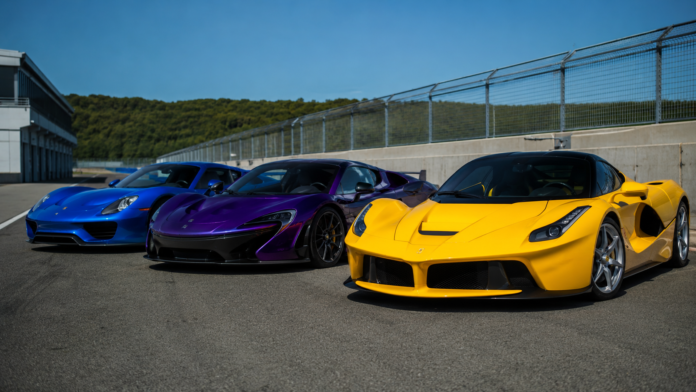
The sun is just beginning to warm the asphalt at the Pittsburgh International Race Complex in Wampum, Pennsylvania. Three cars are lined up in the paddock: a Ferrari LaFerrari, a McLaren P1, and a Porsche 918 Spyder. They are the “Holy Trinity” of hybrid hypercars. They are also the proof that hybrid powertrains make supercars faster, not slower.

A decade ago, the idea of a hybrid supercar seemed contradictory. Hybrids were associated with fuel economy, not performance. The Toyota Prius was the symbol of the segment, and it was the antithesis of everything a supercar stood for. Then, around 2013, three of the world’s greatest sports car brands released new range-topping models, all of which were hybrids. The Porsche 918 Spyder, Ferrari LaFerrari, and McLaren P1 each used electric power to augment their gas engines, with shocking results. They crushed quarter mile runs and broke lap records at racetracks worldwide.

This article explains how electric motors make a combustion supercar dramatically quicker, using the engineering principles that have become the foundation of modern hypercar performance.

The Problem: The Internal Combustion Engine’s Weakness

The internal combustion engine has a fundamental weakness. It produces peak power high in the rev range, near its redline. This means that acceleration is not linear. The engine must be revved to produce its best output. On a racetrack, this is manageable. In everyday driving, it is not.

The power band of a combustion engine is also narrow. There is a sweet spot where the engine produces maximum torque. Below that spot, the engine is sluggish. Above that spot, the engine is past its peak. The driver must manage the revs to stay in the power band.

The Solution: Torque Fill

The solution is torque fill. Electric motors produce peak torque from zero RPM. This is the opposite of a combustion engine, which produces peak torque at higher revs. By combining the two power sources, engineers can create a system that delivers linear power across the entire rev range.

The electric motor fills the gap before the gas engine produces peak power. The result is immediate throttle response from a standstill, strong mid-range power, and sustained pull to the redline. The driver does not have to wait for the engine to spool up. The power is always there.

The “Holy Trinity”: Proof of Concept

The Porsche 918 Spyder was the first road-approved vehicle to break the seven-minute mark on the Nürburgring’s Nordschleife. It did this not despite its hybrid drive, but because of it. The 918 Spyder combined a 4.6 liter V8 with two electric motors to produce 887 horsepower. The electric motors provided instant torque, filling the gaps in the V8’s power delivery.

The Ferrari LaFerrari used a HY-KERS system derived from Formula 1. The system provided instant torque and filled the gaps during gear changes. The result was a car that could accelerate from 0 to 100 km/h in 2.6 seconds and reach a top speed of 352 km/h. The electric motor did not make the car slower. It made it faster.

The McLaren P1 used a 3.8 liter twin-turbo V8 combined with an electric motor to produce 916 horsepower. The electric motor provided torque fill, plugging the gaps in the V8’s power delivery. The result was a car that was fast, responsive, and engaging.

The Evolution: Beyond Torque Fill

The hybrid systems of today have evolved beyond simple torque fill. The McLaren W1, for example, can drive in two gears at once. The electric motor is positioned after the transmission’s clutches, allowing the engine and electric motor to operate in different forward gear ratios at the same time. The result is constant power delivery, not just torque fill.

The Ferrari F80 uses electrically assisted turbochargers. An electric motor between the turbine and compressor can spin the blades almost instantly, negating turbo lag. The F80 also uses three electric motors, one at each front wheel and one at the rear, effectively making it all-wheel drive. The system provides instant torque, torque vectoring, and regenerative braking.

The Lamborghini Revuelto uses three electric motors to complement its V12 engine. The system provides instant torque and allows for all-wheel drive.

The Audi Nuvolari uses a 4.0 liter V8 with three axial flux electric motors to produce 1,001 horsepower. The system is inspired by Formula 1, with active aerodynamics and a new generation of all-wheel drive. The electric motors provide instant torque and variable torque distribution.

The Pittsburgh Morning: A Track Session

The LaFerrari, P1, and 918 Spyder are on track now. They are not racing. They are demonstrating. The electric motors fill the gaps in the combustion engines’ power delivery. The cars accelerate smoothly, predictably, and quickly.

A group of enthusiasts is watching from the paddock. They are discussing the technology. They are impressed.

“Look at how smooth it is,” one says. “No lag. No delay. Just power.”

“That is the hybrid system,” another replies. “Instant torque. Always there.”

The Benefits: Beyond Speed

The benefits of hybrid supercar powertrains extend beyond raw speed.

All-Wheel Drive Capability

The electric motors can drive the front axle, providing all-wheel drive without a heavy mechanical link. The Ferrari F80 uses two front motors for torque vectoring, while the Lamborghini Revuelto uses electric motors to provide all-wheel drive capability.

Torque Vectoring

Electric motors at each wheel can provide independent torque control, allowing for precise handling and cornering. The Ferrari F80 and Lamborghini Revuelto both use this technology.

Regenerative Braking

The electric motors can recover energy during braking, improving efficiency and reducing brake wear. The Porsche 918 Spyder’s electric motors could decelerate the car with significant braking force.

Electric-Only Operation

Some hybrid supercars can operate in pure electric mode for short distances. The Porsche 918 Spyder could travel up to 30 kilometers on electric power alone.

Quiet Operation

The electric motors allow the car to operate quietly in urban environments. This is a benefit for early morning starts and late night arrivals.

The Verdict

Hybrid supercars are faster than their internal combustion-only predecessors. The electric motors fill the gaps in the combustion engine’s power delivery, providing instant torque and linear acceleration. The result is a car that is more responsive, more predictable, and quicker.

The technology has evolved. Torque fill has given way to constant power delivery. Electric motors have given way to sophisticated hybrid systems that manage power distribution across multiple axles and multiple gears.

The LaFerrari, P1, and 918 Spyder proved that hybrids could be fast. The Ferrari F80, McLaren W1, and Audi Nuvolari are proving that hybrids can be even faster.

Key Takeaways

  • Electric motors produce peak torque from zero RPM, filling the gap before the gas engine produces peak power.
  • The Porsche 918 Spyder was the first road-approved vehicle to break the seven-minute mark on the Nürburgring.
  • Modern hybrid systems can drive in two gears at once, providing constant power delivery.
  • Electrically assisted turbochargers negate turbo lag, improving throttle response.
  • Electric motors provide all-wheel drive capability and torque vectoring without heavy mechanical links.

Conclusion

The sun is higher now. The track session is over. The supercars are parked in the paddock, their batteries charging, their engines cooling.

The enthusiasts are still talking. They are convinced.

Hybrid supercars are faster. The data is clear. The experience is undeniable.

The LaFerrari, P1, and 918 Spyder proved that hybrids could be fast. The Ferrari F80, McLaren W1, and Audi Nuvolari are proving that hybrids can be even faster.

The electric motor is not a compromise. It is an enhancement. It is the future of performance. And the future is faster.

The Science of All-Wheel Drive in Supercars: How It Really Works – A Morning at the Pittsburgh International Race Complex

0

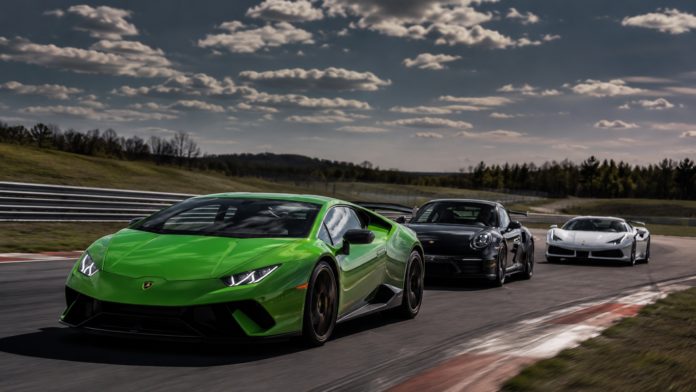
The morning mist is still hanging over the hills of western Pennsylvania as a line of supercars rolls into the paddock at the Pittsburgh International Race Complex in Wampum. A Lamborghini Huracán Performante, its V10 crackling. A Porsche 911 Turbo S, squat and purposeful. A Ferrari SF90 Stradale, its hybrid system silent for now. They are all different. They all have one thing in common: sophisticated all-wheel-drive systems that bear almost no resemblance to what you would find in a family SUV.

AWD in supercars is not about getting through a snowstorm. It is about putting 1,000 horsepower to the pavement, about rotating the car through a corner with surgical precision, and about making the driver feel like a hero. This article explains how these systems work, from torque vectoring to rear-biased platforms to electronically controlled differentials.

The Location: Pittsburgh International Race Complex, Wampum, Pennsylvania

The Pittsburgh International Race Complex is a 2.8 mile road course that hosts track days, club races, and high performance driving events. The track has 19 turns, elevation changes, and long straights that test both car and driver. It is the perfect place to understand the difference between a commuter AWD system and a supercar system.

The Supercar AWD Difference

The AWD system in a family SUV is designed for traction. It sends power to the wheels with grip when you lose traction on a slippery surface. It is reactive, slow, and predictable.

The AWD system in a supercar is designed for performance. It is proactive, fast, and capable of distributing torque with millisecond precision. It can send power to the outside rear wheel in a corner to rotate the car. It can send power to the front axle only when needed. It can create torque vectoring that makes the car feel like it is on rails.

The Anatomy of a Supercar AWD System

The Engine and Transmission

Most supercar AWD systems start with a longitudinal engine mounted behind the driver. The engine sends power to a transmission, which is typically a dual-clutch unit. The transmission sends power to the rear wheels directly, and to the front wheels through a transfer case or a separate electric motor.

The Center Differential

The center differential distributes torque between the front and rear axles. In a supercar, this is not a simple fixed split. The system can vary the torque distribution from 0 percent front to 50 percent front, depending on conditions and driver inputs.

The Rear Differential

The rear differential distributes torque between the rear wheels. In a supercar, this is often an electronically controlled limited-slip differential. It can send torque to the outside rear wheel during cornering, reducing understeer and improving traction.

The Torque Vectoring System

Torque vectoring is the most important feature of a supercar AWD system. It allows the car to actively distribute torque between the rear wheels, and sometimes between the front wheels as well. The result is a car that can be rotated into a corner, held on a precise line, and powered out with maximum traction.

How Torque Vectoring Works

Torque vectoring works by braking the inside rear wheel during a corner. This creates a yaw moment that rotates the car into the corner. The system then sends more torque to the outside rear wheel, which pushes the car through the corner.

The effect is subtle but significant. The car feels smaller, more agile, and more responsive. The driver can carry more speed through corners and exit with more traction.

Rear-Biased Platforms

Most supercar AWD systems are rear-biased. This means that the car is primarily rear-wheel drive, and the front axle is engaged only when needed. The rear bias gives the car the playful character of a rear-wheel drive car, with the added traction of all-wheel drive.

The rear bias also reduces weight. The front axle components are lighter because they are not required to handle full engine power.

Electrically Driven Front Axles

The latest generation of supercar AWD systems uses electric motors to drive the front axle. The Ferrari SF90 Stradale is a prime example. It uses a twin-turbo V8 driving the rear wheels, and two electric motors driving the front wheels. There is no physical connection between the two power sources.

This configuration has several advantages. It allows for torque vectoring at the front axle. It allows for regenerative braking at the front axle. It allows the car to operate in pure electric mode for short distances. And it eliminates the need for a heavy transfer case and driveshaft.

The SF90 Stradale Example

The SF90 Stradale is a rolling laboratory of AWD technology. Its electrified AWD system combines a 4.0 liter twin-turbo V8 with two front-axle electric motors. The system produces a combined 986 horsepower.

The SF90 also features advanced software that manages the interaction between the internal combustion and electric power sources. The system includes multiple drive modes that adjust the balance between performance and efficiency.

The Porsche 911 Turbo S Example

The Porsche 911 Turbo S takes a different approach. It uses a mechanical AWD system with a center differential and electronically controlled rear differential. The system is rear-biased, sending power to the front wheels only when needed.

The Turbo S also features torque vectoring, which distributes torque between the rear wheels to improve cornering performance. The result is a car that is stable, predictable, and exceptionally fast.

The Lamborghini Huracán Performante Example

The Huracán Performante uses a mechanical AWD system with a center differential and rear differential. The system is rear-biased, with up to 100 percent of torque going to the rear wheels in normal driving.

The Performante also features active aerodynamics and torque vectoring, which work together to maximize cornering grip and stability. The result is a car that is both agile and composed.

The McLaren W1 Exception

Not every supercar uses AWD. The McLaren W1 is rear-wheel drive. McLaren engineers argue that AWD adds weight and complexity, and that a well-sorted rear-wheel drive car with sufficient downforce can achieve similar performance.

The W1 achieves this through a combination of downforce, traction management, and weight savings. The car can generate significant downforce, which presses the tires into the pavement and provides mechanical grip.

The Pittsburgh Morning: A Track Session

The Lamborghini Huracán Performante is on track now. Its AWD system is working hard, sending power to the outside rear wheel in the corners, keeping the car stable and fast.

The Porsche 911 Turbo S is next. Its AWD system is more subtle, but equally effective. The car feels planted, secure, and fast.

The Ferrari SF90 Stradale is the last to go. The electric front motors add a burst of power on corner exit. The car accelerates with authority.

The Verdict

Supercar AWD systems are nothing like what is in your SUV. They are designed for performance, not for snow. They use torque vectoring, rear-biased platforms, and electronically controlled differentials to deliver exceptional grip and agility.

The technology is evolving rapidly. Electric front axles are becoming common. Electromechanical systems are replacing hydraulic clutch packs. Advanced software is managing power distribution with unprecedented precision.

The result is a generation of supercars that are faster, more agile, and more capable than ever before.

Key Takeaways

  • Supercar AWD systems are proactive and performance-oriented, unlike reactive systems in SUVs.
  • Torque vectoring uses braking and torque distribution to rotate the car through corners.
  • Rear-biased platforms give cars the playful character of rear-wheel drive with the added traction of AWD.
  • Electrically driven front axles allow for torque vectoring, regenerative braking, and pure electric operation.
  • Advanced software manages power distribution in milliseconds, adapting to conditions and driver inputs.

Conclusion

The sun is higher now. The track session is over. The supercars are parked in the paddock, their engines ticking as they cool.

The drivers are talking about the technology. They are discussing torque vectoring, rear-biased platforms, and electronically controlled differentials. They are enthusiasts, and they are fascinated by the science.

The AWD systems in their cars are the result of decades of engineering. They are complex, sophisticated, and effective. They are the reason these cars can put 1,000 horsepower to the pavement and feel composed.

That is the science of all-wheel drive in supercars. It is not about snow. It is about speed.

How Active Aerodynamics Work: The Science Behind Moving Wings – A Morning at the Pittsburgh International Race Complex

0

The sun is still low over the hills of western Pennsylvania, but the track at Pittsburgh International Race Complex in Wampum is already alive with the sound of high-revving engines. A McLaren 720S is flying down the main straight. As it approaches the braking zone for Turn 7, its active rear wing tilts forward in less than half a second, transforming from a downforce generator into an air brake. The car decelerates with a stability that seems to defy physics.

What you are witnessing is active aerodynamics in action. Unlike fixed wings and splitters that provide a constant level of downforce, active systems adapt in real time to the car’s speed, steering angle, braking force, and cornering load. They optimize downforce for cornering, reduce drag for straight-line speed, and even assist in braking. This is the science behind moving wings, and it has become one of the defining technologies of the modern supercar.

The Problem: Why Fixed Aero Isn’t Enough

A fixed rear wing is a compromise. It is designed to provide optimal downforce at a specific speed, typically a track average. At lower speeds, it creates unnecessary drag, reducing acceleration. At higher speeds, it may not provide enough downforce for stability. And under heavy braking, a fixed wing does nothing to slow the car.

Active aerodynamics solves these problems by varying the car’s aerodynamic aids on the fly. By adjusting the angle of attack, opening or closing ducts, or deploying movable elements, the car can strike a balance between efficiency and roadholding ability. The result is a car that can be slippery on the straights and planted in the corners.

The Sensory Network: How the Car Knows What to Do

Active aerodynamic systems do not operate in isolation. They are integrated with the car’s electronic control systems, including the ECU, ABS, and stability control. The system takes information from a variety of sensors.

Speed Sensors

The car’s speed is a primary input. At low speeds, downforce is less important, and drag reduction is prioritized. At high speeds, stability becomes critical, and the system adds downforce.

Steering Angle Sensors

When the driver turns the wheel, the system anticipates the cornering load and adjusts the aerodynamics accordingly. The front splitter may be adjusted to balance the downforce distribution.

Brake Pressure Sensors

Under heavy braking, the system deploys the rear wing as an air brake. The wing tilts to increase drag, slowing the car and improving stability.

Yaw Rate and Lateral Acceleration Sensors

These sensors detect the car’s rotational motion and cornering forces. They allow the system to adjust downforce distribution to maintain balance.

Suspension Load Sensors

Some systems monitor the load on each wheel. This information allows the system to optimize downforce for the specific cornering situation.

The Actuators: How the Movement Happens

The sensors provide the data. The actuators make the movement happen.

Hydraulic Actuators

Many systems use hydraulic actuators to move the wings and splitters. Hydraulics provide precise control and high force. They are used in the Bugatti Chiron’s active rear wing and the McLaren 720S’s air brake.

Electric Motors

Electric actuators are becoming more common. They are lighter and more responsive than hydraulic systems. The Porsche 911 GT3 uses electric motors to adjust its rear wing.

Pneumatic Systems

Some systems use compressed air to move aerodynamic elements. Pneumatics are lightweight but less precise than hydraulics.

The Aerodynamic Elements: What Moves

Active Rear Wings

The rear wing is the most common active aerodynamic element. It can change its angle of attack to balance downforce and drag. Under heavy braking, it can deploy as an air brake.

Active Front Splitters

The front splitter can be adjusted to balance downforce distribution. In some cars, the splitter is fixed, but the underbody diffuser is active.

Active Air Intakes

Some systems use active air intakes to manage cooling and aerodynamics. The intakes can be opened or closed to reduce drag when cooling is not needed.

Active Underbody Panels

The underbody is a critical aerodynamic surface. Active panels can be adjusted to manage airflow under the car, reducing lift and improving stability.

The Software: The Brain Behind the System

The sensors and actuators are the hardware. The software is the brain. The control algorithms determine when and how the aerodynamic elements should move.

The software is developed through extensive testing, both on the track and in computational fluid dynamics simulations. The goal is to optimize the car’s behavior for all driving conditions.

The driver can also influence the system. In some cars, the driver can select different aerodynamic modes, such as “Sport,” “Track,” or “High Downforce.”

The Benefits: Why Active Aero Matters

Active aerodynamics provides several benefits over fixed systems.

Improved Performance

The car can be optimized for all driving conditions. Downforce is available when needed. Drag is reduced when not.

Better Stability

The car remains stable at high speeds. The downforce is balanced between the front and rear axles.

Shorter Braking Distances

The air brake function reduces braking distances. The car stops more quickly and more predictably.

Increased Efficiency

Drag is reduced on the straights, improving acceleration and fuel economy.

The Pittsburgh Morning: A Track Session

The McLaren 720S has completed its lap. It is parked in the paddock. The driver is stepping out.

The active rear wing is still in its neutral position. It will deploy again on the next lap.

A group of enthusiasts is gathered around the car. They are studying the wing mechanism. They are asking questions.

“How does it know when to move?” one asks.

The driver explains. “It reads the sensors. It adjusts automatically. I do not have to think about it.”

The Limits of Active Aero

Active aerodynamics is not perfect. The system adds weight. The mechanisms can fail. The software can be buggy.

The complexity also adds cost. Active systems are expensive to develop and expensive to repair.

But the benefits outweigh the drawbacks for most supercar buyers. The performance gains are significant.

The Future of Active Aero

Active aerodynamics is becoming more common. It is no longer limited to hypercars. The Porsche 911 Turbo, the Ferrari 296 GTB, and the Chevrolet Corvette Z06 all feature active aero elements.

The technology is also evolving. New materials, lighter actuators, and more sophisticated software are being developed. The active systems of the future will be more responsive, more efficient, and more reliable.

The Verdict

Active aerodynamics is a critical technology for modern supercars. It allows the car to be optimized for all driving conditions, improving performance, stability, and efficiency.

The system is complex, combining sensors, actuators, and software. The result is a car that adapts to the road in real time.

The McLaren 720S has left the paddock. It is back on the track. The wing tilts forward in the braking zone. The car slows predictably.

That is the science of moving wings. It is the future of performance.

Key Takeaways

  • Active aerodynamics adjusts the car’s aerodynamic aids in real time based on speed, steering angle, braking force, and cornering load.
  • The system uses speed sensors, steering angle sensors, brake pressure sensors, yaw rate sensors, and suspension load sensors.
  • Hydraulic actuators, electric motors, and pneumatic systems move the aerodynamic elements.
  • Active rear wings, front splitters, air intakes, and underbody panels are all common active elements.
  • The software determines when and how the elements should move, based on extensive testing.
  • The benefits include improved performance, better stability, shorter braking distances, and increased efficiency.

Conclusion

The sun is higher now. The track is busier. The McLaren 720S is parked, its wing retracted.

The driver is satisfied. The car performed as expected. The active aero system worked perfectly.

Active aerodynamics is not a gimmick. It is a genuine performance enhancer. It allows the car to be optimized for every moment, every corner, every speed.

The science is complex. The engineering is demanding. The result is a car that is faster, more stable, and more efficient.

That is the power of moving wings. That is the future of supercar performance.