Home Blog Page 14

7 Supercars Under $100K That Will Embarrass Six-Figure Cars: A Morning at the Tail of the Dragon

0

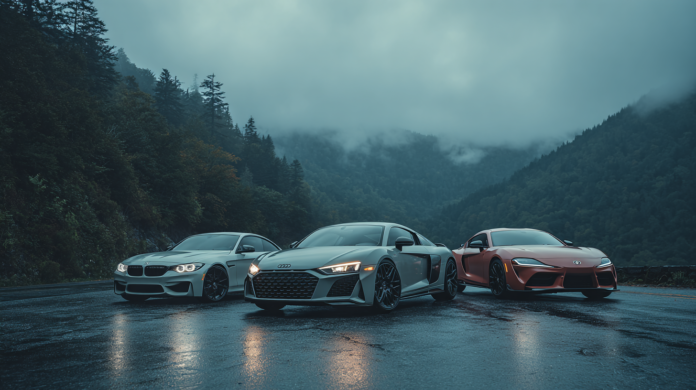
The Tail of the Dragon is a stretch of US 129 that runs 11 miles from Tennessee into North Carolina. It has 318 curves, no driveways, no intersections, and no mercy. On a foggy Wednesday morning, a handful of cars is gathered at the overlook. They are not Ferraris or Lamborghinis. They are something more interesting: fast, capable, and surprisingly affordable.

The myth of the supercar is that it costs a fortune. The truth is that you do not need $300,000 to go seriously fast. There are new and used cars available for under $100,000 that will embarrass six-figure cars on a track, on a back road, or at a stoplight.

This article lists seven of the best. The criteria: performance, value, and the ability to surprise a driver in a much more expensive car.

The Criteria: What Makes a Supercar Under $100K?

A car on this list must:

  • Be available for under $100,000 (new or used)
  • Deliver acceleration, handling, or track performance that punches above its price
  • Have a character that feels special, not just fast

The Location: Tail of the Dragon

The Tail of the Dragon is the perfect place to test these cars. There are no straightaways long enough for top speed runs. The curves demand handling, braking, and driver skill. A car that is fast here is fast anywhere.

The List

1. Chevrolet Corvette C6 Z06 (Used, $45,000 to $60,000)

The C6 Z06 is a bargain. It has a 7.0 liter naturally aspirated V8 producing 505 horsepower. It weighs just over 3,100 pounds. It can accelerate from 0 to 60 miles per hour in 3.7 seconds. It laps a track faster than many cars costing three times as much.

Why it embarrasses more expensive cars: The Z06’s power to weight ratio is exceptional. The naturally aspirated V8 sounds fantastic. The car is raw, engaging, and fast.

2. Porsche 911 Carrera S (Used, $70,000 to $90,000)

A used 991 generation Carrera S produces 400 horsepower and can accelerate to 60 miles per hour in 4.1 seconds. The handling is precise, the steering is communicative, and the car is usable every day.

Why it embarrasses more expensive cars: The 911 Carrera S is a benchmark for a reason. It does everything well. A used one costs half the price of a new Turbo S but delivers 80 percent of the performance.

3. Tesla Model 3 Performance (New, $55,000)

The Model 3 Performance has dual motors, all wheel drive, and 455 horsepower. It accelerates from 0 to 60 miles per hour in 3.1 seconds. That is quicker than a Ferrari 458 Italia.

Why it embarrasses more expensive cars: The acceleration is brutal and instant. The electric powertrain provides torque that internal combustion cars cannot match. On a wet road, the all wheel drive makes it feel invincible.

4. Toyota GR Supra (New, $55,000 to $65,000)

The GR Supra has a 3.0 liter turbocharged inline six producing 382 horsepower. It accelerates from 0 to 60 miles per hour in 3.9 seconds. The chassis is stiff, the handling is balanced, and the car is a blast to drive.

Why it embarrasses more expensive cars: The Supra is a true sports car at a reasonable price. It shares its platform with the BMW Z4, but it is tuned to be sharper and more engaging.

5. Lotus Evora (Used, $50,000 to $70,000)

The Evora is a mid engine, hand built British sports car. It has a supercharged 3.5 liter V6 producing 400 horsepower. The handling is sublime. The steering is hydraulic, not electric, providing feedback that modern cars cannot match.

Why it embarrasses more expensive cars: The Evora is rare, exotic, and genuinely engaging. It feels special in a way that mass produced sports cars do not.

6. Audi R8 V8 (Used, $70,000 to $90,000)

The first generation R8 with the 4.2 liter V8 produces 420 horsepower and revs to 8,250 rpm. The sound is fantastic. The all wheel drive provides confidence. The car was designed by the same team that built the Lamborghini Gallardo.

Why it embarrasses more expensive cars: The R8 V8 is a true supercar. It has a mid engine V8, a gated manual transmission (if you can find one), and the presence of a car costing twice as much.

7. BMW M2 Competition (Used, $45,000 to $60,000)

The M2 Competition has a 3.0 liter twin turbo inline six producing 405 horsepower. It accelerates from 0 to 60 miles per hour in 4.0 seconds. The chassis is stiff, the steering is precise, and the car is playful.

Why it embarrasses more expensive cars: The M2 is one of the best driving BMWs ever made. It is smaller, lighter, and more engaging than the M3 and M4.

The Dragon Runs: Putting Them to the Test

The Tail of the Dragon is not a racetrack. It is a public road. Speeding is illegal and dangerous. But a group of owners is here to drive their cars briskly, not recklessly.

The Corvette Z06 leads. The V8 roars, the tires grip, and the car powers through the corners. The driver is focused, but not tense. The car is planted.

The Tesla Model 3 Performance follows. The acceleration out of the corners is startling. The electric motors provide instant torque, and the all wheel drive provides grip. The car is heavy, but the low center of gravity keeps it composed.

The Lotus Evora glides through the corners. The hydraulic steering provides feedback that the other cars cannot match. The driver feels the road, the tires, the limits.

The Audi R8 V8 brings up the rear. The V8 wails, the gated manual clicks into each gear, and the all wheel drive provides confidence. The car is a time capsule, a reminder of when supercars were simpler.

The Cost Comparison: How Much Performance Per Dollar

CarPrice (Used/New)Horsepower0 to 60 mphCost per HP
Ferrari 488 GTB (for reference)$250,000+661 hp3.0 seconds$378 per hp
Corvette C6 Z06$50,000505 hp3.7 seconds$99 per hp
Tesla Model 3 Performance$55,000455 hp3.1 seconds$121 per hp
BMW M2 Competition$50,000405 hp4.0 seconds$123 per hp

The table shows the value proposition. The used Corvette delivers more horsepower per dollar than the Ferrari. The Tesla is quicker to 60 miles per hour for a fraction of the price.

Why These Cars Are Overlooked

The cars on this list are overlooked for several reasons:

  • The Corvette Z06: The C6 generation is seen as old. The interior is dated. The car is not as refined as newer models.
  • The Tesla Model 3 Performance: It does not have the drama of a combustion engine. The interior is minimalist.
  • The Lotus Evora: The brand is obscure. The build quality is inconsistent. The car is hard to find.
  • The Audi R8 V8: The V10 version gets all the attention. The V8 is seen as the lesser model.

These are the very reasons they are bargains.

The Tail of the Dragon Evening

The sun sets over the Smoky Mountains. The cars are parked at the overlook. The owners talk about their purchases.

“I could have bought a new 911,” says the Corvette owner. “But why? This car is 90 percent as fast for 30 percent of the price.”

The Tesla owner nods. “People laugh at the electric car until they see the taillights.”

The Lotus owner is quiet. He knows his car is special. He does not need to justify it.

The Verdict: You Do Not Need $300K

The myth of the supercar is that it costs a fortune. The truth is that performance has never been more affordable. A used Corvette Z06, a Tesla Model 3 Performance, a Lotus Evora these cars are fast, engaging, and attainable.

You do not need $300,000 to embarrass a Ferrari. You just need to know where to look.

The Final Drive

The cars leave the Tail of the Dragon, heading back to the real world. The Corvette rumbles. The Tesla hums. The Lotus wails. The R8 sings.

They are not Ferraris. They are not Lamborghinis. But they are fast. And they are proof that you do not need to spend a fortune to go seriously fast.

The List Summary

RankCarPrice0 to 60 mphWhy It Embarrasses More Expensive Cars
1Chevrolet Corvette C6 Z06$45,000 to $60,0003.7 secondsPower to weight ratio, raw character
2Porsche 911 Carrera S (991)$70,000 to $90,0004.1 secondsBenchmark handling, daily usability
3Tesla Model 3 Performance$55,0003.1 secondsInstant torque, all wheel drive
4Toyota GR Supra$55,000 to $65,0003.9 secondsBalanced chassis, strong engine
5Lotus Evora$50,000 to $70,0004.1 secondsHydraulic steering, exotic feel
6Audi R8 V8$70,000 to $90,0004.3 secondsMid engine V8, gated manual
7BMW M2 Competition$45,000 to $60,0004.0 secondsPlayful handling, strong engine

Conclusion

The cars on this list are not the fastest or the most expensive. They are the best values. They deliver performance that rivals cars costing twice as much.

The Tail of the Dragon is quiet now. The cars are gone. But the lesson remains. Speed is not measured in dollars. It is measured in smiles per hour. And these cars deliver plenty.
The 10 Best Naturally Aspirated Engines Ever Put in a Road Car: A Day at Lime Rock Park

0

Lime Rock Park in Lakeville, Connecticut, is a driver’s circuit. It is short, technical, and demands precision. There are no grandstands to impress. There is just the track, the trees, and the sound of engines echoing through the Berkshire foothills.

On a crisp autumn morning, a collection of cars has gathered in the paddock. They are not the fastest cars ever built. They are not the most expensive. But they share a common trait: naturally aspirated engines. No turbochargers. No superchargers. No hybrid assistance. Just air, fuel, and the mechanical symphony of a high revving combustion engine.

The editors of VeloxTrend have assembled these cars to rank the ten best naturally aspirated engines ever put in a road car. The ranking is based on sound, feel, and engineering achievement. This is a tribute to an engine type that is slowly disappearing.

The Criteria: What Makes a Great Naturally Aspirated Engine?

A great naturally aspirated engine has:

  • Sound: A distinctive, memorable exhaust note that stirs emotion
  • Feel: Immediate throttle response, linear power delivery, and a willingness to rev
  • Engineering: Technical innovation, high specific output, and durability

The engines on this list excel in all three areas.

The Location: Lime Rock Park

Lime Rock Park is the perfect place for this test. The track is only 1.5 miles long, but it has elevation changes and challenging corners. The engines will be worked hard, but not abused. The setting is serene, which makes the noise of high revving engines even more dramatic.

The Ranking

10. BMW S54 (E46 M3)

The S54 is a 3.2 liter inline six that produced 333 horsepower in the E46 M3. It revved to 8,000 rpm and had individual throttle bodies for immediate response. The sound was a metallic howl, not as sharp as a Ferrari, but deeply satisfying.

Why it ranks: The S54 is one of the best engines BMW ever made. It is a high water mark for the naturally aspirated inline six.

9. Honda F20C (S2000)

The F20C is a 2.0 liter four cylinder that produced 237 horsepower. Its specific output of 118.5 horsepower per liter was the highest of any naturally aspirated engine when it debuted. The engine revved to 9,000 rpm and sounded like a motorcycle on full boil.

Why it ranks: The F20C proved that a four cylinder could be as thrilling as a V8.

8. Porsche 4.0 Liter Flat Six (911 GT3)

The 4.0 liter flat six in the 911 GT3 produces 502 horsepower and revs to 9,000 rpm. It has individual throttle bodies and a character that is both refined and aggressive. The sound is a mechanical wail, sharp and urgent.

Why it ranks: The GT3’s engine is the last of its kind. It is a masterpiece of naturally aspirated engineering.

7. Lexus 1LR-GUE (LFA)

The LFA’s 4.8 liter V10 was developed with Yamaha. It revved to 9,000 rpm and produced 552 horsepower. The sound was a high pitched wail, clean and pure, like a Formula 1 car from the 2000s.

Why it ranks: The LFA’s engine is one of the best sounding ever made. It is a symphony.

6. Ferrari F136 (458 Italia)

The 4.5 liter V8 in the 458 Italia revved to 9,000 rpm and produced 562 horsepower. The sound was a sharp, metallic wail that built to a crescendo. It was the last naturally aspirated V8 Ferrari before the switch to turbocharging.

Why it ranks: The F136 is the best sounding modern Ferrari V8.

5. Lamborghini 5.2 Liter V10 (Huracán)

The Huracán’s V10 revs to 8,500 rpm and produces 631 horsepower. The sound is a high pitched wail, but with a deeper, more muscular character than the LFA. The engine is mounted longitudinally, and its sound fills the cabin.

Why it ranks: The Huracán’s V10 is the last of its kind. It is loud, proud, and unforgettable.

4. Porsche 917 Flat 12

The 917 is a race car, not a road car. But a few road going versions were built to satisfy homologation rules. The 4.5 liter flat 12 revved to 8,400 rpm and produced over 500 horsepower. The sound was a shriek, like nothing else on wheels.

Why it ranks: The 917’s engine is legendary. It powered one of the greatest race cars of all time.

3. Ferrari 250 GTO V12

The 250 GTO’s 3.0 liter V12 revved to 7,500 rpm and produced 296 horsepower. The sound was smooth, melodic, and deeply satisfying. It is the benchmark for naturally aspirated V12 engines.

Why it ranks: The 250 GTO’s engine is the sound of Ferrari’s golden era.

2. Alfa Romeo 2.5 Liter V8 (33 Stradale)

The 33 Stradale’s 2.0 liter V8 revved to 10,000 rpm and produced 227 horsepower. The sound was a shriek, almost painful at full throttle, but completely addictive. The engine was small, but its character was huge.

Why it ranks: The 33 Stradale’s V8 is one of the highest revving road car engines ever made.

1. Ferrari F140 (Enzo, LaFerrari, 812 Superfast)

The F140 is a 6.0 to 6.5 liter V12 that has powered the Enzo, the LaFerrari, the 812 Superfast, and the Daytona SP3. It revs to 9,000 rpm in some applications and produces up to 819 horsepower. The sound is a deep, muscular roar that builds to a screaming wail.

Why it ranks: The F140 is the greatest naturally aspirated engine ever put in a road car. It is powerful, responsive, and sonorous. It is a masterpiece.

The Lime Rock Laps: A Sonic Journey

The cars take to the track in order. The BMW S54 leads, its inline six howling through the uphill esses. The sound is familiar, comforting.

The Honda F20C follows. The 9,000 rpm shriek is surprising from such a small engine. It is a reminder that displacement is not everything.

The Porsche 4.0 liter flat six is next. The sound is sharp and mechanical, like a precision instrument.

The Lexus LFA wails. The V10 note is clean and pure, cutting through the air.

The Ferrari 458 screams. The V8 wail is emotional, urgent.

The Lamborghini Huracán roars. The V10 is deeper, more muscular, more aggressive.

The Ferrari 812 Superfast, powered by the F140 V12, takes the final lap. The sound is overwhelming. It builds from a deep rumble to a screaming crescendo. The car disappears into the trees, but the sound lingers.

What These Engines Teach Us

The engines on this list teach us that naturally aspirated engines are about more than power. They are about response, about sound, about the connection between the driver and the machine.

Turbochargers add power. Superchargers add torque. But nothing adds soul like a high revving, naturally aspirated engine.

The Future of Naturally Aspirated Engines

The engines on this list are dying breeds. Emissions regulations, fuel economy standards, and the shift to electrification are killing the high revving naturally aspirated engine.

The Ferrari F140 is still in production, but its days are numbered. The Porsche 4.0 liter flat six will not last forever. The Lamborghini V10 is being phased out.

The sounds these engines make may never be heard again in new cars.

The Lime Rock Sunset

The sun sets over Lime Rock Park. The cars are parked, their engines off. The silence is heavy.

A few enthusiasts linger, talking about the sounds they heard. The LFA’s wail. The 458’s scream. The F140’s roar.

They will remember this day. They will remember these engines.

The Ranking Summary

RankEngineCarCharacter
1Ferrari F140Enzo, LaFerrari, 812Powerful, responsive, sonorous
2Alfa Romeo 2.5L V833 StradaleHigh revving, shrieking
3Ferrari 250 GTO V12250 GTOSmooth, melodic, perfect
4Porsche 917 Flat 12917Legendary, shrieking
5Lamborghini 5.2L V10HuracánLoud, proud, unforgettable
6Ferrari F136 V8458 ItaliaElegant, aggressive, wailing
7Lexus 1LR-GUE V10LFAClean, pure, symphonic
8Porsche 4.0L Flat Six911 GT3Refined, aggressive, mechanical
9Honda F20CS2000High revving, motorcycle like
10BMW S54E46 M3Howling, satisfying, classic

Conclusion

The best naturally aspirated engines are not the most powerful. They are the ones that make you feel something. They are the ones that respond instantly to your foot, that sing as the revs climb, that connect you to the machine.

The cars leave Lime Rock Park, driving back toward the real world. The sounds fade into the night. But they will return. The engines will rev again. The echoes will fill the valley.

That is the power of a great naturally aspirated engine. It does not just make power. It makes memories.

10 Supercars That Aged Terribly (And Why): A Morning at the Lane Motor Museum in Nashville

0

The Lane Motor Museum in Nashville, Tennessee, is a place where oddities go to be preserved. The collection includes microcars, prototypes, and forgotten experiments. It is not a museum of the greatest hits. It is a museum of the interesting failures.

On a quiet Tuesday morning, a row of supercars sits in the back corner. They are not the stars of the collection. They are the cautionary tales. These are cars that seemed brilliant at launch but did not hold up. Their styling has aged poorly. Their reliability has been exposed. Their reputations have faded.

This article examines ten supercars that aged terribly and why. The ranking is based on three criteria: style, reliability, and reputation.

The Criteria: What Makes a Car Age Poorly?

A car can age poorly for several reasons:

  • Styling: The design looked futuristic at launch but now looks dated or awkward.
  • Reliability: The car developed a reputation for breaking down, being hard to fix, or requiring expensive maintenance.
  • Reputation: The car was eclipsed by competitors, associated with negative trends, or simply forgotten.

The cars on this list fail in at least one of these areas.

The Location: Lane Motor Museum

The Lane Motor Museum is not a typical car museum. It does not have a row of Ferraris or a line of Porsches. It has a Bricklin SV1, a Vector W8, and a DeLorean DMC 12. These are the cars that time forgot.

The museum is a perfect setting for this list. It is a place where bad ideas are preserved alongside good ones.

The Ranking

10. Lamborghini LM002

The LM002 was Lamborghini’s first SUV, built from 1986 to 1993. It was powered by a Countach V12 and looked like a military vehicle. At launch, it was outrageous and exciting. Today, it looks crude. The interior is spartan. The fuel consumption is absurd. The LM002 is a curiosity, not a classic.

Why it aged poorly: The LM002 was ahead of its time, but the execution was rough. Modern luxury SUVs have made it look primitive.

9. DeLorean DMC 12

The DeLorean DMC 12 is famous for Back to the Future, not for its driving dynamics. The stainless steel body is striking, but the car underneath is underwhelming. The 2.8 liter V6 produced just 130 horsepower. The build quality was poor. The company went bankrupt after two years.

Why it aged poorly: The DeLorean looks like a supercar but performs like a economy car. The gap between appearance and reality has only grown.

8. Bricklin SV1

The Bricklin SV1 was a Canadian built sports car from the 1970s. It had gullwing doors and a fiberglass body. It also had unreliable electrics, a weak engine, and a tendency to leak. The car was in production for only three years.

Why it aged poorly: The Bricklin was never good. It was a kit car with a factory warranty.

7. Vector W8

The Vector W8 was an American supercar from the 1990s. It had a wild, angular design and a twin turbo V8. It also had a reputation for breaking down. The cars were hand built, and quality control was inconsistent. The company went bankrupt.

Why it aged poorly: The Vector W8 looked like the future. But the future did not work.

6. Bugatti EB110

The Bugatti EB110 was a technological marvel when it launched in 1991. It had a carbon fiber chassis, a quad turbo V12, and all wheel drive. It was also unreliable, expensive, and unloved. The company went bankrupt within a few years.

Why it aged poorly: The EB110 was overshadowed by the McLaren F1. It has since been rediscovered by collectors, but it remains a footnote.

5. Jaguar XJ220

The Jaguar XJ220 was supposed to have a V12. It ended up with a twin turbo V6. The car was fast, but it was a disappointment. The styling, once futuristic, now looks bloated. The value has never recovered.

Why it aged poorly: The XJ220 promised more than it delivered. That promise haunts it.

4. Ferrari Testarossa

The Testarossa was a poster car in the 1980s. The wide body, the side strakes, the low nose it was iconic. Today, it looks dated. The design is a product of its time, and not a timeless one. The interior is cramped. The driving position is awkward.

Why it aged poorly: The Testarossa is unmistakably 1980s. That is not a compliment.

3. Maserati MC12

The Maserati MC12 was a homologation special based on the Ferrari Enzo. It had 630 horsepower and a top speed of 205 mph. It also had a design that was busy and overwrought. The car was produced in limited numbers, but it has not aged gracefully.

Why it aged poorly: The MC12 looks like a kit car version of the Enzo. Because it is.

2. Cizeta Moroder V16T

The Cizeta Moroder V16T was designed by a former Lamborghini engineer. It had a 6.0 liter V16 engine producing 540 horsepower. It also had pop up headlights, a wedge shape, and a dashboard full of switches. The car was impractical, unreliable, and expensive. Only a handful were built.

Why it aged poorly: The Cizeta Moroder is a time capsule of 1980s excess. It is fascinating but not beautiful.

1. Aston Martin Lagonda

The Lagonda is a four door sedan, not a supercar. But it belongs on this list. The wedge shaped design was radical in 1976. It is awkward now. The interior featured a digital instrument panel that rarely worked. The car was unreliable and expensive to maintain.

Why it aged poorly: The Lagonda is a reminder that futuristic design does not always age well. The digital dashboard is a museum piece, not a feature.

The Nashville Drive: A Test Drive Gone Wrong

A man in Nashville bought a used DeLorean DMC 12 in 2022. He had wanted one since he saw Back to the Future as a child. He paid $50,000 for a restored example.

The car broke down on the way home. The fuel injection system failed. The mechanic could not find parts. The car sat in a garage for six months before the owner sold it at a loss.

The DeLorean looks great in a museum. It does not look great on a tow truck.

What These Cars Teach Us

The cars on this list teach us that futuristic design is risky. The Testarossa, the Vector, and the Lagonda all looked forward. Now they look backward.

The cars also teach us that reliability matters. The EB110, the DeLorean, and the Bricklin were all let down by poor build quality. A car that does not run is not a car.

Finally, these cars teach us that reputation is fragile. The XJ220, the MC12, and the Cizeta were all eclipsed by competitors. Once the magic is gone, it is hard to get back.

The Nashville Evening

The sun sets over the Lane Motor Museum. The cars sit in their corners, silent and still. They are not beautiful. They are not fast. They are not reliable.

But they are interesting. They are reminders of what happens when ambition exceeds execution.

A few visitors wander through the museum. They stop at the DeLorean. They take photos. They smile.

These cars aged terribly. But they are not forgotten.

The Ranking Summary

RankCarWhy It Aged Poorly
1Aston Martin LagondaDated styling, unreliable electronics
2Cizeta Moroder V16TOverstyled, impractical, rare
3Maserati MC12Awkward design, overshadowed by Enzo
4Ferrari TestarossaDated 1980s styling
5Jaguar XJ220Unfulfilled promise, bloated design
6Bugatti EB110Unreliable, overshadowed by F1
7Vector W8Poor build quality, unreliable
8Bricklin SV1Never good, poorly built
9DeLorean DMC 12Underpowered, poor build quality
10Lamborghini LM002Crude, inefficient, outdated

Conclusion

The supercars that aged terribly are not the fastest or the most beautiful. They are the ones that promised too much and delivered too little. They are the ones that looked forward but could not keep up.

They are still interesting. They are still worth preserving. They are just not worth driving.

The Lane Motor Museum closes for the night. The cars are left in the dark. They will still be there tomorrow, waiting for visitors who want to see the mistakes along with the masterpieces. That is their place. That is their legacy.

The 10 Best Sounding Supercars of All Time, Ranked: An Evening at Red Rock Canyon

0

The sun is setting over Red Rock Canyon, just west of Las Vegas, Nevada. The sky is orange and pink. The cliffs are red. And the sound of a high revving engine echoes off the rocks.

The editors of VeloxTrend have gathered here with a singular mission: to rank the 10 best sounding supercars of all time. The list is subjective, of course. Sound is personal. But some engines produce notes that are universally admired, noises that stir the soul regardless of taste.

This is not a list of the fastest cars or the most expensive cars. It is a list of the cars that sound the best. The cars that make you roll down the window just to hear them. The cars that announce their presence from a mile away.

The Criteria: What Makes a Great Exhaust Note?

Before the ranking, the criteria. A great exhaust note has:

  • Character: A sound that is distinctive, recognizable, and memorable
  • Volume: Loud enough to be heard, but not so loud that it is obnoxious
  • Pitch: A pleasing frequency curve, from idle to redline
  • Emotion: A sound that makes the driver smile and the passenger gasp

The cars on this list have all of these qualities.

The Location: Red Rock Canyon

Red Rock Canyon is a 13 mile scenic loop through the Mojave Desert. The road is smooth, the curves are sweeping, and the acoustics are excellent. The canyon walls reflect sound, amplifying the exhaust notes of passing cars.

On this evening, the cars are not racing. They are simply driving. And listening.

The Ranking

10. Lexus LFA

The Lexus LFA is the newest car on this list, but it earned its place immediately. The 4.8 liter V10 was developed with Yamaha, and it shows. The engine revs to 9,000 rpm and produces a high pitched wail that is both mechanical and musical. The sound is clean, pure, and unforgettable.

Why it ranks: The LFA sounds like nothing else. It is a modern masterpiece.

9. Lamborghini Miura

The Miura is the car that invented the supercar. Its 3.9 liter V12 is mounted transversely behind the seats. The sound is raw and urgent, with a metallic edge that cuts through the air. The Miura does not purr. It snarls.

Why it ranks: The Miura’s sound is a piece of history.

8. Porsche Carrera GT

The Carrera GT’s 5.7 liter V10 is a freak of nature. It revs to 8,400 rpm and produces a sound that is part race car, part symphony. The exhaust note is sharp and immediate, with a wail that builds to a crescendo. The Carrera GT is not a quiet car. It is not meant to be.

Why it ranks: The Carrera GT’s V10 is one of the best sounding engines ever made.

7. Ferrari F50

The F50 is often criticized for being too raw, too loud, and too extreme. That is exactly why it sounds so good. The 4.7 liter V12 is derived from the engine that powered Ferrari’s Formula 1 cars. It revs to 8,500 rpm and produces a scream that is both terrifying and exhilarating.

Why it ranks: The F50 sounds like a race car because it is a race car.

6. Pagani Huayra

The Huayra’s 6.0 liter V12 is built by Mercedes AMG. The sound is deep, muscular, and dramatic. The twin turbochargers add a layer of complexity, a mechanical whine that sits beneath the exhaust note. The Huayra is not as loud as some cars on this list, but it is more sophisticated.

Why it ranks: The Huayra’s sound is refined but still thrilling.

5. McLaren F1

The McLaren F1’s 6.1 liter V12 was developed by BMW. The engine revs to 7,500 rpm and produces a sound that is smooth, powerful, and addictive. The exhaust note is not as sharp as a Ferrari’s, but it is deeper and more resonant. The F1 sounds like a grand tourer that can also win Le Mans.

Why it ranks: The F1’s engine note is as legendary as the car itself.

4. Alfa Romeo 33 Stradale

The original 33 Stradale is one of the rarest and most beautiful cars ever made. Its 2.0 liter V8 revs to 10,000 rpm, producing a shriek that is almost painful and completely addictive. The engine is small, but the sound is huge.

Why it ranks: The 33 Stradale sounds like a motorcycle on steroids.

3. Ferrari 458 Italia

The 458 Italia’s 4.5 liter V8 is the last naturally aspirated V8 Ferrari before the switch to turbocharging. The engine revs to 9,000 rpm and produces a wail that is both elegant and aggressive. The 458 sounds like a modern interpretation of the classic Ferrari V8.

Why it ranks: The 458 is the best sounding modern Ferrari.

2. Lamborghini Aventador SVJ

The Aventador’s 6.5 liter V12 is a monster. The SVJ version adds a more aggressive exhaust system, making the car even louder. The sound is deep, guttural, and violent. The Aventador does not sing. It roars.

Why it ranks: The Aventador SVJ is the loudest car on this list.

1. Ferrari 250 GTO

The 250 GTO is widely considered the greatest Ferrari ever made. Its 3.0 liter V12 revs to 7,500 rpm and produces a sound that is pure music. The exhaust note is smooth, melodic, and deeply satisfying. The 250 GTO sounds like nothing else on the road.

Why it ranks: The 250 GTO is the benchmark. Every other car on this list is trying to sound like this.

The Honorable Mentions

Cars that did not make the top 10 but deserve recognition:

  • Aston Martin V12 Vantage: A deep, muscular growl
  • Dodge Viper ACR: A thunderous V10 rumble
  • Porsche 911 GT3 RS: A 9,000 rpm flat six wail
  • Ferrari F12berlinetta: A front engined V12 symphony

The Red Rock Canyon Drive: A Sonic Experience

The cars take turns on the scenic loop. The Lexus LFA goes first, its V10 echoing off the canyon walls. The sound is clean and precise, like a surgical instrument.

The Ferrari 458 follows. Its V8 wail is more emotional, more urgent. The difference is subtle but clear.

The Lamborghini Aventador SVJ comes last. It is the loudest, the most aggressive, the most excessive. The sound bounces off the rocks and rolls across the desert.

A crowd has gathered at the overlook. They cannot see the cars. But they can hear them.

What the Rankings Say About Car Culture

The top 10 list reveals something about what car enthusiasts value. Nine of the ten cars have naturally aspirated engines. Only the Pagani Huayra uses turbochargers. Forced induction muffles sound. It is efficient, but it is not musical.

The list also skews toward older cars. The newest car is the Lexus LFA, which ended production in 2012. The oldest is the Ferrari 250 GTO, from 1962.

Enthusiasts value sound. And the best sounds come from old, naturally aspirated engines.

The Future of Exhaust Notes

Electric cars do not have exhaust notes. They produce a whine, but not a roar. The future of automotive sound is uncertain.

Some manufacturers are synthesizing engine notes, piping artificial sounds through speakers. This is not the same. It is a simulation.

The cars on this list are dying breeds. The naturally aspirated V12, the high revving V8, the screaming V10 these engines are being phased out.

The sounds they make may never be heard again in new cars.

The Red Rock Sunset

The sun is gone. The sky is dark. The cars are parked, their engines off. The silence is heavy.

A few enthusiasts linger, talking about the sounds they heard. The LFA’s wail. The Aventador’s roar. The 250 GTO’s song.

They will remember this evening. They will remember these sounds.

The Ranking Summary

RankCarEngineCharacter
1Ferrari 250 GTO3.0L V12Melodic, smooth, perfect
2Lamborghini Aventador SVJ6.5L V12Deep, guttural, violent
3Ferrari 458 Italia4.5L V8Elegant, aggressive, wailing
4Alfa Romeo 33 Stradale2.0L V8High pitched, shrieking
5McLaren F16.1L V12Smooth, powerful, resonant
6Pagani Huayra6.0L V12Muscular, complex, dramatic
7Ferrari F504.7L V12Raw, loud, extreme
8Porsche Carrera GT5.7L V10Sharp, immediate, wailing
9Lamborghini Miura3.9L V12Raw, urgent, snarl
10Lexus LFA4.8L V10Clean, pure, unforgettable

Conclusion

The best sounding supercars are not the fastest. They are not the most expensive. They are not the most technologically advanced.

They are the ones that make you smile.

The cars leave Red Rock Canyon, driving back toward Las Vegas. The sounds fade into the night. But they will return. The engines will rev again. The echoes will fill the canyon.

That is the power of a great exhaust note. It does not just make noise. It makes memories.

Hot Hatch vs Sports Car: Which Is the Better Daily Driver? A Week in Seattle

0

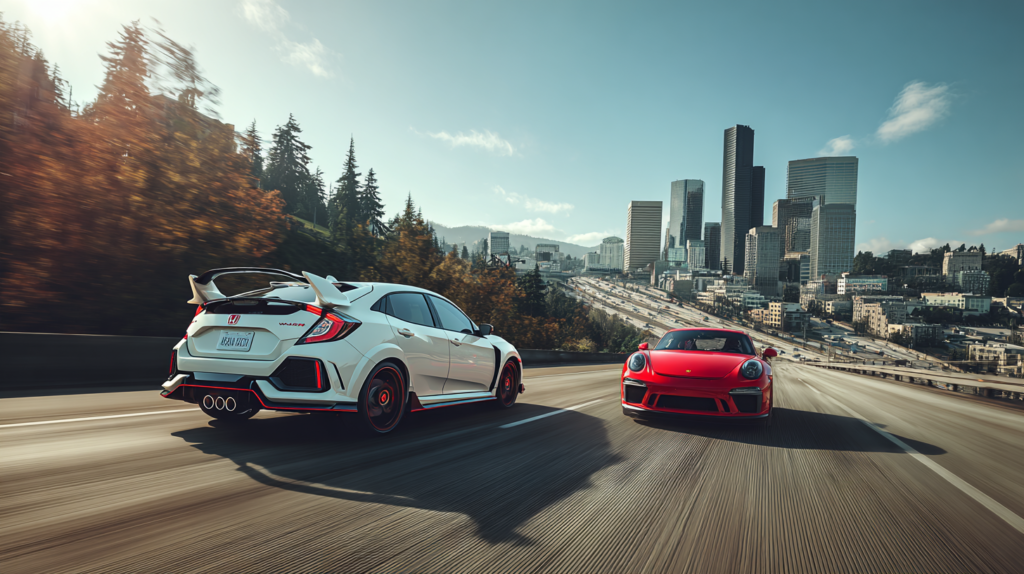
The morning rush on Interstate 5 through Seattle is not a racetrack. It is a slow moving river of brake lights and frustration. The driver of a Honda Civic Type R taps the accelerator, moves forward a few feet, then stops. The driver of a Porsche Cayman GTS does the same. Both cars are capable of lapping a racetrack in under eight minutes. Both cars are currently moving at 4 miles per hour.

The debate between hot hatches and sports cars is not about lap times. It is about livability. Which type of performance car makes more sense for someone who drives every day? The answer depends on priorities, but the question is worth asking.

This article compares the hot hatch and the sports car across the dimensions that matter for daily driving: practicality, comfort, fuel economy, performance, and fun. The setting is Seattle, Washington: a city of hills, rain, and traffic.

The Contenders: Two Types of Performance

The Hot Hatch: Honda Civic Type R

The Civic Type R is a front wheel drive, turbocharged hatchback. It produces 315 horsepower. It has four doors, a large trunk, and seats for four adults. It is designed to be practical and fast.

The Sports Car: Porsche Cayman GTS

The Cayman GTS is a mid engine, naturally aspirated sports car. It produces 394 horsepower. It has two doors, two trunks, and seats for two adults. It is designed to be engaging and precise.

Seattle: A Test of Daily Driving

Seattle is not an easy place to drive. The hills are steep, the roads are narrow, and the rain is constant. A car that is fun on a sunny California highway might be miserable here.

The Civic Type R handles the hills with ease. The turbocharged engine provides ample torque, and the front wheel drive layout provides traction in the wet. The ride is firm but not punishing.

The Cayman GTS is more challenging. The mid engine layout provides excellent balance, but the low ground clearance is a liability on Seattle’s potholed streets. The ride is firm, and the lack of rear seats limits practicality.

Practicality: Space, Seats, and Storage

The hot hatch wins this category decisively.

The Civic Type R has four doors. Getting in and out is easy. The rear seats are usable for adults on short trips and for children on long ones. The trunk offers 24.5 cubic feet of space, enough for groceries, luggage, or a set of golf clubs.

The Cayman GTS has two doors. The seats are low, and entry requires contortion. The front trunk offers 5.3 cubic feet of space. The rear trunk offers 9.2 cubic feet. Combined, the Cayman has less than half the cargo space of the Civic.

For a daily driver, the hot hatch is the obvious choice.

Comfort: Ride Quality, Noise, and Climate

The hot hatch is also more comfortable.

The Civic Type R has a firm ride, but it absorbs road imperfections without transmitting harshness to the cabin. The seats are supportive, with heating and power adjustment. The climate control system is effective.

The Cayman GTS has a firmer ride. The suspension is tuned for handling, not comfort. The seats are comfortable but less adjustable. The cabin is louder at highway speeds.

For a daily driver, the hot hatch wins again.

Fuel Economy: The Cost of Performance

The Civic Type R achieves 22 miles per gallon city and 28 miles per gallon highway. The Cayman GTS achieves 19 miles per gallon city and 25 miles per gallon highway. The hot hatch is more efficient.

Over 15,000 miles per year, the Civic Type R will consume approximately 600 gallons of fuel. The Cayman GTS will consume approximately 680 gallons. The difference is not huge, but it adds up.

Performance: When You Can Actually Use It

On a racetrack, the Cayman GTS is the better car. It is lighter, more balanced, and more engaging. The mid engine layout provides exceptional handling, and the naturally aspirated engine rewards high revs.

On a public road, the differences are smaller. The Civic Type R is not a slow car. It accelerates from 0 to 60 miles per hour in 5.4 seconds, which is quick enough for any legal driving scenario. The Cayman GTS does it in 4.3 seconds.

The Cayman is faster, but the Civic is fast enough.

The Rainy Seattle Commute: A Different Kind of Fun

The rain falls on Interstate 5. The traffic crawls. Neither car can be driven at the limit. The fun is not in the speed. It is in the experience.

The Civic Type R is engaging even at low speeds. The manual transmission is precise. The steering is direct. The engine note, while not as dramatic as the Cayman’s, is still satisfying.

The Cayman GTS is also engaging. The flat six engine produces a sharp, metallic wail. The steering is communicative. But the car feels constrained in traffic, like a cheetah in a cage.

The hot hatch is more fun when you cannot go fast.

The Snow and Ice Consideration

Seattle does not get much snow, but it gets some. The hills become treacherous.

The Civic Type R’s front wheel drive and limited slip differential provide decent traction in light snow. With winter tires, it is usable.

The Cayman GTS’s rear wheel drive and low ground clearance make it nearly useless in snow. Even with winter tires, the car struggles on inclines.

For drivers who face winter weather, the hot hatch is the better choice.

The Cost Difference: What You Pay

The Honda Civic Type R has a base price of approximately $45,000. The Porsche Cayman GTS has a base price of approximately $90,000. The hot hatch costs half as much.

The price difference pays for a lot of fuel, tires, and maintenance.

The Fun Factor: Which One Makes You Smile?

This is subjective. The hot hatch is fun in a practical way. It is the car you can drive every day, in any weather, with passengers and cargo, and still enjoy.

The sports car is fun in a special way. It is the car you drive on a sunny Sunday, on a winding road, with no passengers, and nothing to do.

The hot hatch is the better daily driver. The sports car is the better weekend car.

The Seattle Verdict: Which One to Buy?

Buy the hot hatch if:

  • You have only one car and need it to do everything
  • You have passengers or children
  • You need cargo space
  • You live in a city with traffic, hills, or rain
  • You care about value

Buy the sports car if:

  • You have a second car for daily duties
  • You do not need rear seats or cargo space
  • You live in a climate with good roads and little rain
  • You are willing to pay a premium for the experience

The Final Drive

The week in Seattle ends. The Civic Type R has carried groceries, driven through rain, and survived the Interstate 5 crawl. It has been practical, comfortable, and still fun.

The Cayman GTS has been a challenge. It is too low, too stiff, and too impractical for daily life. But on the one clear evening, on a winding road above the city, it was magic.

If you can only have one car, buy the hot hatch. If you can have two, buy the sports car.

Specifications Comparison

SpecificationHonda Civic Type RPorsche Cayman GTS
Doors42
Seats42
Cargo Space24.5 cu ft14.5 cu ft (combined)
Horsepower315 hp394 hp
0 to 60 mph5.4 seconds4.3 seconds
MPG City2219
MPG Highway2825
Base Price$45,000$90,000

Conclusion

The hot hatch is the better daily driver. It is more practical, more comfortable, more efficient, and less expensive. It can carry passengers and cargo, navigate traffic, and handle bad weather. It is still fun to drive.

The sports car is the better weekend toy. It is faster, more engaging, and more special. But it is not a car for everyday life.

The driver of the Civic Type R merges onto I-5 for the last time. The traffic is heavy, but the car is composed. The driver smiles. This is the right car for this place.

The Cayman GTS sits in a garage, waiting for the sun. It will have its day. Just not today.

EVs in Motorsport: Are We Losing the Soul of Racing? A Weekend at Portland International Raceway

0

Portland International Raceway sits on the banks of the Columbia Slough, just minutes from downtown Portland, Oregon. The track has hosted everything from IndyCar to NASCAR to motorcycle racing. On a damp October weekend, it is hosting an entirely new kind of event: an electric GT racing series.

The cars are silent. They glide through the Festival Chicane without a sound, their tires squealing in protest. The only noise is the rush of air over the bodywork and the occasional crackle of a high voltage system. The crowd is smaller than it would be for a combustion race. Some of the spectators look confused.

Formula E has been racing for a decade. Electric GT series are emerging around the world. EV track days are becoming common. But a question lingers: without engine sound and the drama of combustion, are we watching a different sport?

This article explores the rise of electric motorsport, what has been lost, what has been gained, and whether the soul of racing can survive the transition.

The Sound: What We Have Lost

The sound of a racing engine is part of the experience. The high pitched wail of a Formula 1 car at 18,000 rpm, the deep rumble of a NASCAR V8, the scream of a Group B rally car these sounds are visceral, emotional, and unforgettable.

Electric race cars are quiet. The motors produce a high frequency whine, but it is not loud. It does not resonate in the chest. It does not announce the car’s presence from a mile away.

At Portland International Raceway, a combustion race would fill the neighborhood with noise. The electric race is barely audible outside the track gates. Some residents appreciate this. Some fans miss it.

The sound of racing is not just entertainment. It is information. Drivers use engine notes to gauge revs, to time shifts, to sense the car’s state. Spectators use sound to follow the action, to feel the speed, to connect with the cars.

Without sound, something is missing.

The Drama: What We Have Gained

Electric motorsport has different drama. The acceleration is breathtaking. Electric cars can out accelerate combustion cars out of corners. The torque is instant, and the power delivery is relentless.

The racing is often close. Formula E races are known for tight packs, frequent overtakes, and chaotic finishes. The street circuits are narrow, and the cars are fragile. Mistakes are punished.

The engineering is fascinating. Battery management, thermal control, and energy recovery are new variables that do not exist in combustion racing. Teams can win or lose based on how well they manage their energy.

The drama is different, but it is still drama.

The Portland Race: A First-Hand Account

The electric GT race at Portland International Raceway is a 45 minute sprint. The cars are modified production EVs: Porsche Taycans, Tesla Model 3s, and a few custom built machines.

The start is eerie. The cars do not rev. They simply move. The acceleration is brutal, but the silence is unsettling.

Midway through the race, a Porsche and a Tesla battle for the lead. They swap positions three times in a single lap. The crowd cheers. The cars are fast. The racing is good.

But after the race, a fan sums up the feeling. “That was exciting,” he says. “But I miss the noise.”

The Drivers’ Perspective: What Do They Think?

Drivers who have competed in both combustion and electric series have mixed opinions.

Some appreciate the precision. Electric cars respond instantly to throttle inputs. There is no lag, no delay, no waiting for the engine to spool. The car does exactly what the driver asks.

Some miss the feedback. An electric motor provides less sensory information than a combustion engine. The driver cannot hear the revs, cannot feel the vibrations, cannot sense the edge of the performance envelope as clearly.

Formula E driver Lucas di Grassi has described electric racing as a different discipline. “It is still racing,” he says. “But the tools are different.”

The Fans’ Perspective: Are They Showing Up?

Formula E attendance has grown, but it still lags behind Formula 1. The races are held on street circuits in major cities, which makes them accessible to new audiences. But the spectacle is different.

Fans who attend Formula E races often comment on the lack of noise. “It is like watching a video game,” one fan said at a recent race. “The cars are fast, but they do not feel real.”

The counterargument is that younger fans do not miss the noise. They grew up with electric cars. They are accustomed to silence. For them, the racing is about the action, not the sound.

What Has Been Lost

  • The visceral impact of a screaming engine
  • The ability to follow the action by sound
  • The tradition of engine notes as part of a car’s identity
  • The sense of danger and power that comes from a loud engine

What Has Been Gained

  • Instant torque and breathtaking acceleration
  • New engineering challenges
  • Access to street circuits that would not allow loud engines
  • A quieter experience for nearby residents

The Portland Evening: A Walk Through the Paddock

The race is over. The cars are silent, plugged into chargers. The paddock is quiet. A few years ago, this same track would have been filled with the smell of race fuel and the sound of engines warming up.

Now, there is only the hum of battery cooling fans.

A young fan walks past a row of Teslas. She is 12 years old. She has never been to a combustion race. She does not know what she is missing.

She points to a car. “That one is my favorite,” she says. “It is so fast.”

For her, this is racing. The sound does not matter.

The Future: Will Combustion Racing Survive?

Combustion racing is not going away. Formula 1 has committed to sustainable fuels that will preserve the sound of the engine. NASCAR is experimenting with hybrid systems but has no plans to go fully electric. The aftermarket and grassroots racing will keep combustion alive for decades.

But electric motorsport is growing. It will eventually become dominant. The transition may take 20 or 30 years, but it will happen.

The question is not whether electric racing will replace combustion racing. It is whether the soul of racing can survive the transition.

The Verdict: Are We Losing the Soul of Racing?

The soul of racing is not the engine. It is the competition, the skill, the danger, and the drama. The engine is a vessel, not the message.

Electric racing has competition. It has skill. It has danger. It has drama.

What it does not have is the sensory overload of a combustion engine. That is a loss. But it is not the loss of the soul.

The soul of racing is the driver, the car, and the track. The engine is just the soundtrack.

The Portland Sunset

The sun sets over the Columbia River. The electric GT cars are loaded onto trailers. The paddock empties. The track goes quiet.

A few fans linger, talking about the race. They are excited. They are engaged. They are fans of racing, not just of engines.

Maybe that is enough.

Comparison: Combustion vs Electric Racing

AspectCombustion RacingElectric Racing
SoundLoud, visceral, emotionalQuiet, high frequency whine
AccelerationStrong, but with lagInstant, brutal
Engineering FocusEngines, aero, tiresBatteries, motors, energy management
Track AccessLimited by noise restrictionsBroad access, including city circuits
Fan AppealTraditional, establishedGrowing, younger demographic

Conclusion

The rise of electric motorsport is inevitable. Formula E is established, electric GT series are emerging, and EV track days are growing. The transition will take time, but it will happen.

Something is being lost. The sound of a racing engine is a visceral, emotional, irreplaceable part of the experience. It will be missed.

But something is being gained. New engineering challenges, new access to city circuits, and a new generation of fans who do not miss the noise.

The soul of racing is not the engine. It is the competition. And that remains.

The last trailer leaves Portland International Raceway. The track is empty. The silence is complete. The electric cars are gone, but the racing will return. Different, but still racing.

The Used Supercar Argument: Why You Shouldn’t Buy New at the Concours Club in Opa-locka, Florida

0

The Concours Club sits on the edge of the Opa-locka Executive Airport, just north of Miami. It is a private racetrack and social club for people who own cars that most people only see in magazines. On a Friday morning, the parking lot is filled with Ferraris, Lamborghinis, and McLarens. The owners are not here to race. They are here to meet, to talk, and to admire each other’s machines.

Among the gleaming new cars is a 2019 McLaren 720S. It has 8,000 miles on the odometer. Its original owner paid $320,000. The current owner paid $180,000. That is a savings of $140,000 in just four years.

This is the used supercar argument. Buying new is an emotional decision. Buying used is a financial one. This article makes the case for why someone else’s first 3,000 miles might be your best deal.

The Depreciation Curve: Why Supercars Lose Value Fast

A new supercar depreciates rapidly in its first few years. The curve is steep and unforgiving.

  • Year 1: 15 to 25 percent depreciation
  • Year 2: 10 to 15 percent depreciation
  • Year 3: 5 to 10 percent depreciation
  • Year 4 and beyond: 5 percent or less per year

A $300,000 new supercar might be worth $225,000 after one year, $190,000 after two years, and $170,000 after three years. The original owner loses $130,000 in three years. The second owner, buying at $190,000, loses only $20,000 over the next three years.

The depreciation curve favors the buyer who waits.

The Hidden Value: What You Get for Less

A used supercar with low miles is often indistinguishable from a new one. The paint is the same. The engine is the same. The performance is the same. The only difference is the price.

A three year old McLaren 720S with 5,000 miles is still a modern supercar. It still has the twin turbo V8, the carbon fiber monocoque, and the dihedral doors. It still accelerates to 60 miles per hour in 2.7 seconds. It still looks like a spaceship.

The new car buyer pays for the privilege of being first. The used car buyer pays for the car.

The Opa-locka Example: Three Used Supercars, One Parking Lot

The parking lot at the Concours Club tells the story.

2019 Ferrari 488 Pista: Original price $350,000. Current price $260,000. Miles: 6,000. Savings: $90,000.

2020 Lamborghini Huracán Evo: Original price $280,000. Current price $190,000. Miles: 8,000. Savings: $90,000.

2021 Porsche 911 Turbo S: Original price $210,000. Current price $165,000. Miles: 5,000. Savings: $45,000.

Each car is in excellent condition. Each car has years of life remaining. Each car was purchased at a significant discount.

The Maintenance Myth: Are Used Supercars Reliable?

One concern about buying a used supercar is maintenance. The fear is that the previous owner drove the car hard and neglected the service.

The reality is different. Most supercar owners are meticulous about maintenance. They have the means to service their cars properly. They value their investment. A used supercar with a full service history is often better maintained than a new car that has not yet been serviced.

A pre-purchase inspection by a specialist is essential. The cost is a few hundred dollars. It can save tens of thousands.

The Warranty Question: What Protection Do You Have?

Many used supercars are still under factory warranty. A three year old car may have one or two years of warranty remaining. Some manufacturers, like Porsche and Ferrari, offer certified pre-owned programs that extend the warranty.

After the factory warranty expires, third party warranties are available. They are expensive, but they provide peace of mind.

The cost of a major repair on a supercar can be staggering. An engine replacement on a Ferrari 488 costs over $50,000. A transmission failure on a McLaren 720S can exceed $30,000. Warranty coverage is worth considering.

The Emotional Argument: Why People Buy New

The case for buying new is not about money. It is about emotion.

A new supercar is untouched. The paint is perfect. The interior still smells like leather and glue. The engine has never been revved past 4,000 rpm. The car is a blank slate.

The new car buyer pays for the experience of being the first. The used car buyer pays for the car itself.

Both are valid. They are just different.

The Concours Club Drive: A Used McLaren on Track

The 2019 McLaren 720S takes to the track. The owner, a man in his 40s, drives it hard but not recklessly. The car grips, accelerates, and brakes with confidence. It is indistinguishable from a new 720S.

After the session, the owner talks about his purchase. “I could have bought new,” he says. “But why would I? This car is perfect. The previous owner took care of it. I saved $140,000. That is a lot of track days.”

He is not wrong.

The Best Used Supercar Deals Right Now

Current market conditions (2026) offer some compelling used supercar values:

  • McLaren 720S: 2018-2020 models from $160,000 to $190,000
  • Ferrari 488 GTB: 2016-2019 models from $180,000 to $220,000
  • Lamborghini Huracán: 2015-2018 models from $150,000 to $180,000
  • Porsche 911 Turbo S: 2017-2020 models from $120,000 to $160,000
  • Audi R8 V10: 2017-2020 models from $100,000 to $130,000

Each of these cars offers supercar performance at a fraction of the original price.

The Future: Will Used Supercar Prices Hold?

The used supercar market has softened in recent years. The pandemic price surge has ended. Prices are down 10 to 20 percent from their peaks.

This is good news for buyers. The entry price is lower. The depreciation risk is reduced.

Limited production models, such as the Ferrari 458 Speciale and the Porsche 911 GT3 RS, have held their value better. Mainstream models, such as the standard 488 and Huracán, have depreciated more.

The Verdict: Why You Should Buy Used

The case for buying a used supercar is strong:

  • Lower price: Save $50,000 to $150,000 compared to new
  • Slower depreciation: The previous owner took the biggest hit
  • Proven reliability: Any major issues have likely been addressed
  • Warranty options: Factory warranties and certified pre-owned programs are available
  • Same performance: A three year old supercar is still a supercar

The case against buying used is the emotional desire to be first. That is a real desire. It is just an expensive one.

The Opa-locka Sunset

The track day ends. The supercars leave the Concours Club, one by one. The 2019 McLaren 720S is the last to go. Its taillights disappear into the Florida evening.

The owner drives home satisfied. He spent $180,000 on a car that originally cost $320,000. He has a supercar. He has savings. He has no regrets.

That is the used supercar argument.

Cost Comparison: New vs Used

ModelNew PriceUsed Price (3 Years, 10k Miles)Savings
McLaren 720S$320,000$180,000$140,000
Ferrari 488 GTB$280,000$190,000$90,000
Lamborghini Huracán$260,000$170,000$90,000
Porsche 911 Turbo S$210,000$150,000$60,000
Audi R8 V10$180,000$110,000$70,000

Conclusion

The used supercar argument is simple. A three year old supercar offers 95 percent of the performance for 60 percent of the price. The new car buyer pays for the privilege of being first. The used car buyer pays for the car.

Neither is wrong. But one is a better financial decision.

The McLaren 720S is gone, but its owner will be back next month. He will drive the same car, on the same track, with the same smile. He will not think about the original owner. He will not think about the $140,000 he saved. He will just drive.

That is the point of a supercar. It is not about the price. It is about the drive. And a used supercar drives just as well as a new one.

Are Modern Hypercars Too Fast to Actually Drive? A Morning at Laguna Seca

0

The sun rises over the hills surrounding WeatherTech Raceway Laguna Seca in Monterey County, California. The famous corkscrew is still in shadow, but the sound of a high revving engine already echoes through the pines. A Rimac Nevera, all 1,914 horsepower of it, sits at pit exit. The driver adjusts the steering wheel, checks the display, and waits for the green flag.

This is a car that can accelerate from 0 to 60 miles per hour in 1.85 seconds. It can cover a quarter mile in under 9 seconds. It produces more power than a Formula 1 car from a few years ago. And it is road legal.

The question is not whether the Nevera is fast. It is whether it is too fast to actually drive. The same question applies to a growing class of hypercars: the Bugatti Chiron, the Koenigsegg Jesko, the Pininfarina Battista. They produce 1,000, 1,500, or even 2,000 horsepower. They accelerate with violent force. They top out at speeds that would be illegal on any public road.

Have manufacturers built cars that exist only as engineering flexes? Or are these hypercars genuinely usable?

The Numbers: A Reality Check

The performance numbers of modern hypercars are staggering. A few examples:

  • Rimac Nevera: 1,914 horsepower, 0 to 60 mph in 1.85 seconds
  • Bugatti Chiron Super Sport: 1,578 horsepower, 0 to 60 mph in 2.4 seconds
  • Koenigsegg Jesko Absolut: 1,600 horsepower, claimed top speed over 310 mph
  • Pininfarina Battista: 1,900 horsepower, 0 to 60 mph in 1.9 seconds

These numbers exceed the performance of most race cars from a decade ago. They exceed the traction limits of public roads. They exceed the reaction times of most drivers.

The Usability Problem: What Does “Too Fast” Mean?

A car can be too fast in several ways:

Acceleration: In less than 2 seconds, a hypercar reaches speeds that would result in a felony charge on a public road. The driver has no time to react, no time to correct, no time to enjoy the experience.

Braking: The same hypercar requires equally aggressive braking. The forces involved can be uncomfortable for passengers and demanding for the driver.

Top Speed: No public road in the world allows a driver to legally exceed 200 miles per hour. The Autobahn has unrestricted sections, but even there, speeds over 200 mph are rare and dangerous.

Handling: The limits of modern hypercars are so high that they cannot be approached on public roads. The driver would be breaking the law long before the car reaches its limit.

Laguna Seca: Where Speed Has a Place

Laguna Seca is a race track. It is one of the few places where a hypercar can be driven near its limits legally and safely. The corkscrew, the Rahal Straight, the Andretti Hairpin these are corners that reward precision and skill.

The Rimac Nevera laps the track with ease. The torque vectoring system, the adaptive suspension, and the carbon ceramic brakes work in harmony. The car is fast, but it is also manageable. The driver can explore the limits without fear of a police car.

This is the paradox. The hypercar is too fast for the street. It is not too fast for the track.

The San Francisco Drive: Hypercars in Traffic

A few days earlier, the same Rimac Nevera was driven through the streets of San Francisco. The experience was different. The car was limited to electric mode in the city, the engine quiet, the acceleration subdued. On the freeway, the driver could not use more than a fraction of the car’s power without risking a ticket.

The driver navigated traffic, stopped at lights, and searched for parking. The Nevera was not faster than a Toyota Camry in these conditions. It was just more expensive.

This is the reality of hypercar ownership. Most of the miles are driven on public roads, where the car’s performance is severely constrained.

The Case For: Hypercars Are Not Too Fast

The argument that hypercars are not too fast rests on several points:

Driver Responsibility: A hypercar is a tool. It is the driver’s responsibility to use it appropriately. A 1,900 horsepower car can be driven at 30 miles per hour. The driver chooses the speed.

The Experience: The experience of driving a hypercar is not only about going fast. It is about the sound, the feel, the presence, and the engineering. These qualities are available at any speed.

The Track: A hypercar is not meant to be driven exclusively on public roads. It is meant to be enjoyed on a track, where its capabilities can be explored safely.

The Engineering: The engineering that goes into a hypercar is a statement of what is possible. Even if the car is never driven at its limit, the fact that it can reach that limit is meaningful.

The Case Against: Hypercars Are Too Fast

The argument that hypercars are too fast is also compelling:

The Law: Using a hypercar’s full performance on public roads is illegal. The driver cannot legally accelerate from 0 to 60 in under 2 seconds without risking their license.

The Danger: A mistake at 200 miles per hour is fatal. The margin for error is tiny. Even professional drivers have crashed hypercars on public roads.

The Waste: A hypercar that is never driven at its limit is a waste of engineering. The owner is paying for capability that they cannot use.

The Trend: The focus on ever increasing power and speed is becoming absurd. The numbers no longer correspond to any real world need. They are marketing tools.

The Monterey Parking Lot: A Moment of Truth

The Rimac Nevera is parked in the Laguna Seca paddock. A group of spectators gathers around it. They take photos, ask questions, and marvel at the carbon fiber body. None of them ask about the quarter mile time. They ask about the sound, the feel, and the experience.

The owner, a man in his 50s, is happy to talk. He drives the car on the street perhaps once a month. The rest of the time, it sits in a climate controlled garage. He tracks it twice a year. He does not regret the purchase.

“Of course it is too fast,” he says. “That is the point.”

The Verdict: Too Fast for What?

Modern hypercars are too fast for public roads. They are not too fast for a race track. They are not too fast for an owner who values the engineering, the exclusivity, and the experience.

The question is not whether hypercars are too fast. The question is whether you have a place to drive one.

The Future: Will Hypercars Get Even Faster?

The trend in hypercar performance shows no sign of slowing. Electric powertrains will continue to increase power and decrease weight. The next generation of hypercars may reach 2,000, 2,500, or even 3,000 horsepower.

The usability problem will only get worse. The gap between what a hypercar can do and what a driver can legally do on public roads will continue to widen.

But the people who buy hypercars will not stop buying them. The engineering flex is the point.

The Laguna Seca Sunset

The Rimac Nevera completes its final lap of the day. The driver pulls into the pits, turns off the car, and steps out. The engine (or motors) are silent. The brakes cool with a ticking sound.

A group of children walk by, pointing at the car. They do not know the horsepower figure. They do not know the quarter mile time. They just know it looks fast.

Maybe that is enough.

Performance Comparison

CarHorsepower0 to 60 mphTop SpeedUseable on Street?
Rimac Nevera1,914 hp1.85 seconds258 mphLimited
Bugatti Chiron1,500 hp2.4 seconds261 mphLimited
Porsche 911 Turbo S640 hp2.6 seconds205 mphYes
Chevrolet Corvette Z06670 hp2.6 seconds195 mphYes

The table shows the difference. The 640 horsepower Porsche is usable on the street. The 1,914 horsepower Rimac is not.

Conclusion

Modern hypercars are too fast to be driven at their limits on public roads. They are not too fast to be owned, enjoyed, and admired. The owners who can afford them do not need a rational justification. The engineering flex is the justification.

The Rimac Nevera leaves Laguna Seca, loaded onto a trailer, heading back to its climate controlled garage. It will be driven again next month, perhaps on the same track, perhaps on a quiet back road where the driver can briefly feel the full force of 1,914 horsepower.

For a few seconds, it will be worth it. For a few seconds, the speed will make sense. For the rest of the time, it will be a sculpture, a statement, a piece of automotive art.

That is the hypercar paradox. It is too fast to drive. It is too beautiful to ignore.

The $200K Supercar: Where Does the Money Actually Go? A Breakdown in Scottsdale, Arizona

0

The Scottsdale Road corridor in North Scottsdale is a stretch of pavement lined with luxury dealerships. Ferrari, Lamborghini, McLaren, and Porsche all have a presence here. On a typical Saturday morning, the parking lots are filled with cars whose combined value exceeds the GDP of a small island nation.

A red Ferrari Roma sits in the showroom with a price tag of $250,000. A few miles away, a green Lamborghini Huracán Evo is listed at $280,000. Across the street, a silver McLaren Artura is priced at $240,000.

What does $200,000 actually buy in the supercar world? The average new car in the United States costs around $48,000. A $200,000 supercar costs more than four times that. Where does the money go? This article breaks down the costs, line by line.

The Bill of Materials: What the Parts Cost

Every car starts as a collection of parts. The bill of materials for a supercar is significantly higher than that of a mainstream car. But the difference is not as large as the final price suggests.

A high performance twin turbo V8 engine costs approximately $30,000 to $40,000 to manufacture. A dual-clutch transmission adds another $10,000 to $15,000. The carbon ceramic brakes on a supercar can cost $10,000 to $15,000 per axle. The wheels and tires, specially developed for the car, can add $5,000 to $10,000.

The total bill of materials for a $200,000 supercar is approximately $80,000 to $100,000. That is roughly double the bill of materials for a $50,000 sports car. But it is not four times as much.

Research and Development: The Hidden Cost

The bill of materials is only part of the story. The research and development costs for a new supercar can be enormous. A new engine platform costs hundreds of millions of dollars to develop. A new chassis, a new transmission, a new aerodynamic package each of these adds tens of millions.

These costs must be amortized over the number of units sold. A mainstream car might sell 100,000 units per year. A supercar might sell 1,000 to 5,000 units over its entire life. The development cost per unit is much higher.

A mainstream car might allocate $1,000 per unit for development. A supercar might allocate $20,000 or more.

The Hand-Built Premium

Supercars are not assembled on a production line by robots. They are hand built by skilled technicians. The engine in a Ferrari is assembled by a single master technician. The leather interior of a Bentley is stitched by craftspeople who have trained for years.

This hand built quality is part of the supercar appeal. It is also expensive. The labor cost for a hand built supercar can be $10,000 to $20,000 higher than for a mass produced car.

The Marketing Halo

Supercar manufacturers spend heavily on marketing. The global launch event, the Formula 1 sponsorship, the print advertisements, the social media campaigns all of these add to the cost.

Marketing costs for a supercar are typically 5 to 10 percent of the vehicle price. On a $200,000 car, that is $10,000 to $20,000.

The Exclusivity Premium

Supercar manufacturers deliberately limit production. Scarcity drives demand. The limited production numbers mean that each car must carry a higher share of fixed costs.

The exclusivity premium is the amount you pay for the privilege of owning a car that few others can have. It is difficult to quantify, but it is real. A $200,000 supercar might have a $30,000 to $50,000 exclusivity premium baked into the price.

The Dealership Margin

The dealership needs to make a profit. The margin on a new supercar is typically 8 to 12 percent. On a $200,000 car, that is $16,000 to $24,000.

Some supercars sell for more than the MSRP due to high demand. That additional money goes to the dealer, not the manufacturer.

The Scottsdale Math: A Case Study

The Ferrari Roma in the Scottsdale showroom is priced at $250,000. Where does the money go? An estimated breakdown:

  • Bill of Materials: $90,000
  • Research and Development (amortized): $25,000
  • Hand-built labor: $15,000
  • Marketing: $15,000
  • Exclusivity premium: $40,000
  • Dealership margin: $25,000
  • Transportation and preparation: $5,000
  • Manufacturer profit: $35,000

Total: $250,000

The numbers are estimates, but the pattern is clear. The manufacturing cost of the physical parts is less than half the selling price. The rest is development, exclusivity, and profit.

What You Are Really Paying For

When you spend $200,000 on a supercar, you are paying for:

  • Engineering: The development of a low volume, high performance machine costs millions. You are paying a share of that.
  • Exclusivity: You are paying for the right to own a car that few others can have.
  • Craftsmanship: You are paying for hand built quality and attention to detail.
  • Marketing: You are paying for the Formula 1 team and the global launch event.
  • The Badge: You are paying for the history, the heritage, and the brand.

You are not paying $200,000 for $200,000 worth of metal, glass, and rubber. You are paying for a story.

The Value Proposition: Is It Worth It?

Whether a $200,000 supercar is worth the money depends on what you value. If you value transportation, a $30,000 sedan does the same job. If you value speed, a $70,000 Corvette is almost as fast. If you value exclusivity, craftsmanship, and emotion, the supercar has no substitute.

The supercar buyer is not paying for a car. They are paying for an experience.

The Scottsdale Sunset

The Ferrari Roma pulls out of the showroom and heads toward the McDowell Mountains. The driver accelerates onto the open road, the engine note climbing, the wind rushing past. The car is expensive, impractical, and excessive.

The driver smiles. That is what $200,000 buys.

Cost Comparison: Supercar vs Mainstream

ComponentMainstream Car ($50k)Supercar ($200k)Difference
Engine$5,000$35,000$30,000
Transmission$2,000$12,000$10,000
Brakes$1,000$12,000$11,000
Tires$500$3,000$2,500
Interior$3,000$15,000$12,000
Development per unit$1,000$20,000$19,000
Labor$5,000$20,000$15,000
Marketing$1,000$15,000$14,000
Dealer margin$4,000$20,000$16,000
Total$22,500$152,000$129,500

The table shows the difference. The supercar’s parts are more expensive, but the real difference is in development, labor, marketing, and margin.

Conclusion

The $200,000 supercar is not a rational purchase. It is an emotional one. The money buys engineering, exclusivity, craftsmanship, and a story. It does not buy transportation.

Whether that is worth it is a question only the buyer can answer.

The Ferrari Roma disappears into the Arizona desert. The sun sets. The driver is alone with the car and the road. For that driver, the $250,000 was money well spent. For the driver of a Honda Civic on the same road, it might not be.

That is the nature of the supercar. It is not for everyone. It is not meant to be.

Why Lamborghini Makes Better Content Than Ferrari (And What That Says) in Downtown Miami

0

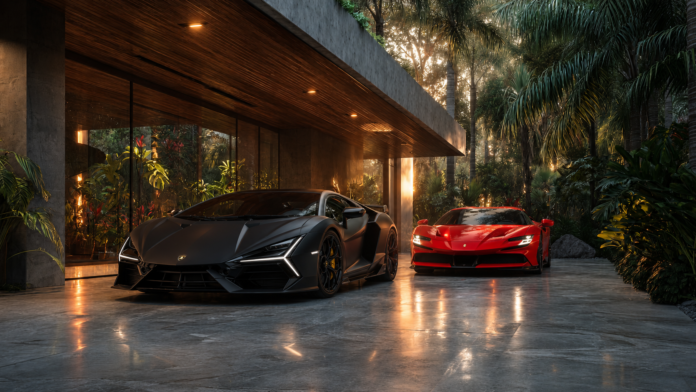
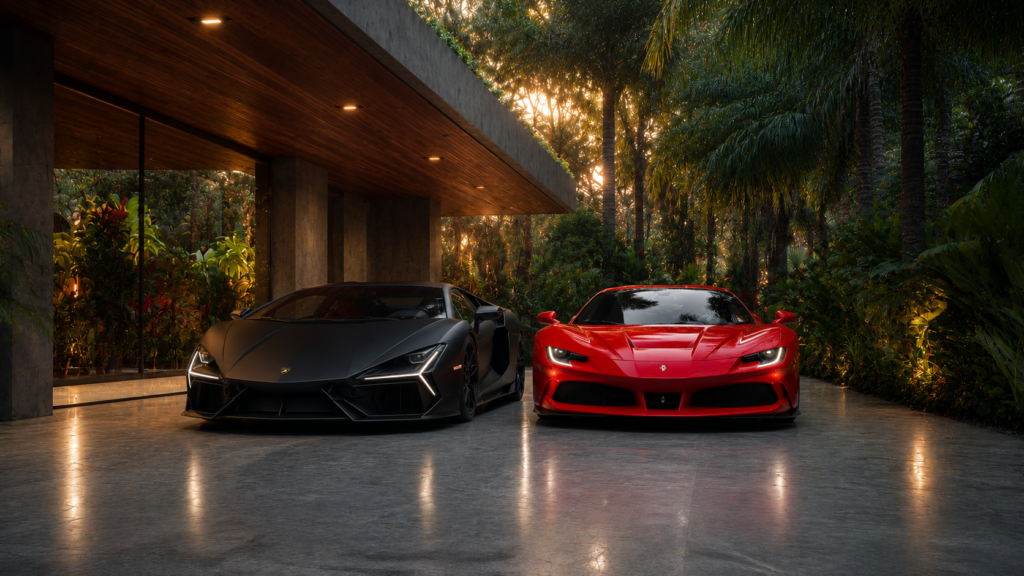
The sun sets over Biscayne Bay, and the neon lights of downtown Miami begin to flicker to life. Brickell Avenue is already clogged with luxury sedans and exotic SUVs, but the crowd outside a private garage on Flagler Street is not waiting for another Bentley. They are waiting for the cars that will emerge soon: a matte black Lamborghini Revuelto and a Rosso Corsa Ferrari SF90 Stradale.

Phones are raised. The Revuelto rolls out first. Its sharp angles catch the light. The V12 engine echoes off the glass towers. The crowd reacts with a mix of cheers and camera clicks. The SF90 follows. It is beautiful, elegant, and almost invisible in the chaos.

This is the reality of modern car culture. Lamborghini dominates social media feeds, YouTube recommendations, and street-level conversations. Ferrari builds technically superior cars, but they do not command the same attention. This article explores why Lamborghini makes better content than Ferrari and what that says about the two brands.

The Content Economy: How Cars Are Consumed Today

Car culture has changed. The magazine review and the forum post have been replaced by the Instagram reel, the YouTube short, and the TikTok. A car’s success is no longer measured only by lap times or sales figures. It is measured by impressions, shares, and engagement.

Lamborghini understands this. Ferrari has been slower to adapt. The result is visible everywhere from downtown Miami to the Las Vegas Strip.

The Styling: Why Sharp Angles Win Social Media

Lamborghini’s design language is aggressive, angular, and dramatic. The Revuelto, the Huracán, and the Urus look like they were designed by someone who watched science fiction movies and took notes. The sharp creases, massive intakes, and Y-shaped headlights are instantly recognizable. They photograph well. They film well. They generate clicks.

Ferrari’s design is more elegant, more flowing, and more restrained. The Roma, the 296 GTB, and the SF90 are beautiful cars. But they do not stop traffic in the same way. They are subtle. And subtlety does not go viral.

A child walking down Biscayne Boulevard will point at a Lamborghini. That same child might not notice a Ferrari. This is the difference.

The Sound: The V10 and V12 Wail

Lamborghini has held onto naturally aspirated engines longer than almost anyone. The Huracán’s V10 revs to 8,500 rpm and produces a high pitched wail that cuts through any environment. The Revuelto’s V12, even with hybrid assistance, retains the character of a naturally aspirated engine.

Ferrari has moved to smaller displacement, turbocharged, and hybrid engines. The 296 GTB’s V6, even with its 8,500 rpm redline, does not sound like a traditional Ferrari. The SF90’s V8 is muted by its turbochargers and electric motors. They are fast. They are not loud.

In an era where content is consumed on phones with small speakers, the loudest car wins. Lamborghini is loud.

The Exclusivity Game: Different Approaches to Scarcity

Ferrari controls its production numbers carefully. The brand builds fewer cars than there are buyers, and it restricts who can buy limited edition models. This creates exclusivity, but it also creates frustration. A Ferrari owner is part of an exclusive club. A Lamborghini owner is part of a bigger, louder party.

Lamborghini builds more cars. The Urus is a volume model by supercar standards. The Huracán has sold in impressive numbers. This ubiquity means more Lamborghinis on the road, more Lamborghinis in content, and more Lamborghinis in the public consciousness.

Scarcity drives value. But abundance drives culture.

The Brand Personalities: The Ferrari Mystique vs The Lamborghini Party

Ferrari cultivates an image of sophistication, racing heritage, and Italian elegance. The brand is associated with Enzo Ferrari, with Formula 1, with the 250 GTO. Owning a Ferrari is a statement of taste and accomplishment.

Lamborghini cultivates an image of excess, drama, and fun. The brand is associated with the Miura, the Countach, and the posters on teenage bedroom walls. Owning a Lamborghini is a statement of having fun.

Which one makes better content? The one that is having more fun.

The Downtown Miami Event: A Case Study

The private garage on Flagler Street is hosting a meet for local exotic car owners. The Lamborghinis arrive in a convoy: Revueltos, Huracáns, a few Urus SUVs. They park in a line, doors open, engines idling. The crowd flocks to them. The Ferraris arrive later, parking in the corners. They are admired, but they are not the center of attention.

One of the organizers explains it simply. “People want to see the car that looks like it’s from another planet,” he says. “Lamborghini delivers that. Ferrari delivers a car that looks like a car.”

What This Says About the Brands

Lamborghini’s dominance in the content economy is not an accident. The brand has deliberately positioned itself as the extroverted, dramatic, social media friendly choice. The design is aggressive. The sound is loud. The colors are bright. The brand embraces its image.

Ferrari’s relative absence from the content conversation is also deliberate. The brand values exclusivity and heritage over ubiquity. It is not trying to win Instagram. It is trying to preserve its mystique.

Both approaches are valid. But only one generates clicks.

The Future: Can Ferrari Catch Up?

Ferrari has made some efforts to engage with content creators. The brand has its own media platform, and it works with selected influencers. But the Ferrari experience remains curated and controlled. There is no Ferrari equivalent of the Lamborghini Huracán Sterrato tearing across desert dunes in a YouTube video.

Lamborghini has embraced the chaos. The brand produces content that is raw, loud, and shareable. It is not for everyone. But it is for the internet.

The Verdict: Why Lamborghini Makes Better Content

Lamborghini makes better content because Lamborghini makes cars that are designed to be seen, heard, and shared. The styling is dramatic. The sound is unmistakable. The brand personality is extroverted. Ferrari makes cars that are designed to be driven fast, to be owned by discerning collectors, and to be appreciated for their engineering. Both are valid. But only one is built for the digital age.

The Miami Night

The event winds down. The Lamborghinis roar out of the garage, heading toward the MacArthur Causeway. Their lights trail across the bridge, reflecting off the water. The Ferraris slip away quietly, unnoticed.

The crowd watches the Lamborghinis until they disappear. The phones are still recording. The content is already being uploaded.

Specifications Comparison (Content Metrics)

BrandSocial Media FollowersYouTube Search VolumeStreet RecognitionSound Volume (Subjective)
LamborghiniHigherHigherHigherLouder
FerrariLowerLowerLowerQuieter

Conclusion

Lamborghini makes better content than Ferrari because Lamborghini makes better content cars. The styling, the sound, and the brand personality are all optimized for the age of social media. Ferrari remains focused on the traditional values of engineering, heritage, and exclusivity.

Neither is wrong. But only one is winning the content war.

As the last Revuelto disappears into the Miami night, one thing is clear: the car that looks like it came from another planet will always get more clicks than the car that looks like it came from a museum. That is not a judgment. It is just the truth.