Home Blog Page 15

How to Spec a New Ferrari: The Options That Matter – A Morning at the Pacific Coast Highway in Malibu

0

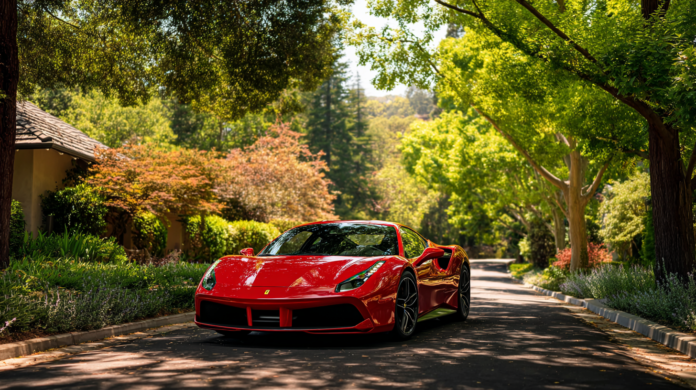
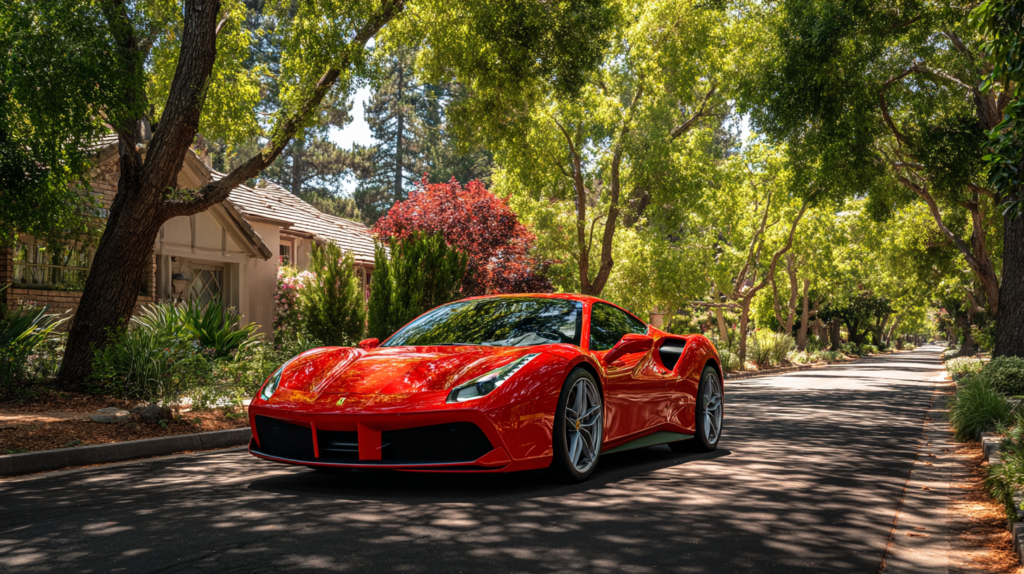
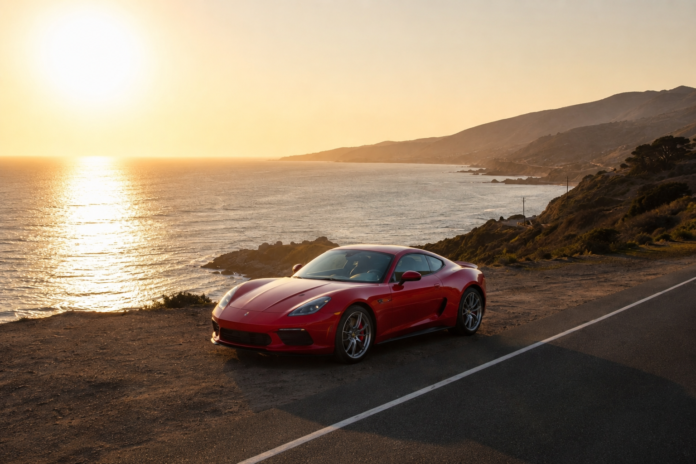
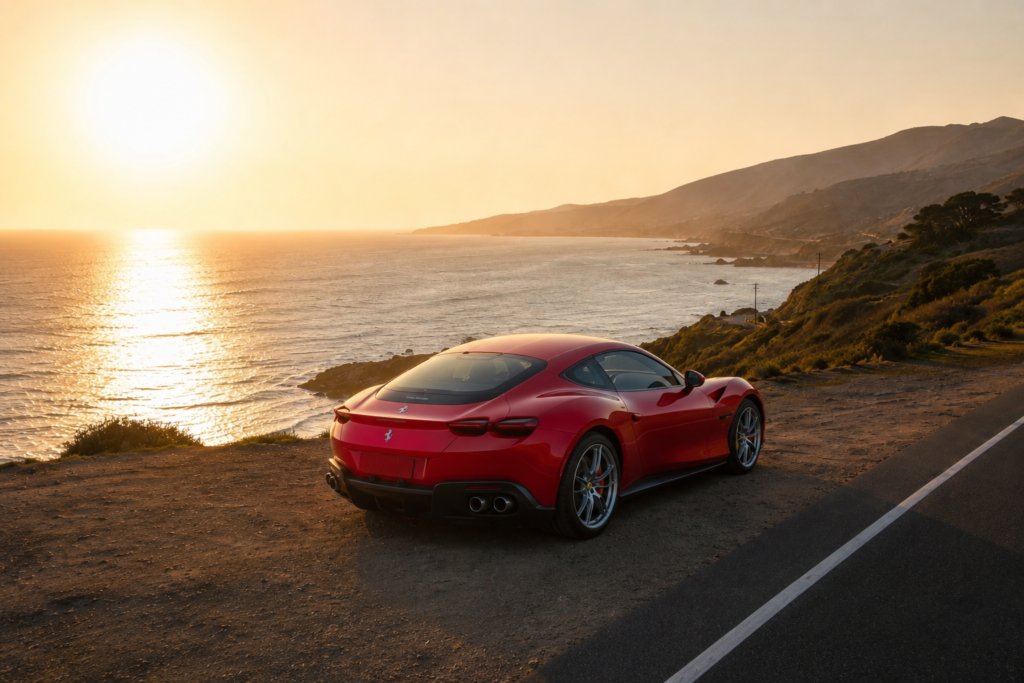
The sun is rising over the Pacific Ocean, casting a golden glow on the winding asphalt of the Pacific Coast Highway in Malibu, California. A brand new Ferrari Roma is parked at a vista point. Its owner, a first-time Ferrari buyer, is staring at the car with a mixture of pride and regret. He loves the car, but he wishes he had made different choices when he specced it. The seats are too stiff. The wheels are too flashy. The yellow brake calipers clash with the red paint.

With hundreds of personalization options, speccing a new Ferrari is genuinely overwhelming. The online configurator is addictive, but it is not educational. The salesman will encourage you to add options because they increase the profit margin. The forum members will have opinions, but their priorities may not match yours.

This guide covers the configurations worth paying for and the ones that drain your wallet for nothing.

The Location: Pacific Coast Highway, Malibu, California

The PCH is a ribbon of asphalt that hugs the California coast. It is a road for driving, not for racing. The curves are sweeping, the views are stunning, and the pace is relaxed. The Ferrari owners who live here have learned through trial and error which options enhance the driving experience and which are purely cosmetic.

The Ferrari Personalization Program: A Primer

Ferrari’s personalization program is called Tailor Made. It is divided into three levels: Exterior, Interior, and Equipment. Exterior options include paint colors, racing stripes, and wheel designs. Interior options include leather colors, stitching patterns, and seat materials. Equipment options include suspension, brakes, and sound systems.

The program is extensive. You can spend an additional $100,000 on options without trying hard. Most of that money will not affect the driving experience. Some of it will.

The Options That Matter: Performance

The Carbon Ceramic Brakes

Standard on most V8 and V12 Ferraris, but not on the entry level models. Carbon ceramic brakes are worth the money. They reduce unsprung weight, resist fade on track, and last longer than steel brakes.

Worth it? Yes, if you drive aggressively or plan to track the car.

The Adaptive Suspension

Standard on most Ferraris. The system adjusts damping based on road conditions and driving mode. It provides a comfortable ride in normal mode and a firm, controlled feel in sport mode.

Worth it? Yes. It comes standard on most models. Do not delete it.

The Launch Control

Standard on all Ferraris. Do not pay extra for it. It is included.

The Exhaust System

The standard exhaust sounds good. The optional sports exhaust is louder and more aggressive. It is worth the money if you want more aural drama. It is not necessary for performance.

The Carbon Fiber Engine Cover

The engine cover is visible through the rear window. The carbon fiber cover looks beautiful. It does not affect performance.

Worth it? Only if you are showing the car at concours events. Otherwise, skip it.

The Options That Matter: Comfort and Usability

The Seats

Ferrari offers several seat options. The standard seats are comfortable for most drivers. The racing seats have aggressive bolstering that holds you in place during cornering but can be uncomfortable on long drives.

Worth it? The racing seats are worth it if you track the car. The standard seats are better for daily driving.

The Front Axle Lift System

This system raises the front of the car to clear speed bumps and steep driveways. It is essential for driving in urban areas. The system is reliable and easy to use.

Worth it? Yes. Buy this option.

The Parking Sensors

Standard on most Ferraris. The rearview camera is also standard. These are essential for parking and maneuvering in tight spaces.

The Infotainment System

Ferrari’s infotainment system is not as good as Porsche’s or BMW’s. But it is adequate. The upgraded sound system is expensive and not significantly better than the standard system.

Worth it? The upgraded sound system is not worth the money.

The Air Conditioning

Standard. Do not pay extra.

The Options That Matter: Aesthetics

The Paint Color

The most important aesthetic choice. Ferrari offers a range of standard colors at no additional cost. Rosso Corsa (red) is the classic choice. Bianco Cervino (white) and Nero Daytona (black) are also popular.

The special colors are expensive. Some cost $10,000 to $20,000. They are beautiful, but they do not affect performance. Choose one if you have the budget and you want your car to stand out.

The Racing Stripes

The stripes are painted on or applied as decals. They cost thousands of dollars. They look good on some cars, but they are purely cosmetic.

Worth it? Only if you love the look. They do not add value.

The Wheels

Ferrari offers several wheel designs and finishes. The forged wheels are lighter and stronger than the cast wheels. The diamond finish is beautiful but difficult to repair.

Worth it? The forged wheels are worth the money. The diamond finish is a matter of personal taste.

The Brake Calipers

The calipers come in several colors at no additional cost. Choose a color that complements the paint. Avoid clashing colors like yellow on a red car.

The Interior Leather

The standard leather is high quality. The upgraded leather is even softer and more luxurious. The contrast stitching adds a nice detail.

Worth it? The upgraded leather is worth it if you spend a lot of time in the car. The contrast stitching is a small detail that adds a lot.

The Carbon Fiber Trim

The carbon fiber interior trim is beautiful. It is also expensive. It does not reduce weight in any meaningful way.

Worth it? Only if you love the look.

The Options That Drain Your Wallet

The Special Paint Protection Film

Ferrari offers a paint protection film at an inflated price. You can get the same film from a professional installer for half the cost.

The Custom Luggage

Ferrari offers luggage sets that are designed to fit in the front trunk. They are beautifully made and terribly expensive. You can buy generic soft bags for a fraction of the price.

The Commissioned Stitching

You can have your name or initials embroidered into the seats. This is a nice touch, but it does not affect anything.

The Carbon Fiber Aero Bits

The carbon fiber front splitter, side skirts, and rear diffuser look aggressive. They are also fragile and expensive to replace. A stone chip can ruin a $5,000 piece.

The Special Edition Badging

Ferrari offers special edition badges for various anniversaries and events. These badges cost thousands of dollars and add no value.

The Malibu Morning: A Wise Owner’s Perspective

The owner of the Ferrari Roma has learned his lesson. He is now helping a friend spec a new 296 GTB.

“Get the front axle lift,” he says. “I did not, and I regret it every time I enter a parking garage.”

“Get the adaptive suspension. It is standard. Do not delete it.”

“Get the forged wheels. They look better and they are stronger.”

“Skip the carbon fiber engine cover. No one will see it but you.”

“Skip the upgraded sound system. You will be listening to the engine, not the stereo.”

The First-Time Buyer’s Checklist

Before you spec a new Ferrari, complete this checklist.

  • Set a realistic budget for options. Do not let the configurator run wild.
  • Prioritize performance and comfort options over cosmetic options.
  • Research the standard equipment. Do not pay for features that come standard.
  • Test drive a car with the options you are considering.
  • Ask the dealer which options hold their value on the resale market.
  • Ignore the forum members who say you must buy every option.
Conclusion

Specing a new Ferrari is overwhelming, but it does not have to be. Focus on the options that matter: carbon ceramic brakes, adaptive suspension, front axle lift, forged wheels, and comfortable seats. Skip the options that drain your wallet: special paint protection film, custom luggage, and carbon fiber aero bits.

The sun is higher now over Malibu. The Ferrari Roma is gone. Its owner is wiser. He will not make the same mistakes again.

The best advice comes from a seasoned Ferrari collector: “Buy the car for yourself, not for the next owner. Get the options that make you happy. But be smart about it. A $20,000 paint job does not make the car faster. A $10,000 carbon fiber engine cover does not make the car more fun to drive.”

That is the truth of speccing a Ferrari. The options that matter are the ones that enhance the driving experience. The rest is decoration. Choose wisely. Drive happily.
The Complete Guide to Supercar Insurance in 2026: A Morning at the High Museum of Art in Atlanta

0

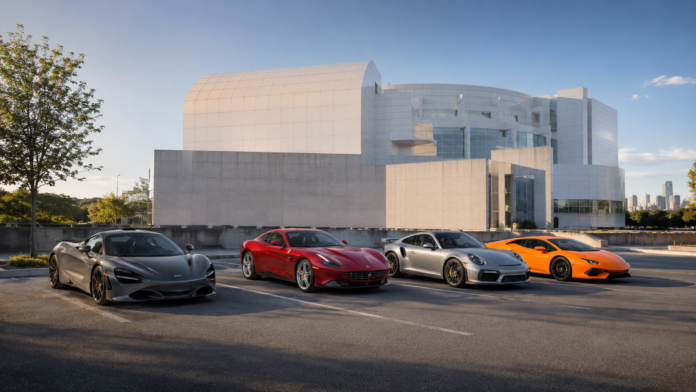
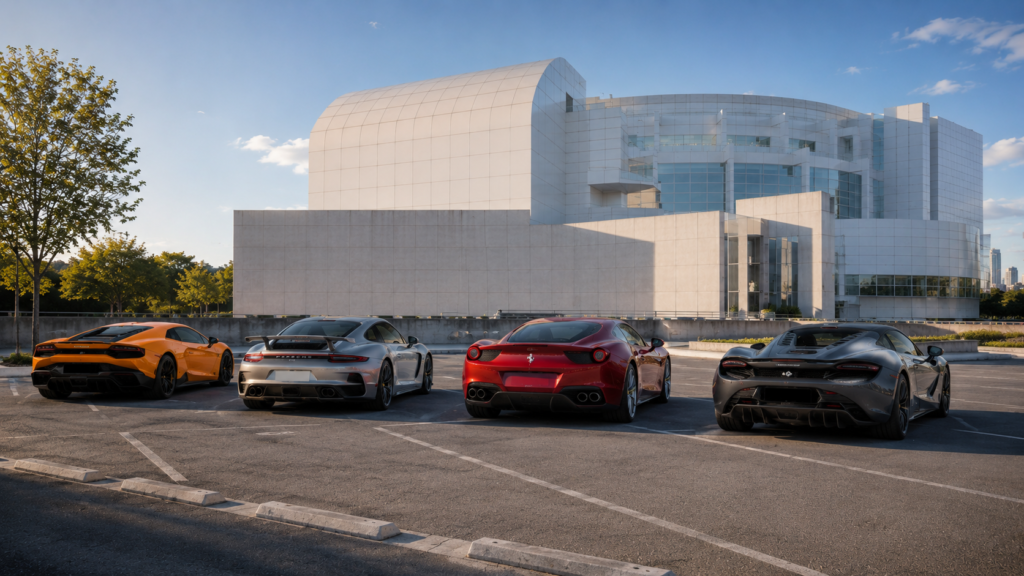
The morning light filters through the glass atrium of the High Museum of Art in Atlanta, Georgia. The building itself is a work of art, designed by Richard Meier and Renzo Piano. In the parking lot, a collection of supercars is gathered. A McLaren 720S, a Ferrari Roma, a Porsche 911 Turbo S, and a Lamborghini Huracán EVO. Their owners are not here to talk about horsepower. They are here to compare insurance policies.

Supercar insurance is different from standard car insurance. Agreed value, market value, track day coverage, mileage restrictions, storage requirements. The terminology is confusing, and the consequences of a mistake can be catastrophic.

This guide covers everything you need to know about supercar insurance in 2026. The advice comes from a specialty insurance broker who has placed policies on over $100 million worth of exotic cars.

The Location: High Museum of Art, Atlanta, Georgia

Atlanta is a hub of wealth and car culture. The city has multiple Ferrari, Lamborghini, and McLaren dealerships. The owners here are educated, wealthy, and careful. They have learned through experience which insurers are reliable and which are not.

Agreed Value vs. Market Value: The Most Important Decision

The single most important decision you will make is choosing between agreed value and market value.

Agreed value: You and the insurer agree on a specific value for the car at the start of the policy. If the car is totaled, you receive that agreed amount. There is no negotiation, no depreciation argument, no haggling.

Market value: The insurer pays what the car is worth at the time of the loss, based on current market data. This amount may be less than what you paid, less than what you owe, and less than what it would cost to replace the car.

For supercars, agreed value is the only sensible choice. Supercar values fluctuate, and some models appreciate. A market value policy could leave you with a significant shortfall.

The broker’s advice: “Always get agreed value. Document the car’s condition, mileage, and provenance. Update the agreed value annually.”

Mileage Restrictions: How Much Can You Drive?

Supercar policies typically have annual mileage limits. Common limits are 1,000, 3,000, or 5,000 miles per year. Some insurers offer unlimited mileage policies, but they are expensive.

If you exceed your mileage limit, the insurer may refuse to cover a claim. Do not guess. Be realistic about your annual driving.

The broker’s advice: “Estimate your annual mileage honestly. If you drive 4,000 miles per year, do not buy a 3,000 mile policy. The savings are not worth the risk.”

Storage Requirements: Where the Car Must Sleep

Most supercar insurers require the car to be stored in a locked, enclosed garage. Street parking is not acceptable. Some insurers also require a security system and a fire extinguisher.

If you live in an apartment or condo, verify your parking situation before you buy a policy. A shared garage may not meet the insurer’s requirements.

The broker’s advice: “Take photos of your garage. Document the locking mechanism, the security system, and the condition. Send them to your insurer when you apply.”

Track Day Coverage: Can You Drive on a Circuit?

Many supercar owners want to track their cars. Standard policies exclude track use. If you crash on a racetrack, even during a non-competitive driver education event, your claim will be denied.

Some insurers offer track day endorsements. These provide coverage for specific events at specific tracks. The coverage is limited, and the deductible is higher.

The broker’s advice: “If you plan to track your car, buy a policy with a track day endorsement. Read the fine print. Some policies only cover driver education events, not timed laps or competitions.”

The Insurers That Understand Performance Cars

Not all insurance companies understand supercars. A standard insurer may not know how to value a rare Ferrari or how to source a replacement part.

Specialty insurers focus on exotic and high performance cars. They understand the market, the repair process, and the needs of supercar owners.

The broker recommends these companies:

  • Chubb: Excellent for high net worth individuals with large collections. Agreed value, worldwide coverage, and low deductibles.
  • Hagerty: The best known specialty insurer. Agreed value, track day options, and a community of enthusiasts. Good for cars driven fewer than 5,000 miles per year.
  • Grundy: Similar to Hagerty. Agreed value, no mileage limits for pleasure driving, and reasonable rates. Not available in all states.
  • Pure: A high net worth insurer. Excellent service, agreed value, and bundled policies for home, auto, and umbrella.

The broker’s advice: “Do not use a standard insurer like Geico, Progressive, or State Farm for a supercar. They do not understand agreed value. They will fight you on a claim.”

The Cost: What to Expect

Supercar insurance costs vary widely based on the car’s value, your driving record, your location, and your annual mileage.

  • Porsche 911 Carrera (agreed value $120,000): $2,000 to $3,000 per year
  • McLaren 720S (agreed value $180,000): $4,000 to $6,000 per year
  • Ferrari 488 GTB (agreed value $190,000): $4,500 to $7,000 per year
  • Lamborghini Aventador (agreed value $400,000): $8,000 to $12,000 per year

Younger drivers, drivers with tickets or accidents, and drivers in urban areas pay more.

The Atlanta Conversation: Real Owners, Real Policies

The owners at the High Museum are sharing their experiences.

A McLaren 720S owner says, “I use Hagerty. I have an agreed value of $180,000. I pay $5,200 per year. I have a 3,000 mile limit. I have never had a claim.”

A Ferrari Roma owner says, “I use Chubb. I bundle my car with my home and umbrella policies. I pay $4,800 for the car. The service is excellent.”

A Porsche 911 Turbo S owner says, “I used to use a standard insurer. They tried to pay me market value after a minor accident. The repair cost was $15,000. They offered $9,000. I switched to Grundy the next week.”

The Claim Process: What Happens When You Crash

Filing a claim on a supercar is different from filing a claim on a Honda Civic. The insurer will send an adjuster who specializes in exotics. The repair shop must be approved and experienced with carbon fiber and aluminum structures.

The process is slower. Parts may need to be sourced from Italy, Germany, or England. The repair may take months.

The broker’s advice: “Document everything. Take photos of the damage, the scene, and the other vehicles. Keep receipts for towing and storage. Do not authorize repairs until the insurer has approved the estimate.”

The First-Time Buyer’s Checklist

Before you insure a supercar, complete this checklist.

  • Choose agreed value over market value.
  • Document the car’s condition with photos.
  • Estimate your annual mileage honestly.
  • Secure a locked, enclosed garage.
  • If you track the car, buy a policy with a track day endorsement.
  • Work with a specialty insurer, not a standard insurer.
  • Compare quotes from Hagerty, Grundy, Chubb, and Pure.
  • Read the fine print. Understand your deductible, your mileage limit, and your storage requirements.

The High Museum Afternoon

The owners have finished their coffee. They are walking back to their cars. The McLaren owner is checking his tire pressure. The Ferrari owner is wiping a smudge off the door. The Porsche owner is adjusting his mirrors.

They are not worried about insurance. They did their homework. They chose the right policies. They drive their cars. They enjoy their cars.

The broker’s final advice: “Insurance is not exciting. It is not sexy. But it is the most important part of supercar ownership. Do not skip the research. Do not cheap out. Protect your investment.”

Conclusion

Supercar insurance is complex, but it is not impossible. The key is understanding agreed value, mileage restrictions, storage requirements, and track day coverage. Work with a specialty insurer that understands exotic cars. Document everything. Read the fine print.

The High Museum is quiet now. The supercars are gone. The owners are driving home, protected by policies that fit their needs.

That is the goal of supercar insurance. Not to be the cheapest. To be the right coverage when you need it most. Do your homework. Protect your dream.

Ferrari Ownership 101: The True Annual Cost of a Prancing Horse – An Afternoon in Atherton, California

0

The sun is warm on the tree-lined streets of Atherton, one of the wealthiest zip codes in the United States. The houses are large, the lots are manicured, and the garages are filled with cars most people only see on a screen. A red Ferrari 488 GTB is parked in a driveway. It is beautiful, low, and aggressive. But the owner is not smiling. He is reviewing his annual expenses.

Ferrari ownership is a dream for many enthusiasts. The sound of a V8 or V12, the feel of the leather steering wheel, the knowledge that you are driving a piece of Italian art. But the dream has a price. Beyond the sticker price, there are annual costs that surprise many first-time buyers.

This guide provides a realistic annual cost breakdown for Ferrari ownership, including servicing, insurance, tires, storage, and the unexpected expenses.

The Location: Atherton, California

Atherton is a small town on the San Francisco Peninsula. It is home to tech executives, venture capitalists, and successful entrepreneurs. The cost of living here is astronomical. The owners who live here can afford Ferraris, but even they are careful about their budgets.

The owner of the 488 GTB has agreed to share his annual expenses. He bought the car used, with 15,000 miles. He has owned it for three years. He drives it about 3,000 miles per year, mostly on weekends.

The Sticker Price: Only the Beginning

The 488 GTB was $280,000 new. Our owner paid $190,000 for a three year old example. He thought he was getting a deal. He was not wrong, but he underestimated the running costs.

The Annual Service

Ferraris require an annual service or a service every 10,000 miles, whichever comes first. The service includes an oil change, filter replacement, fluid checks, and a general inspection.

  • Annual service cost: $1,500 to $2,500

The 488 has a twin turbo V8. The oil is expensive. The filters are specialized. The labor is billed at $300 to $500 per hour.

Our owner paid $2,100 for his last annual service.

The Major Service

Every 20,000 to 30,000 miles, a Ferrari requires a major service. This includes spark plugs, belt replacements (on older models), and additional fluid flushes.

  • Major service cost (30,000 miles): $5,000 to $10,000

The 488 does not have a timing belt. It uses a timing chain. This reduces major service costs compared to older Ferraris. But the spark plugs are still expensive. Our owner is approaching 30,000 miles. He has budgeted $7,000.

The Tires

Ferraris wear staggered tires. The rear tires are wider than the front tires. The tires are high performance summer tires, which wear quickly.

  • Tire cost (set of four): $2,500 to $4,000
  • Tire lifespan: 6,000 to 12,000 miles

Our owner drives 3,000 miles per year. He needs new tires every two to three years. He paid $3,200 for a set of Pirelli P Zeros.

The Brakes

Ferraris come with carbon ceramic brakes. The pads wear, and the rotors can crack or wear out.

  • Brake pad replacement: $3,000 to $5,000
  • Brake rotor replacement: $10,000 to $15,000 per axle

Our owner has not needed brakes yet. But he knows the cost is coming. He has set aside $5,000 for pads and $15,000 for rotors.

The Insurance

Insurance for a Ferrari is expensive. Rates vary by location, driving record, and annual mileage.

  • Annual insurance cost: $3,000 to $10,000

Our owner pays $4,500 per year. He has a clean driving record and drives only 3,000 miles per year. He stores the car in a garage.

The Storage

A Ferrari should not be parked on the street. It should be stored in a garage, ideally in a climate controlled space.

  • Garage cost (if you do not have one): $300 to $1,000 per month

Our owner has a garage. He does not pay extra for storage. But he acknowledges that the garage space could be used for something else. He considers it an opportunity cost.

The Unexpected Expenses

This is where Ferrari ownership gets expensive. Parts fail. Sensors malfunction. The car is complex, and repairs are costly.

  • A $35 brake switch left our owner stranded. The tow cost $300. The repair cost $500.
  • A wheel bearing failed. The bearing itself is not expensive. But Ferrari does not sell the bearing separately. He had to buy the entire hub assembly. Cost: $1,400.
  • A stone cracked a headlight lens. The headlight assembly is not repairable. Replacement cost: $5,000.

Our owner has spent $7,200 on unexpected repairs in three years. That is $2,400 per year.

The Depreciation

Depreciation is not an out of pocket cost, but it is a real loss of value.

  • Annual depreciation: 5% to 10% of the car’s value

Our owner paid $190,000 for his 488. Three years later, it is worth approximately $155,000. That is a loss of $35,000, or approximately $11,700 per year.

He is not worried. He plans to keep the car for many years. The depreciation will slow.

The Annual Total: A Realistic Estimate

Here is a realistic annual cost breakdown for a Ferrari 488 GTB driven 3,000 miles per year.

ExpenseAnnual Cost
Annual Service$2,100
Tires (amortized over 2.5 years)$1,300
Brakes (amortized over 5 years)$1,000 (pads) + $3,000 (rotors)
Insurance$4,500
Unexpected repairs$2,400
Depreciation (amortized)$11,700
Total$26,000

The total is approximately $26,000 per year. That is $2,200 per month. That is more than the monthly payment on a new Honda Accord.

The Atherton Afternoon: A Candid Conversation

The owner of the 488 GTB is sitting on his patio. He is drinking iced tea. He is not complaining. He loves his car.

“People ask me if I regret buying it,” he says. “I do not. The car is incredible. The sound, the feel, the attention. It is worth it.”

“But I wish someone had told me about the costs. I budgeted for the purchase. I did not budget for the maintenance. I did not budget for the unexpected repairs.”

He pauses. “I would do it again. But I would save more first.”

The First-Time Buyer’s Checklist

Before you buy a Ferrari, complete this checklist.

  • Set a realistic annual budget for maintenance, insurance, and repairs.
  • Research the specific model’s common issues.
  • Buy the newest, best maintained example you can afford.
  • Get a pre-purchase inspection from a Ferrari specialist.
  • Budget for a warranty. The Ferrari Approved warranty is excellent.
  • Find a trusted independent mechanic who specializes in exotics.
  • Secure garage storage.
  • Get insurance quotes before you buy.

Conclusion

Ferrari ownership is not for the faint of heart or the light of wallet. The sticker price is only the beginning. The annual costs of servicing, insurance, tires, storage, and unexpected repairs add up to tens of thousands of dollars per year.

But for the owners who can afford it, the experience is unmatched. The sound of the V8, the feel of the leather, the knowledge that you are driving a piece of automotive art. It is worth it.

The sun is setting over Atherton. The 488 GTB is back in the garage. The owner is inside, reviewing his budget. He is not worried. He knew what he was getting into. He did his homework. He drives his car. He smiles.

That is the truth of Ferrari ownership. It is expensive. It is demanding. It is wonderful. And it is not for everyone. But for those who can afford it, there is nothing else like it.

Porsche 911 Buyer’s Guide: Carrera, GTS, Turbo, or GT3? – A Rainy Morning at the Vintage Market in Roscoe Village

0

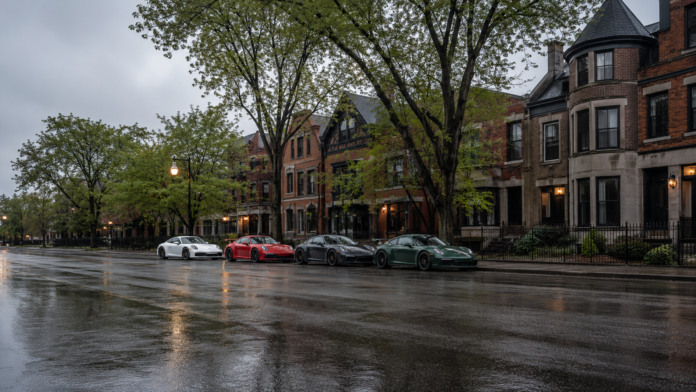
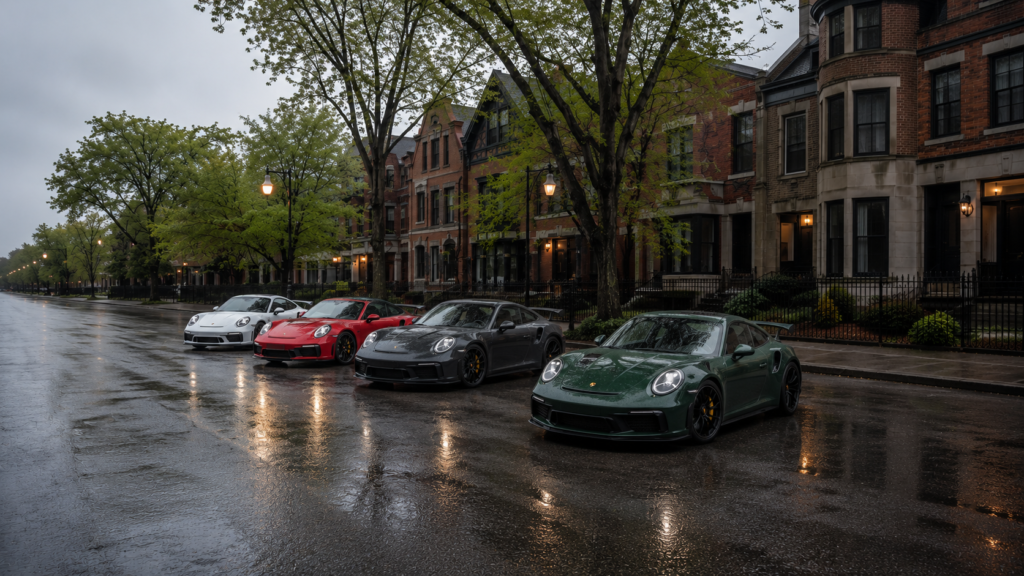
The rain is falling softly on the cobblestone streets of Roscoe Village, a historic neighborhood on Chicago’s north side. The vintage shops and corner cafes are quiet, but a row of Porsche 911s is parked along a side street. They are not the newest models, nor the most expensive. But they represent the bewildering variety of the modern 911 lineup.

The 911 lineup has never been more complex. There are Carreras, Carrera Ts, Carrera 4s, Carrera Ss, Carrera GTSs, Turbos, Turbo Ss, GT3s, GT3 RSs, Dakars, and Sport Classics. Choosing the right one requires understanding what you actually need, not what you think you want.

This guide breaks down every current 911 variant, what separates them, and which one actually matches your driving life.

The Location: Roscoe Village, Chicago, Illinois

Roscoe Village is a neighborhood of tree-lined streets and brick buildings. It is not a racetrack. It is not a canyon road. It is a place where people live, commute, and park on the street. The 911 owners here have learned that the best car is not always the fastest. It is the one that fits your life.

The 911 Philosophy: Rear Engine, Flat Six, Evolving

Every modern 911 shares a rear engine layout and a flat six engine. The 992 generation, introduced in 2019, is the current model. The lineup includes rear wheel drive and all wheel drive, naturally aspirated and turbocharged, coupe and convertible.

The key is understanding the hierarchy. The numbers and letters tell a story.

The Carrera: The Entry Point

Who it is for: The driver who wants a 911 for daily driving. The one who does not need the extra power of the S or GTS.

The car: The Carrera has a 3.0 liter twin turbo flat six producing 379 horsepower. The 0 to 60 time is 4.0 seconds with the dual-clutch transmission, or 4.2 seconds with the manual. The top speed is 182 miles per hour.

The Carrera is the lightest and most affordable 911. It is rear wheel drive, which means it is playful and engaging. The ride is compliant, and the cabin is comfortable.

What owners say: “The base Carrera is plenty fast for the street. I drive mine every day. It is comfortable, reliable, and fun.”

What to watch for: The base Carrera is often overlooked. Buyers assume they need an S. Test drive a base Carrera before you spend more money.

The Carrera S: The Sweet Spot

Who it is for: The driver who wants more power than the base Carrera but does not need the Turbo or GT3. The one who wants the best all-around 911.

The car: The Carrera S has a 3.0 liter twin turbo flat six producing 443 horsepower. The 0 to 60 time is 3.5 seconds with the dual-clutch transmission. The top speed is 191 miles per hour.

The Carrera S has larger brakes, wider tires, and a more aggressive suspension than the base Carrera. It is available with rear wheel drive or all wheel drive (Carrera 4S).

What owners say: “The Carrera S is the sweet spot. It has enough power to be exciting, but it is not as expensive as a Turbo or GT3. It does everything well.”

What to watch for: The Carrera S is popular. Used examples hold their value well.

The Carrera GTS: The Driver’s Carrera

Who it is for: The driver who wants a Carrera with the performance of a Turbo but the character of a naturally aspirated engine. The one who wants the best of both worlds.

The car: The Carrera GTS has a 3.0 liter twin turbo flat six producing 473 horsepower. The 0 to 60 time is 3.3 seconds. The top speed is 193 miles per hour.

The GTS is the top of the Carrera line. It has the engine from the Turbo (detuned), the chassis from the Carrera S, and unique styling cues. It is the driver’s Carrera.

What owners say: “The GTS is the Goldilocks 911. It is not as firm as the GT3, but it is sharper than the S. It is the perfect daily driver.”

What to watch for: The GTS is expensive. A well-optioned GTS approaches the price of a base Turbo.

The Turbo and Turbo S: The All Weather Supercar

Who it is for: The driver who wants the fastest 911 for the street. The one who needs all wheel drive for year round driving. The one who values effortless power.

The car: The Turbo S has a 3.7 liter twin turbo flat six producing 640 horsepower. The 0 to 60 time is 2.6 seconds. The top speed is 205 miles per hour.

The Turbo is rear wheel drive. The Turbo S is all wheel drive. Both are brutally fast. The all wheel drive provides confidence in rain and snow.

What owners say: “The Turbo S is a cheat code. It is so fast, so stable, so capable. It does not feel like a 640 horsepower car. It feels like a guided missile.”

What to watch for: The Turbo S is expensive to buy and expensive to maintain. The tires wear quickly. The brake rotors are costly.

The GT3: The Naturally Aspirated Purist

Who it is for: The driver who values driver engagement over straight line speed. The one who wants a high revving naturally aspirated engine. The one who tracks their car.

The car: The GT3 has a 4.0 liter naturally aspirated flat six producing 502 horsepower. It revs to 9,000 rpm. The 0 to 60 time is 3.2 seconds with the dual-clutch transmission, or 3.7 seconds with the manual. The top speed is 197 miles per hour.

The GT3 is rear wheel drive. The suspension is firm. The cabin is louder than other 911s. The car is designed for track use.

What owners say: “The GT3 is not a daily driver. The ride is punishing. The cabin is loud. But when you rev it to 9,000 rpm on a track, nothing else matters.”

What to watch for: The GT3 holds its value exceptionally well. Manual transmission cars are especially desirable.

The GT3 RS: The Track Weapon

Who it is for: The track day enthusiast. The driver who wants the most extreme naturally aspirated 911. The one who does not care about comfort.

The car: The GT3 RS has a 4.0 liter naturally aspirated flat six producing 518 horsepower. The 0 to 60 time is 3.0 seconds. The top speed is 184 miles per hour. The downforce is massive.

The RS has a fixed rear wing, a stiffer suspension, and reduced sound deadening. It is not a street car. It is a race car with license plates.

What owners say: “The RS is too much for the street. It is noisy, harsh, and impractical. But on a track, it is sublime.”

What to watch for: The RS is expensive. It is also rare. Used examples command high prices.

The Dakar: The Off Road 911

Who it is for: The adventurous driver. The one who wants to take their 911 on gravel roads and light trails. The one who appreciates rally heritage.

The car: The Dakar is a limited edition 911 designed for off road use. It has raised suspension, all wheel drive, and off road tires. The 3.0 liter twin turbo flat six produces 473 horsepower.

The Dakar is not a rock crawler. It is a gravel road machine. It is a tribute to Porsche’s 1984 Paris Dakar Rally victory.

What owners say: “The Dakar is the most fun you can have in a 911 on a dirt road. It is ridiculous. It is wonderful.”

What to watch for: The Dakar is a limited edition. Only 2,500 were built. Prices have already appreciated.

The Roscoe Village Decision: Which One Fits Your Life?

The owners gather at a corner cafe. They talk about their cars. They are not arguing. They are sharing.

The Carrera owner says, “I drive mine every day. It is perfect for the city.”

The Carrera S owner says, “I wanted more power, but I did not want the Turbo. The S is the sweet spot.”

The GTS owner says, “I track mine a few times a year. The GTS is the perfect dual purpose car.”

The Turbo S owner says, “I drive mine in the snow. The all wheel drive is a game changer.”

The GT3 owner says, “I have a second car for daily driving. The GT3 is for weekends and track days.”

The GT3 RS owner says, “I trailer mine to the track. It is too harsh for the street.”

The Dakar owner says, “I drive mine on gravel roads. It is the most fun I have ever had.”

The First-Time Buyer’s Checklist

Before you buy a 911, complete this checklist.

  • Decide how you will use the car. Daily driver? Weekend toy? Track car?
  • Set a realistic budget, including insurance and maintenance.
  • Test drive multiple variants. A base Carrera may surprise you.
  • Consider certified pre-owned. A two year old Carrera S is a better value than a new base Carrera.
  • Get a pre-purchase inspection from a Porsche specialist.
  • Budget for maintenance. Porsche parts are not cheap.

Conclusion

The Porsche 911 lineup is complex, but the choice is simpler than it seems. The base Carrera is for daily driving. The Carrera S is the sweet spot. The GTS is the driver’s Carrera. The Turbo S is the all weather supercar. The GT3 is the track day purist. The GT3 RS is the track weapon. The Dakar is the off road adventurer.

The rain has stopped in Roscoe Village. The 911s are parked along the street. The owners are drinking coffee. They are happy.

The best advice comes from the Carrera owner. “Do not overthink it. Drive them. The right one will speak to you. The numbers do not matter. The feeling matters.”

That is the truth of buying a 911. The right one is the one that makes you smile. Not the one with the highest horsepower. Not the one with the lowest price. The one that fits your life. The one that feels right. The one you want to drive.

Naturally Aspirated vs Turbocharged: Which Soul Wins? A Drive Through the Pittsburgh Hills

0

The morning fog is still lifting off the Monongahela River as a dark blue Porsche 911 GT3 winds its way up through the Mount Washington tunnel. The driver downshifts to third gear, and the 4.0 liter flat six behind the seats responds with a sharp, metallic wail that echoes off the concrete walls. The sound does not just travel; it fills the space, demanding attention.

A few miles away, a silver BMW M3 Competition with its twin turbocharged inline six idles at a red light on Liberty Avenue. It is quiet, subdued, almost polite. The driver taps the accelerator, and the engine responds with a muted burble. It is fast. It is efficient. It is missing something.

The debate between naturally aspirated and turbocharged engines is not about which is faster. On a racetrack, the turbocharged cars generally win. The debate is about something harder to measure. It is about feel, about response, about the connection between the driver and the machine.

This article takes an honest look at what the car world has gained and what it has lost in the shift from naturally aspirated engines to turbocharged ones. The setting is Pittsburgh, Pennsylvania: a city of hills, bridges, and tunnels that reward an engine with character.

The Naturally Aspirated Engine: A Brief History

For most of automotive history, naturally aspirated engines were the standard. Air and fuel were drawn into the cylinders by atmospheric pressure. There were no turbochargers to force extra air in, no superchargers to add complexity. The engine’s power output was a function of displacement, compression, and rpm.

The naturally aspirated engine has a directness that forced induction cannot replicate. When the driver presses the accelerator, the engine responds immediately. There is no lag, no delay, no waiting for the turbo to spool. The power builds linearly, predictably, and rewardingly. The sound is pure, unadulterated by the whistle of a turbo or the muffling effect of forced induction.

The naturally aspirated engine is also simpler. There are fewer parts, fewer complex systems, and fewer things to break. But it is less efficient, less powerful per liter of displacement, and increasingly difficult to justify in an era of emissions regulations.

The Turbocharged Engine: The Modern Standard

Turbochargers use exhaust gases to spin a turbine that forces extra air into the engine. This allows a smaller engine to produce the power of a larger one. A 3.0 liter turbocharged engine can produce as much power as a 5.0 liter naturally aspirated engine. This downsizing improves fuel economy and reduces emissions.

Turbocharged engines also produce more torque at lower rpm. This makes them feel faster in everyday driving, even if the peak power numbers are similar. The power comes on earlier and stays strong across a wider rev range.

But turbocharged engines have a different character. There is lag, however small, between the driver’s foot and the engine’s response. The sound is muted, muffled by the turbocharger. The power delivery is not linear. It builds, then surges, then holds. It is effective, but it is not as involving.

Pittsburgh: A City That Demands Character

Pittsburgh is not a flat city. It is a city of hills, bridges, and tunnels. The roads are narrow, the corners are blind, and the elevation changes are constant. A car with good acceleration is useful. A car with good handling is essential. But a car with an engine that talks to the driver is priceless.

The climb up Canton Avenue in the Beechview neighborhood is one of the steepest public streets in the country. A turbocharged engine with its broad torque curve would climb it easily, chugging along at low rpm without complaint. A naturally aspirated engine would require higher revs and more driver engagement.

This is not a disadvantage. It is a difference.

The Fort Pitt Tunnel is a half mile tube that connects the west end of the city to downtown. The sound of a naturally aspirated engine bouncing off the tunnel walls is unforgettable. The driver and passenger are engulfed in sound, a mechanical symphony that cannot be replicated by a turbocharged engine.

The Imprecise Numbers: Which Is Faster?

On paper, turbocharged engines win. They produce more power per liter, more torque at lower rpm, and better fuel economy. They are the rational choice.

In the real world, the gap is smaller. A turbocharged engine may have a 0 to 60 time that is half a second quicker. But half a second is irrelevant on public roads. What matters is the feeling.

The naturally aspirated engine feels faster because it builds power progressively. The driver feels the acceleration building, the revs climbing, the engine working. The turbocharged engine feels fast, but it is less communicative.

The Sound: The Soul of the Engine

The naturally aspirated engine has a sound that turbocharging cannot replicate. The high revving wail of a flat six, the guttural roar of a V8, the metallic scream of a V12 these sounds are part of the experience.

Turbochargers muffle the sound. They act as silencers, smoothing out the exhaust pulses and reducing the volume. Some manufacturers pump artificial engine noise through the speakers to compensate. This is not a solution. It is a confession.

The naturally aspirated engine does not need artificial noise. It sings on its own.

The Losses and Gains

The car world has gained many things from turbocharging. Smaller engines, better fuel economy, lower emissions, and more low end torque. These are real benefits.

But something has been lost. The immediacy of response, the purity of sound, the linear power delivery, the mechanical connection. These are not things that matter on a spec sheet. They matter to the driver.

Pittsburgh: A City for Enthusiasts

The drive continues through Schenley Park, past the golf course and the ice rink. The roads are smooth, the corners are flowing, and the trees are turning orange and red. It is October, and Pittsburgh is beautiful.

The naturally aspirated Porsche 911 GT3 is in its element. The driver works the engine, keeping the revs high, feeling the power build. The transmission is manual, the steering is hydraulic, and the connection is direct.

The turbocharged BMW M3 would be faster on this road. It would be more efficient. It would be more sensible. But it would not be more fun.

The Final Verdict: Which Soul Wins?

There is no winner. There is only preference.

The turbocharged engine is the future. It is more efficient, more powerful, and more sensible. It is the engine of progress.

The naturally aspirated engine is the past. It is less efficient, less powerful, and less sensible. But it has a soul that no turbo can fake.

The driver must choose. Not between fast and faster. Between involved and efficient.

The Pittsburgh Sunset

The Porsche 911 GT3 crests the hill on Grandview Avenue, overlooking the city. The sun is setting behind the stadiums, casting a golden glow over the rivers. The driver stops the car, gets out, and looks at the skyline.

The engine ticks as it cools. The exhaust crackles. The driver smiles.

This is why the naturally aspirated engine will always have a place. Not because it is better. Because it is beautiful.

Specifications Summary

Engine TypeExamplesPowerTorqueCharacter
Naturally AspiratedPorsche 911 GT3, Lamborghini Huracán500 to 600 hpLower at low rpmLinear, responsive, loud
TurbochargedBMW M3, Ferrari 296 GTB500 to 700 hpHigher at low rpmSurgey, muted, efficient

Conclusion

The naturally aspirated engine is not dead. It is dying, but it is not dead. Enthusiasts still demand it. Manufacturers still build it. The Porsche 911 GT3 still revs to 9,000 rpm. The Lamborghini Huracán still wails. The Chevrolet Corvette Z06 still screams.

But the days are numbered. Emissions regulations will eventually force even the holdouts to downsize and turbocharge. The naturally aspirated engine will become a rarity, a niche product for the few who remember what was lost.

The turbocharged engine is the future. It is efficient, powerful, and sensible. But it is not the same.

The driver in the Porsche 911 GT3 heads back down the hill, toward the city. The engine sings. The driver smiles. For now, that is enough.

The Ferrari Tax: Is Owning a Prancing Horse Worth the Premium? A Weekend in Maranello

0

The town of Maranello in northern Italy is unremarkable. It is a small industrial town, home to a few thousand people, with narrow streets and modest buildings. But on the outskirts of town, behind a red gate, sits the factory of dreams. The Ferrari headquarters is a pilgrimage site for enthusiasts from around the world. They come to see the cars, to visit the museum, and to take photos of the famous test track.

Across the street from the factory, a row of Ferraris is parked outside the Cavallino restaurant. A red SF90 Stradale, a yellow 296 GTB, a blue Roma. They are beautiful, expensive, and exclusive.

The Ferrari brand carries a weight that few others can match. A Ferrari costs significantly more than a comparable supercar from Porsche, McLaren, or Lamborghini. This premium is often called the Ferrari Tax. It can be 40 percent, 50 percent, or even 60 percent higher than a competitor with similar performance.

This article asks a simple question: Is owning a Prancing Horse worth the premium? Or are you just paying for a logo?

The Ferrari Tax: By the Numbers

Let us look at the numbers. Compare the Ferrari 296 GTB to its closest competitor, the McLaren Artura. Both are mid-engine V6 hybrids. Both produce around 800 horsepower. Both are rear wheel drive.

  • Ferrari 296 GTB: $350,000
  • McLaren Artura: $240,000

The Ferrari costs $110,000 more. That is a 46 percent premium.

Compare the Ferrari SF90 Stradale to the Lamborghini Revuelto. Both are V8 hybrids. Both produce around 1,000 horsepower. Both are all wheel drive.

  • Ferrari SF90 Stradale: $550,000
  • Lamborghini Revuelto: $600,000

The Ferrari is actually less expensive. But the Revuelto is a V12, which commands its own premium.

Compare the Ferrari Roma to the Porsche 911 Turbo S. Both are grand tourers. Both produce around 600 horsepower.

  • Ferrari Roma: $250,000
  • Porsche 911 Turbo S: $200,000

The Ferrari costs $50,000 more. That is a 25 percent premium.

The Ferrari Tax is real. It is not imaginary. It is not a myth. It is a significant premium that buyers pay for the privilege of owning a Prancing Horse.

The Case For the Ferrari Tax: What You Get for the Money

The Heritage

Ferrari has a racing heritage that few manufacturers can match. The company has won more Formula 1 championships than any other. The brand is associated with Enzo Ferrari, with the 250 GTO, with the F40, with Michael Schumacher. This heritage is not a marketing gimmick. It is a genuine asset that adds value to every car Ferrari builds.

The Experience

Owning a Ferrari is different from owning any other car. The delivery experience is personal. The factory tours are exclusive. The owner events are attended by fellow enthusiasts who share the passion. The Ferrari community is tight knit and welcoming.

The Sound

Ferrari engines sound different. They are tuned for emotion, not just for power. A Ferrari V8 wails. A Ferrari V12 screams. A Ferrari V6 (in the 296 GTB) sings. The sound is part of the experience.

The Resale Value

Ferraris hold their value better than most competitors. A well maintained Ferrari will depreciate slowly. Limited edition models often appreciate. The Ferrari Tax is partially offset by superior resale value.

The Exclusivity

Ferrari controls its production numbers carefully. The company builds fewer cars than there are buyers. This scarcity drives up prices and ensures that Ferraris remain exclusive. You cannot simply walk into a dealer and buy a new Ferrari. You must be invited.

The Case Against the Ferrari Tax: What You Are Overpaying For

The Performance Gap

Modern supercars are so capable that the differences in performance are negligible. A McLaren Artura is not 46 percent slower than a Ferrari 296 GTB. It is a few tenths slower to 60 miles per hour. The performance gap does not justify the price gap.

The Reliability

Ferraris are more reliable than they once were, but they are still not as reliable as Porsches. The Ferrari Tax does not buy you superior reliability. It buys you a brand that is more finicky.

The Service Costs

Ferrari service costs are higher than the competition. A standard annual service for a Ferrari can cost thousands of dollars. A major service, including the timing belt change on older models, can cost tens of thousands.

The Wait

Ferrari controls its production numbers carefully. You cannot simply order a Ferrari. You must build a relationship with a dealer, purchase less desirable models, and wait for an allocation. The Ferrari Tax includes this hassle.

The Logo

At some point, you are paying for the logo. The Prancing Horse is a powerful symbol, but it is still a symbol. The question is whether the symbol is worth $50,000, $100,000, or more.

A Weekend in Maranello: The Emotional Argument

The Ferrari Museum in Maranello is filled with the cars that made the brand famous. The 250 GTO, the F40, the Enzo. They are parked under soft lights, roped off from the crowd. Schoolchildren press their faces against the glass. Older men stare in silence.

Outside the museum, a line of tourists waits to take photos. They are from all over the world. Japan, Brazil, Germany, the United States. They are united by a single obsession.

This is the power of the Ferrari brand. It transcends logic. It transcends numbers. It is an emotional connection that cannot be quantified.

A Ferrari owner is not paying for a car. They are paying for a membership in a club. They are paying for access to a community. They are paying for a feeling.

The Resale Value Argument: The Ferrari Tax as an Investment

Ferraris hold their value better than most cars. A limited edition Ferrari, such as the 458 Speciale or the 488 Pista, may even appreciate. The Ferrari Tax is partially an investment.

Consider the McLaren Artura. It will depreciate. The Ferrari 296 GTB will also depreciate, but likely less. After five years, the Ferrari may be worth 60 percent of its original price. The McLaren may be worth 40 percent. The difference in depreciation could be $50,000 or more.

The Ferrari Tax is not a sunk cost. It is a cost that may be recovered at resale.

The Alternatives: What Else You Can Buy

For the price of a Ferrari Roma ($250,000), you could buy a Porsche 911 Turbo S ($200,000) and have $50,000 left over. The Porsche is faster, more reliable, and more practical. It is the smart choice.

For the price of a Ferrari 296 GTB ($350,000), you could buy a McLaren Artura ($240,000) and a used Porsche 718 Cayman GTS ($110,000). You would have two cars instead of one. Both are excellent.

For the price of a Ferrari SF90 Stradale ($550,000), you could buy a Lamborghini Revuelto ($600,000) which is more exclusive, or a Porsche 911 Turbo S ($200,000) and a used Ferrari 488 GTB ($250,000). You would have a modern daily driver and a classic Ferrari.

The alternatives are compelling. The Ferrari Tax is not the only option.

The Verdict: Is It Worth It?

The Ferrari Tax is real. It is significant. It is not going away. But whether it is worth it depends on what you value.

If you value emotion, heritage, and exclusivity: The Ferrari Tax is worth it. You are not paying for a car. You are paying for an experience.

If you value performance, reliability, and value: The Ferrari Tax is not worth it. There are better cars for less money.

If you are an investor: The Ferrari Tax is worth it. Ferraris hold their value and sometimes appreciate.

If you are a driver: The Ferrari Tax is questionable. A Porsche 911 Turbo S is 90 percent of the car for 50 percent of the price.

The Final Drive

The sun sets over Maranello. The Ferrari 296 GTB pulls out of the Cavallino parking lot. The driver heads toward the Autostrada, leaving the factory behind. The car accelerates, the engine wails, and the driver smiles.

Is the smile worth $350,000? That is the only question that matters.

Specifications Comparison

ModelPriceCompetitorPrice DifferencePremium
Ferrari 296 GTB$350,000McLaren Artura ($240,000)$110,00046%
Ferrari Roma$250,000Porsche 911 Turbo S ($200,000)$50,00025%
Ferrari SF90 Stradale$550,000Lamborghini Revuelto ($600,000)$50,000-8%

Conclusion

The Ferrari Tax is a real and significant premium. It is not based on performance alone. It is based on heritage, emotion, exclusivity, and resale value.

For some buyers, the premium is worth it. For others, it is not. There is no right answer. There is only the question: what do you value?

As the Ferrari disappears into the Italian evening, the debate continues. Is the Prancing Horse worth the premium? The answer depends on who is asking.

Why the Manual Transmission Will Never Die in Performance Cars: A Drive Through the Angeles Crest Highway

0

The Angeles Crest Highway, known to locals as the 2, cuts through the San Gabriel Mountains north of Los Angeles. It is a road of constant radius sweepers, tightening turns, and dramatic elevation changes. On a weekday morning, the traffic is light. The pavement is smooth. The views are spectacular.

A bright yellow Porsche 911 GT3 with a six speed manual transmission crests the ridge at 5,000 feet. The driver downshifts from fourth to third, blipping the throttle with their right foot. The engine revs climb, the exhaust crackles, and the car settles into the corner. The driver’s right hand moves to the shifter, pulling it back into fourth as the road straightens. The dance is fluid, instinctive, and satisfying.

This is the experience that paddle shifters cannot replicate. Dual-clutch transmissions shift faster. They deliver better lap times. They are more efficient. But they do not involve the driver in the same way. The manual transmission is slower, but it is more engaging. And for a growing number of enthusiasts, that matters more.

Despite predictions that the manual would die out with the rise of electric cars and automated gearboxes, the third pedal is making a comeback. Manual take rates in sports cars like the Porsche 911, BMW M2, and Toyota GR86 are higher than they have been in years. This article explores why the manual transmission refuses to go quietly.

The Numbers: Manual Sales Are Holding Steady

The data is clear. Enthusiasts are still buying manuals. Take rates for the Porsche 911 GT3 are consistently above 50 percent when a manual is offered. The BMW M2 sees a 20 to 30 percent manual take rate. The Toyota GR86 and Subaru BRZ are manual first cars, with a majority of buyers choosing the third pedal.

The manual is no longer the default. It is now a premium option, an enthusiast choice that costs extra. And buyers are willing to pay.

The Counterargument: Paddle Shifters Are Faster

No one disputes that paddle shifters are faster. A dual-clutch transmission can shift in milliseconds. The driver does not need to lift off the throttle or press a clutch pedal. The car simply bangs through the gears. On a racetrack, this is an advantage. In a drag race, it is decisive.

But most driving is not done on a racetrack. Most driving is done on public roads, where the difference of a few tenths of a second is irrelevant. What matters is the experience. And the experience of a manual transmission is unique.

The Angeles Crest Highway: A Manual’s Natural Habitat

The Angeles Crest Highway is not a racetrack. It is a public road. The speed limit is 55 miles per hour, and speeding is dangerous and illegal. But the road still rewards a driver who is engaged.

In an automatic car, the Angeles Crest can be relaxing. The car does the work. The driver steers and brakes, but the transmission chooses the gears. In a manual car, the driver is part of the machine. The left foot presses the clutch. The right hand moves the shifter. The right foot matches the revs. There is no pause, no delay. The car and driver are connected.

This connection is why manuals are surviving. It is not about lap times. It is about involvement.

The Emotional Argument: You Are Part of the Car

Modern cars are capable but isolating. Electric power steering filters out road feel. Sound deadening quiets the cabin. Automatic transmissions remove the driver from the process of choosing gears. The manual transmission is a counterbalance to this trend.

When you drive a manual, you are not a passenger. You are a participant. You decide when to shift. You decide how aggressively to engage the clutch. You decide whether to rev match on a downshift or simply let the engine slow the car. The car does not make decisions for you. You make them.

This is not nostalgia. It is a preference for engagement over convenience.

The Practical Argument: Manuals Are Cheaper to Maintain

Manual transmissions are simpler than dual-clutch automatics. They have fewer parts, fewer electronic sensors, and no complex hydraulic systems. They are easier to service and cheaper to repair. A clutch replacement is expensive, but it is routine. A dual-clutch transmission failure can cost more than the car is worth.

For owners who keep their cars for the long term, this matters. The manual is the more durable choice.

The Theft Deterrent

In an era where car thieves can clone key fobs and hack electronic systems, the manual transmission is an effective theft deterrent. A significant percentage of car thieves cannot drive a manual. It is not a security system, but it is a barrier.

The Future: Will Manuals Survive Electrification?

The rise of electric vehicles is a threat to the manual transmission. Electric motors do not need multiple gears. A single speed reduction gear is sufficient. There is no clutch, no shifter, and no third pedal to press.

But some manufacturers are exploring simulated manuals. Toyota has filed patents for a simulated manual transmission in an electric vehicle. The system would use software to replicate the feel of shifting gears, including a clutch pedal and a shifter. It would be artificial, but it might satisfy the desire for engagement.

The manual transmission as we know it will eventually disappear from most new cars. But the demand for engagement will not. Something will replace it.

The Angeles Crest Highway: A Perfect Moment

The yellow Porsche 911 GT3 reaches the turnout at Mount Wilson. The driver stops the car and looks out over the Los Angeles basin. The city sprawls to the horizon, a sea of buildings and freeways.

Inside the car, the shifter is in neutral. The clutch pedal is at rest. The engine ticks as it cools. The driver sits for a moment, not wanting the drive to end.

This is why the manual transmission will never die. It is not about speed. It is not about efficiency. It is about the feeling of being connected to the machine, the road, and the moment.

The Case for the Manual: A Summary

  • Engagement: The manual involves the driver in the act of driving.
  • Simplicity: Manuals are simpler and cheaper to maintain.
  • Durability: Manuals are more durable than complex dual-clutch units.
  • Theft deterrent: A surprising number of thieves cannot drive a manual.
  • Emotion: The manual makes driving a skill to be practiced and enjoyed.

The Case Against the Manual: A Fair Hearing

  • Speed: Paddle shifters are faster on track.
  • Convenience: Automatics are easier in traffic.
  • Fuel economy: Modern automatics are more efficient.
  • Availability: Fewer cars are offered with manuals.

The Verdict: The Third Pedal Endures

The manual transmission will never be the mainstream choice again. Automatics are too convenient, too efficient, and too fast. But the manual will survive as an enthusiast option, a third pedal for those who value engagement over lap times.

The Angeles Crest Highway will always have drivers who want to shift their own gears. The Porsche 911 GT3 will always offer a manual. The Toyota GR86 will always be manual first.

The manual transmission is not dying. It is finding its place as a premium, enthusiast focused option. It is slower, but it is more satisfying. And for a growing number of drivers, that is enough.

A Final Thought

As the sun sets over the San Gabriel Mountains, the Porsche 911 GT3 heads back down the mountain. The driver shifts from third to fourth, then fourth to fifth, then fifth to sixth. The engine settles into a cruise, and the car disappears into the evening light.

The manual transmission is not the future. But it is not the past either. It is a choice. And for as long as there are drivers who want to make that choice, the third pedal will endure.

Is the Porsche 911 Overrated? The Case For and Against in the Cotswolds

0

The Cotswolds region of England is a landscape of rolling hills, stone villages, and narrow B roads that thread through the countryside like old veins. This is not racetrack. It is not a drag strip. It is a place where cars are measured by how they feel on a damp morning, how they handle a blind crest, how they fit into a village high street. It is the perfect place to ask a controversial question.

The Porsche 911 has been in continuous production for more than 60 years. It has won countless comparison tests, topped innumerable lists, and earned the devotion of millions of enthusiasts. But is it the greatest sports car ever made? Or is it simply the most successfully marketed?

A 911 Carrera S is parked outside the village pub in Bourton on the Water. It is a beautiful car, there is no denying that. But beauty is not the same as truth. This article makes the case for and against the Porsche 911, and lets you decide.

The Case For: Why the 911 Might Actually Be the Greatest

Continuity and Evolution

The 911 has been in production since 1963. No other sports car can claim such longevity. The 911 has evolved through eight generations, each one building on the last. The rear engine layout, the flat six sound, the distinctive silhouette these are constants. But underneath, the car has been transformed. Air cooling gave way to water cooling. Naturally aspirated engines gave way to turbocharging. Manual transmissions gave way to dual-clutch automatics. The 911 has survived and thrived.

The Rear Engine Magic

The 911’s rear engine layout is a liability in theory, but an asset in practice. The weight over the rear axle provides exceptional traction. On a wet road, the 911 can put down power that a front engine car cannot. The rear engine also gives the 911 its distinctive handling character. The car rotates on corner entry, and the driver can adjust the cornering attitude with the throttle. It is a unique experience, and one that has won over generations of drivers.

The Everyday Usability

The 911 is not a supercar that requires a sacrifice. It has a usable trunk. The rear seats (however small) can accommodate children or luggage. The ride is firm but not punishing. The cabin is quiet at highway speeds. The 911 can be driven to work, to the grocery store, and to the track, all in the same week. This usability is a key part of the 911’s appeal.

The Engineering Excellence

The 911 is engineered to an extraordinarily high standard. The engines are robust, the transmissions are reliable, and the chassis are well sorted. Porsche’s quality control is among the best in the industry. The 911 is a car that can be driven hard and daily without falling apart.

The Resale Value

The 911 holds its value better than almost any other sports car. A well maintained 911 will depreciate slowly, and some models even appreciate. This is a testament to the car’s desirability and durability.

The Case Against: Why the 911 Might Be the Most Successfully Marketed

The Rear Engine Compromise

The 911’s rear engine layout is a solution to a problem that no longer exists. The engine was placed in the back of the original Beetle because it was cheap and simple. Porsche kept it because it became a trademark. But the rear engine layout has inherent disadvantages. It limits luggage space. It makes the car prone to oversteer in the hands of inexperienced drivers. It requires complex engineering to manage weight transfer. A front engine or mid engine layout would be simpler and more effective.

The Rising Price

The 911 was once an affordable sports car. The original 911 cost approximately $6,500. A base 911 Carrera today starts at approximately $120,000. A well equipped Turbo S can exceed $250,000. The 911 is no longer accessible to the average enthusiast. It has become a luxury good, a status symbol.

The Homogenization

The modern 911 is a technological marvel, but it has lost some of its character. The engines are turbocharged, which muffles the classic flat six sound. The steering is electric, which reduces feedback. The manual transmission is available only on certain models, and the dual-clutch is the default. The 911 is more capable than ever, but it is also more remote.

The Marketing Hype

Porsche has done an exceptional job marketing the 911. The brand has cultivated an image of precision, heritage, and exclusivity. The 911 is featured in films, video games, and advertisements. It is associated with success and taste. But marketing is not the same as truth. The 911 is a fine car, but it is not the only fine car.

The Competition

The 911 faces fierce competition. The Chevrolet Corvette offers mid engine performance for half the price. The Audi R8 offers a naturally aspirated V10 and all wheel drive. The Mercedes AMG GT offers a front engine V8 and a luxurious interior. The 911 is no longer the clear leader in its class.

The Cotswolds Drive: A Moment of Clarity

The B roads of the Cotswolds are not designed for speed. They are narrow, poorly surfaced, and often wet. A modern 911 Turbo S would be wasted here. But a base Carrera, with its rear engine traction and manageable power, is in its element.

The driver crests a hill and sees a slow moving tractor ahead. The 911’s brakes are strong and predictable. The car slows without drama. The driver downshifts, the flat six burbles, and the car waits for the opportunity to pass. When the straight comes, the 911 surges forward. It is not violent. It is just effective.

There is no theater here. There is no screaming V12 or wild oversteer. There is just competence. The 911 does everything well, and it does it without fuss. For some drivers, this is the definition of greatness. For others, it is the definition of overrated.

The Verdict: You Decide

The Porsche 911 is not the fastest sports car. It is not the most beautiful sports car. It is not the most affordable sports car. It is not the most exciting sports car. But it is one of the most complete.

The case for the 911 is that it does everything well. It is fast, reliable, usable, and desirable. It is a car that can be driven every day and enjoyed on weekends. It is a car that holds its value and rewards its owner.

The case against the 911 is that it is not special enough. It is too expensive, too homogenized, and too reliant on marketing. It is a car for people who want a sports car but are not willing to make sacrifices. It is a car for people who care more about resale value than driving pleasure.

Which side is right? There is no answer. The 911 is a tool. It is a tool for driving, for commuting, for touring, for tracking. For some people, that tool is perfect. For others, it is not.

The Cotswolds Evening

The sun sets over the Cotswolds, and the 911 heads back toward the village. The driver parks the car and walks into the pub. The debate continues inside, over pints of ale and plates of fish and chips.

“Is the Porsche 911 overrated?” one person asks.

“Depends on what you want,” another replies.

That is the only honest answer.

Specifications Summary (Current 992 Generation)

ModelHorsepower0 to 60 mphBase Price
Carrera379 hp4.0 seconds$120,000
Carrera S443 hp3.5 seconds$140,000
Turbo S640 hp2.6 seconds$230,000
GT3502 hp3.2 seconds$170,000
GT3 RS518 hp3.0 seconds$240,000

Conclusion

The Porsche 911 is one of the most significant cars in automotive history. It has survived for 60 years, evolved through eight generations, and earned the devotion of millions. But it is not perfect. It is expensive, homogenized, and perhaps overhyped.

Is it the greatest sports car ever made? That is a matter of opinion. Is it the most successfully marketed? That is a matter of fact.

The 911 is a car that inspires strong opinions. That alone is a testament to its importance. Indifference is the true enemy. The 911 has never been indifferent.

As the pub in Bourton on the Water empties and the last patrons head home, the 911 sits alone in the car park. It does not look overrated. It does not look underrated. It just looks like a 911.

And that, perhaps, is the point.

Alfa Romeo Giulia QV vs BMW M3: Italy vs Germany, Round 1,000 in the Marche Region

0

The Marche region of eastern Italy is not as famous as Tuscany or Umbria. It has no Florence or Siena to draw the crowds. But what it lacks in tourist recognition, it makes up for in driving roads. The SS209, known as the Valmarecchia, winds through the Apennine Mountains. It is a road of constant elevation changes, blind crests, and sweeping corners. It is a road that demands a driver, not just a commuter.

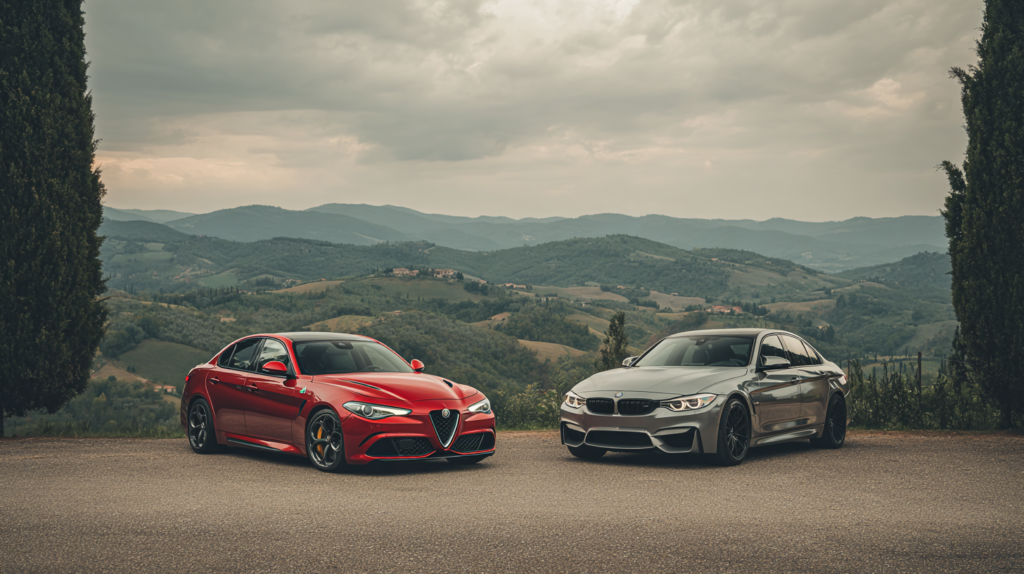
Two cars have come to this road to settle an old argument. The Alfa Romeo Giulia Quadrifoglio, the most emotional sports sedan ever made, built just a few hours north of here. The BMW M3, the most accomplished sports sedan on the market, built nearly a thousand kilometers away in Munich. Italy versus Germany, round 1,000.

This comparison is not about lap times or quarter mile runs. It is not about who has the larger touchscreen or the softer leather. It is about what you value in a car. It is about the soul.

The Contenders: Two Different Personalities

Alfa Romeo Giulia Quadrifoglio

The Giulia Quadrifoglio is Alfa Romeo’s flagship performance sedan. It is powered by a 2.9 liter twin turbo V6 engine that is derived from Ferrari technology. The engine produces 505 horsepower and 443 lb-ft of torque. The car features a carbon fiber driveshaft, an eight speed automatic transmission, and rear wheel drive. The Quadrifoglio is designed to be an emotional experience, prioritizing driver engagement over absolute precision.

BMW M3

The M3 is BMW’s iconic sports sedan. The current generation, the G80, is powered by a 3.0 liter twin turbo inline six engine, the S58. It produces 473 horsepower in base form and 503 horsepower in Competition form. The M3 features an eight speed automatic transmission and a choice of rear wheel drive or all wheel drive. The M3 is designed to be precise, capable, and refined.

The Valmarecchia: A Road That Rewards Emotion

The SS209 climbs out of the town of Santarcangelo di Romagna, heading south toward the Republic of San Marino. The road is narrow in places, with crumbling edges and the occasional patch of gravel. It is not a perfect racetrack. It is a real road.

The Alfa Romeo Giulia Quadrifoglio feels at home here. The steering is quick, almost too quick for a novice. It is weighted perfectly, and it communicates every change in camber, every pebble on the pavement. The rear end moves under power, not in a threatening way, but in a way that invites the driver to participate.

The BMW M3 is more clinical. The steering is precise, and the car is planted. It does not wiggle. It does not squirm. It just goes. It is fast, but it is not as alive.

Powertrain: Ferrari Fire vs Bavarian Precision

Alfa Romeo Giulia Quadrifoglio

The Quadrifoglio’s V6 is a masterpiece. It is derived from the Ferrari F154 V8, with two cylinders removed. It revs quickly, and it produces a sharp, metallic wail that builds to the 6,500 rpm redline. The engine is responsive, and the eight speed transmission shifts quickly.

  • Horsepower: 505 hp
  • Torque: 443 lb-ft
  • 0 to 60 mph: 3.8 seconds
  • Top Speed: 191 mph
  • Weight: 3,800 lb

BMW M3 Competition

The M3’s S58 inline six is also a masterpiece. It is smooth and powerful, with a broad torque curve that makes the car feel strong at any rpm. The engine note is more muted than the Alfa’s, but it is still satisfying.

  • Horsepower: 503 hp
  • Torque: 479 lb-ft
  • 0 to 60 mph: 3.4 seconds (xDrive)
  • Top Speed: 180 mph (limited)
  • Weight: 3,900 lb

Performance Verdict

The BMW is quicker to 60 miles per hour, especially with the xDrive all wheel drive system. The M3 is also more efficient and more refined. The Alfa is more emotional. It is not about the numbers. It is about the feeling.

Chassis and Handling: The Feel of the Road

Alfa Romeo Giulia Quadrifoglio

The Quadrifoglio’s chassis is a work of art. The suspension uses double wishbones at the front and a multi link rear. The car features an active suspension that can be adjusted through the drive mode selector. The Alfa Romeo Chassis Domain Control system manages the suspension, steering, and brakes.

The Alfa is playful. It rotates on corner entry, and the driver can adjust the cornering attitude with the throttle. The car rewards smooth inputs and communicates clearly.

BMW M3 Competition

The M3’s chassis is also exceptional. The suspension uses double wishbones at the front and a five link rear. The car features adaptive dampers that adjust based on driving conditions.

The M3 is stable and predictable. It is less playful than the Alfa, but it is also less demanding. The car inspires confidence, even at high speeds.

Handling Verdict

The Alfa Romeo is the more engaging car to drive at the limit. It is more alive, more responsive, and more rewarding. The BMW is the more capable car. It is faster and more stable, but it is less emotional.

Interior: Passion vs Precision

Alfa Romeo Giulia Quadrifoglio

The Quadrifoglio’s interior is driver focused. The seats are heavily bolstered, with leather and Alcantara upholstery. The steering wheel is thick and feels good in the hands. The dashboard features a digital instrument cluster with a central tachometer. The materials are good, but the fit and finish is not at BMW’s level.

BMW M3 Competition

The M3’s interior is more refined. The materials are higher quality, and the build quality is exceptional. The seats are comfortable and supportive. The infotainment system is more advanced, with a larger screen and more features.

Interior Verdict

The BMW M3 has the more modern and luxurious interior. The Alfa Romeo is more focused on the driving experience.

The Marche Sunset: A Moment of Clarity

The sun is setting over the Apennines, casting long shadows across the SS209. The Alfa Romeo and the BMW pull into a small town called Pennabilli. They park side by side in the main square. The Alfa’s engine ticks as it cools. The BMW’s fans whir.

The Alfa Romeo draws a crowd. A group of teenagers takes photos. A man in his 60s walks around it slowly, admiring the curves. The BMW draws a glance, then nothing.

This is the difference. The Alfa Romeo is special. It is not the better car in any objective sense. But it has something that the BMW does not. It has soul.

Value and Ownership

Pricing

The Alfa Romeo Giulia Quadrifoglio has a base price of approximately $80,000. The BMW M3 Competition has a base price of approximately $75,000 for rear wheel drive and $80,000 for xDrive. The prices are similar.

Depreciation

The BMW holds its value better than the Alfa. The M3 has a loyal fanbase and strong demand. The Quadrifoglio has higher depreciation.

Ownership Costs

The Alfa Romeo is more expensive to maintain. The Ferrari derived engine requires specialized service, and parts are more costly. The BMW is less expensive to own over time.

Which One Tells You Everything About What You Value?

Choose the Alfa Romeo Giulia Quadrifoglio if:

  • You prioritize emotion and driver engagement.
  • You want a car that feels alive and rewards skill.
  • You value style and passion over precision and refinement.
  • You are willing to accept higher ownership costs.
  • You want a car that draws a crowd.

Choose the BMW M3 if:

  • You prioritize precision, capability, and refinement.
  • You want a car that is fast and composed in any condition.
  • You value a modern, luxurious interior.
  • You want a car with strong resale value.
  • You prefer a more understated design.

Specifications Summary

SpecificationAlfa Romeo Giulia QuadrifoglioBMW M3 Competition
Engine2.9L twin turbo V63.0L twin turbo inline six
Horsepower505 hp503 hp
Torque443 lb-ft479 lb-ft
Transmission8 speed automatic8 speed automatic
DriveRear wheel driveRWD or AWD
0 to 60 mph3.8 seconds3.4 seconds (xDrive)
Top Speed191 mph180 mph (limited)
Weight3,800 lb3,900 lb
Base Price$80,000$75,000 to $80,000
CharacterEmotional, alive, passionatePrecise, capable, refined

Conclusion

The Alfa Romeo Giulia Quadrifoglio and the BMW M3 are two of the greatest sports sedans ever built. They represent two different philosophies. The Alfa is about the heart. The BMW is about the head.

The Alfa is not the better car. It is not as fast, not as refined, not as reliable, and not as well built. But it is the more special car. It is the car that makes you feel something.

The BMW is the car that makes you faster. It is the car that you can trust, that will never let you down, that will deliver its performance lap after lap. It is the smart choice.

Which one tells you everything about what you value in a car? Look at the two cars parked in the square at Pennabilli. The one that draws the crowd is the Alfa. The one that draws the driver is the BMW.

The choice is yours. It always has been.

Ford GT vs Aston Martin Vantage: Track-Bred Grand Tourers Compared on the Pacific Coast Highway

0

The Pacific Coast Highway stretches along the California coastline, a ribbon of asphalt that clings to cliffs overlooking the Pacific Ocean. The sun is setting over Big Sur, casting long shadows across the road. The air smells of salt and sagebrush. This is a road built for grand touring, for covering vast distances in comfort without sacrificing the thrill of driving.

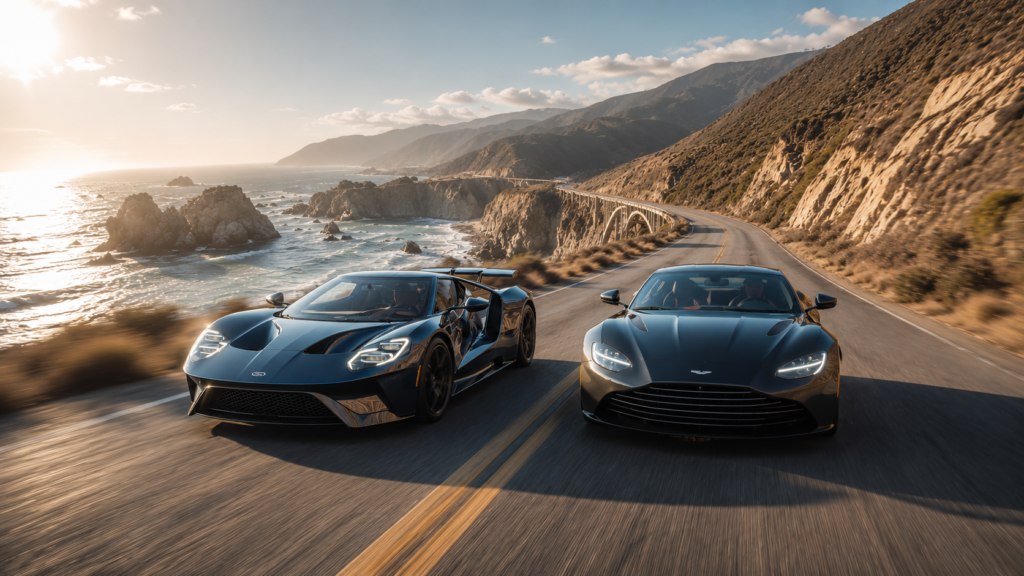
Two cars have come to play on this legendary highway. The Ford GT, a mid-engine American supercar born from Le Mans winning DNA. The Aston Martin Vantage, a front-engine British grand tourer with a twin turbo V8 and a reputation for elegance. They are different in layout, philosophy, and price. Yet both are track bred. Both are grand tourers. Both are here to answer the same question: which one speaks to your soul?

The Contenders: Two Different Philosophies

Ford GT

The Ford GT is a mid-engine supercar. It is powered by a 3.5 liter twin turbo V6 producing 647 horsepower. The engine is based on the unit that powered Ford’s Le Mans winning GT race car. The car features a carbon fiber monocoque, active aerodynamics, and a seven speed dual-clutch transmission. The GT is designed to be a track weapon that can also be driven on the street.

Aston Martin Vantage

The Aston Martin Vantage is a front-engine grand tourer. It is powered by a 4.0 liter twin turbo V8 sourced from Mercedes AMG, producing 503 horsepower. The car features an aluminum chassis, a rear mounted eight speed automatic transmission, and a limited slip differential. The Vantage is designed to be a stylish, comfortable grand tourer with genuine sporting credentials.

Big Sur: A Road Built for Grand Touring

The Pacific Coast Highway between Carmel and San Simeon is one of the most beautiful driving roads in the world. The road twists and turns along the coastline, with elevation changes and off-camber corners that demand attention. This is not a racetrack. It is a public highway, and driving at the limit is not advisable. But it is a place where a car’s character becomes clear.

The Ford GT attacks the road with aggression. The mid-engine layout provides exceptional turn in, and the active aerodynamics keep the car planted. The driver feels every input, and the car responds instantly.

The Aston Martin Vantage is more relaxed. The front-engine layout gives it a different rhythm. The car flows through corners, the chassis communicating clearly but not urgently. The driver can cover ground quickly without feeling rushed.

Performance: Numbers for the Track and the Road

Ford GT

  • Engine: 3.5L twin turbo V6
  • Horsepower: 647 hp at 6,250 rpm
  • Torque: 550 lb-ft
  • Transmission: 7 speed dual-clutch
  • Drive: Rear wheel drive
  • 0 to 60 mph: 3.0 seconds
  • Top Speed: 216 mph
  • Weight: 3,354 lb

Aston Martin Vantage

  • Engine: 4.0L twin turbo V8
  • Horsepower: 503 hp at 6,000 rpm
  • Torque: 505 lb-ft
  • Transmission: 8 speed automatic
  • Drive: Rear wheel drive
  • 0 to 60 mph: 3.5 seconds
  • Top Speed: 195 mph
  • Weight: 3,373 lb

Performance Verdict

The Ford GT is significantly more powerful and quicker. Its 647 horsepower is 144 more than the Vantage’s 503. The GT’s 0 to 60 time of 3.0 seconds is half a second quicker than the Vantage’s 3.5 seconds. The GT also has a higher top speed.

The Vantage is not a slow car, but it is not in the same performance league as the GT.

Chassis and Handling: Two Paths to Grip

Ford GT

The Ford GT’s carbon fiber monocoque is rigid and light. The suspension uses double wishbones at all four corners, with pushrod actuated dampers. The active aerodynamics, including a deployable rear wing and front splitter, adjust to balance downforce and drag.

The GT is a precise instrument. The steering is direct and communicative, providing excellent feedback. The car changes direction eagerly, and the rear wheel drive layout requires careful throttle management. On a track, the GT is exceptionally fast.

Aston Martin Vantage

The Vantage’s aluminum chassis is also rigid. The suspension uses double wishbones at the front and a multi-link rear. The car features an electronic limited slip differential that manages torque distribution between the rear wheels.

The Vantage is more forgiving than the GT. The steering is precise but less urgent. The car is stable and predictable, and the rear wheel drive layout is more manageable. On a winding road, the Vantage is enjoyable and accessible.

Handling Verdict

The Ford GT is the more capable car on a track. Its mid-engine layout, active aerodynamics, and carbon fiber construction make it a weapon. The Aston Martin Vantage is the more accessible car on a winding road. It is easier to drive quickly without requiring the same level of skill.

Design: American Aggression vs British Elegance

Ford GT

The Ford GT’s design is dramatic and aggressive. The low nose, large air intakes, and flying buttresses give it a purposeful, race car appearance. The dihedral doors open upward, adding to the drama. The GT is available in a range of colors, including the iconic Gulf livery.

Aston Martin Vantage

The Vantage’s design is elegant and muscular. The front end features the signature Aston Martin grille and sharp LED headlights. The side profile shows a long hood and a fastback roofline. The rear end is clean and sculpted.

Design Verdict

The Ford GT is the more dramatic and eye catching car. It looks like a race car for the road. The Aston Martin Vantage is more elegant and understated. It appeals to drivers who prefer subtlety over aggression.

Interior: Function vs Luxury

Ford GT

The Ford GT’s interior is functional and driver focused. The seats are fixed, with adjustable pedals and steering column. The materials are high quality, with carbon fiber, Alcantara, and leather throughout. The infotainment system is basic but functional.

The interior is not luxurious, but it is not supposed to be. The GT is a car for driving, not for lounging.

Aston Martin Vantage

The Vantage’s interior is more luxurious. The seats are comfortable and supportive, with power adjustment and heating. The materials are exceptional, with fine leather, Alcantara, and metal trim. The infotainment system is more sophisticated than the Ford’s.

The Vantage is a car that can be used for long distance touring in comfort.

Interior Verdict

The Aston Martin Vantage has the more luxurious and comfortable interior. The Ford GT is more functional and driver focused.

The Pacific Coast Highway: A Moment in Time

As the sun dips below the horizon, the two cars pull into a vista point overlooking the ocean. The Ford GT’s dihedral doors are open, and the driver is reviewing telemetry data on the display. The Aston Martin Vantage’s engine ticks quietly as it cools.

They are different cars for different drivers. The Ford GT is for the enthusiast who wants to feel like a race car driver, who values lap times and track capability above all else. The Aston Martin Vantage is for the enthusiast who wants to cover ground in style, who values elegance and comfort as much as performance.

Value and Ownership

Pricing

The Ford GT has a base price of approximately $500,000. However, the application process and limited production mean that most buyers paid $650,000 or more. The Aston Martin Vantage has a base price of approximately $150,000. The Ford is significantly more expensive.

Exclusivity

The Ford GT was limited to 1,350 units over a five year production run. The Aston Martin Vantage is a volume model, with thousands of units produced. The Ford is rarer and more exclusive.

Ownership Costs

Both cars are expensive to maintain. The Ford GT’s specialized components and limited production make parts difficult to source. The Aston Martin’s Mercedes AMG engine is more common, but service costs are still high.

Which One Speaks to Your Soul?

Choose the Ford GT if:

  • You want a car with racing heritage and track capability.
  • You value exclusivity and rarity.
  • You prefer an aggressive, dramatic design.
  • You are willing to accept a less luxurious interior.
  • You have the budget for a $500,000 plus car.

Choose the Aston Martin Vantage if:

  • You want a car that is elegant and refined.
  • You value comfort and luxury for long distance touring.
  • You prefer a more understated design.
  • You want a car that is easier to drive quickly on winding roads.
  • You want better value. The Vantage is significantly less expensive.

Specifications Summary

SpecificationFord GTAston Martin Vantage
Engine3.5L twin turbo V64.0L twin turbo V8
Horsepower647 hp503 hp
Torque550 lb-ft505 lb-ft
Transmission7 speed dual-clutch8 speed automatic
DriveRear wheel driveRear wheel drive
0 to 60 mph3.0 seconds3.5 seconds
Top Speed216 mph195 mph
Weight3,354 lb3,373 lb
Base Price$500,000+$150,000
CharacterAggressive, track focused, exclusiveElegant, comfortable, accessible

Conclusion

The Ford GT and the Aston Martin Vantage are two very different interpretations of the track bred grand tourer. The Ford GT is a race car for the road. It is expensive, exclusive, and demanding. It rewards skilled drivers with exceptional performance.

The Aston Martin Vantage is a grand tourer with a sporting edge. It is elegant, comfortable, and accessible. It rewards drivers who appreciate style and finesse.

Which one speaks to your soul? The Ford GT speaks to the driver who wants to conquer the track. The Aston Martin Vantage speaks to the driver who wants to enjoy the journey.

Both will put a smile on your face. Both are legends. As the stars appear over the Pacific, the two cars head their separate ways. The GT turns inland, toward the racetrack. The Vantage continues south, following the coast. Neither is wrong. Both are right. The choice is yours.