Home Blog Page 16

Nissan GT-R R35 vs Porsche 911 Turbo S: Godzilla vs Stuttgart on the Shuto Expressway

0

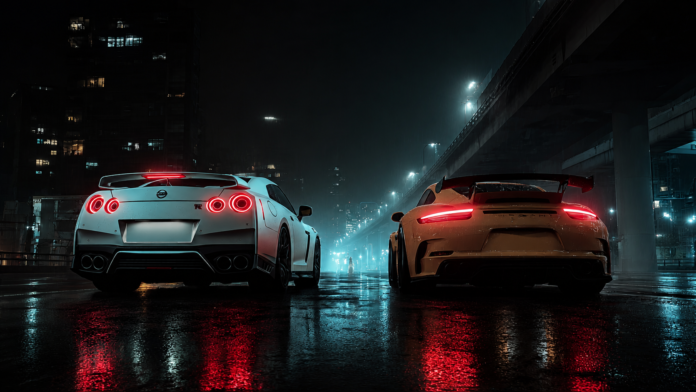
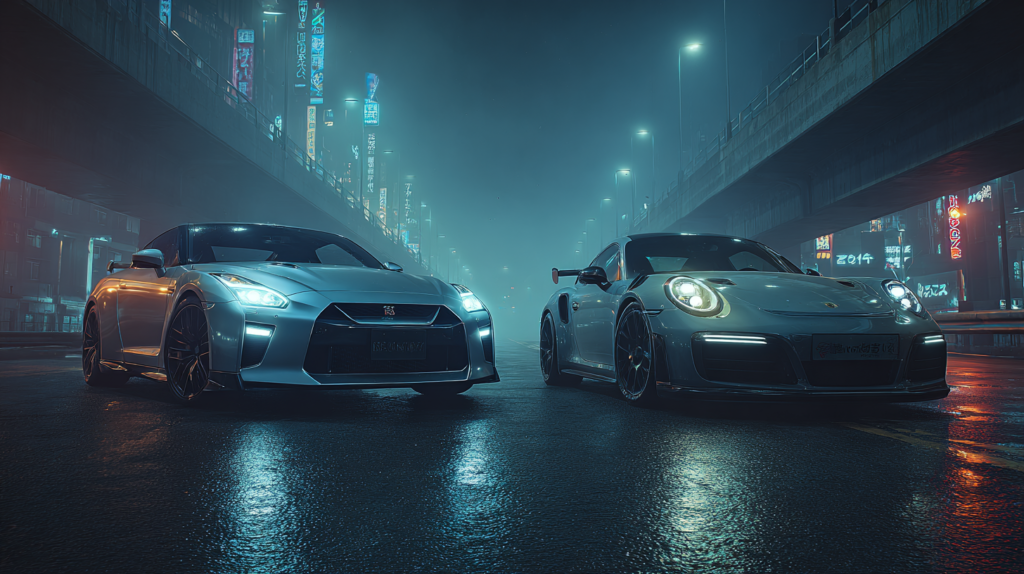
Tokyo at night is a different world. The neon glow of Shibuya reflects off the rain slicked asphalt of the Shuto Expressway. The city that never sleeps hums with energy, and at its heart, the elevated expressway becomes a proving ground for a specific breed of enthusiast. The Bayshore Route, with its long straights and sweeping curves, is a place where Japan’s finest performance machinery has been tested for decades.

It is here that the Nissan GT-R R35, known to fans around the world as Godzilla, feels most at home. Yet tonight, it shares the rain slicked pavement with a rival from across the sea. The Porsche 911 Turbo S, the benchmark of all weather, everyday supercar performance, has come to play.

Since 2007, the Nissan GT-R and the Porsche 911 Turbo have been locked in a debate. The R35 generation, now in its final years, redefined what was possible from a Japanese performance car. The 992 Turbo S represents the latest generation of Stuttgart’s finest, a car that seems to defy physics with its launch control and all wheel drive.

This is a comparison not just of numbers, but of philosophies. A quarter mile, track, and value analysis that has started arguments in parking lots and online forums for nearly two decades.

The Contenders: Two Titans of All Weather Performance

Nissan GT‑R R35

The Nissan GT‑R is a front-engine, all wheel drive coupe. It is powered by a hand built 3.8 liter twin turbo V6, the legendary VR38DETT. In its final Nismo form, it produces approximately 600 horsepower and 481 lb-ft of torque. The car is equipped with a six speed dual-clutch transmission and an advanced all wheel drive system that can vary torque distribution between the front and rear axles. The GT‑R is designed to be a supercar slayer, delivering exotic performance at a fraction of the price.

Porsche 911 Turbo S

The Porsche 911 Turbo S is a rear-engine, all wheel drive coupe. It is powered by a 3.7 liter twin turbo flat six engine producing 640 horsepower and 590 lb-ft of torque. The car uses an eight speed dual-clutch transmission and Porsche’s advanced traction management system. The Turbo S is designed to be the ultimate everyday supercar, combining comfort, all weather capability, and blistering speed.

Shuto Expressway: Where Legends Are Made

The Bayshore Route of the Shuto Expressway is not a racetrack. It is a public highway, and driving at the limit is illegal and dangerous. But in the quieter hours of the night, the long, lit tunnels and sweeping corners have become a place where car culture thrives. The GT‑R has long been the king of this domain. Its launch control and all wheel drive make it brutally effective from a stoplight, and its stability at high speed is legendary.

The Porsche 911 Turbo S, with its rear engine layout and higher power output, is a different beast. It demands a lighter touch, a more delicate application of power. But when driven correctly, it is unstoppable.

Quarter Mile: The Drag Strip in the City

The Shuto Expressway does not have a drag strip, but the long straights between the tunnels serve the same purpose. From a standing start, the GT‑R is a missile. Its launch control system, perfected over years of development, delivers consistent, brutal acceleration.

  • Nissan GT‑R R35 Nismo: 0 to 60 mph in 2.5 seconds. Quarter mile in 10.8 seconds at 130 mph.
  • Porsche 911 Turbo S: 0 to 60 mph in 2.6 seconds. Quarter mile in 10.5 seconds at 135 mph.

The numbers are close, nearly identical. The GT‑R has the edge to 60 mph, but the Turbo S has more power and a higher trap speed. On the street, from a stoplight, the result is a driver’s race.

The Tunnels: Track Performance on Public Roads

The tunnels of the Shuto Expressway are where the handling differences become apparent. The concrete walls amplify the sound of the engines, and the lack of runoff means the driver must be precise.

The Nissan GT‑R feels planted and secure. The all wheel drive system provides immense grip, and the car rotates predictably. The steering is heavy and communicative. The GT‑R is a car that flatters the driver, allowing them to push hard without fear.

The Porsche 911 Turbo S is more demanding. The rear engine layout requires the driver to manage weight transfer carefully. But the rewards are significant. The Turbo S rotates on corner entry and puts power down exiting corners with authority.

Value: The Godzilla Advantage

The Nissan GT‑R has always been about value. When it debuted in 2008, it delivered supercar performance for less than $70,000. Today, the GT‑R Nismo starts at approximately $220,000. The Porsche 911 Turbo S starts at approximately $200,000.

The price gap has narrowed significantly. The GT‑R is no longer the bargain it once was. However, the GT‑R offers exclusivity. Production numbers are low, and the car has a cult following that the Porsche cannot match.

The Porsche offers a more luxurious interior, a more refined ride, and the prestige of the Porsche badge. For many buyers, the extra cost is justified.

Daily Driving: Comfort vs Capability

The Porsche 911 Turbo S is the better daily driver. The interior is quiet and comfortable. The suspension absorbs road imperfections. The car is easy to drive in traffic, with a smooth dual-clutch transmission.

The Nissan GT‑R is more raw. The ride is firm, the cabin is loud, and the dual-clutch transmission can be jerky at low speeds. The GT‑R is a car that always feels alive, even when driving slowly. Some owners prefer that. Others find it tiring.

The Tokyo Night: A Moment in Time

As the rain begins to fall harder on the Shuto Expressway, the two cars slow to a crawl. The GT‑R’s wipers clear the windshield. The Turbo S’s headlights cut through the spray. Side by side, they are a study in contrasts.

The GT‑R is a aggressive, sharp edged machine. It looks like it was carved from a single block of carbon fiber. The Turbo S is smoother, more elegant, its curves refined over generations.

They are both extraordinary. They are both legends. And they are both fading. The R35 GT‑R is nearing the end of its long production life. The 992 Turbo S will eventually be replaced by a hybrid.

But tonight, on the Shuto Expressway, they are timeless.

Which One Wins the Argument?

The debate has continued for years. There is no clear winner.

Choose the Nissan GT‑R R35 if:

  • You want a car with a cult following and a raw, unpolished character.
  • You value exclusive, low production numbers.
  • You prefer a car that feels aggressive and demanding.
  • You are willing to accept a firmer ride and a louder cabin.

Choose the Porsche 911 Turbo S if:

  • You want a car that is refined, luxurious, and comfortable.
  • You value the prestige of the Porsche badge.
  • You want a car that is easy to drive every day.
  • You prefer a smoother, more elegant design.
The Verdict from the Shuto Expressway

The Nissan GT‑R and the Porsche 911 Turbo S are two of the greatest performance cars of their generation. The GT‑R is an icon, a car that changed the rules. The Turbo S is a benchmark, a car that has been refined to near perfection.

The GT‑R is the better value. It offers performance that rivals cars costing twice as much. The Turbo S is the better luxury car. It offers a level of refinement and comfort that the GT‑R cannot match.

On the Shuto Expressway, both are capable of breathtaking speed. Both will put a smile on your face. Both are legends.

Specifications Summary

SpecificationNissan GT‑R R35 NismoPorsche 911 Turbo S
Engine3.8L twin turbo V63.7L twin turbo flat six
Horsepower600 hp640 hp
Torque481 lb-ft590 lb-ft
Transmission6 speed dual-clutch8 speed dual-clutch
DriveAll wheel driveAll wheel drive
0 to 60 mph2.5 seconds2.6 seconds
Quarter mile10.8 seconds at 130 mph10.5 seconds at 135 mph
Top Speed196 mph205 mph
Base Price$220,000$200,000
CharacterRaw, aggressive, demandingRefined, comfortable, easy

Conclusion

The Nissan GT‑R R35 and the Porsche 911 Turbo S are two of the most significant performance cars of the 21st century. They represent different approaches to speed. The GT‑R is a street fighter. The Turbo S is a precision instrument.

The GT‑R wins the quarter mile. The Turbo S wins on the track. The GT‑R wins on emotion. The Turbo S wins on refinement.

The argument will continue as long as there are car enthusiasts. And that is the beauty of it. There is no right answer. There is only the drive.

As the rain clears over Tokyo, the two cars disappear into the night. The GT‑R’s exhaust echoes off the tunnel walls. The Turbo S’s flat six hums quietly. They are gone, but the debate lingers.
Pagani Huayra vs Koenigsegg Agera RS: The Artisan Hypercar Battle on the Streets of Monte Carlo

0

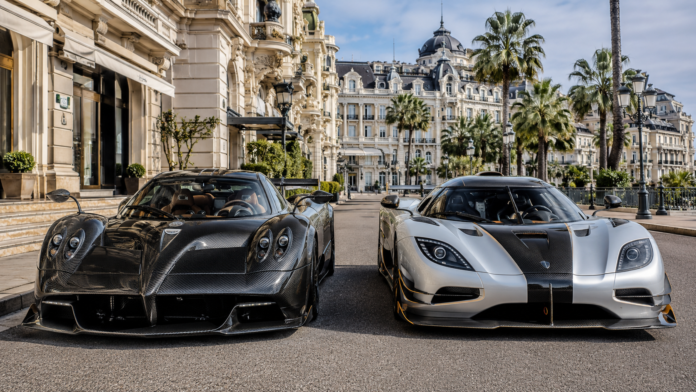
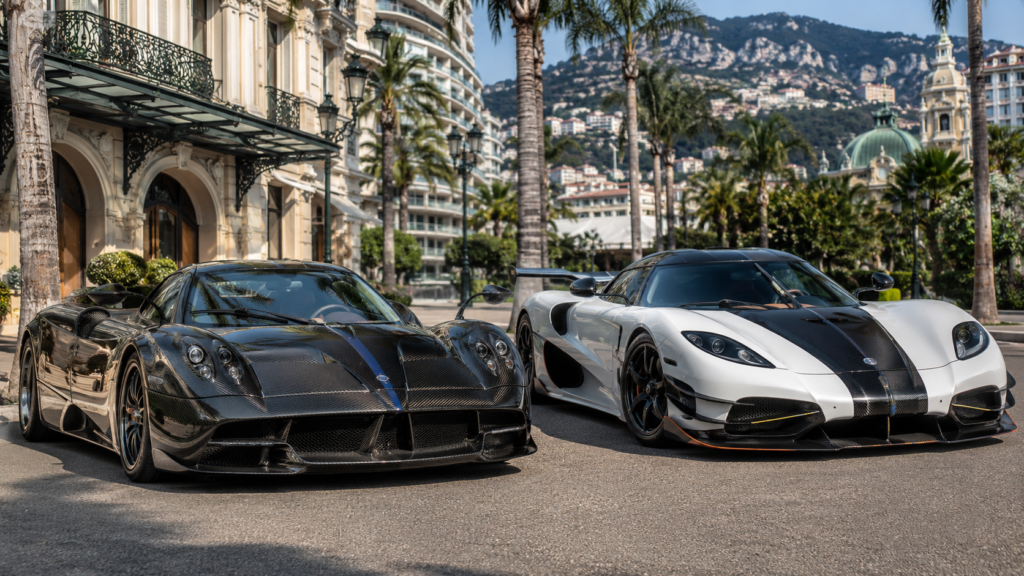
The sun hangs low over the Mediterranean, casting a golden glow across the harbor of Monte Carlo. Yachts worth hundreds of millions of euros bob gently in the water. The streets are quiet this early in the evening, the casino not yet alive with the clatter of chips and the murmur of high rollers. Into this quiet comes a sound like thunder rolling off the cliffs. It is the bark of a twin turbo V12, the unmistakable signature of a Pagani Huayra. Moments later, a sharper, more mechanical whine joins the chorus. It is the scream of a twin turbo V8 from a Koenigsegg Agera RS. Two of the most extraordinary hypercars ever built have arrived on the same stretch of asphalt.

The Pagani Huayra and the Koenigsegg Agera RS represent two very different visions of the hypercar. Both are hand built in limited numbers. Both cost millions of dollars. Both are capable of speeds that would have been unthinkable a generation ago. But they approach the problem of performance from completely different angles. The Huayra is a work of art, sculpted by artisans who treat carbon fiber like clay. The Agera RS is an engineering tour de force, a machine designed to push the boundaries of physics.

This article compares the Pagani Huayra and the Koenigsegg Agera RS across performance, engineering, design, driving experience, and legacy to determine which represents the greater engineering achievement.

The Contenders: Two Different Philosophies

Pagani Huayra

The Huayra is the second model from Pagani, following the Zonda. It is named after Huayra Tata, the Incan god of wind. The car is powered by a 6.0 liter twin turbo V12 engine developed by Mercedes AMG. It produces 720 to 789 horsepower depending on the variant. The Huayra is famous for its active aerodynamics, with four movable flaps that adjust to balance downforce and drag.

Koenigsegg Agera RS

The Agera RS is a limited production variant of the Agera, which followed the CCX. It is named after the Swedish verb “to act,” reflecting the company’s focus on action rather than appearance. The car is powered by a 5.0 liter twin turbo V8 engine developed in house. It produces 1,160 to 1,341 horsepower depending on the fuel used. The Agera RS is famous for its power to weight ratio and its record setting top speed.

Performance: The Numbers That Define an Era

Pagani Huayra

The Huayra’s Mercedes AMG V12 is a masterpiece of forced induction. The twin turbos provide strong low end torque, and the engine pulls to its 6,700 rpm redline.

  • Engine: 6.0L twin turbo V12
  • Horsepower: 720 to 789 hp
  • Torque: 738 to 811 lb-ft
  • Transmission: 7 speed automated manual
  • Drive: Rear wheel drive
  • 0 to 60 mph: 3.2 seconds
  • Top Speed: 230 to 238 mph
  • Weight: 1,350 kg dry

Koenigsegg Agera RS

The Agera RS’s V8 is a powerhouse. On E85 fuel, it produces up to 1,341 horsepower. The power to weight ratio is exceptional, making the car incredibly quick.

  • Engine: 5.0L twin turbo V8
  • Horsepower: 1,160 to 1,341 hp
  • Torque: 1,100 lb-ft
  • Transmission: 7 speed dual clutch
  • Drive: Rear wheel drive
  • 0 to 60 mph: 2.8 seconds
  • Top Speed: 278 mph (record)
  • Weight: 1,295 kg dry

Performance Verdict

The Koenigsegg Agera RS is the more powerful and faster car. Its 1,341 horsepower is significantly more than the Huayra’s 789. The Agera RS holds the world record for the fastest production car, with a two way average speed of 277.9 mph. The Huayra is fast, but it is not in the same league as the Koenigsegg.

Engineering: Two Paths to Speed

Pagani Huayra: Active Aerodynamics

The Huayra’s most distinctive engineering feature is its active aerodynamic system. Four flaps, two at the front and two at the rear, adjust their angle based on speed, steering angle, and braking. The system provides downforce when needed for cornering and reduces drag for straight line speed. The flaps move continuously, keeping the car balanced in all conditions.

The Huayra also features a carbon titanium monocoque, a hybrid material that combines carbon fiber with titanium. The structure is lightweight and incredibly rigid. The suspension uses double wishbones at all four corners, with pushrod actuated dampers.

Koenigsegg Agera RS: Lightweight Power

The Agera RS’s engineering focus is on power to weight. The 5.0 liter V8 is one of the most powerful production engines ever built. The engine features a flat plane crankshaft, titanium connecting rods, and a carbon fiber intake manifold.

The Agera RS also features a carbon fiber monocoque with honeycomb aluminum core. The suspension uses double wishbones at all four corners, with pushrod actuated dampers. The car also features a removable hardtop, allowing it to be driven as a coupe or a targa.

Engineering Verdict

Both cars are engineering masterpieces. The Huayra’s active aerodynamic system is more advanced and complex. The Agera RS’s powertrain is more powerful. The Huayra is perhaps the more clever engineering achievement, while the Agera RS is the more brutal.

Design: Art vs Science

Pagani Huayra: Sculpted Beauty

The Huayra’s design is breathtaking. The body is sculpted and organic, with flowing lines that catch the light. The front end features a prominent grille and signature quad headlights. The side profile shows the dramatic side air intakes and the curved roofline. The rear end is dominated by the four exhaust outlets and the active flaps.

The interior is a work of art. The materials are exceptional, with leather, carbon fiber, and machined aluminum throughout. The controls are arranged like an aircraft cockpit. The seats are comfortable and supportive.

Koenigsegg Agera RS: Functional Aggression

The Agera RS’s design is more functional. The body is smooth and aerodynamic, with a focus on reducing drag. The front end features a small grille and slim headlights. The side profile shows the large side air intakes and the distinctive removable roof. The rear end features a large diffuser and dual exhaust outlets.

The interior is more spartan than the Huayra. The materials are high quality, but the focus is on function over luxury. The seats are supportive, and the controls are simple and intuitive.

Design Verdict

The Pagani Huayra is the more beautiful car. It is a rolling sculpture, a work of art that happens to be a hypercar. The Koenigsegg Agera RS is more functional, but it lacks the Huayra’s emotional appeal.

Driving Experience

Pagani Huayra: The Ballet

The Huayra is a car that rewards finesse. The engine is responsive, but the power comes on smoothly. The active aerodynamics keep the car planted, allowing the driver to carry speed through corners. The steering is precise and communicative. The Huayra feels alive, dancing on the road.

Koenigsegg Agera RS: The Bludgeon

The Agera RS is a car that demands respect. The power is immense, and it comes on aggressively. The car requires smooth inputs; any sudden throttle application can overwhelm the rear tires. The steering is direct but less communicative than the Huayra’s. The Agera RS feels like a weapon, a tool for conquering roads and records.

Driving Verdict

The Huayra is the more enjoyable car to drive at normal speeds. It is engaging and communicative. The Agera RS is the more thrilling car at the limit, but it is also more demanding and less forgiving.

The Monte Carlo Drive

Back on the streets of Monte Carlo, the two hypercars approach the iconic hairpin of the Grand Prix circuit. The Huayra goes first. The active flaps adjust, the suspension compresses, and the car rotates neatly around the tight corner. The driver shifts manually, the automated gearbox delivering a crisp change.

The Agera RS follows. The power is intoxicating, but the driver must be careful. Too much throttle and the rear end will step out. The car is a handful, even at low speeds. The driver manages it with skill and concentration.

The two cars park side by side near the casino. Onlookers gather, phones raised. The Huayra draws gasps of appreciation. The Agera RS draws stares of awe.

Legacy and Value

Pagani Huayra

The Huayra was produced from 2011 to 2018. Approximately 100 coupes were built, along with the Huayra Roadster, BC, and Imola variants. Prices started at approximately $1.5 million. Today, Huayras trade for $2 to $3 million depending on the variant.

Koenigsegg Agera RS

The Agera RS was produced from 2015 to 2018. Only 25 units were built. The car that set the world speed record sold for approximately $2.5 million. Today, Agera RS models trade for $3 to $5 million depending on provenance.

Value Verdict

Both cars have appreciated significantly. The Agera RS’s record setting pedigree makes it the more valuable collector car. The Huayra’s artistry and beauty make it the more desirable to many enthusiasts.

Which Is the Greater Engineering Achievement?

The answer depends on how you define engineering.

If you define engineering as the pursuit of absolute performance, the Koenigsegg Agera RS is the greater achievement. Its power to weight ratio, its top speed record, and its raw performance numbers are unmatched. It is a car that pushes the boundaries of what is physically possible.

If you define engineering as the integration of art and technology, the Pagani Huayra is the greater achievement. Its active aerodynamics, its carbon titanium monocoque, and its breathtaking design represent a level of craftsmanship and innovation that is rare in any field.

Both are extraordinary. Both are masterpieces. The Huayra is the work of an artist who happens to be an engineer. The Agera RS is the work of an engineer who happens to create art.

The Final Verdict

The Pagani Huayra and the Koenigsegg Agera RS are two of the greatest hypercars ever built. They approach the same problem from completely different angles. The Huayra is about beauty, engagement, and the joy of driving. The Agera RS is about power, speed, and the thrill of conquest.

Which one is right for you? If you want a car that you can drive on a winding road and feel like a part of the scenery, choose the Huayra. If you want a car that you can take to a racetrack or a salt flat and set records, choose the Agera RS.

As the sun sets over Monte Carlo, the two hypercars disappear into the night. The Huayra’s V12 rumbles, then fades. The Agera RS’s V8 screams, then quiets. They are gone, but they are not forgotten. They are legends.

Specifications Summary

SpecificationPagani HuayraKoenigsegg Agera RS
Engine6.0L twin turbo V125.0L twin turbo V8
Horsepower720 to 789 hp1,160 to 1,341 hp
Torque738 to 811 lb-ft1,100 lb-ft
Transmission7 speed automated manual7 speed dual clutch
0 to 60 mph3.2 seconds2.8 seconds
Top Speed230 to 238 mph278 mph (record)
Weight1,350 kg dry1,295 kg dry
ProductionApproximately 100 coupes25 units
Base Price$1.5 million$2.5 million

Conclusion

The Pagani Huayra and the Koenigsegg Agera RS are two of the most remarkable hypercars ever created. They represent the pinnacle of boutique automotive engineering. The Huayra is a work of art, a machine that prioritizes beauty and engagement. The Agera RS is a record breaker, a machine that prioritizes speed and power.

Neither is objectively better. They are different. The Huayra is for those who want to savor the drive. The Agera RS is for those who want to conquer the road.

Both are legends. Both will be remembered. The choice is yours.

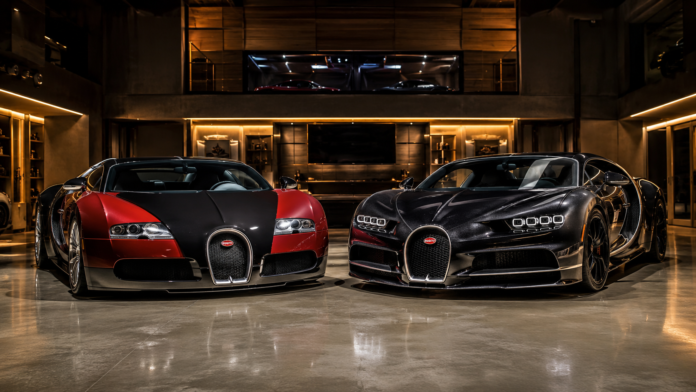
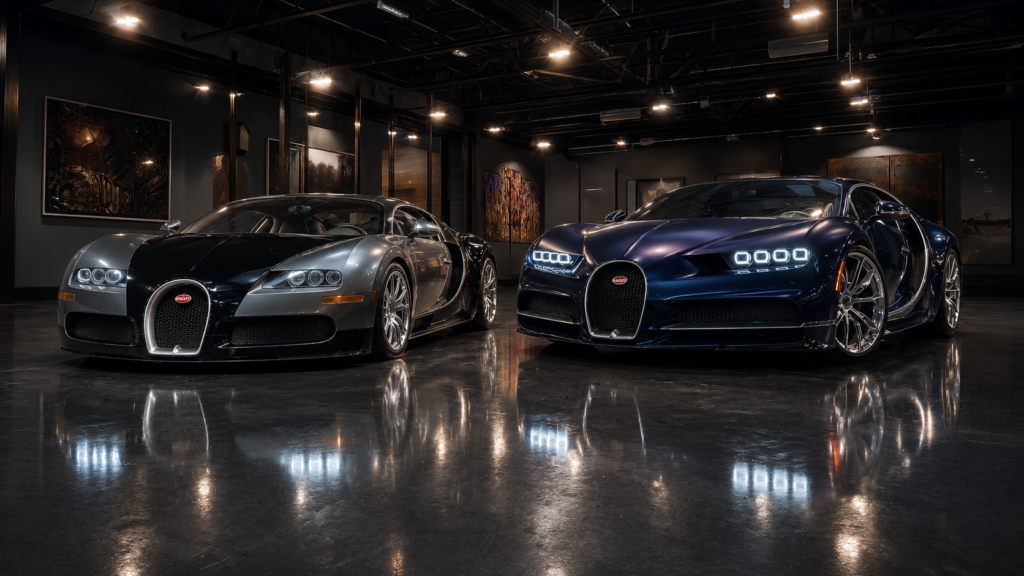
Bugatti Veyron vs Bugatti Chiron: 15 Years of Hypercar Evolution on the Autobahn

0

How does the car that defined the modern hypercar era compare to its successor? A generational comparison of two W16 legends on the open roads of Germany.

The sun was just beginning to warm the tarmac of the A2 autobahn, a stretch of unrestricted highway that cuts through the flat farmland of Lower Saxony near the town of Lehrte. To the north, the silhouette of the Volkswagen test track at Ehra Lessien was barely visible on the horizon, a place that had witnessed history twice, once in 2005 and again in 2019.

On the shoulder of the road, two cars sat side by side. On the left, a Bugatti Veyron 16.4 in a deep shade of ebony. On the right, a Bugatti Chiron Super Sport in a striking blue carbon fiber weave. Between them, 15 years of engineering evolution.

This was not a drag race. It was a journey. A chance to understand how the car that defined the modern hypercar era compared to its successor. Two W16 legends, separated by time but connected by an engine that had become the most iconic of the 21st century.

The story of the Veyron began in a small room in Wolfsburg, Germany, in the late 1990s. The story of the Chiron began on the same Ehra Lessien track where the Veyron had claimed its fame. Together, they represent a continuous pursuit of a single goal: to build the fastest, most powerful, and most technologically advanced production car in the world.

Bugatti Veyron vs Bugatti Chiron: Key Specifications Compared

SpecificationBugatti Veyron 16.4 (2005)Bugatti Chiron Super Sport (2019)
Engine8.0L quad-turbo W168.0L quad-turbo W16
Horsepower987 hp (1,001 PS)1,578 hp
Torque922 lb-ft1,180 lb-ft
Transmission7-speed dual-clutch7-speed dual-clutch
DriveAll-wheel driveAll-wheel drive
0-60 mph2.5 seconds2.3 seconds
Top Speed253 mph273 mph (limited)
Weight4,162 lb4,400 lb
Production450 units500 units (Super Sport)
Original Price$1.7 million$3.9 million

The Birth of a Legend: The Veyron’s Impossible Promise

The early morning light caught the Veyron’s aluminum body panels, casting reflections that danced across the hood. The car was nearly two decades old, but it did not look dated. It looked purposeful, a machine designed by engineers, not stylists.

The Veyron was conceived in 1999 when Ferdinand Piëch, the chairman of Volkswagen Group, challenged his engineers to build the most powerful and fastest production car in the world. The targets were staggering. One thousand horsepower. Two hundred and fifty miles per hour. The ability to drive at top speed for an extended period without overheating or running out of fuel.

At the time, no production car had exceeded 240 miles per hour. No road car engine had ever produced 1,000 horsepower reliably. The engineering challenges seemed insurmountable. The project was canceled and restarted multiple times. Eighteen prototype engines failed before the first reliable unit was produced.

The car that finally emerged in 2005 was a masterpiece. The W16 engine, an 8.0 liter quad turbocharged unit, occupied the space between the driver and the rear axle. The transmission, a seven speed dual clutch unit, was one of the first of its kind. The all wheel drive system was designed to handle the immense power without overwhelming the tires.

The Veyron was not a car. It was a statement. It proved that the impossible was possible.

The Evolution: How the Chiron Built on a Legacy

The driver of the Chiron pressed the start button. The W16 engine came to life with a deep, mechanical rumble that was more refined than the Veyron’s. The car’s interior was a different world. The leather was softer, the carbon fiber trim was more intricate, and the digital instrument cluster was a work of art.

The Chiron was not a revolution. It was an evolution. The engineers had taken everything they learned from the Veyron and refined it. The engine produced 1,578 horsepower, nearly 600 more than the original Veyron. The torque figure of 1,180 lb-ft was available across a broader range of the rev band. The transmission was stronger, the cooling system was more efficient, and the aerodynamics were more sophisticated.

But the fundamental architecture remained the same. The W16 engine, the dual clutch transmission, the all wheel drive layout, the two seat configuration all of these elements were carried over from the Veyron. The Chiron was not a different car. It was a better version of the same car.

Performance Evolution: How the Numbers Changed in 15 Years

Performance MetricVeyron 16.4 (2005)Chiron Super Sport (2019)Improvement
0-60 mph2.5 seconds2.3 seconds0.2 seconds
0-100 mph5.5 seconds4.8 seconds0.7 seconds
0-200 mph22.0 seconds15.8 seconds6.2 seconds
Top speed253 mph273 mph20 mph
Horsepower987 hp1,578 hp591 hp
Torque922 lb-ft1,180 lb-ft258 lb-ft

The Drive: Experiencing the Veyron on the Autobahn

The driver slid into the Veyron’s cockpit. The seats were comfortable but not heavily bolstered. The dashboard was filled with physical buttons and a small screen. The steering wheel was thick and wrapped in leather. The car felt expensive, but it did not feel modern.

The Veyron pulled onto the autobahn. The engine was quiet at low speeds, and the ride was surprisingly compliant. The car felt heavy, which it was, but it also felt planted, secure, and stable.

The driver pressed the throttle. The turbos spooled, the transmission downshifted, and the Veyron surged forward. The acceleration was immense, but it was not violent. It was a wave of force that built steadily, pushing the driver into the seat. The car reached 120 miles per hour without drama. It reached 150 miles per hour with the same composure.

At 180 miles per hour, the Veyron began to feel different. The steering weighted up, the suspension firmed, and the car felt as if it were glued to the road. The driver could feel the downforce pressing the car onto the tarmac. The engine was roaring now, a mechanical symphony of 16 cylinders and 4 turbochargers.

The Veyron reached 200 miles per hour. The world outside became a tunnel of color. The driver’s focus narrowed to the road ahead, the gauges, the mirrors. The car was stable, predictable, and utterly confidence inspiring.

The Veyron was not a car that demanded skill to drive fast. It was a car that made speed feel effortless.

The Successor: Driving the Chiron on the Same Roads

The driver switched to the Chiron. The difference was immediate. The seats were more supportive. The digital instrument cluster was clearer. The sound of the engine was more refined, a deeper, more cultured note.

The Chiron pulled onto the autobahn. The ride was firmer than the Veyron’s, but it was still comfortable. The car felt smaller than its weight suggested. The steering was quicker, and the car responded more eagerly to inputs.

The driver pressed the throttle. The Chiron launched forward with a ferocity that the Veyron could not match. The 0 to 60 time of 2.3 seconds was not dramatically different from the Veyron’s 2.5 seconds, but the 0 to 200 time of 15.8 seconds was a revelation. The Chiron reached 200 miles per hour more than 6 seconds faster than the Veyron.

At high speed, the Chiron was even more stable. The aerodynamics were more advanced, generating downforce without excessive drag. The car felt planted, secure, and unstoppable.

The Chiron reached its limited top speed of 273 miles per hour. The world outside became a blur. The driver felt the immense forces at work, the engineering effort required to keep the car stable at speeds that were previously the domain of fighter jets.

The Chiron was not a different car. It was a better version of the same car. A car that had evolved over 15 years of continuous development.

The Interior: From 2005 Luxury to 2019 Opulence

The Veyron’s interior was a product of its time. The dashboard was filled with buttons and switches, each with a satisfying click. The materials were high quality, with leather covering every surface. The seats were heated and power adjustable. The sound system was premium.

But the technology felt dated. The navigation screen was small and low resolution. The interface was slow. There were no smartphone integration features, no advanced driver assistance systems. The Veyron was a car designed to be driven, not to be connected.

The Chiron’s interior was a different experience. The dashboard was dominated by a large digital instrument cluster that could be configured to show different information. The center console featured a small screen for infotainment functions. The materials were exceptional, with leather, carbon fiber, and machined aluminum throughout.

The seats were more supportive, with heating and cooling functions. The sound system was world class. The car featured Apple CarPlay, a premium audio system, and advanced climate control.

The Chiron was a car that you could live with. The Veyron was a car that you drove.

The Engineering: What Changed in 15 Years

Under the skin, the Chiron represented a significant evolution from the Veyron. The engine block was redesigned, with larger turbochargers and improved cooling. The transmission was strengthened to handle the additional torque. The chassis was stiffened, and the suspension was revised.

But the most significant changes were in the electronics. The Veyron’s systems were relatively simple. The Chiron’s systems were complex, with advanced traction control, torque vectoring, and active aerodynamics that adjusted continuously based on driving conditions.

The Chiron also benefited from advances in materials science. The use of carbon fiber was more extensive, reducing weight while increasing rigidity. The tires were developed specifically for the car, with compounds that could withstand speeds exceeding 270 miles per hour.

The result was a car that was more powerful, more capable, and more refined than its predecessor. But it was also heavier, more complex, and more expensive.

The Cost of Hypercar Ownership

Cost ConsiderationVeyron (2005)Chiron (2019)
Original price$1.7 million$3.9 million
Current value (used)$1.5 to $2.5 million$4 to $6 million
Tire replacement$38,000 per set$50,000 per set
Oil change$21,000$30,000
Annual service$30,000 to $50,000$50,000 to $80,000

The Verdict: Evolution, Not Revolution

The Veyron and the Chiron were parked side by side at a rest stop near the town of Brunswick. The sun was higher now, and the day was warming. A few other cars had pulled in, their drivers stopping to photograph the two hypercars.

The Veyron was a landmark. It had defined the modern hypercar era. It had proven that 1,000 horsepower and 250 miles per hour were possible in a production car that could be driven on public roads. It was a car that had changed the industry.

The Chiron was the successor. It had taken the Veyron’s formula and refined it. More power, more speed, more luxury, more technology. It was a better car in every measurable way.

But the Veyron had something that the Chiron could not replicate. It had the aura of a pioneer. It was the car that had done it first. The car that had faced the impossible and had won.

The Chiron was the better car. The Veyron was the more significant car.

As the drivers prepared to leave, the owner of the Veyron looked at his car and then at the Chiron. “The Chiron is faster,” he said. “It’s more comfortable. It’s more advanced. But when I drive the Veyron, I feel like I’m driving a piece of history.”

The owner of the Chiron nodded. “The Veyron is the legend,” he said. “The Chiron is the legend perfected.”

They started their engines, pulled onto the autobahn, and disappeared into the distance. Two W16 legends, separated by 15 years but united by a common purpose. To push the boundaries of what was possible.

Conclusion: The Evolution of an Icon

The Bugatti Veyron and Bugatti Chiron represent two chapters in the same story. The Veyron was the bold beginning, a car that faced impossible engineering challenges and emerged victorious. The Chiron was the mature evolution, a car that took a brilliant formula and made it better in every way.

For the collector who values significance, the Veyron is the car to own. It is the car that changed the game, the car that defined the modern hypercar era. For the driver who values performance and luxury, the Chiron is the superior car. It is faster, more comfortable, and more capable.

Both are extraordinary. Both are legends. Both will be remembered as defining the era of the W16 hypercar.

And on a stretch of autobahn in Lower Saxony, the two cars drove on, each pushing toward the horizon, each carrying the weight of the Bugatti legacy on their shoulders. The Veyron had written the first chapter. The Chiron had written the second. Whatever came next would have to be very special indeed to surpass either.

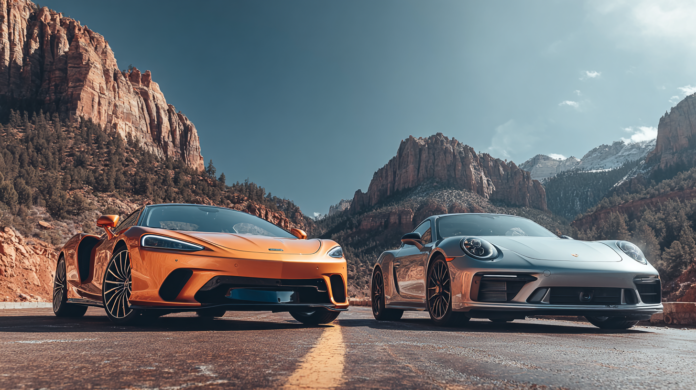
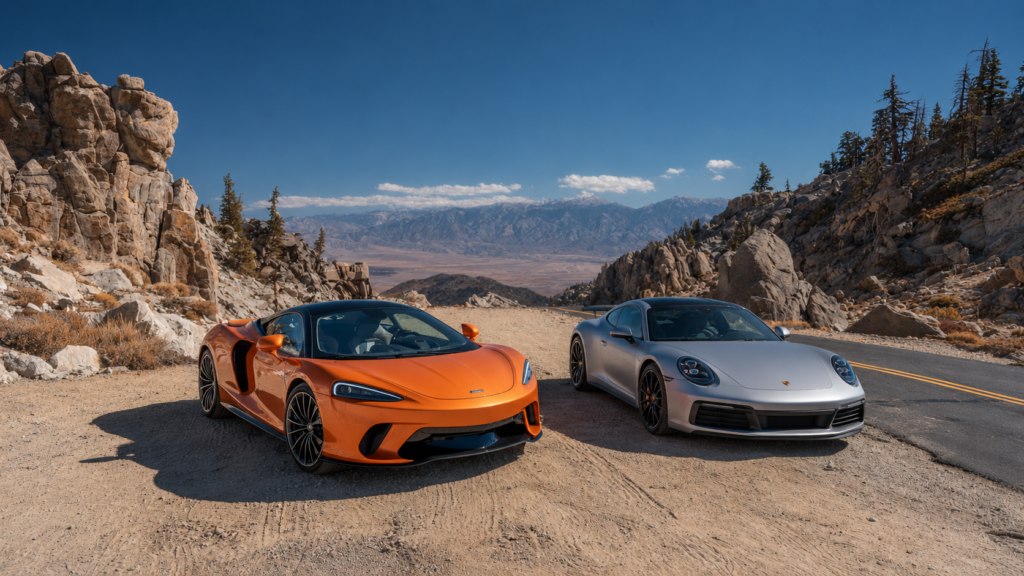
McLaren GT vs Porsche 911 Carrera S: The Everyday Supercar Face-Off on California’s Pacific Coast Highway

0

Can a supercar truly serve as a daily driver? Two very different machines put to the test on the iconic roads between Malibu and Santa Monica.

The morning fog had not yet lifted from the Pacific Ocean when the McLaren GT and the Porsche 911 Carrera S sat idling side by side at a traffic light just off the Pacific Coast Highway in Malibu, California. The air smelled of salt and cold coffee, and the only sounds were the distant crash of waves and the occasional cry of gulls circling above the cliffs.

This was the starting point of a different kind of test. Not a track battle. Not a drag race. A real world test to answer a question that has occupied the thoughts of driving enthusiasts for years: Can a supercar actually work as an everyday sports car?

The McLaren GT was positioned as the brand’s most usable model. It was designed with grand touring in mind, with more luggage space, a more compliant suspension, and a less aggressive character than the brand’s super series cars. The Porsche 911 Carrera S was the default answer for buyers who wanted sports car performance without sacrificing daily usability. It had rear seats, a compliant ride, and a reputation for reliability.

Two cars. One question. A day of driving from the canyons of Malibu to the streets of Santa Monica would provide the answer.

The Drive Begins: First Impressions on the Pacific Coast Highway

The light turned green, and both drivers turned right onto the Pacific Coast Highway. The sun was just beginning to burn through the marine layer, casting long shadows across the asphalt.

Behind the wheel of the McLaren GT, the driver sat low, with knees nearly straight and hips barely off the ground. The cabin was cocoon like, with a thin glass canopy that let in light but not the outside world. The seats were supportive, with aggressive bolsters that held the driver in place. The steering wheel was small and thick, covered in Alcantara.

The McLaren’s 4.0 liter twin turbo V8 woke up with a sharp, mechanical bark. The 612 horsepower and 465 lb ft of torque were available immediately, and the car surged forward with an urgency that demanded attention. The dual clutch transmission shifted quickly, nearly imperceptibly, and the car settled into a cruise at 45 miles per hour.

The Porsche 911 Carrera S took a different approach. The 3.0 liter twin turbo flat six produced 443 horsepower and 390 lb ft of torque. It was less powerful than the McLaren, but it was also less intimidating. The engine note was a deep, guttural rumble, and the car felt immediately familiar. The driving position was more upright, the visibility was better, and the interior felt more like a luxury car than a race car for the road.

The first few miles of the drive revealed the fundamental difference between the two cars. The McLaren demanded attention. It was a car that you drove, not a car that you rode in. The Porsche invited relaxation. It was a car that you could drive without thinking about it.

McLaren GT vs Porsche 911 Carrera S: Key Specifications Comparison

SpecificationMcLaren GTPorsche 911 Carrera S
Engine4.0L twin-turbo V83.0L twin-turbo flat-six
Horsepower612 hp443 hp
Torque465 lb-ft390 lb-ft
Transmission7-speed dual-clutch8-speed dual-clutch
DriveRear-wheel driveRear-wheel drive (optional AWD)
0-60 mph3.1 seconds3.3 seconds
Top Speed203 mph191 mph
Curb Weight3,400 lb3,500 lb
Cargo Space14.8 cu ft (total)5.1 cu ft (front) + rear seats
Base Price$210,000$130,000

The Comfort Test: Can You Live With It Every Day?

After twenty minutes on the Pacific Coast Highway, the road turned inland, heading into the canyons of Malibu. Before the twisty sections, the drivers made a brief stop at a lookout point overlooking the ocean. This was an opportunity to assess the cars for their daily usability.

The McLaren GT’s interior was striking. The exposed carbon fiber, the brushed aluminum switches, the leather and Alcantara upholstery all spoke of craftsmanship and expense. The seats were comfortable for a short period, but the aggressive bolsters and the low seating position would become tiring on a long commute. The infotainment system was a screen mounted portrait style on the dashboard. It worked, but it was not intuitive.

The Porsche’s interior was less dramatic but more functional. The seats were supportive without being aggressive. The driving position was natural, with good visibility in all directions. The infotainment system, mounted in a curved display, was intuitive and responsive. The materials were not as exotic as the McLaren’s, but they were durable and well assembled.

The cargo test was revealing. The McLaren GT had a rear hatch that opened to reveal a luggage compartment with 14.8 cubic feet of space. This was enough for two carry on suitcases and a couple of soft bags. The front trunk added a small amount of additional space. For a weekend trip for two, the McLaren would work.

The Porsche had a front trunk with 5.1 cubic feet of space, enough for one small bag. But the car also had rear seats that could fold down, creating additional storage. For a single person or a couple without children, the Porsche’s cargo space was adequate but less than the McLaren’s.

The Verdict on Usability: The McLaren GT surprised with its generous cargo space, but the Porsche 911 Carrera S was easier to live with day to day. Its better visibility, more comfortable seats, and more intuitive controls made it the winner for daily driving.

The Performance Test: Which One Leaves You Wanting More?

The road climbed into the Santa Monica Mountains, becoming narrower and more winding. This was where the true character of each car would emerge.

The McLaren GT came alive on the twisty roads. The 612 horsepower was intoxicating, and the car accelerated out of corners with a force that pushed the driver into the seat. The steering was precise, providing feedback about what the front tires were doing. The chassis was stiff, and the car changed direction with immediacy.

But there was a catch. The McLaren’s suspension was firm, and on the rough, cracked pavement of the canyon roads, the car transmitted every imperfection to the driver’s spine. The ride was punishing. The car was also wide, and on narrow roads with oncoming traffic, the driver had to pay constant attention to the car’s placement in the lane.

The Porsche 911 Carrera S was less powerful, but it was also less intimidating. The 443 horsepower was sufficient to make the car feel quick, but it did not overwhelm the chassis. The steering was precise, though less communicative than the McLaren’s. The suspension was compliant, absorbing bumps without losing composure.

The Porsche felt smaller than it was, and it was easier to place on the road. The car rotated willingly on corner entry, and the rear engine layout gave it a unique handling character. The driver could get on the throttle early, using the weight over the rear axle to drive out of corners.

On a smooth road, the McLaren was the more thrilling car. Its power, its steering, and its chassis created a level of engagement that the Porsche could not match. But on a real road, with real imperfections, the Porsche was the more usable performance car.

The Verdict on Performance: The McLaren GT left the driver wanting more when the road was smooth and the conditions were perfect. But on a typical road, the Porsche 911 Carrera S was the car that delivered satisfaction without frustration.

The Highway Test: Cruising in Comfort

The Pacific Coast Highway stretched out ahead, a straight ribbon of asphalt running alongside the ocean. This was the grand touring test, a chance to see how each car performed on long journeys.

The McLaren GT settled into a cruise at 70 miles per hour. The engine was quiet, barely audible over the wind and road noise. The suspension, while still firm, absorbed the expansion joints and minor imperfections without transmitting harshness. The seats, despite their aggressive bolstering, were comfortable for extended periods.

There was, however, a constant sense of occasion. The low seating position, the narrow cabin, the view of the front fenders bulging on either side all of these elements reminded the driver that this was a supercar, not a sedan.

The Porsche 911 Carrera S was more relaxed. The driving position was higher, the visibility was better, and the cabin was quieter. The suspension was more compliant, and the car absorbed the road’s imperfections without complaint. The seats were comfortable, and the infotainment system was easy to use.

The Porsche did not feel special in the same way that the McLaren did. It felt like a very capable sports car, but it did not feel like an event. For a daily driver, this was an advantage. For a weekend car, it was a drawback.

The Verdict on Highway Cruising: The McLaren GT was comfortable enough for long journeys, but the Porsche 911 Carrera S was more relaxing. The Porsche was the car you would choose for a cross country road trip. The McLaren was the car you would choose for a drive where the journey itself was the destination.

The City Test: Navigating Urban Environments

The final segment of the test took the cars into the streets of Santa Monica. Traffic was moderate, with stop and go conditions on Wilshire Boulevard. This was the true test of daily usability.

The McLaren GT was challenging in the city. The wide body made parking difficult, and the lack of visibility to the rear and sides required constant attention. The dual clutch transmission was smooth, but the firm suspension transmitted every bump and pothole. The car attracted attention, which was not always welcome in heavy traffic.

The Porsche 911 Carrera S was easier to manage. The car was narrower, with better visibility, and the more compliant suspension absorbed the city’s poor pavement. The car did not attract the same level of attention, which was an advantage in traffic.

The Verdict on City Driving: The Porsche 911 Carrera S was the clear winner for urban environments. The McLaren GT was a handful, and it would be tiring as a daily driver in a city.

The Cost of Ownership: Numbers That Matter

The financial consideration of owning either car was significant. The McLaren GT had a base price of approximately $210,000, while the Porsche 911 Carrera S started at approximately $130,000. The difference of $80,000 was substantial.

But the price difference was only part of the equation. The McLaren’s depreciation curve was steeper than the Porsche’s, meaning that the McLaren would lose more value over time. Maintenance costs for the McLaren were higher, with specialized service requirements and more expensive parts. Insurance costs were also higher for the McLaren.

The Porsche, on the other hand, benefited from a large dealer network, more affordable parts, and a reputation for reliability. The 911 Carrera S would be less expensive to own and maintain over the long term.

The Final Verdict: Which One Actually Works as a Daily Driver?

The McLaren GT was a remarkable car. It was beautiful, powerful, and exclusive. It offered generous cargo space and surprising comfort on the highway. On the right road, under the right conditions, it was one of the most thrilling cars on the market.

But as a daily driver, it fell short. The firm ride, the limited visibility, the wide body, and the constant attention made it tiring to live with. The McLaren GT was a supercar that you could drive every day, but it was not a car that you would want to drive every day.

The Porsche 911 Carrera S was less dramatic, less powerful, and less exclusive. But it was more comfortable, more practical, and easier to live with. It was a car that you could drive to work, to the grocery store, to the track, and on a cross country road trip without compromise. It was a sports car that worked as a daily driver.

The answer to the question was clear. The McLaren GT left the driver wanting more when the road was smooth and the conditions were perfect. The Porsche 911 Carrera S delivered satisfaction every day, on every road, in every condition.

For the driver who wanted a weekend toy that could also be used for occasional errands, the McLaren GT was a compelling choice. For the driver who wanted a daily driver that could also provide thrilling performance, the Porsche 911 Carrera S was the superior option.

Both cars had their place. Both would put a smile on the driver’s face. But for the driver who needed a sports car that actually worked as a car, the Porsche 911 Carrera S was the one to buy.

Conclusion: The Everyday Supercar Verdict

As the sun set over the Pacific Ocean and the two cars idled one final time at a traffic light in Santa Monica, the drivers reflected on the day. The McLaren GT had delivered moments of pure joy, moments when the road and the car aligned to create a driving experience that few cars could match. But those moments were fleeting, separated by periods of discomfort and frustration.

The Porsche 911 Carrera S had delivered consistent satisfaction. It had not reached the same heights as the McLaren, but it had never fallen to the same lows. It was a car that you could live with, a car that you could trust, a car that would never leave you wanting more.

The light turned green. The Porsche turned right, heading toward the freeway and home. The McLaren turned left, heading back into the canyons for one more pass before the light was gone.

Both drivers were smiling. But only one of them was smiling about the car they would drive to work tomorrow.

The Corvette Evolution: How America’s Legend Climbed from Ultimate Sports Car to Hypercar Rival

0
The Corvette C8 ultimate lineup, Stingray, Z51, GS, GSX, Z06, Eray, ZR1, ZR1X

Introduction: The Corvette C8, One Name, Nine Personalities

The Chevrolet Corvette has transformed. What began as a simple American sports car has branched into a family of vehicles so diverse that the lineup now spans from accessible entry performance to machines that challenge hypercar territory. A drive through the twisting tarmac northeast of Scottsdale, where the Sonoran Desert meets rocky inclines and high-speed straightaways, reveals something surprising. Not all Corvettes feel like Corvettes. And that is exactly the point.

Before we dive into the nine current models, it helps to remember where this all started. The Corvette began in 1953 as the C1, a stylish but modestly powered roadster with a six-cylinder engine. The C2 introduced the Sting Ray name and independent rear suspension. The C3 brought long hoods and dramatic curves. The C4 returned to performance roots with a modern chassis. The C5 fixed the rear end and introduced the LS engine family. The C6 refined the formula with round taillights and the brutal ZR1. The C7 went global with a more angular design and the wild Z06. And now the C8 changed everything by moving the engine behind the driver. Each generation added a chapter to the story. The nine models below represent the current climax of that evolution.

This comparison examines nine distinct Corvette models within the C8 generation. Each serves a different driver. Each responds differently when pushed to its limit. And each occupies a specific segment, from sports car to hypercar.


Understanding the Corvette C8 Lineup: A Segment-by-Segment Breakdown

Before analyzing how each model behaves on the road, it helps to understand where each fits in the performance hierarchy. The Corvette family now spans four performance tiers:

SegmentModels IncludedCore Purpose
Sports Car (High-Performance)StingrayEntry-level performance, daily usability
Sports Car (Track-Oriented)Stingray Z51Enhanced grip, track-day readiness
Sports Car+ / Entry SupercarGrand SportDriver engagement, linear power delivery
Supercar (AWD Hybrid)E-RayAll-weather capability, instant torque
Supercar (GT-Leaning)Grand Sport XLong-distance comfort, planted handling
Supercar (Track-Focused)Z06High-rpm power, precision driving
Supercar+ / Near-HypercarZR1Extreme ICE performance, rear-drive character
HypercarZR1XMaximum everything, physics-defying grip

Chapter 1: The Entry Point – Corvette Stingray

Starting MSRP: $70,000–75,000
Drivetrain: Rear-wheel drive
Powertrain: 6.2-liter naturally aspirated V8 (LT2)
Horsepower: 490
Peak RPM / Redline: 6,600 rpm
Core Identity: Entry performance
Segment Classification: Sports Car (High-Performance)

The Stingray serves as the gateway. But do not let the words “entry performance” fool you. Even this base model feels like a supercar. The mid-engine layout, a first for a production Corvette, places the driver closer to the front axle while the engine sits behind the cabin. The result is a polar moment of inertia that allows the car to rotate faster than any front-engine Corvette in history. On the roads near Bartlett Lake, where long sweepers allow for steady throttle application, the Stingray feels composed and exotic. The 490 horsepower reaches the rear wheels through a predictable chassis that does not surprise the driver. Steering feedback is direct without being nervous. The cabin feels special. The engine note, while quieter than the higher trims, still barks with authority above 4,000 rpm.

What happens when you push it: The Stingray remains predictable and balanced. The rear end steps out gradually, giving the driver time to correct. Understeer is minimal. The car forgives small mistakes in throttle or steering input. A novice driver can approach the limit without fear. An experienced driver can hold the car at the edge of traction for extended periods. The base car communicates like a supercar should, with a clear sense of where the grip ends and the slide begins.

Best for: First-time sports car owners, daily drivers who want weekend fun, drivers who value predictability over aggression.


Chapter 2: The Sharper Sibling – Corvette Stingray Z51

Starting MSRP: $77,000–85,000
Drivetrain: Rear-wheel drive
Powertrain: 6.2-liter naturally aspirated V8 with performance exhaust (LT2)
Horsepower: 495
Peak RPM / Redline: 6,600 rpm
Core Identity: Sharper Stingray
Segment Classification: Sports Car (Track-Oriented)

The Z51 package adds more than five horsepower. It adds cooling, brakes, suspension tuning, and an electronic limited-slip differential. On the ascent toward Bartlett Lake, where the road tightens and elevation changes, the Z51 feels more planted than the base Stingray. The body rolls less. The brakes inspire confidence after multiple hard stops. The performance exhaust changes the sound character, adding a snarl that was missing on the base car.

What happens when you push it: Grip levels rise noticeably compared to the base Stingray. The car rotates more willingly into corners. At the limit, the Z51 remains forgiving but playful. The rear end moves under power in a controlled manner. Drivers can adjust their line with throttle inputs. The car does not snap unexpectedly. It communicates clearly through the steering wheel and seat.

Best for: Track day enthusiasts, drivers who want more capability without losing daily usability, those who plan to push the car regularly.


Chapter 3: The Driver’s Choice – Corvette Grand Sport

Starting MSRP: $88,495
Drivetrain: Rear-wheel drive
Powertrain: 6.7-liter naturally aspirated V8 (LS6)
Horsepower: 535 (estimated)
Peak RPM / Redline: 7,200 rpm (estimated)
Core Identity: Driver’s car
Segment Classification: Sports Car+ / Entry Supercar

The Grand Sport represents a shift. The larger 6.7-liter engine revs higher. The power delivery feels linear, meaning acceleration builds smoothly rather than surging. On the straight sections near the Bartlett Lake dam, the Grand Sport pulls hard but predictably. The engine note changes character above 5,000 rpm, encouraging the driver to explore the upper ranges. This is the car for drivers who believe that connection matters more than outright speed.

What happens when you push it: The Grand Sport rewards consistency. Unlike the Z51 which invites playfulness, the Grand Sport wants smooth inputs. Abrupt steering or throttle application upsets the balance. But with smooth driving, the car delivers remarkable grip and corner exit speeds. Confidence builds as the driver learns the car’s rhythm. The limit is high but clearly marked. Push past it and the car provides warning through understeer before any sudden behavior.

Best for: Experienced drivers who value chassis feedback over raw power, canyon carvers, drivers who enjoy building skill over time.


Chapter 4: The Hybrid Revolution – Corvette E-Ray

Starting MSRP: $108,000–115,000
Drivetrain: All-wheel drive (electric AWD)
Powertrain: 6.2-liter V8 plus front electric motor
Horsepower: 655 combined
Peak RPM / Redline: 6,600 rpm (gas engine)
Core Identity: Hybrid performance
Segment Classification: Supercar (AWD Hybrid)

The E-Ray changes the formula. Electric motors power the front wheels while the V8 drives the rear. This creates all-wheel drive without a physical connection between front and rear axles. On the dusty shoulders of the Bartlett Lake road, where loose gravel meets pavement, the E-Ray finds grip where rear-drive Corvettes would spin. It is the Corvette for people who live where seasons change.

What happens when you push it: Instant torque from the electric motor transforms launches. The car jumps forward without waiting for engine rpm to build. The front wheels pull through corners, reducing understeer. Stability is remarkable. The E-Ray feels almost impossible to spin. However, the added weight of the hybrid system becomes apparent in quick transitions. The car feels heavier than the Grand Sport despite having more power. At the limit, the E-Ray is very stable but less playful than rear-drive models.

Best for: Drivers in snowy or rainy climates, those who want supercar performance with year-round usability, drag strip enthusiasts who value consistent launches.


Chapter 5: The All-Weather Performer – Corvette Grand Sport X

Starting MSRP: $112,195
Drivetrain: All-wheel drive (electric AWD)
Powertrain: 6.7-liter V8 plus front electric motor
Horsepower: 721 (estimated)
Peak RPM / Redline: 7,200 rpm (estimated)
Core Identity: All-condition performance
Segment Classification: Supercar (GT-Leaning)

The Grand Sport X takes the Grand Sport’s high-revving V8 and adds the E-Ray’s electric front axle. The result is a car that combines linear power delivery with all-wheel drive traction. On the long, flowing sections of road near Horseshoe Dam, north of Bartlett Lake, the Grand Sport X settles into a rhythm that feels effortless.

What happens when you push it: This car is extremely planted. The combination of a naturally aspirated engine’s predictable torque curve and electric front axle grip means the Grand Sport X accelerates through corners with remarkable composure. Unsettling the car requires deliberate effort. Mid-corner bumps that would upset other Corvettes pass without drama. The limit is high enough that most drivers will never find it on public roads. On track, the car understeers slightly before the rear breaks away, giving ample warning.

Best for: Long-distance touring, drivers who want performance in any weather, those who prefer a car that feels stable at all times.


Chapter 6: The Track Specialist – Corvette Z06

Starting MSRP: $121,395
Drivetrain: Rear-wheel drive
Powertrain: 5.5-liter flat-plane crank V8 (LT6)
Horsepower: 670
Peak RPM / Redline: 8,600 rpm
Core Identity: Track weapon
Segment Classification: Supercar (Track-Focused)

Picture this. You are climbing from Bartlett Lake Road toward the Four Peaks Wilderness. The elevation rises. The corners tighten. You press the start button and the Z06 wakes up. Then you hear it. The flat-plane crank V8 does not sound like any Corvette that came before. It sounds like a Ferrari. Specifically, it sounds like the Ferrari 458 Italia, the car many enthusiasts consider the greatest naturally aspirated V8 of the modern era. The LT6 engine wails to 8,600 rpm with a metallic shriek that raises the hair on your arms. At idle, it spits and crackles with an uneven rhythm. At full throttle, it screams like a race car.

The Z06 represents a philosophy shift. This engine wants to stay above 6,000 rpm. Below that, it feels ordinary. Above that, it transforms into something emotional. The flat-plane crank allows for higher revs and quicker throttle response, but it also changes the vibration character. The car shakes slightly at idle in a way that feels purposeful.

What happens when you push it: The Z06 rewards skill and punishes mistakes. At the limit, the car rotates quickly. The rear end steps out with less warning than the Grand Sport or E-Ray. Throttle application requires precision. Too little power and the car pushes wide. Too much and the rear slides. The steering is direct and communicates every surface change. This car is not for novices. But for drivers with track experience, the Z06 offers a level of engagement that rear-drive supercars from Europe cannot match at this price. And the sound alone is worth the price of admission.

Best for: Experienced track drivers, those who value high-rpm power delivery, drivers who want to improve their skills over time.


Chapter 7: The Extreme ICE Flagship – Corvette ZR1

Starting MSRP: $197,000–216,000
Drivetrain: Rear-wheel drive
Powertrain: 5.5-liter twin-turbo flat-plane V8 (LT7)
Horsepower: 1,064
Peak RPM / Redline: 8,600 rpm
Core Identity: Extreme ICE flagship
Segment Classification: Supercar+ / Near-Hypercar

The ZR1 adds twin turbochargers to the Z06’s flat-plane V8. The result is 1,064 horsepower sent to the rear wheels only. On the straight sections of State Route 88 heading toward Canyon Lake, the ZR1 accelerates with an intensity that feels barely legal. The turbos spool with purpose. The engine builds boost quickly and holds it to redline. The sound changes from a shriek to a pressurized howl, with whooshing air sounds between shifts.

What happens when you push it: Violent acceleration is the first thing drivers notice. The ZR1 reaches speeds that feel inappropriate for public roads in seconds. But traction becomes a challenge. In first and second gears, even sticky tires struggle to put the power down. The car requires careful throttle modulation. Sudden full throttle in low gears produces wheelspin. The ZR1 demands precision and respect. At corner exit, drivers must wait until the car is straight before applying full power. The chassis remains communicative, but the power overwhelms the rear tires easily. This is a car that demands you pay attention every single second.

Best for: Experienced drivers seeking extreme straight-line performance, collectors, those who want a rear-drive challenge.


Chapter 8: The Ultimate Corvette – ZR1X

Starting MSRP: $207,000–247,000
Drivetrain: All-wheel drive (electric AWD)
Powertrain: Twin-turbo flat-plane V8 plus electric front axle
Horsepower: 1,250 (estimated)
Peak RPM / Redline: 8,600 rpm
Core Identity: Ultimate Corvette
Segment Classification: Hypercar

The ZR1X takes the ZR1’s twin-turbo engine and adds the electric front axle from the E-Ray and Grand Sport X. This is the most powerful and most capable Corvette ever produced. On the remote sections of the Apache Trail, where pavement gives way to well-maintained tarmac through desert canyons, the ZR1X feels like physics has been rewritten.

What happens when you push it: Relentless acceleration describes the experience. The electric front axle eliminates traction concerns. The car launches with near-unlimited grip. Corner exit speeds exceed what seems possible. The ZR1X does not feel like a 1,250-horsepower car because the power is so usable. Where the ZR1 requires careful throttle management, the ZR1X allows earlier and harder acceleration. The car remains planted through bumpy corners. The limit is so high that finding it on public roads is not advisable. On a track, the ZR1X delivers consistent, repeatable performance without the drama of rear-drive models.

Best for: Drivers who want the most capable Corvette available, those with access to tracks, collectors seeking the ultimate expression of the nameplate.


How to Choose: A Practical Guide

Drivers in Scottsdale face a decision. The city’s combination of straight highways, winding canyon roads, and nearby tracks like Arizona Motorsports Park means any of these Corvettes could find a home. But the right choice depends on the driver’s experience and goals.

Choose the Stingray if: You want a sports car for weekends and daily driving. The predictable handling and lower price make it accessible. Plus, it still feels like a supercar.

Choose the Stingray Z51 if: You plan to visit the track several times per year but still drive the car to work.

Choose the Grand Sport if: You have track experience and value chassis feedback over straight-line speed.

Choose the E-Ray if: You live where it snows or rains frequently and want year-round supercar performance.

Choose the Grand Sport X if: You want the Grand Sport’s character with all-weather capability.

Choose the Z06 if: You are an experienced track driver who wants a high-revving, rear-drive challenge. And you want to hear a Ferrari soundtrack from an American engine.

Choose the ZR1 if: You have advanced driving skills and want extreme power in a rear-drive package.

Choose the ZR1X if: You want the most capable Corvette and have the budget. This is the ultimate expression.


Final Thoughts: A Lineup for Every Driver

The Corvette family no longer offers a single experience. From the forgiving Stingray to the physics-defying ZR1X, each model serves a different driver with different priorities. The roads northeast of Scottsdale, with their mix of tight corners, high-speed sections, and elevation changes, reveal these differences clearly. A novice driver will feel comfortable in the Stingray. A track veteran will find joy in the Z06’s high-rpm precision and Ferrari-like wail. And anyone who experiences the ZR1X will understand how far the Corvette nameplate has evolved.

The starting prices range from $70,000 to over $220,000. The horsepower ranges from 490 to 1,250. The drivetrains range from rear-drive to electric all-wheel drive. But every model shares one characteristic. Each delivers performance appropriate to its segment. The Corvette has come a long way from the C1’s Blue Flame six-cylinder. The C8 generation proves that America can build not just a sports car, but an entire family of world-class performance machines. Choose based on your skill level, your climate, and your goals. The right Corvette exists for you.

Lamborghini Urus vs Ferrari Purosangue: Super-SUV Heavyweight Fight in 2026

0

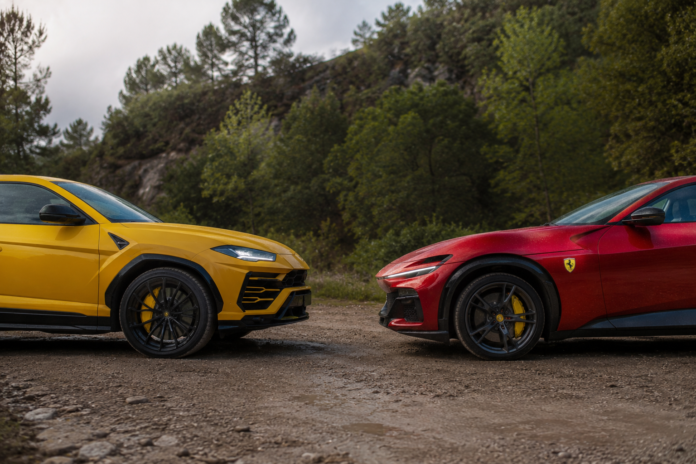
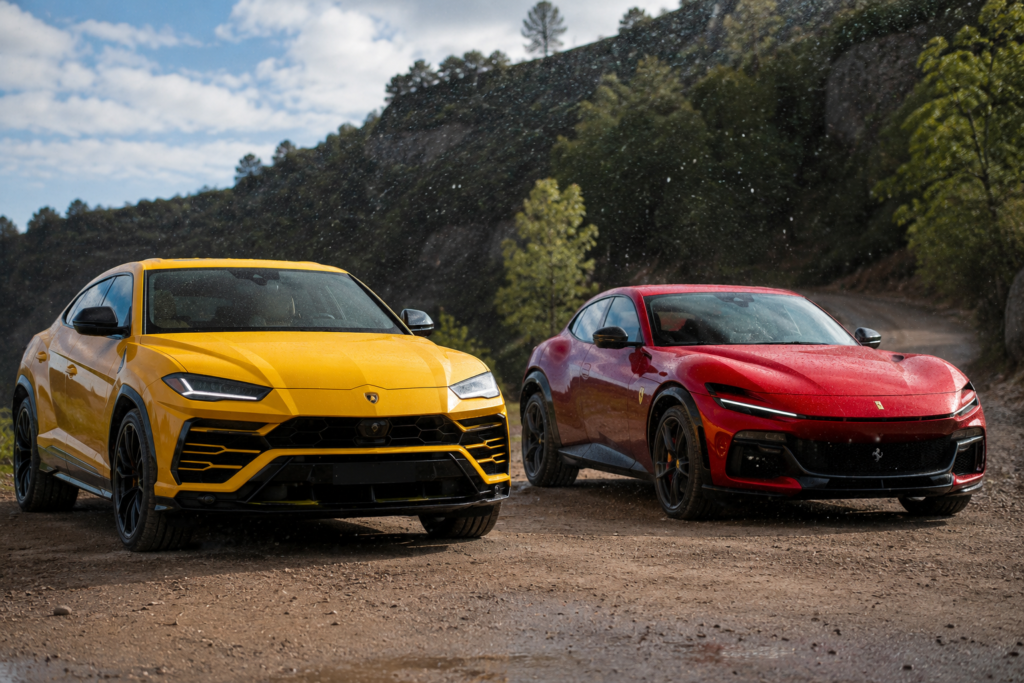
The Lamborghini Urus and the Ferrari Purosangue represent two very different answers to the question of whether a supercar manufacturer should build an SUV. The Urus was Lamborghini’s first production SUV since the LM002 of the 1980s. It was a commercial success, doubling the brand’s sales and introducing Lamborghini to a new audience. The Purosangue was Ferrari’s first production four-door, four-seat vehicle. It was a controversial departure for a brand that had long resisted the SUV trend.

Both are high-performance, luxurious, and expensive. But they take very different approaches to the formula. The Urus is a brute, using a twin-turbo V8 and aggressive styling. The Purosangue is an elegant machine, using a naturally aspirated V12 and a more restrained design.

This article compares the Lamborghini Urus and the Ferrari Purosangue across performance, design, interior, driving experience, and value to determine which super-SUV comes out on top.

The Contenders: Two Super-SUV Philosophies

Lamborghini Urus

The Urus is Lamborghini’s best-selling model. It is powered by a 4.0 liter twin-turbo V8 producing 657 horsepower. The engine is shared with the Porsche Cayenne Turbo GT, but Lamborghini has tuned it for more power and a more aggressive character. The Urus features all-wheel drive, an eight-speed automatic transmission, and a torque vectoring system. The design is sharp, angular, and unmistakably Lamborghini.

Ferrari Purosangue

The Purosangue is Ferrari’s first four-door vehicle. It is powered by a 6.5 liter naturally aspirated V12 producing 715 horsepower. The engine is mounted in the front, but behind the front axle line, and power is sent to all four wheels through an eight-speed dual-clutch transmission. Ferrari calls the Purosangue an “FUV” (Ferrari Utility Vehicle) rather than an SUV. The design is elegant and flowing, with a fastback roofline and rear-hinged rear doors.

Powertrain and Performance

Lamborghini Urus

The Urus’s 4.0 liter twin-turbo V8 is a proven engine. It produces 657 horsepower at 6,000 rpm and 627 lb-ft of torque from 2,250 to 4,500 rpm. The eight-speed automatic transmission is quick and responsive. The all-wheel drive system, combined with torque vectoring and rear-wheel steering, makes the Urus exceptionally capable for its size.

  • 0 to 60 mph: 3.2 seconds
  • Quarter mile: 11.2 seconds
  • Top Speed: 190 mph
  • Weight: Approximately 4,800 lb

Ferrari Purosangue

The Purosangue’s 6.5 liter naturally aspirated V12 is a masterpiece. It produces 715 horsepower at 7,750 rpm and 528 lb-ft of torque at 6,250 rpm. The eight-speed dual-clutch transmission is mounted at the rear, contributing to near perfect weight distribution. The all-wheel drive system is a development of the system used in the FF and GTC4Lusso.

  • 0 to 60 mph: 3.3 seconds
  • Top Speed: 193 mph
  • Weight: Approximately 4,600 lb

Performance Verdict

The Ferrari has more power. Its 715 horsepower is 58 more than the Urus’s 657. The Urus is slightly quicker to 60 miles per hour, with a time of 3.2 seconds compared to the Purosangue’s 3.3 seconds. The Urus also has a higher top speed, at 190 mph versus the Ferrari’s 193 mph? Actually, the Ferrari has the edge here. The Purosangue’s 193 mph top speed is slightly higher than the Urus’s 190 mph.

Both are exceptionally fast for SUVs. The Urus feels more aggressive, with a sharper power delivery. The Purosangue’s naturally aspirated V12 is smoother and more linear, building power as the revs climb.

Chassis and Handling

Lamborghini Urus

The Urus is built on the Volkswagen Group’s MLB Evo platform, shared with the Porsche Cayenne and Bentley Bentayga. The suspension uses air springs with adaptive dampers, and the car features rear-wheel steering. The Urus has multiple drive modes, including Strada, Sport, Corsa, and Sabbia (sand), Terra (off-road), and Neve (snow).

The Urus handles remarkably well for its size and weight. The all-wheel drive system provides exceptional traction, and the rear-wheel steering improves agility. The steering is precise, but it lacks the feedback of the Ferrari.

Ferrari Purosangue

The Purosangue uses a modified version of the platform that underpins the Roma and 296 GTB. The suspension uses double wishbones at all four corners, with active dampers. Ferrari’s Active Suspension Technology uses electric motors to control wheel motion, actively counteracting body roll during cornering.

The Purosangue handles like a sports car. The active suspension keeps the car flat through corners, and the rear-wheel drive bias (the front wheels receive power only when needed) gives it a playful character. The steering is precise and communicative, providing excellent feedback.

Handling Verdict

The Ferrari Purosangue is the better handling car. Its active suspension, lower center of gravity, and rear-wheel drive bias make it feel more like a sports car than an SUV. The Urus is capable and agile, but it does not match the Ferrari’s composure and feedback.

Design and Styling

Lamborghini Urus

The Urus’s design is sharp, angular, and aggressive. The front end features the signature Lamborghini Y-shaped daytime running lights and a massive grille. The side profile shows the sharp creases and muscular haunches. The rear end is dominated by the Y-shaped taillights and a prominent diffuser.

The Urus is available in a range of bright colors, including Arancio Borealis (orange) and Verde Mantis (green). The design is loud, aggressive, and unmistakably Lamborghini.

Ferrari Purosangue

The Purosangue’s design is more elegant and flowing. The front end features a prominent grille and slim headlights. The side profile shows the fastback roofline and the rear-hinged rear doors. The rear end features a full-width light bar and a subtle diffuser.

The Purosangue is available in a range of sophisticated colors, including Rosso Corsa (red) and Blu Tour de France (blue). The design is elegant and understated compared to the Urus.

Design Verdict

The Lamborghini Urus is the more dramatic and aggressive design. The Ferrari Purosangue is more elegant and sophisticated. Which is better is a matter of personal taste.

Interior and Luxury

Lamborghini Urus

The Urus’s interior is sporty and modern. The seats are supportive, with hexagonal stitching that echoes the Lamborghini design language. The dashboard features a digital instrument cluster and a central touchscreen that controls infotainment and climate functions. A second touchscreen below controls additional vehicle functions.

The materials are high quality, with leather, Alcantara, and carbon fiber throughout. The cabin is spacious, with comfortable seating for four adults. The cargo area offers approximately 21 cubic feet of space with the rear seats up.

Ferrari Purosangue

The Purosangue’s interior is luxurious and elegant. The seats are comfortable and supportive, with leather and Alcantara upholstery. The dashboard features a digital instrument cluster and a central touchscreen. The passenger has a dedicated touchscreen. The rear seats are equally well appointed, with power adjustment and heating.

The materials are exceptional, with fine leather, real metal, and carbon fiber trim. The cabin is spacious, with comfortable seating for four adults. The cargo area offers approximately 15 cubic feet of space with the rear seats up.

Interior Verdict

The Ferrari Purosangue has the more luxurious and refined interior. The Lamborghini Urus is more sporty and aggressive.

Driving Experience

Lamborghini Urus

The Urus is a car that demands to be driven aggressively. The V8 roars, the suspension firms up in Corsa mode, and the car hurls itself down the road. The Urus is thrilling, but it is also tiring. It is not a car for relaxed cruising.

Ferrari Purosangue

The Purosangue is more versatile. It can be driven gently, with the V12 providing smooth, effortless power. In Comfort mode, the ride is compliant and the cabin is quiet. In Race mode, the car transforms, with sharper responses and a more aggressive exhaust note.

The Purosangue is a car that can be driven every day. The Urus is a car for weekends.

Value and Ownership

Pricing

The Lamborghini Urus has a base price of approximately $230,000. The Ferrari Purosangue has a base price of approximately $400,000. The Ferrari is significantly more expensive.

Depreciation

The Urus has depreciated less than many expected, thanks to strong demand. The Purosangue’s limited production and higher price point may help it hold its value.

Ownership Costs

Both cars are expensive to maintain. The Ferrari’s V12 requires specialized service, and parts are more costly.

Which Brand Made the Right Call?

Both brands made the right call for their respective customers.

Lamborghini needed the Urus to survive. The brand’s sales doubled after the Urus was introduced, and it funded the development of the Revuelto and other future models. The Urus brought new customers to the brand, many of whom went on to purchase a Huracán or Aventador.

Ferrari did not need the Purosangue to survive. The brand was already profitable, and it had a waiting list for its existing models. But Ferrari recognized that its customers wanted a vehicle that could carry four people in comfort and still deliver the Ferrari driving experience. The Purosangue is a low-volume, high-margin vehicle that satisfies existing customers rather than chasing new ones.

Which One Is Right for You?

Choose the Lamborghini Urus if:

  • You want a more aggressive, dramatic design.
  • You prefer a twin-turbo V8 with a sharper power delivery.
  • You need more cargo space.
  • You want a lower entry price.
  • You value the Lamborghini brand’s extroverted character.

Choose the Ferrari Purosangue if:

  • You want a more elegant, sophisticated design.
  • You value the naturally aspirated V12 engine.
  • You want the best handling SUV on the market.
  • You prefer a more luxurious interior.
  • You are willing to pay the premium for the Ferrari badge and V12.

Specifications Summary

SpecificationLamborghini UrusFerrari Purosangue
Engine4.0L twin-turbo V86.5L naturally aspirated V12
Horsepower657 hp715 hp
Torque627 lb-ft528 lb-ft
Transmission8-speed automatic8-speed dual-clutch
DriveAll-wheel driveAll-wheel drive
0-60 mph3.2 seconds3.3 seconds
Top Speed190 mph193 mph
Seating4-54
Cargo Space21 cu ft15 cu ft
Base Price$230,000$400,000
CharacterAggressive, loud, thrillingElegant, refined, engaging

Conclusion

The Lamborghini Urus and the Ferrari Purosangue are two of the most extraordinary SUVs ever built. They represent two different answers to the question of what a super-SUV should be.

The Urus is a brute. It is loud, aggressive, and thrilling. It is a Lamborghini in every way, with the sharp styling, powerful V8, and extroverted character that define the brand. It is the car that saved Lamborghini, and it deserves its success.

The Purosangue is an elegant machine. It is refined, luxurious, and engaging. It is a Ferrari first and an SUV second. Its V12 is one of the greatest engines ever built, and its handling defies the laws of physics. It is not a car that Ferrari needed to build, but it is a car that Ferrari customers wanted.

Who wins the super-SUV heavyweight fight? There is no clear winner. The Urus is the better value, with a lower price and more cargo space. The Purosangue is the better driver’s car, with a superior engine and handling.

The choice depends on what you value. If you want aggression and drama, choose the Urus. If you want elegance and refinement, choose the Purosangue.

Both are legends. Both will put a smile on your face. The choice is yours.

Porsche 911 GT3 vs Ferrari F8 Tributo: Naturally Aspirated vs Turbo in 2026

0

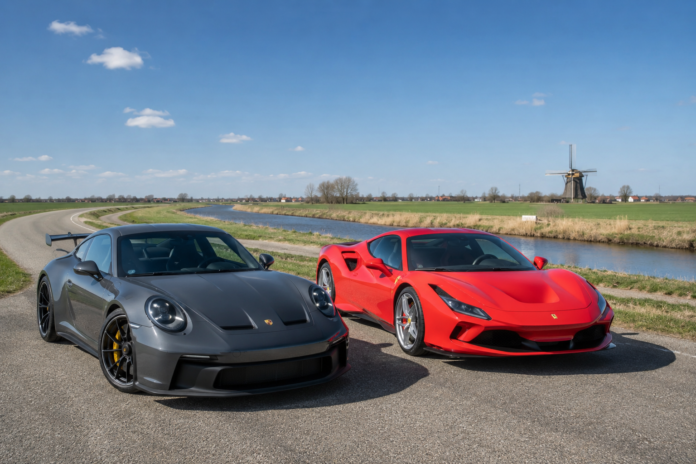
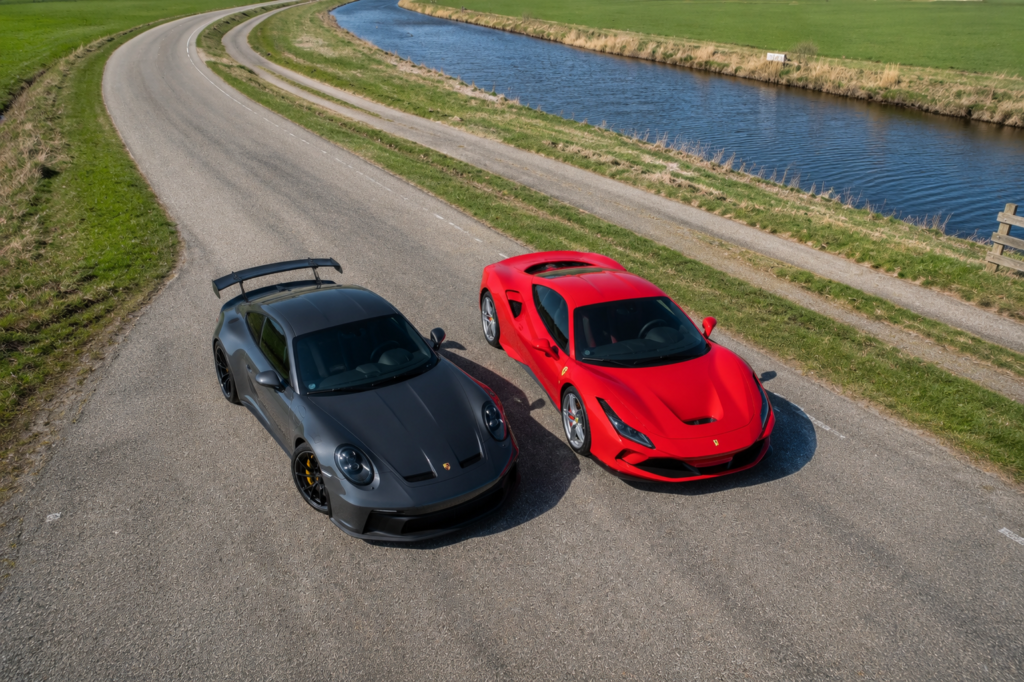
The Porsche 911 GT3 and the Ferrari F8 Tributo represent two very different engineering philosophies in the pursuit of performance. The GT3 uses a 4.0 liter naturally aspirated flat-six that revs to 9,000 rpm. The F8 Tributo uses a 3.9 liter twin-turbo V8 that delivers massive torque from low in the rev range. The GT3 prioritizes driver engagement and sensory feedback. The F8 Tributo prioritizes raw power and lap times.

Both are exceptional machines. Both have passionate fanbases. This article compares the Porsche 911 GT3 and the Ferrari F8 Tributo across performance, handling, driving experience, design, and value to determine which delivers the purer driving experience and which one wins on lap times.

The Contenders: Two Different Approaches

Porsche 911 GT3

The 911 GT3 is the purist’s 911. It uses a 4.0 liter naturally aspirated flat-six engine producing 502 horsepower. The engine revs to 9,000 rpm, and power is sent to the rear wheels through either a six-speed manual or a seven-speed dual-clutch transmission. The GT3 is designed for driver engagement, with hydraulic steering feedback and a chassis that communicates clearly.

Ferrari F8 Tributo

The F8 Tributo is Ferrari’s final mid-engine V8 supercar before the brand moved toward hybrid powertrains. It uses a 3.9 liter twin-turbo V8 producing 710 horsepower. Power is sent to the rear wheels through a seven-speed dual-clutch transmission. The F8 is designed for blistering speed, with advanced aerodynamics and electronics that make it brutally effective.

Powertrain and Performance

Porsche 911 GT3

The GT3’s 4.0 liter flat-six is a masterpiece of naturally aspirated engineering. The engine produces 502 horsepower at 8,400 rpm and 346 lb-ft of torque at 6,100 rpm. The power builds linearly to the 9,000 rpm redline, rewarding drivers who keep the revs high. The six-speed manual transmission is available, offering a traditional, engaging shift experience.

The GT3 accelerates from 0 to 60 miles per hour in 3.4 seconds with the manual transmission and 3.2 seconds with the dual-clutch. Top speed is 197 miles per hour. The quarter mile is completed in approximately 11.2 seconds.

Ferrari F8 Tributo

The F8’s 3.9 liter twin-turbo V8 produces 710 horsepower at 8,000 rpm and 568 lb-ft of torque at 3,250 rpm. The power comes on strong from low rpm, with the twin turbos providing massive mid-range punch. The seven-speed dual-clutch transmission shifts rapidly, keeping the engine in its power band.

The F8 accelerates from 0 to 60 miles per hour in 2.8 seconds. Top speed is 211 miles per hour. The quarter mile is completed in approximately 10.1 seconds.

Performance Verdict

The Ferrari F8 Tributo is significantly quicker in a straight line. Its 710 horsepower is 208 more than the GT3’s 502. The F8’s 0 to 60 time of 2.8 seconds is a full 0.6 seconds quicker than the GT3 manual and 0.4 seconds quicker than the PDK. The quarter mile difference is even more dramatic.

On lap times, the F8 also has an advantage. Its power, advanced aerodynamics, and electronic aids make it faster around most circuits. The GT3 is not a slow car by any measure, but it cannot match the Ferrari’s raw performance numbers.

Chassis and Handling

Porsche 911 GT3

The GT3’s chassis is legendary. The double-wishbone front suspension, a first for a production 911, provides exceptional grip and turn-in response. The rear-axle steering improves agility. The hydraulic steering offers direct communication and excellent feedback.

The GT3 is balanced and predictable. The rear-engine layout gives it unique handling characteristics. The car rotates on corner entry, and the driver can adjust the cornering attitude with the throttle. The GT3 rewards skilled drivers and invites them to explore its limits.

Ferrari F8 Tributo

The F8’s chassis is also exceptional, but it is different in character. The mid-engine layout provides neutral handling. The active aerodynamics, including the S-duct and deployable rear wing, generate significant downforce. The Side Slip Control system manages torque delivery, making the car easier to drive quickly.

The F8 is more clinical than the GT3. It is fast and precise, but it is less communicative. The electronic aids do much of the work, and the driver feels less connected to the road.

Handling Verdict

The Porsche 911 GT3 is the more engaging and rewarding car to drive at the limit. Its hydraulic steering, rear-engine dynamics, and naturally aspirated engine create a level of feedback that the Ferrari cannot match. The F8 is faster and more stable, but it is less alive.

Driving Experience

Porsche 911 GT3

The GT3 is a car that demands to be driven. The engine encourages high revs, rewarding the driver with a sharp, metallic wail as the tachometer climbs toward 9,000 rpm. The manual transmission requires precise inputs. The steering communicates every detail of the road surface.

The GT3 is not a car for effortless speed. It requires skill and attention. But that is the point. The GT3 is a driver’s car, designed for those who value the connection between driver and machine.

Ferrari F8 Tributo

The F8 is a car that delivers effortless speed. The engine provides massive torque from low rpm, making the car feel fast without needing to work it. The dual-clutch transmission shifts seamlessly. The electronic aids keep the car planted and stable.

The F8 is fast and capable, but it is less involving. It is a car that flatters the driver, making it easy to go quickly without requiring the same level of skill as the GT3.

The Sound

The GT3’s flat-six produces a high-pitched wail that builds to a crescendo at 9,000 rpm. The sound is mechanical, sharp, and intoxicating. It is one of the best-sounding engines in production.

The F8’s twin-turbo V8 produces a deep, muscular roar. The sound is aggressive and powerful, but it lacks the high-revving purity of the GT3. The turbochargers muffle some of the engine’s character.

Interior and Technology

Porsche 911 GT3

The GT3’s interior is driver-focused and functional. The seats are supportive, with excellent lateral hold. The materials are high quality, but the emphasis is on function over luxury. The instrument cluster features a central tachometer, a nod to the 911’s heritage. The infotainment system is modern and intuitive.

Ferrari F8 Tributo

The F8’s interior is more luxurious. The materials are exceptional, with leather, Alcantara, and carbon fiber throughout. The seats are comfortable and supportive. The instrument cluster is digital, with a central tachometer. The infotainment system is functional but can be less intuitive than the Porsche’s.

Interior Verdict

The Ferrari F8 Tributo has the more luxurious interior. The Porsche 911 GT3 is more functional and driver-focused.

Value and Ownership

Pricing

The Porsche 911 GT3 has a base price of approximately $170,000. The Ferrari F8 Tributo has a base price of approximately $280,000. The Ferrari is significantly more expensive.

Depreciation

The GT3 holds its value exceptionally well. The F8 also holds its value, but the higher starting price means greater absolute depreciation.

Ownership Costs

The Porsche is less expensive to maintain. The Ferrari’s specialized service and parts costs are higher.

Which Delivers the Purer Driving Experience?

The Porsche 911 GT3 delivers the purer driving experience. Its naturally aspirated engine, hydraulic steering, and rear-engine dynamics create a level of feedback and engagement that the Ferrari cannot match. The GT3 is a car that rewards the driver, that requires skill, and that communicates clearly.

The Ferrari F8 Tributo is faster, more powerful, and more technologically advanced. But it is less involving, less communicative, and less alive.

For drivers who value the connection between driver and machine, the GT3 is the choice.

Which One Wins on Lap Times?

The Ferrari F8 Tributo wins on lap times. Its 710 horsepower, advanced aerodynamics, and electronic aids make it faster around most circuits. The GT3 is quick, but it cannot match the Ferrari’s raw performance.

The F8 is a car designed for speed. The GT3 is a car designed for engagement.

Which One Is Right for You?

Choose the Porsche 911 GT3 if:

  • You value driver engagement and feedback above all else.
  • You want a high-revving naturally aspirated engine.
  • You prefer a manual transmission.
  • You enjoy the challenge of managing a rear-engine car.
  • You want a car that holds its value well.

Choose the Ferrari F8 Tributo if:

  • You want the fastest lap times.
  • You value raw power and acceleration.
  • You prefer the prestige of the Ferrari badge.
  • You want a car with a luxurious interior.
  • You are willing to pay the premium for Italian exotic performance.

Specifications Summary

SpecificationPorsche 911 GT3Ferrari F8 Tributo
Engine4.0L naturally aspirated flat-six3.9L twin-turbo V8
Horsepower502 hp710 hp
Torque346 lb-ft568 lb-ft
Redline9,000 rpm8,000 rpm
Transmission6-speed manual / 7-speed PDK7-speed dual-clutch
DriveRear-wheel driveRear-wheel drive
0-60 mph3.4 / 3.2 seconds2.8 seconds
Top Speed197 mph211 mph
Quarter Mile11.2 seconds10.1 seconds
Base Price$170,000$280,000
CharacterEngaging, pure, communicativeFast, capable, clinical

Conclusion

The Porsche 911 GT3 and the Ferrari F8 Tributo are two of the greatest performance cars ever built. They represent two very different philosophies. The GT3 is about the journey, the feel, the connection. The F8 is about the destination, the speed, the numbers.

The GT3 delivers the purer driving experience. Its high-revving flat-six, hydraulic steering, and rear-engine dynamics create a level of feedback that is unmatched. It is a car for drivers who want to feel every input, who enjoy the challenge of managing a car at the limit, who value the process as much as the result.

The F8 wins on lap times. It is faster, more powerful, and more technologically advanced. It is a car for drivers who want the fastest time, who value performance above all else.

Neither is better. They are different. The GT3 is for purists. The F8 is for speed seekers.

Both will put a smile on your face. Both are legends. The choice is yours.

Corvette C8 Stingray vs Audi R8 V10: $80K vs $180K Track Battle in 2026

0

The Chevrolet Corvette C8 Stingray and the Audi R8 V10 represent two very different approaches to the mid-engine supercar formula. The Corvette is the disruptor, bringing a mid-engine layout to an affordable price point for the first time in the model’s history. The Audi R8 is the established exotic, with a naturally aspirated V10 engine, a quattro all-wheel drive system, and the prestige of the four rings.

The price difference is staggering. A new Corvette C8 Stingray starts at approximately $80,000 for a base coupe, with well-equipped models reaching around $90,000. The Audi R8 V10 starts at approximately $180,000, more than double the price of the Corvette. The question is whether the price gap is justified, or if the Corvette is simply the smarter buy.

This article compares the Chevrolet Corvette C8 Stingray and the Audi R8 V10 across performance, handling, design, interior quality, daily usability, and value to determine whether the extra $80,000 to $100,000 for the Audi is money well spent.

The Contenders: Two Mid-Engine Layouts

Chevrolet Corvette C8 Stingray

The Corvette C8 is the first production Corvette with a mid-engine layout. The 6.2 liter naturally aspirated V8 produces 490 horsepower and 465 lb-ft of torque. The engine is mounted behind the driver, and power is sent to the rear wheels through an eight-speed dual-clutch transmission. The Corvette is designed to be a performance value, offering supercar capability at a sports car price.

Audi R8 V10

The Audi R8 V10 is one of the last naturally aspirated V10s in production. The 5.2 liter V10 produces 562 horsepower and 406 lb-ft of torque. The engine is mounted longitudinally behind the driver, and power is sent to all four wheels through a seven-speed dual-clutch transmission. The R8 is designed to be an everyday exotic, combining supercar performance with daily usability.

Powertrain and Performance

Chevrolet Corvette C8 Stingray

The LT2 V8 is a pushrod engine, a design that emphasizes low-end torque and compact packaging. It produces 490 horsepower at 6,450 rpm and 465 lb-ft of torque at 5,150 rpm. The eight-speed dual-clutch transmission provides rapid shifts and is paired with a standard limited-slip differential. The Corvette’s performance numbers are impressive for its price. Zero to 60 miles per hour takes approximately 3.0 seconds. The quarter mile is completed in approximately 11.2 seconds. Top speed is 194 miles per hour.

Audi R8 V10

The R8’s V10 is a high-revving engine. It produces 562 horsepower at 8,000 rpm and 406 lb-ft of torque at 6,500 rpm. The seven-speed dual-clutch transmission is one of the best in the industry, with lightning-fast shifts. The R8’s acceleration numbers are strong. Zero to 60 miles per hour takes approximately 3.2 seconds. Top speed is 205 miles per hour.

Performance Verdict

The Audi R8 V10 has more power. Its 562 horsepower is 72 more than the Corvette’s 490. However, the Corvette is actually quicker to 60 miles per hour, with a time of 3.0 seconds compared to the R8’s 3.2 seconds. The Corvette’s higher torque and excellent launch control give it a straight-line advantage. At higher speeds, the R8’s power advantage becomes more evident. The Audi pulls harder above 100 miles per hour and has a higher top speed.

Chassis and Handling

Chevrolet Corvette C8 Stingray

The Corvette’s mid-engine layout is a game changer. The weight distribution is nearly 50:50, and the car rotates eagerly on corner entry. The suspension uses double wishbones at all four corners. The steering is electric but provides good feedback. The Corvette’s chassis is stiff and responsive. The car feels smaller than it is, and it rewards smooth inputs. On a track, the Corvette is capable of lap times that exceed many cars costing twice as much.

Audi R8 V10

The R8’s chassis is also excellent. The all-wheel drive system provides exceptional traction, making the car easy to drive quickly even in poor conditions. The suspension is adaptive, with settings that range from comfortable to firm. The R8’s steering is precise but less communicative than the Corvette’s. The car feels planted and secure, but less playful. The all-wheel drive system eliminates any drama, making the R8 fast but clinical.

Handling Verdict

The Corvette C8 is the more engaging car to drive. Its rear-wheel drive layout and lower weight make it feel more alive and responsive. The Audi R8 is more stable and predictable, providing confidence in all conditions. On a dry track, the Corvette is the more rewarding car. In wet or slippery conditions, the R8’s all-wheel drive system is a clear advantage.

Design and Styling

Chevrolet Corvette C8 Stingray

The Corvette’s design is dramatic and aggressive. The mid-engine proportions are classic supercar, with a long wheelbase, short overhangs, and a cabin pushed forward. The front end features sharp angles and large air intakes. The side profile shows the massive side air intakes that feed the engine. The rear end is dominated by quad exhaust outlets and a prominent diffuser. The Corvette is available as a coupe with a removable hardtop or as a convertible.

Audi R8 V10

The R8’s design is more restrained. The front end features Audi’s signature single-frame grille and sharp LED headlights. The side profile shows the distinctive side blade, a design element that has been part of the R8 since its introduction. The rear end features a full-width diffuser and quad exhaust outlets. The R8’s design has aged well, but it is less dramatic than the Corvette’s.

Design Verdict

The Corvette C8 is the more dramatic and eye-catching design. The Audi R8 is more understated and elegant.

Interior and Technology

Chevrolet Corvette C8 Stingray

The Corvette’s interior is a significant improvement over previous generations. The dashboard is driver-focused, with a digital instrument cluster and a central touchscreen. The seats are supportive, with power adjustment on many trims. The materials are good for the price, but they do not match the Audi’s quality. Hard plastics are present in lower areas. The cabin is functional and modern, but not luxurious. The Corvette seats two passengers. The trunk space is split between a front trunk and a rear trunk, providing enough room for a weekend trip.

Audi R8 V10

The R8’s interior is more luxurious. The materials are exceptional, with leather, Alcantara, and metal trim throughout. The seats are comfortable and supportive. The virtual cockpit displays all essential information directly in front of the driver. The R8 seats two passengers. The front trunk is smaller than the Corvette’s combined cargo space.

Interior Verdict

The Audi R8 V10 has the more luxurious and refined interior. The Corvette C8 is more functional but less premium.

Daily Usability

Chevrolet Corvette C8 Stingray

The Corvette is surprisingly usable for a mid-engine supercar. The ride is compliant, with the optional magnetic ride control system absorbing road imperfections effectively. The cabin is relatively quiet at highway speeds. The dual trunks provide enough space for a weekend trip. The fuel economy is acceptable for a performance car.

Audi R8 V10

The R8 is also usable daily. The ride is more compliant than many supercars, and the cabin is quiet. The all-wheel drive system provides confidence in rain and snow. However, the smaller trunk limits cargo space.

Usability Verdict

Both cars are surprisingly usable. The Corvette has more cargo space and better fuel economy. The R8 has better all-weather traction.

Driving Experience

Chevrolet Corvette C8 Stingray

The Corvette is a car that demands to be driven. The V8 produces a deep, guttural roar that builds to a sharp wail at high rpm. The throttle response is immediate, and the car launches hard. The chassis communicates clearly, and the car rotates eagerly on corner entry. The Corvette is not a car for passive drivers. It requires engagement, and it rewards skilled inputs.

Audi R8 V10

The R8 is more relaxed. The V10’s high-pitched wail is intoxicating, but the car is easier to drive. The all-wheel drive system provides traction that inspires confidence, and the steering is less demanding. The R8 is a car that can be driven gently and also driven hard. It is more versatile, but it is less engaging.

Value and Ownership

Pricing

The Chevrolet Corvette C8 Stingray has a base price of approximately $80,000. A well-equipped model is approximately $90,000. The Audi R8 V10 has a base price of approximately $180,000. The Audi is more than double the price of the Corvette.

Depreciation

Both cars depreciate, but the Corvette’s lower starting price puts more distance between their used values. The true cost analysis shows that the more expensive car is not necessarily “worth it” financially, regardless of brand.

Ownership Costs

The Corvette is less expensive to maintain. Parts are more readily available, and Chevrolet dealers are more numerous. The Audi’s V10 requires specialized service, and parts are more expensive.

Is the Price Gap Justified?

The Audi R8 V10 is a beautiful, refined, and highly capable machine. It has a legendary engine, all-wheel drive traction, and the prestige of the four rings. But it costs more than twice as much as the Corvette C8 Stingray.

The Corvette delivers comparable performance for half the price. It is quicker to 60 miles per hour, it is more engaging to drive, and it has more cargo space. The interior is not as luxurious, and the engine lacks the character of the V10. But the performance per dollar is unmatched.

For most buyers, the Corvette is the smarter buy. The extra $80,000 to $100,000 for the Audi is difficult to justify based on performance alone. The Audi is a car for buyers who value the brand, the engine character, and the all-weather capability.

Which One Is Right for You?

Choose the Chevrolet Corvette C8 Stingray if:

  • You want the best performance for your dollar. The Corvette delivers supercar performance for a sports car price.
  • You value handling and driver engagement. The Corvette is more rewarding on a track.
  • You need more cargo space. The Corvette’s dual trunks are surprisingly practical.
  • You are budget-conscious. The Corvette is half the price of the Audi.
  • You prefer a more dramatic and aggressive design.

Choose the Audi R8 V10 if:

  • You want the prestige and refinement of a German exotic.
  • You need all-weather capability. The R8’s all-wheel drive system is a clear advantage.
  • You love the sound and character of a naturally aspirated V10.
  • You value a luxurious interior with high-quality materials.
  • You are willing to pay the premium for the brand and the experience.

Specifications Summary

SpecificationChevrolet Corvette C8 StingrayAudi R8 V10
Engine6.2L naturally aspirated V85.2L naturally aspirated V10
Horsepower490 hp562 hp
Torque465 lb-ft406 lb-ft
Transmission8-speed dual-clutch7-speed dual-clutch
DriveRear-wheel driveAll-wheel drive
0-60 mph3.0 seconds3.2 seconds
Top Speed194 mph205 mph
Seating22
Base Price$80,000$180,000

Conclusion

The Chevrolet Corvette C8 Stingray and the Audi R8 V10 are both exceptional mid-engine supercars. The Corvette is a performance value that redefines what is possible at an $80,000 price point. It is quicker to 60 miles per hour than the Audi, it is more engaging to drive, and it offers surprising practicality.

The Audi R8 V10 is a masterpiece of engineering. Its naturally aspirated V10 is one of the greatest engines ever built. Its interior is luxurious, its all-wheel drive system provides confidence in all conditions, and its design is timeless.

Is the price gap justified? For performance-focused buyers, no. The Corvette delivers nearly identical performance for half the price. For buyers who value brand prestige, engine character, and all-weather capability, the Audi is the choice.

The Corvette is the smarter buy. The Audi is the emotional buy.

Both will put a smile on your face. Both are legends. The choice is yours.

Honda Civic Type R vs Subaru WRX STI: Hot Hatch vs Rally Icon in 2026

0

The debate between the Honda Civic Type R and the Subaru WRX STI has persisted for years. The Civic Type R represents the pinnacle of front-wheel drive precision. The WRX STI carries the legacy of World Rally Championship dominance. Both cars have passionate fanbases. Both offer manual transmissions. Both deliver excitement at accessible price points. But they approach performance from fundamentally different directions.

This article compares the Honda Civic Type R and the Subaru WRX STI across performance, handling, practicality, driving experience, and value to determine which car enthusiasts actually prefer.

The Contenders: Different Approaches

Honda Civic Type R

The Civic Type R is a front-wheel drive hot hatch. It uses a turbocharged 2.0 liter four-cylinder engine producing approximately 315 horsepower and 310 lb-ft of torque. The engine is mounted transversely, with power going to the front wheels through a six-speed manual transmission. The Type R is designed for track performance. It prioritizes cornering speed and driver engagement over all-weather capability.

Subaru WRX STI

The WRX STI is an all-wheel drive rally sedan. It uses a turbocharged 2.5 liter Boxer engine producing approximately 305 horsepower and 290 lb-ft of torque. Power is sent to all four wheels through Subaru’s symmetrical all-wheel drive system with a six-speed manual transmission. The STI is evolved from Subaru’s World Rally Championship program. It is designed to perform on gravel, snow, and wet pavement. It prioritizes all-weather capability and traction over pure lap times.

Powertrain and Performance

Honda Civic Type R

The Type R’s turbocharged 2.0 liter engine is a masterpiece of engineering. It produces 315 horsepower at 6,500 rpm and 310 lb-ft of torque from 2,600 to 4,000 rpm. The power delivery is linear and predictable, with strong mid-range pull extending to the redline. The six-speed manual transmission is widely regarded as one of the best in the industry. The shifter has short, precise throws, and the rev-matching system works seamlessly. The Type R accelerates from 0 to 60 miles per hour in approximately 5.4 seconds. Top speed is 169 miles per hour.

Subaru WRX STI

The STI’s 2.5 liter turbocharged Boxer engine produces 305 horsepower at 6,000 rpm and 290 lb-ft of torque at 4,000 rpm. The Boxer engine design lowers the center of gravity, improving cornering stability. The six-speed manual transmission is robust and mechanical. The shifter has a heavier, more deliberate feel than the Honda’s. The all-wheel drive system launches hard from a standstill, making the STI brutally effective in poor conditions. The STI accelerates from 0 to 60 miles per hour in approximately 4.8 seconds. Top speed is 159 miles per hour.

Performance Verdict

The Civic Type R has slightly more power, with 315 horsepower compared to the STI’s 305. However, the STI is quicker to 60 miles per hour by approximately 0.6 seconds due to its all-wheel drive traction. The Type R has a higher top speed, reflecting its focus on track performance.

Chassis and Handling

Honda Civic Type R

The Type R’s chassis is engineered for cornering precision. The front suspension uses a dual-axis strut design that reduces torque steer. The rear suspension is a multi-link setup that keeps the car planted through corners. The steering is electric, but it provides excellent feedback. The car changes direction eagerly, and the front end grips tenaciously. On a dry track, the Type R is one of the quickest front-wheel drive cars ever built. The ride is firm. The Type R transmits road imperfections to the cabin. On smooth pavement, it is sublime. On rough roads, it can be punishing.

Subaru WRX STI

The STI’s chassis is tuned for stability and all-weather capability. The all-wheel drive system sends power to all four wheels, providing exceptional grip in rain, snow, and gravel. The Boxer engine’s low center of gravity improves cornering stability. The steering is heavier than the Honda’s and provides less feedback. The car feels planted and secure, but less agile. The STI is easier to drive quickly in poor conditions, but less rewarding on a dry track.

Handling Verdict

The Civic Type R is the sharper tool for dry pavement. Its front-wheel drive layout, precise steering, and stiff chassis make it a joy on a racetrack or winding road. The Subaru WRX STI is the better all-weather car. Its all-wheel drive system provides confidence in rain, snow, and gravel.

Design and Styling

Honda Civic Type R

The Type R’s design is aggressive and aerodynamic. The front end features a large grille and prominent air intakes. The side profile shows a low roofline and muscular haunches. The rear end is dominated by a large wing and triple exhaust outlets. The Type R is available in Racing Blue, Championship White, and Crystal Black.

Subaru WRX STI

The STI’s design is more understated. The front end features a large grille and hood scoop. The side profile shows flared fenders and a muscular stance. The rear end features a prominent wing and quad exhaust outlets.

Design Verdict

The Civic Type R is the more dramatic and aggressive design. The Subaru WRX STI is more reserved.

Interior and Practicality

Honda Civic Type R

The Type R’s interior is driver-focused. The front seats are heavily bolstered, providing excellent support during cornering. The rear seats are usable for adults, but headroom and legroom are limited. The trunk offers approximately 25 cubic feet of cargo space with the rear seats up, making the Type R surprisingly practical.

Subaru WRX STI

The STI’s interior is more spacious. The seats are supportive but less aggressive. The rear seats are comfortable for adults. The trunk offers approximately 12 cubic feet of cargo space.

Practicality Verdict

The Subaru WRX STI has a more spacious interior for passengers. The Honda Civic Type R has significantly more cargo space.

Fuel Economy

The Civic Type R achieves approximately 22 miles per gallon city and 28 miles per gallon highway. The Subaru WRX STI achieves approximately 17 miles per gallon city and 23 miles per gallon highway. The Honda is significantly more fuel efficient.

Driving Experience

Honda Civic Type R

The Type R demands engagement. The engine pulls hard, the transmission snicks through gears, and the chassis rotates eagerly. On a dry road, it is addictive. The ride is firm, and the cabin is loud. The Type R is not a relaxed cruiser. It is a car that always feels alive.

Subaru WRX STI

The STI is more versatile. It can be driven gently, with a compliant ride and a relatively quiet cabin. Then, on a back road or in the snow, it transforms. The all-wheel drive system provides traction that the Honda cannot match. The STI is less sharp than the Type R, but it is more usable in a wider range of conditions.

Value

Pricing

The Honda Civic Type R has a base price of approximately $44,000. The Subaru WRX STI has a base price of approximately $37,000. The Subaru is significantly less expensive.

Depreciation

Both cars hold their value well. The Type R’s limited production numbers help preserve its value. The STI’s loyal fanbase keeps demand strong.

Which Do Enthusiasts Actually Prefer?

The answer depends on what you value most.

Choose the Honda Civic Type R if:

  • You prioritize dry pavement performance and lap times.
  • You want the best front-wheel drive handling ever built.
  • You value the precise manual transmission.
  • You can tolerate a firm ride and a loud cabin.
  • You have the budget for the higher price.

Choose the Subaru WRX STI if:

  • You need all-weather capability. The all-wheel drive system is a game changer in rain and snow.
  • You want the better value. The STI costs significantly less.
  • You need a car that can be driven gently and also driven hard.
  • You prefer the rally heritage and the Boxer engine character.

Specifications Summary

SpecificationHonda Civic Type RSubaru WRX STI
Engine2.0L turbo four-cylinder2.5L turbo Boxer four-cylinder
Horsepower315 hp305 hp
Torque310 lb-ft290 lb-ft
Transmission6-speed manual6-speed manual
DriveFront-wheel driveAll-wheel drive
0-60 mph5.4 seconds4.8 seconds
Top Speed169 mph159 mph
MPG City2217
MPG Highway2823
Cargo Space25 cu ft12 cu ft
Base Price$44,000$37,000

Conclusion

The Civic Type R and the Subaru WRX STI are two of the most beloved performance cars in the accessible segment. The Type R is a front-wheel drive precision tool. It is sharper, more focused, and more rewarding on a dry track. It is the choice for drivers who prioritize dry pavement handling above all else.

The STI is an all-weather champion. It is less powerful and less sharp, but it can be driven hard in rain, snow, and gravel. It is also significantly less expensive.

Enthusiasts are divided. Track day regulars tend to prefer the Type R. Drivers who face winter weather tend to prefer the STI.

The Type R is the better performance car on dry pavement. The STI is the better all-weather car and the better value.

Neither is wrong. Both are legends. The choice is yours.

Aston Martin DBS vs Bentley Continental GT: British Luxury Muscle Off in 2026

0

The Aston Martin DBS and the Bentley Continental GT represent the pinnacle of British grand touring. Both are powered by massive V12 and W12 engines. Both are handcrafted with exquisite materials. Both are capable of covering vast distances at high speeds while cocooning their occupants in luxury. But they attract very different buyers.

The DBS is a brutish, front-engined super GT. It is designed for drivers who want to feel the road, hear the engine, and command attention. The Continental GT is a refined, all-wheel-drive cruiser. It is designed for drivers who want to cover ground effortlessly, insulated from the elements, while enjoying the finest cabin in the segment.

This article compares the Aston Martin DBS and the Bentley Continental GT across performance, design, interior, driving experience, and value to understand why these two British icons appeal to different audiences.

The Contenders: A Tale of Two GTs

Aston Martin DBS

The DBS is Aston Martin’s flagship grand tourer. It is powered by a 5.2 liter twin-turbo V12 producing 715 horsepower. The engine is mounted in the front, and power is sent to the rear wheels through an eight-speed automatic transmission. The DBS is designed to be a driver’s car: sharp, responsive, and engaging.

Bentley Continental GT Speed

The Continental GT Speed is Bentley’s performance-focused grand tourer. It is powered by a 6.0 liter twin-turbo W12 producing 650 horsepower. The engine is mounted in the front, and power is sent to all four wheels through an eight-speed dual-clutch transmission. The Continental GT is designed to be a comfortable, effortless cruiser that can also be driven quickly.

Powertrain and Performance

Aston Martin DBS

The DBS’s V12 is a masterpiece. The twin turbos provide massive torque from low rpm, and the engine pulls hard to the 7,000 rpm redline. The sound is deep, guttural, and addictive.

  • Displacement: 5.2 liters
  • Configuration: Twin-turbo V12
  • Horsepower: 715 hp at 6,500 rpm
  • Torque: 663 lb-ft at 1,800 rpm
  • Transmission: 8-speed automatic
  • Drive: Rear-wheel drive
  • 0-60 mph: 3.2 seconds
  • Top Speed: 211 mph
  • Weight: 3,900 lb

Bentley Continental GT Speed

The Continental GT’s W12 is smooth and refined. The twin turbos provide effortless power, and the engine is silky at all speeds. The sound is muted compared to the Aston Martin.

  • Displacement: 6.0 liters
  • Configuration: Twin-turbo W12
  • Horsepower: 650 hp at 5,000 rpm
  • Torque: 664 lb-ft from 1,500 to 5,000 rpm
  • Transmission: 8-speed dual-clutch
  • Drive: All-wheel drive
  • 0-60 mph: 3.1 seconds
  • Top Speed: 208 mph
  • Weight: 5,000 lb

Performance Verdict

The Aston Martin is quicker to 60 miles per hour? No. The Bentley’s all-wheel-drive traction gives it a slight advantage, with a 0 to 60 time of 3.1 seconds compared to the DBS’s 3.2 seconds. The DBS is lighter and more powerful, but the Bentley’s launch control and all-wheel drive make it brutally effective from a standstill.

At higher speeds, the DBS’s power advantage becomes evident. The Aston Martin pulls harder above 100 miles per hour, and its higher top speed reflects its focus on high-speed grand touring.

Chassis and Handling

Aston Martin DBS

The DBS is a driver’s car. The chassis is stiff, the suspension is firm, and the steering is heavy. The car feels alive and responsive. The rear-wheel-drive layout requires skill to manage, but it rewards smooth inputs.

The DBS is not a comfortable cruiser. The ride is firm, and the car transmits road imperfections to the cabin. But for drivers who want to feel the road, this is a feature, not a bug.

Bentley Continental GT Speed

The Continental GT is a luxury cruiser. The air suspension is adaptive, and the car absorbs road imperfections with ease. The steering is light and isolated. The all-wheel-drive system provides exceptional grip, making the car easy to drive quickly even in poor conditions.

The Continental GT is not a driver’s car in the traditional sense. It is a car designed to insulate the driver from the road, to provide effortless progress, and to coddle its occupants.

Handling Verdict

The Aston Martin DBS is the more engaging and rewarding car to drive. The Bentley Continental GT is the more comfortable and effortless car.

Design and Styling

Aston Martin DBS

The DBS is stunning. The front end features a massive grille and aggressive air intakes. The side profile shows a long hood, a low roofline, and muscular haunches. The rear end is characterized by a prominent diffuser and quad exhaust outlets.

The DBS is a car that commands attention. It is dramatic, aggressive, and beautiful.

Bentley Continental GT

The Continental GT is elegant and understated. The front end features a large grille and round headlights. The side profile is smooth and flowing. The rear end is clean and simple.

The Continental GT is a car that exudes class. It is not as dramatic as the DBS, but it is timeless.

Design Verdict

The Aston Martin DBS is the more dramatic and exciting design. The Bentley Continental GT is more elegant and understated.

Interior and Luxury

Aston Martin DBS

The DBS’s interior is luxurious but driver-focused. The materials are high quality, with leather and Alcantara throughout. The seats are supportive but firm. The cabin is not as quiet as the Bentley’s, and the infotainment system is dated.

The DBS is a car for drivers, not for passengers.

Bentley Continental GT

The Continental GT’s interior is one of the best in the industry. The materials are exceptional, with leather, wood, metal, and glass throughout. The seats are comfortable and supportive. The cabin is quiet, and the ride is smooth.

The Continental GT is a car for both drivers and passengers.

Interior Verdict

The Bentley Continental GT has the more luxurious and refined interior. The Aston Martin DBS is more focused on the driver.

Driving Experience

Aston Martin DBS

The DBS is a car that demands to be driven. The V12 roars, the steering is heavy, and the chassis communicates every detail. The car feels alive and rewarding.

Bentley Continental GT

The Continental GT is a car that insulates. The W12 is silent, the steering is light, and the suspension absorbs everything. The car feels effortless and relaxing.

Which One Attracts Which Buyer?

The Aston Martin DBS and the Bentley Continental GT attract very different buyers for very different reasons.

The Aston Martin DBS attracts drivers who:

  • Want to feel the road and hear the engine.
  • Value engagement and emotion over comfort and isolation.
  • Prefer a dramatic, aggressive design.
  • Are willing to accept a firmer ride and a louder cabin.
  • Prioritize driving excitement over passenger luxury.

The Bentley Continental GT attracts buyers who:

  • Want to cover long distances in effortless comfort.
  • Value luxury, refinement, and isolation.
  • Prefer an elegant, understated design.
  • Want a car that is easy to drive quickly in all conditions.
  • Prioritize passenger comfort and cabin quality.

Value and Ownership

Pricing

The Aston Martin DBS has a base price of approximately $330,000. The Bentley Continental GT Speed has a base price of approximately $275,000. The Bentley is less expensive.

Depreciation

Both cars depreciate, but the Aston Martin may hold its value slightly better due to its lower production numbers and more dramatic character.

Ownership Costs

Both cars are expensive to maintain. The Bentley’s all-wheel-drive system and complex electronics can be costly to repair. The Aston Martin’s V12 requires specialized service.

Specifications Summary

SpecificationAston Martin DBSBentley Continental GT Speed
Engine5.2L twin-turbo V126.0L twin-turbo W12
Horsepower715 hp650 hp
Torque663 lb-ft664 lb-ft
Transmission8-speed automatic8-speed dual-clutch
DriveRear-wheel driveAll-wheel drive
0-60 mph3.2 seconds3.1 seconds
Top Speed211 mph208 mph
Weight3,900 lb5,000 lb
Base Price$330,000$275,000
CharacterDramatic, engaging, aggressiveRefined, effortless, elegant

Conclusion

The Aston Martin DBS and the Bentley Continental GT are both stunning British grand tourers with serious power. But they are not the same. They appeal to different buyers for different reasons.

The DBS is for drivers. It is a car that demands to be driven, that rewards engagement, that prioritizes emotion over isolation. It is dramatic, aggressive, and thrilling.

The Continental GT is for passengers. It is a car that insulates, that coddles, that prioritizes comfort over engagement. It is elegant, refined, and effortless.

Neither is better. They are different. The DBS is the choice for drivers who want to feel the road. The Continental GT is the choice for drivers who want to enjoy the journey.

Both are icons. Both are legends. Both are British luxury muscle at its finest.