
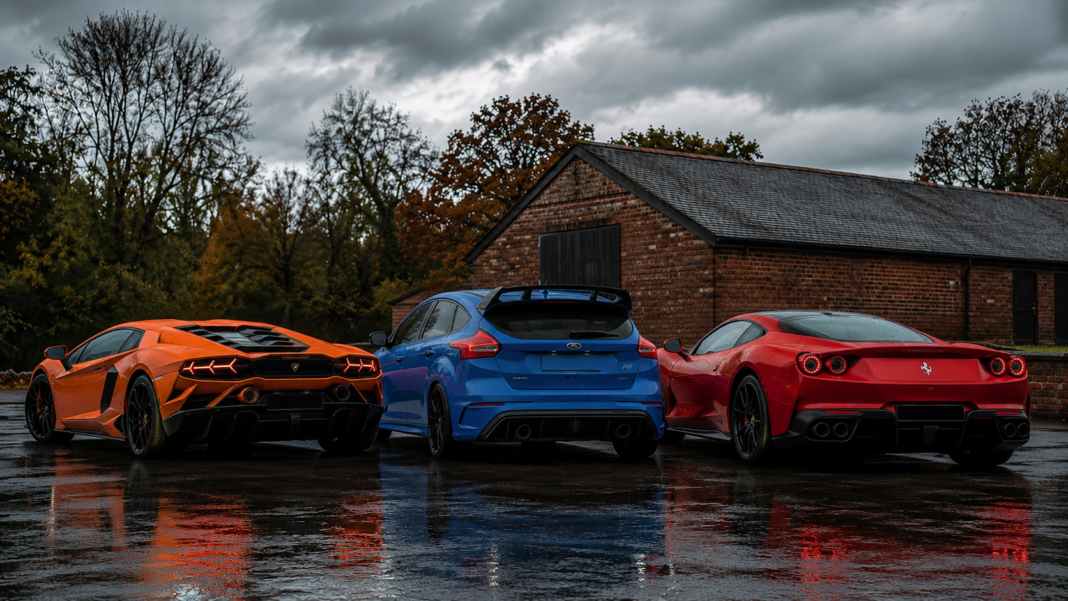
The rain is falling on the tarmac of Caffeine and Machine, a former pub turned petrolhead haven in the English countryside. The car park is a sea of metal. A Lamborghini Revuelto sits next to a modified Ford Focus RS. A Ferrari 812 Superfast is parked across from a classic Porsche 911. The owners are not here to race. They are here to talk, to watch, and to film.
A young man with a gimbal is walking slowly around a McLaren 765LT. He is not a journalist. He is not a photographer. He is a YouTuber with 200,000 subscribers. His audience is waiting for the video.
Supercar YouTube has changed the automotive landscape. Creators like Doug DeMuro, Shmee150, and Supercar Blondie built audiences of millions by talking about performance cars. They did not have journalism degrees. They did not work for magazines. They just had cameras, passion, and a deep understanding of what viewers wanted to watch.
This article tells the story of how supercar YouTubers shaped a generation of enthusiasts and changed the way we buy cars.
The Location: Caffeine and Machine, Warwickshire, England
Caffeine and Machine is a gathering place for car enthusiasts. The venue is casual. There are no velvet ropes, no dress codes, no attitude. The cars range from six-figure exotics to budget project cars. The crowd is diverse.
The venue has become a hub for automotive content creators. YouTubers film walkarounds here. Instagrammers take photos here. TikTokers film short clips. The location is a microcosm of the shift in automotive media.
The Pre-YouTube Era
Before YouTube, automotive media was dominated by magazines and television shows. Enthusiasts read Car and Driver, Evo, and Top Gear. They watched MotorWeek and Fifth Gear. The content was produced by professionals with budgets, editors, and distribution deals.
The coverage was limited. A new car might be reviewed by a handful of outlets. The reviews were published weeks after the car was announced. The perspective was from the industry, not the consumer.
There were few opportunities for independent voices to break through.
The Early Days: Enthusiasts with Cameras
The first automotive YouTubers were enthusiasts with cameras. They filmed their own cars, their friends’ cars, and cars at local meets. The production quality was low. The audio was bad. The lighting was poor. But the passion was real.
These early creators filled a gap. They covered cars that magazines ignored. They provided a perspective that was relatable. They were not experts, but they were enthusiasts, and that resonated.
The Breakthrough: Doug DeMuro and the Quirks and Features
Doug DeMuro was not the first automotive YouTuber, but he was the most influential. He started his channel in 2017 after working at Porsche and writing for Autotrader. His formula was simple. He filmed walkaround videos of interesting cars, pointing out quirks and features that no one else noticed.
DeMuro’s style was unpolished. He spoke quickly. He wore T-shirts. He did not look like a traditional car journalist. But his knowledge was deep, and his enthusiasm was contagious.
His videos consistently received millions of views. He became the most recognizable automotive YouTuber in the world. His success proved that there was an audience for long-form, detailed, enthusiast-driven content.
The Supercar Specialists: Shmee150 and Mr JWW
While DeMuro focused on quirks and features, other creators focused on the supercar lifestyle.
Tim Burton, known as Shmee150, started his channel in 2010. He filmed his own cars, including a Porsche 911 GT3, a McLaren 720S, and a Ford GT. His content was aspirational. Viewers watched to see what it was like to own and drive exotic cars.
James Walker, known as Mr JWW, took a similar approach. He documented his car buying experiences, his track days, and his road trips. His content was polished and professional.
These creators built audiences by providing access. A viewer who could never afford a McLaren could still watch someone drive it on the Hakone Turnpike. The connection was emotional, not transactional.
The Globetrotters: Supercar Blondie and Effspot
Other creators focused on discovery. Alexandra Hirschi, known as Supercar Blondie, filmed rare and unusual cars from around the world. She showed viewers hypercars they had never seen, prototypes that were not yet released, and limited editions that were already sold out.
Effspot, real name Nathan, took a similar approach. He traveled to exotic locations to film hypercars, documenting the global supercar scene.
These creators expanded the scope of automotive YouTube. They showed viewers what was happening in Dubai, Monaco, and Tokyo. The world felt smaller. The cars felt closer.
The Caffeine and Machine Conversation: A Creator’s Perspective
A young man with a gimbal is taking a break from filming. He has been making videos for four years. He started with a phone and a used BMW. Now he has a channel with 200,000 subscribers.
“I used to read car magazines,” he says. “I loved them. But they did not cover the cars I was interested in. They did not cover modified cars. They did not cover budget builds.”
He stops to check the battery on his gimbal.
“Now I can watch a video about a car the day it is announced. I can watch a video from someone who owns the car, not someone who drove it for an hour. The perspective is different.”
The Impact on Car Buying
Supercar YouTube changed how people buy cars. A potential buyer can now watch multiple in-depth videos about a specific model before visiting a dealership. They can learn about common problems, ownership costs, and modification potential.
The influence is measurable. Dealerships report that customers arrive better informed than ever before. They have watched videos. They have read comments. They have done their homework.
The relationship between creators and manufacturers has also evolved. Brands now send press cars to YouTubers. They sponsor videos. They invite creators to launches. The line between journalism and marketing is blurry.
The Caffeine and Machine Conversation: A Viewer’s Perspective
A man in his 30s is standing next to his Porsche Cayman. He has been watching automotive YouTube for years.
“I bought this car because of a video,” he says. “I was considering a BMW M2. Then I watched a comparison video from a YouTuber I trust. He explained the differences in handling, in feel, in ownership costs. I bought the Porsche.”
He is not a supercar owner. He is an enthusiast with a budget. He used YouTube to make an informed decision.
The Criticism
Supercar YouTube is not without its critics. Some argue that the content is shallow, focused on drama and hyperbole rather than substance. Others argue that creators are too cozy with manufacturers, blurring the line between review and advertisement.
The pressure to produce content is relentless. A creator who does not upload regularly loses subscribers, loses revenue, and loses relevance. The quality can suffer.
There is also a criticism that supercar YouTube distorts the market. Limited edition cars are filmed, hyped, and flipped for profit. The enthusiasts who actually want to drive the cars are priced out.

The Caffeine and Machine Conversation: The Old Guard
An older man is standing near a vintage Ferrari. He has been a car enthusiast for 50 years. He does not watch YouTube.
“I read magazines,” he says. “I trust the writers. I do not need to watch a 20-year-old talk about a car he drove for an hour.”
He is not wrong. The old media still has value. But it is no longer the only option.
The Future of Automotive Media
The future of automotive media is fragmented. Print magazines are struggling. Television shows are declining. YouTube is dominant, but it is maturing.
New platforms are emerging. TikTok is short-form and viral. Instagram is visual and curated. Substack is written and thoughtful.
The creators who succeed will adapt. They will diversify their content. They will build communities. They will find new ways to connect with audiences.
The Warwickshire Sunset
The rain has stopped. The car park is emptying. The YouTuber with the gimbal is packing up his equipment. He has filmed four cars. He will edit the videos tonight and upload them tomorrow.
His audience is waiting.
The Verdict
Supercar YouTubers changed how we buy cars. They built audiences of millions by talking about performance cars with passion and authenticity.
They filled gaps that traditional media ignored. They provided access to cars and experiences that were previously out of reach. They made the supercar world feel smaller, more accessible, and more human.
The industry has adapted. Manufacturers now work with creators. Dealerships now monitor YouTube reviews. Buyers now watch videos before visiting showrooms.
The shift is permanent. The old media is not dead, but it is no longer the only voice.
Key Takeaways
- Doug DeMuro pioneered the quirks and features format, becoming the most recognizable automotive YouTuber in the world.
- Creators like Shmee150 and Mr JWW built audiences by documenting the supercar lifestyle and providing aspirational content.
- Supercar Blondie and Effspot expanded the scope of automotive YouTube, covering rare and unusual cars from around the globe.
- Dealerships report that customers are better informed than ever, having watched multiple in-depth videos before visiting.
- The line between journalism and marketing has blurred as manufacturers now sponsor content and invite creators to launches.
Conclusion
The Caffeine and Machine car park is empty. The rain has stopped. The YouTuber with the gimbal has gone home.
His video will be uploaded tomorrow. It will get thousands of views. It will influence someone’s buying decision. The cycle will continue.
The supercar YouTubers changed the game. They did not have journalism degrees. They did not work for magazines. They just had cameras, passion, and a deep understanding of what viewers wanted to watch.
A generation of enthusiasts grew up watching them. A generation of buyers trusts them.
The old guard may not understand. But the market has spoken.
The future of automotive media is on YouTube. And it is not going back.

