
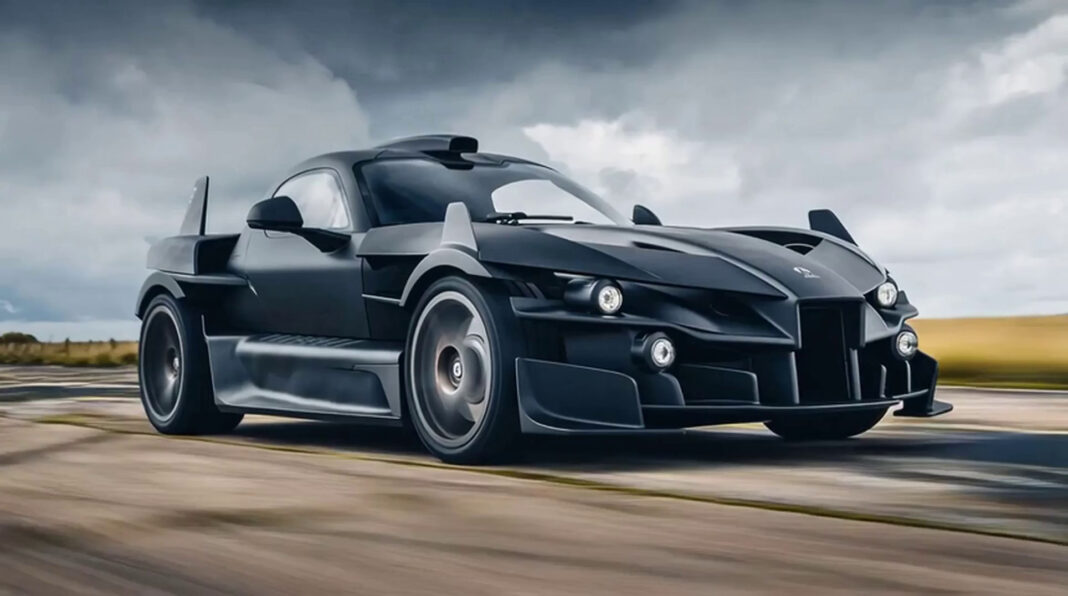
The name Ariel has long been synonymous with a particular breed of performance vehicle. From the Atom, a skeletal tube frame roadster that prioritized power to weight above all else, to the Nomad, an off road buggy with the same manic energy, the British manufacturer has built its reputation on machines that are light, loud, and utterly focused on driving engagement.
For years, the prospect of an electric Ariel seemed unlikely. Batteries are heavy. Ariel vehicles are not. The two concepts appeared fundamentally incompatible. Yet in 2026, the Ariel Hipercar is a reality. With up to 1,180 horsepower, a lightweight bonded aluminum chassis, and an optional jet turbine range extender, it represents one of the most unusual and technically ambitious electric vehicles ever conceived for road use.
This article provides a detailed examination of the Ariel Hipercar, its performance specifications, engineering philosophy, and what makes this car stand out in the current automotive landscape.
The Ariel Philosophy
Ariel Motor Company operates differently from mainstream automakers. Based in Somerset, England, the company produces vehicles in extremely limited numbers, with each car assembled by hand from start to finish by a single technician. This approach prioritizes craftsmanship and attention to detail over production volume. It also creates a direct connection between the builder and the machine, a relationship that Ariel extends to its customers by inviting them to witness their vehicle’s creation.
The Hipercar, whose name is an acronym for HIgh PERformance CARbon Reduction, represents a significant departure for the company. It is the first Ariel designed with a roof, a necessity driven by aerodynamic requirements and the need to house the roof scoop that feeds air to the optional turbine. It is also the first Ariel to use a battery electric powertrain, a technology that posed significant challenges for a company built around lightweight engineering.
The development of the Hipercar was made possible through UK government funding supporting green technology initiatives. This support allowed Ariel to undertake a project that would otherwise have been financially out of reach for a small, privately owned manufacturer.
Powertrain Specifications
Motor Configuration
The Ariel Hipercar offers buyers a choice between two powertrain configurations. The rear wheel drive variant uses two electric motors mounted at the rear axle, producing a combined 590 horsepower and 662 lb ft of torque. For those seeking maximum performance, the all wheel drive configuration adds two additional motors at the front axle, bringing total output to 1,180 horsepower and 1,342 lb ft of torque.
Each motor produces 295 horsepower independently, allowing for sophisticated torque vectoring capabilities. By varying power delivery to individual wheels, the system can enhance cornering performance, rotating the car into turns and providing optimal traction during exit.
Battery and Range
Power for the electric motors is drawn from a 62.2 kWh battery pack developed in partnership with Cosworth, the renowned British engineering firm with extensive motorsport experience. This battery provides an estimated range of 150 miles on the WLTP cycle, which tends to be more optimistic than the EPA cycle used in the United States.
The battery incorporates a patented liquid cooling system that circulates a temperature controlled gel to every cell pack within the unit. This system addresses one of the primary challenges of electric vehicle performance: maintaining consistent power output during sustained track use by preventing the battery from overheating.
The Turbine Range Extender
For buyers who require additional range, Ariel offers an optional Cosworth turbine range extender. This unit functions as a generator, spinning at 110,000 rpm to produce 47 horsepower. The turbine charges the battery while driving, effectively eliminating range anxiety for longer journeys without adding the weight of a larger battery pack.
The turbine draws air through a roof mounted scoop, which directs flow to the unit. This placement serves both functional and aesthetic purposes, creating a visual signature that distinguishes the Hipercar from conventional electric vehicles.
Acceleration Performance
With the full 1,180 horsepower configuration, the Ariel Hipercar accelerates from 0 to 60 miles per hour in 2.09 seconds. The 0 to 100 miles per hour sprint takes 4.42 seconds, placing it among the quickest accelerating production vehicles in the world. Top speed is electronically limited to 155 miles per hour, a figure that prioritizes stability and energy efficiency over outright velocity.
Weight and Structure
Chassis Construction
The foundation of the Hipercar is a bonded aluminum tub, a structure that provides the necessary rigidity while maintaining the lightweight ethos that defines the Ariel brand. This aluminum chassis is then clothed in carbon fiber body panels, which contribute to the car’s low overall weight while allowing for complex aerodynamic shapes.
Weight Considerations
At 3,185 pounds for the all wheel drive version, the Hipercar is heavy by Ariel’s historical standards. The Atom weighs approximately 1,300 pounds, and the Nomad tips the scales at 1,477 pounds. The additional mass of the battery pack, four electric motors, and the turbine range extender necessarily increases the vehicle’s heft.
However, in the context of electric performance vehicles, the Hipercar’s weight is remarkably low. It undercuts competitors with similar power outputs by a significant margin, a direct result of the company’s focus on lightweight construction and the use of the relatively small 62.2 kWh battery pack. The two motor rear wheel drive variant is even lighter, weighing under 3,086 pounds.
Chassis and Suspension
Suspension Geometry
The Hipercar uses double wishbone suspension at all four corners, with unequal length control arms designed to optimize tire contact patch through the full range of wheel travel. This geometry is standard for high performance vehicles, providing the control necessary for precise handling.
Dampers and Brakes
Bilstein adaptive dampers are fitted as standard equipment, allowing the driver to adjust suspension characteristics to suit road conditions or personal preference. The braking system comes from AP Racing, a supplier with extensive motorsport credentials. Six piston calipers clamp the front rotors, while four piston units handle rear braking duties. These components provide the stopping power necessary to match the car’s substantial acceleration capabilities.
Tires
Michelin Pilot Sport Cup 2 tires are mounted at all four corners. These tires represent the current state of the art in road legal track day rubber, offering high levels of grip while maintaining acceptable behavior on public roads. The specific compound and construction were developed in consultation with Michelin to suit the Hipercar’s weight distribution and performance characteristics.
Aerodynamics and Design
Functional Styling
The exterior appearance of the Ariel Hipercar is determined almost entirely by functional requirements. Every surface, every vent, and every protrusion serves a purpose related to aerodynamic efficiency, cooling, or turbine operation. The vertical fins at each corner and the fin running along the centerline of the rear deck manage airflow and contribute to high speed stability.
The roof mounted scoops direct air to the turbine range extender, ensuring consistent operation regardless of vehicle speed or ambient conditions. This placement also creates a visual signature that distinguishes the Hipercar from conventional electric vehicles, signaling its unusual powertrain configuration to observers.
Cooling Requirements
Electric vehicles generate significant heat during sustained high performance driving, particularly when operating at the 1,180 horsepower output level. The Hipercar’s bodywork incorporates extensive cooling ducts and openings to manage thermal loads. The front fascia is designed to direct air to the radiators that cool the electric motors and power electronics, while side vents allow heated air to exit the wheel wells.
The Roof
For the first time in an Ariel production vehicle, the Hipercar provides a roof over the occupants’ heads. This departure from the company’s traditional open air philosophy was necessitated by two factors. First, a closed cabin improves aerodynamic efficiency, reducing drag and increasing range. Second, the roof provides a mounting point for the turbine air scoop, which requires clear access to undisturbed airflow.
Interior and Driver Controls
Craftsmanship Approach
Consistent with Ariel’s manufacturing philosophy, each Hipercar interior is hand finished by a single technician who oversees the entire assembly process. This approach ensures a level of attention to detail that mass production cannot replicate. Buyers are invited to visit the Somerset factory to witness their car’s construction and meet the person building it.
Adjustable Systems
The driver can adjust several parameters of the vehicle’s behavior to suit conditions or personal preference. Regenerative braking strength is configurable, allowing the driver to choose between maximum energy recovery or a more natural lift off feel. Traction control intervention levels can be tailored, and torque vectoring characteristics are adjustable to suit different driving scenarios.
These adjustments allow the Hipercar to transform its character from efficient grand tourer to focused track machine at the push of a button, adapting to the driver’s needs without requiring compromise.
Information Display
The instrument panel provides the driver with essential information in a clear format. Given the car’s performance capabilities, the focus is on presenting data that matters: speed, charge level, and system status without unnecessary distraction. The specific configuration of displays and controls is developed in consultation with each buyer, reflecting Ariel’s bespoke approach to vehicle creation.
Driving Experience
On Road Character
Despite its extreme capabilities, the Hipercar is designed to be usable on public roads. The adjustable suspension allows compliance over rough surfaces, and the ability to moderate power delivery through the driver adjustable systems means the car can be driven gently when conditions or mood require.
The turbine range extender, for those who option it, eliminates the range anxiety that can accompany electric vehicle ownership. With the turbine spinning at 110,000 rpm to generate electricity, the Hipercar can cover distances far exceeding its 150 mile battery range, making it suitable for grand touring as well as local exploits.
On Track Performance
When driven at the limit, the Hipercar reveals its true purpose. The combination of all wheel drive traction, torque vectoring, and the low weight enabled by the bonded aluminum and carbon fiber construction allows the car to accelerate out of corners with authority. The Bilstein dampers maintain control over body motions, and the AP Racing brakes provide consistent stopping power lap after lap.
The patented liquid cooling system for the battery ensures that performance does not degrade as the battery heats up during track use. This is a critical distinction from many electric vehicles, which can deliver one impressive acceleration run followed by reduced power due to thermal management strategies.
The Sound
Electric vehicles are often criticized for their silence, but the Hipercar offers a different acoustic experience. The turbine range extender, when operating, spins at 110,000 rpm, producing a distinctive high frequency whine that is unlike any conventional internal combustion engine. This sound, combined with the characteristic noise of the electric motors under load, creates an auditory signature that is unique to the Hipercar.
For drivers who value the sensory aspects of performance driving, this sound provides feedback and engagement that purely silent electric vehicles cannot match.
Production and Availability
Manufacturing Location
The Ariel Hipercar is manufactured at the company’s facility in Somerset, England, alongside the Atom and Nomad models. This location has been the heart of Ariel’s operations for decades, and the addition of the Hipercar represents a significant expansion of the company’s manufacturing capabilities.
Production Timeline
The Hipercar was officially launched as a prototype, with the company planning to deliver first customer examples approximately two years after the debut. By 2026, those initial deliveries are underway, with production ramping to meet demand.
Pricing
Ariel has stated that the Hipercar will be priced at less than one million pounds. This positions it in competition with other low volume electric hypercars from established manufacturers and boutique startups alike. The exact price varies based on configuration, with the rear wheel drive variant costing less than the full power all wheel drive version, and the turbine range extender representing an additional option.
Customization
Consistent with Ariel’s philosophy, each Hipercar is built to customer specification. Buyers work directly with the factory to select powertrain configuration, exterior finish, interior materials, and optional equipment. This bespoke approach ensures that no two cars are exactly alike, and that each owner receives a vehicle tailored to their preferences.
What Makes the Ariel Hipercar Stand Out in 2026
The Lightweight Approach
In an era when electric vehicles are growing ever heavier, with battery packs swelling to accommodate range anxiety and luxury features accumulating mass, the Ariel Hipercar takes a different approach. Its 3,185 pound curb weight, while heavy by Ariel standards, is remarkably light for a 1,180 horsepower electric vehicle. This focus on weight reduction pays dividends in handling response, braking performance, and driving engagement.
The Turbine Range Extender
The optional Cosworth turbine range extender sets the Hipercar apart from virtually every other electric vehicle on the market. While range extended electric vehicles are not new, the use of a high speed turbine rather than a piston engine is unusual. The 110,000 rpm unit provides electrical generation without the vibration and mechanical complexity of a reciprocating engine, and its roof mounted air scoop creates a visual signature that is unmistakably Ariel.
Handcrafted Production
In an automotive industry increasingly dominated by automation and robotics, Ariel remains committed to hand assembly by skilled technicians. Each Hipercar is built from start to finish by a single person. This approach, combined with the invitation for buyers to visit the factory during construction, creates a level of connection between owner and machine that mass production cannot replicate.
The Ariel Ethos Translated to Electric
The Hipercar demonstrates that the Ariel philosophy minimalist design, obsessive weight reduction, and focus on driver engagement can survive the transition to electric power. It is not simply an electric vehicle built by a company that used to make lightweight sports cars. It is an Ariel through and through, applying the same engineering priorities to a new type of powertrain.
British Engineering
The Hipercar represents a collaboration between two iconic British engineering firms: Ariel and Cosworth. The battery and turbine development by Cosworth brings decades of motorsport experience to the project, ensuring that the electrical systems meet the durability and performance standards expected of a vehicle wearing the Ariel badge. This partnership demonstrates that British engineering remains capable of world class innovation.
The Future of Ariel
Electrification of the Range
Ariel has indicated that the Hipercar represents the first step in a broader electrification strategy. Company leadership has stated that the rest of its model range will eventually be electrified, following the path established by the Hipercar. This suggests that future generations of the Atom and Nomad may adopt electric powertrains, adapted to the specific requirements of those vehicles.
Continued Focus on Lightweight
Despite the inherent weight penalty of battery electric systems, Ariel remains committed to lightweight construction. The lessons learned in developing the Hipercar’s bonded aluminum chassis and carbon fiber bodywork will inform future models, ensuring that even as the company transitions to electric power, its vehicles retain the agility and responsiveness that define the brand.
Limited Production
Ariel shows no interest in becoming a high volume manufacturer. The company’s value proposition depends on exclusivity, craftsmanship, and the personal connection between builder and buyer. Future models, whether electric or otherwise, will likely follow the same limited production model that has sustained Ariel for decades.
Conclusion
The Ariel Hipercar represents a remarkable achievement: an electric vehicle that honors the lightweight, driver focused philosophy of a company built on skeletal sports cars. With up to 1,180 horsepower from four wheel motors, a bonded aluminum chassis clothed in carbon fiber, and an optional jet turbine range extender spinning at 110,000 rpm, it is unlike anything else on the road.
Yet the Hipercar is not defined solely by its specifications. It is defined by how it was created: hand assembled by a single craftsman in Somerset, built to the exact requirements of each buyer, and supported by engineering partnerships with firms like Cosworth that share Ariel’s commitment to performance.
In 2026, as the automotive industry continues its transition toward electrification, the Hipercar stands as proof that the values enthusiasts cherish driver engagement, lightweight construction, and mechanical integrity can survive the shift. It is not simply an electric car built by a company that used to make lightweight sports cars. It is an Ariel, through and through, applying the same engineering priorities to a new type of powertrain.
For the small number of buyers who will acquire a Hipercar, it offers something beyond electric performance. It offers the knowledge that their vehicle was built by hand, tailored to their specifications, and engineered to deliver the kind of driving experience that has defined Ariel for decades. And for the rest of the automotive world, it offers a glimpse of how electrification can coexist with the values that make driving rewarding.

